
Indian Thali – The Magical Bites

Indian thali comes with histories of India’s places, and people telling you who they are and why they eat what they eat – Dr Nandita Iyer, doctor, blogger and author of The Great Indian Thali – Seasonal Vegetarian Wholesomeness

Interview by Rajeshwari Kalyanam

For this trained doctor and nutrition specialist, cooking has been a passion and writing, a hobby. Dr Nandita Iyer has been blogging for many years before she began to write books that bring together everyday nutrition and healthy eating. Her blogs, articles and books come loaded with exciting vegetarian recipes and whole lot of practical advice thrown in. Her latest book - The Great Indian Thali – Seasonal Vegetarian Wholesomeness – explores Indian landscape, the quintessentially local thalis that are mouthwatering made using local produce – the vegetables, fruits, nuts, grains and cereals. The food we eat is reflective of the climate, the landscape, traditions and in Dr Nandita’s words it comes with histories of India’s places, and people telling you who they are and why they eat what they eat.

Indian thaliAbout the book – ‘The Great Indian Thali…’ she shares, “The book is divided into seasons, colour coded for Spring, Summer, Monsoon and Winter. It brings vegetarian recipes from different parts of India keeping in view what is seasonal, the festivals, what dishes can be made using local produce. It has recipes of vegetarian dishes, snacks, rice recipes – a little bit of everything – in short - it is a sneak peek into what is India eating in terms of vegetarian food across seasons. It is decorated with flowers from each season and takes you through the sensory experience of Monsoons in Mumbai, winters in Kashmir and summers in the north. The book also has a playlist of Hindustani music with QR Code. It is a playlist of music for every season that you can play while cooking or entertaining to create the mood.”

Book is not about giving out recipes for full thalis. It has got different dishes from appetisers, to main course, and desserts, which you can put together to make a thali. There are also a bunch of basic recipes like dal, rice, rotis parathas, she adds.

Excerpts from the interview:

What is your definition of a good nutritious thali?

Healthy thali versus unhealthy – it’s all about balance. These days on social media people want to post pictures of thalis with tons of dishes. It looks good and plentiful, but it is not necessarily balanced and it’s a lot of food. It has a negative impact on portion control and good balance of carbohydrates, proteins, a variety of vegetables is usually missing as these thalis come overloaded with crabs, lot of processed food – refried in refined oil, and sugars.

A good thali is simple, moderate and delicately done. Anything in the name of Indian and traditional is not right – it should be in the context of right time and right proportion. I do not subscribe to these marketing trends like these huge freak shakes that come with 2000 calories and a whole lot of sugar, colours and additives, and spin on traditional in the name of fusion.

Once in a while it is okay to eat these Bahubali thalis but like tobacco comes with a warning that it is injurious to health, these thalis must come with a warning.

Why a dedicated book for thalis, and what can the reader expect?

There are tons and tons of books on Indian vegetarian food and recipes. What I like about my book is that it is about the seasonal recipes, from east, west north and south. The dishes can be paired with other dishes from the same region or other regions to make a really balanced colourful, light meal. In India, and around the world, we have vegetables available round the year now. We have winter vegetables like cauliflower, peas that are available in summers, and gourds and bhendi during winters. But the fact remains that the vegetables are at the most nutrition and flavoursome best when they are in season. Try making a winter vegetable pickle and it will be a level beyond what it tastes when you make it in summer. Experiencing the taste of fresh vegetables growing seasonally and not from cold storage is the key for getting nutrition needed for the season. For example, eating amla or turmeric during winters gives extra anti-oxidants and vitamin c, which you need in building immunity for the season. And, it is about eating little bit every day, and not just one day. The whole point of the book is focus on India, focus on vegetarian mostly plant based and eating seasonal and local.

Can you share about any unique thalis you would have tasted?

One of the unique thalis I tasted was Manipuri. My friend and neigbour made this beautiful vegetarian thali, which I was not aware at the time that it is very prominent in Manipur. Apparently, devotees of Lord Krishna offer it as prashad. They don’t use metallic cups. Each of cups for each dish is made using banana leaves. It is colourful and stunning visually. It is a balanced meal served with a lot of local greens and flavouring and unique dishes, it was a joy to try it out at her place.

In recent times people seem to be going back to their roots in terms of food. What is your view?

It’s always nice that people are rediscovering their roots, and the cuisines of their ancestors, and discovering what’s local beyond four – five vegetables we use. It’s important to go beyond, towards the bio diverse diet- otherwise we will end up losing local varieties of vegetables, millets…If no body eats, they will stop growing and we will be left with a very little choice. I think it’s important to discover old recipes with an eye on what modern science of what suits our current lifestyle - if are you a sedentary person, are you active and what suits your fitness goals and health condition.

What is the most important element of an Indian thali?

There’s nothing called important dishes on Indian thali. Everything has its place and importance. Its either contributing towards flavour or texture or its adding freshness or aiding digestion.

What is that one unique feature in all Indian thalis?

The concept of Indian food is that we don’t eat course wise. And, even if we begin with rice and dal, or roti, we take everything on the plate. We eat each bite as per out preference or liking. I can take rice and curry with some chutney and that makes a morsel, sometimes a bit of roti with sabji dipped in dal or rice with dahi and pickle – that makes a morsel. Infinite permutations and combination of eating bites as per your own liking and what your heart desires while you are eating the food – that is the beauty of Indian thali.
India – The Best Destination for Vegetarians

India is already the best destination in the world for vegetarians. It has had a head start for Vegans: Wendy Werneth

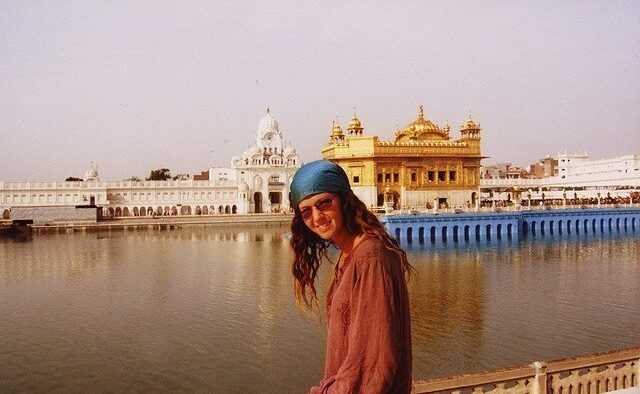
Wendy Werneth is an intrepid traveler, vegan foodie and polyglot. She has travelled over 117 countries so far and as a vegan has explored 30 to 40 countries and written about her experiences in her blog https://www.thenomadicvegan.com/. Wendy had visited India in 2019 when she brought a group of vegan travelers to tasty fares in Bangalore and Pondicherry.

Wendy will speaking at Namaste 2021 on August 29th at 6 pm IST.

How did you turn to veganism? What was your initial initiation?

My journey to veganism started in 2014. My father had recently passed away from complications caused by type 1 diabetes, and the last couple of months of his life were quite miserable. Seeing him on his deathbed, I knew I didn’t want to end up like that, so I started looking into the lifestyle choices I could make to improve my own health.

That was how I discovered the benefits of plant-based nutrition, and initially I was mainly interested in it for health reasons. At first, I was just cutting back on my consumption of animal products and didn’t plan to go fully vegan.

But as I continued to educate myself, I learned about how my food choices were destroying the planet, and about the horrible things happening to innocent animals in the meat, egg and dairy industries.

The more I learned, the more I realized that being fully vegan was the only way that I could live in alignment with my own values. I took about four months to make the transition.

How does India compare as a vegan destination as opposed to countries which have very specialised vegan restaurants? 

It depends on how you look at it. On the one hand, it’s true that India doesn’t have as many specialized vegan restaurants as some other countries. But on the other hand, there are many naturally vegan dishes that are already part of traditional Indian cuisine.

This is especially true in the south of India. In the north, it’s of course still very easy to avoid meat, fish and eggs, as all restaurants are used to accommodating the many vegetarians in India who don’t eat these things. Dairy products are the one thing you need to be careful about as a vegan in India, but even so it’s not difficult to avoid them.

You can just ask restaurant staff to prepare your dish with vegetable oil instead of ghee, for example. Since many restaurant staff are not yet familiar with the term “vegan”, it’s best to be specific about the ingredients you don’t want (ghee, curd, paneer, cream, etc.).

This might be intimidating at first for vegan travelers who are used to eating in restaurants where veganism is widely understood, and where vegan options are clearly marked on the menu.

But personally, I much prefer trying traditional local dishes that happen to be vegan even though they’re not marked as such, as opposed to eating in an all-vegan restaurant that serves “international vegan” dishes that are not really part of the local cuisine.

What attracts you to Indian cuisine? How is an Indian vegan diet different from other countries?

I’ve always loved Indian food, and I continue to be amazed by the huge variety it has to offer. There’s such a mix of spices that every dish is always a new adventure.

The main difference I’ve noticed between vegan food in India vs. in other countries is that there are not as many plant-based meat and cheese alternatives in India. This is just fine with me, since I don’t miss eating animal products and don’t feel any need to recreate the experience.

In Western countries, though, it’s common to find plant-based versions of burgers, chicken nuggets, hot dogs, etc. Whereas in India, where many people refrain from eating animals for religious reasons, the idea of eating something that imitates the look, taste and texture of animal products hasn’t taken off in the same way.

How does the veganism of different states and religions in India appeal to you?

On my most recent trip to India, I really enjoyed discovering many local vegan dishes that were new to me, particularly in the state of Karnataka. Through conversations with one of the co-leaders of our tour, I also had the opportunity to learn more about Jainism and how veganism coincides with Jain teachings. India has such a rich cultural and religious diversity, so no matter how many times I return there will always be something new to learn and discover.

Do you think given our huge proclivity for vegetarianism, we can become an attractive tourist destination for vegans. Is vegan tourism a big industry?

My answer to both questions is definitely yes. India is already the best destination in the world for vegetarians, so it has a huge head start over other countries when it comes to catering to the needs of vegans.

Vegan tourism already makes up a sizable chunk of the tourism market and is growing at an astonishing pace. Tourism-related businesses that do not respond to this change in the demand from their clients are going to get left behind.

You have travelled all over the world. How many countries have you been to and have you recorded the vegan stories in all these countries. Is veganism a cultivated choice, a societal trait or an environmental necessity? In a family of vegans, can veganism or vegetarianism be forced or should it be a choice?

I’ve been to 117 countries so far, but many of them I visited before I became vegan. As a vegan, I think I’ve visited 30 to 40 countries in Europe, Africa, Asia and South America.

I do my best to share as much helpful info as I can about these countries on my blog, The Nomadic Vegan. And I also publish guest posts by other authors on destinations that I have not yet had the chance to visit.

As for the question on whether veganism should be “forced” within families, I’m child-free by choice, so I don’t have experience with raising children and would not presume to tell other people how they should raise theirs. I find it very odd when people say that parents shouldn’t “force” veganism on their children.

Should parents not instill in their children their own values and the moral code that they live by? That’s what parenting is! Children already have innate compassion and empathy for animals. It’s only through societal pressure that they are taught to suppress that compassion.

Please tell us a little about your tour. Why did you choose the two south Indian cities of Bangalore and Pondicherry?

The tour was actually organized by a vegan company called Escape To, which specializes in sustainable, vegan tours to places on the Indian subcontinent. So while I didn’t choose the destinations myself, I was thrilled to explore this part of India.

I had been to Pondicherry on my first visit to India, back in 2004, but at that time I skipped Bangalore. To be honest, back then I didn’t think it would be that interesting, because in my head I had stereotyped Bangalore as a modern technology hub, and I was more interested in the traditional architecture and culture of India.

But thanks to the opportunity to co-lead a tour there with Escape To, I discovered that there was much more to the city than I had imagined. Traveling as part of the tour was a very different experience than traveling independently.

Both forms of travel have their advantages and disadvantages, but the tour was very special because Escape To arranged opportunities for us to share meals with locals inside their homes, meet with local entrepreneurs and activists, and visit community-driven empowerment projects. Those were experiences that I never would have had by visiting India on my own, and it really gave me a deeper understanding of and appreciation for the country.

Are there any famous ambassadors of veganism from India?

Yes, and their numbers are growing! I don’t follow the lives of celebrities very closely (whether they’re from India or from anywhere else), but I do know that a number of Indian celebrities have adopted a vegan lifestyle or at least switched to a plant-based diet. A few examples are Alia Bhatt, Vinita Chatterjee and Sonakshi Sinha.

What is the most compulsive argument for people to turn to veganism today in your view.

There are many compelling reasons to adopt a vegan lifestyle. As for which one is the most compelling, that’s going to depend on the individual person and what they care about the most.

It could be the many health benefits of a plant-based diet, the fact that going vegan is the single most important step we can take as individuals to reduce our ecological footprint and save the planet, or it could be that they believe in non-violence and don’t want to cause unnecessary harm to innocent animals.

For me personally, the most compelling reason for going vegan was because it was the only way for me to live in alignment with my own values of compassion and non-violence. My conscience would not let me continue to call myself an animal lover while at the same time paying people to kill animals.

And compassion and non-violence are values that virtually all humans hold dear. We may have grown up eating animals and their secretions because our societies taught us that it was socially acceptable, but if we really look at the matter objectively, we will see that eating animal products doesn’t line up with our own moral values.