The Truth About The Earth Runs Deeper

In a fast-paced world racing to compete in modernity and progress, Aseem Shrivastava, Delhi-based writer, teacher and ecological thinker, advocates a different approach to that of most economists. Shrivastava did both his bachelors and masters degree in economics; by the time he had completed his doctorate in environmental economics from the University of Massachusetts, Amherst, he was deeply disillusioned with the subject. Finding that he could not overlook the flaws in the system, the abstruse mathematics hiding the fact that the fragile theoretical model of economics did not work, he turned to philosophy for answers.

Reading the works of thinkers from Nietzsche to Kierkegaard, Shrivastava found clarity that economics had not provided him. Having co-authored the book Churning the Earth with Ashish Kothari, he taught at several Indian universities, where he could finally make the switch to philosophy, proceeding to teach the subject at the Nordic College, Norway. He had found a way of thinking that he has since passionately advocated—ecosophy. Raimon Panikkar, the philosopher-theologian whose books Cultural Disarmament and The Rhythm of Being introduced Shrivastava to the concept, defines ecosophy as the wisdom of the earth.

Shrivastava emphasises the difference between ecosophy and other discussions of nature and the environment. Ecology is a branch of science and environmentalism has always considered nature as an ‘afterthought’ to the economy. Ecosophy, however, is a perspective, a truly ecologically sensitive approach. Furthermore, ecosophy critiques ‘modernity’, which is a deeply colonial and West-centric outlook, Shrivastava argues, just as development is, which environmentalism and ecology do not question.

A key concept that Shrivastava is concerned with while living in the anthropocene, is technocracy, the power of technology and those who wield it. Society is conditioned to accept it passively, sometimes as a necessary evil, when one thinks of what Max Weber called ‘disenchantment with the world’. Science has become secular, eliminating the experience, and even the idea of a soul—Even if there is one, it is restricted to humans. Shrivastava says that the misconceptions spread to interpretations of Nietzsche’s work as that of an atheist. Nietzsche was raised as a Lutheran Protestant, being the son of a pastor. But he rejected this system of belief even before the time he reached his twenties, says Shrivastava—why else would he speak of keeping faith with the earth, if the earth was the inanimate Cartesian gathering of matter? Even the greatest scientific minds, from Bohr to Heisenberg, talk about consciousness and the soul—especially Schrodinger, who expressed the need to draw from Oriental philosophy in dealing with science.

Whether we like it or not, Shrivastava reminds us, we are constantly in dialogue with everything around us. The importance lies in aspiring to a fruitful dialogue with nature, rather than a ruthless ascent of humanity to self-destructive, hubristic power. Nature will be merciless in turn, but within, it also carries a harmonious, intricately woven peace.

In a course of reconnecting with nature, staying in a remote village, participants described their feelings of never having lived so much before, says Shrivastava. They fetched water, collected firewood, cooked on the firewood, living the rural life and being occupied without being ‘busy’. People need to learn to pause and understand, reconsider nature-man relationships, rather than the impulsive urge to plough through nature whenever it seems to be in their way. He recommends reading authors such as Pannikar and Rabindranath Tagore, as well as Wendel Berry’s essays and especially his book The Unsettling of America, and Hannan Arendt’s book The Human Condition.

Shrivastava is also wary of ‘solutionism’, which powers the current economic model—a vicious cycle of creating problems and creating solutions to them—and supplanting one system with another. Rather, the answers must come through living through the perspective of ecosophy, through creation and love and inquiry. The idea of sustainability itself is flawed, Shrivastava says—the current system is in no way sustainable, and technocrats are simply trying to find a way to continue to profit while retaining this system. Moreover, countries of the West place the blame on ‘developing’ countries, while in reality they do not want these countries to succeed in switching to traditional systems because they would not only lose markets but the ‘developed’ countries will also be exposed as climate criminals, just as they have in the past.

What then are these traditional systems? India’s deep heritage and the ancient cultural respect for nature, reverence for the soul that inheres in nature, is already rooted in the ideas of ecosophy. In this video interview, Shrivastava talks about his latest workshop in Bangalore, his vision as Advisor of the Center for Embodied Knowledge and about the role of institutions and individuals in caring for the earth.

Honest Assamese Filmmaking

The despair of the poverty stricken family worsens, when the sole bread earner of the family dies suddenly.  The wife is now left with the tough choice of pulling out her children from school and putting them to work, or find a way to educate them.  The story of Protyush (Ushering a Crack of Dawn) directed by Arindam Barooah is about the struggles faced by many families across India, as they try to balance hopes for a better future with pressing day to day needs.

Arindam is not a stranger to these pressures and brings them to life with great sensitivity in his films. Protyush (Ushering a Crack of Dawn) was awarded Best Short – Jury Award Special Mention in the 2020 Indica Pictures Film Festival. Arindam Barooah is also known for Panisokori (in the swirls) (2021), Daag Acche Hain (The Broader, The Better) (2019) and Endharor Bheta Bhangi (2018)

Arindam hails from Duliajan, Assam. As a child he loved watching films but did not venture into filmmaking until after finishing his engineering. In 2014 he shot his first movie titled ‘Eti Notun Prabhat: A New Dawn.’ In this interview he speaks about his inspiration.

You have grown up and lived in a land where life is not very easy for many people. You also have described a life lived with financial pressures. How does this sensitise one and make one empathetic to the struggles of others that you have portrayed so beautifully in your films.

I believe the surrounding is one of the best sources of inspiration, ideas etc. I have been fortunate enough to have met people in person and gotten to know them. It’s the interaction and experience that led me to make films based on their life and put forth in front of the world.

In Protyush, you have dealt with the theme of an impoverished woman who has to make a critical decision on how to live her life on her own terms. Is this film inspired by any real life story? 

As I said, the surrounding is one of the best sources of inspiration. I have come across few women who have been financially weak and are brave enough to live lives on their own terms.

You have dealt with poverty, stigma, hardship, hope through takes and shots that we describe as vilambata kalam or very slow tempo speed in South Indian Carnatic music, that allows time to dwell on the note. How do you execute this technically to describe the emotion?

Most of my films have slow paced treatment. I let the viewers experience the passage of time with respect to the characters. The treatment forces the viewers to stay with the state of mind of the character’s emotion on the screen. Most of the frames highlight layers of emotions hiding beneath the surface.

You have shown great integrity to the themes by pinning them in their own environment. How do you research and execute this for greater authenticity?

Whenever I get an idea or someone shares a story to make a film, I make an effort to know about the subject/theme beforehand. I try to make myself comprehend the essence of the subject. I make a point that most of my subjects should be socially driven. They should be also from the audience’s perspective, relevant to today’s time and should deliver a certain message to society.

Could you briefly describe how your filmmaking has changed or expanded over the years from Panisokori. 

I have become a more mature and detailed filmmaker now. I am now not in haste to do something good rather give time to make the output better. I had learned to work smoothly with a professional team where I believe filmmaking is a joint effort. I try to observe things more minutely especially both in aesthetic & technical ways.

Where do you place the success of your film from the great pool of creativity that is emerging from Assam?

I would say it’s still a long way to go. Panisokori being an independent film would still have a niche audience. It won’t attract a mass audience considering the subject and treatment we portrayed in the film. However, the audience’s taste is changing towards better content oriented films over masala films.

Hold On To The Beauty We Have Inherited

Actress Akriti Singh’s directorial debut, Eight Down Toofan Mail, is about a woman who claims to be the Queen of Awadh. She arrives in New Delhi in 1974 and seeks a meeting with the then Prime Minister, Indira Gandhi, to reclaim her heritage. Akriti says the film is a fictional take on this story. In this interview, she talks about her new roles and the coming together of acting, scriptwriting and direction.

You envision a change in the course of filmmaking as actors take to writing and directing their own films. Are we saying that specialisation in various aspects of filmmaking is going to be superseded by the genius of one person?

With the advent of easier tools for editing and other aspects of filmmaking, our obsession with making reels and TikToks, and a video camera in everyone's pocket, I think filmmaking has already changed. Every individual is capable of and keen on telling their story through videos. Actors are storytellers; it is the basic requirement of the craft. Once the technical aspects are taken care of, good actors are master storytellers and can surely get into filmmaking if it is something that interests them.

What are the challenges of converting a historical episode into a film? We have seen it done with such acclaim in the Broadway musical Hamilton. Does it require a different kind of scriptwriting, one that is careful with historical facts and personalities?

You discover so much when you dig deep into a historical event. I would say historical events lend themselves beautifully to films. Not only do we know the history, but we also know what happened in the future as a result of that event. We are living and breathing in a world shaped by it.

The storytelling becomes very layered. Writing a historical episode into a film is a reflective process. Since it is fiction, no matter how much research we do to make it historically accurate, the writer's gaze will seep into it too.

How did you bring your friends together to act with you in the film? Was it easier working with people who know your artistic vision?

I have been acting on stage for a number of years now. I also have my own theatre group, where I write and direct plays. All my co-actors in the film are from my theatre company. It took just one phone call each to convince them to act in the film. Theatre has a camaraderie like no other medium. Working with such passionate and kind people was special in more ways than one.

Also, having worked together for years in multiple plays, we all had a shorthand.

Could you briefly describe how you envisioned shooting the film, with a relatively low budget and small settings?

Restrictions are very helpful when creating or writing something. I was aware of the budget constraints while writing the script, so I wove all the restrictions into the story, and they showed me the way ahead.

Having been on multiple film sets made me realise the excess that goes into filmmaking. I realised that if you are really keen on telling a story, nothing will stop you. Money will surely not stop you.

We all treated it like a collaborative theatre production, and lo and behold, our film was ready.

What does the story of the Queen of Awadh hold for modern audiences, who are often displaced and lost due to societal changes and government policies?

The story is about finding the Queen (or the Nawab) in you – not settling for anything less. It is about courage and fighting to get what is rightfully yours. At one level, the story is about the madness needed to hold on to the beauty in the world that has been passed on to us.

How was enacting this role special for you?

One of the acting gurus I had the chance to work with, Mr Pankaj Kapoor, said during a workshop that it is easy to play low-status characters but very difficult to play high-status characters.

I took playing the Queen as a challenge. Her status was higher than everyone else's in the film. Yet she had to come across as sweet, a rational and intelligent being, but at times bordering on madness. It was sheer delight to portray her.

How did your craft, the videographer's skills and the editor's role shape the final film?

The cinematography of the film is unique; it takes one back to the 1970s. Our cinematographer, Shaurya, figured out the texture and colour of the film to suit the era. We deliberately chose not to have many camera movements. We framed most of the scenes like a King's (Queen's) court. The lenses were all vintage 1950s and 1960s lenses, collected painstakingly.

Editing is the backbone of any film, especially one shot in a limited number of days with limited resources. I could shoot the story efficiently because I was also the one editing it. My storyboards on the set helped me shoot quickly.

Would you like to do more films like this? Are there any in the pipeline?

I have already made two short films using the same methods. One of them, The Softer Kiss, is going viral, with 1.4 million views. The other is in the post-production stage.

The script for my next feature is ready. I plan to begin shooting very soon. It is a comedy set in Mumbai.

As a film person, which movies have inspired you to make Eight Down Toofan Mail, and do you have any role models in filmmaking?

Norah Ephron is my role model. So is Iranian filmmaker Mohsen Makhmalbaf. A lot of writers inspire me – Michael Ondaatje, Elmore Leonard, Scarlett Thomas, Dharmveer Bharti and many more. Actors inspire me too. Olivia Colman in The Crown inspired me to make this film.

World Of Indian Consciousness

A multiple award-winning filmmaker, writer and meditation facilitator, Akanksha Damini Joshi has been witnessing India in its social, political, ecological, cultural and spiritual dimensions. It is the “Indian people's connection with the Sacred – in all diverse forms and colours – that has been the anchor, through and beyond their crises,” believes Akanksha.

On the occasion of Shivaratri, CSP, in conversation with Akanksha, explores the possible union between the internal and external worlds of Indian consciousness.

One of your storytellers says there is a way of viewing India: as an outsider and as an insider. In your view, how many of us city dwellers can be counted among the outsiders? Do we know the people who inhabit your films?

What I hear you asking is whether there is a disconnect between modern metropolitan Indians and indigenous religious-spiritual India. There is no simple way to answer this, but I will try. In one word, the answer would be yes. There is a huge disconnect. Most of us modern Indians – not all, but many – carry the baggage of inheritance, a mental conditioning of servility.

For almost a thousand years, India was ruled, first under the Central Asian dynasties and then by the European powers. In both cases, while there have been beautiful creative learnings, there is no denying that there has also been incredible destruction – of both tangible and intangible indigenous heritage.

The loss of intangible heritage includes that of socio-economic structures, cultural practices, value systems and a worldview. When I see your question, I see that loss staring at me. Silently. It is so far gone that it is impossible to imagine what we – diversely – were before a thousand years, except through bits and pieces, like the many indigenous folk religious cultures, scriptures, stories and songs.

Modern India, as reflected in mainstream metropolitan culture, does not have the time to look back. Neither the patience nor the intention to carve out an empathetic story, however broken, of India's past.

As far as the latter is concerned, there is a perceptible fear – instilled by modern education based on a Western, masculinist understanding of science and technology – of anything to do with religions. And if you can't creatively engage with religions, you can't engage with India.

For India is, most of all, a land that belongs to seekers. Those who can be seen in my film on spiritual seeking, Hindu Nectar: Spiritual Wanderings in India, or my film on climate change, Earth Witness, where each of the protagonists holds a deeply religious view of life and nature. Yet many modern Indians would not even have the language to say... umm... hello to them.

The non-Indians you feature appear to be the insiders, privy to a world of wonder and secrets. How do they gain access and ease of being?

How do scientists gain access to truths about the various phenomena in this world? By experimenting. What are the essential prerequisites for experimentation? An attitude of openness and learning.

That is what in India we call shishyatva – an emotive tuning to learn, to be a disciple. That, combined with the courage to experiment in the inner laboratory, makes us privy to the world of wonder and secrets, this mother-womb of seeking that is India.

India has always had people from other lands and cultures coming as seekers. Buddhism and its meditative practices spread along the Silk Road, far into Southeast Asia and all the way to Japan as Zen, all thanks to these seekers who came to India with that essential openness of being disciples.

It is the same ancient current of seeking that you witness in the Spanish, Russian, American and Australian protagonists of Hindu Nectar.

As a filmmaker, are you on the inside or outside? Do you take a stance?

I am a modern filmmaker who uses all the ease and delight that 21st-century technology offers as tools to create. At the same time, I trace my artistic lineage back to the ancient traditions of storytelling in India, such as Pattachitra, Natya, Itihaasa and Puranas.

Were these artists, authors and rishis ever outside? Was there ever a difference between the teller and the told in the indigenous narrative traditions of India?

This inside-outside dichotomy comes from a materialistic worldview. In both the Mahabharata and the Ramayana, the rishi-authors Vyasa and Valmiki are integral parts of the narrative, as characters. The teller merges into the told. That is my inheritance.

My style of filmmaking is feminine and poetic. I do not begin with a set idea. I venture to explore and absorb. I am also a cinematographer. I don't subscribe to a vocabulary of “shooting”, the semiotics of which come from the sport of killing. I wait. I watch. I absorb. In the absorbing is the learning.

So, in short, I don't take a stance; but with the words, images and sounds in my stories, I attempt a dance.

Does the media need to go deeper and explore this world?

Recovery can begin only after a recognition of loss. In other words, you wake up only when you know you have been dreaming thus far.

The modern world, rushing towards a global future and continually inventing new dreams and desires, barely has the time to pause, look back, assimilate and digest. To take ahead what needs to be taken and leave behind what is of no use anymore.

Media is a part of that modernity which has no desire or space to look back. It is in a mechanical rut, moving ahead: fast, faster, fastest. Time is limited, deadlines are tight. There is constant, factory-like pressure to produce.

And if there is a looking back, it is through judgmental glasses coloured by modern morality, with no empathetic understanding of the past. That requires the luxury of both physical time and mental space. It requires deep immersion.

Judging one's own past and rejecting it is like cutting one's own roots. Like a flower in a vase, one can look pretty, but one will last only a few days. If we need to sustain ourselves, we need roots. That is essential for any culture or person.

How do we interpret narratives whose language we can no longer speak?

By not being 21st-century time-centric and by not believing that we are the best humans who have ever graced this earth. By realising that we are here because of millions of innovations and adaptations made by our ancestors. They laid the foundation for the good that we have today. With humility.

There are many ancient knowledges and experiences that continue unbroken to this day, including our rich culinary traditions.

I would say we need a feminine approach to relearning. A daughter learns from her mother the family's culinary skills, adapting them over time to her own tastes and needs. It is the same here. Learn the tools and skills the ancients offered. Adapt them to ever-changing times. That alone is the method that keeps India Sanatan, eternal.

In your opinion, are we any closer as a nation to discovering our inner selves than we were before we were colonised?

What we were before we were colonised is, honestly, like a jigsaw puzzle that many of us try to put together in different ways, depending on our ideology or area of expertise. Each presents a different picture.

So, what we were, I can't say for sure. What we are, I can perhaps attempt to say. India is in a process. A churning. And through this churning is gradually emerging a sense of our many selves, rooted in the eternal sacred calling of India.

How has not knowing or not engaging with this core caused harm to our land and water?

I have been researching a film on Varanasi for a few years. One of my protagonists once told me that there was a time when, before entering the river Ganga, people had to first bathe and cleanse their bodies at home. Only then would they step into the river, for she was the sacred mother who would cleanse their souls.

As the understanding of that sacredness got diluted with time, so did people's attitude towards the river. Sure, she is still called “Ma Ganga”, but how one is supposed to behave with this sacred mother has been forgotten.

I have made award-winning films on ecology – Chilika Bank$ and Earth Witness. Spending nearly eight years deeply engaging with stories about nature, I realised that the outer ecology can only be saved when we know how to preserve the inner ecology – through meditation and worship. That realisation resulted in my film on spiritual wanderings in India, Hindu Nectar – https://youtu.be/pwJntmsMAT4.

Sustainability and environmental awareness were ingrained in our indigenous sacred traditions. Losing them, we lost the lived sutra that linked us to the rivers, the mountains and the earth.

Thankfully, in different cultures and regions of India, these sutras still survive as sacred memory that can perhaps still be revived.

Does meditation help to centre our being and facilitate this exploration?

Dhyana is India's original export to the world. In older times, it travelled eastwards, as far as Japan. In recent times, it has travelled westwards, as far as America. India has literally embraced the world with the sutras of meditation, allowing each land to weave the sutra in its own special way.

This has been India's unique civilisational calling: to offer those who search various tools and techniques of realisation – a realisation of our inherent limitlessness and inherent freedom.

Exploring India without an insight into this is like a blind man looking at a source of light – of no use at all, an effort wasted.

The feminine filmmaking I speak of is grounded in this tradition of meditative exploration. My crew will vouch for this: each of my filming schedules is an intense meditation process. On a boat in the Sundarbans, in a jeep in Chhattisgarh, in the ancient Himalayan forests. To listen, we first need to be empty of ourselves. Meditation does that. It is an essential tool to be a via-media.

It must be exciting to witness so much of our country. Are there any stories that are dearer to you than others?

India is my Guru. She reveals to me stories, people and experiences through which I need to learn. The stories dearest to me are the ones that can never be told. The ones that reside softly in the heart of the storyteller, beating ever so tenderly in the sacred moments of solitude.

What stories have caused anguish, and which ones have helped you rejoice that India's ancient wisdom is safe?

I see this as a phase of churning for most ancient cultures around the world. It has come as a response to a dream we had of a global village, which ended up manifesting as a global factory – mass-producing ideas, culture and things.

How the wisdom of our ancestors – in material, creative, emotive and spiritual processes – survives this flat factory world is the greatest challenge of our times. I don't doubt that it will survive. How it will survive will be fun to watch.

The stories that disrupt the standardised mode of ideas and processes – the uniform, one-size-fits-all variety – are heartening to listen to and watch.

How do we break away from the shackles with which English binds us?

There is already a disruption of those shackles, paradoxically, thanks to the global market.

The proliferation of Hindi news channels in the early 2000s, for example, splintered the notion held by many in the Hindi-speaking states that Hindi was inferior to English. Rural markets were now lucrative. Advertisements started being made for them in their languages. The notion of the inferiority of indigenous languages to English began to dilute.

We are not fully there yet – we need higher science education in indigenous languages, for instance – but I am certain that, not too far in the future, there will be a time when English will be seen as just another useful link language of India, for use nationally and internationally.

YouTube channel: www.youtube.com/prabhudamini

Reconnecting To Arunachal’s Past

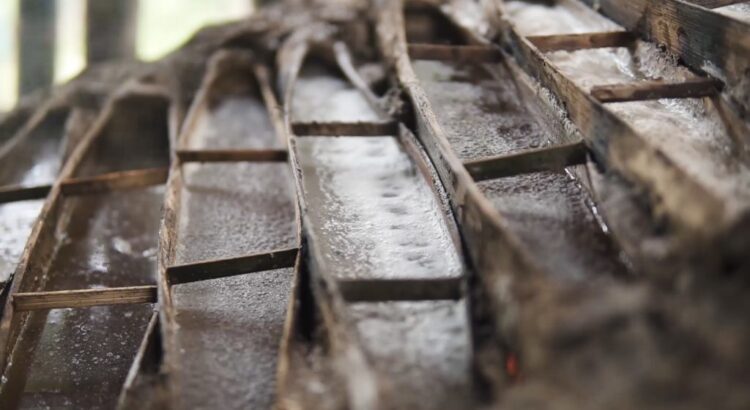
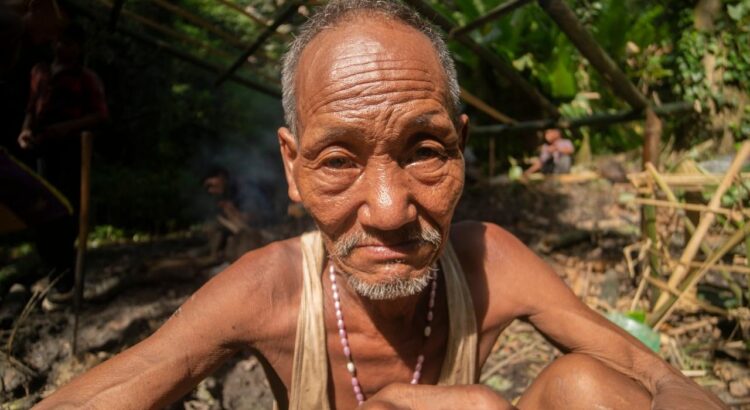
In the stunningly verdant landscapes of Arunachal Pradesh, director Abo Arangham captured a lost tradition of salt-making in the award-winning documentary The Lost Art of Seasoning, an art of ovens and salt wells. Drawn to simple stories from his hometown that are yet to be told, Abo collaborated with his friend Pongro Wangsu, who had approached him to direct the project.

Having begun his academic journey with journalism, Abo filmed The Lost Art of Seasoning while still in film school, obtaining permission for longer shoots. He says there is no one in his age group from his community who hasn't heard a folk story about salt wells from their elders as a child. Back then, there were only fragmented stories, but since childhood, he has had a burning curiosity. He found filmmaking to be a refuge through which he could express himself and reconnect with the past. Visual elements and techniques add their own ‘seasoning’ to any narrative.

Arunachal Pradesh, being at a very nascent stage of filmmaking, presented its own set of challenges, he says. Apart from the unforgiving terrain and the rainforest during the monsoon, there were also budget constraints and the difficulty of convincing people to come in front of the camera. The lack of awareness among the masses and the absence of a government support system, Abo points out, add to the challenges. Most importantly, there is also an absence of senior filmmakers from the region to speak with and look up to. Abo says that, apart from one or two people, most filmmakers in Arunachal are at the same level, all trying to help one another.

There was also difficulty in finding multiple people from the same community to act, owing to linguistic differences. In Arunachal, the nuances of language can vary even within a single tribe. Although he hasn't yet had the opportunity to work with multiple communities on a single project, Abo considers the authentic use of language crucial to storytelling.

The art of storytelling runs deep among these tribes, most of which have an oral tradition of passing down narratives through stories, proverbs and songs. Knowledge, traditions and safeguards were transmitted through these forms. Storytelling has helped their community survive through the toughest of times and will continue to do so. While he considers himself a learner, Abo is proud to take up the mantle of storyteller and continue the tradition.

Recalling a memorable moment during the filming, Abo is still in awe of the surreal experience of lighting a fire in those same ovens after generations. Until then, he had been unsure about the outcome of the project. But the first fire moved the cast and crew emotionally and rekindled their connection with their ancestors.

The best way to retain authenticity and cultural sensitivity while telling the stories of indigenous people, Abo believes, is to speak with the elders of the community. Spending time with them brings a richness to the narration, born of their own experiences or those passed down to them by their elders.

Filmmaking in Arunachal is an untapped reservoir of possibilities. The film industry has always been crucial in promoting and preserving the culture and heritage of a region. While talented people are making films and telling important stories, there are not many takers, even within Arunachal, for the state's own film productions, says Abo. YouTube remains the last available option for many upcoming filmmakers. However, there is hope. They are learning and improving with every project, and with the wealth of stories that Arunachal has to offer, it is only a matter of time before they find a wider audience.

No One Can Tell Your Story Better Than Yourself

Abo Arangham, a filmmaker from Arunachal Pradesh, ventured into his own territory for new explorations. He wanted to reveal the many layers of a tradition cradled by his own community. For that, he had to turn ‘listener’ to his own people. ‘The Lost Art of Seasoning’, his documentary film, was born. ‘The Lost Art of Seasoning’ won the Best Documentary – Jury Award Special Mention at the Indic Film Utsav 2021. He tells Indica Pictures more about his passion for storytelling on cultural, traditional and community aspects nestled in his community and state.

What prompted you to go for a visual documentation of the traditional art of salt-making in ‘The Lost Art of Seasoning’?

A small number of people have seen or have knowledge on the process of traditional salt making. Documenting it for the next generation and sharing the knowledge through a film, we felt, would be more impactful and appropriate.

The rituals associated with the salt-making process make it an arduous task, yet the villagers carried out the sacred practice for generations. What does it tell you about the ancestors in the community?

Sometimes I wonder how difficult it must have been for them to continue the process despite the continuous danger looming around salt-making – from warring villages around. It was a difficult world they lived in which I can’t even comprehend. It was their grit to survive, desire to pass on the knowledge to next generation and respect for the spirit that they could continue.

Have you shown the film to the residents of the village? How was the reaction/appreciation?

Yes and I could feel the heartwarming connection between the villagers and their ancestors. They started to discuss and narrate their own personal version of the past folk history about salt making and the importance of its preservation. I will never forget their eyes brimming with nostalgia and pride, their regards for their past when they saw the place and the process in the film for the first time.

What were your expectations from the film before you entered the village to shoot it?

Being a younger generation from the tribe, it was necessary for us to have participated and involved ourselves with the elders and learned the process ourselves. Our expectation from the film was to actually bring alive what most of us had only known in the stories.

Tell us about your inclination for storytelling and the contribution of your elders to your interest in storytelling, culture and tradition.

I am from an indigenous community, where everything is passed down from one generation to the other in the form of a story. Almost whatever I knew about my people from the past was all in fragmented (stories) I had heard as a kid from the elders. This included the process of salt- making. Wanting to know more about our people and a zeal to finish those stories had me inclined towards storytelling in the form of audio-visual mediums.

The documentary connects past and present. Amid present day life in the village, you look at the process of salt-making prevalent in the past. What does the concept of past and present mean to you and to the people in the village in the context of salt-making.

Salt pretty much controlled everything in the past. Local economy and power revolved around salt. Our previous generations are witness to salt being in the center of its wellbeing inside of deep jungle. If you are to survive and move ahead, learning about the past is a must and salt is an ingredient which shaped our past and history, will, our future.

How did village elders and other residents react when you shared with them the idea of making a film on the subject?

Their first reaction was of being scared and confused. But they were happy that someone from the younger generation had shown interest in reviving the past process of salt making. They were skeptical about the series of rituals required to perform before the process of salt-making starts as they didn’t want to upset the Queen of salt.

Learning about salt production was a lifetime opportunity for you. What does it tell you about the villagers’ belief in tradition and their history?

Villagers still have deep-rooted connection and belief in their tradition and history, which is a positive sign. The fact that they were reluctant about pre-process rituals which might offend the Queen of salt itself is a proof of how much they still believe and highly regard their history and tradition. Willingness of the older generation to pass on whatever they knew to us young people was quite encouraging and praiseworthy.

You met one of the last salt makers left in the village. Tell us about the resolve of the villagers in keeping a tradition alive.

People are keen to continue the process of salt making again occasionally at least. Most of them thought it was impossible to start again but since it succeeded, it has ignited the flame of interest in looking back at their past again.

In the film, the village elders tell your team that younger generations must get involved in reviving the art. How can younger generations reciprocate hope and appreciation?

The only way younger generation can reciprocate the hope and appreciation is by continuing the process of salt making and passing it on to the next generation. While not forgetting the rituals, prayers for offerings, to the spirit of Salt Queen. Creating awareness among the younger generation regarding the salt-making process and its importance is also necessary.

What were the difficulties you faced in shooting the film?

Apart from the technical difficulties, problems were many to count. Villagers being superstitious regarding salt making which might offend the Salt Queen (folklore), to what if they made a mistake in the pre-process rituals necessary to start salt making. Some even started talking of us being there only to start a salt producing factory for personal gains. Salt well was located at a difficult distance – enough to break our will. We had to cross a few hills covered in dense forest every day to and fro from the village to salt well. Shooting in the month of monsoon in dense forest made it all the way more challenging and it was a learning experience. One unique challenge was to start and go on with the process of salt making with the help of fragmented memories elders had – memories of more than 30 – 35 years. Being from Arunachal, where film-making is a new concept, one doesn’t get support from a few quarters. So, it was always going to be a tough and arduous journey.

Your team has stood out as a patient listener; it collected memories of the villagers and conducted interviews. What were the challenges in putting together so much material within the time limit?

Compiling every important detail while keeping in mind its coherent story was a challenge since you want the viewers to dive in the moment along with the film. We wanted our viewers to have the same experience we had while shooting and making the film. Duration of the film is something which we did not decide before the postproduction stage. Idea was to keep it as short as possible at the same time not missing any single connecting dots of the salt making process.

What other aspects of culture in the Northeast interest you in filmmaking?

I would definitely want to expand my research through films mostly related to my tribe and Arunachal in particular. It is a huge task, since most of the tribes don’t have any written history for any sort of reference. Stories heard from the elders are first priority because there is vast knowledge hidden in those simple stories which need to be shared. I hope I can contribute in any way possible to help preserve our forgotten stories through films.

Tell us about the stories and films that you like and appreciate.

The kinds of films which bring out the best in us and our environment that we are living in, which tell us the story about the past and the present from faraway lands; which ignite our eagerness to know more about this beautiful and diverse world.

How did showcasing the film at the Indic Film Utsav help you and your team?

Getting screenings at film festivals is always welcome and morale-boosting for young filmmakers like us. Getting recognition from the organizers was a cherry on the top. Glad that the Indic Film Utsav gave us a stage to show our humble lifestyle.

What are you currently working on?

I am currently working on more of such content from the far-flung corners of our indigenous tribal culture to be preserved and available for the world to see.

What are the advantages of telling stories of your own region via films?

One gets to learn and see many new things. One feels a sense of responsibility towards it. The whole process becomes a learning experience in itself. And this is our own story. No one can tell your story better than yourself.