Being Mindful of What and How We Eat Will Decide How Mother Earth Accomodates Us: Chef Srijith Gopinathan

Srijith Gopinathan, Executive Chef of San Francisco’s Campton Place is only one of two Indian chefs to retain his two Michelin stars and the only one in the US. His imaginative Cal-Indian cuisine twins the abundance of Californian produce with the spices and recipes of India.

The Michelin Guide writes about the Taj group’s Campton Place and Srijith: “The breadth and complexity of Indian cuisine gets its due at this tasteful retreat, tucked into a posh hotel just steps from the luxury boutiques of Union Square. Attired in a soft palette of cream and white, with a striking central glass light fixture, it's a smooth showcase for the freewheeling, colourful food from Chef Srijith Gopinathan. Diners have a choice of vegetarian or omnivorous dishes from the six-course tasting - with an extravagant add-on of white truffle naan for the high rollers in the room. Either way, you’ll be sent on a riotous journey through different textures, flavours and temperatures, along with some truly whimsical plating.”

Srijith with Indic Academy Founder Hari Kiran Vadlamani at Campton Place

He has memories as a six year old, of helping his grandmother cook lentils served with rice to farmers working in their plantations. His first dish created all on his own as a teen was ‘caramel custard’ made not with the usual vanilla but with cardamom.

At Campton place, he has added India’s chaat delicacies to his Michelin menu in the  Spice Route section. He has recreated the dahi puri with food friendly pots, where the yogurt is replaced with yogurt foam, mint chutney with mint ice and tamarind with tamarind gel. Both purists and as well as contemporary foodies have come away singing its praise.

This May, Srijith along with entrepreneur Ayesha Thapar have come together to create Ettan – Cal-Indian cuisine. Ettan which means ‘breath’ in Sanskrit, hopes to “redefine how people experience Indian cuisine; creating a unique confluence of the Indian palette with California fresh ingredients. Our aim is to encourage people to experience the richness and depth of Indian flavours in a vibrant and healthy manner – marrying Eastern sensibilities with Western expression, presented through an international design aesthetic.” Srijith continues with the Taj alongside.

In this interview with CSP Srijith talks about the India food route and more.

How have perceptions of Indian food in the US changed over the last decade, with greater globalisation, more media exposure and more investments in the industry.

In my opinion, last 10 years have been crucial / important time for Indian food overall in US. Indian cuisine is now slowly moving from extreme left (cheap bowl of curry) to the middle of scale closer to mainstream but certainly not mainstream with the likes of Italian, Greek or Californian. Moving away from mom/pop Indian food shops to well thought out restaurants space with educated/travelled Indian chefs, passionate and well informed investors have certainly made things a bit more fluid. Social media certainly is the final cherry on the icing.

The last many years of hard work/glamour has certainly made Indian food a bit more than a cuisine but a culture of enjoying the goodness/ wellness of it.

Has Indian food managed to shrug off the 'ethnic food' tag and become more universally accepted? What needs to be done to avoid this kind of categorization?

Like I mentioned in my first answer, it has been moving towards the middle of the scale but not there yet. This is also because of the uniqueness, complexity and richness of our cuisine. Subcontinent cuisines don't share any resemblance to any advanced nations’ - European or American - cuisines and hence it takes a bit of education to familiarise.

The best way to combat this would be to educate the west with less extreme dishes with regard to spices and chillies which seem to intimidate a good majority. The newer generation seem to comprehend this very quickly, which is a good sign.

In your own personal journey, what are the influences that have shaped your journey to creating an oeuvre that is distinctly Indian and yet having a universal appeal?

My personal story does have something to do with my early exposure to international cuisine along with my being brought up with Indian food as a child. I was a bit of a curious kid even before the days of Google where I believed there was some kind of a synergy in bringing in ideas from different cuisines than from just one. However I do enjoy Indian food as it is since it is one of most spectacular cuisines in the world.

You mention in one of your interviews that it was at the Hyde Park Culinary Institute that you learnt the 'fancier' aspects of food. Could you share how you incorporated this into Indian food?

That was a very short time but yes traveling to New York, time at Hyde Park, dining out and of course networking with the local chef’s fraternity in my early 20s did open my eyes a bit more than it would have in my home town. By fancy I refer to the finer aspects of dining, which has always been emphasized better and very well in the West and was accessible to the common man unlike back home THEN. That certainly translated in to knowledge. I thought those learnings did come handy later in my life when I got back to cook in the US.

The world is getting more concerned now about not just gastronomy but also about food culture and production. Where is the food that is served coming from, about ethical practices, etc. Has that been something you have thought about since you use local ingredients?

Being mindful/careful of what we consume and how we consume is going to be the deciding factor to how much Mother Earth will home us here in this paradise. So that is not a choice but an absolutely imperative factor to prevent the human race from being homeless. Using local food is an absolute necessity and we in the State of California have been in the forefront conducting ourselves with those values as well as advocating the same to the rest of the world. Gastronomy can be created from something as simple as an ‘apple peel’ provided it is a tasty one.

How has Indian food been impacted by exposure to the West

We are not a very gentle, straight forward cuisine to mess around with. I have always believed discipline in cooking is something we could borrow from the western world to avoid ambiguity in recipes. This will make it easier to pass on these rich skills sets to following generation.

Do you think that there are enough skilled people in the industry who are grounded in Indian cooking and food culture in the US?

NO is the simple answer. Harsher immigration policy across the world has only added to the size of the dent. Again, Training locals is harder since it is harder to find people who are interested in learning this complex art in most western local job markets.

How important are international awards and recognitions for you to create and enhance the Indian brand?

Extremely important. Awards and accolades are the warranty and guarantee in our restaurant industry.

How do you think the current crisis is going to impact the hotel industry?

This is unprecedented and unfortunate. I feel crisis could change things in two timescales – short term and long term.

The short term could be harsher and extreme by changes mostly influenced by fear as well as pressure to abide by local/state compliances etc. To combat this, we can have a spread out and well-spaced table set up, a masked server taking orders and serving food/beverages, disposable menus, regulated movements inside the restaurant, in some cases even disposable dining ware. You may have to even have less or no conversations with our bartender while sitting on your bar stool. Long term changes could be behavioural changes like further emphasizing on each other’s space in public areas and the like. All this could go back to normal with vaccines in place. Fortunately as human beings our memories are pretty short and that could affect us both ways.
Adya Kumar: Anarkalis, Hindi & Pottery

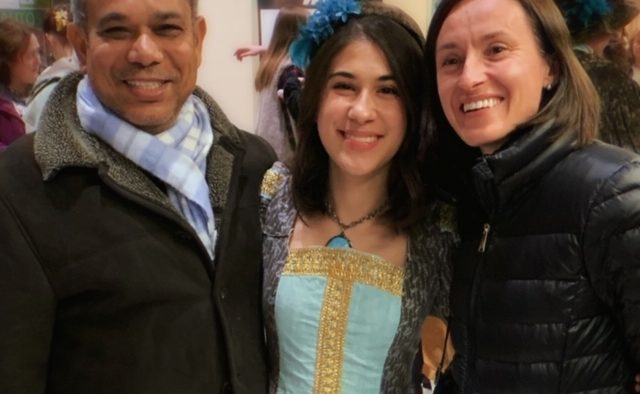
Adya Kumar is all set to begin a Bachelor of Fine Arts (B.F.A) course at the AMDA College and Conservatory of the Performing Arts next fall. Raised in a multi-cultural family, her father Avatans Kumar is an Indian and mother Agnieszka is Polish, she talks to CSP about the influence of both cultures in her growing up years.

Adya speaks to her paternal grandparents, who reside in Delhi with her uncle, in Hindi. Her father’s childhood years were spent in Patna, before he moved to the US.

Avatans Kumar is an important member of Indic Academy, which seeks to promote India’s civilizational values across the world. He spearheads IA’s US activities. He met his wife Agnieszka at the University of Illinois, where he was an international student and a teacher of Hindi. She had already been residing in the US for 10 years by then. Both of them were part-timing on a campus during the summer for a catering company when they became friends.

In this interview Adya talks about her Indian and Polish roots.

What is your interest in the performing arts? How has your parentage influenced the kind of art you have learnt? How has learning these art forms helped to understand 'culture' better....be it Indian, Polish or American?

I’m an actor, but I also sing and play instruments. I’ve been taking voice lessons (western classical) since I was about 13, and that was also around the time I was in my first full length musical. I did musicals with a community theater for about two years, and then once I was in high school I did both musicals and plays. And now I’ll be going to college for acting! I’ve loved performing and putting on shows ever since I was really little, and I think my parents saw that and put me in theater camps and music lessons. They also did a lot to expose me to Indian theater as well, which I really apprieciate. I took Kathak lessons for a time when I was 7 or 8, and my favourite memories of Diwali would be when we went and watched the Ramayana plays at the mandir.

Having a basic understanding of music theory from school has not only made me a better musician, but I can now appreciate all the things in Indian music that’s unique.

Does growing up in America make you and other children from multicultural families more aware and curious of your roots?

I’m sure it does since I’m not around all the practices and nuances of my cultures all the time, but my parents have done a great job of exposing me to those as well. I think I’m also just naturally curious to learn more anyway so it wouldn’t have made a difference where I grew up.

How often do you visit the country of birth of your parents?

I haven’t been to Poland in a couple of years now, but we visit India approximately every other year. I talk to my grandparents and the rest of my family via FaceTime and WhatsApp.

Are there any favourite dishes in your home which reflect either Indian or Polish traditional cuisine? Do your parents much the cuisine by interchanging tastes?

For sure! My dad does most of the cooking and he makes a lot of really good authentic Indian food. Christmas is the time for lots of traditional Polish food, and my grandma always supplies us with good soups and polish coleslaw (sorówka). My mom’s cooking style is a bit more… experimental let’s say. It’s a hit or miss with what she makes.

Since your dad is with Indic have his views and interests influenced you in any way?

Yes definitely! I never thought I would ever become so knowledgeable about Indian politics, but here I am? Seriously though, my dad’s work with Indic Academy and his own research and articles have really changed the way I view history and made me even prouder to be Indian.

What are some of the typical things in your home, in terms of décor, you would identify as being Indian or Polish?

Yeah, we definitely have traditional Indian art hanging on the walls and Polish pottery scattered around.

Do you like to wear Indian clothes and jewellery?

I do! Last year for prom I wore an Anarkali. I obviously can’t wear Indian clothes all the time since the weather in Illinois is so crazy, but I always wear my Indian clothes when I go to India. I try to incorporate little bits and pieces into my everyday outfits, too.

Do you watch Indian films? Do you have any particular favourites?

My family doesn’t really follow Bollywood stuff as much anymore, but one movie that sticks out to me is Bol Bacchan. It was really funny!

What are the advantages of being raised in a multicultural family in terms of exposure to two beautiful traditions?

One thing I’m really proud of and grateful for is the fact that I have access to the eastern and western philosophies about life and religion in my own home! I think as a result, I feel a lot more well-rounded in the way I view the world around me and the way I look at different issues.

Does your school celebrate diversity? Are there special days to mark this?

No, my school does not have any special days and I’m honestly glad that it doesn’t. It would feel too forced and clichéd to me! I’ve been blessed to have grown up in an overall very welcoming and inclusive town.

Bharat Bala on Cultural Memory

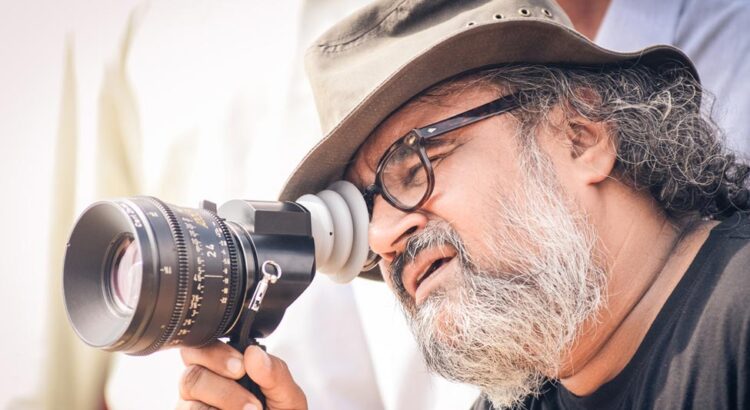
Film producer Bharat Bala Ganapathy has been spending the last three months travelling across India, despite all odds, to capture India in lockdown and document on film what the country has gone through.

“How do we imagine India without its people? Where had they gone? From Benaras onwards, which has always seen hundreds of millions of people, so many doors shut on us, saying no permission. But so many others opened. If your idea has merit, if you have the deep desire, nothing can stop you.”

Bharatbala has hundreds of hours and 15 terabytes of footage, with some amazing content of India in lockdown. “It was important to record it so that generations to come can see what we, as a country, went through.”

INDICA Founder Hari Kiran Vadlamani asked Bhara Bala if this documentation included coverage of the migrant population’s lives as they moved out of towns, and if there was a special message about the problems they faced.

In response, Bharatbala said that the entire project was about telling the human story. “It is about what we have experienced as people, anybody. The migrant story is a part of the story. We will tell a complete story; we don’t want to be swayed by emotions. It is about how humanity came together. It is a painful time, but how Indians withstood the pain, what is the inner resilience, what is the strength of our people… even if they are in power, what is their resilience… that is what is going to shape the story.”

Bharatbala spoke to entrepreneur and talk show host Hari Nair today on the role of films in creating impact and influencing perceptions about India, both within the country and abroad.

Three years ago, when the world opened up to content online, through both live streaming and recorded content, Bharatbala decided to use the skills and experience gained over three years in filmmaking to create a ‘legacy project’. “India is a big, big project which requires immersion. When you go to the West, you see museums becoming a hub of learning for experiencing the civilisation and culture of the world. In India, because there is so much of it, we have not been able to package it for younger audiences.”

Bharatbala’s mega Virtual Bharat project of 1,000 films was an endeavour to experience Bharat virtually. The drivers of the project were: “Each of the episodes would be about uncovering untold stories of India, making each of the films less than 10 minutes so that even if it is not of interest, viewers may be amenable to watching it, and ensuring consistency so that there is continuity in quality. Each film should be a gem; otherwise, we will not put it out.”

Virtual Bharat is a stupendous success because it brings great filmmaking and contemporary cinematic techniques to an immersive non-fiction film experience. Eighty films have been made, and nine films have been released so far. Every film has been made in the original language of the state being filmed.

Cutting-edge filmmaking is evident, for instance, in Taalam, on the boatmen of Kerala. “What was special to us about that film was that here are the boatmen of Kerala who are not athletes or sportsmen; they are farmers, postmen, teachers, everyday people. But when they come and sit in the boat, there is a rhythm that has been set. The only instruction being… follow the rhythm and you will win the race,” says Bharatbala.

This could well be the theme for a diverse nation. “If we follow the rhythm as a nation, the nation is winning. This was the messaging, but not overtly. Wherever possible, if it can bring about a deeper emotional connect through messaging, we do that,” he says.

Bharat Bala has brought youngsters into the project. “I was giving youngsters the enthusiasm and the emotion required to complete the project in a certain way. The goal is to do these 1,000 films. I should have 150 cutting-edge, talented youngsters with me – editors, cinematographers, sound engineers, music composers and researchers.”

On his thought process, Bharat Bala says there have to be conversations about culture and that if these can be brought through creativity, they could connect with a much bigger and deeper audience. “Creativity is all about freedom, about imagination. How can you preserve the story, not change it?”

In terms of soft power, Bharat Bala stressed that there first has to be a domestic audience for soft power. “When the domestic audience is captured, they will resonate it around the world. The day we will be a soft power is when India embraces its culture. The power has to be felt here, from Kanyakumari to Srinagar. When the people of this country have embraced diversity and see the power of this culture, everybody will be at your doorstep. When India talks to each other, when we start talking to each other as one, then our soft power will really fly. Our literature, our poetry, our arts will go deep into people. Conversations will get more robust.”