The Smart Way Of Telling Indic Stories

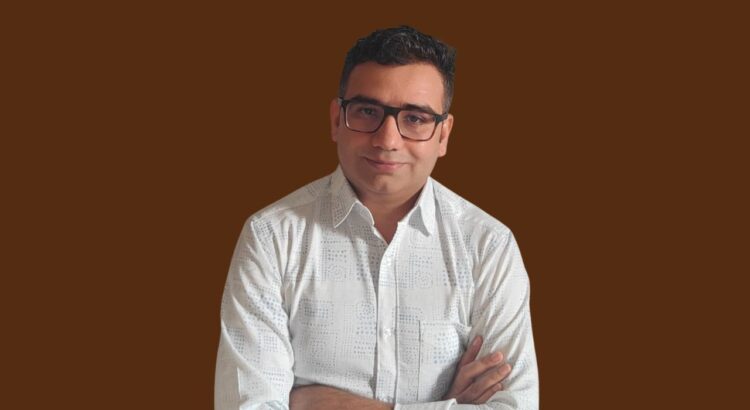
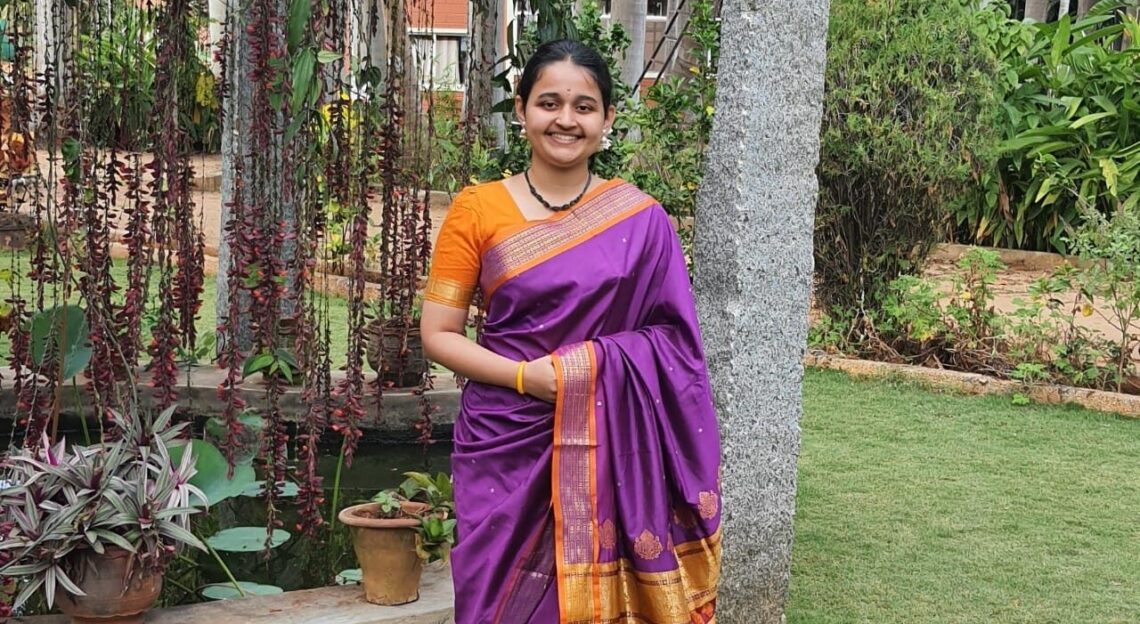
Two IITian storytellers from Mumbai have created Sutradar, to bring to young children the rich tapestry of Indian stories. With smartphones being the windows to the world to the current generation Gaurav Tiwari and and Satish Meena embarked on a unique journey in 2020 to bring the timeless tales of gods, goddesses, and epic adventures into the digital age.

Inspired by the age-old stories that had been passed down through generations, they envisioned a way to make these myths not only accessible but also interactive in the palm of your hand.

Armed with a deep love for their cultural heritage and a curiosity for the capabilities of technology, these modern-day bards set out to weave the threads of mythology into the digital fabric of smartphones. Their mission to create a platform where users could not only read or listen to ancient stories told through short captivating videos.

As they delved into the vast treasure trove of Indian mythology, they discovered a wealth of characters, each with their own tales of valor, love, and wisdom. The stories by themselves are eternally enchanting but there are no longer extended family to tell them, and no programmes in India that could compare to the films made in the West.

With a blend of creativity and technological prowess, the Gaurav and Satish began to craft an immersive experience that transcended the boundaries of time.  A new chapter in the saga of Indian mythology has unfolded—one written not in ink on parchment, but in pixels on smartphones. The journey had just begun, and the storytellers are determined to weave a tapestry that honorsthe past while embracing the future.

In this interview Gaurav talks about the journey of Sutradar and its role in preserving our stories.

Do you think the reason behind less familiarity with Indian stories and IP is because of the lag in adapting these to present day media (such as apps, Instagram reels, etc)? Did the pandemic make this inadequacy more evident? 

Not only in Instagram reels but also in other modern day media, Indian stories have not been explored much even in traditional media like TV and Cinema. Whatever efforts have been made in the past in this direction have been limited to one story, one medium, rather than making an organized effort into creating a self-sustaining ecosystem around them.

Pandemic pushed people indoors and made them more heavily dependent on screens and that certainly exposed the lack of content based on Indian culture in modern media channels as well.

What are your plans to expand into video games with Indian roots? Is there a larger market for those games in urban audiences than physical board games?

Video games require significant commitment in terms of time and money. While we have shortlisted some storylines for potential video game adaptations, we will wait for the right opportunity to delve into them. There might be a larger market for video/mobile games than board games in terms of reach, however the opportunity to make money is very limited. Only real money games like online gambling and fantasy sports are running sustainable business, others are struggling.

However we believe that this situation will change in the future and we will be prepared for it when that happens considering we would be ready with a lot of ready assets to be used in these games.

What role does monetisation of a country or culture's IP play in soft power?

Very significant. We believe true soft power means the other side acknowledges, understands and appreciates your culture. This can only be done through powerful stories. We do not lack stories. What we lack is a significant effort in creating and promoting high quality content and products around them. My kids are excited about Christmas or Halloween because they have consumed entertaining content around these festivals. This becomes the initiation point for them to look towards western culture. We need to create content and design activities around our festivals to engage the younger generation.

Are there plans to expand your storytelling to include stories and legends of tribal communities and keep alive stories only told in specific regions of India?

We do want to tell the stories from all across the country. For us the purpose of this is two-fold. One, it expands the scope and reach and secondly, it also helps create awareness about various cultures and brings a sense of unity in diversity. A very fine example of this is the recent success of the Kannada film Kantara. A movie based on the cultural tradition of a very specific part of the country which resonated with almost the entire nation.

How does one go about in these modern times making the stories of the epic accessible and relevant in terms of language and content? Does this run the risk of being unfaithful to the original or taking liberties with ancient traditions?

When we were young, the device we used to consume content was called an "idiot box", nowadays they are "smart tv" or "smart phone". This means the style of storytelling that worked for idiot box will not work for smart TVs/phones. Our stories have seen this evolution across every generation without distorting the story or changing the message – the printing press era gave us the Gita Press, the comic book era was dominated by Amar Chitra Katha, the audio cassette era saw the rise of T-series and Sagar Arts gave us the most successful show of the TV era - based on the Ramayana. We are trying to do the same for the Smart Device era.

As long as we research well and take our role seriously with our heart in the right place we should be able to do justice to the original stories while adopting them for the modern mediums.

Do you intend to broaden the target audience into a more global one? What changes would you implement in that case and how would positive global reviews impact the popularity in the Indian market?

We do. This again goes back to your question about soft power. We can achieve global soft power in the true sense only by taking these stories global. The Internet has made taking these stories global easier than it was a decade ago and even the creation/adoption process will become easier with the advancement in generative AI. We need to use modern tools to create and distribute stories to the modern audience.  Unfortunately despite many decades after independence we still seek global validation for most of the things we do. Keeping that in mind positive global reviews will certainly help in gaining popularity in the Indian market as well.

I grew up in Kanpur, which is famous for its leather goods. I once bought an expensive pair of shoes of a popular foreign brand only to later discover that they were manufactured in Kanpur. We don't appreciate what is easily accessible to us and do not want to spend money on it. Unfortunate but true.

Over thousands of years, many versions of the Indian epics and stories have diverged from the original and been retold. Is there such a thing as a right or wrong version, and how do you approach this issue in your series Myth Busters?

I usually avoid this debate considering there is no way to establish authenticity with certainty. However careful and repeated reading of multiple versions gives us an idea and you become adept at spotting inconsistencies. The approach we have adopted at Sutradhar is to refer to unabridged versions of the text available through reputed publications before starting the process of developing the story.

Regarding myths, I categorize them under two categories - harmful and harmless. A harmful myth is one which is carefully created as propagated with the intent to distort the original messaging and put our ancient culture in bad light. An example of this would be the myth created around Eklavya that he was denied education because of his low caste.

An example of a harmless myth would be the myth that Shrikrishna gave Akshaya Patra to Yudhishthira. While it is not true, in reality it was Suryadeva, however this myth does not distort the messaging of the epic or put it in a wrong light.

We are more aggressive towards busting the harmful myths.

With a great oral tradition should we look at creating content not just from our great texts but also through wisdom transferred orally? Are you doing this?

We intend to do that when we reach a more mature stage as an organization. However we have explored this at a minuscule scale for our Temple Tales series considering the stories around many temples are based on oral traditions or "Sthal puranas".

Come Hear The Hero’s Journey

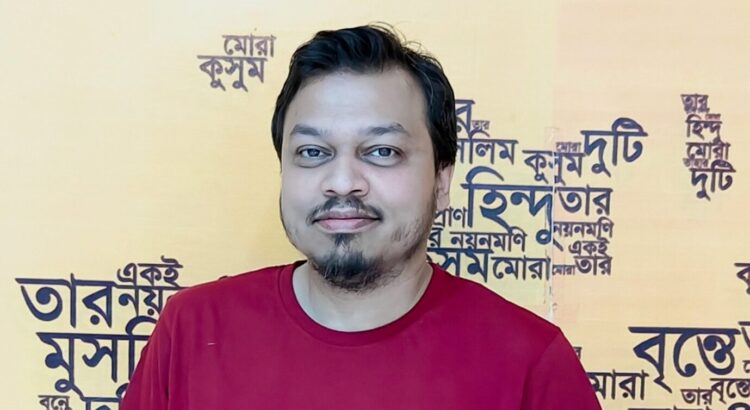
Author and artist Ratul Chakraborty holds in his hand and heart the love of a civilisation that has in balance everything that is meaningful, profound and sustainable. It is fortunate that he has decided to dedicate his time fully to the documenting of all that is precious about Bharat, quitting his extremely successful job as a video game designer. Through his writing, his pictures and his thoughts we get a glimpse of how he is going about his own exploration of this ancient culture, but also through his modern sensibilities sharing it with his audiences to much acclaim.

What was your childhood like for you to have such diverse interests as gaming and Indian cultural history?

I come from a typical middle class ‘Bangaal’ (that’s the word we Bengalis use for those of us who are originally from present day Bangladesh) family. Our family got uprooted by jehadis back during the partition days and lost almost everything they possessed. My grandparents underwent unimaginable hardships as they worked tirelessly to rebuild their lives from scratch as well as support our extended family. Of course, being really old school, they hardly ever spoke about those days, especially in front of me. I came to know about our background once I grew up a bit- mainly from my parents.

My love for stories comes from my grandmother. As a kid, every night before I went to sleep, I would pester her to tell me a new one. This was my magical gateway to the world of folktales and itihasa- which morphed into an insatiable appetite for reading as I grew up. My favourite time of the year was the Kolkata Book Fair; I would scrounge and save up every bit of pocket money for months preceding the event so that I could splurge on books!

My love for gaming began when I first used a pc at my friend’s place- I remember playing a 2D side scrolling martial arts game called ‘Karateka’ and being absolutely blown away. I got my own pc around three years later, and my great love for the medium of video games truly begun as I applied my programming skills to make small games or modify existing ones. Even at that age, I knew this was what I wanted to do in life!

Are the two exclusive in the kind of creativity involved, which made you leave the world of video gaming at your age and take up writing full time? Can we see an interplay of game design and emotion in your future work?

I believe any high-quality creative process involves an intense period of churn- an intellectual Manthan so as to speak, which allows us to finally reach clarity. This churn is both internal to the creative mind as well as a best practice for top level teams regardless of industry and discipline. Ultimately, a big part of the satisfaction from what we term today as the “Creative Process” comes from our participation in this Manthan and the insights we gain during and after the process. In that regard, both video game making as well as writing are supremely satisfying from a creative perspective.

Secondly, there are certain creative concepts which can be very effectively applied in both fields. For example, I adapted the well-known Hero’s Journey narrative structure to the field of game design to define gameplay and player progression systems. The same goes for applying concepts like Rasa theory- in the end it boils down to finding a way to generate certain emotions within the reader or player!

However, there are essential differences- video games are an interactive medium first and foremost, which are built by multi-disciplinary teams of specialists. The dynamics of creation are totally unique- highly dependent on data points, business models, evolving tech, market flux, team capacity etc. On the other hand, writing a book is a lot more personal- the final manuscript (regardless of its sales) is a true reflection of your own creative capacity and mastery of the craft of writing- there is no place to hide!

In my case, I am still someone who loves to play video games- the decision to move on from game making is as much about exploring myself as anything else. I myself do not know my own destination, and my only hope is that I am as true to myself as possible on this journey, no matter the shores it takes me to.

Do you like the short story format? How long did it take for you to write your first collection of stories, Sutradhar? Were the ideas from your experiences or reading or both?

I began this journey not as an author, but as a storyteller. Each of the stories in the book started out flashes of inspiration that I had quickly jotted down. In true bardic tradition, I began to expand and embellish these at every retelling, and soon the scribbles began to resemble stories! When I thought of writing Sutradhar, I was clear from the very beginning that it was not going to be a straight retelling of historical incidents. My target was to create dramatic original content set in specific historical periods. So, I decided to use these existing notes as a base for the book.

Coming from a video game background, I looked at each of these stories as a self-contained prototype, which can then be transferred individually or collectively to other media platforms and formats also. Another consideration was purely practical – I was not getting enough time at a stretch to write, and felt that I could tackle smaller stories more easily than attempting a full-length novel.

The process of writing Sutradhar was the most challenging yet fulfilling episode of my life. I had been writing Sutradhar in snatches for the best part of a decade, suffering through year-long writer’s blocks and periodic loss of inspiration. There were often times where I felt that it was a futile, never-ending pursuit. But then I would read something or see something on social media that would cause an emotional upheaval, and I would write furiously for a week or so before reverting to my daily grind. I committed so many of the basic mistakes that writing coaches warn against – not making writing a habit, endlessly rewriting the same sentences, not having any idea where the plot was going most of the time… all of it guaranteed to make one lose his mind in frustration.

However, the book had taken on a life of its own – it kept gnawing at the back of my mind until I decided to take a break from my job, and committed myself 100% to finishing it. I vowed not to pick up a video game controller until I got to the end of the line, and after two months, I had the first draft of the manuscript in my hands! The joy at that moment was indescribable – I began to message friends and family with the widest smile I remember having since my marriage. That moment of joy sustained me through the multiple cycles of rewrites that I went through, which otherwise would have felt very painful indeed.

Structurally, each story in Sutradhar has three layers – the events in the story itself, the grand theme that underpins those events, and finally what I call the Bharatvarsha layer – the intangible quality which infuses the very being of our Rashtra that I hope to have succeeded in presenting to my readers.

It has been my good fortune to draw inspiration from a plethora of sources, from the books that I have read to the games that I have played to obscure nuggets of information found while trawling on the web. I still get goosebumps when I recall Abanindranath Thakur’s evocative portrayal of Bappa Rawal’s adventures in one of the chapters of Raj Kahini- the first book I really fell in love with as a kid. I started to write from a young age itself, and still remember the joy when my first story got published in our school magazine – and that story incidentally holds the kernel to the final story of Sutradhar, The Path of a Coward! As I grew up, my cultural horizons also expanded – from Japanese Manga like Buddha and Lone Wolf and Cub, to Russian literature like Dead Souls and The Greatcoat, to the great Indian works of Bankim Chandra Chattopadhyay, Sharadindu Bandopadhyay and Kalki Krishnamurthy.

In the Ramayana, Valmiki says there is a Dharma of the Writer.  One has to write only what is true. In a creative work weaving myth and history, what is the civilisational truth that you seek to convey? As you embark into a full-time writing career, what future do you see for fiction writers from India who value a Sanatana Dharma history?

In my opinion, the fundamental truth about our civilization is that we are a tribe of seekers.The pursuit of truth through our Sadhana is the essence of the Hindu way of life.

The barrier to this Sadhana in the Kaliyuga is Maya- the fundamental untruth that casts an illusion on everything that we come across, distorting our perception of reality itself. This distorted understanding of reality then manifests as Tamas which shrouds both the society and the individual, making us inert and unresponsive- dead before death. Therefore, I believe that the greatest threat to Hindu civilization is the Maya which stops us from the pursuit of truth.

The question then becomes, how does Maya operate? For me,it is first and foremost a social disease that hijacks our mind and infects every institution in order to stop them from performing the common good, if not acting against it outright. There are three broad layers in which this happens- education, entertainment and information. These three form the virtuous triangle that supports any civil society. The ability to hijack and distort these institutions means having the power to mentally dominate the entire population.

Education is how we pass on the right values and ethics to our next generation. Entertainment is how we tell stories that imprint those values in the social fabric of a civilization in the form of culture. Information is how we see those values succeed in real time, and learn from the instances when it doesn't. Now what happens when we don't pass on the right values? When our stories don't celebrate who we are? When the right information is hidden away from us? We become ignorant- knowing neither the world, nor ourselves. The result? A spineless, self-loathing, deracinated generation, ripe for manipulation and slavery, living in an Adharmik society where MatsyaNyaya- The Law of the Fish, reigns supreme.

This is the challenge in front of any author (or broadly, creator). Our dharma is to be fearless in the pursuit of truth, and hammer away at the mental shackles of Maya that continues to colonise our minds collectively and individually. The seeker necessarily pursues the truth alone, submerged in his lonely Sadhana- but shattering the walls of illusion to unlock the path to truth can and must be a collective social project, like building the Rama Setu.

However, just like the Rama Setu episode, it is not enough to tame the sea. As authors it is our duty and responsibility to explore all facets of the Srishti, Sthiti and Pralaya cycle which is the beating heart of all aspects of creation. It is not enough to demolish the distortion and untruth of Maya; without an uplifting and aspirational alternative vision all it would lead to is cynicism and confusion. Thus, we all must become bards singing the raag of the “Great Bharatiya Dream”, and use our craft and skills to share that glorious vision to all our readers.

In the end, I echo the sentiment of the unknown Karsevak- I aspire nothing more than to be a monkey of the vaanar sena.

You mention in a tweet that you are listening to Beethoven’s 9th Symphony through a Cayin RU7 powering an Audeze LCD X. Technology has changed our experience of music.  Would you say the same with reading and writing?

Technology is the interface through which we access the world; it is not just music, not just reading, not just writing- each and every experience of the human condition is coloured by the technological zeitgeist. Just like every other aspectof our universe, the technological space evolves with its own momentum. That does not mean that the evolution is good or bad, but that it evolves and will continue to evolve whether we like it or not. In the same vein, the flipside to technological evolution is technological extinction aka obsolescence.

What we are seeing today is this evolution/extinction cycle is happening at an unprecedented speed never before seen in human history. The trap here is if we focus too much on the technology, then we lose sight of the fundamental- the experiences that matter to us. This leads to a sense of constant dissatisfaction, as the market continues to evolve and we are bombarded with advertisements about how the “new” product is so much better than last year’s version. This is of course by design, since a consumer market driven society is dependent upon constant purchases from the population to maintain the unstable equilibrium between economic growth, inflation and employment.

I remember an interesting incident- someone had asked me for a recommendation for buying a new headphone. I had told him that his current pair was decent enough, instead he should figure out a way to find more time to actually listen to music. That was definitely not the answer he was looking for though, for the subconscious objective was not the experience of listening to music, but the chase of a dopamine high from the feeling of power when you pay for and acquire a new gadget. My own perspective has always been to centre myself around the experience, and then use technology to streamline it. For example, I absolutely adore the Kindle, because it allows me to read anywhere in the most comfortable way possible- like in a dark room at night!

Animals are a very important aspect of Indian writing and culture.  In the modern world, the urban human doesn't connect much to them. Except those who have pets. Is there something we are missing when we ignore the animal world?

The concept of interconnectedness of life is one of my most cherished learnings from Hindu dharma. My story “A Mirror for the Ants” from Sutradhar is essentially based around this fundamental truth. The more I read, the more I realize the sheer magnificence of the intricate civilizational design that unified ALL life, seen and unseen, into the lattice we call Bharat Varsha. If we open the map of Akhand Bharat, and superimpose all the Shaktipeethas and Jyotirlingas and the Dhams and the Teerthas on it, the sacred design will become clear to us instantly. Each region is its own ecological entity, governed by the presiding deity and guarded by a kshetrapal, following the rhythms of the ritual calendar which mirrored the natural one, striving to maintain balance between economic activity and regeneration of natural resources- all of them connected by threads of Dharma and sacred pathways for Yatras that created the cultural unity that survives in some form even today after thousand years of barbaric assaults. This is a glorious vision, though one which is completely at odds with our current reality where we chase the chimera of eternal growth while paying lip service to sustainability.

In fact, I would say that the difference between animal world and human world is an artificial one from a Hindu perspective- for us, we either live in a world where all life flourishes in harmony, or we live in a world bereft of balance. The greatest example of this is possibly the Ramayana- even when Shri Rama is living in the jungle, he is threatened not by the wild animals, but by Rakhshasas hell bent on bringing disorder and chaos. Ultimately, it is with the help of the non-humans that Shri Rama is able to rescue Ma Sita and defeat Ravana, and restore harmony in the world, heralding the golden age we call Rama Rajya. Is there any other culture that expresses such a glorious and profound commitment to the interdependency of life? As one of my favourite verses from the Upanishads go,

ईशावास्यमिदंसर्वंयत्किञ्चजगत्यांजगत्‌।

Your stories have a connection with places. You have taken pictures on the go… how do you capture stories through your frames?

I love photography because it touches three things I absolutely love- exploring the technology of the camera/lenses, mastering the technique of capturing different types of shots and most importantly, finding stories worth telling. Today we live in a world where photographs, by their ubiquity, have become a part of collective cultural lacunae- vast amounts of data that are so transient that they barely register on our minds as we scroll past them on our tiny screens. As a creator, you want your work to reach as many people as possible- but what does reach actually mean in today's indifferent world? Does it mean the algorithm puts your image in the maximum number of scrolling screens as possible? Does it mean likes and shares? Does it mean that only a handful of people who really care see it? The question boils down to that torturous consideration- what’s the point of doing all this?

It feels amazing to imagine that I am able to take a photograph so powerful that it will make someone stop scrolling. But that is neither something one can plan for, nor is it something that makes me lug around a heavy camera kit on the streets. No. My purpose is entirely a lot more... selfish. Photography for me is an extremely personal activity. It is something which makes me feel like an explorer, a scientist and an author at the same time. Looking at a scene, thinking of a shot, looking at a face and KNOWING that I NEED to capture a portrait- these are the things that matter. That is why I do it. The process and the experience which leads to the final picture - in the end, in my opinion that's where one can find lasting satisfaction.

Every Hindu ritual begins with a Sankalpa mantra. This mantra can be considered to be the earliest example of what we today call "MetaData"- data about data. Open any photo on your phone, and you will see that it contains the date, time and place where it was taken, the camera settings you used and the details of the file format itself. This is actually independent of the contents of the photograph, which are unique in every case. The Sankalpa too contains data about data- who is doing the ritual, for what, when and where. I literally got goosebumps when I first heard and understood the phrase "जम्बुद्वीपेभारतवर्षेभरतखण्डेआर्यावन्तार्गतब्रह्मावर्तेकदेशेपुण्यप्रदेशे..." While I marvelled at the genius of our ancestors, I asked myself why? Why did the ancients take such efforts to pinpoint a subject, a place and a time with such fidelity?

The answer, in my opinion, lies in the foundation of culture. A civilization does not grow in a vacuum- it takes on specific characteristics based on its geography, climate, history and demography. This is the diversity that acts as the Darwinian force that has allowed mankind to spread across the planet in a kaleidoscope of cultures. Yet man is man. The great Japanese auteur Akira Kurosawa once remarked,

“Human beings share the same common problems. A film can only be understood if it depicts these properly.”

Even though the context might be different, human emotions are universal. It is with these emotions that we connect when we read, watch or play something. Thus, we can consider diversity (place/time) and universal emotions (through characters we start to care about) as two halves of the creative base that makes everything else from plot twists to dialogs click in the reader's mind; one can almost call it Realness! This feeling is what I personally try to capture whether writing or game making- Universal Emotions in Local Contexts.

Let me end with an example- a few years ago my wife and I went to visit Orccha (in MP). By sheer luck the day we arrived was the marriage ceremony of "Ram Raja Sarkar"- the locals told me we were immensely blessed to have arrived on such a day. In the evening both of us participated in an elaborate wedding procession to the Janki Ma temple- an experience of a lifetime which I will never forget. I got to know the historical background of this event, and realised that now we too were a part of that continuum. An intensely local custom, fused with the universal emotion of Ram Bhakti, a common activity of tourism and the personal story of a couple getting a lucky surprise- all of them combined to make it a unique story that I never tire of telling!

It is true what they say- the magic of our great civilization is a living, breathing entity- we only need to open up our minds to see its wonders.

As We Speak, The Bansuri Goes To The Grammys

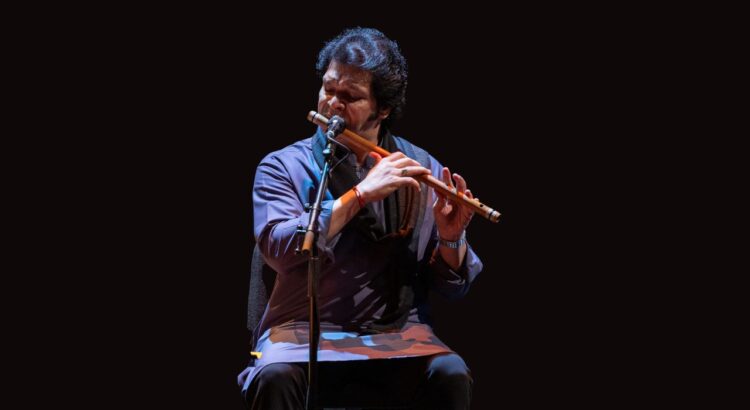
Bansuri exponent Shri Rakesh Chaurasia’s collaborative album “As We Speak” has been nominated for the Grammy Awards this year. It is a special collaboration which brings his genius on the Bansuri, Ustad Zakir Hussain on the tabla and multiple Grammy award winners Bela Fleck on the Banjo and Edgar Meyer on the Bass. The album has been nominated in three different categories:  Best Contemporary Instrumental Album, Best Instrumental Composition for “Motion”, Best Global Music Performance for “Pashto.”

More about As We Speak from Bela Fleck's website: “When we are performing on stage, in composing mode or creating mode, we are basically having a conversation,” says renowned tabla player, Zakir Hussain, of his bandmates, banjo legend Béla Fleck, the great double bassist Edgar Meyer, and bansuri player Rakesh Chaurasia. “So the music emerges as we speak.”

The quartet’s latest 3x Grammy nominated album As We Speak (Thirty Tigers) not only showcases the group’s breathtaking abilities as instrumentalists, but underscores the wide range of influences at their command. Across a dozen songs, the quartet glides easily between the cerebral complexity of Indian rhythm and the gut-level groove of a funky bass line, sounding equally at home with the rigors of raga.

A new project from perception shattering musicians Béla Fleck, Zakir Hussain, Edgar Meyer, and Rakesh Chaurasia, As We Speak brings together their unique takes on Indian and Western Classical music, Jazz and Bluegrass. Weaving a sonic tapestry of banjo, tabla, double bass, and bansuri, these artists convene to make some of the most soulful, fascinating and undefinable music found in today’s world.

CSP is privileged to speak to Vidwan Rakesh Chaurasia on this new album and what it means to Indian music:

What does a Grammy award mean for Indian music?

A Grammy nomination is a very big honour for any musician! To have been nominated for this award as an Indian Classical musician is a very humbling feeling. To represent our rich traditional art form on the world stage, collaborating with world renowned maestros from different genres and syncing it up all to create an entire new album is a great feeling. There have been many Indian artists who have been recipients of this award and getting another three nominations just goes on to show the kind of value our Indian music holds on the world stage. Hope this also inspires more and more people to create amazing music and showcase our depth to the world!!

As We Speak is a collaboration between world renowned musicians Padma Vibhushan Ustad Zakir Hussain on the Tabla, multiple Grammy award winners Bela Fleck on the Banjo and Edgar Meyer on the Bass, and myself on the Indian Bansuri.

How does the Indian flute bring melody and depth to modern music?

The Indian bamboo flute also known as the Bansuri is one of the closest instruments to the human voice/vocal form of music - meaning any music that is sung can be reproduced on the flute to the closest possible degree. It gives us the space and depth to play our traditional classical music and also the scope to incorporate other genres of music like folk, jazz etc. The adaptability of the bamboo flute to blend in seamlessly with every form of music /many different instruments is its unique feature.

In your recent tours abroad which artists have you found it interesting to engage with musically?

I have been fortunate enough to work with amazing musicians across the world.

It's been one of my best experiences to work with our very own Padma Vibhushan Ustad Zakir Hussain ji on the tabla. I have grown up watching Ustad ji performing with my guru and uncle Padma Vibhushan Hariprasad Chaurasia ji and to be able to collaborate with him has been a dream come true!

Bela Fleck is a multiple Grammy award winning Banjo maestro. An acclaimed virtuoso, he is an innovative and technically proficient pioneer and ambassador of the banjo, playing music from bluegrass, jazz, classical, rock and various world music genres.

Edgar Meyer is also a multiple Grammy award winning American Bassist and composer. His styles include classical, bluegrass, newgrass, and jazz.

To be able to collaborate with these amazing musicians from different genres, adapting to the genres and coming out with this album has been a very fruitful and satisfying experience for me.

How can Indian raga music become popular among new western audiences?

Indian Raga/Classical Music has been widely appreciated and acclaimed across the world for a very very long time! Legendary musicians like Bharat Ratna Pandit Ravi Shankar ji, Pandit Hariprasad Chaurasia ji, Pandit Shiv Kumar Sharma ji, Ustad Allah Rakha ji and many many more have taken our Indian music to Western shores and beyond! The younger generation venerates these legends and there are also a lot of people who come and learn Indian classical arts. I have been touring the world for quite some time now and I find a great amount of interest for our music in the younger Western generation. The fact that music is also a part of the curriculum in their schools also helps in the way that they are also pretty informed audiences! Sticking to the core values of our music while also exploring different dimensions also helps in getting new audiences for our music!

As an artist what attracted you most to collaborate with international artists?

The very aspect of knowing about different genres of music, incorporating it on the Bansuri, finding a middle ground in playing those pieces is reason enough to get attracted and inspired to collaborate with different artists! Keeping the sanctity intact for each of our genres yet going beyond the realm in playing the music of the other genre is a very special experience. In this album there has been an influence of many genres of music all seamlessly blending in to give way to our album 'As We Speak' !

Reflections About The Sacred In Theatre

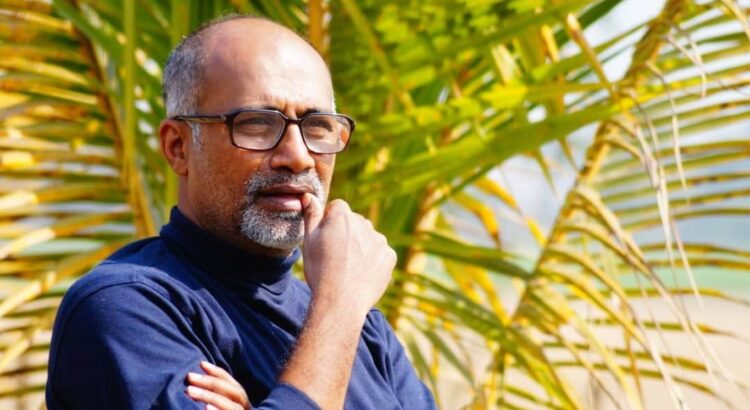
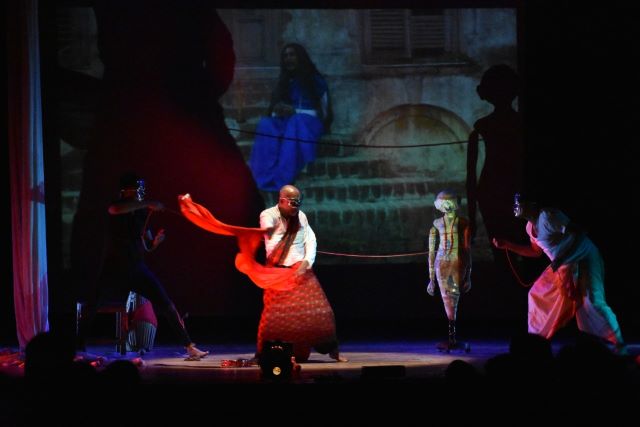
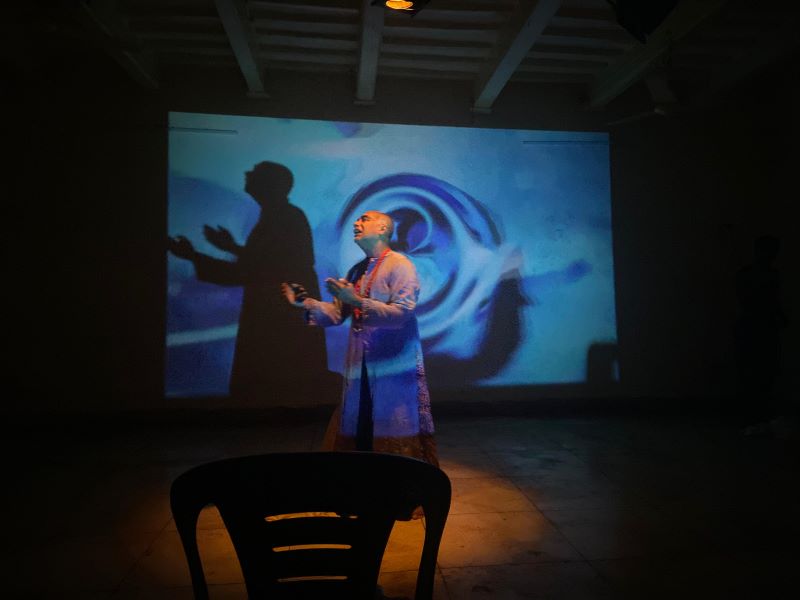
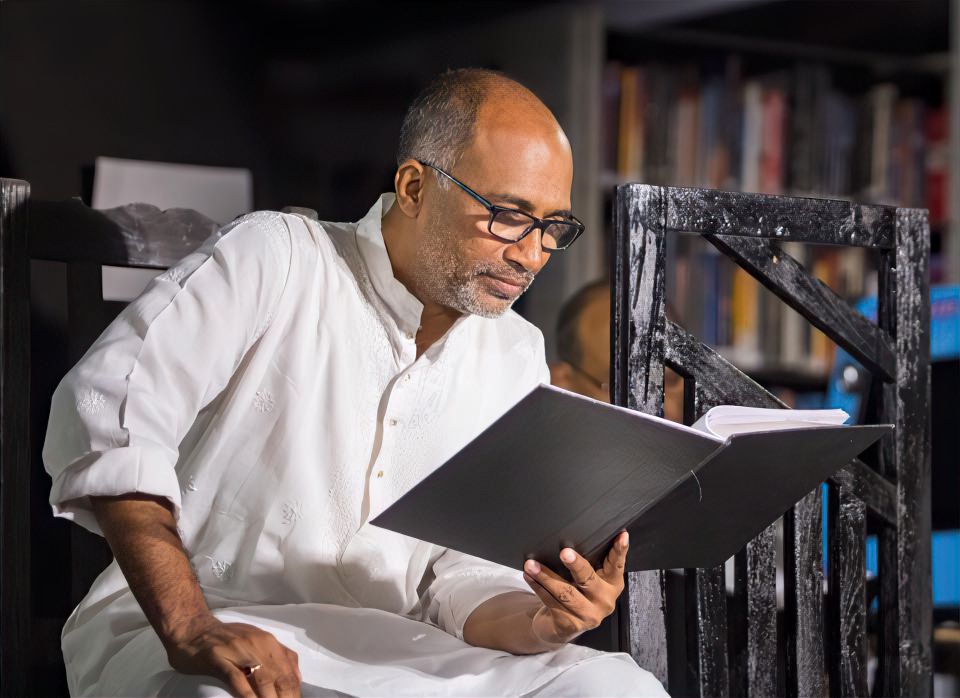
Dr Janardan Ghosh is a performing artist, academic, theatre director, fim actor, playwright, performance coach and storyteller (Katha ‘Koli, a new art of storytelling) whose practice includes the use of traditional theories, contemporary performance vocabulary, and interactive media. His research-based work engages the indigenous practice methods in urban spaces exploring the perspectives of historicity, spiritual consciousness, intertextual dialogue, and body-space dynamics of myths, tales and gossips.

He has trained and worked with several international and national theatre and film directors and is a critically acclaimed contemporary theatre practitioner in Bengal.

He has acted in plays, webseries and award winning movies. He has been awarded for Performance in Education for Social change by Monash University, Australia and The Telegraph. A film where he played one of the leading reading role – Kalkokkho was selected for the competitive section of the Busan Film Festival, 2021.
 

How did you get interested and get your training in the regional and cultural theatre of West Bengal?

I was born in Dhanbad. My school and my father inspired me to peep into the world of theatre at my birthplace. I got initiated into Bengali theatre when I came to Kolkata for my higher studies. I started with a small group theatre named Taranga (North) and gradually got introduced to the mainstream group theatre movement through the extraordinary actor-director-singer Anjan Dutta, theatre director Jayati Bose and the legendary theatre activist Badal Sirkar. While Mr. Dutta and Ms. Bose trained me in the art of theatre, Badal Babu shaped my philosophical ideas. The popular Bengali theatre was influenced by Western theatre from its genesis. Kolkata theatre is very much Stanislavski, Brecht, Beckett and Grotowski. So, initially, I was groomed into Western techniques and theories and was extremely impressed by Badal Sirkar’s Third Theatre. Onstage, I explored Tagore, Shakespeare, Manoj Mitra, and some original texts written by me and in intimate spaces, we explored Badal Sirkar’s texts and various original texts from Jean Genet to Tantra to Ramayana.

However, gradually, from the elaborate stage performances, I shifted to minimalistic performances in intimate spaces and audiences in the round. I also had the opportunity to have an understanding of Forum theatre under the tutelage of Dr. Sanjay Ganguly and Jana Sanskriti. Thereafter, my academic research (PhD) on Spirituality in Performance ushered me into the world of indigenous performances and classical Indian theatre. I got extremely hooked on folk performances, especially storytelling performances, like Kathakatha, Palakirtan, Patachitra, Gambhira, etc (I interacted with Patachitra artists of Nayagram, Kirtaniyas from Nabadwip and Gambhira artists of Malda) and eventually tried to develop a storytelling performance named Kathabhinaya, adopting elements from my Western training (I got trained by Wulfgung Kolneder, Germany, Włodzimierz Staniewski, Poland and others) and the folk art forms from the practitioners.
Are there many explanations for the origin of Bengali theatre? Which according to you is the more far-reaching influence - Vedic or Folk? What evidence do we have of this?

Many theatre historians claim that Bengali theatre began in the 19th century during British rule in India. However, though it is true that the visibility of the form and technique in the theatre of Bengal increased with the English influence, various indigenous forms of theatres existed and thrived in Bengal for more than a thousand years. Scholars like Selim Al Deen and Manamathamohan Basu state that even the classical Sanskrit theatre had no role to play in shaping Bengali theatre, it was the folk theatre that flourished in ancient Bengal. In Bharata’s Nāṭyaśāstra, Pravṛtti has been mentioned as “nānādeśabeṣabhāṣācārāvārtāh”. Country-Dress-Language were the determinants of Pravṛtti. There are four Pravṛttis and Odramḡadhī represents the Pravṛtti of Bengal.  Bhāratī and Kauśikī Vṛttis form the Odramāgadhī Pravṛtti. To perform Kauśikī Vṛtti, born out of Shiva’s dance, Lord Brahma created twenty-three Apsaras. The form is repleted with various gesticulations, songs and musical compositions (Bahunṭtagītvādya). There is a difference between Nṛtya and Nṛtta. While Nṛtya is the classical dance form, Nṛtta is folk gesticulations performed on the beats of music. The earliest Bengali performances yet discovered are found to be based on Nṛtta and the Kauśikī Vṛitti. Prof. Basu claims that from Nṛtta performance in Bengal evolved to Nṛtya to Nāṭya. I feel Bengali Nātok (Hereafter, I shall not use theatre, but the word Nātok. However, the word Nātok has a debatable origin. While some scholars claimed that Nātok came from Nātaka, a form mentioned in Daśarūpaka in Nāṭyaśāstra, others stated that it came from the word Nāṭya, which included dance and singing.

In ancient Bengal performances were termed as Kāc, Nāṭya, Līlā etc.) emanated from folk rituals related to the worship of Gods and Goddesses, like Shiva (known as Nataraj, Natesh, Natanath, Adinath etc.), Chandi, Manasa, Dharma etc. In Shatapata Brahman, it is mentioned that the fire of the Vedic Yajñas that originated from the banks of river Saraswati was blown off at the banks of river Sadanira (Karotoa river). Beyond the banks of Sadanira was Bengal or Vangadesh. So, the culture and art practice of Bengal grew without the influence of the Vedic culture. The Nātok grew from Shivotsav, Shiva rituals. We still have the residuals of those rituals in the form of Charok and Gajon. Gambhira performance, originating from Shivotsav still exists in greater Bengal. It is a three-day festival of performance, the first day is the beginning of dance and songs, followed by a Mask dance on the second day and on the third day we have dances of the ghosts and fire acrobatics etc. Many commentators have stated that Shiva’s drink named Siddhi in Bengal is similar to the Vedic drink Soma. The great poet Kriitibas in his Bengali Ramayan, mentions the popular episode of Shiva’s wedding in Uttarkanda. This episode is also found in old limericks. Bengali girls still worship Shiva for a husband as powerful as Shiva. Apart from such pieces of evidence, we do not have any substantial written text. The earliest Gītikāvya available is Shunyapuran. Ramai Pandit from the 10th century AD, during the reign of Dharmapal II, wrote it. The Bengali religious practice of that period was influenced by the Śunyavāda of the Buddhist tantra. The Shivotsav had then taken the form of Gambhira and Gajon festival of Dharmathakur. Dharmathakur was worshipped for having children. Shiva was then considered to be the prime devotee of Dharmathakur. This is a very common phenomenon in Bengali religious belief system, they never abandon Shiva. When Vaishnavism was in its prime Shiva became a great Vaishnava and would perform Haribhajan with his five mouths. Shiva is also shown as the mendicant asking for alms from Mother Annapurna, Shakti. It is well known that the Sun God Surya is replaced by Shiva. Shiva is a Dravidian word, meaning the colour of blood (raktavarna): the colour of the rising Sun. Shiva has interestingly changed his status in the Bengali pantheon but never lost his relevance.  The shifting dynamics of Shiva were the source of many creative performances along with rituals. The stories of hope and human desire were the central themes of Gītikāvyas, which were popular among the common folks.
Are there tales to support this, like the one you mention about Suryayi and Gowri. Did this kind of conversational song-based dialogue lead to a particular kind of theatre?

Yes, like Suryamangala songs many short and long “performance songs” were there which are lost. From these folk songs grew the Mangalkāvyas. The 17th-century Kāistha poet, Ramkrishnadev wrote the Brihat Shivayan Kāvya, which was influenced by Sanskrit Kāvya and Puran. However, around the 18th century, Rameshwar Bhattacharya, a Hindu Brahman, wrote another Shivayan portraying Shiva as a farmer, showing folk songs' influence. Hence the Gītikāvyas were not only emerging and evolving from indigenous folk songs but also had strong influences of Sanskrit Puranas, Itihās and Kāvyas. Both the above-mentioned sources were equally dramatic. During the Buddhist Tantric period, Dharmathakur rose to greater importance than Shiva and many Dharmamngal Kāvya were constructed. Apart from those Kāvyas, many other Kāvyas and Kāhinīs were written on the lives of Gorokkhanatha and his wise and powerful disciples. Among those Gītikāvyas the stories of Bengal’s King Manikchandra, his queen Maynamoti, and their sons Govindachandra and Gopichandra became the most popular and well travelled performative songs. It is assumed that Manikchandra ruled Bengal in the late 11th century. Queen Maynamoti was the disciple of Mahāyogi Gorakkhanath. By His grace, Maynamoti was empowered with potent magical powers; one call, “Tuṛu tuṛu koriā hunkār”, and the thirty-three crores of Devatās along with Ramlakshman, Panchapandavas, and Munirishis would drop down from heaven. Even Yama was scared of her. Shiva as usual features in this tale as the guardian of the farmers. When Manikchand started exploiting and torturing the farmers —


“Āchila ḍeṛ buṛi khājnā loilo ponār ganḍā.

Lāngal becāy jongol becāy āro becāy fāl.

Khājnā tāpete becāy dudher chāoāl.”


— they came to Shiva for help. Shiva consoled them and told them not to worry as Manikchandra was fated to die after six more months. However, He warned them to keep it a secret and Maināmoti should not know or else she would destroy his Kailasha, “Kailāś Bhuvan mor koirbe lanḍa bhanḑa.” This narrative song was full of drama and action, this story gained popularity because human beings were shown as more powerful than the Gods and they could obtain this power through Sādhana. In these Gītikāvyas, the performative aspect and the dramatic elements were in abundance. Among the ancient theatre scripts discovered in Nepal, Gopīchandra Nātok is a prominent one. The Mangalkāvyas of the Middle Ages had dramatic episodes and characters like Chandsadagar, Behula, Kalketu, Khullona, Shrimanta, and Bhanṛu Datta. Elements were profusely drawn from Ramayan, Mahabharata, Shrimadbhagavat and other Puranas.

Pieces of evidence of Śrī Kṛṣṇakīrtan are found in the middle ages, which are interspersed with dialogues between Kṛṣṇa, and Baṛāi. The padas are examples of Aṇu-nāṭya. Baṛucanḍīdās was a specialist in creating such dialogues. Canḍīdās was also a puppeteer.

You are trained in indigenous practice methods exploring the perspectives of historicity, spiritual consciousness, intertextual dialogue, and body-space dynamics of myths, tales, etc. Did any of Indian traditional performative elements influence Western theatre?

Rasa theory has impacted a lot on Western performers and theatre practitioners. From Richard Schechner to Philip Zarilli to Peter Brook all tried their best to comprehend and use the theory of Rasa in their performance idioms. Chapter six of The Nāṭyaśāstra provides a thorough listing and description of the eight rasas, which include, Vīra (courage), Bhibhatsa (disgust), Bhayānaka (fear), Sringara (erotic, love), Hāsya (humour), Raudra (rage), Karuṇa (compassion, pity), and adbhuta (wonder, awe) and Abhinavagupta added the ninth rasa Śānta (peace). “Rasa iti koh padārthā. ucyate āsvādyatwāt”. According to Dr. Nagendra, the word Rasa in the sense of aesthetic delight came to be used probably during the fifth century B.C. to the second century, B. C. Abhinavagupta stated that the purpose of performance is bliss or pure pleasure: “Rasa consists of pleasure, and rasa alone is drama, and drama alone is the Veda” (Masson and Patwardhan). According to Abhinavagupta, rasa is not merely a psychological experience but a transcendental one, which involves “the return of consciousness to its own innate and universal but immediate ecstatic nature” (Gnoli). Schechner devised a system to explore Rasa named Rasa Boxes around 1980-90s. It was designed to allow performers to explore and use their feelings and emotions in various performances. It claims to integrate ancient Indian theory with contemporary emotion research: termed as Brain in the Belly, facial expressions, neuroscience and performance theory. It is very much Visceral. Rasaboxes exercises are considered to engage the whole mind and body, it is psychophysical. However, I find the exercise and the Rasabox concept a little constricted.

Rasa is a complete experience, not fragmented between performer and audience. Rasa is an indescribable phenomenon, binding it to a structured formula narrows the scope of comprehending the vastness and subtlety of the happening. Schechner’s Rasaesthetics provide a comprehensive and simplistic understanding of the Rasa theory but not the essential experience. Rasa happens. The conception of rasa is based on experience. Bharata has established the colour and the presiding deities of the different rasas as they were handed down by tradition. He has provided the vibhāvas, anubhāvas and vyabhicāribhāvas for all eight sentiments. Bharata also introduces abhinaya (acting and more, which I will discuss later) for expressing the anubhāvas. The vibhāvas, according to Bharata, are to be dealt with by the poet, and are to be expressed by creating an ambience either through verbal renditions or other means. The anubhāvas are to be expressed through gestures, which would eventually lead the spectator to deduce the sentiment or rasa. Thus the actors in a performance, which has an appropriate ambience and characters (vibhavas), use appropriate gestures expressing the mental states (anubhāvas) and the transitory moods (vyabhicāribhāvas) to produce the rasa within the spectator as depicted by the poet.

The vibhāvas or determinants are the conditions and objects which give rise to the emotions. For example, in Rāmāyaṇa, the determinants of the emotions within the Rāmlīlā performance are Daśaratha’s hasty decision to give two boons to Kaikeyī, Mantharā’s advice to Kaikeyī, Sūrpaṇakhā’s sudden visit to the forest and an unexpected meeting with Lakṣmaṇa. These factors dramatically generate the story of the performance.

The anubhāvas include the performer’s gestures and other means of expressing emotional states. These may be involuntary such as sweating, shivering and trembling or voluntary such as deliberate actions and gestures. For example: Hanumān’s unexpected bodily growth, Rāvaṇa’s anger during Rāma’s exile.

The vyabhicāribhāvas are the ‘Complementary Psychological States’ which exist temporarily in a performance, but contribute to the overall emotional tone of the play. In Rāmāyaṇa, Sugrīva’s initial doubt about Rāma, Rāma’s army not believing Vibhīṣaṇa’s change of sides, Bharata’s angry outburst at his mother, sarcastic attitude towards the king Daśaratha, Rāma’s helplessness and despair at the loss of Sītā, are some of the fleeting emotions which contribute to the major theme of the play.

The inner idea of the poet is made to permeate the mind of the spectator by means of chanting words, gesticulation, facial colour, and the representation of the temperament. The mental states are the cause of the manifestation of the sentiments (rasa) in the performance.

These mental states are known as bhāvas.There are forty-nine bhāvas (8 sthāyibhāvas, 33 vyabhicāribhāvas, and 8 sāttvikabhāvas), which are capable of exploring the vast range of human behaviours.

Sāttvikabhāvas are the temperaments which are achieved through concentration of mind. The bhāvas originate in the mind. The sāttvikabhavas are as follows—Stambha (paralysis), Sveda (perspiration), Romāñca (horripilation), Svara-bheda (change of voice), Vepathu (trembling), Vaivarṇya (change of colour), Aśru (weeping) and Pralaya (fainting). The temperament is required to represent experiences since they are the imitation of human nature. These are artificial representations created by the actor by imagining the situation and acting it out. The effect of the powerful mood is not reflected in the physical body of the actor until and unless the actor is one with a particular mood. The actor may not suffer a sad mood but has to show the suffering of the character if needed through his physical appearance. This requires special mental training which will affect the physicality of the actor as per the required mood. This special effect of the mental state is known as sattva. This entire gamut of physical acting, mental state and more, is known as abhinaya in Nāṭya Śāstra.The sentiment of the play is conveyed to the spectator through Abhinaya. According to Bharata, abhinaya is of four kinds: Sāttvika (temperamental), Āṅgika (physical), Vācika (verbal) and Āhārya (dress, makeup, etc.).

Bharata’s own summary of his dramatic theory is as follows: “The combination called nāṭya is a mixture of rasas, bhāvas, abhinayas, dharmīs, vṛttis, pravṛttis, siddhi, svaras, instruments, song and theatre-house”.

While Western practitioners usually tend to structure everything for its utilisation, Art practitioners in the East cross the threshold of the comprehensible constructed level to a state of esoteric obscurity beyond the well-structured and rehearsed material. I believe that a big leap leads to the experience. A leap is indispensable.

I found Eugenio Barba deeper in his search and use of Indigenous methods or techniques. One of his passages on Indian Art practices endorses my views. He writes, “Continuity in the arts relies on human beings. Written texts may record certain principles, but the belief in the efficacy of the living teacher goes back to the time of the ancient sage/teacher, Narada: ‘What is learnt from reliance on books and is not learnt from a teacher does not shine in an assembly’.” Most of the crucial knowledge is transferred through non-verbal means and their nuances of expression exist beyond words.

What is the Sanskrit influence on Bengali theatre and is it restricted to a particular region?

Many Nāṭyaśalās built by the Hindu Kings were destroyed with the advent of the Muslim conquerors. A few pieces of evidence of the performance spaces constructed by the last Hindu ruler Lakshman Sen are found. During his reign, the poet Jayadeva wrote Gītgovinda in Sanskrit, however, it has elements of folk performances. Dr Ajit Kumar Ghosh argues that though the Gītgovinda was written in Sanskrit the form and performative element present in it is that of a Gītināṭya. We know that William Jones had defined this work as a pastoral drama. A similar trend is observed in Caryā Padas. On the other hand, the folk performances were found to adopt elements from Sanskrit Drama. Lord Caitanya’s performances described by Vrindavan Das in Caitanyabhāgavad are important examples of such an amalgamation of the classic and the folk culture in Bengal.  Caiatanya’s disciple Rupa Goswamin wrote plays in Sanskrit, like Bidagdha Madhava, Lalita Madhava and others. He strictly followed the norms of Sanskrit Drama in his plays. He constructed a Bhāṇikā named Dankeli Koumudi.  Swarup Damodar and Rai Ramananda were the other two disciples who accompanied Caitanya in his theatrical ventures. Rai Ramananda was an experienced and expert theatre director. He directed the play Jagannath Ballava. Sanskrit theatre thrived in Bengal during the Vaiṣṇava period.

After the introduction of Western English plays in Bengal, people desired to have something similar in their own language. However, there were no Bengali plays as such, so, Sanskrit plays were translated in Bengali. A six-act Rupaka play named Prabodhchandrodaya was translated into Bengali as Atmatatwakaumudi in the year 1822. The same year, another Prahasan was translated from Sanskrit Hasyarnab, it is assumed that it might be a translation of Jagadishwara’s Hasyarnab. In the year 1828, Ramchandra Tarkalankar translated another Prahasan named Koutuksarvasya.  Twenty years later, Ramtarak Bhattacharya translated Abhigyana Shakuntalam and Nilmoni Pal translated Shri Harsha’s Ratnabali in the year 1849. Two original plays were written in the year 1852, Bhadrarjun and Kirtivilas and had elements of Sanskrit plays along with Shakespearean influences. They were five-act plays, but Kirtivilas began with Nandi and then Sutradhar took over.

The translation and performance of Abhigyana Shakuntalam by Nandakumar Rai in the year 1855 was a historical moment, as it is considered to be the beginning of Bengali theatre. Later Bengali playwrights like Ramnarayan Tarkaratna and Michael Madhushudan Datta were strongly influenced by Sanskrit plays. Ramnarayan’s first play Kulinkulasarvasya can be classified as a Sanskrit Rupaka play and he wrote three Prahasanas. Ishwarchandra Vidyasagar translated Bhavabhuti’s Uttarramcharit and Abhigyan Shakuntalam. Kaliprasanna Singha translated Vikramorvashi and Malati Madhava. Dinabandhu Mitra, Jyotirindranath Tagore, Girishchandra Ghosh and Dwijendralal Roy translated many other Sanskrit Plays.
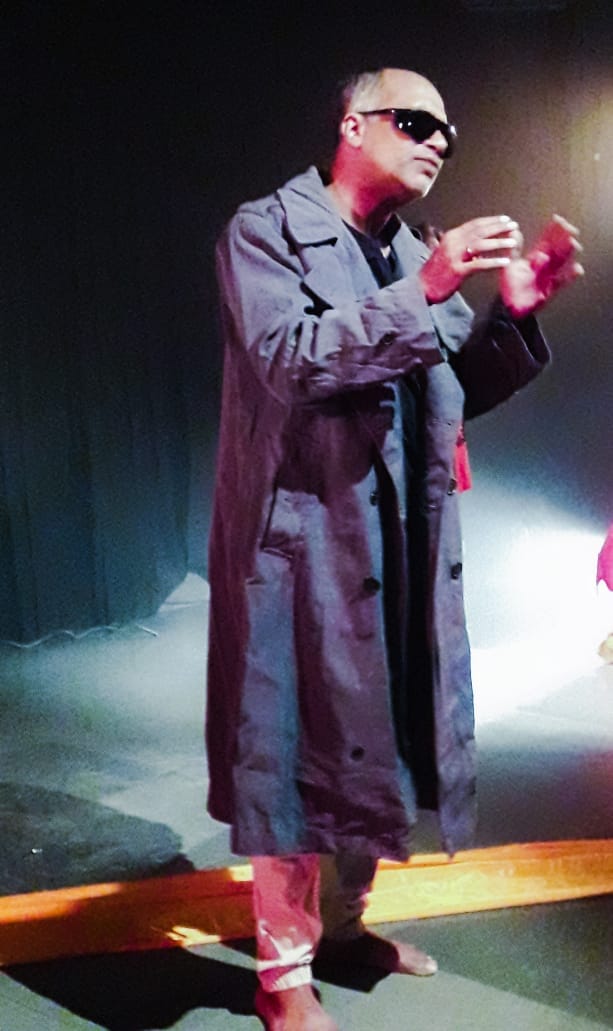
What is the connection between Performance and Spirituality in Bengali theatre? Is this to be found in any other genre of theatre around the world?

We have already seen that Bengali theatre is born out of religious rituals. However, the experience of the performer and the audience can be investigated to locate its Spiritual facet. The religious rituals like Shivotsav had a spiritual goal for the practitioners, which percolated into the performance idiom. Shiva’s romance, meditation, anger, affection, farming, weaving, acrobatics, music, theatre and dance all were the ingredients of early Bengali theatre. In the contemporary Gajon festival, we find remnants of those rituals. The participants reach a state of trance, walk on sharp blades and jump on fire beds. Gambhira performance includes the mask dance; wherein the performers use masks of Kalika, Chamunda, Shiva, Ram Lakshman, Hanuman and others. The folk origin of Bengali theatre carries the spiritual virtue in its later contemporary forms. Later, we have more structured performances like Dharma Mangal and Gītgovinda. Dr Manamathamohan Ghosh mentions that the ‘Bhagavatprem’ has entered the system of the Bengali race to such an extent that it cannot be destroyed without rubbing out the entire race itself. He gives an example of a family play ‘Lilavati’, where she sings a song


“Who says my Kānāi is not in Gokul

I get his fragrance at all times

His ankles tinkle in my heart

It makes the ‘runu jhunu’ sound, you all please listen…”


From Dinabandhu Mitra to Maharaj Durgacharan Laha all started weeping profusely. The spiritual bhāvā was predominant in early Bengali theatre. Then there was an abundance of religious and Puranic plays to provoke spiritual emotions in the audience. However, many considered them to be of no greater quality and essentially melodramatic. These scholars avoided noticing that the Indian ethos is essentially spiritual. As the legendary theatre critic commented about passion Plays: “The moving force behind it— the thing which kept the audience silent and spellbound on hard seats for eight hours, unmindful of cramped limbs and aching bones—was the force of tradition rather than dramatic virtuosity, of emotion rather than judgement, of religious awe rather than artistic appreciation.”

There was a rise in the popularity of Puranic plays during the life and times of Girish Chandra

Ghosh in the early part of the 19th century. His plays like Ravan Badh, Sitar Banobas, Lakkhan Barjan, Ramer Banobas and others evolved out of Krittivasa’s Ramayan and explored Dharmabhāva and Devamahātmya. He also wrote, directed and enacted plays based on Mahabharata and other Puranic tales like Abhimanyu Badh, Pandav Gourav, Dhruva Charitra, Kamale Kamini, Nal-Damayanti and many others. His two plays Chaitanyalila and Bilvamangal were deeply rooted in spiritual understandings. Sri Ramakrishna went to see these plays. Thereafter, he became Sri Ramakrishna’s devotee and was significantly influenced by Sri Ramakrishna’s philosophy, teachings and style of conversation. Many of the plays he wrote after Caitanyalila (1884) show traces of Sri Ramakrishna’s influence. Performers like Binodini Dasi, Vidya Sundar and others were praised and blessed by Sri Ramakrishna for their extraordinary performances. Sri Ramakrishna assured the performers that they would be able to reach God through their performances. Gradually there was a decline in plays containing spiritual essence and Bengali theatre was flooded with political and social plays.

Later in the 20th century, we find a brief revival of Bengali Puranic plays with playwrights Manmatha Rai (Karagar, Devasur, Savitri, Chandsadagar), Jogeshchandra Choudhuri (Sita), Mahendra Gupta and others. In the 21st century, we rarely have plays reflecting spiritual comprehension. However, we have tried to explore the spiritual nuances through our performances like The Otherness of Being based on Raganuga Bhakti Sādhana, Digambarim exploring the power of Śakti Sādhana, Paramahamsa based on life and teachings of Sri Ramakrishna and the present production based on a folk retelling of Ramayana, Ramayan: Fractured, Fixed and Foretold.

I feel the dividing line between art and spirituality is so narrow and so easily crossed. Goethe says, “ Art rests upon a kind of religious sense; it is deeply and ineradicably in earnest.” For me going to the performance space is similar to going to the temple.
In your interactions with foreign theatre groups, do you see an interest in these religious/spiritual theatre themes?

When we talk about the sacred drama, what do we mean in particular? To a layman, sacred drama includes plays based on religious themes and hagiographic tales of saints and all performances with religious implications. However, I believe all performances irrespective of themes and tales must generate spiritual resonances to be considered sacred drama. Hence, we can enlist a host of theatre practitioners and experts who have contributed to the shaping and enriching of the sacred drama.

Ralph Yarrow is known for his seminal book called Sacred Theatre. I met him in person and had a long discussion on his book when he was in India and have borrowed ideas and information from his collection of essays to frame my concept of sacred drama from the West. He writes, “Theatre has the ability always to come up with something unexpected, and it is important to explore precisely the forms and scope of that unexpectedness. They may be both profound and perverse: after all, those who have speculated about the nature of the sacred in theatre range from Abhinavagupta to Zeami, from Jean Cocteau to Peter Brook, from Antonin Artaud to Shakespeare (not forgetting Maurice Maeterlinck, Aleister Crowley, Rabindranath Tagore, Kavalam Pannikar and Nicolas Nunes)”. Peter Malekin, while writing about sacred drama and early Greek ritual forms, made it clear that the sacred does not “exist...in subject matter...but in a mode of being”.

Yarrow also said that many practitioners claim that the heart chakra is activated by Noh drama, or by ancient Egyptian and Indian statues, and that at times, all the chakras are fired by the chanting of the Ṛg Veda. Grotowski himself practised the sacred art of unlocking impulses to stimulate organic responses during performances and training. Jennifer Kumiega writes: What the Laboratory Theatre team were seeking in these particular exercises, then, was the possibility of an organic response, rooted in the body, and realized in accomplishment through precise details. Grotowski in fact went so far as to locate the organic source point of the creative impulse –- in the area of the body called in Polish ‘cross’. This, which Grotowski called ‘the organic base of bodily reaction’, is located at the base of the vertebral column including the lower pelvic area of the abdomen. There is a connection here worth noting, with kundalini yoga: according to this tradition, there is a concentration of life energy, represented as a serpent coiled three and a half times, which is dormant at the base of the spine.

Grotowski’s search for the “cross” and Brook’s exploration of the Holy theatre indicates the strong presence of the sacred in drama. Grotowski, in his influential book, The Poor Theatre, claims that when theatre was still a part of religion, “it liberated the spiritual energy of the congregation or tribe by incorporating myth and profaning or rather transcending it”. Grotowski sincerely believed that one can reach the inner core of the self through performance, and he believed in the spiritual energy of performance. Yarrow states that the individual performer of a sacred drama and the spectator feel “complete” in the sense of being in command of and able to call upon an extended range of thought and action.

I worked with the legendary Polish director Włodzimierz Staniewski who was with Grotowski from the beginning of his theatre journey. We did Ibsen’s Master Builder together. I had felt his earnest search for a spiritual experience through his performances. When I went to Gardzienice Centre for Theatre Practices, in Poland, I saw their performances and realised their work to be ritualistic and extremely transcendental. The performers would elevate to a different realm.

Sati Gio is a Korean Butoh Dancer. We did a performance named Kali’s Child and Sick Dancing Princess together. Interacting and working with her, I felt that she had this desire to connect with the unknown through performance. Zeami said there are many eyes of a performer. I could see that in Gio’s body. Butoh dancer looks deep inside to create a movement.
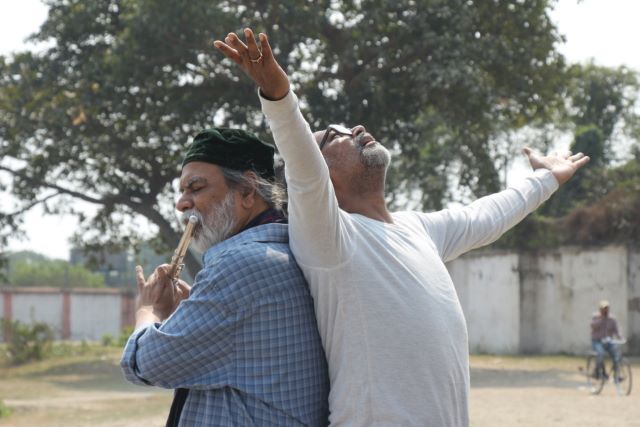
How can Rasa theory be used to understand the universal emotions of Spirituality and Art? Abhinavagupta gives a spiritual interpretation to rasa theory, saying the ability to appreciate the universal essences of emotions depends on the audience member’s transcendence of one's ego. Rasa can be attained only by the person who is detached from personal motives and interests and identifies with the supreme universal.

Abhinavagupta interpreted rasa philosophically, claiming that it is samvid-viśrānti (equanimity and composure) or camatkāra (extraordinary phenomenon), which underscored the essential need for specific roles and motives of different artistic media and techniques of within the arts. While Abhinavagupta evolved rasa into a universally recognized aesthetic quality, it was Bhaṭṭanāyaka, Abhinavagupta’s teacher, who had initially brought out the universal character of this subjective experience/feeling. Bhaṭṭanāyaka claimed that drama had a special power. Bhaṭṭanāyaka was the first scholar to explore aesthetic experience in terms of the audience’s inward experience. He argued that the aesthetic experience of a spectator is similar to the experience of having an absolute realization (āsvāda of Brahman) (Gnoli 48).

Mason and Patwardhan remark: “It may well be that Bhaṭṭanāyaka was the first person to make the famous comparison of yogic ecstasy and aesthetic experience”. Abhinavagupta was deeply influenced by these claims of his guru Bhaṭṭanāyaka and he philosophically established rasa as the very soul of drama.  For Abhinavagupta, rasa takes a prime position in exploring art and artists and he interprets these experiences as religious experiences. He insists that rasa transcends time and space for both the spectator and the actor and it also goes beyond the limited world of desires and the ego-bound life. Enjoyment of rasa is blissful, and this aesthetic bliss is akin to the spiritual bliss of realizing one’s own identity with the absolute Brahman. Abhinavagupta maintained that the aesthetic experience (rasa) consists of tasting (āsvāda) devoid of any obstacles (vighnas): it is an undisturbed relish. Mason and Patwardhan comment that all of Abhinavagupta’s efforts focus on one important need: i.e. to crack the hard shell of the empirical ‘I’ and allow the higher self to automatically identify with everyone and everything around. So, in the study of Indian aesthetics, Abhinavagupta added a new dimension of spirituality.

An aesthetic experience, according to Abhinavagupta, passes through certain levels, firstly the spectator is introduced to the artistic work, which evokes in the receiver a state of wakefulness. The spectator accepts the imaginary world of performance to be true. Then the spectator is excited, and consequently the emotional situation described in the performance creates “sparks” in the spectator’s consciousness, leading to the revival of traces of his own experiences. The impressions that are enlivened this way come from a whole repertoire of experiences and not just from one particular concrete experience. At the same time, these impressions do not produce any attachment towards the artistic work. Thus, the emotional response is a positive reorientation in the receiver and gradually the receiver abandons the thoughts and concerns of daily life and gets immersed in the act of performance through rasa. The experience purifies the thoughts, will and emotions of the receiver or spectator. Secondly, the full dedication and involvement in perceiving the emotional signals received from the performance create an immersive feeling for the spectator, an out-of-the-world experience (alaukika).
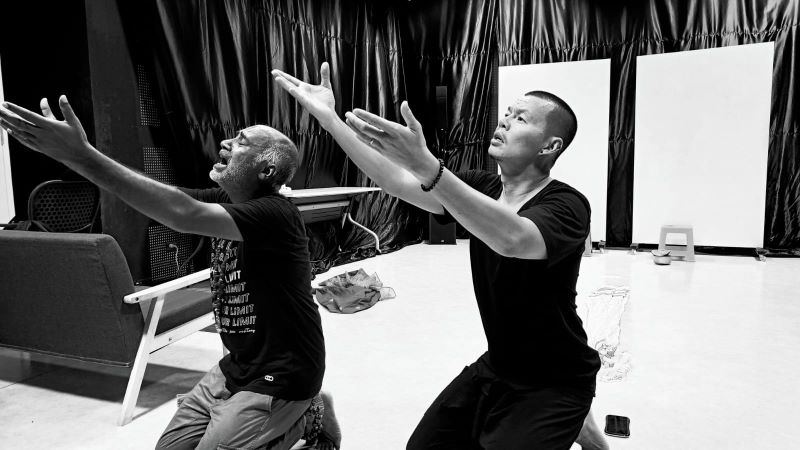
Could you tell us how Sri Chaitanya Prabhu influenced Bengali theatre and how theatre influenced the Bhakti movement?

The stories of Kṛṣṇa were spread extensively through theatre and performances by the Vaiṣṇavas in an extraordinary way. The essential element of Vaiṣṇava philosophy is ‘Kṛṣṇa Bhakti’. Bhakti or devotion was fostered by dancing, singing and playing of music by the Vaiṣṇavas; Sri Caitanya improvised the form of Kīrtan to Nagarkīrtan, which included congregation, procession, music, dance, ecstasy and devotion. Caitanya’s Gauḍiya Vaiṣṇavism also offered the conjoint involvement of the ‘Dhārmic’ practice and Theatre in the same holy space. Caitanya used to arrange for various theatrical performances on different ‘tithis’ and would act different characters himself. He understood the power of theatre and used it best to reach the common people.

During his stay in Nadia, Caitanya directed and acted in many plays, which later enriched and revived the folk form ‘Jātrā’ in Bengal. Śrī Caitanya’s theatrical performances were inspired by the poetic works of Canḍīdās, Jayadeva, Vidyāpati and other early poets of Eastern India. Kṛṣṇadās Kavirāj writes, “Canḍīdās Vidyāpati Rāyer Nāṭakgīti / Karṇāmṛta Śrīgītagovinda / Svarūp Rāmānanda Sane Mahāprabhu Rātri Dine / Gāy Śune Parama Ānanda” (Śrī Śrī Caitanyacaritāmṛta). The Gosvamins and other contemporary followers of Caitanya were equally adept and accomplished in the field of theatre. Śrī Caitanya encouraged his followers and associates to explore the art of performance and write and perform plays and use theatre as a medium to develop and promote Vaiṣṇavism. Life and works of Nityānanda Prabhu, Rūpa Gosvāmin, Rāi Rāmananda, Kavi Karnapura and many others reiterate the claim. The unique Rāganūraga Bhakti Sādhana of Gauḍiya Vaiṣṇavism is based on rasa theory.

Prof. Darshan Choudhury states a few significant points on the style and form of Caitanya’s theatre performance, which I feel might have influenced later Bengali theatre. He states that Caitanya performed ‘Rukmini Haran’ and ‘Vrajalīlā’ in Nadia and performed ‘Vrajalīlā’ and ‘Rāvanbadh’ in Neelachal, Orissa. He enlists the following features:

  1. The performance used to happen in an open space
  2. The play was not written or well-rehearsed, only the theme of the play was fixed
  3. The songs were well prepared and rehearsed
  4. Dialogues were instantly improvised to complement the theme and include dance.
  5. The male actors played all the roles.
  6. The older characters created humour and played comic roles.
  7. Make-up and costume were important.
  8. There was entry and exit in the performance.
  9. Religious feelings and devotion were the raison d’ ětre of the performance

There is a strong debate on the form and style of Caitanya’s performance. While Jātrā is a common feature of his performance, scholars propose three different possibilities from the statement of Caitanya: ‘Āji Nṛtya karibāñ ANKAer bidhāne’ [We shall perform according to the rules of ‘anka’]: a. ‘Anka’ as the Assamese Ankīyā Nat, b. ‘Anka’ being one of the ten Rūpakas from Nāṭyaśāstra and c. ‘Anka’ is used as a term for scene division. While Dr Sukumar Sen claims it to be as per the style of Assamese Ankīyā Nat and the form of Sanskrit play, Bhāna, Hossain asserts the claim to be flawed. Hossain points out the difference in a particular word used by Sen in Caitanya’s statement; Sen uses the word ‘Bandhane’, which means bound by rules, whereas Satyendranath Basu uses the word ‘Bidhane’ as per rules. Moreover, the description provided by Virindāvandās gives emphasis on the emotional [Bhakti Bhāva] content of the performance than the technical aspect of the Play. So, Hossain is unable to decipher the style and form and suggests an influence of the Sanskrit play on Caitanya’s performance and an amalgamation of various folk forms of performances with Jātrā. Śankardeva’s Ankīyā Nat is also considered to be a form of Jātrā. The above arguments prompt us to assume that Caitanya’s performance cannot be pocketed in a single form or style, it was extremely dynamic and experimental. The Bengali theatre which had such a dynamic starting point like Caitanya’s performance rarely took the legacy forward and got potentially diluted by the influence of European theatre. However, one can notice the richness that Caitanya provided through his extraordinary form of performance that evolved out of traditional Jātrā.

Caitanya’s performance can be termed Performance Art in modern-day parlance.
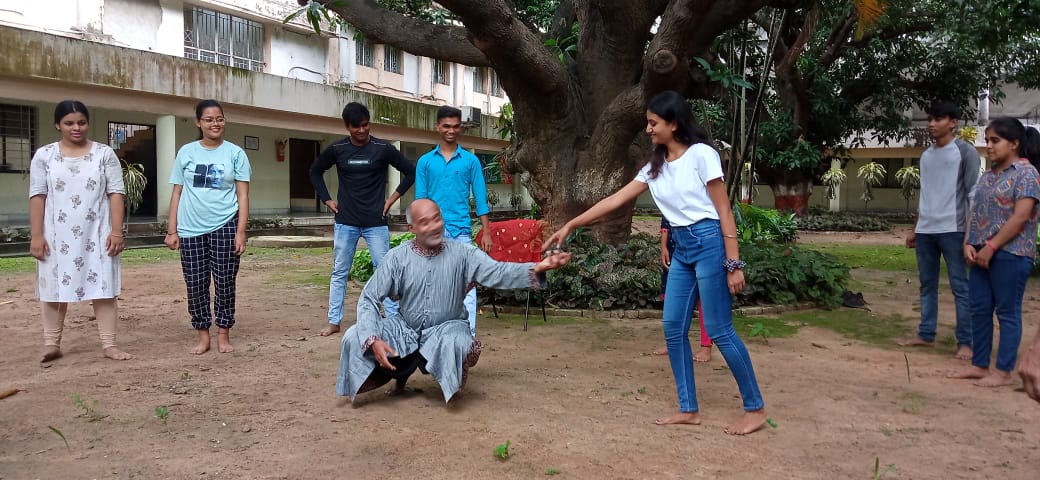
What is the role of theatre according to you, is it to elevate the consciousness of the sadhaka to the level of the divine, or is it to be disconnected from any over-expression of religiosity and restrict itself to the aesthetic of performance?

Yes, for me role of theatre is to help an individual evolve, and elevate her or him to a higher realm of understanding the Self. I believe that it raises the consciousness of the performer (sādhaka) to the level of the divine. When an actor or an audience comes out of a performance he or she is purer than before. Performance can lead you to Mokṡa. Sri Ramakrishna is my greatest inspiration and point of anchorage.

Performance played a very important role in Sri Ramakrishna’s life, beginning as far back as his childhood days when he enacted roles and often surprised the villagers with his performances, which will be discussed later in this chapter. The common womenfolk of the village were unable to recognize him when he dressed as a woman and slipped into their homes. While playing the roles of different gods and goddesses, he would go into samādhi at times, as well as when he saw someone performing such roles. In fact, many of his performances culminated in spiritual realization. I will provide the details later in the chapter. Later, during his period of sādhana, Sri Ramakrishna practised a special kind of vaiṣṇava bhakti incorporating elements of theatrical performances, which I have discussed in earlier chapters. Sri Ramakrishna also was well-known for his storytelling; however, the inherent theatrical skills in his storytelling have rarely been explored. His narrative style and painting of characters while telling a story were unparalleled; the audience was undeniably affected by the stories and some people were even brought to a state of spiritual realization. He also used to sing bhajans, which mesmerized the devotees. And while singing quite often he would go into samādhi (KMG 100,126). Sri Ramakrishna’s storytelling, histrionics and performances as his other creative expressions and involvement were more than a mere artistic creation; they had the power to awaken one’s dormant spiritual consciousness.

After Guruvayur, Pepita Seth Turns To Theyyam

Pepita Seth has been in Kerala for over four decades. She says that people like her - British, female, foreign, are “not supposed to enter Kerala’s temples and should not even dream of doing so at Guruvayur.” However, in 1981, she was allowed in officially and otherwise. A permission which she says changed her whole life.

When she was awarded the Padma Shri she was listed as Pepita Seth, Kerala. When she went to Guruvayur after the announcement of the award, a ritual artist told her that this was the first award for Guruvayurappan, and for someone from Guruvayur! “For them, it was like a member of the family getting the award. Not untrue, when I consider all those who have, over the decades, done so much to help me,” says Pepita.

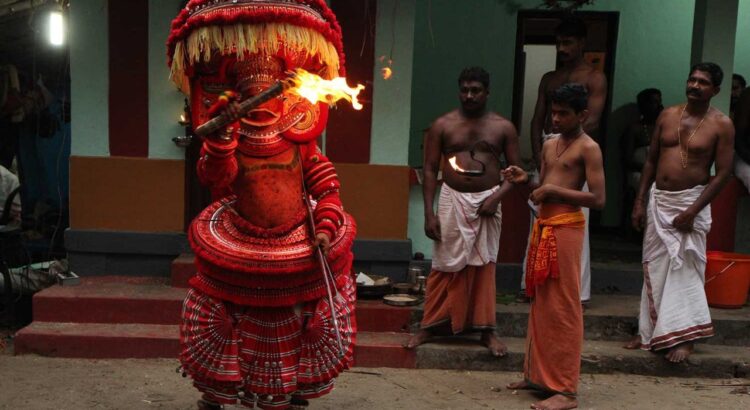
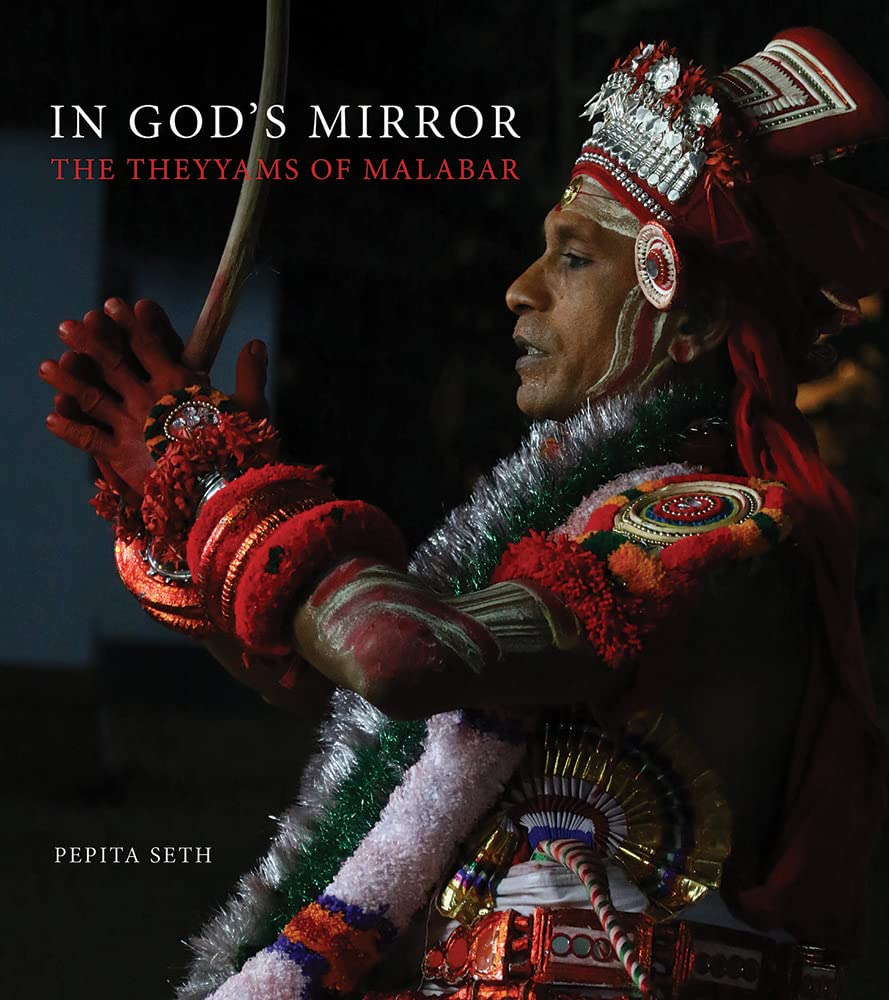
In this interview with CSP, Pepita talks about her second book - In God’s Mirror, The Theyyam Universe. See an ealier piece by her here: Theyyam - The Power to Call the Deities Down - Center for Soft Power (indica.in). Indica supported the publication of the book with a grant.

You have now published your second book. So how is working on In God’s Mirror, The Theyyam Universe different from Heaven on Earth: The Universe of Kerala's Guruvayur Temple in terms of documentation and experience?

While writing the book on Guruvayur, I had already worked on Theyyam and so I didn’t have to run around a lot this time. As a photographer, the main difference was that Guruvayur was in a contained space. My only problem was that one pooja looked exactly like another and so there was not going to be enough visual difference, but I learnt a lot from that experience. Theyyam is completely different, but you apply the same principles as when I started off as a film editor. I am now working on a series of costumes.

As soon as the Guruvayur book was released I went to Malabar to see the theyyakkarans - Lakshmanan Peruvannan and Murali Panikkar, their families, and other practitioners. Although they suggested that I continued working on Theyyam I refused, reasoning that I was now much older and no longer an innocent. I also knew, or thought I did, exactly how much stamina a long term commitment would demand. Yet since nobody took the slightest notice of my protestations, I sensed that my return was assumed. As a result I made a request: that the book would be a collaborative effort. What I never expected was their condition: that I stayed with them. It changed absolutely everything, giving me extraordinary access, taking me into their homes and being part of their lives. Furthermore, it meant that I saw how Theyyam impacts on their daily lives, what it actually means to ‘carry’ a deity, to be a practitioner and, above all, to hear their stories and catch some of the inner nuances. It took little time to realise I had wildly underestimated the stamina ultimately required. Yet as 15 years came and went, far exceeding the time I had expected to devote to Theyyam, I became tangibly aware of the role being played by Theyyam’s deities. My growing suspicions were clarified one morning when I approached Patamatakky Bhagavathi to make my offering and receive her blessings. After looking at me she took my hand, pulled me close and said: ‘You should never think it was your decision to do this work. It was not. It was our decision.’

Having worked in films, I was aware of different angles, close ups, longshots, big shots. I seldom photograph something from the same angle, unless I am boxed into it, which sometimes happens. The first time I covered any kind of ritual in Kerala was the initiation of a Velichappadu (oracles, or in Malayalam the Revealer of light).  The temple was small, it was not only jam packed but it was also very clear who would sit where. I thought to myself that I couldn't shoot the same view the whole time, nor could I get up and move around, so I decided to do what I would have if I was shooting a movie. I took close ups of the priest’s hands with the flowers and things like that.

How do you know what is special? What is special both for the Indian seeing this day in and day out, and for the person who has not seen this at all? How do you capture something that is of interest for both of them?  

The point of interest actually is not the deity. It is the man.  The first part of the Theyyam performance known as Vellattam or Thottam is performed in a light manner without any elaborate costume.  Here the man has really pale makeup, but you can see the face.  The Thottam mudi (tuft) is very small. I thought to myself if this is what is going on the outside, what is going on on the inside. So of course I love the elaborate costumes and everything, but in a way I think the Thottam is really extraordinary because you see the disappearance of a human being.

You see a logic to the rituals, and there’s a 90 percent chance they will follow a pattern. If it was a new shrine, and if he’s moving the light this way, then that would be the best place to be. So I observe the set up of the shrine very carefully. Sometimes these happen in open fields and they would disappear for two hours.

After a time, and certainly after 15 years, I have a clear idea of what most deities that I saw would do. That did not mean that they always did it like that. They could go off the script as it were, but you get used to it and you also develop a sixth sense.

Two  things you get a sixth sense about is knowing that they're not going to do what you think they're going to do and the second is which is the safest place to stand because they can move with tremendous speed. They are not bothered if you're standing right in front of them, they'll just roll right over you. The best and safest place to stand is right behind the chanda (cylindrical percussion instrument) players, because the one thing they're not going to do is crash into the chandas. The chanda players know exactly what is going to happen and they would do these little head movements.  Sometimes I would run somewhere, not having a clue, but then there was this kind of backup which was fantastic.

All of Indian art is meant to elevate the audience to the same level of consciousness as the performer. So did you experience to some measure what he's experiencing?

Yes absolutely I couldn't and wouldn't do work on Theyyam if it wasn't affecting me. For me if the divine is in man, then, of course, when the divine is there there’s the man too, I suppose.

When I first went to Malabar, people told me I was wasting my time. They would say, ‘They will take the shirt off your back, they will bleach you white, they will not cooperate.’ Well, I finally came to the conclusion that there was something wrong with the people who made those statements because it's not true. At the same time, the Theyyam people do have very clear ways of literally tripping people up and you can see it coming. When they wear the big head dresses they know within a millimeter what the available space is, they really do. But I have seen people being knocked over by it. And then the chanda people will look and start laughing which means he had it coming.

How is it different from the Guruvayur experience, where you actually have the deity in front of you? Is there a difference between how you experience the divine?

Well, in a sort of way, no. It's the same but different in Theyyam, which is the multiplicity of it. I spent an entire day with Lakshmanan and, one day, trying to find out exactly who Chamundi was as there are several theories. I asked him whether she was Annapurneshwari’s daughter or her sister. At the end of the day, he said, ‘I can’t give you a very clear answer. It all depends’. And really it does depend, you see what you want in the deity and I suppose the deity goes about its own routine. Visually and on some level it's completely different from Guruvayur, they couldn't be more poles apart but at the same time it's being driven by the same kind of power.


You have interacted with many scholars and practitioners. How do they all come together through your work? You have Lakshmanan on one hand and the Namboodiris on the other. Where do their worlds meet?

There was an occasion when Lakshmanan and some other people were discussing who is a Kshetrapalan. I don’t think anyone actually knew but there were various theories about how a Kshetrapalan is and what does the word mean -is he the guardian of the temples, the guardian of the land or something else.  Lakshmanan is very knowledgeable and he said ‘What we need is a Brahmin’. Now, considering their caste difference, that was a very strange remark. I asked him is that really who you need. He replied, yes, but it has to be somebody who knows what he's talking about.

So I rang up Narayanan Chittor Namboodiripad, who I had known since 1984 when he was conducting a ritual in Trichur. At that time, he had called me and told me I should go to his house to learn more about the rituals for my book on Gurvayur. I used to go every Monday to his house and he would teach me about the rituals, the poojas and the best part was when he said one day, and ‘now we are going to talk about the nature of God’. That was incredible.

The thing is those people don't fudge it because they know, so they don't have to. I fudge things because I don't know, but they are so clear when they speak. Anyway, I said to Thirumeni (he already knew that I was working on this second book on Theyyam and had heard me talking about Lakshmanan) that I would hand over the phone to Lakshmanan. They spoke for more than an hour. I had to keep running and charging the phone and finally when it was all over Lakshman turned to me and said, ‘I have to meet him’. So we visited Thirumeni’s ancestral home. It was strange. Thirumeni sat on one side, Lakshmanan on the other and I was in the middle. They were both kind of leaning forward. They got on very well and though Thirumeni had said he could speak for only two hours as he wasn’t well, it was about three and a half when we left. The next day when I called Thirumeni, he said ‘that man knows what I know’.

Their apparent differences were extraordinary. Thirumeni was a Namboodiripad, not just an ordinary Namboodiri. He was frail and just short of 80 years and Lakshmanan must have turned 50. So you couldn't see where they connected, but it worked so well that Lakshmanan used to come down by himself to speak to Thirumeni and those conversations must have been incredible because actually they were equals. One day Thirumeni rang me up and said, like a child, that he had always wanted to hear one of the Thottam songs and Lakshmanan had rendered it.

(Narayanan Chittoor Namboodiripad belongs to the ancient family of Chittoor Mana who were the spiritual advisors to different rulers in the South Indian state of Kerala including the Zamorin of Calicut. Son of Sankaran Namboodiripad, the Yajurveda exponent and Uma Antharjanam, Namboodiripad is the descendant of Vasudevan Namboodiripad.)

You are very much part of their social milieu. In very traditional settings how did you fit in as it is generally male dominated as it is in Theyyam? 

Yes, that is true, but it is a little more fluid with the Theyyam people as there are some very powerful women around here. Often, the men have a better view point than the women. But if you go to where the Theyyam stands, that is the best. They know that you know how you're supposed to behave so therefore you can stand there. I know how to behave in their world. So it's okay. Murali, a youngster, was very fond of me and would rush up and grab my hand and say ‘Amma Amma’.

What has this experience taught you about identities both in society as well as in the world of rituals?

Most societies have rules and it's an automatic thing to make things work or not work. Sometimes I don’t have a clue as to who I am. In Malabar, women can get away with anything if they are determined. It is as if they have a shakti.

There is one Theyyam artist Santosh Peruvanan and I've known him since he was 12 when his father had died. As there was no one to train him, he went to Lakshmanan and asked him if he would. I'm really very fond of Santosh because he's really done so much without the normal sort of family backup.

One day there was a deity performance under a big tree during Panguni. They draw a shape and you have to make sure you stand behind it. Suddenly someone came from the shrine to Santhosh and asked rudely - should she be here? So Santosh pointed over to the shrine and said, do you see that Amma and do you see this Amma (pointing to me)? They are the same Amma and don't ever question what she does because she knows exactly where she can stand, far better than people like you.”

What was your research prior to your interactions with them? How much of your knowledge was from living with them and how much from books?

I've looked at stuff about Theyyam to know that I don't trust those books. That is not to say they're full of mistakes, but it's the same with the Guruvayur book. There's no list of books consulted or anything and people used to get very upset about this.  But I haven’t quoted a thing because I had access to the people in the temple who knew. So why did I need to go and ask somebody who actually performed absolutely no role in the temple. I used to buy cheap books on Theyyam and I just stopped because I see now that if you don't have access to their lives or you don't know who they are it’s like going to a ballet and never talking to any of the dancers.

The luckiest thing that happened to me was the three months when Lakshmanan was making costumes. I didn't even have to get out of bed because, in the main room there was a bed and that's where I slept. I was just part of their lives.

You also talk about intuition and you say you always operate from a point where you do things based on gut feeling. So how did this workout for your two books?

I go by instinct. I don't know how that works and you can't question it. There was a wonderful man called Gurunathan who died five years ago. He doesn’t suffer fools, but he’s actually very kind. He asked me what I wanted to know and I told him Annapoorneshwari.  Then he told me he had rights in the Annapoorneshwari shrine. He asked me to come to his house by 10 am and by that Sunday morning I had finished the chapter.

Also when I arrived in Malabar I went to the Chirakkal Kovilakam and met the royal family. Someone had given me the address of Ravi Varma and I didn’t realise that he was Royalty.  So I went and met Thampuran and asked him the full story of the Bhagavathi. He asked me to come and stay with them and witness the festival when it happened in January. It was October and he asked me to stay on. When the Kaliyattam came up, he took me to the shrine and introduced me to everybody and left. Gurunathan told me a good 20 something years later, that when I had turned up, they knew.

There is a belief that when you want to know about Theyyam, you have to first see the Chirakkal Thampuran (royal) who takes you to a top performer, in this case Lakshmanan Peruvanan who would bring them to Gurunathan. I asked Gurunathan, ‘You've known all this time, but you never said anything’. He said they knew I was the right person to do this work, but at that time I knew absolutely nothing about Theyyam, so they thought they should let me get on with learning about it.

Can you tell us more about your love for elephants?

I used to have an elephant which actually belonged to my father and there used to be a variety of ink in the UK called Quink. So this elephant was called Quink. That is how I became interested in elephants. The first journey of India was to retrace my great grandfather's march from Calcutta to Lucknow in 1857 but I was obsessed with actually going to see elephants, which is what got me to Kerala.

How do you understand their role in temples today? 

I remember the first day I went to Guruvayur, I was taken to where the elephants were. There were very few elephants and they were kept very near the temple. They told me not to go close. There was a beautiful elephant there but there were tears running down his face. Apparently all these elephants have three people with them and one of them, not the top guy but the second guy, was hitting him. The elephants were taken for a bath daily and they had chains but they were not attached to anything.

One day this cruel man came past the elephant, and it lunged at him. At exactly the same point, the good man crossed and the elephant got the wrong man. The problem was that they could not get the body, because the elephant was crying and waving its ears. Nowadays, everything has changed in Guruvayur. The main people are Government servants whose way of dealing with an elephant is hitting it. In the old days when I first came to Kerala I saw them wandering around people. Now they're chained when they go around the temple.

Do you think that any of these traditions and influences are at risk of dying due to lack of  either interest or support?

Well, the answer is yes. When I first saw Theyyam in the 1980s, people said it would last for a maximum of 10 years. Now it is changing and there are young theyyakaras who don't know how to make the costumes and other things. The shrine people want to do everything fast and go home. One of the chapters deals with how the deity got furious with the shrine people telling them, “If you want me to hurry, why do you want me at all.”

Things are changing due to the market forces. The government is really pushing Theyyam for tourists, but Theyyams are not for tourists and it is not a performing art. I'm not saying it doesn't have elements of performance in it. It is a ritual just like going and standing in front of Guruvayurappan. In Theyyam, you have aged people prostrating at times before a 10 year old.

There are some amazing stories. Once a woman came up to the Theyyam, weeping because her husband was an alcoholic. He beat up children, there was no food on the table and everything was in a terrible state. The thing is that Theyyakaran was her husband.  She was trying to get help from the Theyyam who gave it to her.

Vrindavan As The Lodestone Of Pan-Indian Vaishnavism

Shri Sunil Kumar has been actively associated with Gaudiya Vaishnavism through the Hare Krishna Movement, a unit of ISKCON Bengaluru, where he has been associated with practitioners and scholars in the field. His spiritual journey has been a source of inspiration for his writing.

He is a postgraduate from the University of Westminster, London. His book, Existential Angst (1999), an anthology of poetry is catalogued in the British Council, Sussex, the U.S. South Asian Literature List. He has also authored Surreal City; a work of fiction, a poignant tale spanning multiple generations that takes readers on a journey through time and space. The noted poet Nissim Ezekiel made him a member of the P.E.N. (India Chapter).

Sunil Kumar’s paper at INDICA’s Conference on Vaishnavism held in April 2023 examines the historical, religious, and cultural significance of Vṛndāvana - one of the most sacred towns in Indian devotional tradition, particularly for Vaishnavas.

He explores the town’s complex history, tracing its evolution from ancient times to the present day, the role it has played in the development and propagation of Gaudiya Vaishnavism, and how it continues to be a major centre for spiritual practice and learning.

In this interview, he talks about the role of Gaudiya Vaishnavism in the Sri Krishna bhakti sampradaya.

How did you get interested in Gaudiya Vaishnavism and how has it inspired you in your life?

My interest in Gaudiya Vaishnavism or what can be loosely described as a synonym for Bengali Vaishnavism began in childhood. As an avid and voracious reader and a quizzer both in school and university, I was curious and inquisitive by nature. Children are naturally impressionable, and apart from Srila Prabhupada (Abhay Charan De)'s devotionally supercharged books, I would credit my maternal grandmother's influence and the learned scholar and first governor general of India C. Rajagopalachari's excellent and simple texts on the Ramayana and the Mahabharata for my interest in religious tradition in general and Gaudiya Vaishnavism in particular from a very young age.

I believe it has inspired in my life both on a subtle and a gross level. The imprint of Gaudiya Vaishnavism has lingered on over the years even when I was working in unrelated fields like technology and management. Over the past decade, a reconnection with the praxis and spirit of Gaudiya Vaishnavism happened with a very diligent, scholastic and extremely devoted group in Mumbai who were sent here by the Akshay Patra founder and ISKCON Bengaluru founder Madhu Pandit Das ji.

Devotional movements usually expect you to transcend intellect and surrender to the divine. I believe that is still some way off in my case. Sri Aurobindo stressed on the synthesis of yogas or the interconnectedness of all paths to the Supreme and my mind resonates with that understanding. Sri Krishna would also not have unequivocally explained all paths to the Supreme if that were not the case. Of course, ideological debates and commentaries have been extant in Bharat for a very long time, but Gaudiya Vaishnavism is a very important contributing river in the ocean of Indic thought and belief.

What according to you is the difference between Gaudiya Vaishnavism and the modern ISCKON movements?

There is an unnecessary bifurcation made between the modern ISKCON movements and Gaudiya Vaishnavism. ISKCON as envisaged by the founder acharya Bhaktivedanta Srila Prabhupada is nothing but a continuation of the sampradaya in a more modern avatar. India has always been fascinated by the West and the U.S always has been a cultural exemplar that people wanted to emulate for a long time.

In the 60s, when an impoverished 70 year old Srila Prabhupada set out to the West on a steamer with tickets gifted by Scindia steamship owner Sumati Morarji, he had a mere Rs 40 with him and his set of Srimad Bhagavatam (Bhagavata Purana) books and unbounded faith in Bhagavan Sri Krishna. He was following the instructions of his guru maharaja Srila Bhaktisiddhanta Saraswati to spread the message of Chaitanya Mahaprabhu in the Western world.

Gaudiya Vaishnavism as such is a Vaishnava tradition that started way back with the devotional genius of Chaitanya Mahaprabhu and his disciples, generally refered to as the six gosvamis of Vrindavan. It flourished in the medieval era due to the patronage of local chieftains, Rajput princes and relatively lesser persecution by Akbar.

The intellectual basis and roots for Gaudiya Vaishnavism and a majority of the acharyas were from the present-day Bengal -Odisha region. It petered out to a great extent in the 19th century and was slightly derided in the Bengali renaissance period after British colonisation. Nevertheless, the influence of Chaitanya and his devotional approach was part and parcel of the cultural substrate of Bengal. We have to consider the influence of Bhaktivinoda Thakur and his son Bhaktisiddhanta Sarawati in reviving the Gaudiya Vaishnava tradtion.

Post the death of Bhaktisiddhanta Saraswati in 1936, the Gaudiya Math founded by Saraswati witnessed an internal power struggle between his disciples and a parting of ways, as well as founding of competing schools both claiming to be the heir apparent to the Gaudiya throne. Prabhupada, founder of ISKCON lived in complete obscurity as a pharmacist and after sanyasa in a small corner of a Vrindavan temple for nearly 11 years. He just remembered one instruction by his guru maharaja Saraswati to spread Chaitanya's message of unalloyed devotion to Krishna in the Western world in a language they could understand, English.

ISKCON is the most successful offshoot of the Gaudiya tradtion that is responsible for making the movement internationally famous as well as attracting academia from around the world. Modern India was also reacquainted with an ancient tradition that would otherwise have faded away.

There is a perception that ISKCON was a hippie and a Western movement due to many of Prabhupada's disciples in the early days being Western. This was natural as ISKCON was founded in 1965 in New York. There were a few scandals in the West in the 80s, but all the recent growth has come due to the movement expanding in the country that gave birth to the Gaudiya tradition- India.

Some differences from tradition- just like Swami Chinmaya's initial lectures in English in Chennai, orthodox Brahmins initially resented Prabhupada for initiating mlecchas (Westerners) as disciples in a traditional Sampradaya. Some other critiques levelled at ISKCON and differences from earlier Gaudiya tradition- active proselytisation or preaching that some people in India only associate with Abrahamic religions.

In my opinion, ISKCON is merely a continuation of the Gaudiya Vaishnava tradition aimed at explaining ancient philosophy in a more contemporary, palatable form. Acharyas in ancient Bharat were pragmatic and explained that actions had to be taken as per the kala and the desha (time and country). I would credit the genius of Srila Prabhupada and his immense faith in Krishna, Chaitanya and his guru's words for the worldwide expansion of the movement in the twilight years of his life till his death (65-77).

What role have the gurus of these movements played in creating renewed interest around Vrindavan?

Vrindavan or the Vraja region always has been a pivotal part of Sanatana belief systems. Bhagavan Sri Krishna has been worshipped from North to South, East to West. Unfortunately, due to brutal Islamic invasions over many centuries, Mathura and the Vraja region had become a desolate wasteland. Gaudiya Vaishnava tradition especially, local legends and even competing sampradayas have attributed the rediscovery of Vrindavan to Sri Chaitanya's mystic recollections and trances around Lord Krishna's pastimes.

Despite the affluence of the West, there was a hippie movement, loneliness, despair and a search for spirituality that they believed existed in India. Running away from soulless materialism, Indic gurus have always asserted that there is more to life than mere eating, drinking, earning money et al. The initial inflow from the West to Vrindavan was in the 60s and the 70s, apart from Bharatiya pilgrims who always visited Vrindavan as part of tradition. In 2023, we have a more materially affluent India but the global rise of dangerous extremism, mindless violence and technological dangers lurking in the background.

As always, there are two sides to the story and depending on your perspective you can see the glass as half-full or half empty. I believe there are still no dearth of spiritual wisdom latent in Indic tradition and we have merely scratched the tip of the iceberg. The gurus of this tradition (I believe your question pertains to ISKCON) are planning the tallest Hindu temple in the world - namely the Chandroday Mandir in Vrindavan. Now critics may decry this as commercialism but like most places in India, Vrindavan is witnessing a large influx of tourists and unplanned growth.

In the modern age, commerce and marketing are omnipresent but these are not restricted to merely ISKCON. The competing Gaudiya Maths have not been as successful but they are present in Vrindavan, that is the epicentre of the tradition around Sri Krishna. A disciplined daily schedule instituted by the founder acharya Prabhupada hat comprises aartis, lectures on the Bhagavad-Gita and Bhagavatam and book distribution is followed around the world and in Vrindavan.

ISKCON, initially popular in the more developed Western countries gradually spread worldwide and I have met and interacted with disciples from the former Soviet Republics- Russia, Ukraine, etc, South America, Hungary and even China.

The rise of social media has given an even bigger platform for gurus to spread their message and this has also increased interest across India as well. However, there are many myths and misconceptions around and these have to be cleared so that Sanatana tradition and Indic belief do not wane off and flourish even more. Renewed interest around Vrindavan will only contribute to the resurgence of India's core dharmic values.

How has Vrindavan increased in importance as the hub of Vaishnavism in recent years?

I would not call Vrindavan as the only hub of Vaishnavism. It certainly is the most important place for acolytes of the Gaudiya tradtion along with the Nabadwip-Mayapur region, the birthplace of Sri Chaitanya. I had the pleasure of visiting Srirangam, Guruvayoor, Pandharpur, Dwarka and Puri over the years- all very important in Vaishnav tradition.

However the pan-Indian hub of the Vaishnava tradition around Krishna is certainly the Vraja region, Vrindavan in particular. Apart from the ancient Gosvami temples in Vrindavan, there are modern marvels like the Prem Mandir constructed by the followers of Kripalu ji Maharaj. Sadly, there is a lack of town planning and concern for the environment in modern India. Increased population, overcrowding and unclean environs take away from the charm of a devotional town. Reverence for mother earth and the environment has been replaced by indifference.

The construction of the Krishna Balram temple in Vrindavan was complete in ‘75, one of the earliest ISKCON temples, along with Juhu in Mumbai. Initially, on the outskirts of Vrindavan, it was and still is sometimes referred to as the 'Angrez Mandir' for a long time by locals. However, modern Vrindavan has grown by leaps and bounds and it is very much within the crowding, bustling space of the overcrowded town.

Although we certainly can't designate a place as a hub of Vaishnavism merely by the number of people coming there, it certainly is an important parameter. Apart from that, scholarly and devotional literature have always considered Vrindavan akin to a terrestrial Vaikuntha. Surdas, Mirabai, Vallabhacharya, the only female alwar Andal, traditions of music, dance, poetry and literature have been influenced by the concept of Vrindavan for millennia.

In recent years, we have seen a resurgence of interest in youth in uncovering the wisdom of our traditions and the core meaning of shastras Apart from that, modern Indians have always been fascinated when there is interest from the globe- particularly the West in our ancient traditions and texts. These are positive factors contributing to the growth of Vrindavan. Also, if you have a government in the centre and the state of U.P. more favourably inclined and respectful of dharmic traditions and constructing more facilities for pilgrims, footfalls will increase. The Jiva Institute of Vedic studies founded by Satyanarayan Dasa Babaji has also contributed to the scholastic research around the Gaudiya Vaishnava tradition.

At the same time, there will be those who argue that a spirit of bhakti is the true barometer of a Vaishnava hub. I think in Kali Yuga, considering our present constraints, we can form our own objective assessment of a dhama.

How does the history and culture of Vrindavan recreate the sense of bhakti as espoused by our ancient texts?

According to the Gaudiya tradition, Vrindavan dhama is the most important place in the material universe to the bhaktas of Krishna. However, it is merely a reflection of Nitya Vrindavan/Goloka Vrindavan in the spiritual world, where Bhagavan Sri Krishna eternally resides with his consort Srimati Radharani, the gopas, the gopis and all his exalted devotees who have transcended material existence. You cannot gain the mercy of Krishna unless you please Radha. Srimati Radharani is the hladini shakti or the pleasure potency of Krishna. The highest existence according to the Gaudiya Vaishnava acharyas is a siddha deha (transcendental body) in Goloka Vrindavana and existence as a Manjari (part of a group of gopis associated with Radha).

In Kashmiri Shaivism we have the concept of prakasha and vimarsha, Shiva and Shakti or the Purusha and Prakriti of Sankhya tradition. Our ancient texts are a reservoir and repository of wisdom, layers of meaning and symbolism that require a sense of bhakti to really engage with them in any sort of profound level.

Unlike the jnana marga of Advaita Vedanta as explained by its most famous exponent Bhagavatpada Adi Shankaracharya, the Gaudiya Vaishnava tradition and its offshoot ISKCON maintain that ultimate moksha usually translated as salvation is not merely merging into Brahman or an impersonal effulgence, but in a rasa-filled relationship with Bhagavan Sri Krishna.

A person may ask why is Vrindavan so central compared to the other places we know Sri Krishna was present in his earthly sojourn- Dwarka, Mathura or Kurukshetra. A Gaudiya Vaishnava acolyte or the numerous bhaktas over the ages may come up with a straight answer- Lord Krishna's childhood pastimes and the nectar of devotion associated with those simple childhood pranks and lilas in the Indic tradition. A psychologist will stress on the simplicity of the human emotional connect that is associated with the idea and image of Vrindavan- mother Yashoda and Krishna's stories for instance.

The history of the Vraja region has always been associated with a sense of bhakti in the Sanatana mind regardless of his personal orientation or belief system. Even Abrahamic religions knew that it was the town most associated with Krishna.

The 84 kos yatra around all the ancient spots in Vraja has been ongoing since the 1500s. A Madurai Brahmin Narayan Bhatta again associated with the Gaudiya tradition authored the Vraj Bhakti Vilas, a detailed list of all the places to be visited in the Vraja region after consulting many Vedic texts as well as Puranas. This exemplifies the primacy of Vrindavan by a scholar drawing extensively from most of our ancient texts that are considered authoritative by almost all sampradayas.

The earliest mention of Sri Krishna and Radha according to historical sources is in the Satvahana ruler Hala's Prakrit text 'Gaha Sattasai' from the present day Maharashtra region way back in the 1st century CE. Srimati Radharani is only mentioned in context to Sri Krishna's Vrindavan stay. Even this may have been predated by a spirit of devotion and bhakti with its central focus around Vrindavan for centuries before that, effectively making the history and culture of Vrindavan a focal point for Indic devotional tradition for more than two thousand years at least.

Any visitor to Vrindavan can attest to the bhakti-infused spirit of the locals and the traditional greeting of 'Radhe-Radhe'. Every street, ghat, stones, hill, sand and even trees are associated with Krishna and his devotees. Such towns focused solely on bhakti around a sole figure are rare around the world, and now even in India.

How can the modern bhakta be inspired both by simple chants as well as complex philosophical texts. By visits to modern temples as well as ancient tirthas?

According to the Gaudiya tradtion, Vrindavan is a dhama and not a mere tirtha. Although tirthas are a crossing or ford, where one can get past the stream of samsara, a dhama is a more important place where the Lord's spiritual abode is manifested in the material world. Apart from Vrindavana, in the Gaudiya Vaishnava tradition Nabadwip-Mayapur is also very important.

The centrality of chanting the Lord's Name is one of the most important parts of Gaudiya practise. According to the tradition, in an age characterised by the onslaught of materialism and incessant distractions, the bhakta can only transcend material existence by remembering the Lord and dedicating every activity to him in a spirit of nishkama (desireless) karma. As per Gaudiya Vaishnava belief, the simple chanting of the sixteen syllable Hare Krishna mantra is the easiest and fastest way to deliverance or moksha. The names of the Lord are non-different and an embodiment of the divine presence.

Tamaala Nurturing A Family Tree Of Artists

The word Tamaala is representative of indigenous art forms across the world because of its connect to the earth and nature. In India, it is an evergreen tree and is also the botanical name of the Bay leaf tree (Tej Patta). For native Indians of America it is a common name for a girl child and is a blue-green tree.

Tamāla (तमाल) is the name of a tree found in maṇidvīpa (Śakti’s abode), according to the Devī-bhāgavata-purāṇa (Tamala, Tamāla: 23 definitions (wisdomlib.org)). Accordingly, these trees always bear flowers, fruits and new leaves, and the sweet fragrance of their scent is spread all over in this place. The trees (e.g. Tamāla) attract bees and birds of various species and rivers are seen flowing through their forests carrying many juicy liquids.

It is a Sanskrit word, identified with Cinnamomum tamala (Indian bay leaf) by various scholars in their translation of the Śukranīti. This tree is mentioned as having thorns, and should therefore be considered as wild. The King was told to place such trees in forests (not in or near villages).

The Tamaala Art Gallery in South Bangalore was founded by Vinay Prashant and his wife Suvarna Kamakshi in 2015. They were recipients of an Indica fund recently for their Terracotta Mobile Amplifier Project, which supported artists post-pandemic.

Vinay says that the inspiration for the name for them, comes from the Gita Govinda (Lord Krishna is said to have grown up under the forest of Tamaala trees) and the tree is also mentioned in the Kanakadhara Sthotram.

Their website says that “deep respect for all things handmade and an unending sense of wonderment at the richness of India's Arts and Crafts were the most important factors leading to the birth of Tamaala (in 2015). Add to this the dwindling state of traditional handicrafts and the struggles of the Indian Artisan, and we had more than enough reason to start something to improve this situation.”

In an interview for Indica, Vinay says that their business is an attempt to bring back the rural artisans to their traditions by creating more sources of revenue, furthering their sustenance and therefore, reviving the art/ craft form.

Says Vinay, “several handmade forms are under threat, we can look no further than Karnataka for stark examples - Kinhal toys from the Koppal region is a vanishing craft form. We have worked with the artisans occasionally - they suffer from too much work - and too little manpower (barely 20 artisans practising the craft).”

Currently Tamaala is working with 160 + rural artisans from 15 out of 72 regions in India. The artisans are from 39 craft and art clusters. “We have mostly come up various artisans in our traves and work. After having visited them in the rural surroundings.” Asked how Indian products can compete with foreign products in the toys and games sector, Vinay says we need to make a few major distinctions while classifying toys and games. “Top of Form Bottom of Form Electronic toys vs. Non-electronic (parents are moving towards the latter and the imported ones are electronic).  Traditional games vs. regular board games. The former helps bring families together since the grandparents mostly know all the rules and helps children in spatial thinking etc – during the lockdown this helped relieve stress. Handmade vs. Machine Made –the consumer is far more aware of the distinction and difference now and they value the handmade far more than they used to earlier - hence the market is also larger now.”

During the pandemic, Tamaala worked on design innovation to sell unique products like the TMAP (Terracotta Mobile Amplifier Project) and the CMAP (Channapatna Mobile amplifier Project) and on the entire traditional games series. The Terracotta mobile amplifiers are made by potters in Channapatna. Starting as a post-pandemic project, the Terracotta amplifier has created livelihoods for rural potters from 3 craft clusters - Channapatna, Narayanpura, and Magadi. The amplification is significant for an acoustic instrument. It is available in earthy natural colour with hand-painted motifs.

Tamaala is assisting artists reinvent their products to suit modern markets and also upgrade their skills through Design Intervention. “We do this through discussions with artisans - we also mix artisans from different clusters to create new products. Design student projects help bringing in fresh perspectives in clusters. Expose artisans to our end consumers through workshops so that they understand consumer tastes etc,” says Vinay.

Tamaala helps artists bring out highly research based traditional games, which are mostly multi-cluster in their income generation impact. During the pandemic and soon after, the organisation has helped reverse migration and what this means in the art world is that the younger generation is going back to learning and working on traditional inherited art.

Giving examples he quotes one example of a traditional artisan family from Channapatna. The young son returned jobless from Saudi Arabia and couldn’t find work in India. Vinay says, “Now the natural question in the reader's mind would be - why would he not work with his father and help him in his craft work. That brings me to the next point - most of the artisans who educate their children, educate them away from their traditional art. This happens similarly unfailingly and in 90% of such artisan families. They feel that an artisan’s work is not for the educated child, they have a brighter future - jobs in the city, marriage into a good family and a house & car, maybe.”

The father works with Tamaala’s chief artist co-creating designer candles, toys and almost 50% of their Channapatna collection. “He started asking us for more work as he desperately needed to make up for his son’s unemployment. We ramped up our requirements from him. But it was certainly not enough to feed another family, the sales of these being seasonal - there was a limit to how much we could pre-make.”

In order to help the family, Tamaala came up with the option of the son helping the father at marketing his ware, by approaching the Cauvery Handicrafts director for stall options in the Mysore Palace campus and at the Cauvery handicrafts emporium. This allowed the family to secure a little more income.

In another case, a potter family of five members from near Jigni village helped Tamaala in their Eco friendly Ganesha project. Vinay says in one year they made about 2000 Ganeshas which created livelihoods for about 32 potters overall. Both their children wanted to be in cities or go abroad. But seeing how Tamaala helped his family, one of the sons started helping his family make the Ganesha idols. “We’ve noticed that the younger generation not only brings a higher energy level into the making process but their education enables them to do things more systematically improving productivity for the family - this was clearly demonstrated by his involvement.”

Tamaala also works with a few tribal artists from the Gond region. In one family with 3 children, who were all reputed artists, but one wanted to move to do a degree in engineering and the other brother wanted to move to the city to support the family.

Tamaala helped in the daughter’s wedding and also sold paintings which the family sent to them. But they still needed more backing. “To help out we got into a long term engagement with the remaining family members, sending them advance money for art works they could send us later. This helped a bit and the elder brother decided not to move to the city and look for a job. We had also planned an extensive workshop in Bangalore with all the three members teaching their art forms over a three week period. This was for wall murals as well as canvas and paper art,” says Vinay.

He adds that at about the same time the DC of that region saw these artisans work on one of his village tours and “gave the elder son an opportunity to create wall murals in all the district government buildings, all for a good sum of money, and he almost gave him a recurring contract where he would be engaged for at least six months of the year. So, though disappointed slightly with the cancellation of our workshop idea, we were quite happy seeing the family come upon good times, finally.”

Tamaala is supporting the artists who bring to life Indian culture with their hands and imagination. From the textures they use, to the colours and ideas, they create an idea of India that is centuries old and needs to be preserved.

Samskritam’s A Tool To Explore The Universe

Parnika Tembye, a Political Science graduate from Ramnarain Ruia Autonomous College, Mumbai, simultaneously pursued a Bachelor’s degree in Sanskrit. Apart from doing these two degrees simultaneously, she explored her interest in Vyakaranam by diligently attending a two year Paniniya Vyakarana Course offered by Bharatiya Vidya Bhavan, Mumbai. She has the experience of working as an educator for multiple educational companies based in Mumbai. She is currently associated with Agastya Gurukulam, developing a curriculum for Ganitam based on Indian Treatises and handling subjects like Samskritam, Ganitam and Itihaasa for primary children.

Parnika has been doing exceptionally well at her MA Sanskrit programme from MIT ADT University of Vedic Science.  In this interview she talks about her love for Samskritam.

What drew you to Samskritam?

संस्कृतिः संस्कृताश्रिता ।

In modern times, most people my age frown upon the word karma and do not believe in its existence. I, on the contrary, am among those handful of youths who completely believe in it. I believe that this is one of the most just and brilliant models of existence given by our ancient sages and seers. Of course, in modern scientific parlance, it is just my belief but I am not ashamed to carry it. Having said that, my excitement and eagerness to understand, implement and imbibe the ancient Hindu samskriti and samskara led me to Samskritam. Thus started my spiritual and eternal journey with Samskritam.

What is the scope of learning Sanskritam at a higher degree level?

We all know that when we learn a new language, we also get a peek into the culture and traditions of its native speakers. Samskritam is no different. If we approach Samskritam with an open mind like any other language, we will come to know how blessed we are to be a part of this Bharatiya culture.  I have experienced it, right from learning the varnamala of Samskritam to relishing the literary works of great poets. I started getting answers to my questions, not just about our deep culture, but also, ganitam, vigyanam, management, history and so on. Isn’t it exciting and thrilling to know that no matter how many problems you face, you can somehow get the solution if you know decent Samskritam. It is because of the wide range of literature it has. Brilliant minds of Bharat have worked upon intricate problems and penned them down in this language. And probably that is why this beautiful language is boasted as Suravani (the language of Gods).

In my journey, the school of Vedic Sciences, MIT Pune, plays a vital role. If you have multiple responsibilities yet are excited to pursue a degree in Samskritam, MIT is the best option. All the classes are conducted online by devoted and qualified subject experts. I used to wonder why we should learn Samskritam through another language? Why shouldn't Samskritam be taught in Samskritam itself? But I am glad to mention that, in the School of Vedic Sciences, the mode of instruction for all the subjects is also Samskritam. Don’t be worried, if you face difficulty for a month or two to get adjusted with the mode of instruction. But this is the best way to develop our skills in this language. If what we pursue is not challenging, then what is the point of pursuing it? Samskritam will definitely challenge you, but it will keep you engaged and excited throughout. The recording of the lectures are also available for us to go through at a later point of time. All the materials are shared with us online. The only job for us as students is to be punctual to the class and be participative in the discussions.

Apart from this, it is mandatory for us to give the semester exam in person at MIT. It may sound like a big responsibility, but I urge you to sign up for the course just to visit the magnificent MIT campus that would make you feel bad for taking this course online. Its green and serene environment makes learning all the more interesting and engaging. They also provide hostel accommodation at a nominal price along with food for students who write the exam. And to top it all, if you are financially struggling and still want to pursue Samskritam, all you have to do is just seek help. Indica finds and magnanimously supports such students by fully or partially granting scholarships to deserving students. I would like to keep it here on record that only because of the financial support given by Indica, I am able to pursue my dream.

Apart from the language, what is the subject matter you are introduced to?

There are a wide range of subjects that one can explore through Samskritam and one may not be sure as to where their interests lie. Hence, MIT gives us an opportunity to glance into all aspects of Samskritam which definitely helps us in identifying our interest. We have been introduced to subjects like Sahitya (literature), Vyakaranam (grammar), Ved-Vedanta (Indian epistemology), Mimaansa (Indian heuristics) etc. It is not just going to be rote learning, but we will be able to appreciate its practical value in our life. For instance, we had an assignment in Alankara shastra, where we could choose any kaavya or movie and identify the components of rupakam that were taught in theory.

The language Samskritam, has definitely widened my horizon and continues to keep me in awe with the treasure trove of knowledge it contains. It gives great exposure to different Indian art forms like dance, drama etc. The text known as the fifth veda called Bharatnatyashastra, is the most ancient and elaborate text on dramaturgy. We also get to explore other treatises related to mathematics and astronomy like Leelavati, Aryabhatiyam, Shulba sutras, jyotirmayukh etc, Aarya chanakya’s Kautilya arthashstra related to polity, life lessons, principles of management and many more if we have the thirst of knowledge.

Samskritam is not just limited to teaching our culture, but opens the way to learn any topic of our interest. It will not be a hyperbole to state that this language acts as a tool to discover the entire universe.