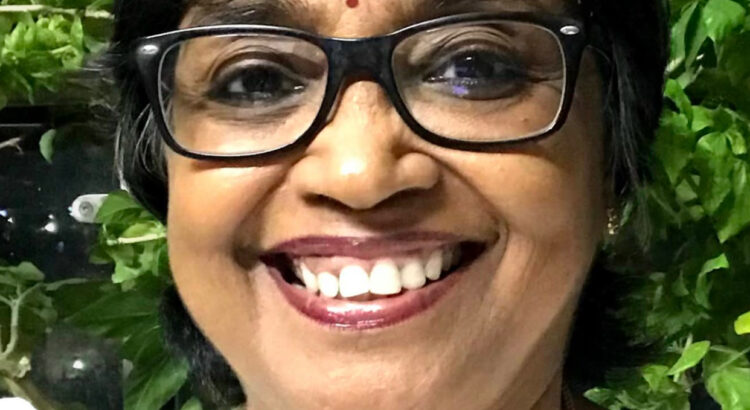
Pioneering The Story Telling Movement in Tamil Nadu

Jeeva Raghunath’s storytelling journey began in the classroom, where she spent 12 years captivating toddlers before bringing her creativity to high school French lessons. A chance reunion with Radhika Menon, M.D. of Tulika Publishers, led her into children’s book marketing and the translation of Priya’s Day by Cathy Spagnoli.

Fifteen years ago, at the book’s launch, she was formally called a professional storyteller - a title that shaped her future. She pioneered the storytelling movement in Tamil Nadu, represented India at 17 international festivals, and trained over 25,000 children and adults worldwide. With 500+ performances to her name, she became a force in the storytelling world.

Beyond the stage, Jeeva has authored 8 children’s books, translated 45 into Tamil, and starred as Owl Aunty in Singapore’s award-winning Punnagai. As Creative Head of the 3D animation series Bommi and Friends, she brought stories to life in a new dimension.

Jeeva is known for capturing the magic of childhood and Tamil culture through engaging narratives. Her works include Malli, a heartwarming tale of simple joys, and Gadagada Gudugudu, which playfully introduces traditional street games. She has also created Tamil alphabet books like A Vilirunthu Akku Varai and Kasakasa Parapara.

Her contributions extend to early readers with the Thumb Thumb Series (Where is Thangi, Up Up) and the Panchatantra Series (The Talkative Tortoise). She has also co-authored Uma’s Secret with Sweden’s Marie Oskarsson, soon to be published in Swedish.

Through her vibrant storytelling, Jeeva brings culture, rhythm, and imagination to young readers worldwide.

Jeeva grew up in a world where stories weren’t just told—they were lived. The first tales she ever heard were in the warmth of her mother’s lap, wrapped in laughter. Humor, she realized, was the heart of a good story, a thread that wove itself into her own storytelling journey.

As the world shifted to digital screens, many feared that children would lose interest in traditional tales. But Jeeva knew better. No gadget, no animation, could replace the magic of a story told in person, the twinkle in the teller’s eye, the rise and fall of their voice.

Over the years, she penned nearly a dozen children’s books. Indian storytelling had long existed, but now, more publishers were bringing its richness to the forefront. Tamil, with its vast ocean of folktales, was her greatest inspiration. The stories of the land, passed down through generations, shaped her voice and vision.

Some lament the loss of oral storytelling traditions. Jeeva, however, sees a different picture. Yes, some have faded, but others are being revived with fresh energy. The landscape isn’t barren—it’s blooming.

Do stories shape minds and spark action? Perhaps. But Jeeva believes that stories, like seeds, grow differently in each listener’s heart. "You can lead a horse to water, but you can’t make it drink," she says with a smile. Each child, each listener, takes away something unique.

And as for her favorite Tamil story? She doesn’t pick just one. “Any story that touches my heart,” she says, “is a story worth telling.”
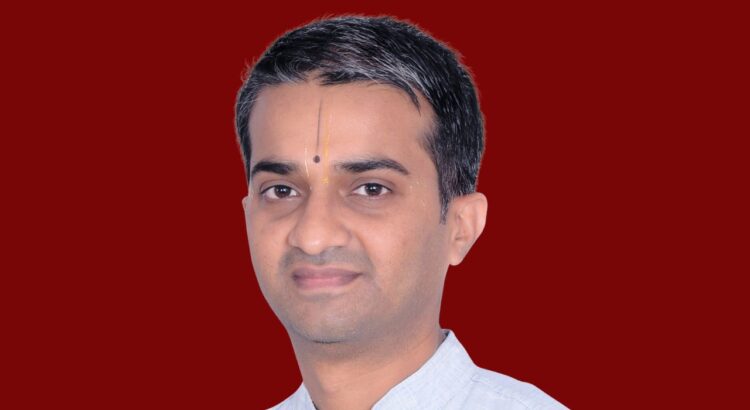
Balance Between Shraddhā And Sāstra

Dr Srinidhi V, a physician and public policy scholar, bridges traditional Indian knowledge and modern research. He is a founding member of the educational initiative Pūrṇapramati and serves as Honorary Deputy Director at the Aitareya Śodha Prakāśana Pīṭha of Udupi Śrī Bhāndārakeri Maṭha.

Educated in Kannada medium schools in Kalyana Karnataka, he earned his medical degree from Bangalore Medical College (2007) and later completed a Ph.D. at IIM Bangalore, focusing on Ayurveda and biomedicine. With eight years at PHFI’s Ramalingaswami Centre, he worked on health equity and social determinants. A scholar of Saṃskṛta and Mādhva Vedānta, he has edited rare manuscripts, co-authored a Saṃskṛta grammar, and received the Prof. M. Hiriyanna Grantha Puraskara. Now dedicated to making Mādhva teachings accessible, he develops research materials and teaches Saṃskṛta, Indian epistemologies, and Vedānta through Pūrṇapramati, MadhvaVidya, and INDICA.

What are your insights on the the Metaretreat on Pedagogy? 

 First, I extend my gratitude to Sahana ji and Shivakumar ji for persuading me to reschedule my commitments and attend the retreat. I am truly grateful, as I would have otherwise missed this enriching experience.

The MetaRetreat was exceptional due to the powerful synergy of its theme, participants, schedule, and location. It was a timely intervention addressing a critical issue of the mainstreaming of IKS, which must happen at both the content and pedagogical levels. Engaging with individuals from diverse backgrounds and expertise, all deeply committed to this cause with shraddhā, was highly motivating. The retreat provided an invaluable opportunity to strengthen existing relationships and build new networks.

My academic and personal interests revolve around the fault lines between tradition and modernity. In this context, I gained profound insights from Prof. Paturi, whose perspectives on engaging with modernity while remaining rooted in tradition expanded my understanding of this theme.

A particularly fulfilling moment for me was when the entire team, especially Nitya ji and Arundhati ji, on Prof. Paturi’s suggestion, encouraged me to write a textbook on the Bhāratīya Theory of Knowledge. This felt like a divine coincidence, as I had already initiated this project discreetly over a year ago, without anyone knowing. That an eminent group independently proposed the same theme, and methodology reaffirmed the significance of my work and gave me the confidence to prioritize it.

How are you integrating Indian values and Knowledge into the syllabus taught in your school?

At the content level, the curriculum in our Gurukula includes Bhagavad Gītā memorization, Rāmāyaṇa and Mahābhārata storytelling, and rigorous Sanskrit education as part of the daily routine. Additionally, we adopt a framework integrating the adhibhūta, adhidaiva, and adhyātma dimensions of reality. This approach ensures that all knowledge systems are contextualized within a sacred paradigm.

To reinforce this integration, we have designed initiatives such as celebrating cultural festivals with contemporary relevance. For instance, Bhāgīrathī Jayantī is observed as River Day, allowing students to experience these dimensions in practice.

What are the areas in which you see challenges in such an integration?

 The unresolved tension between modernity and tradition remains a significant challenge. The politics of knowledge is skewed in favor of modernity, making it difficult to create a level playing field for traditional systems. While we strive to engage with modern frameworks while staying rooted in tradition, striking the right balance—where the sacred remains uncompromised—has been difficult.

Furthermore, we are yet to establish a clear roadmap for higher education that preserves paramparās in their true sense while also ensuring economic sustainability.

What do we actually understand by Indian pedagogy with reference to your sampradaya and the works you have translated or engage with.

At its core, Indian pedagogy is practice oriented. The key distinction between the traditional Indian ethos and contemporary education lies in the centrality of shraddhā toward the sacred, which naturally informs the learning process.

Traditional learning is inherently emic, with a strong emphasis on ritual practice alongside intellectual rigor. The true hallmark of Indian pedagogy is the balance between shraddhā and śāstra —a combination that ensures both depth and authenticity in knowledge transmission.

In the integration of Ayurveda and Allopathy how do we ensure that the essence of Ayurveda is not lost by the different approaches of the two systems with more emphasis being given today to Western research methods. 

This requires an explicit recognition that epistemology is deeply tied to ontology and axiology. When a knowledge system excludes certain ontological categories, its epistemology inevitably becomes constrained.

Modern research methods, due to their rejection of the metaphysical, inherently impose limitations. The only way to integrate both systems meaningfully is by ensuring that the ontological foundations of Ayurveda are respected. Once these core theoretical constructs are acknowledged as sacrosanct, modern research methods can be employed to assess outcomes - without undermining the conceptual basis of Ayurvedic principles.

Biological plausibility cannot be the sole criterion for validating or rejecting Ayurvedic approaches. Instead, modern methodologies should be used to evaluate results, while the theoretical framework remains intact.