Local People Make the Best Wildlife Trackers: Akanksha Sood

Akanksha Sood Singh, award winning wildlife film maker, and producer and co-founder of The Gaia People, a film production company, is described by Jackson Wildlife as having "developed and honed her skills, often in extremely high pressure – high demand settings which range from the jungles to tent pole feature films, crafting scripts to negotiating complex acquisition and co-productions and now to producing and directing her own films."

Akanksha’s work has been televised across the globe on almost all major networks.  In this interview with CSP she speaks about her films:

As The Gaia People is an all women team, how do perspectives change in wildlife films based on gender of the filmmaker. Do we have enough female voices?

Every filmmaker has a point of view that is reflected in the films they make and that is what sets the narrative apart from another film, which may be on the same topic. Having said that, I think in wildlife films the subject of the film dictates the tone – you want to tell the life story of the most famous tiger through her point of view or do you want David Attenborough narrate her story? Both have an impact, the tone may be different. In my experience I have seen that women bring in a more personal and emotional touch to a narrative whether she is a director or writer or cinematographer. We have not had enough female voices and for those who are here, there has never been a platform for their contribution. But this is now rapidly changing as I see an army of young dedicated women entering this space in varied roles – something that collectively as a team can really change the shape of a film. And in India, irrespective of the gender of the filmmaker, we don't have platforms for natural history content! There is an amazing number of channels in India and even OTT platforms now, yet none of them commission wildlife films – commission is different from acquisition. We do have a Discovery Channel and National Geographic here who tend to acquire some wildlife films, but mostly commission quick turn around content based on culture, food, travel, defense etc.


How did your love for the wild enter the narrative?

The fact that I am making this narrative is because my love and passion for it drives me! It gets reflected in the locations I work in, the animals I pick to make characters in my stories and how I want to tell their stories. The love of the team for this work is also very important because that too has a bearing on the narrative. What is important is that there is a diversity of views working towards the same goal that truly brings out the best and more holistic story.

How are your wildlife films similar to your films on social issues or documentaries on society?

The two are very very different. My wildlife films vary – blue chip, action, science, conservation – a mix of something or everything. But my social documentaries have been observational and emotional. In films you rather take a stand or lay out the facts – I like to keep my views to myself and show the facts, but with a treatment that moves the audience. I want people to empathise with my characters whether they are human or animal. Over the years, I have come to conclude that telling stories of people is much easier than that of animals – and that challenge is what keeps me on my toes.

How has film making influenced conservation in India?

It brings to light habitats and species that you did not know exist in our country. It makes you aware of issues that plague our natural world, shows you historical changes that impact contemporary times and help put in perspective what the future can look like. It highlights the grassroots work being done by researchers, biologists, conservationists, NGOs, forest departments and even the common man which otherwise never come out. And films can influence policy level decisions as a tool of research and evidence. Overall, wildlife films help promote the appreciation and conservation of our living planet.

Among the science genre where do wildlife films stand?

Wildlife films are special factual films. Let me explain this – there is fiction and non fiction that is also called factual. In the broad categories of factual, science is one. Wildlife films are very specialized and thus the term “specialist factual”.

Does the wild tell it's own story or do you approach it with your own ideas?

Nature always tells it owns stories. As a filmmaker I think it is my role to bring that story in an entertaining and impactful way to the audience. For example – I made a film called Tigress Blood – based on unusual behaviour of tigers that has never been documented in the wild. The story unfolds as we saw it play out in the jungle. Now I am working on a series that is scripted – I will film and put together the visuals as per my script– but it is completely based on facts.

How have wildlife films originating from India changed over the years?

They have come a long way. Long way. Wild life films have typically been blue chip – films of very high value and production quality on a species. These films would take a year sometime even more to make an would typically be an hour long. They are timeless films and thus have an appeal across regions and languages – could just be dubbed into any language. They were also popular as television was the only outlet, usually just one public broadcasting channel, which had dedicated slots for all kinds of programming.

Then came cable television and it changed the game. It required films of shorter durations, but more in numbers, and films with drama and action as they were now competing with other kinds of fiction and non-fiction programming running at the same time on another channel. Around this time came a wave of presenter led films thanks to Steve Irwin. The public lapped up the hand-on approach of the wild with all the drama of survival and exploration that was thrown in. Now for the price of one blue chip film, 2 to 4 presenter led films could be made. Blue chip thus gave way to low budget, quick turn around films.

Now there is just too much of content out there. Blue chip sill remains the all time favorite, but unique access; never before seen behavior, human impact and even conservation told smartly are gaining popularity.

How closely do you work with locals while filming.  What insights does this offer? Can you share a few anecdotes.

Yes we do – at many levels. Involving the local communities is a primary responsibility that I have to factor in as a filmmaker. To immerse yourself in place and to gain the most out of it for your story, who else can be a better guide than the communities that live alongside with the species in those habitats, apart from the scientists? And involvement has many options –making them stakeholders by using their knowledge base, involving them as characters in the film, or giving them the financial benefit through home stays and local canteens, and also building skill sets by employing them as crew members in some capacity. I can tell you that local people make the best wildlife trackers in any landscape, anywhere in the world. Even researchers depend on them for their field work.

I was recently making an episode on Pangolins in and around Papikonda National Park in Andhra. This is one species that you don't know if its there or not there, how do you track it, in a Naxal zone, where do you even start? The biologist himself had tried for a year or more and had no got even one Pangolin on his camera traps. I had an amazing shooting script ready. But it all broke down in the field when after 5 days I realized we are NOT going to get even one shot. I spent two days interacting with local people, hearing their stories and experiences with the animal and the landscape, and than on location I had a new script for the film. It’s turned out even better than what I had imagined – all because I reached out to the best source of information!

Indian Temples and Jhandis in the Caribbean: Interview with HC of India to Trinidad and Tobago

Soft-spoken Orissa-born diplomat Arun Kumar Sahu is a poet at heart. His collection of poems “Iguana and Other Poems”  was recently published. Sahu is currently posted as the High Commissioner of India to Trinidad and Tobago, Grenada, Dominica and Montserrat. A trained linguist and a JNU alumnus, Sahu joined the Indian Foreign Services (IFS) in 1996.

Avatans Kumar, a US-based columnist and Sahu’s long-time friend from their JNU days speaks to the Ambassador on his poetry and more.

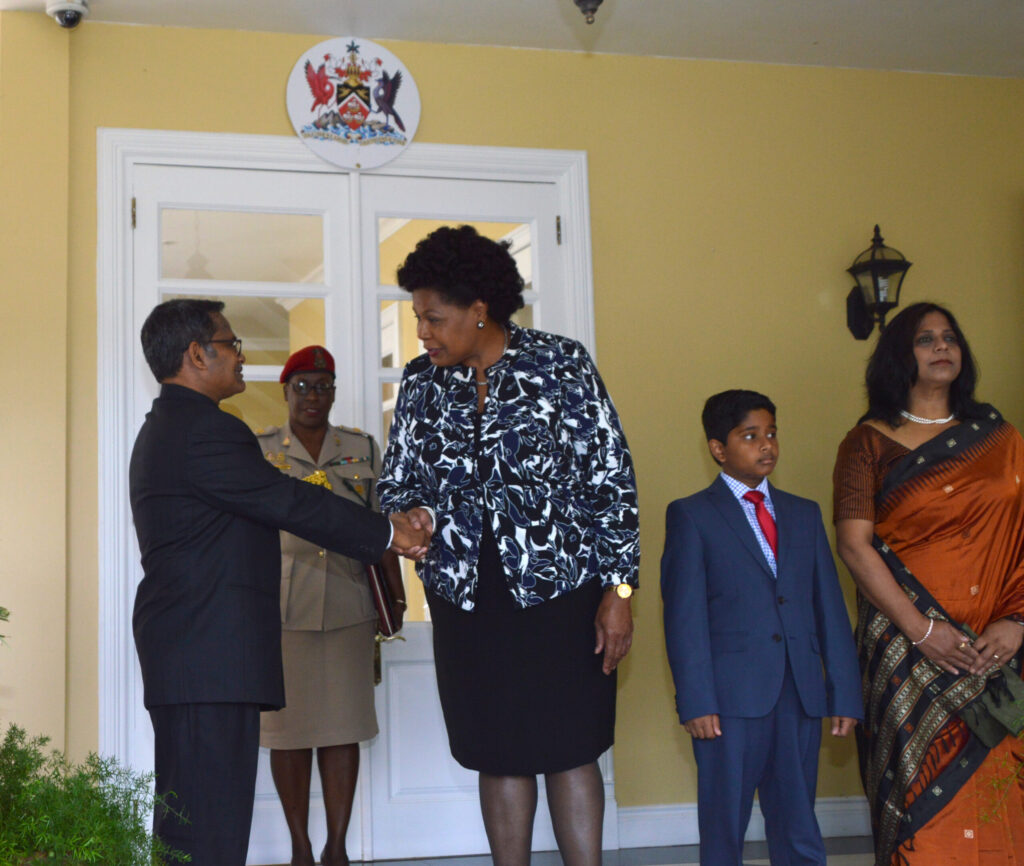
High Commissioner Arun Kumar Sahu calling on the President of Trinidad and Tobago Paula-Mae Weekes

Given the history of the Indian diaspora in the Caribbean, how similar and how independently evolved is it from India in language, culture, faith, etc?

There are some similarities and some differences. One can see the Indianness in their culture, faith and social existence, but many aspects are also Trinidadian. Over the last 175 years, Trinidadians of Indian origin have continued with some socio-cultural practices from India, but many others have also undergone substantial change. Many Indo-Trinis, especially the younger generation do not understand or speak Hindi or Bhojpuri, though most of them love Bollywood films and listen to Hindi songs.

Some Hindu households still use pennants, locally called ‘jhandi’ in their yard (I have written about this in The Hindu, dated 30 August 2020 available at https://www.thehindu.com/opinion/open-page/the-caribbean-pennants/article32472565.ece ), worship many gods and goddesses and listen to Tulsidas’ Sri Ramcharit Manas and other Hindu texts. There are over 300 temples of different sizes all over Trinidad and Tobago. However, they are also intimately connected to life and society in North America and the UK. They speak English and creole, enjoy the soca, doubles, and cricket. Intercultural interaction is a fact of Trinidadian diversity. I have started writing a book about the India connection of Trinidad and Tobago. I am fascinated by the way the indentured laborers and their descendants have carried on their cultural uniqueness.

What is people’s attitude there in terms of Yoga, Ayurveda, Veganism (India’s perceived soft power), etc?

Yoga, Ayurveda, vegetarianism, and astrology are not new to the Trinidadians. Many of them practice them and also promote them. Their rituals of rites of passage are very elaborate. Some of them also believe in Panchang and practice fasting on certain days of a week. At the same time, many of them are also very western in their lifestyle and outlook.

Famous Hindi poet Mahadevi Verma once wrote - ‘viyogi hoga pahala kavi’ (bereaved/detatched will be the first poet). Are you a ‘viyogi’. What inspires you to write poetry?

Detachment is essential for creative output. A writer has to be a mute observer, a silent sufferer to create something that will touch the hearts of many. He is there in the process, but he is also not there. A writer does not write well when he is in a state of suffering or ecstasy. He writes well only when he has gone through the emotion and lived with it for a while.

To me, expressing emotion is not literature. Literature is a craft that expresses the essence of a writer's feelings and links it to the existence of the wider world. It's a mirror with multiple cracks. No image is perfect in this mirror.

I have defined it in my poem "MY POETRY" in the collection IGUANA and Other Poems. I have said,

"My poetry,

It is a mirror of crushed sentiments

A reflection of the living and suffering

The invisible imprint of stillness of moments.

Read it once,

Read it again and again,

Smile, dance and cry with her

Take a deep breath and feel,

Surreptitiously and unwittingly

She will touch your heart.

My poetry."

I am not sure many folks know that you are a trained linguist and I have known you since our JNU days. You were always a graceful and helpful senior. I had a fantastic time working with you at the National Seminar on the 8th Schedule. That being said, has being a trained linguist helped you as poet? How?

Yes, it has. It has helped me to understand the power of language, words, and how to stitch words in a composition. Words, phonemes and morphemes are like pebbles in the seashore. Once you enjoy playing with them, you want to talk to the sea with their help. It has also helped me understand the nuances of a second or third language or a foreign language. Language is both a product and a reflection of history and society. Understanding a language is vital for a writer.

Interesting you talk about multilingualism. What language do you dream in?

Don't know. As you know, an Indian child is born bilingual or trilingual - the mother tongue, which could be a local variety of the standard first language, a dominant second language, in my case English and Hindi because we all watch Bollywood films. Subsequently, one can learn some foreign languages too. I learned Mandarin Chinese. Sometimes, words of two or three languages come in a sentence. I suppose the dreams are all messed up.

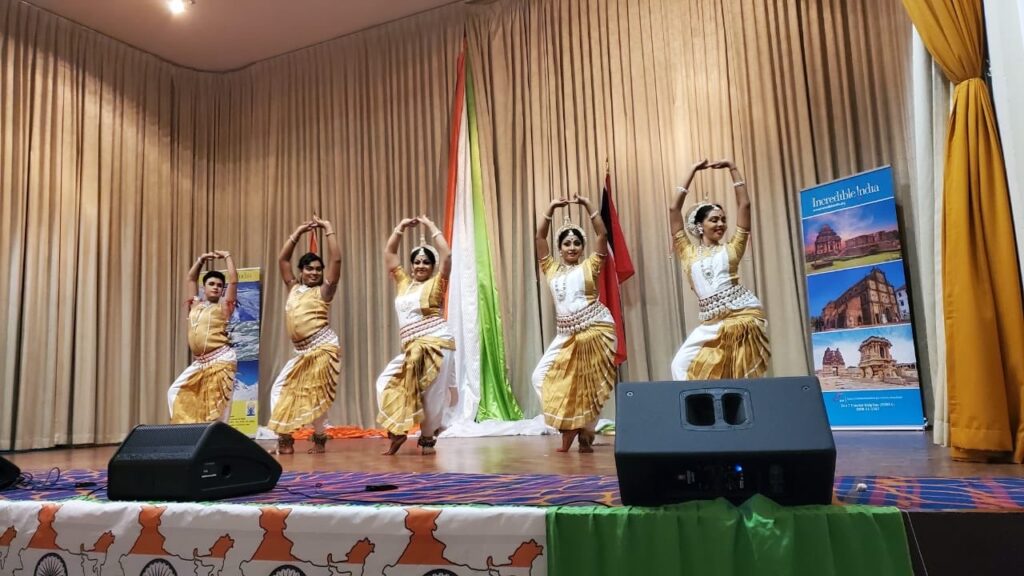
Odissi dance in Port of Spain

Talking about dreams is making me drowsy already. Jokes apart, do you really get enough sleep? Being a diplomat, you must keep a busy schedule. When do you find time to write poetry?

I am a loner, mostly detached from many things that I do on a day to day basis. I do my job with the utmost care and dedication, acutely conscious of time. I do not waste my time in fruitless arguments and meaningless socialization. Once I finish my job, I return to my world of solitude and self-introspection.

Specific experiences leave a deep impression on me. I try to live with them for days, months, or maybe even for years. Then one day, they just come out and take a literary form. I wouldn't say I like to write about raw emotions. I allow them to be ripe within me. I have no specific time to write. I write while traveling, in a hotel room, on a flight, after a diplomatic engagement, late at night. There is no specific routine. Sometimes, I do not write for days if I don't feel like it.

What kinds of books do you read? Who are your favorite authors/poets?

I read all kinds, but books dealing with human characters appeal to me the most. I also like books on philosophy and history. I am not a voracious reader but a discerning one. If a book does not appeal to me, I don't proceed with reading it even if its a best seller. I love listening to people.

There is not one favorite author, but many, in various languages such as Odia, Bangla, Hindi, English and of different geography, Russian, African, and Latin American. But two books in my young age attracted me to the world of literature: Paraja of Gopinath Mohanty in Odiya and The Old Man and the Sea of Earnest Hemmingway. In a sense, I didn't read these books, they read me.

What is your idea of relaxation?

Don't do anything—lounge around with a big cup of strong coffee with milk and extra sugar. Don't talk to anybody—no mobile phone. Watch a movie. Listen to Indian classical music, thumri or ghazal, Salman Ali; country music, Frank Sinatra or John Lennon, watch a good movie or a stand-up comedy.

You also write short stories. Between poetry and prose, which one is your favorite, and why?

There is no favorite. I write all kinds of literature. For me, the art of writing is only a tool to express what I want to convey. The inherent urge to express a feeling, theme, or character decides the form of literature, whether a poem, a short story or a prose piece. What I have observed in me is that a feeling usually takes resort in a poem, a character in a short story, and a narrative in prose. The satisfaction is actually in playing with the words, phrases, and finally able to say what I wanted to say. I am comfortable in creating literature in all forms. Someday in future, I intend to write a novel too.

I will certainly look forward to that. Has poetry affected the way you approach diplomacy?

It's a complementary relationship. Not only poetry but literature, in general, is the dissection of the society, the good, the bad, and the ugly. If a diplomat understands literature, he or she understands the mind of a community he lives in, which in return sharpens his insight in providing critical inputs for policymaking and statecraft. Diplomacy as a profession, on the other hand, exposes one to an unbelievable range of diversity and people.

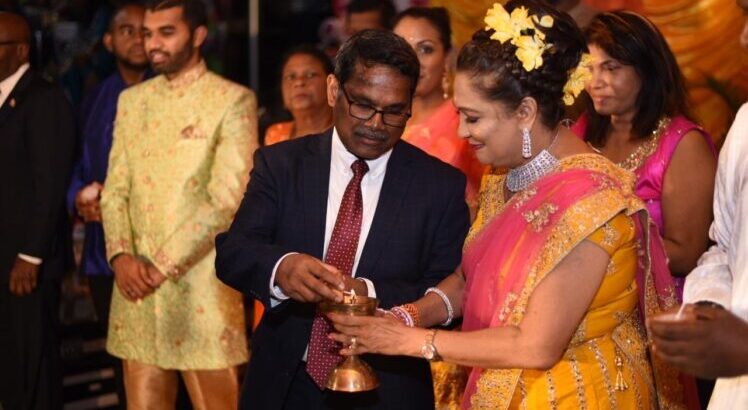
(Cover picture: Sahu with former Prime Minister Kamla Persad Bissesar (of Indian origin). “Iguana and Other Poems” can be purchased at https://www.amazon.com/dp/B08HGLNN39/)

Chennai Designer Revives Lost Vegetables

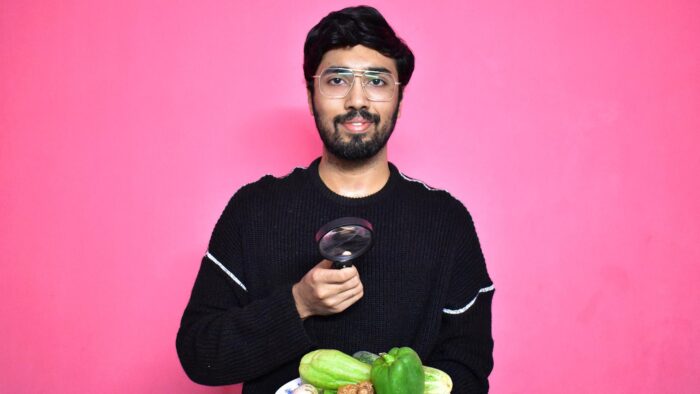
Akash Muralidharan the young food designer from Chennai is on a mission. He wants almost extinct local vegetables to repossess the culinary space. The 25-year-old food designer recently completed a 100-day cooking challenge on Instagram, which saw him discover and cook with some of the lesser-known vegetables native to the South, like country cucumber (thummatikai), spiny gourd (mezhuku-pakal), the list goes on.

How many 25 year olds are chopping and cooking unheard of vegetables with a burning passion to get them back on the menu? To understand his passion we need to rewind his life. It was the Alserkal Avenue’s Quoz Arts Fest , Dubai that made him conscious about saving local cuisines and crops. He was there as a part of  the CGG  team that had put up the art show- Food design and Art installation? What is this Brave New World?

Akash Muralidharan is a food designer who was trained at SPD, Milan. He gave up his career as an architect to pursue a calling that is deeply rooted in his childhood.

A young life packed with so many flavours was a sure invitation to CSP. CSP spoke to him about his journey as a food designer, the importance of safeguarding our culinary diversity and, why we cannot shun away from our role in guarding our legacy which we have taken for granted. We can consciously preserve our culinary heritage by doing something as simple as cooking some of the vegetables listed by Akash.

Food influences and growing up years

Food and the joy that comes with cooking, has always been a part of his life. Recalling his childhood, he says he spent most of his time in the kitchen. Firstly, because he loved eating and the second was because he was his grandmom’s favourite. He would watch her cooking, follow her around while working in the kitchen garden trying to cultivate new plants from saplings brought from numerous family trips. His fondness for food and cooking grew from hanging around with grandma. Touchingly he says, “I think my interest in food might have stemmed from my relationship with my grandmother and the kitchen.”

Chennai to Milan

Life took a new turn. Growing up, moving away from the joint family settling in a new flat he felt that design was his passion, so he pursued a course in architecture. Later, while working in an architecture firm the monotony of blueprints and AutoCAD drove him to quit his job. In pursuance of his passion, he took up animation and joined a start-up too. But nothing inspired him till he saw a notification in July of 2018.  It was for a Master's course in Food Design and Innovation from Scuola Politecnica di Design (SPD) in Milan. Talking about that moment he shares, “It was a very last-minute decision but my portfolio interested them at the Institute and I joined the institute. The course helped me expand my interests and I realised that I enjoyed working with food every-day. My background helped me get creative with food.”

Academic Internship and exposure to the Food Industry

Akash Muralidharan interned with Katja Gruijters at her Studio is in Arnhem, close to Amsterdam, working with her he got to experiment with architecture and food. With her, he learned how to translate food into installations, spaces through which people could feel the process of an ingredient.

A story had to be told about a region which was rich in agriculture but unknown, uncelebrated in the rest of the Dutch world, a narration in form of an art installation that would increase the footfall in the neglected agricultural bowl of Holland. While working on it he realized the rich possibility of design and food.

The course took him to places across Europe and he learnt much from the community of food designers.

Importance of Food design in today’s world

What is this new field of Food Design? He says that Food design is a form of art whose canvas is food. The food designer acts as an artist using food as a medium to send powerful messages. Food designers no longer stick to the norms dictated by society. They no longer confine their skills in creating tangible products.

“Food designers are making the effort to reshape and reimagine the relationship between humans and food for a better sustainable future.”

Talking about the status of Food design in India he says that he was not  sure of designers working as a team but many have started talking about issues related to food . “Through design we can reach out to larger people, we do not only package food aesthetically but create awareness behind the presentation.”

The purpose behind the design is to create awareness about food diversity and how to sustain it best.

The Centre for Genomic Gastronomy

After his internship at Amsterdam, he moved back home as he felt that there were, “Many opportunities to send very powerful  messages through food.”

He joined The Centre for Genomic Gastronomy. It is a study group of artists from around the world who work on food. He has been working with them remotely, Akash has been spending his time studying about food and human behaviour, designing food, and presenting his thoughts through exhibits and workshops. “We tell the stories and exhibit the dishes so that people eating and reading the stories realise that whatever is happening with their food habits right now could dictate what they would be eating in ten years from now! They aim to educate people about being conscious of their food habits.”

Alserkal Avenue’s Quoz Arts Fest, Dubai- Sushi on the plate

New National Dish UAE is a project that asks how climate change will change what people eat. Sushi on the plate was one of the food scenarios that CGG presented at Arts Fest Dubai. The very idea of Dubai eating sushi in ten years seems like a fantasy. New National Dish was inspired by the exhibition, Food Bigger than the plate by  V&A London. In a similar effort to bring the same concepts of sustainability and food future, but specific to the UAE’s scenario V&A  asked CGG to manage the art show at Alserkal.

In a very scientific manner, four possible food scenarios were projected for 2030. Imagining a future dictated by socio-cultural changes on one hand and by scientific or technological developments, on the other hand, a hybrid Sushi emerged as a possible national dish! Looking into the factors it does not seem farfetched as salmon farming has increased and a drought-resistant variety of rice that grows in saltwater, sticky rice. Voila, Dubai may eat sushi in ten years!

Aakash played a key role in this show. The project was taking shape remotely. His training as an architect saw fruition as a lot of aids were needed to visually communicate the concepts to chefs, installation artists, and fabricators. The instructions became lucid and were aesthetically translated into a wonderful exhibition. It received many accolades and hopefully, it will make people conscious of their food choices.

As he says, the idea was not to tell what exactly they would be eating “These futures are not predictions, but rather fictions you can use to imagine with or push back against. To start conversations and debates.”

An idea of one such more immediate conversation was brewing in his head.

100 days pact- Cook & See

Akash’s earlier projects had triggered in him a burning desire to preserve food diversity. Grow local and eat local should become the norm. But how could he start a debate on this issue?  A chance encounter with   Samaithu Paar by S Meenakshi Ammal lying in his erstwhile bedroom now a converted storeroom showed him the path and a movement commenced.

The three-volume book Tamil cookbook was an essential part of the trousseau for many young Tamil brides. The narrative that contained stories, instructions on how to treat vegetables, and detailed methods of preparations hypnotised him, the yellowing pages heavily underlined with margins  bearing notes in his mother’s handwriting gave him the  idea of  “ Cook & See”

The book bore names like mezhuku-pakal, names he had neither heard nor tasted. So,  in whodunit style he started digging out these vegetables, he started questioning his mom, aunts, and cooks from an older generation. While doing so a plan began to emerge;  a plan designed to make these lesser-known vegetables cool again.

On March 1st, 2020 Cook & See was launched

He wrote on Instagram at the start of the challenge.

“These hundred days will help me gain the perspective of the house cook who decides the meal to be served in the house, and the challenges faced by them in acquiring and cooking with these vegetables,”

The idea behind this was twofold.

One was to educate himself about each of these vegetables, their origin, the background of them, and the culinary aspect of each vegetable.

The other was to raise awareness by sharing recipes.

About the launch, he says that “I went into this with blind faith,” faith because he had his mother’s support. In the beginning, he had 25 vegetables on the list. Every week he would plan the menu with his mother and source the vegetables taking inspiration from the cookbook. The recipes were cooked for lunch and his dad was mighty pleased with trying out new dishes every day!

He shared clips of them cooking on his Instagram along with explanations about the origins of each crop and how histories of trade have formed cuisine in parts of South Asia. It is appropriate to go gaga over his Instagram feed. He used his design skills as well as took help from his illustrator friends to create a wonderfully engaging template showcasing these lesser-known vegetables.

Cook&See was not without its shares of challenges and surprises, Lockdown being the biggest one!

Recipes from Samaithu Paar were the starting point, it did not have recipes for all the vegetables. Together with his mother, Akash Muralidaran adapted existing recipes, matching flavour profiles and textures. For example, he cooked moringa flowers according to a recipe featuring banana blossoms and the result was surprisingly good.

Lockdown – Show must go on

The lockdown, which was implemented shortly after the rolling out of his series, did not make things easier. It was a bit hard to hunt down these vegetables. Insta support and encouragement came in handy. Aishwarya was growing many of these vegetables on her grandmother’s land. For Akash, this was a prayer answered.

The initial plan of 25 vegetables snowballed into a movement. Major credit goes to his visually appealing Insta page that was flooded with hundreds of likes and comments. His recipe videos touched many hearts, inspired hundred to share their list of forgotten vegetables, and in no time the list of disappearing vegetables multiplied!

Many shared a similar sense of loss and hoped for the resurrection of these vegetables. And so Akash stepped out of the kitchen, hung his apron, and passed the ladle to his community of supporters.

The last ten days were open to the public. It was Cook and Forage. Vegetables are growing around us; moringa, neem,  papaya, the flowers of which could be sourced without visiting the market for the supplies! 

Friends took it up and shared interesting recipes. Survival skills to be nurtured during Lockdown! Native vegetables apart, it was also time to celebrate the greens surrounding us, says Akash. Aloe Vera Thuvaiyal was one such revelation. “One of my friends suggested this dish to me. It made me realise how we do not notice the vegetables growing around us,” he adds.

The 100th post on aloe vera wrought to close the Cook &see with an awareness about the vegetables that are fast disappearing from our kitchens

Why is it important to think about biodiversity (or the lack of) on our plates?

Over the last 20 years, our eating patterns have changed drastically.  The culinary landscape has changed.

“Most of the vegetables that we eat today have been reduced to a handful, quoting a 2013 FAO Article, Akash tells us that 95% of the world’s energy needs come from 30 species of crops. Our quest towards a standardized diet in interest of food security is one of the main reasons’’

In Akash’s research, he also raises an interesting point about cooking traditions and the link to vegetables used and the reasons for the disappearance of many!

On the 100th day of the project, Akash Muralidharan stated he intended to continue Cook and See’s aim to help heritage vegetables and locally grown crops make a comeback.

There were three parts to the campaign.

The first one was on Instagram Cook & See. The second one was research. He is in the second stage of research. Because action can only come when we know the reasons, “I am now in the process of talking to home cooks, chefs and caterers in Chennai about why these vegetables do not make a big part of the city’s kitchens and menus. The aim is to publish that as a book,” he says.

Research into the causes second part of the Campaign

 Any research must ask the right question. Why and how did we start losing these vegetables and the most pertinent question, why do we need these vegetables? As he wrote appealingly in his article…

“We can preserve the diversity if we know the threats. If we study what has happened in our past, we can answer the questions about our future,” he says.

He spoke to home cooks, caterers, restaurant owners to find the answers. Was it because the vegetables were not available in the market or because many did not know how to cook them? Surprisingly, none of them talked about having less time to cook or the difficulty of the process. So why are we losing our traditional cuisines?  Were these vegetables or cooking techniques eliminated naturally by a change in society or were they influenced by external factors like the markets and social media? This needs to be researched seriously or else these cookbooks will become mere repositories of forgotten foods from the past for future generations.

From his research, it emerges that each one of us has played a role in the disappearance of these vegetables.

From home cooks who do not plan their menus for the week and end up buying whatever is available, to restaurant owners who have only eight to ten vegetables on the menu, to new methods of recipe transfer -YouTube channels and recipe blogs that have replaced mothers’ and mothers-in-laws’ recipe banks, to the suppliers- the wholesale markets that force the farmers to cultivate only about twenty or less variety of vegetables, vegetables which have a longer shelf life and, thus dictating what comes on our plates!

Third Stage-What would be on your plate in 10 years?

 “I’ve been talking to  25 to 30 home cooks in Chennai, asking them about their shopping lists and how they plan their meals. It was a revelation to me that people do not give this much of a thought. They are happy with the 15-20 vegetables that are available in the market. But if this were to continue, we would risk losing more variety,” he points out.

In the third stage, one of  action commences, “Once the research is put together as a book I would like to experiment on some of the solutions that came up during the research.” Duly educated and sure of the reasons he wants to take the campaign to schools and colleges. He shared with us that promoting urban gardening and re-inventing these vegetables can be a definite way of bringing them back on our plates. A cook himself he wants to create Squash Caviar to woo the gen Z !

“This is not the end of ‘Cook and See’,” he wrote on social media. “The challenge may have come to an end, but this is just the beginning of more campaigns and research to bring back these vegetables to our plate. To new beginnings and new challenges.”

One feels that vegetables will see a better chance of revival if we stop looking at women as the custodian of the culinary legacy. Women are no longer confined within the kitchen. They have found other mediums of expression. Men too need to don the apron strings. Akash is a lodestar to all the cooks out there. He mastered the art of making the most delectable Mysore Paak following his grandmother around in her kitchen.

(Photographs credit- Akash Muralidharan)