Focus On Sandeepany: In Service Of Self And Society

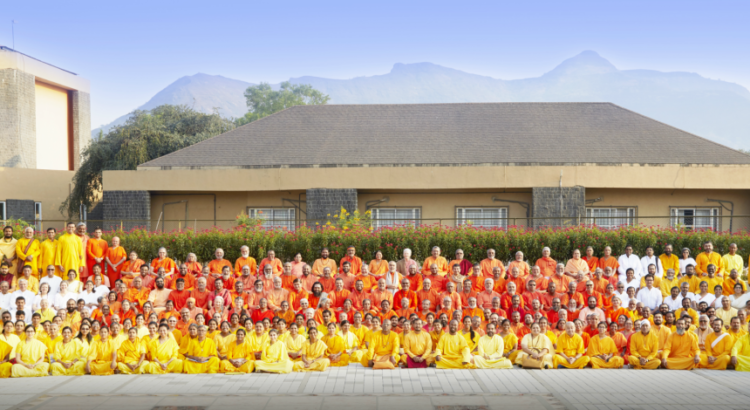
All-India Swamins Brahmacharins of Chinmaya Mission Meet at Chinmaya Vibhooti Ashram, Kolwan, Pune (2019)

Dr. Arundhati Sundar (Chinmaya International Foundation) answers Aparna Shridhar (Indica Moksha) on the modern-day Gurukula for Advaita Vedanta envisioned by Swami Chinmayananda(1916-1993).

(Note: In the interview Arundhati refers to Swami Chinmayananda often as Gurudev or Swamiji)

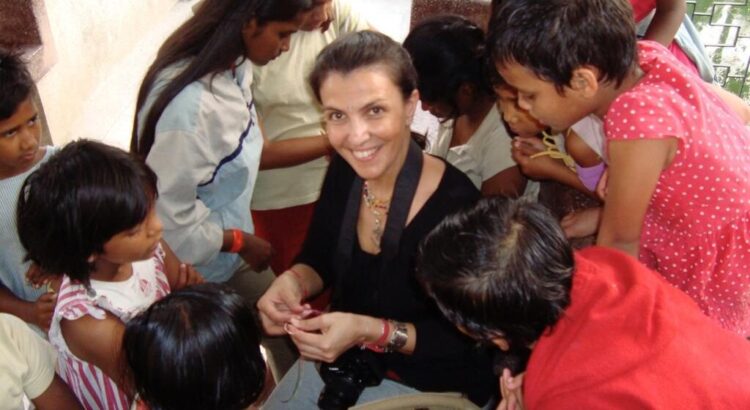
Dr Arundhati Sundar has been a part of Chinmaya Mission and Sandeepany, modern Gurukulas established by Swami Chinmayananda, since her college days.  Giving prominence to Prasathanatrayi education of the Upanishads, Bhagawad Gita and the Brahma Sutras, the Sandeepany institutions are preserving the core values of Hinduism among the youth. From her earliest memory of visiting the Himalaya Sandeepany to awaiting the inauguration of the 19th Vedanta Course in Mumbai in English in Jan 2024, and the 14th course in Hindi in Sidhabari in April 2024, she talks about the journey of the Sandeepany Sadhanalaya through the eyes of a sadhaka. She quotes a name which appears in the archana part of the Guru ashtottaranamavali of Pujya Gurudev – “utsāhavardhakāyanamah”, (Namaskar to the one who energises (me) with enthusiasm and inspiration), saying dharmikas cannot rest or be dejected.

For more details and to register for the Vedanta Course starting January 2024 please visit https://sandeepany.chinmayamission.com/

How did your family come into Swami Chinmayananda’s fold?

My sister and I were curious after reading the small books by Swami Vivekananda on Karma Yoga, Bhakti Yoga and Jnana Yoga and felt we should know Indian philosophy. At that time my mother’s friend encouraged us to ‘check out’ the Chinmaya Vignana Mandir that was running in Churchgate. We started to attend and found the concepts intriguing yet fascinating. For the first 2-3 months, we had innumerable questions. The teacher answered a few. We also realized that answers and explanations would come over several sessions. Then Swami Chinmayananda came to the Chowpatty grounds with his Geeta Jnana Yagna. There was no turning back. We were sure that something fundamental had changed in those seven days at an intellectual, emotional, and spiritual level.  We later realized that my grandmother was a Vedantin who attended the satsangs of several Mahatmas. My mother was a natural bhakta. Neither understood a word of English. My father and brother came in touch with Swami Chinmayanandaji much later. On my husband’s side, he and his the siblings attended Chinmaya Balavihar since a very young age and their engagement in the Chinmaya Mission grew from then.

My sister, a young architect, inspired by Pujya Swami Chinmayananda, joined the Sandeepany Sadhanalaya in Powai, in 1984 with Swami Tejomayanandaji as the course ācharya. After dīkṣā the young brahmachārini was posted to Ahmedabad in Gujarat. She travelled widely across Gujarat and amongst the Gujarati diaspora and Chinmaya Mission centres across the country and overseas.

In 1992, Gurudev initiated her into sannyāsa as Swamini Vimalananda. In 1996, Swamini Vimalananda was posted in Coimbatore as Director of the Chinmaya International Residential School and later the Director of the Chinmaya Education Cell.

Arundhati Sundar with Swamini Vimalananda at Chinmaya Gardens, Coimbatore, August 2018

The Chinmaya Education Movement had humble beginnings with a nursery school in Kollengode, Kerala in 1967 (India). The Movement today encompasses over 80 Chinmaya Vidyalayas (schools), 7 Chinmaya colleges, and the Chinmaya International Residential School in India, and seven Chinmaya Vidyalaya outside India’s borders, in Trinidad (West Indies) the first being in 2003, the latest being the Chinmaya VishwaVidyapeeth, a de novo University in Kerala in 2017.

Swamini Vimalananda, as director of the Education Cell, formalised Chinmaya Vision Programme (CVP) the hallmark of education at the Chinmaya Vidyalayas, based on the foundational principles of integrated development as envisioned by Pujya Gurudev. To promote and encourage CVP principles and mindset, Swamini conducted extensive orientation and training programmes, launched Chinmaya Drishti magazine to communicate best practices across 80+ institutions, and gave shape to many innovative programmes. One that comes to mind is the 200 hours Seva Projects undertaken by the secondary schoolers of Chinmaya Vidyalayas. The projects, guided by the teachers, inspired the children to be the change-makers addressing local issues, a real-life lesson in matching their own interests, building their capacities, while positively contributing to society.  The CVP programme training was not restricted to Chinmaya Institutes but provided to several educational organisations at national and international forums.

Swamini Vimalananda, besides the directorship of the Education Cell, has conducted the six-week Dharma Sevak Courses for over 15 years, innumerable Meditation Camps, including the Purascharana Sadhana Camp in 2021-22. Besides her Vedanta publications, she has written LEEP, aimed at bringing Bhagavad Gītā to the University Curriculum, and co-authored “Why Do We… In Indian Culture” which, since its first print in 1999, has seen phenomenal popularity, with translation from English into eight Indian languages, five European languages and Nepali.

In terms of my family, we have been very blessed indeed. My father, after his study at Sandeepany Sadhanalaya, lived as a vanaprastha at the Chinmaya Gardens Ashram. He was initiated into sanyāsa by Swami Tejomayananda. True to his given name, Swami Nijananda (or Pappaji as he was called by all), felt his life very fulfilled.

What are your earliest memories of being part of the Sandeepany Sadhanalaya project?

In Chinmaya Misssion, the Gurukulas for Advaita Vedanta are called Sandeepany. The first Sandeepany that was set up was Sandeepany Sadhanalaya in Mumbai in 1963.

My earliest memory is visiting Sandeepany Himalaya, located at the foothills of the Dhauladhar Range, in Sidhabari near Dharamshala. I had gone to attend a spiritual retreat being conducted by Pujya Gurudev.  Locally called Tapovan, Sandeepany Himalaya was established to conduct the Vedanta Course in Hindi. At that time the course was being conducted by Brahmachari Vivek Chaitanya, later to become Swami Tejomayananda. He became the head of Chinmaya Mission worldwide in 1993. There was a young dynamic group of Brahmacharin students. Their Vedic chanting from 5-5:30 a.m. was as though in one voice, so perfect that it entranced me, settling the mind for the meditation session that followed.

Being the early days of the ashram, there were only basic facilities. All of us had to scramble for hot water in the mornings. I wondered how the Brahmacharins managed to have everything set up, having conducted the puja, etc. all before 5 a.m. With a laugh they revealed that the stream required no queuing. Down a slippery stone pathway bordering the pine forest, that every now and then was visited by wild animals, in the cold Himalayan December, they took their bath at 4/ 4:30 AM, long before the light of dawn. I was thoroughly impressed with this dedicated, cohesive group who came from Odisha, Assam, Punjab, Rajasthan, UP, etc.

I came to know later about Sandeepany Sadhanalaya in Mumbai, when attending the Chinmaya Yuva Kendra (CHYK) Camp. Later when my sister joined the course at Sandeepany Sadhanalaya, I became so familiar with the Powai Sandeepany that I felt it was a second home. At Sandeepany in Mumbai, too, the group was diverse, from every part of India as well as from Europe and North America. The Acharya for the course was Swami Tejomayanandaji. The discipline observed by the Brahmacharins that I saw never felt forced. All classes started and ended on time. From very early morning to dinner time, the routine was anchored around the classes on Vedantic texts. Their daily sadhana included shramadaan/karma yoga i.e. working to clean up the 10 acre campus, the temple premises, polishing the brass utensils, and decorating the ashram in preparation for festivals like Shivaraatri or some big events. Despite what could be considered monotony by city folk, there was always a sense of enthusiastic energy in the group. In the five years from 1984 to 1989, I probably visited at least once a week and occasionally stayed longer from a week to a month.

Why do you think Swamiji has referenced Swami Vivekananda, for India needing foot soldiers? Are their philosophies and approaches similar for transformation?  

Swami Chinmayananda’s and Swami Vivekananda’s philosophy and approach had a lot of overlap. Their philosophical roots in Advaita are identical – there can be no ‘two’ in Advaita. In their approaches to taking the philosophy and dharma to the people, there are also many similarities.

Swami Chinmayananda while setting up Sandeepany Himalaya said “We want an army of Vivekanandas all over the country. The problems are so severe that they can no longer be remedied by even a handful of persons. Thus, I have to start many training centres, and our hopes are that all of them will bring forth true Vivekanandas.”

For one, Swami Vivekananda is an instantly recognisable household name, an archetypal figure who represented renaissance and transformation for the modern Indian.He epitomised the qualities of the yogi as a hero. At a time when the colonizer had thrown all of Hinduism into the bin by labelling it “superstition”, Swami Vivekananda had garnered tremendous respect in the western intellectual arena, starting in Chicago. Swami Vivekananda, upholding the loftiest heights of Hinduism, stormed onto the world stage. To the Hindu, whose pride was being trampled to dust, Swami Vivekananda truly brought an awakening.

Several decades after Swami Vivekananda, in the newly independent country, despite significant socio-political changes, many of the same problems remained and the challenges were far greater. The political and social leadership did not tap into the inherent wisdom of the Indian civilisation, and completely ignored the cultural genius that could revive the country.

Swami Chinmayananda was deeply rooted in Advaita through his learning with his Guru Swami Tapovan Maharaj, and his sevā bhāva was inspired by his diksha guru Swami Sivananda’s immense work at Rishikesh.

As instructed by Swami Tapovan Maharaj, Swami Chinmayananda travelled across India by foot, bus, bullock cart, and train, through villages and towns, temples and ashrams. He recognized the urgent need of the masses to recover from colonial rule – the challenges were not just economic.  The priests, temples, and related religious / spiritual organisations were totally ill-equipped for the task of guiding the faltering population. The English-educated intelligentsia was entranced by the economic and scientific accomplishments of the West, and blind to the knowledge systems that had nourished this land for millennia.

Naming it the Jnana Ganga project, Swamiji started the arduous tasking of “converting Hindus to Hinduism” through study of the foundational philosophy accompanied by practice. Very soon, Swamiji realized the immensity of the task and for the need of trained teachers who could span the country. That is when he conceived of the Sandeepany, a modern Gurukula. The very first “college” was called Sandeepany Sadhanalaya, emphasizing study and sadhana, both being essential for the transformation of the individual. Both aspects were structured for the modern university-educated youth, while the space provided a conducive atmosphere for Gurukula living, right on the outskirts of a bustling metropolis.

As he interacted constantly with people of all walks of life, the elite and the common folk, Swami Chinmayananda, recognised that Hindu culture, values, knowledge and practises that were traditionally imparted in the home, absorbed by the children in a very organic manner, were eroded by the trend towards nuclear families. It was also increasingly clear to him that popular culture was disconnected with Hindu culture and values. There was an urgent need in society for “an army of Vivekanandas” who were rooted in the foundational philosophy and able to interpret, communicate and serve for the current society.

Of course, the statement was aspirational, a standard to be achieved by the sadhaka Brahmacharins. Gurudev often said, “set the goal so high that one may never reach…, striving to reach the ideal, that is where you grow, day by day, week by week”.

Is the crisis of culture and identity among Hindus worsening in modern day India as people prefer to be a-religious. How can Sandeepany Sadhanalaya become more mainstream to stem this?

If we look at the current scenario in terms of influence on children and youth it is home, school and college, and media. The situation in the home, especially due to the trend of nuclear families and neglect of even a one or two generations is one of disconnect with the ancestral traditions. The education in schools and colleges is dominated by content that has roots entirely outside of Bharat. Science, technology and mathematics taught only topics studied in the West in the last 2-3 centuries as if the Bharat that was coveted by the colonialists, had nothing to offer. Architecture students even to this day study nothing of the temples that have withstood lightning strikes, storms and earthquakes over millenia.

Popular media also do not present noble role models and frequently distort and ridicule the very source of Hindu culture. Hinduism itself becomes a target either covertly, overtly, or by neglect.

The genius of Swami Vivekananda, Bal Gangadhar Tilak, Bharatiyar, Sri Aurobindo and Swami Chinmayananda was that they were absolutely clear that a crisis of identity can only be solved by rediscovering the roots of the Bharatiya religious, cultural and spiritual identity. That alone can become the source, offering an abiding solution, catering to every individual, irrespective of individual circumstances.

As established by Swami Chinmayananda, the Sandeepany ‘graduates’, the Brahmacharins and Swamins, continue their journey of transformation through sharing the precepts of Advaita Vedanta, in whatever field they are placed. This was Swamiji’s way to keep the parampara of the jnanaganga flowing. Over four decades of Pujya Swami Chinmayanandaji’s work, the Chinmaya Mission (CM) expanded its presence and seva in many spheres: Balavihars for children, 80+Chinmaya Vidyalayas, to the Chinmaya Yuva Kendra for teenagers and young professionals, the Study Groups for adults, the various spiritual retreats, village level outreach provided by Chinmaya Organisation for Rural Development. In the three decades after Pujya Gurudev’s mahasamadhi, this model of engaging Sandeepany graduates in the day-to-day activities of the Mission, the growth of Mission has exploded across the global and launched phenomenal new ventures.

The reason for listing a few of the Chinmaya Mission activities is to emphasize the role of the Swamins and Brahmacharins, all graduates of Sandeepany, who continue the ‘parampara’.

With regards to making it mainstream, when you notice the Mission today, you see it is already popular. The activities of CM provides space for both jnāna and sevā or karma yoga for all types of people to engage. Thus, from those who are simply curious, to the sādhakas, the CM is drawing people towards the śāstra, the itihāsas and the culture of the sant-mahātmas. In short, providing a forum for satsang for seekers in countless ways.

Starting in the 50s, Pujya Gurudev did the ‘mainstreaming’ by bringing the Upanishads and the Bhagavad Gita from the lofty Himalayas and remote ashrams into the midst of the cities, addressing colleges and schools, armed forces camps and business houses, academics and rotarians, and even politicians, traveling extensively in India, and over five continents and 40 countries. During his travels, breakfast, lunch and dinner bhiksha was in countless different homes with neighbours, relatives and friends interacting with him very closely.  Swamiji communicated extensively through his books, and his letters, and disseminated information through posters and leaflets.

During his very first Jnana Yagna in Pune, Swamiji would, in the afternoons, set out on a bicycle with the old-style microphone and a satchel with the leaflets, calling out to people to attend the Upanishad talks at the Ganesha Temple by Swami Chinmayananda! Imagine the surprise of the people when they turned up to find that the speaker was the same person who had handed them the leaflet!

The means of communication available today are so much more. The extremely popular Upanishad Ganga Television series, “On A Quest” a biopic on the life of Swami Chinmayananda, etc., The Geeta 365 App and Geeta Capsules, Meditation podcasts, and many such initiatives have been popular.

In terms of impact, Chinmaya Mission’s academic institutions in India, has been tremendous. The Chinmaya Vision Programme (CVP) the hallmark of education at the Chinmaya Vidyalayas, is based on the foundational principles of integrated children’s development as envisioned by Pujya Gurudev. Swamini Vimalananda gave shape to many innovative programmes with the CVP implementation. One that comes to mind is the 200 hours Seva Projects undertaken by the secondary schoolers of Chinmaya Vidyalayas. The projects, guided by the teachers, inspired the children to be the change-makers addressing local issues, a real-life lesson in matching their own interests, building their capacities, while positively contributing to society.  The CVP programme training was not restricted to Chinmaya Institutes but provided to several educational organisations at national and international forums.

Chinmaya Vidyalayas would have seen over one million students walk through their halls and graduate through their doors. In any given year there are over 75,000 students enrolled, with over 3,500 dedicated faculty members, and over 1,500 administrative staff members. In 2015-16, Swamini Vimalananda documented the story of the Chinmaya Education Movement in the book, “Manifesting Divinity”, published by the Central Chinmaya Mission Trust.

Today, there is great satisfaction in seeing echoes of CVP in the ideas and language of NEP2020.

What aspects of Sandeepany should remain unchanged even with all the changes happening around us?

Change is the only constant in the manifest world. Given that, I think, authenticity of the Parampara is its strength. Maintaining that core, while adapting the language of the message and adopting newer technologies and platforms increases the appeal. The youth especially, wish to be a part of a grand and meaningful transformation in society. The secret to that is personal transformation, which is at the heart of Vedanta.

Our outreach can definitely be greater when shared by institutions like Indica. Given the immensity of the task we need to connect with as many as possible. There needs to be a sea-level rise in dharmika thoughts.  Dharmika tendencies are inherently integrating, harmonising society.

The role of gurus, swamis and swaminis is very vital. Do they need to have a certain persona to be both gurus as well as preservers and promoters like Swamiji was?

One does not have to imitate Gurudev. Gurudev himself forged a new path distinct from Swami Sivananda and Tapovan Maharaj while retaining the core tradition of the shruti.  Similarly the Swamins tend to predominantly work in the areas that best suits their inherent svabhava. Eg some Swamins preferentially work with the youth while some other may excel in Sangeet pravachan.

Gurudev’s graduation address to the Brahmacharins when their Vedanta course ended carried a message that serves as a guidance to this day: Do not think you are going to teach them anything. When you address the people, it is an opportunity for loud mananam, those present simply get to overhear.

Swami Advayananda conducting the Vedanta Class at Sandeepany Sadhanalaya, Powai, Mumbai

Guru is a very specific term in the Parampara – it’s not like the Guru claims the position, it’s the individual who accepts someone as a Guru. The Guru too, has to accept the shishya. It’s a process of mutual recognition and acceptance. Pujya Gurudev warned the Swamins “Do not set out to be a Guru”. Many of the Swamins that I have heard or interacted recognize that it is the ‘chatrachāyā’ (the umbrella) of Gurudev Swami Chinmayananda that is at play.

 Managing a Gurukula or being a teacher requires a shedding of ego that scholarship seems to naturally foster. The students of Sandeepany are very different. How does this transformation happen?

Sandeepany’s goal is different.  It is an institute to nurture a serious sadhaka in their journey. The primary goal is not academic and it is definitely not to merely create panditas. Yet, the study is rigorous and intense. It is total immersion 24x7 for two years.  A few who join in fact may drop off, unable to keep up with the discipline, or for other reasons.

Vidya fructifies with vinaya, humility. Occasionally, when adulation comes too early, the maturity to handle it may be absent. Also, Gurudev’s method was in some ways a very tough examination. Instead of remaining in the protected atmosphere of the ashram, the graduates of Sandeepany find themselves in the midst of the society, with all its chaos and confusions, having to deal with committees, limited resources, managing volunteers, motivating, directing, inspiring, while still finding the time for one’s sadhana and svādhyāya. Retaining one’s core spiritual objective, navigating the obstacles of life can be challenging. I guess, it requires an entirely different level of surrender and faith.

Taking the long view though, the spiritual journey is one of unfoldment, of evolution, probably over several janma. One cannot force. It’s the sincerity, consistency of effort that one relies on. Some go directly on their journey, some meander and wander… I would say, hypocrisy would be the one thing to avoid, but easier said than done.

 The formal structure and routine of the two-year course seems to be cherished by students.  Would you know how Swamiji arrived at this structure and how many years did he take to make this vision into a workable model?

Swamiji, when he started was the sole person shouldering all of the many activities of the mission, besides being the acharya for the course. Sometimes when he was on the yagna tour of 2-3 months, the brahmacharins would get assignments and self-study material. I’ve heard that Gurudev after arriving from a flight at midnight or 1 AM, would announce to the waiting Brahmacharins – a class in 20 or 30 minutes, because he would have a scheduled board meeting at 6 or 7 AM and be addressing a group in the city following the meeting! In those days the course took over five years.

Subsequently, when a dedicated acharya was possible the course initially was 2 1/2 years and then 2 years, occasionally being extended by 1 or 2 months as necessary. The textual syllabus core is the prasthāna-trayi: Bhagavad Gita, Upanishads, and Brahma-sutra chatusutri, with Adi Sankara’s bhāshya, the prakarana granthas like Tattva Bodha, Ātma Bodha, Nārada Bhakti Sutra, were covered.

In subsequent courses regional Bhakti and Advaita literature, parts or entirety of the Ramayana, Bhāgavat Purāna, Stotras of Adi Shankaracharya were added.

Vedic Sukta chanting and Meditation remain as the start of day sessions in all of the courses to this day. By the mid-80s, the model has more or less been set.

Please could you share anecdotes of a few students whose transformation is remarkable and whose lives have impacted others to turn to our philosophy?

In some ways one can say that there is remarkable transformation in everyone who undergoes this intensive course.

Very early on was Swamini Sharadapriyananda.  She was the first woman student to join the Vedanta course – at a time when Pujya Swami Chinmayananda had not considered that women would want to join up. The Yashodalaya, the women’s hostel facility was subsequently built, and since then every Vedanta Course has attracted several women sādhakas.

Sharada-amma was a well-established social worker and Gandhian from Hyderabad and joined Sandeepany in her late 30s. Her remarkable contribution and seva was in Chinmayaranyam in Elayapalle in the Cudappah district of Andhra. She established an orphanage, and supported the children until they were skilled enough to start a trade or and the supported and educated the girls till they married. Moreover, about 80 acres of dry hillock land was transformed into lush greenery, providing water not just for the ashram but the villages around during the years of monsoon failure. The village land became valuable and there was a reversal of the younger generation abandoning the villages. She was also the acharya of the first Sandeepany in the Telugu language. In her 70s she learnt to use a laptop including in the Telugu language, and wrote extensively. Transforming innumerable, Amma’s life has inspired many. I have personally been blessed with her satsang as a youth in Mumbai.

Swamini Sharadapriyananda

.Swami Madhavananda

In contrast, Swami Madhavananda was a youth of 18, when he attended talks on the Bhagavad Gītā of Swami Atmananda of Chinmaya Mission in Odisha. The young medical student had an interesting question for Swami Atmananda: “How can I become like you?” Swamiji said, join the Sandeepany –the Hindi course is in Sidhabari in Himachal and English in Mumbai. Swamiji set off on a train journey to Himachal. On the way, in Delhi, he got robbed of all his possessions. With no money, no clothes, no address, and no ticket, all he could remember was Himachal, so he landed up in Shimla its capital. From there he went to Jammu and finally landed up at the Tapovan Ashram after two months. Demonstrating his total commitment, he was accepted as a student. Since the days of his own studentship in the mid 80s, Swamiji has served youth, adults and seniors in several cities, and also as the Acharya for the Vedanta Course at Sandeepany Himalaya.

The scholarship of the graduates is very eclectic and non-didactic. The epics, the Vedas, Upanishads, Puranas, rituals…. that’s a wealth of knowledge. The 5 to 6 years course is now 2 years. How is all this imbibed in a short span of time?

When Pujya Gurudev started, he was the only Acharya. He had to take extensive tours from 2-3 weeks to 2-3 months, in India and overseas, to establish the mission as well as generate funds for Sandeepany. The Sandeepany Brahmacharins then would be assigned study material until Swamiji’s return. Some of the early Course students have related how Pujya Swamiji would land at the airport from one of his tours and arrive past midnight. He would cheerfully greet the eagerly waiting students andannounce: see you in class in 20 minutes and stride into his kutiya to freshen up and be on the vyāsa-pīṭha at the right time. Hence the duration of the course was 5-6 years long.

The curriculum largely covers besides the prasthāna-trayī, Sanskrit for Shastra Studies, overview of the Ramayana and the Bhagavatam, overview of the Mahabharata, the puja ritual and chanting of Bhagavad Gita, Vishnu Sahasranama, major Vedic suktas, etc. It does not cover the Vedas (as a whole except conceptually) nor all the Puranas. The methodology provides the complete tool set for studying śāstra. What we have seen is that for most graduates this becomes the start of their learning journey and they never ever stop learning. Texts from their own regional language (e.g., Tulsi Ramayan or Mukunda Mala or Narayaneeyam or KaivalyaNavaneeta etc) are also taught in the Sandeepany courses of regional languages.  That is the success of the model, and this is accomplished in two years.

What is the role of Bhakti in transformation, according to this education? Are Bhakti and Jnana seen as two paths or are both a must? How does it work for most students?

Pujya Gurudev used a striking analogy – for an airplane to take off two wings are necessary… for a bird to fly two wings are necessary. For a sādhaka, the wings are the head and heart. Bhakti nourishes the heart while textual study grows the head. If either wing is stunted, the spiritual journey is impaired, one could crash. Sandeepany creates an atmosphere where the head and heart have the soil to flourish – each student devices the mix of Bhakti and Jnāna that is right for themselves for continued nurturing of the inner personality.

Mantra and Dhyana are tools most darshanas use as tools for inquiry and introspection.  What role do they play in Sandeepany?

The śāstra itself specifies śravana, manana and nishidyāsana (aka dhyānam) for a full understanding and abidance in the Truth of jīva-brahma-aikya. Shravana itself is an essential requisite for the practice of dhyana. Manana on the texts proceeds alongside shravana. The daily routine at Sandeepany includes time for japa, kirtan, pūjā, attending the temple ārati, etc. to nurture one’s bhakti. The sādhaka chooses their own sādhana according to their predisposition. Also, at different points of time, there may be greater emphasis on some particular aspect.

Gayatri Havan at Sandeepany

The combination of a lifestyle of disciplined routine, the daily deep dive into Vedantashravana, guidance in sadhana is provided by the resident acharyas. Then the atmosphere of the ashram and the temple becomes a conducive environment for sadhana.

We all know that sādhana is never a straight line of progress. When there is a block, the student has opportunities to discuss with their acharya.

 Are we anywhere near achieving Swamiji’s vision? As you embark on another batch in 2024, what are the important milestones according to you in this journey? 

On a lighter note, I feel, the word sanātana has a dual implication: One, the dharma and jnana itself is sanātana, ever-new, ever-refreshing, ever-relevant; and therefore two, the effort for required for growing sanātana dharma has to be ever-new, ever-refreshing and must find new relevance for every aspect of society’s existence.

Swamiji fulfilled his vision, of laying the foundation as well as demonstrating of how one can move from vision to manifestation of the vision. Through Sandeepany, Swamiji created a model for the modern Gurukula. Nine Sandeepanies, in seven languages, over 700 students trained and currently over 300 actively serving Brahmacharins, Swamins and grihasthas across the world.

After Pujya Gurudev, it was Swami Tejomayanandaji who became the head of the Chinmaya Mission worldwide for 24 years, and now the mantle is carried on by Swami Swaroopanandaji.

What Pujya Gurudev created was a diverse, complex, geographically wide-spread setup. Except for the Advaita Vedanta at the core, no two centres are alike in their activities. The activities in each of the centres, reflect the predilections of the local head Swamin or acharya, the trust, and the active volunteer members.

Many a milestone achieved:  Besides the Sandeepany Courses, the jnana-seva continues through Dharma Sevak Courses over last 20 years, Yuvaveer Courses over 15 years, Vedanta Sadhaka Course 2021-22, and innumerable Sadhana retreats across the world, besides all the regular Gita Gnana Yagnas, Upanishad Studies, Home Study Courses, and publications of various Vedanta Books, audio and video talks. During the lockdown due to the Corona pandemic, thousands and thousands, from Seniors to Shishu-vihara and Balavihar children, were served by YouTube talks  and Online interactive classes.

In Mumbai, 18 Courses have been completed, and the 19th Vedanta Course in English will begin in January 2024. In Sidhabari the 14th Vedanta Hindi course will begin from May 2024.

There is an ever hastening pace of change in society the world over. As dharmika Hindus, one often feels that whatever we do is too little or too late and our generation is failing. However, because of the teachers who come from Sandeepany, I frequently meet youth who are totally committed and doing tremendous work in the dharmika and adhyatmika arena and feel renewed hope.

In reality, we dharmika’s have no business getting frustrated or depressed. It is the parampara that has ever renewed Vedic and Hindu culture and the same Parampara will continue to provide energy and enlightenment.

In the Guru ashtottaranamavali of Pujya Gurudev, there is a name we chant during the archana – “utsāhavardhakāyanamah”. Namaskar to the one who energises (me) with enthusiasm and inspiration.

Hari Om.
Transparent Sharing Of Grameen Knowledge

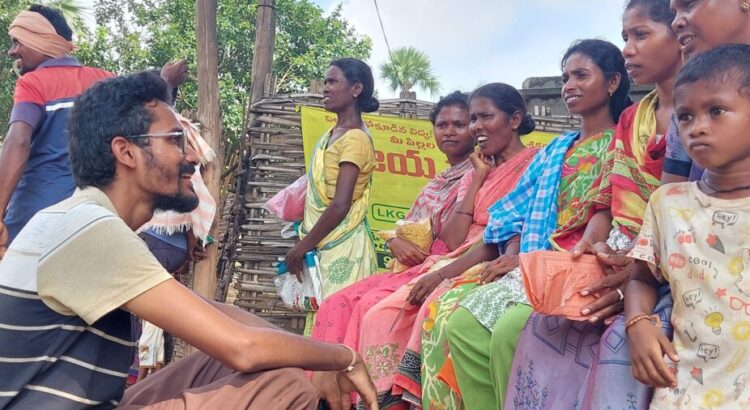
All of us remember the thinnais or aangans of our childhood. A space in time where one could feel the cool breeze in hot summers, and also a place to rest for a weary traveller. Dheeraj Annapureddy is a fellow at the Center for Embodied Knowledge and brings to us the value of these places through his work and thoughts. Let us dive in to hear Dheeraj’s words on grameen architecture

Can you share your personal journey in rooting architecture and the challenges faced by you.

I have grown up in urban spaces always, mostly in the vicinity of many villages, education kept me away from my villages, the language and the culture around.

The little exposure of an Indian village in those days would be the occasional visit to my Mother’s village ‘ ఈదులూరు Eeduluru’, it was like stepping into a completely new world.

‘ పొద్దు పొద్దున్నే ఆవుల బర్రెల మందల హడావుడులు

మగ్గాల  సప్పులు, వంటింట్లో అమ్మమ్మ కాస్తున్న కమ్మని పాలు,

గా పెద్ద ఆంగన్ల సాంపి సల్లుతున్న చిత్రమ్మ, ఆపై  అమ్మమ్మ ముగ్గులు చేసే కనువిందులు

జనాల సిందర మందర గుంపులు,ఆడ ఈడ ముచ్చట్లు

అడుగు బైట పెడితే ప్రేమ ఆప్యాయతలు పలకరింపులు

బతుకమ్మ ఆడేకి పోయే వూరి గుట్ట,

నిద్ర పోనీయకుండా కూతులు కాస్తున్న పాల పిట్ట ‘

The morning is the busiest, the many herds of cows and buffaloes that are moving towards the farm fields, the rhythmic sounds of the small-scale power looms, the sounds of birds waking you up, it’s the morning orchestra of a humble village.

The big Aangans – front yards are first cleaned with water and the cow dung that Chitramma collected yesterday is now spread carefully, grandmother would be ready to welcome the visitors with a beautiful ‘Muggu’.

In festivals like ‘Bathukamma’ the whole village goes out in a procession to the sacred hill in the outskirts of the village, a stream of people flowing through with many million seasonal flowers on their heads. The homes in the gulleys from the main spinal road of the village, the people living in them used to fascinate me, you have bullock carts and many cycles coming from them. There was a village doctor’s mansion I had once visited which is so big I could easily get lost, curving roads adorned along by earthen walls were nothing less than the huge curving stone walls of the Jaisalmer fort for the little child I was.

Following this would be again few memories of visiting Ellora caves in Maharashtra. I did pass by many beautiful homes that were mere glimpses and I would regret for not pausing long enough. It’s again during my bachelors in Architecture in Bhopal, I could connect back with nature, it’s the city of lakes and places like Bharat Bhavan left a great impression on me. Spending some time in the older parts of the cities and with the urban “poor” is when I felt like the villagers again are around me, humble and welcoming. I had a feeling that this was my calling, to serve them, to help in designing homes for them.

We had an opportunity to volunteer on behalf of the college’s rotary club, to start tuitions in the evenings, we would be going around in the colonies and calling out for the kids who have registered for the program. I learnt more about a village while being in the city, what I thought would be the issues weren’t actually their only concerns.

The problems that we try to address on hygiene, congested spaces for the people in these spaces from the comfort of our ‘in grid homes and institutions ‘ results in solutions which kill the social fabric and organic structures that have developed over decades. Social Architecture needs to be better understood, this took me to Kiran ji and Sandeep ji at Hunarshala. I had the opportunity to intern at Hunarshala but my college didn’t recognise it to be something valuable, so I could only get a glimpse of their work while volunteering for a few weeks after my official internship program. Social Architecture, Participatory designing, Owner-Builder are few terminologies I came across, the brief experience had been overwhelming and I was not in a mood to slow down, pause and observe but in the hurry of wanting to just know more (learn less). This is something any youngster would go through, thrilled with such happenings and take part in everything at once.

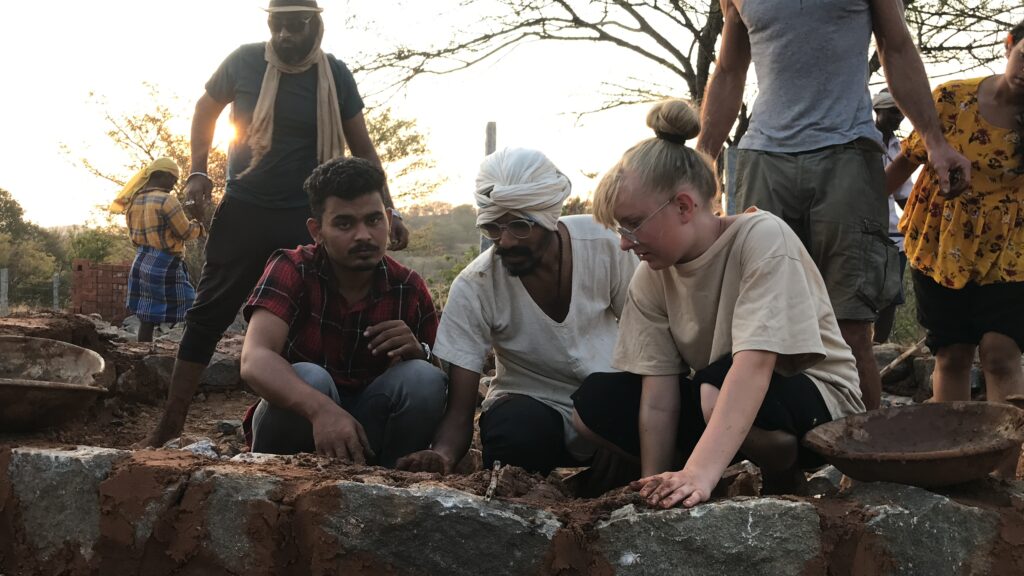
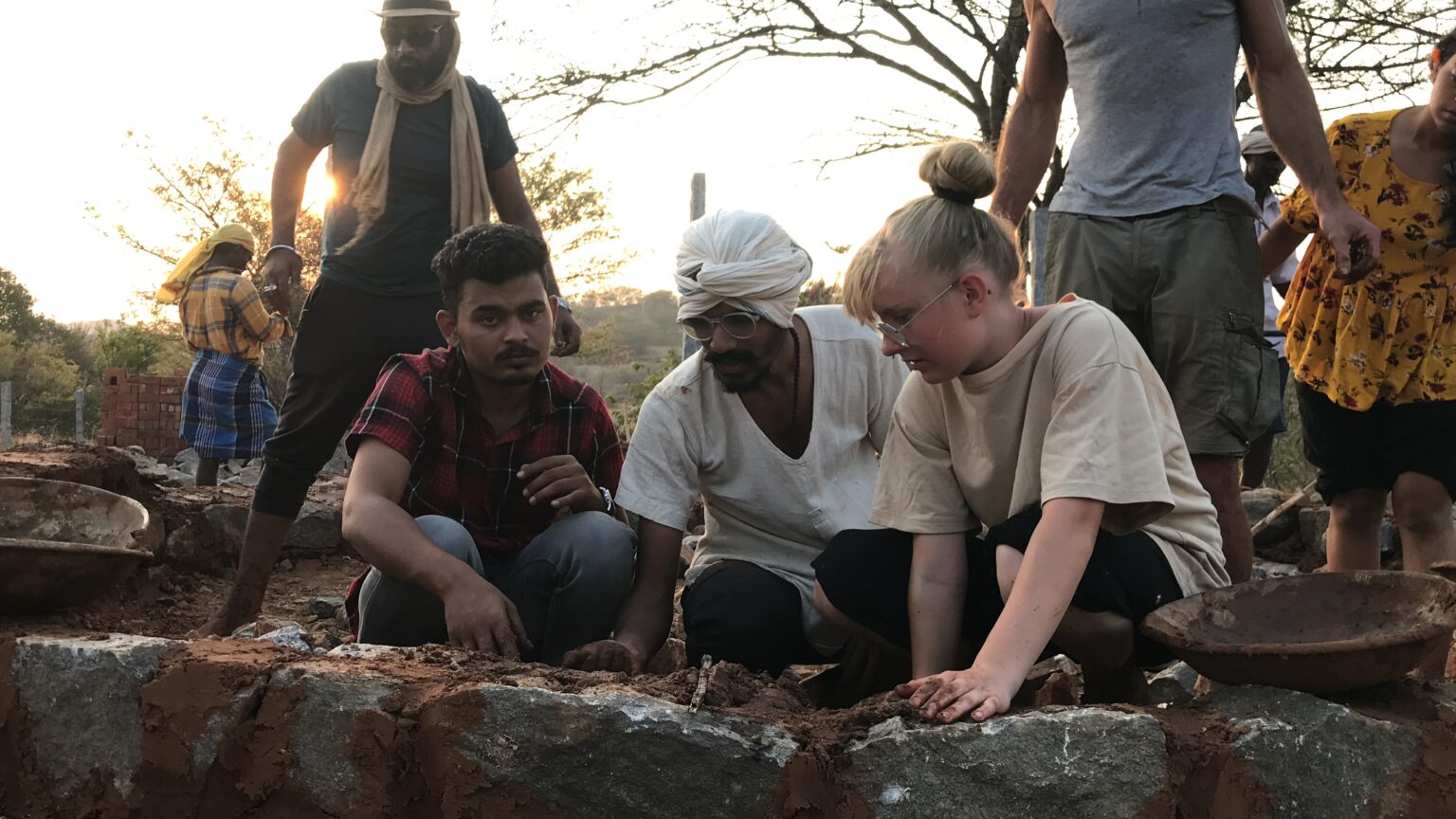
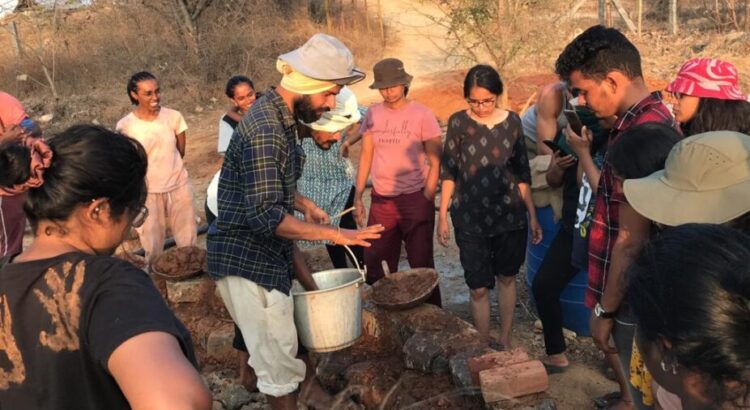
I had this push and pull again in the few initial months while I was with my gurus Biju Bhaskar ji and Sindhu Bhaskar ji at Thannal in Tiruvannamalai. The greatest learnings began here, the artisans are not mere tools for a designer to bring her/his imaginations into reality. Especially here in the realm of ‘Grameen Architecture’, a process in which the design is finetuned and brought into reality by artisans, it is a collaboration, a collective effort that can be only understood by practicing consistently along with them. It is also about what is beyond the materials and technical knowledge they offer, it is a reverence we are ought to show for the transparent sharing of their knowledge and skills that come along from so many generations of artisans.

I am blessed to have seen my gurus meditate and bring back these ancient practices, these are then woven into stories that all of us could easily ingest and learn along with the artisans.

Today we are a team of diverse practitioners around ecology and culture, this very strength inspires us to deep dive to understand the ‘Native Buildings’ beyond their physical structure and understand the tangible and intangible narrations.

The idea is to deliver the documented works to the coming generations in a form and medium they would easily relate and understand. I am very appreciative of the fact that organisations like CEK are coming forward to support our endeavours.

How integral is architecture in preserving culture? Do you feel that as native styles of architecture are disappearing, it also erases the roots of native cultures?

Imagine yourself approaching a village, any village in India. You will see Aangans, big front yards sometimes, if not those, at least a small verandah, a shaded space for passersby to sit and chat with the residents. You would actually sometimes even see animals taking shelter under these tiny shaded areas. These typical scenes are a result of conscious design elements which account for and accommodate social interactions and are an essential part of our welcoming village culture.

A big front yard is also an essential space for a potter family to function, they mix the soil there, store the soil under a tree. They put up their kiln in one corner of this front yard. They dry the pots out in the sun in these open spaces. The presence of these spaces is essential to their profession.

In modern architecture, the focus on privacy means less social interactions. We also need more space to spread our furniture, unlike the minimalistic life in villages where the same space serves multiple purposes. Storage spaces are mostly niches within the wall or vertical spaces to hang things. Even the furniture is multi functional, trunks that are used for storage are also used as sitting or sleeping spaces.

A lot of semi open spaces, like the ones in villages, mean a lot of ventilation and a lifestyle that is in tune with the weather and wind flow. An absence of these spaces affect the health slowly.

We still have rituals and other systems to keep the village together, but a change in the design of personal spaces are like a slow poison, leading to a change in lifestyle, causing discomfort and less social interactions. These are slowly disintegrating the social fabric and the culture of the village itself.

Often during the evironmental conversation endeavours organised by urban societies, the locals are excluded from the efforts. This is rooted in the idea that locals do not understand the need for conservation and do not have sustainable practices, while in fact, the opposite is true. How would you recommend that general conservation measures be carried out in harmony with the locals, the way you have done with sustainable architecture? 

The common perception is that humans always affect their environment negatively, and conservation efforts are generally about creating boundaries, separating humans from nature.

But we have seen that the recent events of uprooting tribal communities from forests have had adverse effects on the ecology of those places, as the balance that their presence created was disturbed. The tribals are the true ecologists/naturalists who know every inch of the forest like their own body, and its changes through the seasons, through the years. They know how to work within the limits that nature sets for them.

Just like tribals are in tune with and integral to their forests, traditional village systems are also conscious of their limited resources, and have sustained a circular economy within. These systems were the inspiration for the old urban spaces as well, and the locals of these spaces are as well rooted to their surroundings as the tribals are to forests. We need to value the knowledge they have, and include them in any conservation efforts that are planned around them, and only then will these plans be effective and long lasting.

A collaboration between the government, scientists and locals is needed for policies, funds, technical know-how, local knowledge to come together, and the ownership of these efforts should reside in the hands on the locals. Without them, it will be an isolated effort and a lot of external resources, manpower and continued external maintenance will be required unnecessarily.

We still have many such places in India that can be best understood by working with the people who have been there since multiple generations, and probably still have memories of harmonious living.

How do you feel native styles of architecture can be brought to the urban landscape? Do you feel it is a viable shift for big cities to make, not just more rural areas?

Anything built today in the urban landscape is with the materials that have a huge carbon footprint and are often not processed enough to mask their toxicity. The workforce who handle them take the brunt while handling them, the users who later occupy the spaces are also then exposed to the hazardous materials. The spaces are also not anthropometrically designed, they are also designed to discourage socialisation and to put forward a very individual pursuit of economical development.

Native architecture is completely the opposite, it is highly human centric, ecologically conscious, values social spaces at every level (often prioritised are public and semi-public spaces over personal space during the design).

A simple beautiful example that we have encountered here in Indrana (Jabalpur,Madhya Pradesh) – A villager was arguing with the building contractor about why he doesn’t need to have a door facing the road, he tells the contractor that his friends and guests should be hosted in the main ‘Aangan’ and not in any segregated space.

The cities in their pursuit to expand are ruthlessly intruding into villages around them and the rampant urbanisation is affecting the social fabric and customs in a way that is disintegrating the culture into mere rituals. The most viable way to adopt Native Architecture would be to start by conserving the existing while carefully planning the city expansions. This is one way to value the knowledge that the humble artisans have been carrying through generations and to have the possibilities of collaborating with them to innovate solutions for the new Urban India.

In addition to the sustainable nature of the architecture, this work also brings work to traditional workers. Is this a shift that you see happening in fields other than architecture?

Yes this is part of a larger philosophy, which is really coming from our tradition, that everyone should have meaningful work.

The modern way tries to minimise the number of workers as a cost saving measure, but it is wasteful in its use of materials.

This is not just true of Architecture but everywhere from farming to production of clothing, utensils, footwear etc.

For example in Architecture, the simplest way to take ‘Grameen architecture’ forward is to get as many youngsters trained in its various forms, this is to be facilitated after considerable amount of research and development in collaboration with the very artisans who are still holding them in the tip of their fingers.

This effort is to not again to produce firms that only serve the rich for their fancies of sustainability but also for these youngsters to adopt this for themselves and their families and build ‘homes’ their way, the indigenous way.

We are thankful to organisations like ‘Hunarshala’ and ‘Hunar Gurkul’ who are stepping forward to train new generation of Masons, Carpenters and Thatchers. Centres like these are a must in every corner of the country to take forward the fraternity of ‘Grameen Architecture’.

When I look into the other extensions of this holistic lifestyle, for example, as travelling far becomes economical, the many youngsters who have taken interest in traditional art forms are reaching out to the artisans to witness it in first hand, which in turn is slowly inspiring the sons and daughters of the artisans to look at their own art with new found respect and give more time and attention in practicing it.

What would you say is the most impactful change made by spreading awareness and skills through your workshops? What are other ways you are looking to reach out to people who might be interested in these efforts but don’t know how to start?

Sharing indigenous knowledge the way the villagers do is not simple, the fact that these are very social communities and knowledge is not necessarily taught, but shared very wisely & easily through stories and idioms from day to day activities is evident.

The introductory workshops we have been organising are majorly designed around giving the participant the experience of being a fellow villager with the artisans, it is to give them a hands-on experience not just at the skills but also through the processes of procuring – processing – moulding the materials in their native spaces.

It is not just to provide the understanding of the ecology but also about the people, the communities that take part in the sacred circular economies of the village.

People return back with a deep respect towards the artisans, now that they get to interact with them in such close quarters, they realise how precious their “common” wisdom is and that their hands and eyes are carrying forward their skills from generations of learnings.

The impact that is visible and spontaneous is when we have kids joining thier parents in these workshops, the way they interact with the elements of nature, with fellow participants, the way they take an active lead in the activities arranged inspires each one of us, we are always learning around them.

It is a surprise for me to see most of the kids tune themselves with the hands-on activities so well that the adults fall behind and it’s the kids who encourage everyone else to get back to churning earth with bare feet, harvesting ‘Besharam branches’ in the local water bodies etc. The elders observe the kids closely and understand that given an opportunity, the next generations to come are willing to engage and learn in arts and crafts that are close to nature.

The intention is not to ask the elders to completely change their lifestyle and settings overnight, but to understand the needs of the child and make subtle changes in their immediate surroundings to enable a holistic learning aligned with the indigenous traditions and giving them opportunities to interact with our artisans. India still holds her Artisan sons and daughters embraced. We are never too far from an artisan or a villager and learning/unlearning can begin at any point.

In the world of digital mediation dominating information sector, where everything from a hair pin to satellite are ‘ googled ‘ every second, these knowledge systems which rely on physical interactions and communications are fading away very easily. Urbanization starts in the television and mobile screens today. Revival and adoption of indigenous systems into our daily lives has to compete with the speed of climate change.

We are still blessed with few young villagers who have a concern for the disappearing cultures in their own villages, they are integral to the communities and it is them we would want to take the help of, and collaborate to document what is left and alive of the native. It would be through their practice we shall be able to communicate and make more youngsters in the villages aware of their rich culture and the opportunities around them to stay afloat in circular economies.

Awareness starts at home.

Indians Craft Best Beer For World Food

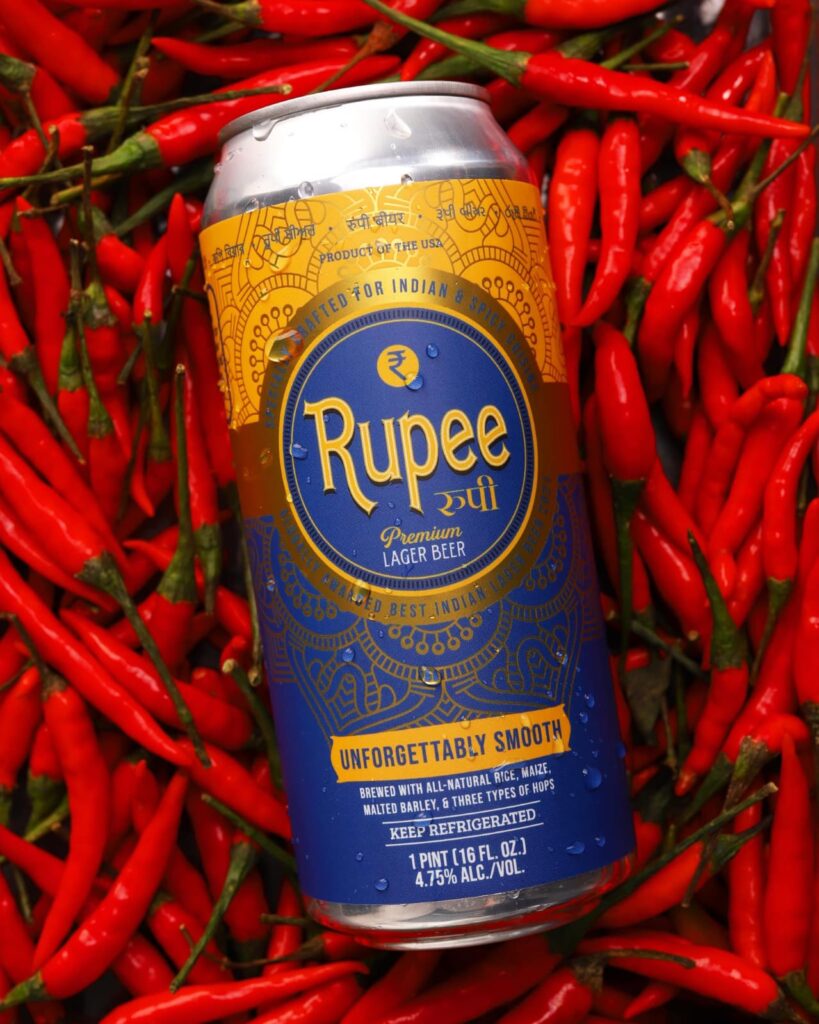
Growing up in a family of fifth generation entrepreneurs, Van and Sumit Sharma ‘have been conditioned to turn lemons into lemonade’. Van tells CSP that their family background from their grandparents' family businesses in India and Kenya, to their parents starting their restaurateur careers in Europe and then relocating to America instilled in their DNA how to build businesses from scratch. Van says Covid-19 was a very unfortunate time in history; however it helped them adopt better systems and technology to hit the ground running.

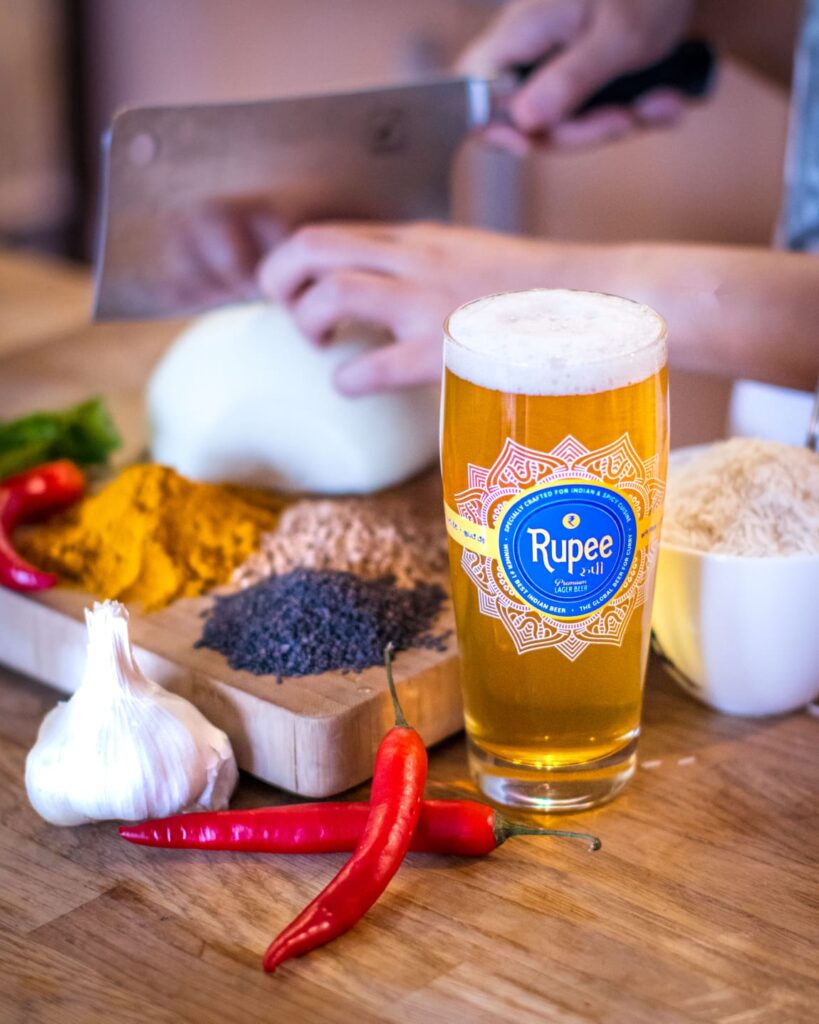
Born in West London, the brothers moved to Portland in the US in the early 90s. With a family history of over forty-five years in the restaurant business, their parents carried that legacy to the States, launching three Indian restaurants in different cities across Maine. The brothers have launched their own brand of brew to pair with Indian food which is spicy and full of flavor. Launched in 2020, their brew, named Rupee, launched in 2020, is available in 12 states in the US. This June, they launched their ‘Mango’ beer to mark International Mango Day. They were named the Best Beer For World Food’ recently.

Your family was predominantly in the food industry, with three hotels in a part of the US that doesn’t have many Indians or Asians. What was your business model?

Our parents launched three of the longest running Indian restaurants in New England in Brunswick, Portland and Bangor Maine in the early 90s when they immigrated here from Germany and the U.K. Three decades ago, Maine was the least diverse state in America, with a very small population of people who were of color. Since then, it’s become a bit more diverse, but nowhere close to larger metropolitical cities such as New York, Boston, and Washington D.C. Our dad always had a vision to serve classic North Indian favorites, helping elevate the cuisine and part of the world he was from - Punjab. The menu for over three decades has been very similar to its original offering with staple Punjabi favorites such as Butter Chicken, Saag Paneer, Tandoori Chicken and loads of traditional breads.

What motivated you and Sumit to start Rupee Beer and what is the story of how you chose the flavor and brewing techniques.

We've always enjoyed beer. There are loads of pictures of us behind the bar or at our parents' restaurants, running around when we were younger in front of Kingfisher signs. In the early 90s, a lot of beer distributors didn't carry top Asian beers in our region of America as it wasn't considered a high volume region with not much demand to sell imports. Slowly Indian beers become available which our families’ restaurants were top buyers of. When Covid hit, we both had just come back to the U.S. after living abroad for several years in Australia and England, and we noticed that the global supply chain was disrupted and because of it, Indian beer wasn't able to ship to Maine. This got us thinking as working in the business and hearing customers of many years asking where is your Kingfisher or Taj Mahal beer, as they wanted to add it onto their take-out order which we were open for still.

We knew we had an idea and aligned with a highly influential world class beer brewer who happens to live not far from our families’ home, and was also a customer of our restaurants. Through a year of extensive research, developing, taste tests and brewing, we all agreed on a recipe which was truly made to pair with the flavors and spices we grew up eating, and we are grateful things have taken off.

The American craft beer market is highly competitive. What unique qualities or skills do you bring to your brewing that sets you apart from other brewers in the US?

Yes, beer is crowded and competitive. The American craft segment has a lot of options available to the everyday consumer. What started as something we wanted to simply serve as a lager available at our family's restaurant during Covid, we are grateful has grown into a brand which continues to expand. We were recently named ‘Best Beer For World Food’, which brings home our original mission to also create a beer which was made to actually complement the rich and complex flavors Indian cuisine is known for around the world. We've aligned with top brewers to help produce the best possible premium beers we can, while also helping mainstream America learn more about India, and our heritage via beer.

Could you explain the key differences you've noticed between the beer preferences of Indian consumers and non-Indians? How have you adapted your beer offerings to cater to the American market? 

There are loads of styles of beer, and typically an Indian consumer gravitates towards lighter lagers which are easier to drink, being less bitter and hoppy is what we have noted. IPA's are immensely popular with their craze across America and Europe, but traditionally not as popular in Asian markets. Hotter climates always gravitate towards lagers which are light and easy to drink in warm weather.

Was pairing with food the main motive of your starting this enterprise? Many people believe that one needs a beverage to wash down rich or spicy Indian food. In India we often see nimbu pani, chaas or lassi offered. 

Being from the Indian restaurant business, it was important for us to ensure the beers we produce be the best possible beverages meant to pair with desi flavors. We brew with basmati rice which help make our lager smooth, and brought down the average standard of how carbonated the beer is to ensure when pairing with spicy or heavy food, that the consumer would have an easier time digesting and not feeling as uncomfortably or full.

What brewing equipment and techniques have you found most useful in your brewing process in the US? Are there any tools or methodologies that you've introduced to create Indian flavour?

We knew brewing beer wasn't something we had done before, which is why we aligned with some influential world class brewers to bring Rupee to life. We're using recipes which are very much inspired by Indian recipes and have adopted them with the help of science and brewing techniques to create easy to drink beers, all designed to pair well with International food. We've also incorporated key ingredients such as basmati long grain rice into our lager which makes it super smooth, and used mango flavor in our super popular summer mango wheat ale. Each new beer has a subtle connection to India and our mission.

We're grateful, we have some world class brewmasters and consultants who advise us along the way and are obsessed with quality control and making Rupee the highest and most premium quality liquid on the market.

Craft beer enthusiasts value sustainability. Can you discuss any sustainable practices or initiatives you've implemented in your brewing process or packaging?

We are doing as much as possible to ensure we do our small part to be more sustainable. As we scale, we are looking at innovative ways to become more sustainable in our production and distribution.

In the US, there's a growing interest in unique and experimental beer styles. You have launched a Mango flavoured beer. What outcomes do you foresee for your new offerings?

The beer industry especially in the craft category is always changing and innovating with new creative recipes. The current two SKUs we have on the market, our Basmati Rice Lager and Mango Wheat Ale have been received super well by an American audience. We are very excited to say, ahead of this Diwali, Rupee is launching our signature India Pale Ale, putting the India back into India Pale Ale.

How do you navigate the complex regulations and licensing requirements for alcohol production in the US? Are there any insights you've gained that you think are particularly important for other Indian brewers looking to enter the US market?

The rules and regulations are super complex as alcohol is regulated in America, and each state has its own variations in how they govern. We always consult top legal counsel.

Collaboration is a significant trend in the craft beer industry. Have you collaborated with other breweries, either in the US or abroad? If so, what were the outcomes and benefits of these collaborations?

Not yet but we have thought about it! If any India based breweries are interested, get in touch with us!

Marketing and branding play a crucial role in the success of a brewery. How do you market your Indian-inspired beers in the US, and what strategies have been most effective for you?

We take a very authentic approach to marketing. Rupee for us is lager than us and its also very much the story of Sumit and myself. We look very Indian just like our can design. The name is very Indian just like our names, yet we are based in America, and  on a mission to showcase our culture in the best possible light. It's very much in line with how we both grew up in the Indian restaurant business, always having to to some extent be and act as ambassadors for our culture, cuisine and values - in a very homogeneous and American part of America in the 1990s.

Can you discuss any challenges or cultural differences you've faced when introducing Indian beer styles or flavors to American consumers? How have you overcome these challenges?

People always have a misconception that because we are Indian, that we are brewing an India Pale Ale. That very much was not the case when we launched Rupee's flagship lager, which was very much in line with most of the pale lagers you drink in India today ie: Kingfisher. It's interesting people sometimes think we add spices to our beer because we are Indian. Indian beer brands have been in America for decades, but never something that was as mainstream as how far Rupee has come.

Looking ahead, what are your goals and aspirations for your brewery in the US? Are there any exciting projects or developments on the horizon that you can share?

The Rupee of today is not the same Rupee as tomorrow. We are evolving and the Rupee brand is growing to offer more styles and ranges of beer. We hold true to our mission to bring Indian craft beer to the world, and we have some very exciting things brewing as we speak!

How do you see the future of Indian-inspired beer in the US market? What trends do you anticipate, and how do you plan to stay relevant and innovative in this evolving industry?

Rupee continues to grow and evolve and we are leading the way on how more Americans view beer, India and consider beer accompaniment with food. We feel the world wants more easy to drink enjoyable beers, which can be enjoyed with or without food. Beer isn't meant to be pretentious like wine. We are having fun with Rupee and will continue to produce beers our loyal drinkers want to experience.

How Eli Kutty Teaches Us Malayalam

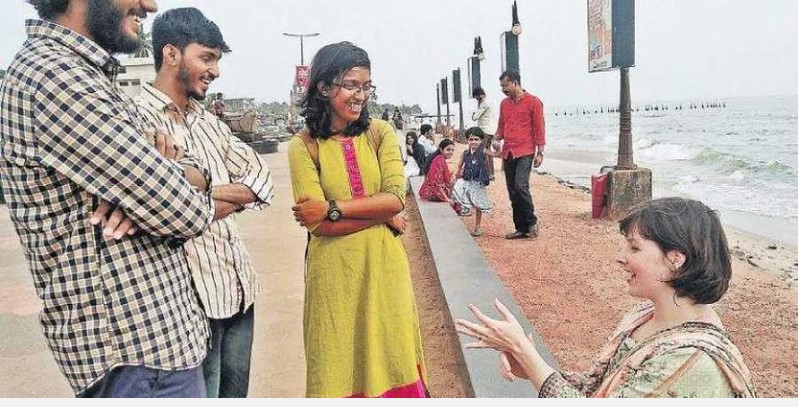
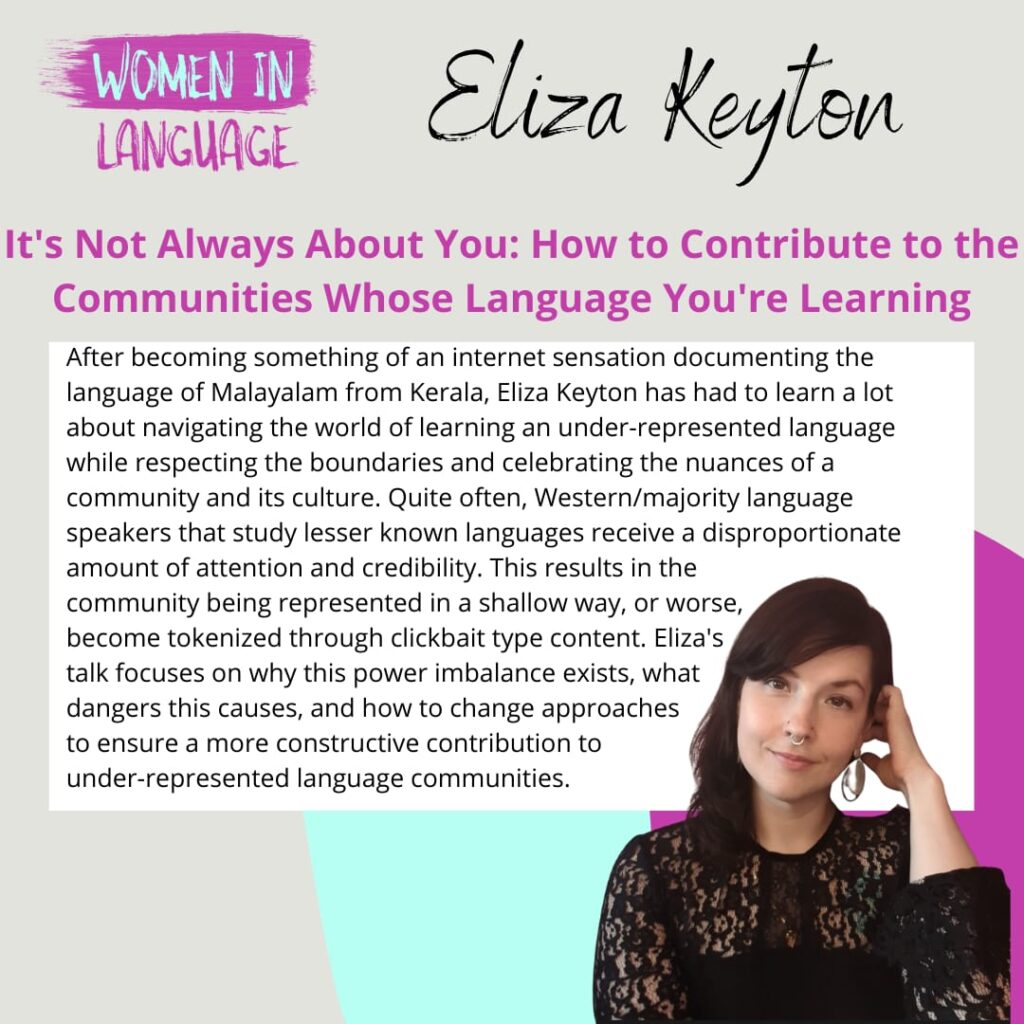
Elizabeth Keyton hosts one of the most popular Malayalam teaching programmes on social media. Her Instagram handle eli.kutty has followers all over the world wanting to learn, improve and polish their Malayalam. Elizabeth shares the story of her interest in the language and the success of her initiative with CSP.


How did a person from Georgia come to start a Malayalam teaching program on social media?

I have been teaching English as an Additional Language since 2009, and have been trained to teach languages through my degree and certificate programs. I had worked in South Korea, Texas, and NYC before coming to the UAE in 2015. The UAE, and the Gulf in general, is home to many Malayalees, so it’s no surprise I would meet Arjun there. Once we became more serious in our relationship, I decided to learn Malayalam. I think that language is very important to connecting culture and people, so it seemed like the natural thing to do when marrying into a family and blending cultures. However, Malayalam resources aren't readily available, so I had to do a lot of research, read language analyses, and go through old textbooks to learn new ideas. For me, teaching is a great way of learning, so I started making notes on an Instagram page. I made it mostly for my benefit and others who may be interested in learning, however after a year the popularity grew and I became more dedicated to making educational resources and helping others learn the language with more updated techniques and explanations.

How did you decide on the name Eli Kutty for your project? What has been it's impact.

My name is Eliza, and someone once called me "Eli" for short. My Tamizh friend told me how in Tamizh (and Malayalam) it means rat, but if I added Kutty to it, it could be very cute. It was a joke name between us, and when I started my account, I used this name for it to be funny. I didn't know it would become a household name later!

Are you a linguist? Does learning languages come easily to you?

I am a language enthusiast and a teacher. I spend most of my studies on how language is acquired and techniques to help people learn. While my background was focused on teaching English, many of these ideas are easily transferable to other languages. As a child, I studied Spanish, and later spent time on Korean and Japanese. If there is the correct motivation, then learning a language can be fun, and with good resources it can be easy.

What would you attribute the success of your Malayalam teaching project to? Who are the main people wanting to learn from you? Are there not enough resources locally?

I started EliKutty on my own and my husband has been a big support. Many people assume I've learned from him directly or he has creative control on my work, but I've done a lot of things on my own, just with my curiosity and creativity leading the way. However, I have relied a lot on my tutors from italki and muthassi.in to help me stay motivated learning and improving my Malayalam. My followers are mostly Malayalees, many who are intrigued with my work and learning neat things about their language that they hadn't considered before. In my classes, I have a mix of foreigners from New Zealand, Europe, Canada, etc, as well as NRIs who are trying to get back in touch with their mother tongue.

There aren't as many resources for Malayalam as there are for other languages like Spanish, Hindi, or Japanese. Also, the current school programs favor English medium curriculum, meaning local children need to take tuitions to help them read and write Malayalam. while there is legislation to promote mother tongue education, there needs to be more allocation of resources to states to help improve and update their curriculum, as well as pedagogical standards

That being said, the Kerala government has made many wonderful initiatives like the Malayalam Mission to promote mother tongue education, as well as Malayalam class schemes for guest workers who come to Kerala for employment.

What was the hardest part of learning Malayalam. How did you manage to learn the grammar and the pronunciation? How did you translate this to your teaching?


Malayalam has a lot of unique properties that make it challenging for someone who speaks English to learn. One example are the retroflex sounds that don't exist in English. This results in 2 different L sounds ള /ല , different N sounds ന ണ , and the infamous zha/ഴ . As I teach others these sounds, I often use diagrams of the mouth to show where the tongue placement is and how the lips, teeth, and airflow all work to make these phonemes.

As for grammar, Malayalam has the feature of agglutination. This means that instead of using several words, Malayalam employs many suffixes to give an exact meaning.

Here's an example I like to use:

In Malayalam- you can see this phrase:

guhakalilekkulla yathra ഗുഹകളില്ലെകുള്ള യാത്ര

you can break down the word like this:

guha-kal-il-lekku -lla yathra  ഗുഹ-കളി-ല്ലെകു-ള്ള

(cave-plural-direction-toward-adjective)  journey

so it translates to : journey to the caves

What I try to do is break down the words and identify the patterns, then replace words to create new phrases. It really can feel overwhelming when seeing a long word, but once you can identify its parts, it becomes clearer.

How does knowing the language help to understand the cultural of Kerala.  Could you share some anecdotes of your experiences.

In the UAE, CM Pinarayi Vijaayan came to visit for a speech, and it was an incredible experience to learn more about the government of Kerala and the ways that the Communist Party has impacted the community in positive ways. Speaking Malayalam has given me access to interesting spaces of political thought and discussion. Through cinema, social media, and other channels, you will find that Malayalees are incredibly politically literate and are always up for discussions and debates on what is going on at home and abroad.

In 2019, I had a solo journey through Kerala, from Kasaragod (the northern most district) to Trivandrum (the southernmost). Along the way I met with Malayalees of all communities, sampling the food, language, cultures, and customs of the people of Kerala. Being able to visit the oldest mosque in South Asia, Cheraman Perumal Palli, the first Christian Church, reading some Sangam literature and seeing a Chera period idol at a unique temple, learning about syncretic practices between various religious groups, and finding out about the pockets of Buddhist sites in the state made me see how much of a multifaceted and dynamic community is there in Kerala.

Have you explored the cuisine,  dress and the places in Kerala.  What are your best memories?

I've had incredible seafood at Odhen's Hotel in Kannur, Beef biriyani in Kozhikode, Mango fish curry and fish fry at my Mother in law's house. Onam is a fantastic season with a feast of a Sadhya, and there's nothing like driving for an afternoon tea and pazham pori. The Muslim communities in the Malabar coast easily have the most unique and delicious variety of cuisine from the state.

You are an avid traveler.  How does Kerala compare to the other places you have visited in Asia?  

It's difficult to compare places. Asia is such a broad scope of people, landscape and populations. Some things I found unique to Kerala are the folkloric traditions, such as Theyyam, as well as intense flavor and varieties of food. Vietnam, for example has more aromatic dishes with spicy foods only prominent in the southern half of the country, while Cambodia and Thailand are a variety of textures and flavors in one dish. The monsoon times in Kerala add a dreamy effect as well, making it a real pleasure to visit, as long as you don't mind getting wet!

What kind of a linguistic world will your baby grow up in? Am sure it will be rich and varied.

Aside from Malayalam and English, I hope to immerse my child in the language of my stepfamily from former Yugoslavia. I also hope to provide opportunities to learn Spanish and Mandarin, and generally be open to whatever languages we find ourselves surrounded in as we continue working in various places around the world. While I don't expect my child to be fluent in every language he encounters, I hope to instill a sense of respect and openness toward languages and cultures different from his own, and take the time to get to know more about them.

Traveling From Spain In Search of Ayurveda

Sonia Molina Jiménez is in love with India and has made the journey from Madrid in Spain to India many times. She is a tourism specialist and has worked all her life at luxury hotels in the commercial department.

She says that India and her people have been an integral part of her life. “My attraction to this country has always been a constant in my life. I can't explain why. I even once dreamed of having a natural child and adopting an Indian girl to start a family. But the time never came.” Sonia loves listenting to mantras and relaxing music.

Her initial interaction came through a friend regarding with a Spanish organization in Calcutta. “Through a personal contact of mine, I suggested to a friend to start collaborating from Spain with a Spanish Foundation in Calcutta. She was due to visit the Foundation in February 2009 and I asked myself why I should not accompany her on that trip? It was done. And so I arrived in Calcutta and for the first time in my dream India.”

India can be confusing at first. Sonia says that landing in Calcutta and leaving the airport at dawn was a like entering a new “world of sensations. In an overcast sky between pollution, clouds and an incipient sunrise, it was very special light.

Sonia spent 16 days in Calcutta in 2009 Calcutta traveling with her best friend Sabera and working for a foundation started by a Spanish man that took in abandoned girls or girls from families with extreme needs. She took a South India tour in 2014 travelling across Chennai, Madurai, Cochin for 10 days on a holiday with her husband.

While she was travelling alone in January 2015 to Udupi she started studying Ayurveda and doing Panchakarma. She did panchakarma with the 5 steps for 45 days. That September she spent time at Vaidyagama in Coimbatore as well as in Bangalore for 21 days. A friend she had met in Udupi convinced her to live in Vaidyagrama and experience it together. She stayed with her friend in Bangalore for a few days.

About Ayurveda, she says, “Ayurvedic medicine fascinates me. It is a pity not to be able to follow all its advice when we go back home with our daily routines. On the other hand it angers me deeply to know that many ailments can be cured with this type of natural treatments and yet we are poisoned by the economic interests of big pharma.”

Sonia had wanted to open a small Ayurveda therapy centre in Madrid and from there organize trips to India for treatment. But seeing how complicated the process was, she did not pursue it.

Live In A Village To Know The Earth

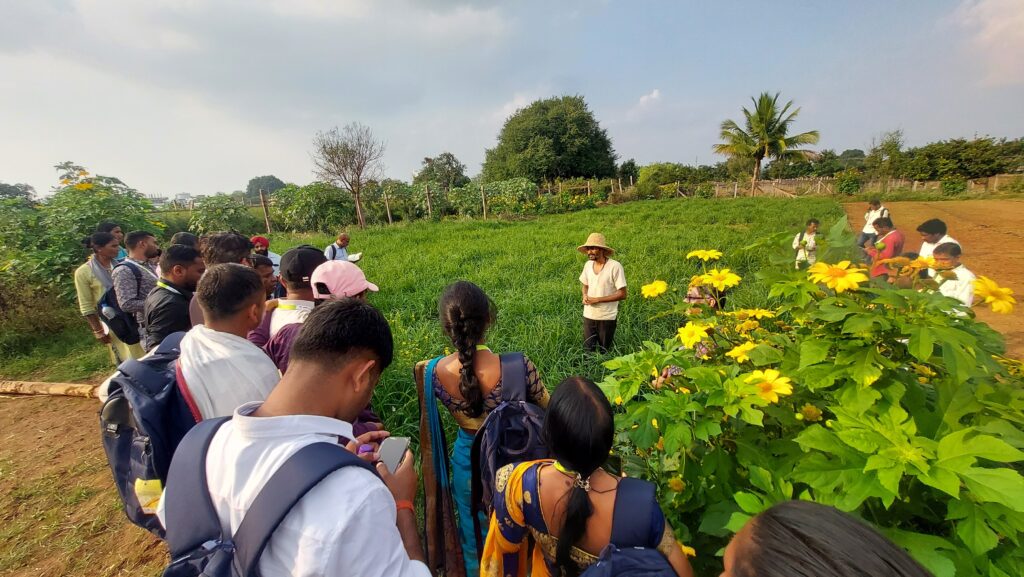
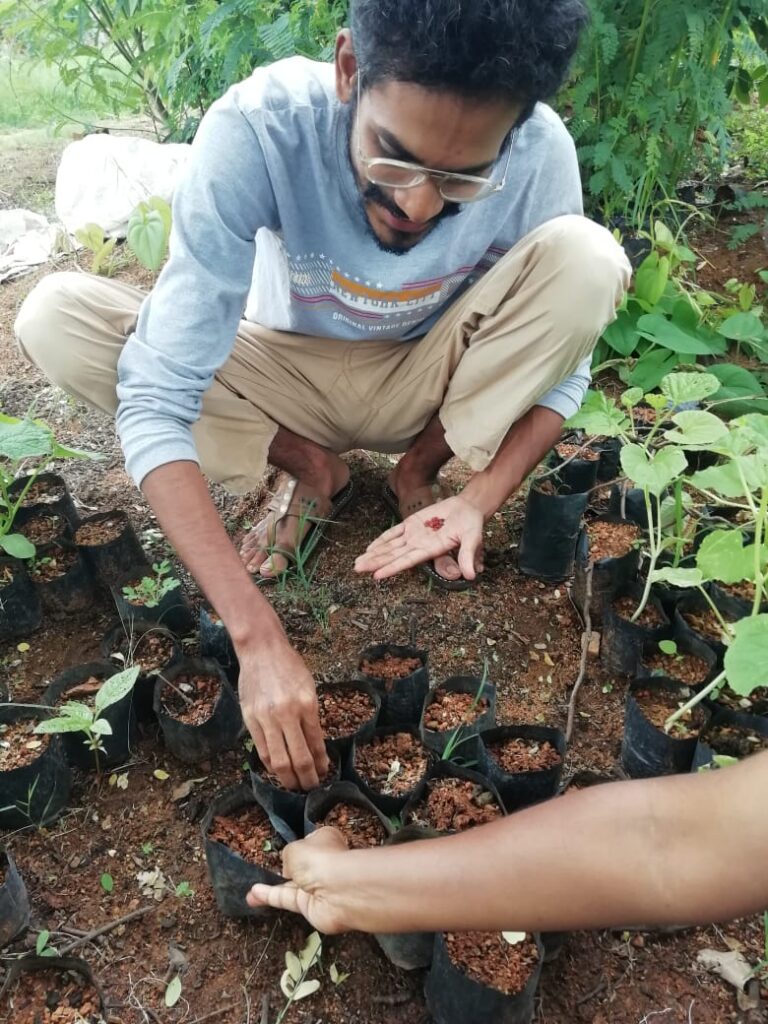
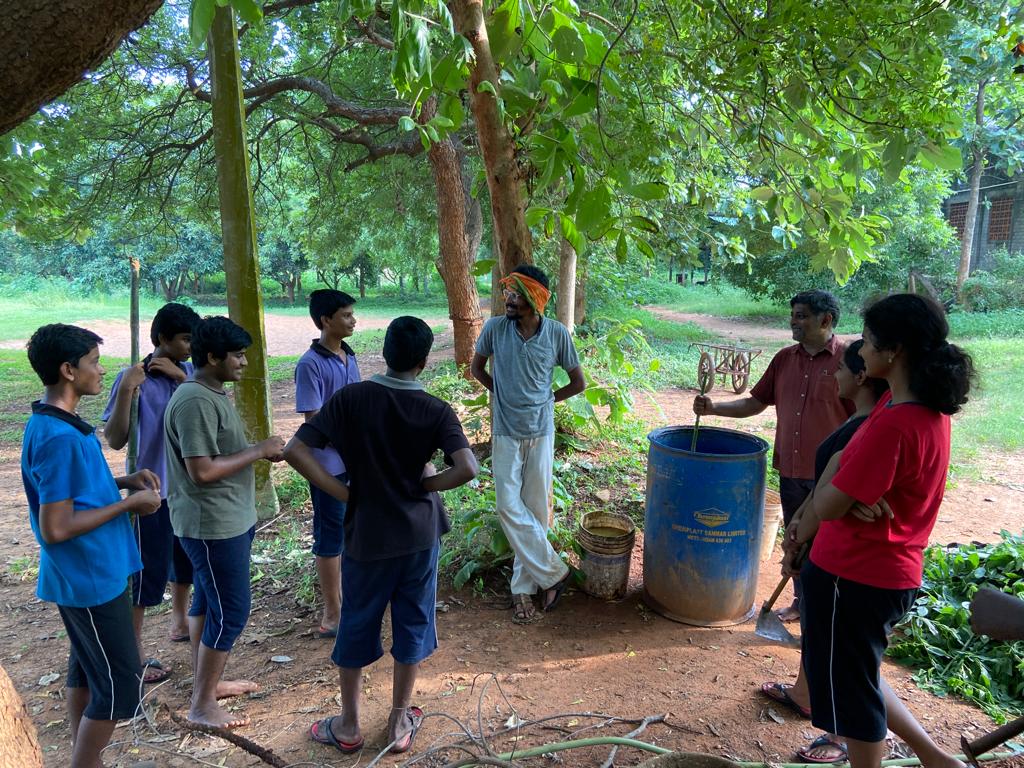
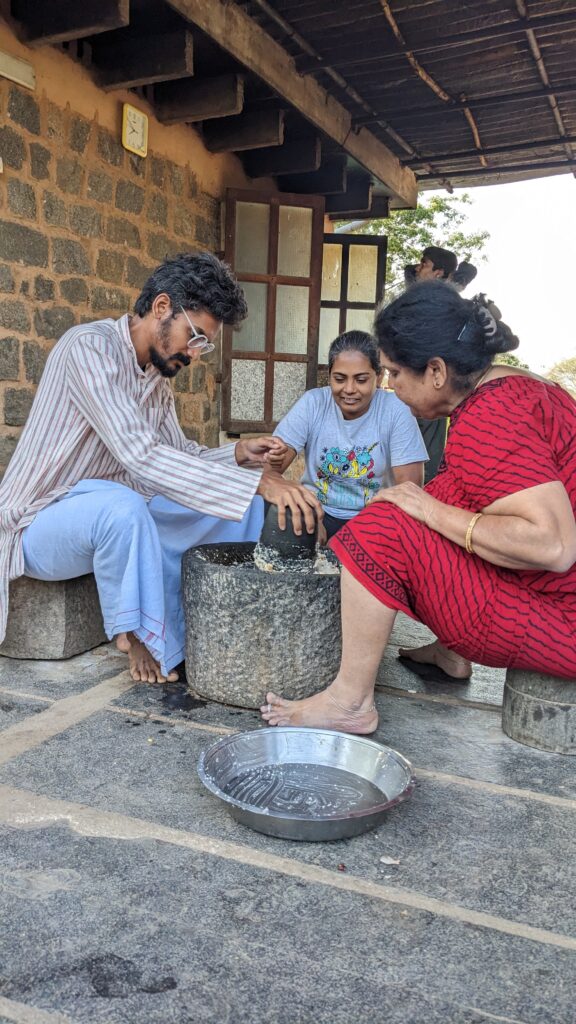
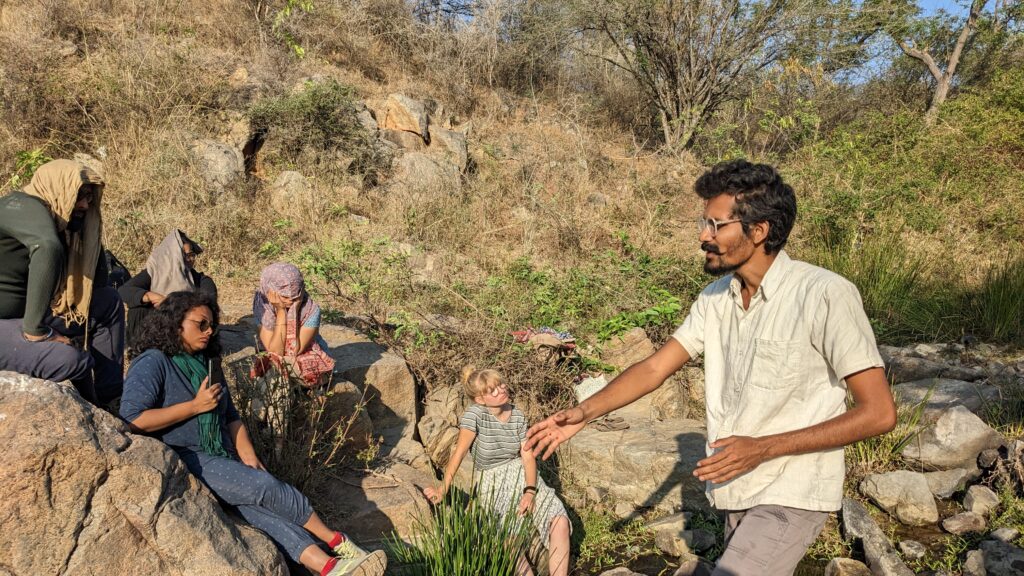
Mayank Ale was city-bred in Hyderabad but in his college days became environmentally concious and developed an abiding love for local agricultural activities. His vision is to create green spaces for children, where they can nurture their creative selves while learning how to co-exist with nature through agriculture. His advice to motivating young explorers is to “foster a sense of wonder about the natural world, facilitate hands-on learning experiences, and enable them to witness firsthand the tangible effects of sustainable actions in the real world.”

Mayank Ale is currently a fellow of the Center for Embodied Knowledge.

Can you explain what does cultural ecology mean to you and why it's important in today's world?

The ecological crisis is a matter of grave concern for many educated young people in India today. This demographic is responding to the crisis in diverse ways. However, there's a noticeable tension when it comes to how we perceive and address this issue, primarily due to the dominance of Western perspectives in framing the problem and proposing solutions.

Thus far, the Western discourse has largely shaped the global conversation surrounding the ecological crisis. This influence has led to Western solutions, such as energy-efficient technology, renewable energy sources, waste management, veganism, and the establishment of biosphere reserves, becoming the default approach worldwide.

We believe that the rich reservoir of wisdom present in local indigenous cultures can offer valuable insights in tackling the ecological crisis. These indigenous perspectives may not only enhance our understanding of the root causes of our environmental challenges but also provide more meaningful and holistic responses. However, it's disheartening to observe that the cultural knowledge systems housing this wisdom are fading away, especially among older generations. Additionally, educated young individuals often find themselves disconnected from these traditional knowledge systems. This disconnect poses a significant challenge in harnessing the invaluable insights that indigenous cultures can contribute to addressing our pressing environmental issues.

You have spent many years in a ashram for artists. How did this experience shape your thinking of finding creative solutions to issues?

Growing up in an urban, educated environment, my perspective was primarily shaped by verbal and theoretical learning. However, my transformative experience of spending time with skilled artisans in their workshops taught me the importance of practical thinking. I discovered the essence of focusing on hands on approach rather than mere words. This fundamental shift in approach significantly altered my perspective and how I engage with my work.

Can you describe a research project or study you've been involved in that exemplifies the principles of Indian cultural ecology? What were the key findings and implications?

My educational journey has been unconventional; I haven't formally worked in academia. Instead, my learning has been informally acquired by immersing myself in rural communities, particularly among artisans in villages.

Cultural ecologists often explore the concept of adaptation. Can you share an example of how a culture has adapted to its environment and the ecological consequences of this adaptation?

In Telangana, the establishment of chain lake systems stands as a remarkable testament to human adaptation in semi-arid landscapes. These systems played a pivotal role in enabling civilizations to thrive in these challenging environments. To honor the profound contribution of these lakes to their way of life, the people of Telangana celebrate one of their most significant festivals, known as Bathulamma – the Festival of Lakes. Additionally, each lake is associated with a goddess, Katta Maisamma, who is regarded as the protector of the vital bund, or embankment.

From an ecological perspective, these lakes represent an ingenious solution for efficiently collecting and storing rainwater. This stored water becomes a lifeline for local agriculture, particularly during the dry months when natural water sources might run dry. It ensures a steady water supply, sustaining the livelihoods of the people and supporting their crops.

Furthermore, these lakes create localized ecosystems that foster biodiversity. They serve as breeding grounds for various migratory birds and aquatic species, thereby contributing to the conservation of local biodiversity.

The construction and maintenance of these lakes are deeply rooted in a profound understanding of the local ecology and hydrology. This traditional knowledge is passed down through generations, playing a crucial role in preserving indigenous wisdom. In sum, the chain lake systems in Telangana are not just marvels of adaptation but also repositories of ecological knowledge and cultural heritage that continue to shape the region's identity and sustainability.

Can you describe a recent or ongoing project that illustrates the potential for cultural ecology to inform sustainable development practices or policy decisions?

During my time in Indrana village near Jabalpur, Madhya Pradesh, I had the privilege of interacting with the Burman community, residing along the riverbanks. Their way of life was characterized by simplicity, with homes made of mud and wood, among the humblest in the village. Much like their fellow villagers, the Burman community's livelihood was intricately woven into the ecological fabric of the region. They were entirely dependent on the river and the adjacent forest for their sustenance.

Sundar chacha as I called him, who is a member of this community, epitomized this deep connection with nature. He played diverse roles as a fisherman, a ferryman for river crossings, a farmer along the riverbanks, a weaver of fishing nets, a forest goer with his goats, and even a boat craftsman. His knowledge of the forest ecosystem was impressive; he effortlessly identified around 20 different tree species, including the preferred Bheraha wood for boat-making and another type suitable for plows. Notably, he highlighted that Jamun and Teak wood could last up to 15 years, making them the preferred choices. While other local trees could be used, they didn't offer the same longevity.

Intriguingly, they crafted bells from Mahua roots to hang around their goats' necks. These bells emitted loud sounds, aiding shepherds in locating lost goats within the forest during grazing.

He shared that he was one of only two individuals from his generation who had acquired the skill of boat-making within his community. Regrettably, the other person had passed away a few years prior. Today, he stands as the last repository of this craft's knowledge in the Indrana vicinity.

However, the most captivating aspect of their way of life was their vegetable farming practices along the riverbanks. These practices commenced as the Hiran River receded following Dussehra celebrations. Each year, the river bestowed the land with rich soil from its watershed, naturally replenishing the earth.

The profound knowledge and intimate connection that the Burman community held with the surrounding nature were nothing short of astonishing. Their sustainable practices and profound wisdom held enormous potential to coexist harmoniously with the environment, without imposing a heavy toll on the delicate ecology.

Are there any specific methodologies or tools you frequently use in your research as a cultural ecologist? Can you explain how these methods help you gain insights into the relationships between culture and the environment?

Respecting and valuing local cultural practices is indeed paramount, as it can significantly influence how readily the community opens up to outsiders. As I am mentioned, coming from a non-academic background without sophisticated tools or methods doesn't hinder the potential for meaningful engagement.

The approach I have adopted, one of showing deep reverence for local traditions and refraining from judgment, is profoundly effective. It fosters trust and mutual respect, essential foundations for productive interactions. Taking the time to immerse yourself in the community and allowing them the space to share their stories naturally is a key element. Often, the conventional interview-style questioning can disrupt the organic flow of information that emerges through storytelling.

By embracing this approach, you not only gain valuable insights into their culture, practices, and knowledge but also forge authentic connections. This method underscores the importance of listening and learning from the people themselves, acknowledging that their wisdom and experiences are central to the understanding and preservation of their heritage.

Your field of interest often includes interdisciplinary collaboration. Can you discuss some of the disciplines or fields you've worked with to gain a comprehensive understanding of how to integrate local values to modern ideas?

My work in rural areas has been greatly enhanced through collaboration with professionals from diverse disciplines. By partnering with architects, linguists, anthropologists, and others, we've cultivated a comprehensive understanding of the intricate cultural-environmental dynamics at play. This interdisciplinary approach has proven invaluable in bridging the gap between traditional local values and modern solutions. It allows us to design and implement projects that not only respect but also integrate the richness of indigenous knowledge and practices, ultimately leading to more sustainable and community-centered outcomes.

What are some of the ethical considerations in cultural ecological research, especially when working with indigenous or local communities? How do you ensure respect for cultural sensitivity and intellectual property rights?

When engaging with indigenous communities, it is of utmost importance to prioritize the reverence for their wisdom, seek their informed consent, and uphold their intellectual property rights. Authentic, open dialogue and the active involvement of community members are indispensable aspects of this collaborative process.

How do you see the field of cultural ecology evolving in the coming years, and what emerging trends or issues do you think will be important for researchers in this field to address?

In the coming years, the field of cultural ecology is poised to embrace a greater array of digital tools for the purpose of data collection and analysis. Furthermore, it will increasingly focus on comprehending how urbanization affects cultural ecosystems. An equally vital trend will involve the seamless integration of traditional practices into rural planning processes.

Can you recommend any books, articles, or resources for individuals who want to learn more about Indian cultural ecology and its relevance to today's world?

  • "Ecology and Equity: The Use and Abuse of Nature in Contemporary India" by Madhav Gadgil
  • "The Adivasi Will Not Dance" by Hansda Sowvendra Shekhar
  • Read about Ravindra Sharma Guruji
  • Read all the books by Dharampal
  • Read Mahatma Gandhi
  • Books by Tagore
  • Alternative futures India unshackled

The most effective approach is to reside in a village and fully engage in its way of life, immersing oneself completely.

Live In A Village To Know The Earth

Mayank Ale was city-bred in Hyderabad but in his college days became environmentally concious and developed an abiding love for local agricultural activities. His vision is to create green spaces for children, where they can nurture their creative selves while learning how to co-exist with nature through agriculture. His advice to motivating young explorers is to “foster a sense of wonder about the natural world, facilitate hands-on learning experiences, and enable them to witness firsthand the tangible effects of sustainable actions in the real world.”

Mayank Ale is currently a fellow of the Center for Embodied Knowledge.

Can you explain what does cultural ecology mean to you and why it’s important in today’s world?

The ecological crisis is a matter of grave concern for many educated young people in India today. This demographic is responding to the crisis in diverse ways. However, there’s a noticeable tension when it comes to how we perceive and address this issue, primarily due to the dominance of Western perspectives in framing the problem and proposing solutions.

Thus far, the Western discourse has largely shaped the global conversation surrounding the ecological crisis. This influence has led to Western solutions, such as energy-efficient technology, renewable energy sources, waste management, veganism, and the establishment of biosphere reserves, becoming the default approach worldwide.

We believe that the rich reservoir of wisdom present in local indigenous cultures can offer valuable insights in tackling the ecological crisis. These indigenous perspectives may not only enhance our understanding of the root causes of our environmental challenges but also provide more meaningful and holistic responses. However, it’s disheartening to observe that the cultural knowledge systems housing this wisdom are fading away, especially among older generations. Additionally, educated young individuals often find themselves disconnected from these traditional knowledge systems. This disconnect poses a significant challenge in harnessing the invaluable insights that indigenous cultures can contribute to addressing our pressing environmental issues.

You have spent many years in a ashram for artists. How did this experience shape your thinking of finding creative solutions to issues?

Growing up in an urban, educated environment, my perspective was primarily shaped by verbal and theoretical learning. However, my transformative experience of spending time with skilled artisans in their workshops taught me the importance of practical thinking. I discovered the essence of focusing on hands on approach rather than mere words. This fundamental shift in approach significantly altered my perspective and how I engage with my work.

Can you describe a research project or study you’ve been involved in that exemplifies the principles of Indian cultural ecology? What were the key findings and implications?

My educational journey has been unconventional; I haven’t formally worked in academia. Instead, my learning has been informally acquired by immersing myself in rural communities, particularly among artisans in villages.

Cultural ecologists often explore the concept of adaptation. Can you share an example of how a culture has adapted to its environment and the ecological consequences of this adaptation?

In Telangana, the establishment of chain lake systems stands as a remarkable testament to human adaptation in semi-arid landscapes. These systems played a pivotal role in enabling civilizations to thrive in these challenging environments. To honor the profound contribution of these lakes to their way of life, the people of Telangana celebrate one of their most significant festivals, known as Bathulamma – the Festival of Lakes. Additionally, each lake is associated with a goddess, Katta Maisamma, who is regarded as the protector of the vital bund, or embankment.

From an ecological perspective, these lakes represent an ingenious solution for efficiently collecting and storing rainwater. This stored water becomes a lifeline for local agriculture, particularly during the dry months when natural water sources might run dry. It ensures a steady water supply, sustaining the livelihoods of the people and supporting their crops.

Furthermore, these lakes create localized ecosystems that foster biodiversity. They serve as breeding grounds for various migratory birds and aquatic species, thereby contributing to the conservation of local biodiversity.

The construction and maintenance of these lakes are deeply rooted in a profound understanding of the local ecology and hydrology. This traditional knowledge is passed down through generations, playing a crucial role in preserving indigenous wisdom. In sum, the chain lake systems in Telangana are not just marvels of adaptation but also repositories of ecological knowledge and cultural heritage that continue to shape the region’s identity and sustainability.

Can you describe a recent or ongoing project that illustrates the potential for cultural ecology to inform sustainable development practices or policy decisions?

During my time in Indrana village near Jabalpur, Madhya Pradesh, I had the privilege of interacting with the Burman community, residing along the riverbanks. Their way of life was characterized by simplicity, with homes made of mud and wood, among the humblest in the village. Much like their fellow villagers, the Burman community’s livelihood was intricately woven into the ecological fabric of the region. They were entirely dependent on the river and the adjacent forest for their sustenance.

Sundar chacha as I called him, who is a member of this community, epitomized this deep connection with nature. He played diverse roles as a fisherman, a ferryman for river crossings, a farmer along the riverbanks, a weaver of fishing nets, a forest goer with his goats, and even a boat craftsman. His knowledge of the forest ecosystem was impressive; he effortlessly identified around 20 different tree species, including the preferred Bheraha wood for boat-making and another type suitable for plows. Notably, he highlighted that Jamun and Teak wood could last up to 15 years, making them the preferred choices. While other local trees could be used, they didn’t offer the same longevity.

Intriguingly, they crafted bells from Mahua roots to hang around their goats’ necks. These bells emitted loud sounds, aiding shepherds in locating lost goats within the forest during grazing.

He shared that he was one of only two individuals from his generation who had acquired the skill of boat-making within his community. Regrettably, the other person had passed away a few years prior. Today, he stands as the last repository of this craft’s knowledge in the Indrana vicinity.

However, the most captivating aspect of their way of life was their vegetable farming practices along the riverbanks. These practices commenced as the Hiran River receded following Dussehra celebrations. Each year, the river bestowed the land with rich soil from its watershed, naturally replenishing the earth.

The profound knowledge and intimate connection that the Burman community held with the surrounding nature were nothing short of astonishing. Their sustainable practices and profound wisdom held enormous potential to coexist harmoniously with the environment, without imposing a heavy toll on the delicate ecology.

Are there any specific methodologies or tools you frequently use in your research as a cultural ecologist? Can you explain how these methods help you gain insights into the relationships between culture and the environment?

Respecting and valuing local cultural practices is indeed paramount, as it can significantly influence how readily the community opens up to outsiders. As I am mentioned, coming from a non-academic background without sophisticated tools or methods doesn’t hinder the potential for meaningful engagement.

The approach I have adopted, one of showing deep reverence for local traditions and refraining from judgment, is profoundly effective. It fosters trust and mutual respect, essential foundations for productive interactions. Taking the time to immerse yourself in the community and allowing them the space to share their stories naturally is a key element. Often, the conventional interview-style questioning can disrupt the organic flow of information that emerges through storytelling.

By embracing this approach, you not only gain valuable insights into their culture, practices, and knowledge but also forge authentic connections. This method underscores the importance of listening and learning from the people themselves, acknowledging that their wisdom and experiences are central to the understanding and preservation of their heritage.

Your field of interest often includes interdisciplinary collaboration. Can you discuss some of the disciplines or fields you’ve worked with to gain a comprehensive understanding of how to integrate local values to modern ideas?

My work in rural areas has been greatly enhanced through collaboration with professionals from diverse disciplines. By partnering with architects, linguists, anthropologists, and others, we’ve cultivated a comprehensive understanding of the intricate cultural-environmental dynamics at play. This interdisciplinary approach has proven invaluable in bridging the gap between traditional local values and modern solutions. It allows us to design and implement projects that not only respect but also integrate the richness of indigenous knowledge and practices, ultimately leading to more sustainable and community-centered outcomes.

What are some of the ethical considerations in cultural ecological research, especially when working with indigenous or local communities? How do you ensure respect for cultural sensitivity and intellectual property rights?

When engaging with indigenous communities, it is of utmost importance to prioritize the reverence for their wisdom, seek their informed consent, and uphold their intellectual property rights. Authentic, open dialogue and the active involvement of community members are indispensable aspects of this collaborative process.

How do you see the field of cultural ecology evolving in the coming years, and what emerging trends or issues do you think will be important for researchers in this field to address?

In the coming years, the field of cultural ecology is poised to embrace a greater array of digital tools for the purpose of data collection and analysis. Furthermore, it will increasingly focus on comprehending how urbanization affects cultural ecosystems. An equally vital trend will involve the seamless integration of traditional practices into rural planning processes.

Can you recommend any books, articles, or resources for individuals who want to learn more about Indian cultural ecology and its relevance to today’s world?

  • “Ecology and Equity: The Use and Abuse of Nature in Contemporary India” by Madhav Gadgil
  • “The Adivasi Will Not Dance” by Hansda Sowvendra Shekhar
  • Read about Ravindra Sharma Guruji
  • Read all the books by Dharampal
  • Read Mahatma Gandhi
  • Books by Tagore
  • Alternative futures India unshackled

The most effective approach is to reside in a village and fully engage in its way of life, immersing oneself completely.