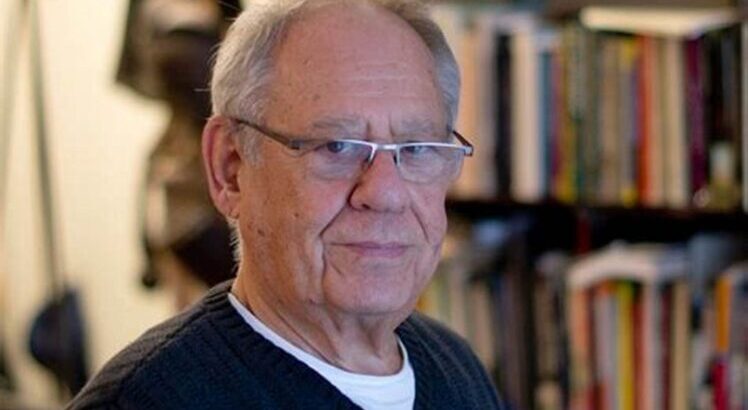
Indian Concept of Maya Leela is very Powerful for Artists Around the World: Richard Schechner

The Natya Shastra of Bharata Muni is the fountain head of Indian dramatics, dance and music. Performance theorist Richard Schechner, comparing the Natya Shastra to the Poetics by Aristotle, says both occupy parallel positions in Indian and European performance theory, and are at or near the ‘origins’ of their respective performance traditions.

The two however are quite different, he adds. While the Poetics is focussed on the structure of drama and dependent on logical thinking, the Natya Shastra is a sastra, a sacred text full of narration, myth, and detailed instruction for performers. “The Natya Shastra is much more powerful as an embodied set of ideas and practices than as a written text. Unlike the Poetics, the NS is more danced than read.”

CSP in an interview with Richard Schechner (https://youtu.be/sTivSnylpMg) explored his journey to India and the influence of the Indian performance traditions on his work and life.

Richard Schechner, who is the Editor of The Drama Review, first visited India in 1970, nearly 50 years ago. At the end of one of his performances of Environmental theatre (a branch of the New Theatre movement of the 1960s that aimed to heighten audience awareness of theatre by eliminating the distinction between the audience’s and the actors’ space) a person came up to him and said, “It's clear from your performance that you've studied or been to Asia.” No, said Schechner.  The person was Porter McRae of the John D Rockefeller Foundation, which later became the Asian Cultural Council, a major funder of scholarly visits to Asia.

The foundation subsidised a six month long trip to Asia for Schechner, the first four months of which were spent in India. After India, he also went to Japan, Indonesia, Korea, Taiwan, Singapore and Thailand and also Papua New Guinea and Australia.  It was 1971, and Schechner was in his 30s. He was already a professor, as well as a theater director and was introduced to Suresh Avasthi, the Secretary of the Sangeet Natak Akademi, who asked him what he was interested in. Schechner told him he was not interested in Western theatre as it was practised in India. “I didn’t even like Western theatre as it was practised in the west. But what I was interested in was Indian performance.”

Speaking on the differences between Western and Indian theatre, at places like the National School of Drama, what is being taught, Schechner says, is a kind of Indian theatre that is largely derived from western modes of performance, that is playwright stagings on proscenium stages. He doesn't think that there isn't an easily distinguishable category such as Western theater or Indian theatre; there are all sorts. But if you are talking about dances, certain Indian dances are termed Indian classical, such as Bharatanatyam, and certain music is termed Carnatic, some Hindustani. But they are all formed by the same principle of notes and scales, and so is Western music, and while obviously the structure is very different, the fundamentals are the same, and he believes the same is true of all fields of art. 

Avasti had many contacts, and he gave Schechner letters of introductions or made phone calls, so that Schechner got to see many, many different forms of performance all over India, from Yakshagana, Kathakali, to Kallaripayattu, to Bharathnatyam, Odissi and Kathak. Deciding to settle down for a while, Schechner stayed in Madras, living with a family that had a house in Shastri Nagar near Kalakshetra. Here, he saw Bala Saraswati dance for the first time, a great experience for him. 

Bala Saraswati was in her 50s at the time and was depicting the scene where Yashoda asks Krishna to take the dirt out of his mouth. “It was fabulously performed. She falls back when she sees what was in her baby’s mouth. He asks her ‘tell me what I can give you’ and she says   ‘take away this memory that this thing has ever happened, because if I know who you are, you cannot be my baby anymore. You will be the Lord.’ It was just breathtaking,” says Schechner.

He watched some of the training in Bharatanatyam, but also began to study yoga with Krishnamacharya, who took a liking to him and took him on as a private pupil. Schechner admired him greatly and later, would teach yoga himself, not as a yoga teacher but as part of his performance training. 

Schechner says he now does yoga and some modified Pilates, and is not bothered overly by consistency or purity. He does what he was taught to the best of his abilities. While he used to be able to stand on his head and do a full lotus position and raise up and down, he can’t do that now at 86, but he says that makes his yoga practice different, but not less. He does not want to think of what he no longer has, because that would take away the flavour of the life he is living. “One must enjoy the food that is on your plate, not what used to be on your plate. If not you will tend to keep thinking of what you cannot do or do not have anymore, which would just lead to an unadvisable state of despair.” 

Schechner also brought his own production of Bertolt Brecht's Mother Courage and Her Children on his second trip to India, performed in Delhi, Lucknow and a small village outside Calcutta. It was not a proscenium based performance, with a stage and audience facing it, but his own style of environmental theatre. After that tour of about a month and a half, Schechner went for the summer to live in Cheruthuruthy, the seat of the Kathakali Kalamandalam, and it was here that he first really read the Natya Shastra, and also studied some Kathakali. He was around 42 years old, but said he wanted to take the introductory training like the eight year old boys, declining their offer of a special teacher. Despite their occasionally laughing at him, Schechner had a good time, and he was also simultaneously reading the Natya Shastra. The book deeply affected him, especially the part about rasa. 

“My experiences in Asia have helped me grasp the creative process differently than I had when I knew only Euro-American theater. I have come to know the body as the source of theatrical thought as well as a means of expression. I experienced a confluence of theater, dance, and music: they became transformed into the consciousness of action, movement, and sound. I felt, as Suzuki does, that "the word is an act of the body" (1982, 89). And I know what Phillip Zarrilli means when he reflects upon changes wrought in his being through training in Kalarippayatt, a Kerala martial art closely related to Kathakali training,” writes Schechner of his experiences.

He adds: “What impressed me most about the methods at the Kalamandalam was the insistence — not spoken or theorized but omnipresent nevertheless — that the body comes first, that performance knowledge enters a person by means of rigorous, continuous, rhythmical bodywork. On 6 July I joined the class of young boys. Immediately after, I noted: Felt very good. Much easier to do when there are others doing it too. Much easier both mentally and physically. But at the same time the work is harder — more strenuous — than when I was doing it alone, or with only my teacher. This morning sweat rivered my face and torso. Instead of asking "What's next?" I just went with the others. My eyes saw, my body did. No translation; just eyes to muscles.”

After that, Schechner began a serious study of the Ram Leela of Ramnagar. Every year, during the festive season, Ramnagar in Varanasi breaks from the present and steps back 200 years. Led by the erstwhile ‘maharaja’ of Banaras, the town hosts a 31-day Ramnagar ki Ramlila, in which the entire epic plays out almost in real time in localities with names such as Lanka, Ashok Vatika and Ayodhya, and around a pond called Ganga.

Sri Ram: Photograph by Richard Schechner

Lakshmana: Photograph by Richard Schechner

The Ramlila was started by Maharaja Udit Narayan Singh in 1830, and its organisers pride themselves on the fact that it has never been disrupted — through battles and wars, famines and droughts, and change in regimes. 

Schechner has written a lot about the Ram Leela, and also on Benares and Kashi. He met the Maharaja, who allowed him to take photographs. He has the world's largest archive of Ram Leela photographs, not open to the public, although he has published some.

The Ram Leela is India’s largest moving dramatic performance, where the Ram Charit Manas of Tulsidas is read at a temple in Janakapuri, the paternal home of Sita. “While the language of Tulsidas was not the Hindi spoken by common people on the streets, some variations had Lord Rama and his brothers speaking in the common Hindi of that part of Uttar Pradesh,” observes Schechner. 

Coronation scene: Photographs by Richard Schechner

Schechner is an initiated Hindu Brahmin having undergone the rites and thread ceremony and was named Jaya Ganesh. He was not asked to give up his Judaism, he says, identifying himself by both faiths. “My decision was made partly because I wished to be able to witness the inner sanctums of the temples nearby, and partly because of curiosity and real belief.” 

Rasa

Schechner finds that most artists all over the world, including the West, are not particularly theoretically inclined, save a few. And teachers, he says, teach more along the mythic lines of theory, not the critical lines of theory.  

Quoting the Natya Shastra, Schecner says:

There is no natya without rasa. Rasa is the cumulative result of vibhava (stimulus), anubhava (involuntary reaction) and vyabhicari bhava (voluntary reaction). 

Speaking about rasa, Schechner says it is a metaphor of juice or flavour, and is very much like food, in that one can enjoy food without being a great connoisseur of it. One can have a fuller appreciation of something the more one knows, but that does not mean the enjoyment does not exist even with ignorance about the detail. So somebody at a very low level of knowledge may actually very much love an Odissi dancer.

He quotes the Natya Shastra “Those who are connoisseurs (bhaktas) of tastes enjoy the taste of food prepared from (or containing) different stuff; likewise, intelligent, healthy persons enjoy various sthayi bhavas related to the acting of emotions (Bharatamuni).

Schechner says the sthayi bhavas are the “permanent” or “abiding” or indwelling emotions that are accessed and evoked by good acting, called abhinaya. Rasa is experiencing the sthayi bhavas. To put it another way, the sweetness “in” a plum is its sthayi bhava, the experience of “tasting the sweet” is rasa.  The means of getting the taste across - preparing it, presenting it  - abhinaya.”

At the artistic level, Schechner says that the transmission of a tradition is always constrained by what the student takes from the art, because one cannot imitate exactly, even if a traditionalist will always say the art form never changes. Historically, Schechner says, we can see it does change. “Speaking of the Natya Shastra itself, there were eight rasas in Bharata’s book, but now there are nine.” 

When asked to describe Shanta, the ninth rasa, Schechner says to think of a rainbow, which has many colours - the rasas, but when combined in the perfect balance, they all disappear. Experiencing the basic rasas in harmony leads to Shanta. Light has no colour till it is refracted, but it is a combination of many colours. 

Rasa Box exercise with Shanta in the centre

As an artist, Schechner was fascinated by this. He did the rasa boxes exercise and was fascinated by a non-Stanislavsky approach towards emotion. He says rasa boxes could be used to analyse texts and emotion, for example, Romeo and Juliet. Usually, people would say Juliet’s basic rasa is shringara because she's driven by love. But maybe it's Roudra, Schechner says, because she is furious at being restricted by her parents and she does not really love Romeo, but wants to get away from her parents. He asks the performer to think about which is the primary rasa driving the character, with layering. Classical Indian actors have their own set of abhinayas. But actors can use the primary rasa and layer it with another rasa, like vanilla flavouring with chocolate cream on top. The best way to learn about rasa boxes is to practice it and attend the workshops. 

Michele Minnick, a student of Schechner, in his article Rasaboxes Performer Training tells us how Rasa boxes work. “The key to their design is the spacialisation of emotions. What makes our use of rasa ‘Western’ is that rather than codifying the expression of emotion through particular genres and facial expressions that are always performed in the same way (as in classical Indian dance), we use space to delineate each rasa, and allow the individual performer to find her own expression of the emotion/s contained within it.”

“The first step towards movement improvisation involves getting into one box at a time and creating a ‘statue’ or fixed pose for each rasa. We then establish that a participant cannot be in a Rasabox without expressing it dynamically. Participants then move among the rasas, embodying each rasa by means of the pose they have chosen.  The idea is to move from one box to another with no ‘daylight’ - no period of transition- between them. This develops an emotional/physical agility the actor can use to transform instantly from expressing rage to love to sadness to disgust, etc. Once participants are comfortable being statues, we introduce breath and then sound and finally movement and sound together. What starts as a fairly controlled exercise develops into a very free improvisation, involving a range of interactions or “scenes” between different people in different boxes.”

It is not necessary to experience the rasa while acting, but it must be expressed accurately. In the theatre of the Ram Lila,  the young boy, when he is playing Ram and wearing the crown he is Ram. Schechner also speaks of how while the brothers are all born on the same day, Ram must always be the tallest because it is the logic of performance, and the narrative, which is why imagery is powerful. Schechner brings in the concept of Maya and Leela, how everything is an illusion, and is play. He believes that the notion of Maya Leela is powerful for artists, because it asserts that the play, the imaginary, is a Maya Leela of a Maya Leela, an enhanced version of the actual Maya Leela. 

Schechner says learning about the arts is subjective, you can have a swift deep experience or spend years and never get anything from it; you can learn the mechanics but not the rasa.  He believes that people must learn about other cultures, their art, perform other cultures, so as to stretch boundaries and understand possibilities. 

In other words, the paradox of being human, Schechner says, is that by origin, we all came from one or two places, but branches of the tree have spread very far, even though they arise from the same trunk. “One should have cultural experiences that are different than the ones you were brought up with, so that would remind you of the fabulous truth of human existence, that we are different but all the same, genetically extremely close but culturally so diverse, and these differences have been sometimes in a great pleasurable way celebrated. Experiencing other cultures through performance arts reminds one both of the beauty of the similarities and that of the differences.”

India has Changed and Is On The Rise in Every Way – Photographer Giunca on India180°

Photographer George Edward Giunca, and his Thai wife, Apisatha, have traveled around India capturing images through fish eye lenses. Their new forthcoming book India180° has images leaping out of these circles of time and space. Their pictures of Thailand and India placed side by side can tell a story of two beautiful cultures influencing each other. Read more:

The Asian landscape is very different from the West. You mention in your blog that you want to show people the true picture away from the prejudices and preconceptions people have. How does a non-Asian touch that core?

I knew that as a non-Asian, I would need some help to clarify any issues and preconceptions I had, and remember to keep an open mind. In my first project, our THAILAND 180º book, my Thai wife, Apisatha, and I started by making a list of what we thought was important about the country and what defined its various cultural aspects. We planned on showing the festivals, food, architecture, historic sites, and tourist attractions. Lots of effort and hours of research lead to an expanded list until we were satisfied.

Next, we traveled around the entire country, taking thousands of photos as we traveled. Finally, we arranged the images in a book, divided by regions in a photo essay format. We used only captions, no text to interrupt the flow between the viewer's eyes and mind. In this way, one can flip through our book's pages and form their own opinions and gather their own in-depth knowledge of the country. It's been hailed as a "visual encyclopedia" of the Kingdom.

We plan on doing the same kind of book for India. It took us 200 pages and 450+ images to make our THAILAND 180º book complete. Even knowing from the start that no book can fully describe a country, we know INDIA 180º will be huge. We dare to estimate that we are 60% done with the photography at this time.

(Caption: Himalayas, Kerala Backwater Tour, Kerala,  Amer Palace, Rajasthan, Sunrise in Varanasi)

What are some of the differences between shooting in India and in Thailand?

From a photographer's point of view, the two countries have more in common than one might imagine. One difference was the spectacular architecture of the minority religious buildings in India. As a photographer, I had to capture them, which added a lot of depth to our visit. Conversing with people in mosques, cathedrals, synagogues, etc., helped us get a better feel for what common thread runs through all Indians and defines them as a whole, which was most rewarding.

Another difference is that while in Thailand, you can take photographs in almost every temple, we were strictly forbidden to take pictures in many of the beautiful temples in the south of India. This made our time there somewhat frustrating and unfulfilling.

Ranakapur Jain Temple,  Ranakapur and Maitreya Buddha statue at Thiksey Monastery, Leh

You interact with the subject before clicking. Do you find differences in how people live across India and between India and Thailand?

I have the feeling that Indian's are more enthusiastic about traveling around and sight-seeing within their country. Everywhere, daily life is centered around religion and calls for a colorful celebration. Apisatha pointed out that rural areas in India seem to have a more self-sufficient economy with less reliance on technology. The people seem more content with the resources on hand and don't require the latest fashions or gadgets for status. Almost everyone appeared to have a quiet dignity that was far from arrogant and quite refreshing.


Pilgrim with holy water from Nupura Ganga

Temples and spirituality are a big draw in both countries. But the sculptures and architecture are in different styles. What appeals to you in both? 

Obviously, most Indian temples are much older, and therefore it's hard to compare the architecture. I get excited just thinking about the first time I saw the Airavatesvara, Varadharaja Perumal, or Brihadeeswara temples. What can compare to the Ajanta and Ellora caves or the Khajuraho Group of Monuments?

Thailand does have some beautiful ancient kingdoms that are a must-see, especially Ayutthaya and Sukhothai. There are also magnificent Khmer temple ruins around Thailand, such as Prasat Hin Phanom Rung. 

While most Thai temples were built in relatively modern times and can outwardly appear somewhat stylized and similar, each one has its own story to tell and knowledge and spiritual inspiration to reward the visitor. I recently observed Thai temples and city pillars with modern sculpture techniques and themes that have held me spellbound.

Of course, the true beauty of art is that it reaches viewers on a much deeper level and communicates things that words never could. Plus, each time it is viewed, it can instill different meanings and even trigger life-changing thoughts and revelations.


Brihadeeswara temple, Wat Phra Kaew and the Grand Palace in Thailand

How do you think Thailand has done better in highlighting its culture in a way that India can emulate? 

Thailand has captured and branded their culture and distilled it into a unique quality they call "Thainess," which they have showcased worldwide in traveling roadshows, festivals, and press releases.

I'm sure India is doing some of the same things, but perhaps they need to do much more. I'm afraid that many otherwise well-meaning photojournalists and NGOs have accidentally done a great disservice to the tourism industry. While using powerful images for years upon years to raise money, they have perhaps filled people's minds with a distorted and outdated notion of India that it is filled with dust, poverty, and beggars. India has changed and is on the rise in every way. That story needs to be told, and we're here to help!

What impact is created by going with black and white pictures in the Indian context?

Black and white photographs have the power to stop people's minds and allow them to see the world differently. Form, line, texture, and shape are more clearly revealed. That said, it seems a shame to do that with a culture as colorful and vibrant as India's! While I enjoyed the way some of my photos looked when I converted them to black and white, overall, the effect disappointed me. A case in point is a series of Indian portraits that we call "180º DREAMS of INDIA." In this series, I showed my subject in color, in the context of a black and white environment. Once again, words get in the way of art! Here are some examples of this effect.

Boy at temple in Tamil Nadu

Cow at 6.10 meeting

How difficult is it to capture the cultural spirit as opposed to your earlier stint in the glamorous world of advertising. Can we 'brand' India in a way that can appeal to different sensibilities?

I often think that God gave me a boon whereby any subject that I point my camera towards gives me everything they have, letting their spirit shine through until I capture it. I'm forever grateful for this! Unless action is involved, most of my photos are done in two clicks! Look into the eyes of the people in the pictures above and see what I mean.

#IncredibleIndia is such an apt branding for the country. The cultural spirit of India comes across as so authentic, and it shines through in every experience a visitor encounters. Most travelers we talked to echoed our thoughts, "Why did I wait so long to visit India?!" People need to be educated, their thoughts updated, and reminded often of how much India has to offer. Once again, for me, the biggest draw to India is the authenticity of the experience.

If travelers are looking for gentrified cityscapes, the world's largest shopping malls, or desiring to take selfies in front of the tallest replica of the Eiffel Tower, India is Not for them! Please don't change.

Branding Extreme Luxury Travel at relatively reasonable prices also comes to mind, featuring the pairing of the wonderful Indian Luxury Trains with accommodation in the palaces that have been converted into luxury hotels. I can't help but think that my 180º photography would be a great fit for promoting this.

Established in 1727 & still the home of the Jaipur royal family who are said to be descendants of Lord Rama

Is traveling and living in India easy for non-Indians? Could you share few experiences?

Because most people speak and understand English, I was able to get answers to the millions of questions that I always have. Apisatha enjoyed being able to converse with the locals, which made her feel less homesick during our extended visits. She also mentioned that most people thought she was a native and occasionally talked to her in their local language.

Aside from easily resolving any problems that arose, the ability to communicate freely allowed me to appreciate the Indian sense of humor. It is so close to my own that I felt like a kindred spirit. That reminds me of a story.

After enjoying two days at the Golden Temple, I had asked our Sikh tour guide to show me how I'd look with a dastar. We were late to catch our train, and I ended up boarding it in Amritsar, still wearing it. I had completely forgotten about the dastar until the conductor gently told me that an American was supposed to be in my seat. Much laughter followed as I explained and showed my passport.


George with a Dastar

Indians love Thai curry. What are your thoughts on the Indian thali? 

I love the pairing of the Indian thali. The six different flavors of sweet, salty, bitter, sour, astringent, and spicy on one tray makes my mouth water to think of it! Whenever we explore a new region in India, we look forward to having a thali meal to sample the local specialties. Since traveling to India, we've been inspired to cook many Indian dishes at home and introduce them to our friends.

I want to thank everyone for reading this far and look forward to your comments. Although Apisatha and I have shared our opinions on the questions above. I now turn the keyboard over to her for these last two. Apisatha~

Thank You. Thai curry was adapted from Indian curry as food culture was expanded via the spice trade route, so I'm not surprised that Indians like it. I know from experience that Indians especially love Thai Green Curry. This curry is unique to Thailand as it is made with all fresh herbs and a generous amount of HOT green chilies.

Thai Curry (above), Indian Thali (below)

What does your lovely wife like about India. Does she see a kindred civilization?

There are many parallels in Thai and Indian culture. In fact, We presented a photo exhibit on this very topic at the 2018 Thai /Indian Fun Fair in Bangkok, Thailand. As I pondered and researched, I found many similarities in Thai and Indian food, culture, arts, architecture, transportation, etc. Perhaps the photos show this better than words.

A kindred civilization is a great way to put it! I often wear Indian clothes and give them to friends as gifts. Since our languages are both based on Sanskrit, I sometimes catch myself humming and singing Hindu devotional songs. The new Mahabarata series that has been dubbed in Thai thrills me, and I can better explain parts of the older Sagar Krishna series to my husband in new ways.

I look forward to returning to India in the near future to finish our INDIA 180º book. If there's time, I just might give you a few tips on Thai cooking or reveal my Mom's secret Thai Green Curry recipe. Bye for now. Namaste!


Being Open Hearted is Understood, Practiced More in Auroville Than Anywhere Else: Jacqueline Kapur

The Red Earth Riding School near Pondicherry, just off the multi-lane highway leading into the city from Tindivanam, lay wet with overnight rain. Once through the gates, you could first smell, and then see -- horses!

There is a comfortable tumble of equestrian facilities, integrated into the trees and the landscape -- rather than standing apart. It is homely, and welcoming, and the horses peer out of the stables wondering if the visitor has an apple or a piece of jaggery for them.

Within a schooling fence, a lone rider was putting either himself, or the horse, through the paces. To the side of the fence, in riding kit, relaxed the school’s famous founder Jacqueline Kapur, chatting with a visitor. All around her were her dogs -- two Great Danes Zara and Ludo, a mixed Rottweiler Kaiku.

She cheerily greets this unannounced visitor and beckons him over, “yeah, the dogs are dangerous, deadly dangerous,” she laughs.

Later, Aparna M Sridhar, Centre for Soft Power, catches up with her over Zoom, for an interview.

Jacqueline Kapur has lived in India for 32 years now, part of the extended Aurobindo Ashram and Auroville community, established by Sri Aurobindo and Mirra Alfassa, known with great devotion and reverence as The Mother. Red Earth was set up in 2010.

A German by birth, she finished her studies at the University of Bochum before living in Japan and learning the language at the Japanese Language Institute in Tokyo for a year. Her friends told her about Auroville, which at that time was “much like a little village,” Jacqueline said.

 After her first visit to India, a friend came to Germany and told her that she had met the ‘man’ of Jacqueline’s life and that he was an Indian. On her second visit, Jacqueline met Dilip Kapur, the founder of Hidesign, one of India’s most successful leather brands and got married to him and raised two children, before they separated.

Excerpts from the interview:

Auroville has drawn Europeans to it because of the work and philosophy of Sri Aurobindo as well as the beautiful ideas of living propounded by The Mother, his collaborator, who was French. What was it that attracted you to Auroville?

I don’t think there is anything which you can pinpoint. It was definitely not just the beautiful landscape. I don’t think you can compare it with anything else.

I think what attracts me the most, even now after 30 years is the idea that here people here try to be the best they can be. Or that is the dream I still have.  The ideas of human unity, no judgement and sharing of whatever there is. As simple as that. Why is it so complicated to be nice to other people, even oneself.

To be friendly, open hearted, giving without expecting anything in return - I think that is more understood and more practiced here, than it is maybe in Delhi or in Paris.

The other thing is the cultural mix. We have people from all over the world here and from all social strata and age groups.  I'm very, very happy that my children grew up in that kind of community.

How did you connect to the larger India through your love of horses?

What I missed a little bit in Auroville was the connect to the rest of India. Even though more than 50% of Aurovillians are Indians, it is still a little isolated. Through equestrian sports I have made so many new people, whom I call friends now. It opened India to me because there was a direct common interest in our love for horses.

Would you say that the people who are interested in horses in India are similar to people who love horses elsewhere in the world?

Yes, I think, people here share this same connect with animals. In Germany, horses and horse riding is much more common. It is available to a broader group of people. In Europe there are horses everywhere.

In India, it's definitely different. You need to look for them, so it's mostly richer people who enter this sport. I've tried, in Auroville, to  open it up to more people because when I was young, I didn't have enough money to buy a horse  for myself. The riding school is a little give back to people who really like horses. I sponsor a lot of kids who cannot afford it and wish to ride. I want to work on equine therapy because that's something very close to my heart and I think it's something which will help a lot of people.  

The values you were talking about in Auroville, can they be instilled through equestrian sports and therapy?

There are many things we can learn with horses - about empathy, compassion, responsibility. It’s about leadership without being aggressive. It's about connecting with yourself and through the horse.

There's something in horse behavior which we can’t explain, how in their presence your emotions and feelings get magnified. That’s why autistic kids respond so strongly to horses. Horses allow you to let the walls down very easily. 

And it's not only for kids. It's just so much more visible when you have children who normally do not touch or do not have contact with other beings or the world at large. When they're around horses, they open up. Horses have an incredibly calming effect. So, anxiety, post traumatic experiences, OCD and other problems can be treated with horses to a great extent.

How much of your business acumen has come from this riding school? And from there, do you bring to the riding school, the Jacqueline from your business world?

In my corporate leadership programs I always say that with a horse, you cannot have a ‘maybe’. If you want to become a leader, you have to give clear instructions. There has to be a “yes”, there has to be a “no”. But in between there can be the room for brilliance, for individuality. If I keep restricting the animal all the time, there will never be a partner. Then the horse can't shine. It also needs to work with everybody so that you know if you have a herd, it cannot run this side and that side. Then the survival of the herd is in question. So with any group dynamic it is the same thing - you need to have one line, you have to have the guidance of a compassionate leader. There has to be guidance and that cannot be too harsh.

How was it starting and running a business in India as a non-Indian? 

Equestrian sport is the only place where everything is absolutely equal. It is the only Olympic sport where women and men compete against each other on the same level because it's not a question of strength. You need to be fit, but you don't need to be super strong. You need to be capable of communication and you need to build trust with the animals so that they give the best.

So if you bring that into the corporate level, the communication is not working properly. There are orders, but there is no communication. Women are way better with at that because we are mothers, (or at least we think about helping others to grow and bloom).  Often women become leaders in companies that cut that part out. If you see strong women leaders, they are often not very maternal or caring. They have to become  tougher than the men in order to rise to that position. I find that very sad. 

As to whether it is difficult to be a female entrepreneur in India, in my case as a female foreign entrepreneur it has actually opened a lot of doors for me, rather than closed them  because I stand out.  

Where did your creative ideas for Casablanca (India’s first multi-brand department store) and now Ayesha Accessories come from? 

When I was young, I think one of my favorite stores was Accessorize in Germany.  I always liked jewelry but I don't like the typical stuff. It has to be a little bit off the beaten track type of jewelry for me. 

Since I was 12 years old, I have been wearing black and my mother wears pink all the time. I don't like the happy “girly” type of stuff but I know what people like which is mainstream jewelry. What I enjoy designing is a little bit different so I created a whole line called Girl Power, with which you can wear your attitude around your neck. So it says things like ‘unstoppable’ or ‘rebel’ and all of it has a little girl sign on it. I have one design with the map of India on it.  

I don't know where I get the inspiration from. I often wake up in the middle of the night and have an idea. I think my brain becomes very creative when I dream. We have a team of designers who execute these ideas.

I have also designed the B and B “Black Box” guest house in the riding school, that is made out of recycled shipping containers. My casual dining bistro in Pondicherry is PY Love Cafe, made with recycled furniture and mirrors. Everything there is made of  and vintage pieces.  

You named the brand after your daughter Ayesha. Is she also part of this?

She's very much involved with trend research and she's working with me on brand building and she's really close to the message we're trying to give about - self love and respect. 

Your daughter acted in the Bollywood film - Black. Do you all watch a lot of Bollywood films?

It was the only Bollywood film I saw (smiles). She acted in the first half of the movie. It was the first time she had ever been to a movie theater and she was impressed. She didn’t know anyone in the sets and in fact she asked Mr Bachchan on the first day of the sets if this was also his first movie (laughs).

What kind of cooking do you like since you have your own cafe?

I like cooking and am supposedly a good cook. What I really like is that I have a very nice lady working for me who cuts the vegetables and I don't need to do the dishes, yet get all the praise for being a ‘wonderful cook’. 

I do love chats especially paani puri. During the lockdown, I think I ate dal with moringa leaves 5 times in a week thanks to the lady who works here. So what I really like is the Auroville scenario, where I can take elements from different cultures. I sometimes like to cook a German dish with an Indian side dish with a Thai curry, and afterwards have an Italian dessert or French dessert. I like to mix things. 

(In the middle of the interview, Jacqueline excuses herself to let in someone at the door. Her three majestic dogs stroll in and settle down besides her.)