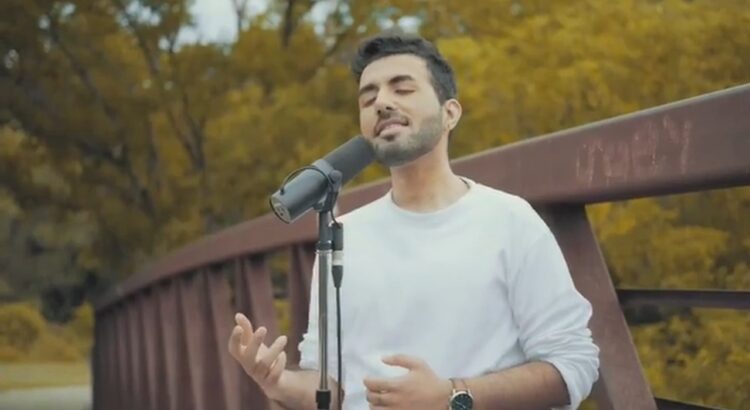
73 Ragas And More with Abby V

Interview by Varsha Venkataraman

India, besides its catchy film songs, is known to have a strong classical music heritage. Indian musicians have performed on so many platforms, locally and globally bringing immense love for Indian music. Most musicians in India have a grasp on classical music which gives them the impetus to perform and collaborate with different genres of music. Most Indians living outside the country learn classical music, be it Carnatic or Hindustani to stay connected with their roots. Apart from staying connected, it has helped them delve into various other forms of music with ease thus making a tremendous mark in their countries, whilst spreading far and wide the cultural heritage.

One such sensational singer from Canada brought to the world 73 Ragas with Vogue and mesmerised the globe. Recently, he was on the New York Times Square Billboard alongside Veteran singer Smt Lata Mangeshkar. CSP was in conversation with Abby V, a Canadian singer of Indian origin who spoke to us about his journey and the Indian music scenario in Canada.

When did you first start singing and what inspired you to sing?

Well, it was a very natural progression and not a lot of thought was put into it because my dad sings, not professionally but out of passion. I grew up in Toronto and singing was a way with which he could stay connected to his roots. He would perform with his friends during the weekends and was very involved with the music scene here. I picked up from him and started to sing and accompany him on stage.

I started learning at a very young age and I simultaneously learnt classical music. Like all Non-residential Indians who have this need to stay connected to their roots, my parents exposed me to music and I was lucky enough to be part of the music scene. Initially, I wasn’t interested in classical music as I was into pop, R&B and Bollywood. I used to perform as a child  and it was much later that I took to learning classical music seriously. I wouldn't really practice and would find excuses to not attend classes. Carnatic and Hindustani music lessons start slow and it takes so long to understand where it leads to. I had completely left it at one point. I still kept singing but not classical. But I came back after listening to my Guru’s Smt Ranjani and Smt Gayatri’s music performance on television and thought to myself ‘wow, I’ve never heard anything like this - can Classical music really sound this beautiful?’ and that's when I started learning it more seriously.

When did you realise that music is what you want to pursue?

It was always there at the back of my mind and my parents were always very supportive. It was more their dream and they were living their dream through me. My musical pursuits were never dismissed as a part-time activity. I gave it my all whether I was performing, learning or just listening. However, I did end up doing a Bachelor’s degree in business from the Rotman School of Business at the University of Toronto. During your high school / college years, you start to think a bit practical and maybe do music on the side. But things fell into place and music took over. My final exam was in April and in February I was called for a reality show and in May, I was touring and doing the show.

Tell us about your experience with the 73 Ragas with Vogue?

It was incredible. I was visiting India during the summer of 2019 when I came up with the idea. When I got back to Canada, I told my friend and video director, Karandeep Sheemar and my parents the idea. This video was my breakthrough in the digital space. It was one of my first projects. I had been touring and performing a lot, but I was a little insecure about putting  myself out there on the internet. When you perform, you have that energy and once it is over, it is done. When you curate content for YouTube, the video is there for life so you’re all the more conscious. . This idea was very clear and strong in my head. A Lot of people were sceptical though. Usually with the 73 questions with Vogue, celebrities are asked questions to which they give answers that connect with the listeners, but if you are doing this with ragas, especially with 73 ragas, which would take a minimum of  10 minutes, it’s natural to wonder if  people are really going to watch and relate to it. But I was quite convinced  with my idea, and when people talk about the one thing that changed their life, for me it was this. It went viral in ways that I didn't expect it would. People were commenting and sharing and I could connect with so many wonderful people around the world. It truly changed my life.

Can you tell us about the role your Gurus have played up until now in your career?

My Gurus, Smt. Ranjani and Smt. Gayatri (Ranjani-Gayatri duo) and Smt. Raji Gopalakrishnan are a huge influence and it was because of them that I understood what Carnatic music is. Well of course, first is my father because he understood the value of music and he introduced me to the concept of ragas. Even when we listened to Bollywood music, he would talk me through the notes and the ragas of the song. I am very grateful to him for sparking that fascination. Growing up here, I didn't have the chance to learn continuously from my gurus. But those two months I would visit India, I would learn under them. More than the training, the inspiration from them is what I am immensely grateful for.

In your opinion, how important is it to understand the technicalities of Indian music to appreciate it?

I honestly don't know how to answer this question because I have been fortunate enough to be surrounded by the musical environment. My father and I used to analyse and understand why certain music sounds a particular way. In that sense, it has been very rewarding to look at a whole new dimension of music. Like when you listen to pop or ghazal, music is obviously beautiful, but if you understand the lyrics, it is a whole new experience and whole new dimension of connection. Understanding the ragas is similar. There is a new depth of experience. But of course, there are so many languages and I wouldn’t understand what the lyrics mean and I still have a good experience. It's not mandatory to grasp the technicalities like the ragas, but if you do have the knowledge it only enhances the experience.

Have you taken part in competitions in and out India?

Yes, but not too many. It was a short one called International Superstar which is a worldwide singing reality show. They recruit people from different countries and I represented Canada. It was a great platform and I did end up winning which felt great. It was the first time I was singing Indian film music professionally. It was a great way to do that on a professional stage. It was a three week reality show. I used to feel like I missed out on a lot of these reality shows like Indian Idol especially when I look at my contemporaries and how they built their following through reality shows or appearances. This is a great way to start in India because Television is a prime outlet in India. I did feel like I missed out on that until I did 73 ragas. I was fortunate to have that viral experience. I know a lot of incredible people who struggle and they need these reality shows to come into the scene.

How did you master at Metalworks help shape your career?

The institute gives out a full scholarship to one Canadian every year covering full tuition at Metalworks. I was lucky enough to receive the scholarship and I’m very grateful for the experience. I was now studying what I really wanted to study and I made full use of it. I learnt so much from it because they cover a lot of aspects- like music production, music management, sound technology. I was very fortunate to have this experience.

How important is creating music videos at times like this?

During times like these, tapping into the online space is a great way for artists to continue expressing their art. The online platform is a wonderful way to stay connected with your audiences  and I am glad to have the resources and skills to do it. It was a great lesson and eye opener for many artists to embrace digital space and technology and embrace their online following. It was the only way to express my art. The pandemic happened two weeks after I released 73 ragas. I had meetings and tours set up and I had to cancel all of them due to the lockdown. It was disheartening because I finally got all the courage to upload the video and this happened. But thanks to the immense support of people around me and the positivity in the world at the time, things helped me push through. There were times I couldn't make myself create content. This was my 9-5 job and we artists have such a  multitude of work. We are either performing or at the studio recording or collaborating with other artists, creating content. So many spaces that the pandemic took away. So once I embraced the digital space, I was fine. I was happy I could pull through.

Are there fusion artists in Canada that you follow and would like to work with?

I am not sure of fusion in terms of classical music. There is a phenomenal drummer Sarah Thawer and she does a lot of Indian music, R&B, Rock and lots of different music. Jonita is a very popular singer and she is from Canada who has made it big in India. A lot of the talented musicians who focus on South Asian music end up moving to India to make a career for themselves. With respect to collaborations, I would love to visit India and collaborate with the artists that I have connected with over the past few months. With the digital space, it has been so easy to connect with them.

Among the various collaborations, are there any memorable collaborations you would like to share with us?

It’s very hard to pick favourites. I love this acapella I started during the lockdown. I collaborated with such wonderful singers like Sivaangi, Aishwarya, and Antara where we recreated iconic classical songs into an acapella version with a pop style. I love mixing elements of pop music with classical; which is another reason why 73 ragas happened - it was a great meeting point for classical music and pop culture coming together.

Are there artists from other genres who learn Indian classical music?

Surprisingly not as much as there should be. No one has touched upon this dialogue and it is so relevant because we hear of many South-Asian musicians who learn the fundamentals of Western music to enhance our technique. But I have never heard of performing Western musicians who learn South Asian classical music to enhance their craft. . Of course you have the scholarly and the academicians, the people who want to study it but performing musicians learning it to enhance their own craft, is not as common. And that bothers me a bit because there is so much value in Indian classical music and even with ghazals, Sufi music in south Asia. Quick e.g.- the concept of sargam in Carnatic music is an incredible asset and skill. If I am able to shift between so many ragas it is because I have a good  grasp over the skeleton concept of sargam. And this concept of ragas which is a whole new dimension should travel globally, and it hasn’t yet.. In fact, guitarists learning Latin techniques and with the Korean wave, Indian classical music doesn’t have that much representation it should have and I hope my generation will change that and bring it to the forefront.

Can you comment on the audience for Indian classical musicians when they perform in Canada?

They are mostly Indians, unlike in Europe , especially in the UK where you do see native European  audiences. This is mostly due to the number of Indians living here and there are so many organisations like the sabhas in India. The Sabhas have the same artists every year and I feel it should be a bit more inclusive of other upcoming artists too. In every major city in North America, the Sabhas cater to the same community, for example if there is a concert coming up, promotions would take place only in Indian stores or Indian Radio Channels. It must go beyond and that will bring recognition. Creating new content with local artists can bridge those two things and not just relying on artists in India. I would long for chances to perform here and there weren’t many. The sabhas would bring artists from India and people would attend to listen to the top 10, so where do we get the chance? Things are improving a little but concert promotions is what we need to work on a bit more.

What is the importance of sound technology in recording music?

I feel it’s very important to know the basics in today’s world of music. So much of our work is digitized and archived on the internet, it’s important for us artists to be able to execute our work the way we’d like to. In the last 2 years, things have become so much easier to create content even with their phones, there are tons of apps on your phone and with a decent mic and a quiet place, there are enhancing options on your phone that can add effects, add music and produce a good track on your phone. It never hurts to learn the tricks of the trade and learn how technology can help with music and in so many ways that's not just limited to recording, but with editing your videos, how to upload, what platforms to upload onto. Within the past year, you can see how technology can help artists with visibility. It can also hinder an artist if they don't execute their content like how they envisioned it and that is painful. So, yes, learning these technicalities is very relevant and helpful especially at a time like this.

Have you performed in India before? How different is the experience in India and Canada?

I have performed in Chennai and in Bombay. I have also been part of the December festival and I have performed at the Music Academy too, it was one of those venues on my bucket list!. Last year I was supposed to come to India, but couldn’t do so because of the pandemic. Hopefully soon! . The experience is pretty much the same. The listeners are just as sharp and I have listened to kutcheries of the same musician here and in India and the audience are quite sharp and are in tune with knowledge of the music. Since the families here try to stay really connected to the roots, they are as much involved and can be more critical of the performances. Concerts can go on for three hours maximum and Hindustani concerts can go up to 2 or 3 full rags, an interval and then one more. They do run for a longer time here.

How does the future look for you? Is there any different you want to do?

I have grown up embracing so many ethnicities and that translates into my art. I try to do things different every day- like Carnatic one day, a ghazal the other day. I want to be versatile and I love all these different styles. Strategically it would be clever if I did one style, like if one Tamil song gained a hit, it would make more sense to do Tamil songs. But the artist in me keeps switching it up and that keeps me going because my audience enjoys it too; and this way I am able to cater to a lot of people. There are so many musicians like Bombay Jayashree and Unnikrishnan who have done such incredible work in the film industry too and stalwarts like Kaushiki Ji have conquered different styles. The future for me is to create music of all kinds, my original music and to keep creating content. I want to have a mixed bag, not restrict myself and perform different styles because I get bored easily!

If not for music, what would you have done?

I would say if I wasn't a performing artist, I would still be a part of the music industry, maybe along the lines of music management. But if I had to do anything besides music, well I do have a degree in business and I would put that to use. Maybe join the Finance team in a record label. But definitely something with music.

Also maybe acting! I have done theatre and at home, I would act out scenes and characters. But I always had this passion  and acting is such a celebrated profession in India and there's so many things that mask the actual art of acting like the fanfare, brand endorsements, looks, modelling and lifestyle. I am very passionate about the method of acting and I analyse these when I watch a film. There were times when I would act out different things and I would maybe want to explore that.
Experiential Heritage Discovery with Roobaroo

From NICE Stories. Roobaroo Walks placed 2nd at the NICE Aarohana Business Plan Competition (BPC) – Growth Stage. Here’s featuring the founders’ spark for starting this venture, their entrepreneurial journey, the business, challenges, goals, learnings and their experience at the BPC!

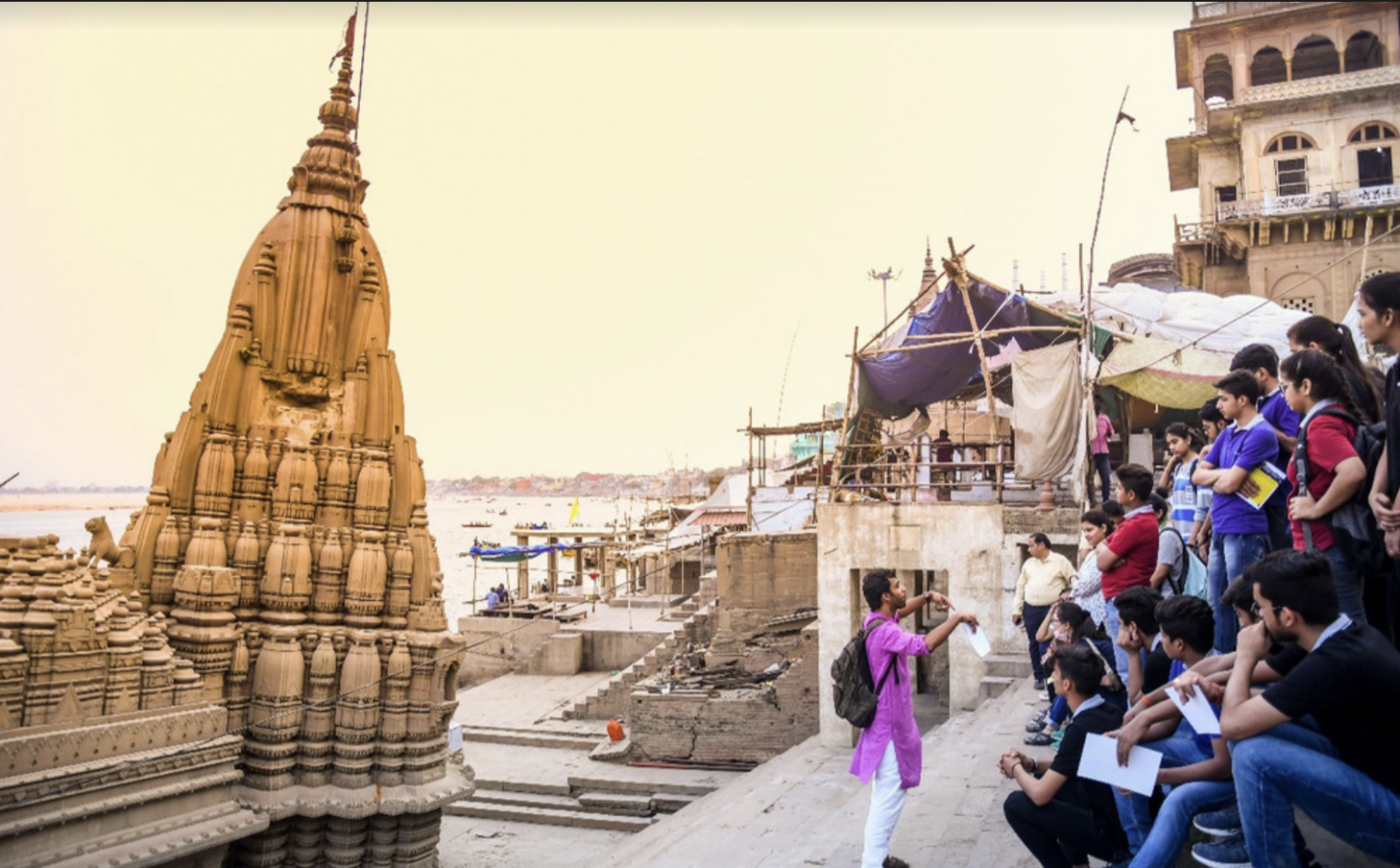
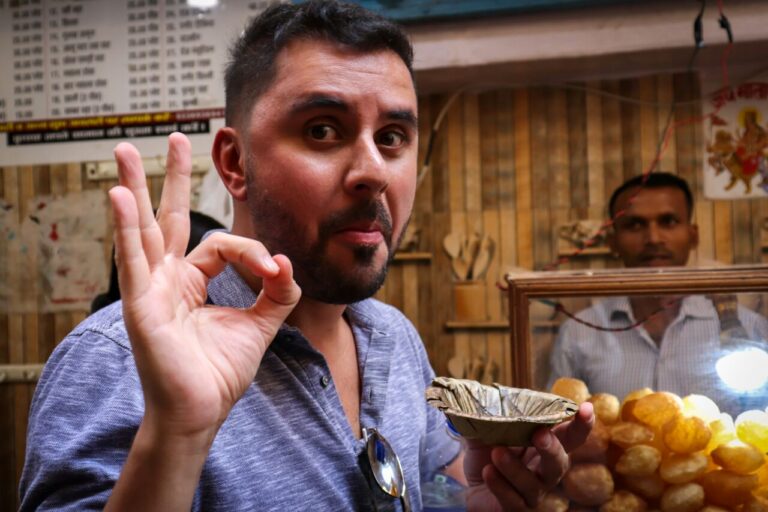
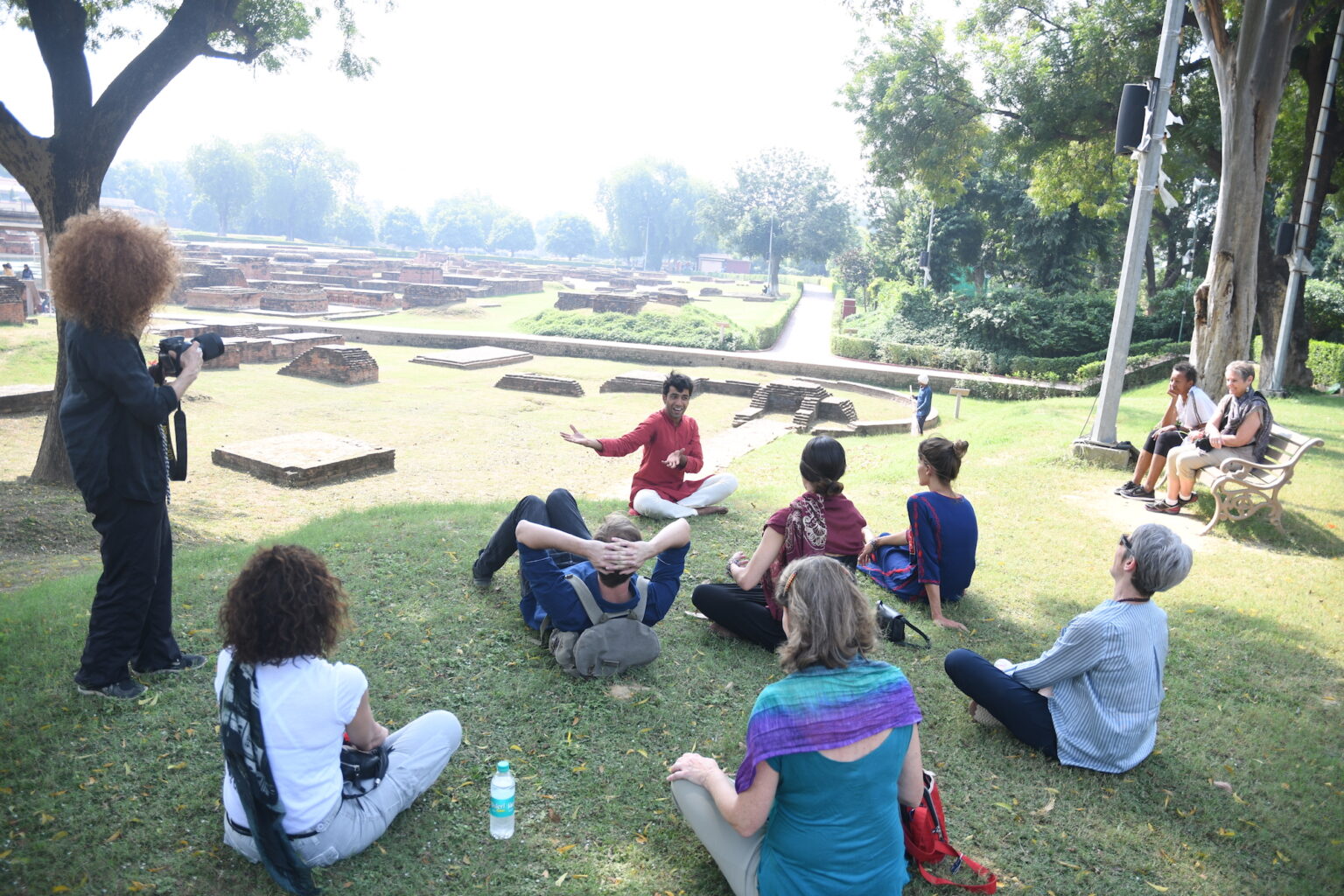
Combining heritage discovery and experiential storytelling! Leading you to fascinating places and letting you in on the best-kept secrets! All this and more at Roobaroo Walks, a cultural enterprise that offers Heritage Walking tours, Food Explorations, Workshops with Artists and Ways to make festivals engaging.

Founding Team

  • Aayush Rathi, Co-Founder, Head of Experiences & Product
  • Anchal Sachan, Co-Founder, Head of Marketing & Business Development

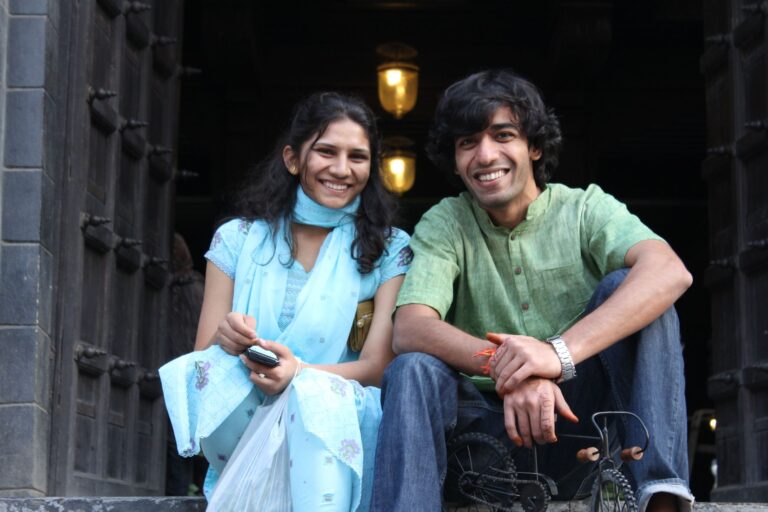
Anchal and Aayush are wife & husband and have a young child – Ved. Anchal is an alumna of K.J.Somaiya Mumbai, ex-Abbott Marketer and a yoga instructor. Aayush is an IIT Bombay, IIM Ahmedabad alumnus and an ex-BCG Consultant.

Read their story.

The Motivation to Found Roobaroo Walks

We are great fans of the knowledge that is encapsulated in the traditions of this land, be it yoga, Ayurveda, its music, dance and crafts, and of course its long-living history. Indian heritage has a lot to offer to people especially in today’s time and age – but its discovery is not always seamless. It’s the quest of unfolding this knowledge that Roobaroo Walks addresses. We transform travel experiences, leisure time and festival celebrations to enthuse creativity and imagination.

Aayush: It was my travels through Europe that had me intrigued about our own heritage. And when I explored India and her heritage, I was first blown away by the tremendous depth and relevance, and next by just how unstructured and unorganized was the process of its discovery.

Anchal: For me, having experienced the benefits of Yoga and Ayurveda through my young age, I wanted to simplify and accentuate its application in the everyday lives of others.

Our Vision

Transforming the way people leverage heritage for personal and community growth via experiential storytelling and art-based products and activities!

Together with our team, we are keen on sharing Indian heritage with the world.

Entrepreneurial Journey 

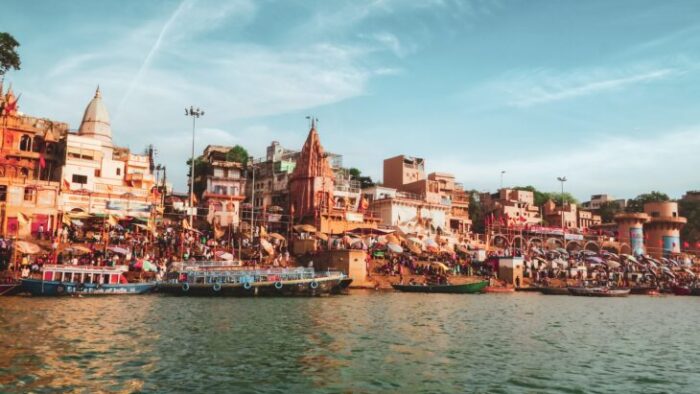
We started with our walking tours at Varanasi, nearly six years ago. After a mere three weeks of arriving, we started testing our model of walking tours with travelers and locals alike; we kept improving based on the feedback. We also made friends and identified artists who were open to sharing their knowledge in a contemporary and easy-to-understand language.


Since then, we have expanded to other destinations. From launching our Delhi chapter in 2018 to launching Lucknow, Amritsar, Agra in 2019 we went live with the Himalayan and Dehradun chapters in 2020.

Our excitement is in leading our customers to fascinating destinations and to the local arts & crafts – both popular and offbeat. Our fun and insightful Storytellers and artists let them in on the best-kept secrets. From relishing delicious food – both from the streets and homes – to engaging with local art forms and artists to even teaching a skill to an interested audience, our customers experience it all.

In these 6 years, here’s what we have accomplished:

  • Conducted 2,600+ Heritage Walks
  • Made memories with over 10,000 travelers from 55+ countries
  • Received the Trip Advisor’s Certificate of Excellence for 4 consecutive years and earned their Travelers’ Choice Award, given to the top 10% of the travel organizations!

Whom Do We Serve

Our experiences and products are ideal for those interested in creative pursuits and meaningful travel. Specifically –

  • Leisure travelers – Indians and International
  • Schools interested in outside-the-classroom learning
  • Corporates looking for team building activities and offsites

Our Top Challenges

  • Increasing our customer reach – Going beyond referrals

We are working on shortening the usual long gestation period of making a destination sustainable. Every new destination requires initial investments – researching and developing content, exploring locations, recruiting storytellers, establishing community spaces. While referrals are great, it takes time for the word to spread. And that’s where our knowledge of Indian heritage comes in – to drive content-based marketing.

  • Ensuring quality at scale

Our offerings are all about handcrafted experiences. So, the natural question is, ‘how do we scale?’ We have been leveraging the processes and playbooks that we have created for seemingly subjective aspects of our work such as storyteller quality, building community ties at new destinations, etc as we expanded to multiple destinations

Experiential Travel During Covid-19

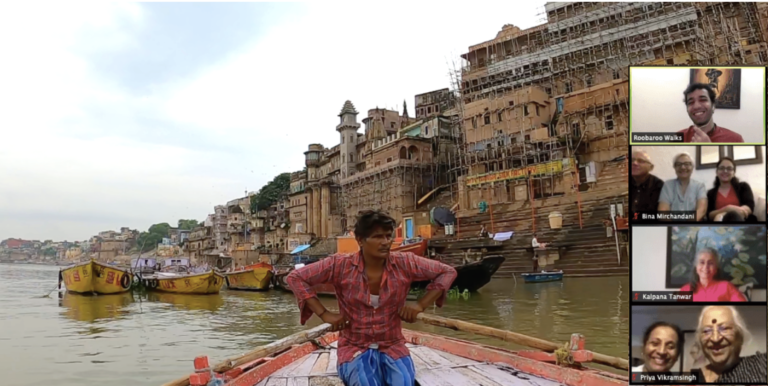
When travel came to a grinding halt in 2020, at Roobaroo, we went online with our offerings. We offered virtual tours, digital art workshops, cultural souvenirs, festival packs – experiences and products that customers consume from the comfort of their homes.

Going online has transformed the way people explore heritage. We will continue to focus on these offerings going forward as well.

Our Goals

In due course, we plan to cover all of India and other countries as well. We will continue leaving the trails with memorable experiences.

Entrepreneurial Learnings

  • From our experience, we know that running small, measurable experiments to establish Product-Market fit quickly is less time-consuming than trying to create the perfect product on the first go.

How did we learn this valuable lesson? While building our mobile application, we took a lot of time iterating on the product before taking it to the users. However, with our virtual tours, digital art workshops, cultural souvenirs, festival packs, we decided to work closely with our users as we were designing these products and services. This helped us to significantly reduce the time required for finding Product-Market fit.

  • It is best to leverage partnerships to grow quickly and in a focussed manner as opposed to doing it all by yourself.

At Roobaroo, we have made exclusive partnerships with small heritage walk organizations in some of our destinations – teams with whom we have worked closely to refine experiences and products.

Advice for Cultural Entrepreneurs

  • We have observed that the gestation period for cultural enterprises is often longer than that for other enterprises such as in FMCG, Transport, etc. It’s therefore important to stay confident by focusing on the traction you’re receiving – without comparing it with other tech-based products.
  • Be nimble – run quick, measurable experiments with consumers to find product-market fit.
  • Build processes for your solutions.

On Winning the NICE Aarohana Business Plan Competition

It has been a great learning experience at the BPC! We prepared by writing down our story, honestly and diligently. We incorporated mentor feedback and practiced a crisp pitch.

The mentor inputs were instrumental in helping us refine our story. 

The validation of our idea from this win has bolstered our confidence further. We look forward to receiving continued mentorship and help in connecting with potential investors.

———

This conversation, originally published in NICE Resource Center, was authored by Chitra Aiyer. 

Chitra is interested in all things Indian and enjoys reading and writing. She has been a technical writer, a freelance writer, blogger, professional photographer, content creator, and an architect. She has worked in startups and has also been part of various citizen-led initiatives, both in the online and offline world. She trained in architecture and professional writing. She is an alumna of Mysore University and San Jose State University. 

Images from Roobaroo Walks, one of the finalists at the NICE Aarohana Business Plan Competition – Growth Stage.

Feature Image Credits Tejal Shanbhag on Unsplash

World Cinema Can be Discussed Within the Framework of Indian Aesthetics: Prachand Praveer

Cinema through Rasa: A Tryst with Masterpieces in the Light of Rasa Siddhanta by Prachand Praveer (translated by Geeta Mirji Narayan from Abhinava Cinema by Praveer, published in Hindi in 2016) discusses the important works of world cinema in the light of the Rasa Siddhānta of Indian classical aesthetics.

When friends of Prachand Praveer suggested that he write a series of essays on World Cinema, he chose "the theoretical framework of Indian Classical Aesthetics, that too of Abhinavagupta as I was highly impressed with the metaphysical and epistemological system of Kashmir Shaivism. Therefore, I delved deeper into it and could relate the rasa theory to world cinema as a practical guide."

In an interview with CSP he talks more about this connection.

Do you think a study of Natyashastra would be useful for students in school to create an aesthetic appreciation of Indian texts, cinema, art?

I think Natyashastra should be taught to students interested in dramaturgy and related performing arts. There should be a serious consideration about the academic level at which it should be discussed as there is a lot to learn in a limited time. Introspecting on our education policy, I would advocate the inclusion of a compendium course involving a mandatory introduction to philosophy (dealing with ethics, logic, metaphysics), Natyashastra, Cinema, Classical music for curious students. We stress too much on empirical studies (science, engineering, social sciences) and very less on our daily conduct (aesthetics apperception, ethics, metaphysics, epistemology, logic etc.), which was not the case two hundred years ago across the world. We have limited our learning to earning capabilities and not to the joy of knowing.

The rasa theory is basic to all our performing arts. The West has incorporated it in theatre studies. But they admit that cinema actors are not grounded in any theoretical frameworks. What are your thoughts on this?

In a classical Indian discourse, there are two views on Rasa Theory application. Bharata Muni, author of Natyashastra, says that all arts are covered under Natya and therefore Rasa Theory is of paramount importance. There are contrary views which although they respect Rasa Theory but wonder if it is basic to music, painting, and others.

My view is aligned with Bharata Muni, which claims that any audio-visual playful medium is Natya. I perceive Cinema as an artwork, which caters to a large audience as a playful medium with both aural and visual at the same time.  We should understand that Natyashastra is a practical guide for poets and performers. As the 11th century Kashmiri scholar Mammata Bhatta says, talent for creativity involves all three aspects – a) Innate ability b) Teaching c) Practice, I believe a theoretical framework or teaching enables one to see unimaginable vistas.

As we know Cinema has brought unprecedented notions to performing arts such as selection of location, camera works, editing or careful rearrangement of images and sound, which was not present earlier. Therefore, I think that there are different kinds of trainings both theoretical and practical, desirous for actors, directors and others involved in Cinema. The rightful question here is, how many theoretical frameworks address Cinema and are they successful?

We must not forget that Cinema is a recent art, and it has piqued the interest of philosophers, social studies scholars, politicians etc. It is not being dismissed as mere entertainment. I am sure indigenous thinking will be helpful for the people involved in Cinema making.

Is there a difference in the way the rasa theory is used in classical arts and in cinema? Does your book deal with this?

The Rasa formulation theory states that with the fusion of the determinants, consequents and transitory emotions, rasa could be identified by the persisting/stable emotions. This theory undergoes various interpretations and explanations with multiple philosophical viewpoints. My book subscribes to the commentary of Abhinavagupta, the great Kashmiri Shaivite philosopher of 10th century, named Abhinavabharati.

As per the classical stand of Bharat Muni and Abhinavagupta, the Rasa theory does not undergo any change in its simple formulation. It is our understanding of Cinema and Classical arts that must engage with this theory for a careful analysis, which my book does in tryst with the masterpieces of the World Cinema. In Cinema, the determinants and consequents undergo changes as per the medium. So, there is a difference in the terms of treatment, but this difference is also present in music or painting where it is claimed that the determinants and the consequents are not explicit but very subtle.

Cinema worldwide has changed dramatically in the last 50 years. How can we understand these changes through theoretical frameworks and societal evolution/change?

If we look at the changes in Cinema, it has primarily to do with technical advancements and consumption of the movie making e.g. big budgets, use of computer graphics, complexity of editing, worldwide release and a two-week euphoria etc. In spite these changes, cinema is not what it used be in the times of great masters.

I see Cinema as an artwork, as the executed vision of a creative mind which is primarily led by the director. Social scientists try to find an answer as to why a genius was born in a certain age. We can lament that with so much evolution we have forgotten to laugh as we do not have any one equal to or even close to Charles Chaplin or Buster Keaton. Should we blame the soap operas or social media, mobile phones or OTT? Frankly, I do not have any answer to this question.

There are cultural differences in the treatment of emotions, but some scripts have universal appeal. Is that where training and theory come together?

I think this is where the idea of transitory emotion, stable emotions and determinants come into play. Natyashastra lists thirty-three kinds of emotions of lesser significance which help in bringing forth eight stable/permanent/persisting emotions viz. love, laughter, enthusiasm, wonderment, anger, pathos, disgust, and fear. This is a crucial feature of Rasa Theory and a very important point of reflection.

You mention many films from the West and how they can be seen through the lens of rasa. Could you talk about how you analyzed this? 

In continuation to the above answer, there are eight stable emotions and eight rasas (often translated as sentiments) viz. Shringara, Hasya, Veera, Adbhuta, Raudra, Karuna, Vibhatsa and Bhayanaka listed in the Natyashastra. Almost all the major cinematic works of the world can be discussed within this framework.

Excerpt from the book:

Study of World Cinema from an Indian Aesthetic Perspective

A discussion on films based on the ancient Indian aesthetic principles will show that drama is closest in nature to films. Drama has to be rehearsed and its destiny is the stage. Films though have a different life, unlike on stage, the actors in a film do not have to emote everything all at once, their act can be done in bits and pieces. Films have to be recorded, edited, background music and playback music have to be synchronized, only then they can be shown to the audience. Of course, it is a given that drama and films both are used to convey, within a stipulated time, some message to society. Drama too has the same characteristics, world over at all times. In the Indian context, drama has been called as the best form of poetics. It has been seen that through the ages poetry has primarily remained a form that is heard while drama gives us the audio-visual pleasure of poetry, all this of course is taking us away from our main point of debate and discussion.

The following verses in the epic work Nāṭyaśāstra, written by Bharata Muni, explain the utility of drama:

Drama teaches the glory of duty to those who have forgotten their duty, it guides us on the path to find love, to the ill-tempered and uncouth, it shows how punishment can improve them, to the disciplined it shows how to live in regulation, cowards are taught how to be brave, the brave are shown the virtues of energy and enthusiasm, a person who is unwise is given wisdom and the intelligent are made further wise. The ones who are burdened with sorrow are taught how to be stable in their grief, those who are waylaid are taught discipline and the poor are shown the means to a livelihood.

– Nāṭyaśāstra 1.110-16; Ghosh 1950: 15

Drama, in Bharata Muni’s words, is an emulation of the work and conduct of the people; it is fulfilling in emotions and highly

descriptive in nature. It is bound to the works and life of all people be it good, bad or in-between. Drama brings people together; it gives them the courage, entertains them, brings happiness into their lives and also counsels them whenever required.

The great Sanskrit poet Kālidāsa has expressed his view in the beginning of his play Mālavikāgnimitra that drama is such a medium that, on a single platform, fulfils the desires of all the people gathered irrespective of their varied interests.

According to the Nāṭyaśāstra, in the Indian tradition, dance, music and playing of musical instruments are an inseparable part of drama which have been unknowingly carried through into films. Due to many differences in the moral and ethical values the Indian traditions seem very queer to the Western eye. This does seem to be one of the reasons why Indian films have not been so popular the world over.

Has one ever wondered why a sad scene makes you cry or why a good drama makes you feel elated and full of joie de vivre? The answer lies in philosophy and particularly aesthetics. The extensive and proper study of reality and what governs consciousness, the study of how to gain knowledge and the study of language is not possible without the knowledge of aesthetics. Many Western philosophers believe that it is impossible to know exactly what an audience feels when they see a work of art as such feelings are unknowable.

Cinema has to be understood in the context of poetics, dramatics and aesthetics. Both poetics and dramatics are explained within aesthetics. In the Indian philosophical system, aesthetics and truth do not oppose each other. In a traditional discussion, if truth is scrutinized then we can see that virtue or the right path and pursuit of the worldly pleasing path both are questioned. Our sacredntexts, i.e. the Vedas and the Upaniṣads, are the right path chosen to learn the truth (śreyas), whereas poetics is akin to the pursuit of the worldly pleasing path (preyas). The great poet Jaishankar Prasad has said that poetics is the imaginative experience of the soul, it has nothing to do with any kind of analysis or inference or science. The thinking power of the soul accepts the virtuous path to the truth in its original and elegant form in its exceptional state and in poetics this conviction is the true realization. Hindi poetess Mahadevi Verma has enunciated on poetics and art, thus: “In poetry, the art has reached such an eminence that it can now help knowledge, because truth can be attained through it and beauty helps to achieve it”. Traditional literature of the Indian poetics has been divided into eight sects as under (Paranjape and Visuvalingam 2006: 101):1

  1. Rasa
  2. Dhvani
  3. Aucitya
  4. Rīti
  5. Vakrokti
  6. Guṇa
  7. Doṣa
  8. Alaṁkāra

Many Indian philosophers do not prescribe to the above eight traditions of poetic and literary criticism, they feel that the Buddhist and other doctrines have not been given due credit here. Poet Jaishankar Prasad has referred to Rasa, Dhvani and Rīti as the delightful or pleasure-giving sects, whereas the no-soul theory proponents Buddhist art forms have been graded as agonizing ones. Among the above eight schools of poetics, Rasa is considered as the most important. The learned teachers have declared that in poetics rasa has been called as the most lively or charming, while the others are parched (जयशंकर प्रसाद 1939: 34; रस्ताेगी 2012: 249).

Historically too, it can be said that rasa has always been the most discussed and effectually important of all the aesthetic doctrines. The sentiments, which are felt whenever a drama is seen, 1 Rajnish Mishra, 2006, “Agamic Assumptions of Indian Literary Theories: An Exposition Based on Abhinavagupta”, Evam, 4(1/2): 91-129.  have been quantified or listed down, according to the rasa theory as against the unknowable feelings described by the German philosopher, Immanuel Kant. Out of these listed sentiments some have been categorized on the basis of the exceptional way they make one realize the feelings shown, they are: anger, laughter, fear, etc. These are above and beyond characters like pride, laziness and worry. The exceptional qualities mentioned above are defined as the sthāyī bhāvas which literally means feelings that stay. They are not named so because they are the static feelings which are always prevalent throughout, but they are the most enduring feelings noticed.

Kashmiri Śaiva philosopher, Abhinavagupta opined that every social being is conscious of eight types of distinctive feelings already present in his/her psyche. In the course of watching a drama, a compassionate spectator feels drawn to the emotions being acted out on stage, these emotions (rasas) can be recognized from the sthāyī bhāvas explained earlier. The spectator loses himself in the feelings which are aroused in him. He feels sated and experiences pleasure which are distinctly different from his day-to-day life experience and personal happiness or sorrow (पारेख 1974: 46-48).

The word rasa has been used variedly; as in the juice of a fruit or the extract of vital force in the context of the Ayurvedic medicine, etc. (पाण्डे2003: 95), but while alluding to drama or films we can say that the word rasa has been able to bring together a very distinctive, diverse and peculiar meaning to itself. It is an experience of aesthetic emotions and also the subject of these experiences itself (रस्ताेगी 2012: 27 4).

My Dream is to Create a Brand for 100 talented Indian Chefs: Gopi Byluppala

The Culinary Lounge is a highly interactive culinary studio space in Banjara Hills, Hyderabad, designed to make the art of cooking and baking a memorable and unique adventure. A space that brings food enthusiasts from all ages together, to bond over food. Uniquely curated experiences leave long memories of the kitchen experience in participants.  Gopi Byluppala, CEO and Founder speaks to CSP on taking Indian Cuisine to the globe.

Recipes and more at: The Culinary Lounge - YouTube

How has Indian food changed over the decades? In your opinion is there a renewed interest in what our ancestors ate?

Culture takes centuries to evolve. Our 4000 year old Indian cuisine has undergone tremendous changes , especially over the recent years. This happened due to globalization and Internet.  Earlier people were only aware of cuisines from their region and community. But with the advent of the internet people are becoming curious about cuisines from other regions. Indian cuisine has been globally recognized with the blooming of Indian restaurants across the globe.

Improvisation and innovation is ruling the roost with many traditional dishes having myriad variants. For instance Szechuan Dosa is a creative fusion of Chinese and south Indian cuisine resulting in a palatable dish. As I said , progressive cuisine is the way forward and many chefs are collaborating with many local regional home makers to understand their family secret recipes and presenting them back in their restaurants with a modern touch to serve a global audience. We need more Gaggans, Garima Aroras and Vikas Khannas to take our Indian cuisine global.

There are thousands of such unsung chefs present in India who have the potential for taking Indian cuisine forward in Innovative ways. The Culinary Lounge's vision is to be the platform to give them the opportunity and to create their branding, so that they will be recognised globally and take Indian cuisine across the world.

And yes, we are going back to our roots of what our ancestors ate. With the increased awareness on health, there is revival of old forgotten millets, rice grains with immense health benefits into the Indian cuisine.

How does The Culinary Lounge support authentic Indian cuisine?

The Culinary Lounge clientele is quite diversified. We directly work with homemakers, we rely on local chefs with family culinary histories. Because The Culinary Lounge is connected globally, we take this authentic Indian cuisine, global.

I will give you an example. Bolivia gave India quinoa.  Today The Culinary Lounge is innovating with the Bolivians getting the original quinoa and making for them a unique recipe - following the authentic Hyderabad recipe, but adapting to their tastes and ingredients. We call it The Bolivian Biriyani. This is being launched on their independence day, August 4, as a gift from India!

A few years ago we invited Mehboob Alam Khan, the legendary culinary personality from Hyderabad. This was for a group of 50 CXOs across the globe. They came to The Culinary Lounge for an experience, where Khan Saab introduced the 400 year old culinary history of Hyderabad while demonstrating the entire intricacy of the process, of how an authentic Hyderabadi biryani is made. From meat selection, to choosing each ingredient, to marination, to even the aromas of the cooked biryani!

How does the Culinary Lounge bring in new clients? What kind of branding have you been doing for the last one year?

There is nothing that can replace ‘Customer reference’ and it works for us the best. Our obsession with ‘Customer Delight’ brings new clients to us. We communicate with our customers and most importantly through visual format. We try to capture all our experiences in candid documentation. Our positioning and branding is defined by our clientele and our quality.

We don’t believe in hard selling, as The Culinary Lounge experiences are unique, and that's the reason we don’t have a sales team. We only communicate with our customers personally on various platforms about how we can out do in delivering for their requirements, whether they are team bonding activities, or experiential dinners or culinary courses.

The last year saw the emergence of many people taking to cooking and social media. Could you bring in some of these people to the Culinary Lounge?

Yes, 2020 was a year where it made everyone get into the kitchen, including ones who never did cooking or baking in their lifetime!

We gave the year a creative spin, in many ways it was a pivot for us. We did a lot of virtual cooking/baking sessions with our existing as well as new clients, in ways that even surprised us.

We found many women coming to us who wanted to start cooking to support their family income as their jobs or their husbands' jobs had taken a hit due to the Pandemic. We sharpened their cooking and baking skills. Many started their cloud kitchens from their home in collaboration with Swiggy or Zomato to reach out to their customers. This happened not just in Hyderabad but in other nearby tier #2 cities like Warangal, Vijayawada, Nalgonda. Today some of them are enabled enough to set up their own stores. This gives us immense satisfaction.

As I said above , corporate teams were missing their buddies badly and they needed the bonding. So , we did close 25 virtual corporate cookoffs. Recently we had engaged 60 corporate CEO’s and their families in a virtual Italian cooking class, where we had delivered all the exotic ingredients in SUV’s to their doorstep! This was our biggest engagement as the overall participants were close to 150 members.

How does one increase the profile of the local chef and make him a celebrity? Could you share some exciting examples?

Many talented chefs remain in the kitchens performing silently, so a few years ago we did a campaign - Artists behind the Walls. Our intention was to bring chefs out of the kitchen and let the world know who they are. To get the world to recognise them.

That's one of the core reasons for me to start The Culinary Lounge, where chefs can Teach, Innovate, Mentor, Perform and Entertain. Every artist needs a platform to perform and get appreciation.

I recently had a conversation with one of the executive chefs of a top hospitality brand. He said he has a dream of starting his own restaurant/food truck in the next 3 years and also of launching a book. He asked for my suggestion and I said, “Inside your hotel, everyone knows you as an executive chef. But in the evening once you get out of your property , most of them in the city don't even know you. This is a very important point that , tomorrow  if you come out and start a restaurant or food truck and an amatuer starts something similar beside you, customers won’t have much idea whom to go to. And if you go ahead and launch the book , there are very less chances it will become #BestSeller, rather, will be placed among other tons of existing recipe books in the bookstores.”

This is the case with most of the chefs in this country. So it's highly important for every chef to start investing in their personal branding and profiling. They need to generate interesting content, have their own social media, podcasts, blogs to voice out their opinions and share their knowledge beyond paneer or biryani recipes.

It's my dream to create a brand for 100 talented chefs in this country. We are signing up with 10 chefs by June 2021.

How does one make cooking seem like an art, rather than a chore?

One should basically enjoy the process of cooking. You need to have a lot of passion to stand for 18hrs in the hot kitchen and finally see people happy while eating the food you have cooked. One should have immense enthusiasm to showcase their culinary skills.

Food, as an art form, is unique in many ways. While painting appeals to sight, and music appears to the sense of sound, food, when created at its highest form, appeals to all five senses at once. Textures, flavors, colors and aromas all have a role to play in a successful dish.

The intricacies of being a chef do not end here, however, as the palate has its own maze to navigate. Marrying the perfect balance of unique flavors and textures is the most highly sought after accomplishment of a given dish.

On top of that, food as a form of art, is temporal. Uniquely created plate by plate, for each customer, carefully executed in its eye appealing presentation, only to be consumed moments later.

A Chef gets called many different things by different people: an artist, a craftsman, a visionary, or sometimes just a cook. The one certainty, however, is that for a chef, work and life cannot be separated.

While Indians come together over food, it is usually women who do the cooking. Can cooking be made more participative? Will it change how we view food?

It was true to a certain extent, but it slowly changing. Last year , everyone of us understood how important it is to support each other at home, especially in the kitchen. I strongly believe that kitchens shouldn’t have any gender bias. Anyone can cook. It's the most important & creative space in the home.

Many young couples come to The Culinary Lounge and celebrate their pre wedding parties over our famous cookouts. At the end,  on a friendly note I tell them that true chemistry and bonding can be developed in the kitchen while husband chopping veggies and wife cooking, together mixing the dough, together organizing the kitchen. So, I always suggest that they should invest in a good kitchen rather than in a bedroom to brew long and beautiful relationships!

And when it comes to family, we should have more Sunday family cooking sessions at home, where everyone should cook together by helping each other. It's a lot of fun. And kids will learn - from a young age -  that the kitchen doesn't belong to just moms and sisters, it's everyone’s place to be in. That definitely changes their perception about food and their respect towards food, chefs, farmers will be a lot better.

How do we get people to travel to different parts of India and explore regional cuisine. Are regional chefs or cooks ready to showcase their food in a way that is attractive to Indians and foreigners?

Culinary Tourism is vital to make it happen. It's huge in European countries where they take a lot of pride in showcasing their vineyards and their cheese. In India we have rich culinary diversity, culinary heritage and history.

Regional culinary cultures should be promoted using local chefs and yes, these local chefs certainly take pride in their cuisine to be showcased. India is still stereotyped as Idli-Sambar if it is South, and Paneer-Butter Masala for North. It is definitely beyond these.

Only chefs can take any country's culture beyond borders through their food. Indian Govt should focus on Culinary Diplomacy, what Thai govt has done in 2001, to spread their culture across the globe, by helping chefs to open regional restaurants in other countries to spread our culinary culture and traditions.

We should find out a way how our regional and traditional foods are presented to millennials with a blend of modern culinary techniques. Here comes the chef’s role who can make their kitchens as labs to brew innovation and there would be more demand for our food across the globe. Progressive cuisine is the way forward which chefs have to adopt.

What are your plans for the future?

We are pioneers in Hyderabad for our corporate cookoffs, private dinners, culinary courses and food innovation. Now, the focus is on how to take our offerings to other cities and also help other entrepreneurs in the food space.

Till date, we were helping aspiring chefs and young business owners on a one-on-one basis to train them in culinary skills as well as business setup.

We are launching our 12 week culinary training program in May 2021 designed to meet the growing demand for qualified chefs in Hyderabad while simultaneously increasing access for young adults looking to start their careers in the culinary arts. Participants will gain the technical skills, industry exposure and on-the-job training experience necessary to launch and grow rewarding careers as line cooks in the hospitality industry. This will be a connecting bridge between the expert chefs and amateurs.

We have digitalised the culinary education for children. We are sending DIY kits for children who’d love to learn culinary skills from top chefs to cover as many towns and cities in India as possible. Almost 70% of kids are in smaller towns who we connect with our global chefs network to inspire them to innovate and explore taste and nutrition in the kitchen.

Can we have more shows where the focus is on Indian food in India? What role does the media play in this branding?

Definitely yes. Content is the key in promoting our indigenous food. India has a huge potential to have its own OTT for showcasing its 8000 years old culinary heritage. This has a global audience.

Understanding Indian cuisine is not an easy task, as it's not one single cuisine. It's highly local and seasonal which changes drastically from one region to another. It’s high time we document this information before we lose them forever.

Digital media plays an important role. This has much more reach than traditional media. Mobile and internet penetration to even tier #3 cities in India will be a great boost. And if these culinary stories were told in local languages, that is when it catches fire!

TCL has taken an initiative - Handi Talks -we have been  conducting conversations around food since 2018 to  create a vibrant community for the food ecosystem and innovation sector.

We are at the beginning of the most radical transformation of our food industry since the Green Revolution. From sensors and software that help farmers improve margins, to crowdfunding platforms that help food artisans kick-start their business, to big data and apps that allow consumers to make more informed choices, there has been an explosion of startups and innovators who are disrupting how food is produced, distributed, sold and consumed. We aspire to be the voice of and hub for this revolution. We need more people to talk about the evolving food landscape from Kashmir to Kanyakumari.

You seem to be an avid cook yourself? How do you showcase your own food?

I respect food a lot. Yes, I do cook. But I like to cook slow and easy. So more than appreciations there may be  a lot of complaints from my family and friends!

I am very particular about making any dish, as I don't like to follow any shortcuts in the kitchen. I like to cook in the most authentic way that dish has to be made. For me personally cooking is therapeutic and a stressbuster.

Cooking with friends and family, especially with my 4 year old daughter, keeps me away from all the stress as we get immersed completely into the culinary world.

The way I prefer to communicate my love, or sometimes even apologies to anyone, is through food. I cook with a lot of care and love for that person, and I believe my food carries that positive vibe and lets the other person know what they mean to me.


Indian Dietary Guidelines Have Smallest Carbon Footprint: Prof Diego Rose, Tulane University

In a recent study by the School of Public Health and Tropical Medicine, Tulane University, US, comparing carbon footprint of the dietary guidelines from seven different countries, the Indian dietary guidelines proved to cause the least damage to the environment.

The study examines the key contributors to carbon emissions and consumption differences between countries. The countries selected for study were Germany, India, the Netherlands, Oman, Thailand, Uruguay, and the United States. These were used to structure recommended diets using six food groups: protein foods, dairy, grains, fruits, vegetables, and oils/fats.

The report (https://nutritionj.biomedcentral.com/articles/10.1186/s12937-021-00669-6) states that the greenhouse gas emissions (GHGE) used to produce the foods in these consumption patterns were linked from the researcher’s database, constructed from an exhaustive review of the life cycle assessment literature. All guidelines were scaled to a 2000-kcal diet.

Speaking to CSP, Professor and Director of Nutrition at Tulane University Diego Rose says “India's dietary recommendations had the lowest carbon footprint mainly because the recommended amount for protein foods was lower than any of the other countries we studied and because India recommends plant protein foods (i.e., pulses) to meet that goal. In general, producing animal foods contributes many times the greenhouse gas emissions as does an equivalent amount of plant foods.”

Asked how this survey can help nations become more nature friendly, Professor Rose says, “India's recommendations have the lowest carbon footprint of the 7 countries we studied, so there is no need for revision in terms their carbon footprint. The US had the guidelines with the highest carbon footprint. Its recommended amounts for protein foods and dairy foods are very high. The countries with dietary recommendations that have higher carbon footprints could reduce their impacts by reducing the recommended amounts of protein foods and dairy foods and within those groups recommending plant-based foods instead of animal-based foods, for example legumes, nuts, and seeds instead of meats. It's interesting that the US has a set of recommendations based on a vegetarian diet, and the carbon footprint of that vegetarian plan is less than half the regular US recommendations.


Globally, more than 90 countries have developed food-based dietary guidelines, which provide brief science-based messages to promote nutritious diets. “We focused our study on government dietary guidelines, which recommend quantites of broad food groups. Because these are never specific enough to calculate a carbon footprint, we used each country's average food consumption to fill in some of the details. To determine specific quantities of foods (e.g., beef or legumes) within these broad groups (e.g. "protein foods"), we obtained information from the UN Food and Agriculture Organization. Their "food balance sheets" provide data on food supplies available for human consumption for each country. These are average figures for the whole country based on production, exports, imports, etc. So, even though these data are not taken from surveys on individual eating habits, they are still useful because they represent what a country's citizens consume in aggregate.”

The researchers say this means that the differences in the carbon footprints between countries are partly due to each country’s current consumption pattern, as reflected in these FAO data. “To control for this effect, we recalculated each country’s FBDG carbon footprint using the same food consumption pattern across all countries, that of the United States. At times, this required different aggregations of foods. For example, the protein foods group in India’s FBDG does not include meats, so we only considered plant protein foods – beans, peas, and legumes – when applying the US consumption pattern to the India FBDG,” says the paper.

Emissions from Foods: The GHGE associated with the protein food recommendations ranged from 0.03 kg CO2-eq/d in India  to 1.84 kg CO2-eq/d in the US, for recommended amounts of 75 g/d and 156 g/d, respectively. Overall, US recommendations had the highest carbon footprint at 3.83 kg CO2-eq/d, 4.5 times that of the recommended diet for India, which had the smallest footprint.

After controlling for country-level consumption patterns by applying the US consumption pattern to all countries, US recommendations were still the highest, 19% and 47% higher than those of the Netherlands and Germany, respectively.

Daily recommended amounts of dairy foods ranged from a low of 118 ml/d for Oman to a high of 710 ml/d for the US. The GHGE associated with these two recommendations were 0.17 and 1.10 kg CO2-eq/d, respectively.

Indian Guidelines:

India’s dietary guidelines were first published in 1998 and revised in 2011. The development of the dietary guidelines was spearheaded by the National Institute of Nutrition. The Ministry of Health has endorsed them. The Indian report states: A variety of foods, which are available and are within the reach of the common man, can be selected to formulate nutritionally adequate diets. While there are only four accepted basic food groups, in India, there are a variety of food preparations and culinary practices. Different cereals/millets are used as staple food, apart from a variety of cereal/millet/pulse combinations in different regions of India. The cooking oils and fat used are of several kinds. The proposed guidelines help to formulate health promoting recipes and diets which are region- and culturespecific. It is difficult to compute standard portion sizes, common to all regions of India. Nevertheless, attempts are made to give portion sizes and exchanges. The Indian Guidelines report is available at: DietaryGuidelinesforNINwebsite.pdf

Filmmaker Akanksha Joshi Explores the Internal and External World of Indian Consciousness

A multiple award winning filmmaker, writer and a meditation facilitator, Akanksha Damini Joshi has been witnessing India in its social, political, ecological, cultural and spiritual dimensions. It is the "Indian peoples connection with the Sacred - in all diverse forms and colours – that has been the anchor, through and beyond their crises," believes Akanksha.

On the occasion of Shivaratri, ​CSP in conversation with Akanksha tries to explore the possible union between the internal world and the external world of Indian consciousness.

​One of your story tellers says there's a way of viewing India. As one who is an outsider and as one who one who is an insider. In your view how many of us city dwellers can be counted among the outsiders. Do we know the people who inhabit your films 

What I hear you asking is if there a disconnect between modern metropolitan Indians and the indigenous religious-spiritual India. There is no simple way to answer this, but I will try. And in one word that will be, yes. There is a huge disconnect. Most of us modern Indians - not all, but many - have a baggage of inheritance, a mental conditioning of servility.

Almost a thousand years of India being ruled, first under the Central Asian dynasties, then by the European powers. In both cases while there have been beautiful creative learnings, there is no denying that there has been an incredible destruction as well. Destruction of both, tangible and intangible indigenous heritage.

The intangible heritage loss. That of socio-economic structures, of cultural practises, of value systems, of a world view. When I see your question, I see that loss staring at me. Silently. It’s so far gone, that its impossible to imagine what we - diversely - were, before a thousand years. Except through bits and pieces. Like the many indigenous folk religious cultures, scriptures, stories, songs.

Modern India, as reflected in the mainstream metro culture, does not have the time to look back. Neither the patience or the intention to carve an empathetic story, however broken, of India’s past.

As far as the latter is concerned there is a perceptible fear - instilled by modern education based on a western masculinist understanding of science and technology - of anything to do with religions. And if you can’t creatively engage with religions, you can’t engage with India.

For India is, most of all, a land that belongs to seekers. Those who can be seen in my film on spiritual seeking, Hindu Nectar: Spiritual Wanderings in India, or my film on climate change, Earth Witness - where each of the protagonists hold a deeply religious view on life and nature - but those many modern Indians would not have the language even say … umm…  Hello to.

The non Indians you feature appear to be the insiders, privy to a world of wonder and secrets. How do they gain access and ease of being 

How do scientists gain access to truths about the various phenomena in this world? By experimenting. What are the essential prerequisites to experimentation? An attitude of openness and learning.

That is what in India we call shishyatva, an emotive tuning to learn, to be a disciple. That, combined with the courage to experiment in the inner laboratory makes us privy to the world of wonder and secrets, this mother womb of seeking, India.

India has always had people from other lands and cultures coming as seekers. Buddhism and its meditative practises spread along the silk road, far into South East Asia, all the way to Japan as Zen, all thanks to these seekers who came to India with that essential openness, of being disciples.

It is the same ancient current of seeking you witness in the Spanish, Russian, American and Australian protagonists of Hindu Nectar.

As a filmmaker are you on the inside or outside.....do you take a stance?

I am a modern filmmaker who uses all the ease and delight which the 21st century technology offers as tools to create. At the same time, I trace my artistic linage back to the ancient traditions of storytelling in India: like Pattchitra, Natya, Itihaasa and Puranas.

Were these artists, authors, rishis ever outside? Was there ever a difference between the teller and the told in the indigenous narrative traditions of India?

This inside-outside dichotomy comes from a materialistic world view. In Mahabharata and Ramayana both, the Rishi-authors Vyasa and Valmiki, are an integral part of the narrative, as characters. The teller merges into the told. That is my inheritance.

My style of filmmaking is feminine, poetic. I do not go with a set idea. I venture to explore, to absorb. I am also a cinematographer. I don’t subscribe to a vocabulary of “shooting”, the semiotics of which come from the sport of killing. I wait. I watch. I absorb. In the absorbing, is the learning.

So, in short, I don’t take a stance; but with the words, the images, the sounds, in my stories I attempt a dance.

 Does the media need to go deeper and explore this world?

 Recovery can begin only after a recognition of a loss. In other words, you wake up only when you know you have been dreaming thus far.

Modern world, rushing towards a global future continually inventing new dreams and desires barely has the time to pause, to look back, assimilate and digest. To take ahead what needs to be taken, to leave behind what is of no use anymore.

Media is a part of that modernity which has no desire or space to look back. It’s in a mechanical rut only to move ahead: fast, faster, fastest. Time is limited, deadlines are tight. Constant factory-like pressure to produce.

And if there is a looking back, then it is wearing judgmental glasses coloured with modern morality, with no empathetic understanding of the past, for that requires the luxury of both physical time and mental space. It requires deep immersion.

Judgement of one’s own past and its rejection, is like cutting one’s own roots. Like a flower in a vase, one can look pretty, but one will only last a few days. If we need to sustain, we need roots. That for any culture or person is essential.

How do we interpret narratives whose language we cannot speak anymore?

By not being 21st century time-centric and believing that we are best humans that have ever graced this earth. By realising that we are here because of millions of innovations and adaptations done by our ancestors. They laid the foundation for the good that we have today. With humility.

There are many ancient knowledges and experiences that carry on unbroken to this day including our rich culinary traditions.

I will say we need a feminine approach to relearning. As a daughter learns from her mother her family’s culinary skills, with time adapting them to her own tastes and needs. Same. Learn the tools, the skills the ancients offered. Adapt them to the ever changing times. That alone is the method which keeps India, sanatan, eternal.

In your opinion are we any closer as a nation to discovering our inner selves than we were before we were colonized?

What we were before we were colonised is, honestly, like a jigsaw puzzle that many of us try and put together in different  ways depending on our ideology or our area of expertise. Each presents a different picture.

So what we were I can’t say for sure. What we are, I can perhaps attempt to say. India is in a process. A churning. And through this churning is gradually emerging a sense, of our many selves, rooted in the eternal sacred-calling of India.

How has not knowing or not engaging with this core caused harm to our land and water?

I have been researching for a film on Varanasi since a few years. One of my protagonists once told me. There was a time when, before entering the river Ganga, they had to first bathe and cleanse one’s body at home. Only then they would step into the river. For she was the sacred mother who’d clean one’s soul.

As the understanding of that sacredness got diluted with time, so did the people’s attitude towards the river. Sure, she is still called, “Ma Ganga”, but how one is supposed to behave with this sacred mother is forgotten.

I have made award winning films on ecology - Chilika Bank$, Earth Witness. Spending nearly 8 years deeply engaging with the stories on nature. In the process, I realised. The outer ecology can only be saved when we we know how to preserve the inner ecology - through meditation, through worship. That realisation resulted in my film on spiritual wanderings in India, Hindu Nectar - https://youtu.be/pwJntmsMAT4.

Sustainability or environmental awareness was ingrained in our indigenous sacred traditions. Losing them, we lost the lived sutra that linked us to the rivers, the mountains, the earth.

Thankfully, in different cultures, different regions of India these sutras still survive as sacred-memory that perhaps can still be revived.

Does meditation help to center our being, facilitate this exploration?

Dhyana is India’s original export to the world. In the older times toward the East, till Japan. In recent times, toward the West, till America. India has literally embraced the world with the sutras of meditations, letting each land weave the sutra in its own special way.

This has been India’s unique civilizational calling. To offer to those who searched, various tools and techniques of realisation. A realisation of our inherent limitlessness, inherent freedom.

Exploring India without an insight into this is like blind man looking at a source of light - of no use at all, effort wasted.

The feminine filmmaking I speak of is grounded in this tradition of meditative exploration. My crew will vouch for this, each of my filming schedules are an intense meditation process. On a boat in Sunderbans, in a jeep in Chhattisgarh, in the ancient Himalayan forests. To listen, we first need to be empty of ourselves. Meditation does that. It is an essential tool to be a via-media.

It must be exciting to be witness to so much of our country. Are there any stories that are dearer than others?

 India is my Guru. She reveals to me stories, people, experiences  through which I need to learn. The stories dearest to me are the ones … that can never be told. The ones that the reside softly in the heart of the storyteller, beating ever so tenderly in the sacred moments of solitude.

What stories have caused anguish and which ones helped rejoice that India's ancient wisdom is safe?

 I see this as a phase of churning for most ancient cultures around the world. It has come as a response to a dream we had of a global village which ended up manifesting as a global factory: mass producing ideas, culture and things.

How the wisdom of our ancestors - in material, creative, emotive and spiritual processes - survives this flat factory-world is the greatest challenge of our times. That it will survive, I don’t doubt. How it will survive, will be fun to watch.

The stories that disrupt the standardised mode of ideas and processes - the uniform, one size fits all variety -  are heartening to listen, to watch.

How do we break away from the shackles with which English binds us?

There is already a disruption of those shackles, paradoxically   thanks to the global market.

The proliferation of the Hindi news channels in the early 2000s, for example, splintered the notion of Hindi being inferior to English which many held in the cow belt states. Rural markets were now lucrative. Ads started being made for them in their languages. The notion of inferiority of indigenous languages to English started diluting.

We are not fully there - like we need higher science education in indigenous languages -  but I am certain, not so far in the future, there will be a time when English will be seen as just another useful link-language of India, for use nationally and internationally.

(Youtube channel: www.youtube.com/prabhudamini )

I am in Love with Ganapati, says German born Bollywood actress Suzanne Bernert

German-born actress Suzanne Bernert was among the first to jump on to the KOO bandwagon last year, much before the rest of India discovered the Indian social media start up. In fact she has 240k followers there as compared to 24k in Twitter. She says she is in love with Ganapati (the eco-friendly version) like all Mumbaikars and is fond of Diwali.

Her father is a retired customs officer and was interviewed by a German newspaper a few days ago on how he nabbed a kidnapper and a fugitive. Suzanne has come far from her childhood roots on the Austrian-Switzerland border. She is a Bollywood actress today. “It was a gorgeous, beautiful, wonderful place but with no scope for acting,” she has said in an earlier interview.

Her formal training in acting began when she was 16 years old although her mother was an amateur theatre artist. Suzanne did participate in the odd school plays and ballet lessons as a child growing up in Germany.

“Nowadays kids, who want to take up acting, have various options at hand—be it in Germany or here in India. They have so many activities from which they can easily choose but back then it wasn’t so common. I remember that my mother used to drive me two times a week for my ballet lessons to a place which was 30-40 km away from where we lived,” remembers Bernert. Most people would not have heard of Bollywood then, she says. After her initial years of acting in school plays, Bernert was trained by the noted German actress Heidelotte Diehl in Berlin for three years.

She subsequently did an acting course under American producer and acting coach Susan Batson who is known for mentoring leading international actresses like Nicole Kidman and Juliette Binoche. “In 2004, while doing theatre in Germany, I was holidaying in Dubai when I saw a casting notice looking for the role of a lead Indian girl’s best friend. So, I called up the guy and we met. Things got finalised with me ending up as the film’s lead.  The film was named Destined Hearts and has been released this year on Amazon and Tubi TV."

Bernert subsequently got an invitation from Ajay Sinha to do a small character in a movie called Stop! which starred Om Puri. “The producer was launching his son through that movie and so they took all these actors around him. Ajay then invited me to come and visit India. In those days he had a television show running called Astitva…Ek Prem Kahani starring Niki Aneja Walia and Varun Badola. Then I went back to Germany and about six weeks later, he called me regarding a role he had for me in Astitiva and that’s how my acting journey in India started,” she explains in an interview to a film magazine.

Bernert was encouraged by Alyque Padamsee to pursue theatre in India. While doing theatre in India she met her future husband Akhil Mishra, a veteran film and television actor who is perhaps best known for his cameo as the librarian in Rajkumar Hirani’s 3 Idiots. After Astitva, Bernert landed roles in TV serials like Aisa Des Hai Mera and Kasauti Zindagi Kay before getting signed for Reema Kagti’s Honeymoon Travels Pvt. Ltd.

Multilingual, she says she knows “English and my mother tongue German. Am still learning more and more Hindi ..that is a work in progress. Marathi and Bengali I have worked in but I cannot hold a conversation in either of the two. As for similarities between German and Hindi ..definitely the pronunciation is similar. That made it easier for me,” says Bernert, who acted alongside Konkona Sen Sharma in Aparna Sen’s 2011 Bengali film Iti Mrinalini.

“My teacher once told that like Julia Roberts and Kate Winslet, I like to feel my characters from the inside, as opposed to the actors who need a lot of external inputs. I think every actor has their own method and they need to go by that method,” explains Bernert, who played Queen Helena in the popular TV series Chakravartin Ashoka Samrat.

Suzanne has acted in several films and television serials in India over the last decade. She acted as Italian born Sonia Gandhi in The Accidental Prime Minister, a 2019 Indian film directed by Vijay Ratnakar Gutte and written by Mayank Tewari, based on the 2014 memoir of the same name by Sanjaya Baru.

Suzanne would appear at the shoot as herself, go upstairs to the  make up room and then appear for the filming. Someone came up to her in the course of the film, asking her what she was doing as she would disappear everyday morning, so convincing was she in her role.

How does the real India relate to the reel India. “A fictionalized account will always be that. Fantasy brought to life on screen. It can never represent real life but definitely slices and impressions of it,” says Suzanne who loves everything Indian, writing to CSP from Kochi.

Suzanne is very fond of wearing Indian outfits and drapes the saree with ease. “I am very fond of Indian wear, from sarees to salwaar to the many kurtas I own. I also strongly support the Vocal for Local movement and the many up and coming designers are a delight. Fusion wear is amazing,” says Suzanne.

India Can Be An Exemplar for Regional Cuisine: Prof Krishnendu Ray

Professor Krishnendu Ray spent last year’s lockdown in his apartment in New York city. While most New Yorkers stocked up on bottled water and toilet paper, Krishnendu stocked up on canned food, pasta and tomato puree. He even mentions in an article why he didn’t stock up on water. In the shortest span in food history, he saw some of the big names, as well as the small ones, being ‘decimated’ by the virus. 

Krishnendu cooks extensively, almost everyday. Right now he’s pulling recipes from In Bibi’s Kitchen and Nothing Fancy and also from recipes in the New York Times.  “I have been in fact cooking a lot more through the pandemic and partly because I'm stuck at home so I cook a lot for my son and my family.”

Personally, he loves Indian food. “My Indian food nostalgia is for Bengali food because my father was Bengali and for Odiya food because my mother was from Orissa. Sometimes it is the simpler stuff like a running vegetable stew with garlic, very typical of  peninsular Indian cooking. I also love rice and daal.”

An Associate Professor and Chair of the Department of Nutrition and Food Studies at New York University Professor Krishnendu is the author of The Ethnic Restaurateur and The Migrant's Table. He co-edited Curried Cultures and was a faculty member and Associate Dean at the Culinary Institute of America.

His interest in food studies started from a “sense of India within the immigrant community” but he says it has expanded since he moved to the US in the 1980s.  “There is this whole question of  global culture and this is being explored in many places in the US and on campuses. Food has become a bit like what music used to be.  Music is still important but there's a sense that food has replaced this especially amongst the younger generation. People's identities, what they eat, what they don't eat have become part of both an aesthetic engagement and an ethical engagement.”

This shift turned Krishnendu’s own attention from a narrower to a broader and wider concern about food and food culture. He points out that while anthropologists have talked about it for almost 100 years and it was the field under which food and food culture was studied, “in most parts of the world food was seen just as something you do and in some ways, don't think about too much.”

For a long time cooking for public consumption has been defined by social order, both in the West and the East, perhaps under the influence of colonisation. “There was a sense that it is the work of the poor, of relatively disenfranchised women and hence not studied in institutions of higher culture.”

Krishnendu has been exploring these questions through his course on Food Studies, his books, his articles in the journal Gastronomica, and his talks given all over the world.

Krishnendu’s first book, the Migrant’s Table, was on food and immigrants and domestic cooking - “what changes, what does not, how does it matter to people and does it matter.”

His next book, the edited Curried Cultures, explores ideas like Curries and their globalisation. His last book The Ethnic Restaurateur looks at immigrants in the US, who are into the food business - “and we have a long record of that,” he says.

 “One of my pieces that got the most attention was on the future of Chinese food. I wrote that Chinese food is going to become expensive in the US and why... it has usually been considered something cheap, just like Indian food. I argued that attention to Chinese food will change in American cities in the long run, I can see it happening.”

The chefs trending now are Indian, Chinese, Mexican, Central Americans but, “at the end of the 19th century and in the early 20th century it was the Italians. Italian food has climbed the hierarchy very fast and has become very prestigious. Just as Japanese food has from where it was hundred years ago.” So he extended his work into these various comparative domains.

When one speaks about culture, soft power and its relationship to economic power and prestige of nation states, “I would say I came from a narrower view and am now doing more work in terms of comparative culture.” 

The Regional Way

The story of Michelin and its grading system, which is the benchmark of the fine dining industry, comes up in the course of our conversation. After all Indian chefs have earned their Michlin spurs opening up restaurants abroad.

Nicolas Beaumont, Michelin's Vice President, Sustainable Development and Mobility, in CSP’s Namaste 2020 had pointed out that Michelin awards chefs who have excelled in regional cuisines in contemporary settings.

“Michelin was after all modeled in France where chefs acquired a lot of prestige and cultural capital. As long as we associate cooking with servants that's not going to happen in Indian culture. That's also true about China. I think it's a big challenge. Both India and China have a rich local cooking tradition but need to get past this bottleneck of  giving respect for what has historically been done by the poor and dispossessed.” Krishnendu points out that it is mostly “middle class Indian cooking that Michelin would be very interested in."  

So how does one increase value. How do you develop respect for a craft that is done by the poor.  Again music has a model. “Like in classical music you have to include increased cost of entry which restricts access like it is done in Gharanas.”

There is a second pathway, which is happening in India too which is the media celebrity route, he adds. “Like the Japanese, India can marry the tradition of craft to social media. And it's happening, the Indian social media world is very lively and because it is an anglophone world, there is rich writing emerging in social media.”

He quotes the example of the Bombay Canteen founded by two youngsters  - Sameer Seth and Yash Banage. Sameer trained at Cornell and Yash in Goa and then they got together to offer Indian regional cuisine. “The media celebrity chef is an important role and is already emerging in India with these young chefs who are assisted by food writers, new media with lower costs.”

There is a whole new crop of Indian chefs who want to travel to various parts of India. Sameer Seth is traveling right now in Uttarakhand and exploring Gadwali food. “There's a lot of promise for Indian food. In some ways, for me wherever there is a dialect there is a cuisine. Most Indians don't know most Indian food and this offers an opportunity to rediscover these cuisines.”

Krishnendu’s friend from Germany, for instance, is interested in doing a small alternative traveling group to Bhuvaneshwar and parts of Orissa, which is not very well known in Germany. “Such tours would like to know about places where they grow paan, places where they grow rice in a paddy field. Such target groups of 10-15 people will be high end tourists rather than backpackers, where they will spend $5000 to $10,000 for a seven day tour.”

The French did it at the end of the 18th century and the early 19th century by mapping the whole country. “They did it by creating a centre which was Paris and Versailles, and mapping various regions. Michelin is a tyre company. They got involved in cuisine as they wanted people to travel and have a destination to eat. This led to another level of promotion, which has to be regional and sub regional, almost at the district level.”

It takes time for a restaurant to become a destination, and Krishnendu says that even the French and Italians had to go through a tough phase. “In the US they thought Italian food was wretched and garlicky and not very interesting. That changed in the late 1970s  and 1980s. I think it has to be a combination of the Indian middle class rediscovering its roots and and, in some ways, going back, which I see happening all over social media.”

This is exactly what happened in America too, he observes. “Everyone thought Americans had terrible food and American themselves started thinking that  American food was terrible. That has changed over the last 30 years. Today you have more celebrity chefs in the US than anywhere else in the world.”

Local people will have to be trained who can interpret this information. “They don't realize how important their culture is, because they have received this idea that big cities  offer good fashionable things. So a retraining has to happen with segments of the Indian middle class, who can then articulate that idea. Some of this has to be done in schools, colleges, hospitality schools, business schools and eventually universities.”  

India today has a “substantial middle class which has money, which travels, the roads have gotten better, flights and airports are better. I think you are beginning to see that early phase of discovering your own country. You can use a blow horn to announce it to the world and set up restaurants which of course would need very high visibility.”

Cuisine as Soft power

Once the people start taking pride, he suggests using tourism and cuisine to fuel soft power like it is being done by the Thai, Japanese or Italian governments who have “very focused soft power investment in even things like identifying the best of their country’s cuisine in the world.”

“What are these places, and can people go there and even if people cannot go can the media go? The Italian Trade Commission identifies authentic Italian restaurants all over the world. Even though people will disagree about the ratings, it draws attention to it.”

In some ways, “India has some massive advantages partly because India has many languages and regions, almost incomparable to any other nation in the world.  The only comparison can be made with China, but China doesn't have as many languages as India and where ever  there's a language, there is culture.  India can become an exemplar but we'll need some  transformation in taking our food seriously.”

Apart from Social Media, one can have a Netflix show on Indian cuisine. Right now the chef shows on Netflix only feature Indians abroad “like Gagan in Singapore, Asma Khan in London. The point is to be able to draw some of these shows into India. It's happening but we are not there yet.”

Courses like the one he runs at NYU are critical. He gives the analogy of cinema studies. “People didn’t take movies seriously. They thought it was just fun and games and entertainment. No one studies entertainment. NYU was among the first to add cinema studies. Places like NYU will do it because places like Harvard don't need to do. Older universities can do the old classical disciplines, they'll do Sociology, they'll do History and they'll be fine. It is the second tier institutions that are hungry for attention.  I think in the Indian case that will be the same. You probably will not have Food Studies in the first tier universities, but you will have it in the second tier.”

Krishnendu says it is important to calibrate culture stressing the importance of food and its integration into hospitality, culinary or humanities schools. “There has to be an investment in educational capital, so that people know how to talk about these things, what are the concepts and what is important and what would an international audience be interested in knowing.”

The Covid  crisis has impacted the service industry badly, especially food and travel. Krishnendu says those who are surviving are at the top or the bottom of the chain. “American chains are doing very well, McDonalds especially because its take out and delivery and not a sit down experience. The very high end ones are also doing well, but they had to pivot to survive.”

He quotes the examples of Daniel Humm’s Eleven Madison Park, one of the top restaurants in New York city. “(During Covid) They did Eleven Madison at home where they sent you a package with the best quality meat and fish. Most Americans cannot buy this kind of quality fish and produce in normal course. Now this has been branded by chef Daniel Humm and is sent with a bottle of wine to your home for $200. A restaurant like that could feed a maximum of 100 to 200 people a night  is now doing it to many more people because now he doesn't need very expensive real estate space. What is happening is the transformation of the industry.” 

I want Brazil to Have a Spiritual Legacy Like India: Vedanta Scholar Jonas Masetti

Jonas Masetti, also known as Vishvanath, is a Brazilian Vedanta Scholar and a disciple of Pujya Dayananda Saraswati. Masetti founded and teaches at ‘Vishva Vidya’, located in the hills of Petrópolis, about an hour from Rio de Janeiro. Prime Minister Narendra Modi mentioned his work this January in his Man Ki Baath programme, which includes teaching hundreds of students about ancient Indian sacred texts, including the Bhagavad Gita and Vedanta. He also teaches Sanskrit, mantras and Vedic culture.


Video of interview: https://youtu.be/wm5qTb8K0jU

In the year 2003, although a well settled Mechanical Engineer, he felt a vacuum in his life and in the lives of many of his contemporaries. At that point he met his Yoga teacher who came from the same parampara. This Indian teacher, Santosh Vallury, had just got married and come to Brazil. He had no students yet, and Jonas became his first student. “I had the privilege and good fortune to have many one to one sessions with him,” Jonas tells CSP in a interview which he requested to be published on Sankashti Chaturthi, March 2 as it is auspicious.

After this initial initiation, Jonas went to meet Pujya Dayanada Saraswati who was touring the US at the time. Taking a break from work, “I did 15 days of seva in exchange for 15 days of the course. This went on for one month in the Ashram in Saylorsburg. After that, I was very into the culture because there was a connection which I felt deeply,” says Jonas.

Jonas started to recite Sanskrit mantras and set out on a path to study Indian texts at the three year course Swami Dayanada was conducting in Arsha Vidya, Coimbatore. 

He stayed for a little more than four and half years at Anaikatti, near Coimbatore in South India. He wanted to start teaching in Brazil, but adopting the open attitude of Swami Chinmayananda, would tell himself “Lets see if it is going to happen. If it happens it happens”.

The number of students has increased year by year since then. “I have some regular students in the parampara whom I meet personally and we also have online meetings. I also have followers who have basically attended some free classes that I offer here and online, so we have more people learning about the Vedic tradition.” 

The Indian Prime Minister introduced Jonas to the world as the person with perhaps the largest following of Vedanta in Brail. Last year, Jonas had 1,50,000 followers studying daily. “That is probably how he came to notice us and it's a recognition,” says Jonas.

The Arsha Vidya parampara requires students to commit to over three years of study and sadhana in the pursuit of knowledge and self-awareness. How important is it to immerse ourselves in this tradition before we realize the true path? “What I feel is that for a foreigner, unless we have an experience in India with the Master, with the temples, with the culture, it is very difficult for us to grasp the “sukshma” part of all this knowledge. For me the 3 year course was fundamental. Anyway, the feeling is that I am now a completely new person. It is like being born again. There is no other way for full awareness - even the sanskrit mantras - they are very much part of the transformation. We cannot make the journey without going through all that.” 

What is the primary interest of his followers and students in Vedanta? Does one have to reach a point where one wants to know the purpose of life or one is not happy with the current way of life? “It is not like that. Once students know the purpose of life, and want answers, they are eager to learn more about Vedanta. So, I put the whole culture and the sacred parts for free on Youtube so that people are attracted to it and want to learn more. When they want to join the parampara, we hold  regular classes to study the Vedic texts. It is a two way method - one part is the online platform and the other part is our institute in the mountains in Brazil,” says Jonas. So people come and stay here for different periods of time, and study just like it is done in India but it is a Brazilian version, he says. 

To assist his students, Jonas has finished translating the Gita into Portuguese and it is being published now. He has also translated some lesser Prakarana granthas. He aims to translate the Upanishads too, “not with the purpose of aiding study through a translation, but as a reference for students as now only English translations are available.”

 Translating from Sanskrit is a challenging task. It took him two and half years to translate the Gita as for every expression he wanted the ‘original meaning’ so that the essence is not lost. “Sometimes I put a footnote and mention the word used. While it may not be the original word, I have used the one closest to the meaning.”

For instance,  But more closer to the meaning, For example - “vo’stvistakamadhuk’. In Chapter III, verse 3 of the Gita, Krishna says that Yagnas are humankind’s Kamadhenu.  “The idea of a ‘wish fulfilling cow’ does not have a literal meaning in our culture. We have references to perhaps Aladdin’s lamp, so I would have to make a note and say that Kamadhenu - the wish fulfilling cow is a concept similar to Aladdin’s lamp.”

Did Vedanta exist in Brazil before the visit of  Swami Dayanand ji. Have students visited India in the early 1990s? Jonas says Swami Chinmayananda was the first person from the parampara to visit Brazil. He came in the 1970s and was on his way to Argentina. Due to a flight delay, he visited Brazil and a lecture was put together quickly.

Jonas’s guru Gloria Arieira was present at this lecture (Gloria Arieira dedicates Padma Sri to the Shankara Sampradaya - Center for Soft Power (softpowermag.com). She was fascinated by all this knowledge and went to Rishikesh to meet him and did a three year course there followed by another course. She returned to Brazil after more than 13 years of sadhana, which Jonas says gave her “an initial base about what Vedanta is about and the purpose of Yoga, not from the Western approach but in the authentic Eastern approach.”

While there were many teachers who visited the United States, Jonas says few visited Brazil. Yoga became popular in the US but not Vedanta. Six years ago he gave a course on Vedanta in Brazil which was extremely popular. “Then suddenly things changed. Now everyone in the world of Yoga in Brazil knows what Vedanta is. Some people agree and some don't, but its base is slowly growing.” 

Is there a connection between Indian culture and Brazilian culture in terms of relatables between the people. “This is the subject that I am working on now after coming back to Brazil. Having studied so much about this ancient culture, I felt the need to connect to my ancestors here.”

He has been talking to spiritual leaders in Brazil and he feels they are talking about the same things. “ Some people have knowledge with a similar base, and have an idea of Karma Yoga. Definitely these values are there in our spiritual legacy. One of my projects for the next year is to revive the spiritual legacy of Brazil and North America because the natives of North America are the authentic people of this region.”

The daily life of the native Indian (in Brazil) begins with a dip in the river, in the same way as Indians bathe in the Ganga, says Jonas. “We turn towards the Sun and offer the water just like what is done in India. We are asking and evoking the sacred blessings of the river. Also we have a lot of reverence for our ancestors and don't see ourselves separate from our parents. We don’t have a Western way of thinking.”

Jonas adds that “Everything in the life of the native Indian is a prayer - to cook is a prayer. To talk to somebody is a prayer. Actually, when I went to meet a Brazilian, he had a sentence which means the same as ‘Atithi Devo bhava’. I had arrived there without notice, and he offered me food and other things. Here it is more a way of life, rather than a textual legacy. I want us to have our own spiritual legacy. There is a lot of connect between our two cultures. The same teachings are there but it is not available to my people right now as unlike India, our ancient civilisation is lost.”

Jonas cherishes the “simplicity and the truthfulness of the Indian people. Spirituality is the connection with masters and one has to understand that love in a different way. The teacher-disciple connection was unique and new to me. In the west the relationship between the student and the teacher fantasizes the guru. In India, it is normal and natural. To see all this happening in a beautiful way with people all studying with devotion and the beauty of the temples is what has stayed in my heart.”

While speaking about the people of Brazil, Jonas says that the world sees Brazil as a place of dance, of Samba and music. “However, there is also underneath a very strong spirituality. We are like the gypsies around the world. On one side, they may appear to be just travellers, but they also have so much culture. They have dance, art and a very strong spirituality. What we should do as a family, like Vasudeva Kutumbakam, is  to have everybody invoke their own spiritual legacy. Our connections with fathers, grand fathers, with devatas, with nature and everything that is available so that we can be the best version of ourselves and lead the world  life spiritually.”

This transformation and realisation cannot be done by a foreign culture, adds Jonas. “This is something that has to be done from within, but we can take help. So, I see that the Vedic culture is in a place where they can help all the countries and all other cultures to invoke their own ancestrality, their own spirituality and so on.”

Jonas says it is very difficult to understand how the same spirituality can help one in daily life and how it can be absorbed into different cultures as the cultures are different. “The values, concepts and how society understands spirituality is different.” 

The greatest obstacle lies in the perception of the teacher or Guru, says Jonas.  “If the guru is not projected as super human people criticize the teachers telling them they are just normal people. But in reality, we are just normal people teaching and in that lies the beauty. It is not that we want to become saints or anything like that. We are just normal people and teaching about something very deep and profound.”

Vedanta shows one that with an open mind, one is able to “hear another person just like oneself. For if we see the teacher as somebody superior to ourselves, from another culture or race then we believe that that knowledge is not something that is accessible for everyone. Vedanta helps give that access. Let people question, the answers are there. It is a different approach. If there is respect and love, the knowledge will flow.” 

Jonas also believes another obstacle which inhibits learning outside India, is the lack of understanding that “what is being taught by the ancient Rishis and masters is not something that one can learn in six months or so. It is something that took them a lifetime to do it.”

In the field of martial arts, of which Jonas is also  part, “nobody thinks they are going to practice Karate for one year and become a Karate Master. But in the West, they have these fancy ideas that in one year one can become a Yoga teacher or Vedanta teacher, Sanskrit teacher and this is not a spiritual legacy. In India, there are some people who dedicate their whole lives for Sanskrit. It is almost like a lack of respect to be able to not acknowledge the effort that these people have done.”

So, Jonas concludes, understanding the path takes a long time and it is very important "that we stop having expectations of a quick answer, a magical mantra, a deeksha that would change our life because that is not spirituality."