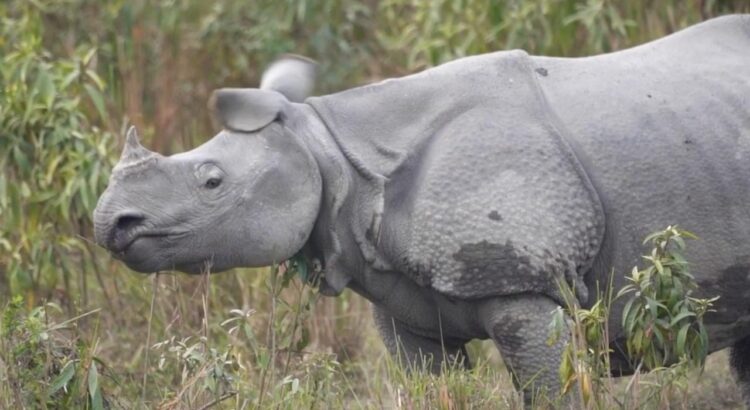
Gainda – A Conservation Story

Supunya Devavrata‘s film ‘Gainda – A Conservation Story‘ won the Best Wildlife Film – Audience Choice at the Indic Film Utsav in 2020. He shares with Indica Pictures his experiences in the exciting landscape of Kaziranga National Park, where he shot the film. He tells us about the project he is currently working on, and on how dedicated platforms and festivals help build a long lasting body of work during an age of fast viewing, and more.

What prompted you to tell the story of Gainda’s conservation via a short film?

As my first short film, it was a story which needed to be told as well as was sanctioned as a video project from the WildlifeTrust Of India. This combination is what prompted the birth of Gainda : A Conservation Story.

Enveloped in conservation stories are stories of species to species and man-animal coexistence. Tell us about the beautiful glimpses of this dual coexistence you saw at Kaziranga and its impact on you.

The life in and around Kaziranga is totally unique. Though explored at many levels, it continues to be a destination which offers something new every time you visit. Even for the locals. The peaceful co existence is not something that just happened. It took decades of living in harmony, respect and understanding for this coexistence to flourish. You can find Rhinos in peoples backyards and alongside the main road to Kaziranga. The people respect the species and work towards a consolidated conservation effort.

What were the visual surprises waiting for you at Kaziranga — from flora and fauna diversity, to the forces of Nature, to your interaction with the landscape?

Kaziranga is a terai landscape. It is also one of the most fiercely guarded jungles in the world. Most importantly, Kaziranga is home to the big four of India – Tiger, Leopard, Rhino, Elephant. This makes this landscape extraordinary. Visually, the jungle is a dynamic mix of various types of grasslands and ecosystems which are quite dense. Within the lush green nature of this jungle, it is often hard to successfully spot animals but when it happens, it’s an unforgettable feeling. The rhinos are often the heroes of this park, alongside the highly elusive tiger. Tigers here are extremely shy and wild as compared to the tigers of central India.

You are working on a project and story of conservation from Gujarat. What is the project about?

This current film titled Mugger, My Neighbour is a documentary that explores the world of wild crocodiles in Gujarat’s Charotar region. The film follows the intimate stories of co-existence between crocodiles and humans in this truly remarkably unique landscape. The project is in collaboration with VNC Gujarat and is currently at the early post production stage.

What does the ‘transition’ from one corner of India to another for a different chapter in wildlife conservation tell you — the director, traveler and Indian, about India’s natural heritage?

India’s natural heritage and wildlife is perhaps on many levels, the most diverse in the world. The flora and fauna coupled with cultures, traditions, belief systems – is the perfect recipe to be declared the richest country in the world in terms of culture. Every corner of every state has a remarkable story which needs to be told. However, the state of it is in a constant decline, as it has been for a while. Unfortunately, the masses continue to neglect the environment and history. There is an urgent need to revive emotions for things that need saving because after a while, there will be nothing left to save.

How did the Indic Film Utsav help you build an audience? Tell us the five positive points of this platform.

Confidence, outreach, professionalism, gratitude and honesty. Indic film utsav ticked all five of these markers and I hope to submit some new films in the coming years.

What attracts you to conservation stories?

My purpose.

What are the major heroes in the set of equipment you used for filming ‘Gainda’ and his extended family?

This film was made on a shoestring budget of Rs 7,500. A singular Mirrorless camera and two lenses (50 MM + 70-200 MM) enabled us to film Gainda. And of course, the wonderful hospitality of the Wildlife Trust of India and the people of Assam.

How can dedicated platforms and festivals help build a long lasting body of work during an age of fast viewing?

Wildlife/conservation storytelling has changed drastically in the past decade. With larger budgets, bigger audiences, OTT platforms and small scale digital platforms, the scope for conservation storytelling has increased dramatically. The style of filmmaking has further been divided into various schools – postmodern, expressionism, neorealism etc. However, the outlook on how to treat a story remains largely unchanged. The use of tools such as Voice-overs, cinematic footage, expensive equipment, as important as they are – can be kept aside. The narrative style of films can be treated in abstract ways, by incorporating new styles of cinematography, hosting, animation, emotions through human characters etc. By instilling a sense of social realism; an emphasis on the authorial expressiveness of the director; and a focus on the thoughts, dreams, or motivations of characters, as opposed to the unfolding of a clear, goal-driven story, we were able to achieve a sort of art house style wildlife film which might hold a lot of potential for an untapped audience.

The theme, pace and style of this film make your work valuable for children and youth. Is this pace and style the future of conservation stories via film?

??I do not think it’s the future because I feel it is the present. The majority just know it – yet. Global audiences are shifting to short form content at an unprecedented rate and many organisations already create content to cater this audience. With the environment being in question on a daily basis, the future is already here.

Would an amalgamation/blend of animation and documentary film, in the telling of conservation stories, work?

Yes, I think so. However, I feel without an emotional angle, the stories will never touch the sky.

Your film on the Greater One-horned Indian Rhinoceros has been made in association with the Wildlife Trust of India, International Fund for Animal Welfare and Assam Forest Association. What role did they play and what were the advantages of collaborating with them?

Wildlife Trust of India works in partnership with IFAW and Assam Forest Department. This project was sanctioned between me and the wildlife trust of India. However, as partners, IFAW and Assam forest department provided outstanding support and access to us. They were very gracious hosts and their expertise certainly helped in creating the narrative.

Films and documentary films that have left a mark on you:

I will never answer this question! The beauty of cinema is too much to consolidate into a few answers.

Do wild animals make good actors?

Wild animals are extremely bright, sensitive and enlightened beings. As opposed to the majority of the actors across the globe. However, if you are able to build trust, respect and if you are able to truly immerse yourself with the species, they will give you takes that are better than Al Pacino!
Contribution of Music and Sound

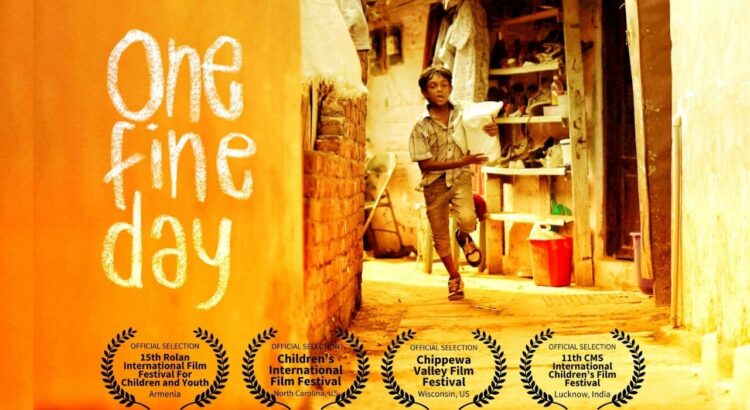
For M.R Vibin, a short film brings the freedom to tell small stories as it does not require the canvas of a feature film. ‘One Fine Day’, his film revolving around two children, is ‘small’ and ‘big’ for several reasons. In 2020, this directorial debut, won the Best Children’s Ultrashort – Jury Award at the Indic Film Utsav’s first edition. He tells Indica Pictures that a story plays a pivotal role in choosing the pace and style of a film, and that his humble film taught him that language is not a barrier when it comes to exploring universal content; and more.

Ten minutes of a heart-warming, gentle, moving, joyous and refreshing story revolving around children performed by children – that’s ‘One Fine Day’. What does this film mean to you?

‘One fine day’ will always remain close to my heart as it was my directorial debut. It is an overwhelming experience to do a film after going through years and years of hardships faced during the film-making journey. I was amazed when it got worldwide acceptance and appreciation from different walks of life.

What pulled you to the idea of telling the story of a rag picker child discovering the joy and treasure of colours and sharing?

The prime reason behind opting for this story is that there are people who do not have accountable possessions, who can find things like this invaluable and will find a ray of hope in their life. This may not be the case for the people having a quality life. The other side of this story is that there might be someone who didn’t find value in these colours and the talent of some child might have been thrown into the garbage.

The scenes centered on the uncovering of treasure from garbage reveal the brilliant actor in Siddhartha. What aspects of his work and talent inspire you as a director/filmmaker?

Siddhartha is a highly talented and brilliant actor. He holds an incredible grasping power to express the emotion of the character effortlessly and I didn’t spend much time grooming him. Owing to his impeccable skill, I could wrap up the shooting rapidly. I am sure that he will become a distinguished actor in the near future in the film industry.

Colours, joy and innocence emanate very strongly in the gentle pace towards the end. Tell us about the interesting moments of working with the two actors in the process of exploring colours, joy and innocence.

Colours, joy, and innocence can be easily connected with children. The storyline is also in line with childhood happiness and it helped me to ascertain a better result from these child artists. They enjoyed portraying the characters because they realize emotion from their perspective.

How have viewers interacted with you on the larger social message in the film? 

I didn’t get much feedback when I released ‘One fine day’ via YouTube. But I got plenty of appreciation from short film festivals conducted in various parts of the world. ‘One Fine Day’ competed with children’s short film festivals and other short film festivals, simultaneously. Since it has universal appeal, it cannot be categorized as a children’s movie alone. The pinnacle factor that I learned from my humble film is that if you have universal content, then language is not a barrier.

When did your journey in film making begin?

I believe one cannot jump into filmmaking or any other process associated with a film without having a proper interest in it. I have been passionate about film since my childhood and this medium inspired me a lot. Though I have a master’s degree in commerce, I chose my first job with an advertising agency as a copywriter because I knew that working there will help me get into the cinema, where visual media has a significant part to play. Malayalam feature film director Sunil Ibrahim, who was then my colleague in the advertising agency, offered to work with me when he did his first feature film. He was aware of my passion. I have been working in the film industry for 10 years as an associate director and writer.

Share your views on the theme, pace and style you like to explore in films.

I would like to experiment with various themes, paces, and styles that enhance different genres. For me, these elements heavily depend upon the content of the cinema. I believe a story plays a pivotal role for me to choose the pace and style. I don’t want to be known as a categorized director.

‘One Fine Day’ is a film rich in sound and music. What inspires you to believe in music and sounds that feel ordinary but give impressive weight and character to a simple story?

I believe cinema is a visual medium. I thought about creating something with minimal dialogues and a rich visual output. In order to have an unplugged visual experience, the magnitude of sound and music should be top-notch. Since the story demands perfection in music and sound to convey the emotions to the people, I didn’t make a slight compromise on that, and I approached renowned music and sound experts for doing this project as they felt the relevance of their contribution. Just like the two artists, the contribution of music and sound was irreplaceable.

What were the challenges involved in telling a story based in an ordinary setting to reveal deeper meanings?

To be honest, I didn’t face any challenges in presenting the story. Since it is not a complicated story, it can be easily communicated. I knew that if I could present the story in the simplest form, then it would help the spectator to have a clasp on the deeper layers of the story.

What is your next project about/on?

I am planning to do a feature film and its script work is progressing. It will be a film circling situational humour. I hope it will entertain the people. It will go on board sooner than before.

What are the other subjects from your home state/region that interest you?

We live in a socio-political environment and tend to confront plenty of stories. Moreover, the Malayalam film industry has a reputation for bringing intelligent and sensible movies and I keenly observe the rational revolutions in the industry. But I don’t believe in state-wise discrimination in telling a story and I trust that human emotion can be easily commutable with another human’s emotion irrespective of language, colour, caste, etc.

Why is the medium of short films important to you?

It provides you the freedom to tell small stories which do not require the canvas of a feature film. Also, a short film gives us the fuel to take risks with experimental creativities. On the other hand, a humongous effort needs to be put in for telling a small story in a short span of time. At the end of the day, a short film will give an interesting space and it will not deteriorate.

‘One Fine Day’ won the jury award at the Indic Film Utsav. How does this award encourage you in filmmaking, directing and storytelling?

Getting recognition in any form is an added advantage because it gives flair to go ahead. Getting a jury award at the Indic Film Utsav will always be a precious achievement. It is encouraging. It is my responsibility to provide better output than the previous. It is a fantastic feeling to get applauded by the world circuit and to be able to know people who don’t know our culture and language, but who can trace the emotion because of the universal appeal held in the subject.