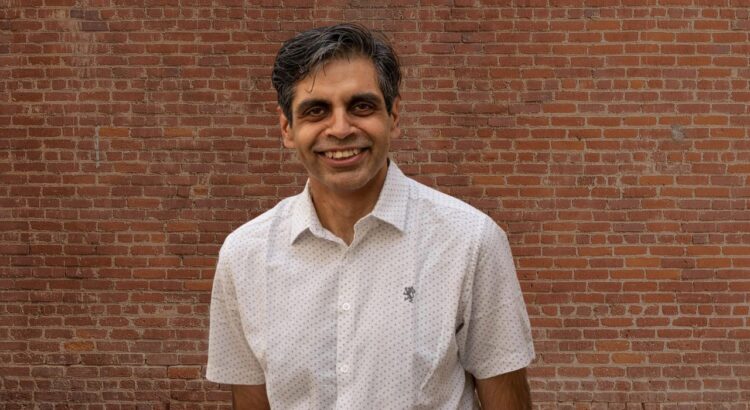
The first time I connected with Nitesh Batraji was during Indica Yoga’s Global Festival of Yoga (GFY). At the time, I only knew him as an Ashtanga teacher and living in Mysore, I feel an affinity to the Ashtanga community and always look forward to meeting people from the community. After attending Niteshji’s session during the GFY, I realised how much more there is to his practice and knowledge than just the one system of Ashtanga. I thought I would be able to relate to him on the level of Ashtanga practice but found that he also meditates, he’s a gifted photographer and an ardent devotee of the Buddha’s teaching — all things I have in common with him (except for the photography). On the course of this interview and after collaborating with Niteshiji on the Yoginsights session, I’m in awe of his humility, his ability to practise what he preaches and I know what compassion looks, feels and sounds like because Niteshji lives his spiritual practices and teachings as much as he teaches them. He founded The Compassion Institute to share this quality with the world. Niteshji explains what compassion meditation is and why it’s essential for spiritual development. In conversation with Indica Yoga…
Sophia: Tell us about your Ashtanga practice and your approach to teaching Mysore-style yoga.
Niteshji: Ashtanga Yoga comes under the Krishnamacharya lineage and was taught by Sh. Pattabhi Jois. Further his daughter Smt. Saraswathi Jois and grandson (Smt. Saraswathi Jois’ son) Sh. Sharath Jois have carried the tradition of Ashtanga forward. I was fortunate enough to learn in the same tradition from Sh. Sharath Jois. The practice of Ashtanga Yoga is a six day practice, where each day we practice Asanas and Pranayama. Asanas are divided into Primary, Intermediate, Advanced A and Advanced B series. Mysore style of Yoga is a unique way of teaching where under supervision of a teacher, each person is taught and given the freedom to explore their own practice by creating a balance through their self-practice.
I have been a student of Ashtanga Yoga since 2009. I was introduced to Ashtanga Yoga at Ashtanga Yoga Center Washington DC. My first teacher was David Ingalls. I was greatly influenced by his teachings. Subsequently, I learnt from many other teachers from the tradition of Ashtanga Yoga. I have been teaching Ashtanga Yoga since 2016 at Ashtanga Yoga Sadhna, Bangalore.
Sophia: You’re a yoga practitioner and teacher, but you’re also a filmmaker, investor and photographer. How do you balance all of the above?
Niteshji: I wish I can say that I am able to balance all the above mentioned activities. I am a work in progress and hope I can be throughout my life. With that being said, what has really helped me is exploring my dharma, to be true to my inner voice, whenever I can. This has given me an end goal. I have been trying to go through this journey of pursuing my dharma.
I am extremely fortunate that Yoga is part of my daily life. Yoga has helped me to listen to my inner voice. Yoga has taught me some of the most important lessons in my life and has also created a great foundation for me to explore many other facets of my life.
My teachers have always emphasised the need of having a daily routine with self-practice. Lam-Rim (Stages of Path), a pathway is given on how to structure your life around daily meditations, what one should do before, during and after meditations. By having such a routine, it makes it easier not just to manage your mind but to structure things in a way that helps you to be your best self. There are good days and better days — and each moment, each day is a learning and an opportunity to start afresh with a beginner's mind.
Sophia: Tell us about your passion for photography, and India as your muse?
Niteshji: Photography is a way of expression for me. It is a way in which I can practice meditation in real life. Though it came to my life because of my father. He was a very passionate photographer. When he passed away in 2013, my aunt (bua), mentioned that my father used to carry a camera to all the events in their life (birthdays, weddings, etc). We have so many photographs in various formats (hard copies, slides, digital). He, in a way, is a carrier for a generation through his camera. That inspired me to get a camera that looked like his and start photographing. Though I used to take photographs before his passing, but after I got a camera, photography became a way of my life.
Photography to me is an epitome of our mind. Just like in meditation I am aware of the entire spectrum of my mind. When I have the camera in my hand, I am able to bring awareness to the entire space (scene) around me. As I choose a subject to photograph, I bring my attention and focus to one particular object. I like to establish a direct connection with my subject through my heart and mind. This is exactly what I do in my meditation, I like to focus and connect to the object of attention. This removes all the barriers that lie in-between and beyond.
India is as diverse as it can get. I can take my camera out anywhere and I will have a subject to work with. I do mostly people, street and landscape photography. The thing that I love the most about photographing in India is its people, and the diversity that comes along. The traditions in any part of the country is a treat for any photographer. Over its history, India has seen an influx of people come from all parts of the world. It has assimilated the cultures of so many and continues to be true to what the idea of India has always been, a place where every individual is free to explore the depth of their true being , irrespective of their background, faith or colour.
Sophia: You’re a graduate of the Compassion Cultivation Teacher Training from Stanford Medical School’s Center for Compassion and Altruism Research and Education (CCARE). What does compassion cultivation mean and how do you use it in your practice and teaching?
Niteshji: Compassion (karuṇā) is one of the our natural qualities that every individual is born with. The concept of Compassion (karuṇā) was introduced to the world in the Yoga Sutras - sutra 1.33. The Yoga Sutras give a pathway for the cessation of the thoughts of the mind. Sutra 1.33 is a way to quieten the upheavals the mind goes through, when someone experiences suffering. I also believe (however not certain) that Buddha was inspired by this sutra to make Compassion as one of the main pillars of his ways to end suffering in our lives as part of his four noble truths.
मैत्रीकरुणामुदितोपेक्षणां सुखदुःखपुण्यापुण्यविषयाणां भावनातश्चित्तप्रसादनम्॥३३॥
maitrī karuṇā mudito-pekṣāṇāṁ-sukha-duḥkha puṇya-apuṇya-viṣayāṇāṁ bhāvanātaḥ citta-prasādanam
As we grow older, our afflictions and past karmas may hinder our ability to practice compassion. Compassion cultivation is a way to remind ourselves of the infinite potential that we have to connect to other humans at an emotional level especially during the time when they are going through difficult times. Compassion also motivates us to help relieve the suffering of others.
Compassion has helped me realise the importance of impermanence of things in life. I have started to cherish the present moments more and joys that come along. During difficult times, like the good times, these will also end but it’s important to respond to downs in the same way I respond to ups. Compassion has helped create a balance in my life. But like many, I am a work in progress and hopefully I will keep learning from each experience and keep implementing these changes in my life.
Sophia: What does yoga and spirituality mean to you?
Niteshji: Yoga has many definitions based on the text we look at. Whether it’s the union of ourselves with the infinite, or cessation of thoughts of the mind or balanced body and mind — to me the most important aspect of Yoga is being kind to yourself and others. Yoga helps me to be more grounded and I know that there is something beyond me who is helping me traverse this journey of life.
The word spirituality comes from the Latin word “spiritualitas”. Spiritualitas comes from the noun spiritus which means 'the breath of life’. Being Spiritual means that I enjoy each breath I take, connect to every inhalation and exhalation of the body and explore the wisdom that comes along with it. That is how I feel our ancestors, sages of the past, were able to go beyond the ordinary, beyond what we see and experience through our five sense organs, to the unseen of the mind and to what is beyond, which helps us realise the true spirit of this precious human birth.
Sophia: What are some of your favourite books on yoga and spirituality?
Niteshji: There are so many books that come to my mind but here are a few that I really like:
- Sadhana by Swami Sivananda
- Raja Yoga by Swami Vivekananda
- The Heart of Yoga by TKV Desikachar
- Gautam Buddha by Vishvapani Bloomfield
- Magic of Surrender by Krishnapriya Gopi
- It So Happened That by Ramesh Balsekar
- Light on Yoga by BKS Iyengar
Sophia: Several modern schools of yoga adapt ancient Indian teachings to a modern context. For example, the globalisation of yoga and how it is being taught and practised in the modern world. Your views on this?
Niteshji: This is a beautiful question. Thank You for this question. The essence of any teachings lie in how it makes us wiser and kinder human beings. How does what we learn on the mat help us in our day-to-day life?
The journey of Yoga can have many meanings. For me, the journey has helped me explore my relationship to self and our connection with other beings. Nowadays we see a lot of people access Yoga through Asana, which is a great entry point for making Yoga part of one’s daily life. However, Yoga goes much beyond the physical and I hope that a practitioner can explore the infinite layers and dimensions of what Yoga can offer. By exploring such options, people can bring peace and calmness in their lives.
Sophia: Do you meditate? How does it affect you?
Niteshji: Yes, I do have a meditation practice. Meditation is a way for me to connect and communicate with my inner-self. It has helped me on a journey of self-exploration, and going deeper in understanding our mind. It has also increased my appreciation for many masters, who have come before us and done similar explorations and made the path and journey easier for us.
Sophia: Can you share any special memories from your spiritual journey like places or people that have affected you deeply?
Niteshji: Mountains have a special place in my life. I feel the vibrations due to tapas by sages over thousands of years that makes the entire belt of Himalayas special. It’s very hard to pin-point one place but if I had to think back, Badrinath is a very special place for me. I visited Badrinath some time after I lost my father and the kind of emotions the place triggered are beyond words. That experience has always remained with me.
I have been extremely fortunate to meet many spiritual leaders in my life due to the nature of my work. To pick one will be very difficult. However, one quality that stood out for each individual is their humility, irrespective of their accomplishments in life.
Sophia: Any advice you’d like to give young students and teachers of yoga?
Niteshji: For young students, explore what area of Yoga that appeals to you. I would suggest studying under the guidance of a teacher to develop a self-practice.
If you like to pursue the path of yoga professionally, teaching Yoga is a journey about going beyond asanas, pranayama or meditation. Also find a group that you would like to work with. It is easier to start with a smaller target group, which will help build your confidence and experience. Start small, have faith in larger powers, angels will show up whenever you need them. Build a community and focus on quality rather than quantity.
For further information on Niteshji’s work visit the Compassion Institute.