Measuring the Mind

Shivani and Ankur Modi founded Ceekr to make mental mastery accessible to all sentient beings. “Everyone who is interested in improving their life. Everyone who wants to ‘overcome challenges and win’ can use this product. Weight and blood measurement combined with food literacy has revolutionised physical fitness. Mind measurement and mind literacy will revolutionise mental health and change leadership development forever,” says Shivani. She has been a student of Sadhguru Jaggi Vasudeva for almost two decades and wishes to improve the world’s mental health with the Yogimeter. She says that the “Yogimeter makes the measurement of mind and life possible for a common man, who does not have access to or knowledge of the works of great masters. It is an introspection tool. With YogiMeter people understand the consequences of their actions. They understand that mind management is not prayer but essential to their commerce, wealth, health and relationships. Many Sadhaks also suffer from a false sense of feeling good and ego diversions. YogiMeter can help them keep the course. It's a knowledge, mind, choice, goal and spiritual GPS.” In conversation with Indica Yoga.

Sophia: How and when did you and Ankur decide you wanted to create Ceekr?

Shivani: Ankur and I have been friends since school. Around 2014 -15, we started discussing our spiritual journeys. I wanted to work in the human consciousness space and Ankur wanted to work in the area of human choice making. As we delved deeper, we realised we were looking to answer the same questions in different ways. This lead to the formation of Ceekr.

Sophia: Tell us about Yogimeter and how it works?

Shivani: Upanishads, Samkhya Karika, Yoga Sutra, Bhagavad Gita, etc., have many frameworks that describe the states of human consciousness and human choice-making. The Ceekr research created a framework which made these frameworks interoperable. This lead to the creation of a new framework which we call the “Causal Mind Model.” This model explains the cause and consequences of human choices. It explains that humans use one of 351 levels of consciousness at any given time. These can be understood as 351 mindsets. Then we created a compendium of symptoms from the scriptures and created its biological equivalents. Through this we were able to create a Biometric table to predict which of the 351 mindsets a person is using at a given point of time. We wrote this knowledge into a logic. This logic was coded into an AI algorithm which is called YogiMeter. YogiMeter is present on the Ceekr Apps and on Ceekr web. The YogiMeter test takes 5 minutes. It publishes an instant report for the user.

The report shows:

  1. Your 60 day happiness forecast.
  2. Your mental wellness on the basis of 40 + markers used by modern science and scriptural studies.
  3. It measures your prosperity, relationship behaviour, effectiveness, stress etc.
  4. The latest version of YogiMeter can also provide team reports and show group dynamics of an organisation.

Sophia: Do you and Ankur have a yoga/spiritual practice? Tell us about your individual spiritual journeys…

Shivani: My Guru is Sadhguru Jaggi Vasudeva of Isha Foundation. I have been an Isha meditator for almost two decades. The journey has been very fulfilling as it helped me realise that I had a tool that enabled me to keep my joy and my calm irrespective of external challenges. Ankur is a meditator and a Gyan Margi. He thinks his research, his day to day life and his work are his spiritual practices.

Sophia: Your website says “master your mind, master your life” that’s a lofty claim. How will YogiMeter aid this?

Shivani: The essence of Vedanta, Yoga, Jainism and Buddhism is mind mastery. The place of “no mind” or moksha or nirvana is also achievable through mind mastery alone. Leadership, super-achievement and excellence are all milestones on the road called mind mastery. If mind mastery was not possible Patanjali, Kapil, Krishna and Buddha would not have spoken. Mind mastery is not an option, it’s the only way. All forms of human, social and financial development are defective and without balance if not based on mind mastery. Every sustainable creation and way of life is based on mind mastery.  No precise solution is achievable without measurement. Rest is all feel good. Once something is measurable and understandable, one can set goals and achieve them. YogiMeter makes the measurement of mind and life possible for a common man, who does not have access to or knowledge of the works of great masters. It is an introspection tool. With YogiMeter people understand the consequences of their actions. They understand that mind management is not prayer but essential to their commerce, wealth, health and relationships. Many Sadhaks also suffer from a false sense of feeling good and ego diversions. YogiMeter can help them keep the course. It’s a knowledge, mind, choice, goal and spiritual GPS.

Sophia: With the onset of COVID, spirituality and yogic practices have seen a growth in online offerings. Is it possible to study something so subjective online? How does Ceekr fit into this trend?

Shivani: The entire purpose of Yoga and Vedanta is to convert subjectivity into objectivity.  When we think of ourselves as our body or just as our identity everything becomes subjective. When we think of ourselves as part of the whole, things start becoming objective and when we think of ourselves as an observer, we are objective.

In the olden days, seekers of objectivity have learned in the isolation of the jungle. The internet is a much easier place to learn. Due to covid more people are asking fundamental questions. Work from home has led to huge investments in remote learning and remote collaboration technology. All this is very beneficial for ideological and knowledge based tools. Besides this if today we want to recreate Nalanda or Takshashila or any kind of ATMGYAN (Knowledge of self) university, it would make the most sense to locate it online. The idea of Ceekr is to spread Mind Literacy (Knowledge of self) to every school, college and organisation of the world. For this there is no better place than the internet. Post covid internet has more seekers and better ed-tech for this.

Sophia: Who are your spiritual inspirations?

Shivani: Krishna, Mahatma Gandhi, all seekers of truth. Researchers, inventors and those who feel the pain of others and dared to change the world for better like Vivekananda, Steve Jobs and those seeking excellence are all my spiritual inspirations.

Sophia: How does Yogimeter benefit students and teachers of yoga?

Shivani: It is a tool for introspection. It helps you find your blind spots. If you don’t have the benefit of a Master or a Guru, you can still find your gaps, set goals and measure your progress. Teachers can diagnose people quicker, give them bespoke solutions, monitor their progress, make them see the mirror and most of all prescribe remedies and stay in touch with their students without building their own technology.

Sophia: Is there a market for this kind of offering? Who is such a product most popular with?

Shivani: Everyone who is interested in improving their life. Everyone who wants to ‘overcome challenges and win’ can use this product. Weight and blood measurement combined with food literacy has revolutionised physical fitness. Mind measurement and mind literacy will revolutionise mental health and change leadership development forever. The world is facing a mental wellness pandemic. WHO says one in 7 people are suffering due to mental illness and the World Economic Forum says that the cost of mental illness will rise from USD 1 trillion to 6 trillion a year in this decade alone. The world needs non-clinical and non-medical mental wellness experts in every corner to combat this problem. Vedanta and Yoga Psychology are the most comprehensive and proven methods of mind management. We are preparing Mind Mastery Mentors who are able to help people in the areas of mental challenges, emotional stuck-ness, growth, relationships, stress, leadership etc. These mentors witness noticeable changes in their own lives within the short period of the training and then go on to help people and build a career around Vedanta and Yoga Psychology.

Sophia: What are you reading right now? And can you list some of your favourite books…

Shivani: I love fiction based on our mythology, so currently I am reading War of Lanka by Amish. I like reading and listening to Sadhguru.

Sophia: What is the future of Ceekr?

Shivani: The world needs a Mind Mastery movement. The world needs everyone to be literate about the mind. The world needs the mind and its decisions to be measurable. The world needs an online place where mind mastery mentors and seekers can commune. The world needs the free market and democracy to marry a culture of inclusion, sustainability and excellence and shed the culture of personal distinction. Ceekr aspires to fulfil these needs of the world.

To find out more about Shivani and Ankur’s work, visit Ceekr
The Art and Music of Spirituality

“One of the things I noticed early on in my yoga practice is that when I listened to music after a blissful session of yoga, it touched the heart more deeply. I came to learn that great musicians and dancers give expression to the profound yogic states (Yogasthah kuru karmāni, as Bhagavad Gita says) that can transport the listener to the same experience. In addition to the practice of asanas, pranayama and dhyana, music is also an integral part of my daily sadhana,” Shriram Sarvothamji a Ph.D., E-RYT-500 qualified teacher, he has been an ardent practitioner of yoga since childhood. He was initiated into yoga by his teacher, Yogacharya R. Subramanian from Chennai, India, with whom he studied for 14 years. Shriram has been teaching yoga since 1991 in India; he has also taught over 300 yoga workshops and retreats all over the USA. His workshops offer a holistic experience of yoga and blend wisdom from classic Yoga texts including Patanjali Yoga Sutras, Bhagavad Gita, Yoga Yajnavalkya and Hatha Yoga Pradipika. 

In conversation with Indica Yoga…

Sophia: Your first impressions of spirituality were formed listening to chanting in your own home, and you studied Sanskrit at a young age, too. Tell us about how your childhood shaped your spiritual inclinations.

Shriramji: Indeed — I have vivid memories of awakening to my father’s devotion-filled Sanskrit chants every day. Although I did not know the meaning of the chants yet, it felt so good that I frequently experienced what can only be described as trance-like states. When I began learning yoga practices (asana, pranayama, chanting and meditation) as an 11-year-old, under the guidance of my first yoga teacher Sri R. Subramanian sir, I was able to experience these states once again. I am grateful that right from the beginning of my yoga studies, I was guided to yoga sadhana as a means for inner transformation, rather than an asana-only discipline focused only on the body.

Sophia: Classical Indian art forms are known to elevate the consciousness, tell us about your work in music and dance forms using asanas…

Shriramji: One of the things I noticed early on in my yoga practice is that when I listened to music after a blissful session of yoga, it touched the heart more deeply. I came to learn that great musicians and dancers give expression to the profound yogic states (Yogasthah kuru karmāni, as Bhagavad Gita says) that can transport the listener to the same experience. In addition to the practice of asanas, pranayama and dhyana, music is also an integral part of my daily sadhana. I received training in Indian Classical Music on the violin, which I practise everyday.

My wife Ekaterina and I had the unique opportunity to collaborate with eminent Indian Classical Dance artists on the “Chitram” project in 2014. Chitram is a brainchild of Dr. Kanniks Kannikeswaran, an eminent composer, scholar and musicologist. We crafted and choreographed a sequence of yoga postures set to music, with a team of 18 yogis. This was a great fulfilling experience for all of us.  It is no coincidence that in yogic mythology, the primordial teacher (adi guru) of yoga, Shiva, is also revered as “Nataraja,” the lord of dance. We continue to work with eminent dance artists to integrate yoga and dance.

Sophia: What does meditation mean to you?

Shriramji: Meditation is the state where the mind is reposed in the self, free from restless and incessant activity. The mind is free from the encumbrance, heaviness and pressures of the world. A tranquil mind conserves energy whereas a turbulent mind consumes energy. We feel recharged and rejuvenated in meditation. Maharishi Patanjali defines meditation (dhyānam) as तत्र प्रत्ययैकतानता ध्यानम् [tatra pratyaya-ekatānatā dhyānam | Sutra 3.2], meaning -- it is the state of mind where the mental scenery (pratyaya) is identical from one moment to the next, due to the mind being tranquil. Patanjali describes this as a "flow of peace" (तस्य प्रशान्तवाहिता संस्कारात्  |  tasya praśāntavāhitā saṃskārāt | Sutra 3.10).

The amazing thing about meditation is that not only does it put us in a place of tranquillity and bliss, it also awakens the latent "superpowers" from within us. The time we set aside for meditation is therefore not a mere escape from the real world challenges. During the practice of meditation there is an inner transformation — and we awaken from meditation more empowered and energised. We have access to creative thoughts, intuition and great ideas that can be the solutions to the real world challenges.

Sophia: You’ve studied Patanjali’s Yoga Sutras and apply its philosophy in your daily life. Why is learning philosophy important to a yoga student?

Shriramji: From a very practical standpoint, the study of the classical yoga texts can greatly elevate the quality of one's yoga practice. The texts also reveal how to skillfully manage our thoughts and emotions in day-to-day life. It is indeed amazing how the yogis discovered the great secrets of the mind, the breath and the body, and how we can harness their full power. Moreover, the texts provide profound truths about the nature of the self, the nature of the universe, and how we can craft our life to express and experience our highest. The texts inspire us to break away from the trivial and mundane, and adopt a grander vision for the self. I have found that just reading the scriptures is a Sadhana that can elevate one's state of mind. No wonder "Swadhyaya" (self-inspired study) is an integral part of yoga sadhana!

Sophia: What are some of your favourite books on yoga?

Shriramji: If I were to pick one book that gave me the greatest insights in my yoga studies, it would be Srivatsa Ramaswami's "Yoga for the Three Stages of Life: Developing Your Practice As an Art Form, a Physical Therapy, and a Guiding Philosophy."  True to its title, the book covers a wide variety of topics, ranging from the practical aspects of yoga to the philosophical foundations. Ramaswami sir gives clear and precise definitions of yoga terminologies such as chitta,  vritti, nirodha, pratyaya, atman, kaivalya, etc., that helped me tremendously to understand the yoga foundations. With plenty of stories from yogic lore, the book is enlightening as well as entertaining. After reading the book, I was inspired to devour all of his other books and articles (that he wrote for the KYM newsletter in the 1980s and 1990s), which are treasures for a yoga student. I would like to make a special mention of a series of articles he wrote on the topic of Yoga for Internal Organs; these articles gave me new insights on the benefits of yoga from the perspective of anatomy and physiology. On a personal note - in summer of 2004, I was thrilled to learn that Ramaswami sir was scheduled to give special lectures on yoga at Rice University in Houston TX, where I was a graduate student pursuing my PhD at the time. I began studying Vinyasa Krama Yoga with him directly, and I feel blessed and fortunate to be under his guidance till date.

Yoga classics that are absolute "must-haves" for me include Swami Hariharananda Aranya's "Yoga Philosophy of Patanjali", Swami Vivekananda's "Raja Yoga" and B.K.S. Iyengar's "Light on Yoga". Nathamuni's "Yoga Rahasya" that was revived by Sri T. Krishnamacharya, and "Yoga Yajnavalkya", the dialogue between sage Yajnavalkya and Gargi, are also my favourite classics.

I also frequently refer to the books published by Bihar School of Yoga, which I find scholarly and erudite. Some of their magnum opus books such as "Swara Yoga" by Swami Muktibodhananda, "Asana Pranayama Mudra Bandha" by Paramahamsa Satyananda Saraswati, "Hatha Yoga Pradipika" with translation and commentary by Swami Muktibodhananda, "Prana and Pranayama" by Swami Niranjanananda Saraswati are must haves for sincere yoga practitioners and scholars.

Sophia: Name Indian masters who have inspired your spiritual journey and what about them inspired you?

Shriramji: My childhood hero was (and continues to be!) Swami Vivekananda. I read Swami ji's classic book "Raja Yoga" and I was blown away by his eloquence. I was also fascinated by the descriptions of the hidden superpowers that are latent in every human being, that can be harnessed by the practice of yoga.

I am greatly inspired by Sri Sri Ravi Shankar ji, the founder of the Art of Living. The powerful practice of Sudarshan Kriya that he cognized is indeed a great gift to humanity. I have been practising the Kriya every day for the last 24 years, and I continue to be amazed by its power to transform the mind to a crystal clear state of awareness. In fact, the Sudarshan Kriya is the cornerstone of my daily yoga sadhana.

I am deeply indebted to Swami Bodhananda Saraswati, founder of the Sambodh Society for Human Excellence, with whom I have been studying Sankhya, Yoga and Vedanta for the last 14 years. His teachings have paved the way to a deep understanding of these topics and I am overwhelmed with gratitude for the opportunity to study with him.

The teachings of Krishnamacharya and his renowned students (who are great yogacharyas in their own right), have also deeply influenced my yoga practice and wisdom.

Sophia: How has mantra chanting affected your mind and why is it important to pronounce them correctly?

Shriramji: As I mentioned earlier, mantras are powerful and can allow trance-like states. Maharishi Patanjali himself alludes to mantras--

जन्मौषधिमन्त्रतपःसमाधिजाः सिद्धयः [janmauṣadhimantratapaḥsamādhijāḥ siddhayaḥ] where he says that extraordinary powers can be experienced using mantras.

My teacher Sri R. Subramanian sir used to frequently state that chanting is a pranayama practice in its own right. The Sanskrit alphabets contain a mix of alpa-prāna (non-aspirated) and mahā-prāna (aspirated) consonants, and therefore proper pronunciation requires a great deal of breath regulation. Correct pronunciation is also important in order not to alter the meaning of the mantra. Also, powerful "ghana pātham" method of chanting, where the words of the mantra are rearranged and woven in a highly structured way. This practice demands extraordinary mental focus, and is a wonderful practice for Dhārana, the 6th limb of Ashtanga yoga. And lastly, Sanskrit is considered as the "Dēva vāni"-- divinely inspired language.

Sophia: What is the purpose of practising yoga?

Shriramji: To me the following Sanskrit quote captures the heart of the purpose of yoga practice, सिद्धस्य लक्षणानि साधकस्य साधनानि  [siddhasya lakṣaṇāni sādhakasya sādhanāni]. Meaning, that which comes naturally for a sage, becomes the practice for a practitioner. To use an analogy — when a caterpillar sees a butterfly it yearns for the blossoming of its own inner potential to fullness. The effort to fulfil its full potential is expressed by way of practice.

According to Maharishi Patanjali, practice, or abhyāsa, is the means or methods we use to experience the grandness of the Self (तत्र स्थितौ यत्नः अभ्यासः | Tatra sthitau yatnaḥ abhyāsaḥ | Sutra 1.13). Patanjali enumerates four ingredients of an inspired, high-quality practice:  long-term commitment, done consistently without breaks, performed with enthusiasm, and with an attitude of service. (स तु दीर्घ काल नैरन्तर्य सत्कारासेवितो दृढभूमिः  ।  sa tu dīrgha kāla nairantarya satkārāsevito dṛḍhabhūmiḥ  |  Sutra 1.14).

I am reminded of a story that embodies inspired action in real life. In the early 1930s, a young boy heard a recording of the great singer Ustad Abdul Karim Khan and was completely mesmerised by his music. "I want to sing like him," he thought, and asked "what should I do to achieve that"? It is said that the 11-year old boy, Bhimsen Joshi, was so inspired that he travelled all over India to find a Guru, and devoted 18 hours a day for several years practising music. He went on to become one of the greatest singers of India, a true Nada Yogi and a Bharat Ratna, who touched the hearts of millions of people with his divine music.

Sophia: Any words of advice for young students and teachers of yoga?

Shriramji: Yoga is an extraordinary gift we give to ourself! Yoga sadhana lays the foundation for exuberant health and extraordinary personal growth. Yoga practices help us serve the world by presenting the best, highest version of ourself: a more compassionate, kind and loving person.

Many times people say that they do not have time to do yoga. I remind myself of my teacher's words, "do not forsake yoga when you need it most"!

To know more about Shriram Sarvothamji’s work, please register for his Yoginsights session to be held on 9th December.

Destress and Declutter the Mind

Omkar Gotkhindikarji has been exposed to yoga and the scriptures from a young age, and the childhood exposure to these profound practices inspired him to pursue a lifetime of yoga practice and teaching. He completed his Bachelor’s and Master’s in Yoga from the S-VYASA University and will soon be hosting the Sthiram & Sukham retreat along with the Director of Indica Yoga, Dr Vinayachandra Banavathy, and the Founder-Director Atman Yoga Consultancy, Ketki Gokhale. Indica Yoga caught up with him to talk about his inspirations and how he uses yoga to destress a very stressed out world.

Sophia: What does yoga mean to you?

Omkarji: Yoga is a way of life to me. Since I started adopting the yoga way of life, I can see drastic changes in my life. I am more calm and confident, and exploring new dimensions in life.

Sophia: You call yourself a yoga teacher and therapist. Can you elaborate on what you mean by therapy, and do you combine yoga with therapy?

Omkarji: Yoga therapy has its origins in various yogic scriptures like the Yoga Vasishtha, the Bhagavad Gita, the Yoga Sutras, Hatha Yoga Pradipika... It is an integrated approach to treat various health issues by using yogic tools like asanas, pranayama, meditation techniques, chanting and imbibing philosophical ideas from yoga. This helps to enhance various levels of personality and work on the root cause of the problem.

Sophia: You teach asanas and philosophy. What inspired your interest in studying and teaching philosophy?

Omkarji: Philosophy gives us the foundation to build a better life. Especially in Yoga philosophy, there are wonderful aspects which can make us live our life with a sense of fulfilment. I was blessed with exposure to scriptures like the Bhagavad Gita and stories from the Ramayana and Mahabaharata since I was a child and they inspired me to study deeper. I have a Bachelor’s and Master’s degree in Yoga from the S-VYASA University in Bangalore.

Sophia: What was your experience learning at the S-VYASA Yoga University?

Omkarji: I joined S-VYASA at a very young age. I was blessed to learn various subjects of yoga under various masters like Dr. H. R. Nagendra, Dr R. Nagarathna, and Prof. N.V.C Swamy, to name a few. They encouraged me to study the scriptures, take those ideas and implement them in life. S-VYASA has a one-of-a-kind yoga hospital, Arogyadhama, which gave me the opportunity to practically train myself in yoga therapy.

Sophia: How do you help people find relief from stress in a high-pressure lifestyle?

Omkarji: My work is majorly in the corporate IT sector and therapy field. When a person approaches  me for any health issue, I make sure I receive the entire case history and diagnosis. I work to create an integrated yoga module which includes breathing techniques, asanas, pranayama, meditation and relaxation techniques. I use that module for that specific person and encourage him/her to practise regularly.

I also make my students understand the importance of correct eating habits, sleep and activity. While doing this I council them on dealing with stress. I use various concepts from the scriptures to change their perspective and improve the quality of their life.

Sophia: What are your favourite books on yoga and spirituality?

Omkarji: I always like reading the Bhagavad Gita and Yoga Sutras. I’m also inspired by books written by the great Swami Vivekananda. For practical use, I rely on publications from the Bihar School of Yoga and S-VYASA.

Sophia: You did a session on gut health for Indica Yoga’s Global Festival of Yoga. Tell us about the mind-gut connection.

Omkarji: Our stress levels have a direct impact on the digestive system. Wrong food habits, sleeping habits, erratic diet plans and excess stress can cause disorders like acidity, constipation, etc. One can have the most nutritious food on their plate but is so stressed out that he or she won't be able to digest that food.  Proper movements and breathing through asanas and pranayama helps improve the digestive system. Kriyas help to detox the body internally which helps a person rejuvenate at the energy level.

Sophia: How do you meditate and how has meditation affected your practice and life?

Omkarji: I meditate every morning for half-an-hour. It has helped me to let go of unnecessary thoughts and declutter my mind effortlessly. I focus more on productivity and the quality of my life.

Sophia: Why did you decide to start teaching yoga?

Omkarji: I was exposed to the field of yoga from a very young age and meeting various masters of yoga and learning from them gave me the motivation to teach yoga. I’m very blessed that I can be an instrument of this practice.

Sophia: Any advice for young yoga students and teachers?

Omkarji: One should balance philosophy and practical aspects like asanas and pranayama equally and with consistency. That's the key for a yogic life.

For further information on Omkariji and to join the Sthiram & Sukham retreat, register here.

Pepper: Spice, Cuisine and Global Trade

Interviewed by Arunima Gupta

Ammini Ramachandran’s aim has been to bring the threads of history, geography, religion, tradition, and personal history together to present the vegetarian cuisine of her region, Kerala.

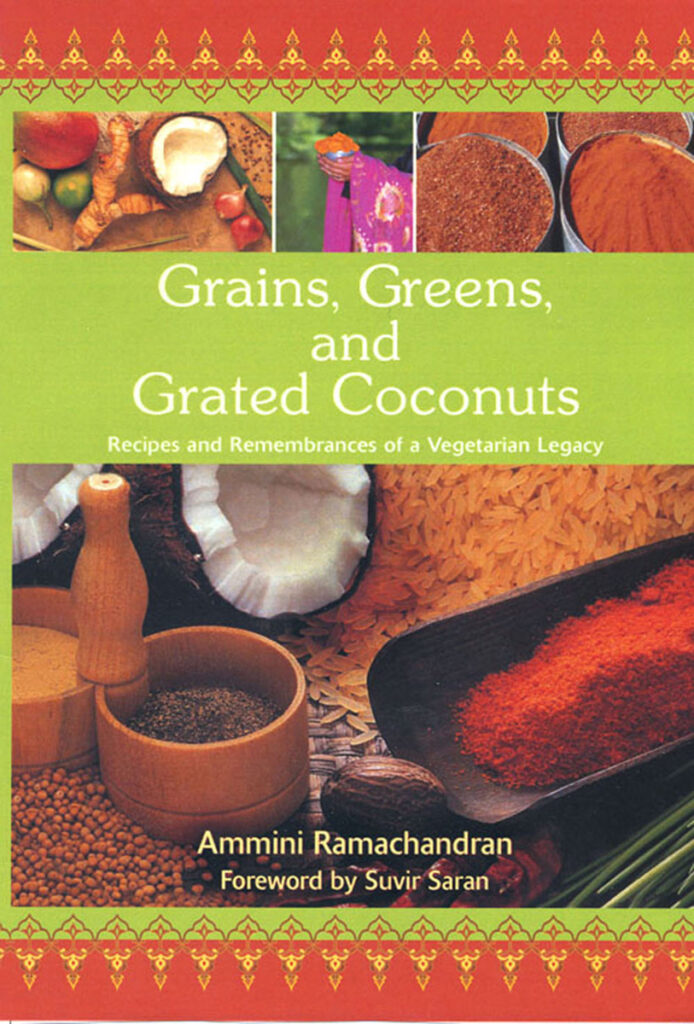
Based out of Texas, USA, Ammini is a food historian, a public speaker and an educator. She has also authored the book – Grains, Greens, and Grated Coconuts: Recipes and Remembrances of a Vegetarian Legacy, which was published in 2007.

Through her blog – Peppertrail, Ammini shares the cultural and culinary traditions of Kerala as well as the science, stories and recipes from ancient Indian literary texts. She also spoke on the Flavours and Fragrances in Culinary Traditions at the “Symposium on Indic Fragrances and Flavours,” organised by Center for Soft Power and Indica.

What motivated you to study and write about Kerala’s culinary heritage and culture?

With most of the younger generation in my family living abroad, I wanted them to remember the vegetarian cuisine of their ancestral home, its history, stories, and culture. So, I started writing a family journal, which eventually evolved into my first book Grains, Greens, and Grated Coconuts: Recipes and Remembrances of a Vegetarian Legacy.

Kerala’s history is intertwined with the ancient spice trade and the cultural, economic, and social changes it brought to the region.

I begin this book by describing the social and cultural aspects of the joint family I grew up in, the matrilineal system of descent, temple festivals and seasonal festivals, and the celebration of the life cycle.

The first chapter – Our History and Heritage, presents a brief account of the development of the ancient spice trade that began before the birth of Christ and lasted many centuries, greatly influencing our society. I elaborate on the social and cultural diversity of Kerala; its gradual colonization by foreign traders, including the Portuguese, the Dutch, and the British; the unification of Kerala after India gained independence from the British; and the influences of foreign trade on our agriculture and cuisine.

In the next chapter, I talk about ingredients, utensils, and cooking methods in a detailed manner, which is then followed by many recipes from the land.

Kerala cuisine is known for its varied non-vegetarian food and strict vegetarians are a minority in Kerala. Many of these simple vegetarian recipes were not documented and my attempt was to document them.  The recipes are mostly satvic, except for two or three that use onions.


How can one understand the evolution of India’s culinary heritage over time?

While researching for my book, I read several food-related books for guidance. I came across K. T. Achaya’s magnum opus, Indian Food: A Historical Companion and it was an eye-opener for me. Ever since I published my book, I have spent hours researching and writing about the history and evolution of Indian cuisine on my website.

The cuisines of ancient India were deeply rooted in ethical and medical principles. Ancient texts also discussed various aspects of food from the perspective of Indian herbal medicine Ayurveda. Another major feature of these works was they compiled a lot of information from earlier works.

During the early medieval period, regional kingdoms of India were flourishing and kings, as well as temples, were decisive shapers of regional cultures. Literature enjoyed generous royal support and patronage. Many culinary texts were authored by kings themselves or by their court poets and the food described them was not always the food of the common people.

The cooking processes described in the ancient texts are elaborate, time-consuming and labour intensive. Cooking was done mostly on wood-burning stoves.

What I found most fascinating was that in earlier times though content with native ingredients, ancient cuisine went out of its way to treat, transform, and prepare them in a variety of ways. These recipes speak volumes about the expertise in high-class cuisine that was prevalent in ancient India. What was equally fascinating is the fact that the new spices, plants, and ingredients that later arrived through the trade routes, were all completely integrated into India’s agriculture and cuisines.

The foods, techniques, and culinary heritage of the past should be certainly recorded and preserved. While reviving them in their original form may not be practical, adaptations of some of the recipes and techniques could certainly be done.

What makes Indian gastronomy distinct from others in the world

The complexity of Indian cuisine and the masterful use of spices work together to bring to the table the best of India. While dishes vary by region, the typical Indian dish contains several different ingredients and an infinite array of fresh spices, each bringing its own unique aroma.

Another thing that sets Indian food apart is its use of whole spices instead of powdered ones. Indians are experts in combining herbs and spices. Most Indian cooks take pride in their very own spice mixes.

How did India’s spice trade influence its economic and cultural relations with the world?

Ever since ancient times, the monsoon-soaked rain forests of south India, home to several spices—including the world’s most widely used spice, black pepper—were a prime destination for many explorers. The abundant black pepper attracted Arabs, Greeks, Romans, Portuguese, Dutch, and British from the west and Southeast Asians and Chinese from the east.

Despite the fame of overland trade along the Silk Road, much of the significant trade between Europe and Asia was carried out in specific sailing seasons along the Indian Ocean. The pre-Islamic tribes of Central Asia, along with Indian and Southeast Asian merchants, were active traders and intermediaries in the early Indian Ocean trade.

Along these trade routes, they collected silk from China; cloves, nutmeg, pearls, and tortoise shells from Indonesia; and cinnamon, ivory, and tortoise shells from Sri Lanka. These commodities were transported to Muziris and other ports along India’s southwestern coast. Muziris became one of the main trans-shipment ports for goods from the east. The most important was pepper, which was always shipped as a large bulk commodity; followed by cinnamon, ginger, and cloves.

Spice traders took these native spices across the great expanse of the Indian Ocean to Africa and Arabia, and from there, to points farther west. The tradition of maritime trade expanded to unprecedented levels with the introduction of spices to the West.

It is impossible to fathom the economic benefits to the nation as a whole from the export of spices. The spice trade not only influenced cuisine but also left an indelible imprint on our culture. When foreign traders arrived at the port of Muziris, near the capital of the Chera kings, the reigning kings treated them with respect, extending facilities for their settlement and the establishment of their faiths in the land.

Could you tell us the importance of pepper in the spice trade?

For almost 2,000 years black pepper dominated world trade and played an important role in promoting trade between the East and the West. Pepper was known in Greece by the 4th century BCE and was an integral part of the Roman diet by 30 BCE. It remained a force in Europe until 1750 CE.

Before the days of refrigeration and the invention of other methods of preservation, pepper and salt were the only preservatives available to man. During much of the Middle Ages pepper was considered a symbol of wealth and affluence. It was a status symbol of fine cookery and a description of a lavish feast invariably mentioned pepper, if not other spices.

After the fall of the Roman Empire, Arabs held the control of spice trade for a long time. In the 10th century both Venice and Genoa began to prosper through trade in the Levant. Over the centuries, a bitter rivalry developed between the two that culminated in the naval war in which Venice defeated Genoa and secured a monopoly of trade in the Middle East for the next century. Arab traders took their merchandise to Alexandria and the Venetians dominated in the distribution of pepper and other spices from the Mid-east to Western Europe. Major market centers were Constantinople and Alexandria.

From the 12th to the 17th centuries, spices constituted the most profitable and dynamic element in European trade and Venice made exorbitant profits by trading spices with buyer-distributors from northern and western Europe. With these monopolies, pepper prices skyrocketed and only the rich were able to afford it.

Although the origins of spices were known throughout Europe by the Middle Ages, no ruler proved capable of breaking the Venetian hold on the trade routes. The higher prices frustrated other European nations and towards the end of the 15th century, the Spanish and Portuguese began to build ships and venture abroad in search of new ways to reach the spice-producing regions. The famous Portuguese explorer Vasco da Gama arrived in Kerala in 1498 A.D. This marked the beginning of the Portuguese dominance of the lucrative spice trade from India. This totally ended the Arab and Venetian monopoly of the pepper trade.

Besides playing a key role in trade, how was pepper used in the social and cultural lives of people?

The consumption of pepper grew astonishingly in the days of the Roman Empire and pepper became the most typical spice in medieval Europe.

Pepper was equivalent to money and people stored it under and lock and key. In 408 A.D. when Alaric, the King of Visigoths, besieged Rome he demanded a stiff price for sparing the city, which included fine garments, gold, silver and 3000 kilograms of pepper. A “proper bribe” from a merchant in Venice to a tax collector included among other things a pound of pepper. In the early 11th century, King Ethelred collected tolls in the form of bags of pepper from ships that landed at Billingsgate. In 1101 A.D. soldiers of Genoa were rewarded with one kilogram of pepper each for their victory in a war.

One of the oldest guilds in the City of London is the Guild of Pepperers, registered as Grosserii, or wholesalers, in 1328 A.D. And in France, a pound of pepper could free a slave. In Germany, a nickname for the rich was “pepper sacks”. When an English ship that sank in 1545 A.D. was raised from the ocean in the 1980s, nearly every sailor’s body was found to have a bunch of peppercorns, the most portable valuable, in his possession.

In Renaissance Italy, pasta dishes served at banquets were sprinkled with abundant quantities of black pepper and cinnamon, as a symbol of prosperity. Around that time, miniature ships of precious metal, inlaid with gems and filled with spices were used as table decorations. The princely houses of Europe had developed a passion for pepper that led to ostentatious display. In the 15th century, Charles the Brave of Burgundy had 289 pounds of pepper brought to his table for his wedding banquet.

As a food historian, you have studied and revived many ancient Indian recipes. Do you have a favourite recipe?

My favorite ancient recipe is a simple side dish made with fresh pomegranate. It is from a poem in the ancient Sangam literature of South India that dates back to 300 BC and 300 AD. These poems started as an oral tradition, and several were lost. In the 19th century, poems written by 473 poets were collected and published in ten volumes of longer poems, Pattuppattu (Ten Idylls) and eight volumes of short poems in Ettuthogai (Eight Anthologies).

In one of the oldest poems, Perumpaanattuppadai, in Pathuppattu a bard recommends to his fellow bards to seek the help of his patron, the ruler of Kanchi. The poem graphically recounts the things the bards would see and get to eat as they travel through various landscapes on the way to the capital city Kanchi.

He tells them when they get to the Brahmin settlements at sunset, they will get well-cooked rice that bears the name of a bird along with fresh pomegranate cooked with butter made from the milk of red skinned cows, fresh curry leaves, and black pepper along with fragrant pickles made with tender green mangoes.

Although it is not practical to get butter from the milk of red-skinned cows, this simple recipe that combines the slight tartness of pomegranate, citrusy notes of curry leaves, and the sharp spiciness of black pepper, is simply delicious.

Time Right for Aggressive Marketing in Indian Plant-Based Sector

At GoodDot, we always did things differently...and Olympic Gold Medallist Neeraj Chopra resonates with our brand, shares Abhinav Sinha on choosing the Olympian as brand ambassador of the plant based meat company. The unique advertising is just one part of the growth and marketing strategy being adapted by one of the first companies in the sector in India that is aggressively moving ahead.

GoodDot
Abhinav Sinha

Abhishek Sinha and Deepak Parihar founded a foodtech company in 2016 that went on to become one of the foremost plant-based meat companies from India. From then to now GoodDot has been trailblazing its way ahead in the sector with innovation, strategy and good practices. The company has been steadily gaining recognition internationally and it has been ranked 104th in the global Foodtech500 list (the world’s first definitive list of the global entrepreneurial talent at the intersection between food, technology, and sustainability). GoodDot vegan mutton and chicken-free products, many amongst them especially created to cater to the Indian taste profile are available across India in addition to Canada, Dubai, Nepal, South Africa and Nepal. Last year the company attracted VC funding, which will further the market reach.

gooddot
Unmutton Bhuna Masala

The company named after a rescued goat Guddu has its presence in India as the largest vegan QSR – GoodDo. This year GoodDot has taken its marketing strategy several notches higher. Part of it involved roping in the Olympic champion Neeraj Chopra as the brand ambassador. Advertising campaigns, marketing initiatives are all part of reaching out to larger market and make our presence felt shares, Abhinav Sinha, VP-Strategy.

He explains the thought process behind roping in a brand ambassador, and why he thinks the time is right for GoodDot, “Brand ambassador is critical for any brand that is looking at making a name. For an early-stage company like Good Dot, you have to be very careful about spends. You have to be careful about when and how do you time when you bring in brand ambassador.

We wanted to have brand ambassador, who is prominent, who resonated with our brand and how to present him was going also to be the key. You can make a typical commercial, or you can have the brand ambassador use your product and say good things about it, or you can make him talk about the category first.

Neeraj Chopra with GudduThen we had to be sure the time was right. Good Dot as a brand is growing and we have fairly strong national presence in every state of the country. We got into modern trading and e-commerce, which is more directly main stream. We needed a brand ambassador to give us the inorganic push and fairly good visibility.”


For GoodDot choosing Olympian Neeraj Chopra turned out to be a masterstroke. Abhinav agrees, “We thought of different options. Two key brand ambassadors are cricketers and movie stars, who are personalities with vast fan following. At GoodDot, we always did things differently. We got into category when nobody did. We were one of the first early movers, who took it up big in India. We are out of small town in India- Udaipur, Rajasthan. We have been widely acclaimed in international platforms as products of absolute international calibre. We were selected for Parliament of World Religions held every 20 years. Our Food Truck Good DO was selected as the World’s second-best vegan truck on the planet. We received lot of accolades.

Neeraj too brought a lot of these qualities into the sport that not many followed. He came from small town India; from rural parts of Haryana not known to rest of India. And at the same time, he has been recognised across world for his excellence in what he does. His rise was also coincidentally the way we have been successful in growing. That’s how the choice came about.”

Vegan Butter Chicken

Indian plant-based sector is on an upward curve, poised to take off. Many products and brands are in initial stages, and in need of scaling up to meet the demand. Funds are coming in and several others are looking at a growth path. In a way, GoodDot is showing the way ahead in its aggressive marketing initiatives.

Speaking about the sector, Abhinav says that in India it is growing at a faster rate than in the US.

“Plant based sector is still nascent in India. But, if our sales or new brands on different types of platforms are an indicator, suddenly there is a barrage of companies coming in, and money is pouring in, which are key indicators of how the market is going to evolve.

If you have to graph it out, we are at the inflection point when the slope will increase sharply. In a year or two it will come into its own. Newer and stronger brands will come in. Indians are more receptive and accepting of plant-based. We are at the turning point of becoming mainstream. A listers are talking about it or they themselves are getting into the sector. Big companies are diversifying to include plant-based; VCs are getting into it.

And, if you think your product is good and has got market validation right – you must begin to put in your money where your mouth is. You must start to invest massively into marketing and branding.”

As far as GoodDot is concerned Abhinav Sinha says exciting times are ahead.

Good Food & Indian Traditional Cooking

Sangeeta Khanna, the food and nutrition consultant, author and champion of Indian cuisines and good quality food shares her learnings and research over the years with AYUVE readers

By Rajeshwari Kalyanam

From blogging to becoming food and nutrition consultant, and health food expert Sangeeta Khanna’s journey has been personally important and professionally accomplishing. Today, she not only guides people towards healthy eating habits, and helps the address lifestyle diseases, she also curates experiential menus, advocates local Indian cuisines and ingredients, sustainable food practices, and continues her research on traditional Indian foods and cooking methods. Her blogs banaraskakhana.com and healthfooddesivideshi.com are popular with her followers who, followed her from her blogs to social media as well. In addition, she reaches out to people through her articles in various publications.

A Post Graduate in Botany, Sangeeta Khanna’s interest in nutrition was fueled during her research while pursuing PhD. She was working on Microbial Biotechnology. “I was specifically working on Dietary Anti-Oxidants from Cyano Bacteria. It was during the mid-90s, and antioxidants were known to slow down ageing and Cyano Bacteria was being explored as protein supplement. I also worked on Spirulina which is repulsive in taste, but is popular now as its almost similar to sea weed in nutritional properties. However, I couldn’t complete my research as I had to take care of my daughter.”

Sangeeta Khanna

Sangeeta was dealing with her daughter’s rare and rather serious neurological condition, and she had specific dietary requirements. While she couldn’t continue her research on a professional front, she began to explore nutrition for the sake of her daughter.

“There was so much misinformation out there that I was frustrated. I combined my knowledge of nutrition with latest research being done in the field from time to time, and began to blog my findings. It was 16 to 17 years ago that I started my first blog – ‘healthfooddesivideshi.com’. I followed it with another blog ‘banaraskakhana.com’, writing about the food I grew up eating before we travelled across the country with my father. I lived in different cities of India thanks to my husband’s central government job. And so, I had exposure to most other cuisines.”

In addition to the academic background and solid knowledge on the subject, Sangeeta has always updated herself with latest developments and research being done in the field. Ever since she began her blog, misinformation over nutrition has been only increasing, and she has observed that as the fad diets, and consumption of processed food increase so do the metabolic diseases. And, so, she continued to dig deeper into the subject and write on it.

“I began my research in mid 90s and so many health fads have shaped the many metabolic diseases. With my own clients I have seen how going back to normal cuisines and good food helps and that’s what helps when health conditions are involved.” She has been giving consultation to people with lifestyle disorders and suggesting changes that help in reversing their condition.

Sangeeta also advocates changing lifestyle to Circadian Rhythm – “This stream has got new name - functional medicine, and there is a lot of quality research that has gone into it, to keep the metabolism on track.”

“What I do is collect my learnings on excessive sugar intake, good quality protein, gut health, fibre profile in natural foods etc., and I share the knowledge with people,” he adds.

She says she has taken small courses here and there for the sake of it, but feels, “Real knowledge comes from interacting with people and updating your information with new research.”

A champion of regional cuisines and local ingredients some of her research includes exploring Indian cuisines, traditional cooking methods and recipes.

Sangeeta has been promoting going back to traditional eating habits, eating good quality food and keeping away processed products that consumers are bombarded with and that has improved health of many, she reveals.

“Recently I was in rural Rajasthan mapping the cuisine that the locals eat. They don’t eat so much of protein like it is hyped, yet they have no metabolism issues. Travelling to interior places, and mapping traditional cuisines and all parameters of health and talking to people has confirmed my belief to not take health fads seriously and go back to what humans have been eating traditionally.”

She believes that traditional food, be it Greek, Italian or Native Australian – They have inherent wisdom of human evolution. This knowledge steered her towards researching Benarasi cuisine.

Here are a few nuggets of wisdom on a variety of topics curated from her wide knowledge and findings -

On Benarasi Cuisine:

“Banaras Cuisine is my native cuisine, and I have done a few festivals in five-star hotels promoting it and introducing it to people. It relies on fresh produce from the Indo Gangetic Plain. This land is fertile and the vegetable have very nice taste to them and are cooked using minimum fat.

I promote it also because I saw how its changing as the new generation started using packaged masalas and most don’t know how their parents and grandparents ate even from 30 years ago. In a way, it is to preserve the simple techniques and how the food was made traditionally. I wanted to introduce people to the real flavours.

For example, Nimona or even simple kadi is made tasty using good quality ingredients, without using masalas…

Importance of Good Quality Ingredients:

Ingredients taste good when not loaded with flavouring agents. I want to bring forth the aspect of regional cuisines where ingredients must be made the hero. And I keep training the hotel staff where-ever I consult.

Significance of Indian Breakfast:

Typical modern breakfast where you open a packet of cereal, and have the same breakfast every single day is not advised. Indian breakfasts are wholesome and nutritious, and there is variety. Even if you like to have aloo paratha or idli every single day doesn’t work.

On Food From North East:

North East food is ofcourse is simple but it is also very methodical in preparation, in the way they use herbs and seasonal produce. The cuisine is quite heavy on meats and is rice-based. They do not use spices. But what makes me very much interested in cuisine are the wild herbs and aromatic ingredients used like ginger, ginger leaves etc.

Me being forager I get interested in these as all of them have medicinal qualities, and are used in cooking every single day. Wild foraged leafy greens fill up for spices. And they do have pepper – which they use a lot and many types of chillies, several types of garlics and even onion to add a lot of flavour. They use fermentation a lot in their cuisine.

Sangeeta Khanna’s Recipe for Mung Ke CHeeley

Extracted with Permission from http://www.banaraskakhana.com/

Sangeeta Khanna

Mung ke cheeley or mung ka cheela | UP wala paneer stuffed mung ka cheela

Food can be nostalgia inducing. Very much so. Sometimes people stop eating their favorite foods when an unpleasant experience gets attached with it. Even when the most pleasant memories are attached with a particular food you can feel like not having it again as the memories it brings can be pain inducing. This mung ka cheela has been one such recipe. 

A cheela is a savory crepe to make you acquainted with this term.

A couple of weeks back I was at a wedding party (In Lucknow) and mung ka cheela was being served as a part of a huge range of appetizers. I told an Oriya friend of mine to take her kids to that counter as kids like it very much. They were tasting mung ka cheela for the first time and this friend was intrigued enough to ask me how did I know that her kids would love it more than the other fancier and exotic looking things around. I chuckled in my mind.

The reason why I knew it was, Mithi loved it too. I remembered the time when other kids used to play with Mithi and this mung ka cheela used to be a hot favorite with all of them whenever they were together in my home. Probably it is the mildly favored slightly chewy nature of this cheela that kids find great to munch on, not that we adults find it like baby food.

It is a great breakfast dish but more popular as an appetizer in wedding parties I guess. The rolled up cheela sliced in 2 - 3 small portions seems to be very popular as I have witnessed. I am talking about the wedding parties in UP .

So I didn't make this particular cheela for a long time. Some 8 years to be precise, the time since Mithi stopped taking solid food. And I never felt like cooking her favorite foods ever again.

When I saw these small kids enjoying this cheela I realy felt good and when we came back home I soaked mung daal and made cheelas with freshly made paneer. Nostalgic I was but in a good way.  Now that her proud momma has learned to remember her good healthy days with a smile the nostalgia is good.

The cheela feels complex by it's looks but actually gets ready within 30 minutes at leisurely pace...when you start from soaked mung daal and cold skimmed milk from the fridge ...enjoying the process while making it.

Ingredients...

Skimmed milk 500 ml 2-3 tsp of white synthetic vinegar or lemon juice to curdle the milk Soaked mung daal withou skin 2 cups Turmeric powder (optional) 1 tsp Chopped onions 3/4 cup Chopped green chillies as per taste Salt to taste Black pepper powder 1 tsp for the stuffing Ghee to make the cheelas 1 tsp per cheela

Preparation....

Heat the milk in a saucepan and grind the soaked mung daal while the milk comes to boiling temperature.

Mung daal paste is quick to make as the daal is quite soft. Add salt to taste and turmeric if using, adjust consistency to make thin pancakes or crepes.

Add the vinegar or lemon juice as soon as the milk reaches boiling temperature. Slowly adding the curdling agent helps in getting softer paneer or chhenna as it is called in some parts of UP. Strain the curdled milk as soon as you see the clear whey separating from the curdled milk.The solid part is panner also called cottage cheese. The whey can be used to knead chapati dough .

Add chopped onions, green chillies, salt and pepper to the paneer and mash to make a soft crumbly mixture . Make thin crepes on hot griddle using very little ghee, it is usually cooked on one side as mung daal cooks quickly. Other side can be cooked if you feel like.

Spread the mixture over the crepe then fold the sides overlapping each other, pressing to flatten the rolled up cheela so the paneer stuffing sticks well to the moist inner layer of cheela.

Serve hot with any chutney of your choice, it can be served with a raita of your choice if you are having it for a meal.

A green coriander chutney goes well with it when it is served as a snack. The cheela can be roasted deep brown or light brown.

The browning has little difference on the final taste, browned ones are crispier though. But both get soft when cool and taste equally good at room temperature too and that makes it a good tiffin box option too. Those who are avoiding or minimizing carbohydrates in their diet will find this recipe great.

Mithi used to like this cheela any time of the day and it was a great distraction for her too. I could keep her occupied by giving her this cheela broken into small bits ( sometimes little paneer with just salt as a stuffing and sometimes plain cheela) as she used to pick up every bit with care using her thumb and index finger, popping the bits in her mouth immaculately, neatly. Those are happy memories ...

Make this cheela if you haven't had it already and let me know if it becomes your favorite....I made another version with tofu and i am sure you would like that too...

Note : some readers have indicated that this mung ka cheela could be similar to Andhra pesarettu. I have posted pesarttu earlier. The only similarity between this cheela (crepe) and pesarettu is the ingredient mung daal but the similarity ends there. This is an interesting example of how an ingredient behaves differently in it's different forms. In pesarettu the mung daal used is with skin and the texture and taste of the dosa is very different. Here the husked mung results into a mild flavor and an almost glutinous texture. I have indicated that the roll sticks by itself and stays in shape, that is because if the slightly sticky nature of the mung crepe here. The flavor of the yellow mung is so delicate that another version of mung ka cheela , which includes some seasoning in the batter, tastes very different from this one.

Yoga Across Cultures

“I love everything about India — I’m a fan of India. I truly feel that India is the cradle of human achievement because of what the Rishis and Saptrishis achieved through yoga.That is India’s biggest gift to humanity. Indian spiritual culture is the light that allows one to reach their true Self, and that yoga culture is now being practised across the world — some of it authentic, some of it not (laughs). I’m a very emotional person, that’s why I love India,” says Ilkay Ozcan (Shraddhaji) when I asked her what she loves most about India. Born in Turkey, she has been living in the UK since the 1970s and she is the Eastern Regional Officer of the British Wheel of Yoga (BWY), which is the largest yoga organisation in England.

Before she became a student and teacher of yoga, Shraddhaji was a political activist and she even likens her activism to yoga saying it’s the first time she experienced selfless dedication to a cause. “I had finished high school in Turkey, this was around 1977 and at the time, the political situation in Turkey wasn’t very good, so when I finished high school, I couldn’t go to university in Turkey because students in Turkey had boycotted university for an entire year. My uncle was a geriatric surgeon in Germany, and he wanted to support my education so with his kind support I attended Leeds University in the UK and studied Architectural Engineering. But, the turmoil in Turkey was so intense, I had to get involved with it and was a political activist — we were against the fascist junta or the military junta in Turkey. Because of my political views, I couldn’t visit Turkey and didn’t see my family for 15 years. I didn’t complete my degree either because I was so involved in the politics of the times. In fact, being in that political situation with my fellow activists was my first experience of selfless devotion to a cause, like in an ashram (laughs). I met my husband then, too, and we are very like-minded. We were married and after seven years of being married, it dawned on us that we have nothing, at least in terms of material wealth (laughs). We didn’t have a house or car…we had poured ourselves and our resources into political activism, publishing newspapers and sending resources to Turkey. After seven years of marriage, we decided to take a step back and think about ourselves and by that time, the situation in Turkey had also improved, this was around 1998. So we found new work. My husband has a Master’s degree in metallurgy and then did another Master’s degree in IT and got a job and we started living a ‘normal’ life (laughs). That’s also when we found TM or transcendental meditation and Maharishi Maharishi Yogi — and we were earning money so we travelled to various retreats. At the same time, I had started attending a local yoga class in our neighbourhood, but it was just one evening a week,” says Shraddhaji.

The one class a week was how her yoga journey may have started, but it was enough to ignite a life-long passion for the subject and Shraddhaji recalls her initial years of studying and teaching as her fondest memories, “The way we studied was that we did an hour of asanas, then pranayama and then meditation. As I continued to practise, yoga and my teacher became increasingly important. I also started reading yoga philosophy and was very curious and eager to learn more so I decided to deepen my knowledge. I understood the value of a physical practice and how effective it is for good health and well-being but that was never my priority with yoga — my interest was always more towards the philosophical part of yoga and spirituality. So my teacher directed me to do a foundation course and also became my best friend in the process. I even went with her and lived in an ashram and did a year-long chakra course at the Mandala Ashram in the UK (this was in 2014-15). I also did a teacher training course to learn more and when I started teaching, I loved it. I absolutely love teaching, I would even teach at my workplace. I was working for an international finance data services company and we would finish our work day at 5:30 PM, and it was a very nice environment. I even got a big room with windows to teach after work. So that company grew and offices were located in more than one building and I was asked to teach in the other locations as well, so for a while that is how I was teaching. Then, a teacher/friend of mine stopped teaching and I took over that class and this was a local night class which was difficult to accommodate but I managed — my husband supported me a lot — he practises much better yoga than me (laughs). So I was teaching and working and doing the chakra course as well and it was exhausting but I loved it. I did this for ten years. In 2021, when COVID happened, I started teaching on Zoom. Then, my mother wasn’t feeling too good so I had to travel to Turkey and when I got back I had my grandson visiting so it’s been hectic (laughs). But yoga has always been steady and constant,” recalls Shraddhaji.

She further adds that her experience at the Mandala Ashram is what inspired her to join and collaborate with the British Wheel of Yoga. She feels “blessed that I got to spend time and study at the Mandala Ashram — the teachers there have immense knowledge and teach with authenticity. I wanted to bring them to where I live in Essex (they’re based in Wales) and so I became a county rep for the British Wheel of Yoga only so that I could bring these teachers to various events. In 2018-2019, I did around six or seven events with them. I was then asked to become a regional officer for the BWY and so I did. At the moment, I am not teaching because I am between the UK and Turkey.”

The thing I loved most about Shraddhaji is her open-heartedness and warmth. We Indians possess a similar joie de vivre and I was curious about how Shraddhaji manages to beautifully balance her connection with English culture, her love for Indian culture and her Turkish roots. “I think yoga still ‘looks’ very Indian to people in the West so as far as cultural exchange is concerned, it took me ten years to settle into English culture because it was so different from my Turkish roots. In fact, it was when I started practising yoga that I realised that they’re also just human beings and I have to find a way to tap into that to make connections. I actually feel my Turkish roots help me connect more with yoga and Indian culture as Turkish culture is also an Eastern culture. We even have so many common words…I remember when I was working in finance, I would find that every day nobody talks to each other in the lift (laughs). I was always the first to start a conversation and turn a dialogue into a friendship. But when I visited India, it felt more familiar because everyone is friendly and open-hearted,” explains Shraddhaji.

Her spiritual influences include the works of Swami Vivekananda, she’s been deeply affected by the book Heart of Yoga by T.K.V. Desikachar, she’s a devotee of Sadhguru and her all-time favourite books on spirituality are the Bhagavad Gita and the Upanishads. “One of my fondest memories of being in India is when I spent time at the Santacruz Yoga Institute in Mumbai. The lady in-charge there, Hansaji and her husband, have also been influences on my spiritual path and the reason I appreciate the British Wheel of Yoga so much is because it reminds me of the same authentic teachings I experienced at the Yoga Institute,” says Shraddhaji.

Talking to people like Shraddhaji, I’m always amazed at just how profound yet approachable yoga and spirituality is when someone genuinely and authentically follows the path. From being a political activist to being a wife, mother and grandmother, Shraddhaji feels yoga permeates all aspects of her life and her advice to young students and teachers of yoga is, “Yoga is life. It’s about achieving consciousness and finding that core within and I think when people practise sincerely, they will feel that shift. I think gradually everyone will get there but it will take time. The greed of this capitalist world, the greed of earning more money is the destroyer but the other side is getting stronger as well so the more people practising, the better it will be for the world. Just be yourself and be connected within yourself and if you’re a teacher and student, don’t beat yourself up thinking you are not doing enough. Yoga is life and life is yoga. If you are consciously living this life, you are in yoga and once you have that, life will only get better and better.”

Visit the British Wheel of Yoga for further information.

A Mantra for Happiness

Yogrishi Sai believes in the healing effect of mantras and music. He’s the founder of Hojo Yoga Studio and the Yogrishi Sai Foundation, and he has also participated in Indica Yoga’s Global Festival of Yoga where he shared his ‘Mantra Meditation’ practice as taught by Sri Krishnamacharya. We caught up with him to talk about how he found yoga, his love for music and how he uses it to heal his students and how we can preserve yoga’s authenticity even in a global world.

Sophia: How did your journey to yoga begin?

Yogrishi Sai: I was initiated into Yoga and Vedic studies at a young age during the traditional Brahmin ‘Munji’ ceremony. Since then Asana, Pranayama, Puja and Homa have become an integral part of my life. As time went by, my interest in yoga and spirituality grew exponentially and I took up yoga as a career. I was inspired by the life-long service of Sri Krishnamacharya in yoga and spirituality and consider myself extremely fortunate to be a teacher from his lineage.

Sophia: Tell us about the Krishnamacharya lineage. Are his teachings different from BKS Iyengar and Pattabhi Jois (both are his students).

Yogrishi Sai: Krishnamacharya is known the world over as “Grandfather of Modern Yoga”. He lived to be a centenarian and devoted his entire life in propagating yoga as a simple and systematic discipline for health and well-being for the modern age. His approach was focused on promoting strength, flexibility, structural alignment, proper functioning of various body systems and mental steadiness by applying unique yogic methods. In effect the great yogi transformed yoga into a therapeutic and healing practice for everyone.

Krishnamacharya taught that everyone is capable of achieving a state of serenity to connect with the Self by gaining control over breath through yoga. In my own experience what stands out in the Krishnamacharya tradition is the focus on the three components of breath and the synchronised physical movements and breath. The efficient breathing with right movement makes yoga practice graceful and effective and prepares the mind for deeper meditation.

Sri BKS Iyengar and Sri Pattabi Jois were Krishnamacharya’s students. We can clearly see elements of Krishnamacharya’s methods in their teachings, however both developed their own distinct style and contributed immensely to promoting yoga globally. They adopted diverse approaches to address the needs of their students. The training under Krishnamacharya provided a strong foundation for them to experiment and evolve into great masters.

Sophia: You said your work has evolved over the years to include mantra, kirtan and you’re a practitioner of Bhakti as well. Tell us about that.

Yogrishi Sai: In the KYM tradition, playing music during Asana practice is not encouraged. Rightly so as it would take attention away from breath. My students in the west love Kirtans as popularised by artists like Krishna Das and they were keen that I include Kirtans during the sessions. To strike a balance, I started including Kirtans towards the end of the sessions. With the grace and blessings of my music guru Vidhushi Lakshmi Bhat, a long-term disciple of Pandit Vinayak Torvi, I was able to accommodate this new feature in my sessions. Needless to say, learning music was a transformative experience. I realised its healing potential and benefited immensely during the daily sadhana. It's a well known fact that Indian classical music and Vedic mantras have therapeutic healing effects. I experimented by creating a playlist of certain ragas and mantras and played it softly during yoga therapy sessions. The results were quite outstanding. So I have been adapting and evolving based on the needs of my students and applying methods that have proven to be fruitful. I pray for forgiveness from my teachers for any deviation from the tradition.

It’s interesting that you brought up the topic of Bhakti. Sage Patanjali in Yoga Sutra lists 'Ishvara Pranidhana’ (complete surrender and love of God) as one of the three aspects of Kriya Yoga. This line of thinking is also the hallmark of Krishnamacharya lineage. He was an ardent devotee of Krishna and continued to offer the traditional prayers till his Maha Samadhi. Bhakti fast-forwards the process of ‘chitta shuddhi’ an essential prerequisite for achieving ‘chitta vritti nirodha’ state.

Sophia: What are your views on the globalisation of yoga?

Yogrishi Sai: Yoga is India’s gift to humanity. During the pandemic, millions across the globe benefited from yoga’s healing power. Yoga and Ayurveda have earned recognition as a cost effective complementary and alternative treatment methods among the global community. Thanks to the efforts and grace of great saints and masters such as Swami Vivekananda, Sri Krishnamacharya, BKS Iyengar and many more, India’s timeless wisdom became popular around the world. Honourable Prime Minister Narendra Modi cemented Yoga’s place in the global consciousness with the adoption of International Yoga Day at the United Nations. I’m also encouraged by the efforts of Indic scholars to remove misconceptions and point out misappropriation of Indian wisdom. There is much more to be done in the rapidly changing global scenario.

Sophia: How can India’s ancient wisdom be applied to a modern world without losing authenticity?

Yogrishi Sai: The modern world is grappling with problems on multiple fronts; wars, terrorism, pandemic, food shortages, supply chain disruptions, corruption, lack of jobs etc. The devastating pandemic combined with excessive spending has brought many countries on the verge of bankruptcy. The time is ripe to integrate ancient Indian wisdom and redefine the ways of living. The global communities should come together to redefine success and the ways to live a good life as taught by the Vedas, Bhagavad Gita and Yogic scriptures. Business leaders should connect business matrices with ethical concepts from Indian Scriptures. I really appreciate Indica Yoga’s efforts to preserve and propagate India’s ancient wisdom by investing in research, publications, scholarships and global conferences on Indic wisdom.

Sophia: What are some of your beloved mantras and why?

Yogrishi Sai: My day starts with the chanting of Sri Rudram, Purusha Suktam, Devi Suktam and Sri Suktam as part of Shiva Pancayatana Puja. Chanting these hymns helps me remove all the negativity and unpleasant memories from the mind. I feel a sense of purity and serenity through the day as a result of chanting these sacred mantras. Chanting of the mantras by paying special attention to intonation and pronunciation sets the stage for meditation.

Sophia: Do you meditate? How does it affect you?

Yogrishi Sai: I practice ‘Mantra Meditation’ as taught by Sri Krishnamacharya. I have had the opportunity to present this meditation technique during the Indica Yoga Global Festival. It helps me stop the constant traffic of thoughts, desires, memories etc., leading to a state of blissful silence. It prepares me to face the ups and downs of this worldly existence with equanimity. Meditation is the key to a fulfilling life.

Sophia: Name spiritual masters that have inspired your practice and work? How did they affect you?

Yogrishi Sai: Two masters influenced me immensely at crucial stages of my life. First and foremost Sri Krishnamacharya. At a time when I was engulfed in self doubt and confusion his teachings and life story inspired and transformed me. At another low point, Swami Chinmayananda’s works gave me new meaning and purpose in life. There is so much more to learn from these two great saints, I have just scratched the surface.

Sophia: What does it take to be an authentic yoga teacher?

Yogrishi Sai: It would be ideal to start one’s yoga journey under a capable master who comes from a long lineage of authentic yoga masters. If one can’t find such a master, the next best option would be to do TTC from a traditional yoga school such as KYM, Bihar School of Yoga etc. Attaining precision in Asanas is only a small part of becoming an authentic yoga teacher. Proficiency in each of the limbs of Sage Patanjali’s Ashtanga Yoga is equally important to achieve the goal.

Furthermore, we should embrace and nurture divine qualities such as compassion, love for all, truthfulness, purity in actions, dignity etc.; must conduct life in an honourable and dharmic way. Great masters uplift people around them just by their presence. This divine grace is the result of their daily sadhana. Therefore we should prioritise a daily practice of Asana, Pranayama, Dhanya, Chanting, Kirtans, Study of Scriptures, constant remembrance of God etc. We can learn a lot more by studying the lives of great teachers. Last but not the least, we must stay connected to our divine nature.

Sophia: Any advice for young yoga students and teachers?

Yogrishi Sai: Do ‘Tapah’, ‘Svadhyaya’, ‘Ishvara Pranidhana’ - and all is coming!!

For further information on Yogrishi Sai’s work visit, https://yogrishisai.com/