Films As A Glue

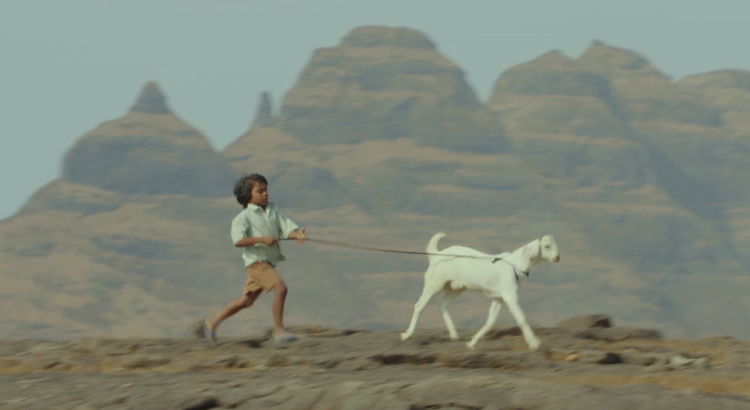
Sacred beliefs and rituals surround the story of Tajmal, where Bhima Konade, a poor farmer decides to sacrifice his goat Tajmal to a family deity to propitiate it for the wellbeing of his son Baal. But the child tries to protect the goat not only from his family but from outsiders. The film written and directed by Niyaz  Mujawar won a national award for fostering national integration. In this interview, Niyaz talks about bringing together communities, and the larger social milieu of modern day India.

Tajmal won the Nargis Dutt National Award for national integration. What aspects of the film you think impressed the judges?

The film’s story, performances, cinematography, soundtrack, and overall impact on encouraging national cohesion could have all impressed the judges. It would be difficult to identify particular components of the film that pleased the judges without more information or the judges’ viewpoints.

I think “Tajmal” brings together people from different backgrounds, and can be a great force for good in a time when separation and polarisation seem to be on the rise. It serves as a powerful motivator towards a more equal and just society by reminding us of our common humanity. Ultimately, the reason why audiences enjoy films that bring together previously divided groups is because they tap into a universal human desire to feel included and accepted. They serve as a constant reminder that, despite our differences, we belong to the same human family and that, by joining forces, we can build a better world for ourselves and the generations to come.

It requires great courage and sensitivity to talk about religious practices like sacrifices. Does the film deal with only the little boy and his love for Tajmal or is it a commentary on society?

The practise of animal sacrifice is just one of many difficult topics explored in Tajmal. The film focuses on a little child and his admiration for the Tajmal, but it also serves as a commentary on larger social and cultural issues in India. The conflict between tradition and progress is explored throughout the film. The film presents animal sacrifice as an ancient cultural practise, but also shows how it can clash with contemporary standards of morality. The little child exemplifies this conflict since he cares deeply about his family and their traditions but is also becoming increasingly aware of the brutality and suffering inherent in their rituals of animal sacrifice. Identity, belonging, and national unity are also examined in the film. The film uses the Tajmal as a backdrop to examine how people from diverse backgrounds may come together to form a common sense of identity and belonging, and the monument serves as a potent symbol of India’s rich cultural past. The film’s critique on society is ultimately broad and multidimensional, touching on themes of culture, tradition, modernism, and individuality. The film’s focus may be on a small child and his admiration for the Tajmal, but it is also a profound commentary on larger social and cultural concerns in India and an invitation to examine one’s own worldview.

What techniques of film making cannot be taught in film institutions. Could you illustrate with your own example

While film institutions can provide students with a solid foundation in various aspects of filmmaking, there are certain techniques and skills that can only be learned through practical experience. One of these techniques is the ability to work effectively with actors and to elicit powerful performances from them. Film institutes can teach us a lot about filmmaking, but we need hands-on experience to grasp some techniques. Some of my strategies include working with performers and getting powerful performances. Creating a safe and supportive environment for performers is a top priority for me on set. I collaborate with them to shape their characters and understand their motivations. I also use other methods to get strong performances. I use numerous takes to capture my performers’ nuances and allow for set improvisation and spontaneity. I also provide my actors thorough criticism and guidance during filming. Teaching these approaches in a classroom is challenging due to the need for a thorough understanding of human psychology and personal connections with performers.  We also need much of practical experience and risk-taking. We can only improve our abilities to work with actors and elicit outstanding performances via exercise and experience. Although film institutes offer a good basis in filmmaking, they cannot replace the significance of hands-on experience and mentorship from professional filmmakers.

Is it difficult to get an animal to act in a film?

Yes, getting an animal to act in a movie is hard. Animals have their own feelings, personalities, and ways of acting, which can make them hard to control and direct on set. They might get easily sidetracked, scared, or not want to work, which can slow down or stop the filming process. It can also be hard to train an animal to do or act in a certain way when told to. This takes a lot of time, skill, and knowledge.

Where does Tajmal feature in your film career.

Before I made Tajmal, I had already made a movie called “Disco Sannya” and written a couple of full-length movies. The Tajmal’s pre-production phase benefited me tremendously. During the making of Tajmal, I felt better about how I did things. I had a lot less trouble with production, but as soon as we finished the movie, the producers ran into money problems, which slowed down the post-production process. When we finally got all the money we needed and moved forward, we were given the highest prize a film in India can get: the National Film Award for Best Film on National Integration.

After receiving this award, I gained a new sense of self-confidence that helped me think about stories that spoke to me on an extremely personal level.
 

A Coming Together Of Sound And Theme

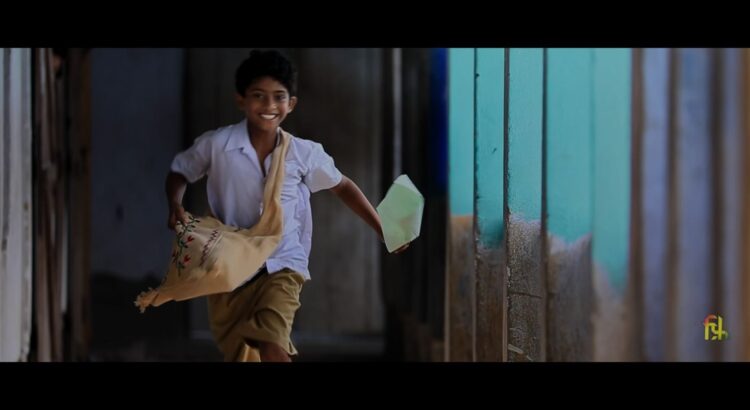
B Suresh Kumar’s film the ‘School Bell’, produced by the Films Division-NFDC, Government of India, has won acclaim for its theme of eradication of child labour and education in a novel way. Also it is a production that highlights and pays attention to Sound in films, something that has often been de-prioritised by film makers in their quest for the perfect story and visuals. It won the Best Ultrashort Film, Audience Choice in the Indica Pictures film festival 2021.

Suresh Kumar, after graduating in Visual Communication, did a Diploma in Film Technology and Television Production. He specialised in Sound Recording from the Film & Television Institute of Tamil Nadu in Chennai, India and worked as a Sound Engineer and Recordist for more than 400 Indian features, short films and documentaries before joining Films Division , Government of India, Ministry of information and Broadcasting.  In this interview, he speaks about how he has brought his experience as a sound engineer to his directorial films.

How did your experience in sound recording transition to film making? How do the two go hand in hand?

Actually, we call it AV i.e. audio comes first and then video. But in Indian Films, I have observed audio is given least importance. As a Sound Recordist, I was often humiliated on shooting locations, where the Directors I worked with cared little about audio. They concentrated only on the cameraman and his visuals. This humiliation made me become a Director and I decided that I will make my films with sound as one of the main features, thereby elevating the narration of the film through atmospheric real sounds.
I started my Direction venture with a musical documentary namely “Gourd to chord”. This is a brief half an hour documentary on the making of Indian musical string instruments like the Veena, Sitar, Tanpura, etc., using Gourd as the base. I used only location sounds and not even a single sound was added later. This documentary was well received giving me confidence I was right.  I then directed a 3 min short Fiction film only with atmospheric location sounds called School Bell. Both films were recognized at national and international film fests.

How did your stint with Films Division help to hone your documentary film skills?

Films Division is an produces documentaries, short fiction and animation films. Working for more than 23 years as a Sound Recordist in Films Division, I gained lots of experience in all genres. I was posted to Kolkata after working in Mumbai, where I got the golden opportunity to work under four time national award winner Joshy Joseph, who was a Director in Kolkata. While accompanying him in one of his Docufiction filmshoots for “Safar- A Journey of an Indian Farmer’ in Odisha, during the silent shot takes, I went into the nearby forest area to record bamboo scratching sounds which were breathtaking whenever the wind was blowing.

I played the bamboo scratching sound to Joshy during our lunch break. He was so taken up with it that he took a shot of a farmer sleeping in the forest in a rope cart from a crane. This became the first shot of the film Safar, in order to introduce the bamboo scratching sound. He was the first person in the entire Industry who understood the value of sound and the value of a Sound Recordist. Subsequently I became permanent Sound Recordist in all Joshy’s films and he became my permanent Director to work with. I am grateful to him for respecting and honoring me and my sound.

What inspired you to make the School Bell and why did you choose Bengali as the medium? Seems to be very Satayajit Rayish.

I am from Chennai  and I joined Film Institute of Tamil Nadu in Adyar to study Sound Recording and Sound Engineering in 1989. During my three years of course, whenever I use to see a small boy or a small girl working in a tea shop washing tea glasses or in a hotel cleaning plates, I use to feel bad for them and wanted to free them immediately and take them directly to a school like a hero does only in Films. But, I was helpless. So, I scripted a short film about Child Labor using a Famous Tamil Prayer song “Neerarum Kadalodutha Nilamadanthai Ezhilozhugum Seerarum Vadanmena Thighazh Bharatha Kandamithil.”  But, it was not easy to make a film in the 1990s as the format was 35mm.
Hence, I kept the script to myself, understanding the ground reality of making a film is a mammoth task for a middle class person. Then, I joined the Tamil film industry and worked for more than 400 films before joining Films Division Kolkata as a Sound Recordist. This became my turning point, as I was encouraged and appreciated by both my directors Rajiv Kumar and Joshy. In Kolkata, we use to attend film festivals regularly at Nandan complex where we became cinephiles. I got the support of my two directors, when I wanted to direct my first documentary. As my confidence grew, I changed my prayer song from Tamil to Bengali, realizing that child labour is a universal problem of India. I decided not to have any dialogue but to play with sound, visuals and emotions. That’s how Neerarum Kadalodutha became Anondo Loke Mongola Loke. The boy Aathithya whom I cast is a Tamil boy, lived next to my apartment in Kolkata. To my surprise the location of the school in which I shot School Bell is called Boral, where Pather Panchali was shot by master film maker Satayajit Ray.

What impact did you hope to make with the production of this film.

It had been my dream for over 30 years to create awareness about eradicating child labour through the medium of films. I have seen many short films on child labour before starting on my film.  They were mostly pedantic with loud commentary or voice overs or scrolling text like in power point presentations. I wanted to convey the problem through the eyes of the child without a single dialogue or separate music.  I used the Prayer song in Bengali as the basic sound track of the entire film and used atmospheric effects. This clicked and people were moved by the sound scape of the film which triggered emotions as I had hoped.

The School Bell is set in modern India. How do we reconcile the fast paced developments in space, medicine, industry with a situation where the right to education is still something not adequately addressed. Your other film Arithaaram is very folksy. How does the koothu community cope with modernisation and how did you manage to capture this?

Just as we have eradicated polio fully from our life, if we could eradicate child labour we can be proud about developments in space, medicine, industry, etc.

Due to the advancement in technological developments in cocial media, the future of Therukoothu (Therukoothu in Tamil, is an ancient art, where artists play songs with dance and music in storytelling of the epics) is bleak. It is a folk art which originated from the early Tamil country and has slowly started diminishing and the survival of the Therukoothu artists became a question mark. This film captures one such artiste and his mental agony.

Video Excerpt of the Interview

Fusion introduces Indian Music to the World: Violinist Nandini Shankar

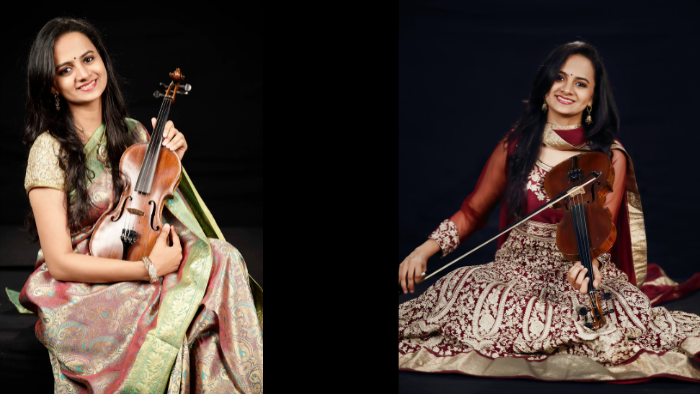
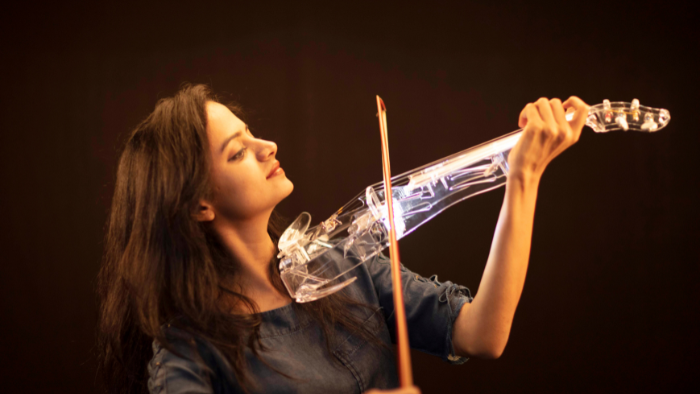
Violin players in the Hindustani tradition are rare and are linked closely to the family of esteemed artist Dr N Rajam. Nandini Shankar, her granddaughter, is part of a legacy which includes India’s classical musical tradition and to the coming together of the East and West through music that has both contemporary appeal and yet is rooted in ancient sounds.

Nandini plays the violin in the Hindustani Gayaki style, pioneered by her grandmother and subsequently played by her mother. She is also part of several bands including the first ever all-women Indian classical band conceptualised by vocalist Kaushiki Chakraborty. She is also part of a fusion band formed by her mother Dr Sangeeta Shankar aimed at giving a new sound to popular tunes. In thi interview she talks about the intersection of the two modes of music India offers to the world.

No two artists of Indian music sound the same even while playing the same raga or song. What does this say about nature of Indian music and the possibilities it offers?

Indian music is deeply rooted in improvisation - and hence the possibilities are infinite. It gives the opportunity for musicians to make any piece of music their own. I think that's beautiful.

Playing the violin in Hindustani music was pioneered by your grandmother and followed down three generations. How has it added to the music soundscape? How is the violin gayaki style you play different from conventional instrumental music? 

My grandmother's pioneering work in developing the Gayaki Ang has been path-breaking in the world of Hindustani violin. It has unparalleled emotive power and depth. I am truly blessed to carry forward this legacy.

In Hindustani classical music, there are two styles - vocal and instrumental. Ragas are unfolded differently in both styles. The gayaki style that we play follows the vocal style of improvisation and expansion of a Raga. The technique allows us to emote as deeply as a singing voice, even on the violin. It is the perfect instrument for that really; being bowed and fretless. It is completely different from the Western Classical style too. Audiences in the West are amazed and often moved to tears when they listen to this style!

How is the Indian fusion scene changing with the burst of digitalisation and sound technologies. Do Indian bands and the music they create hold appeal for international audiences 

Indian fusion is rapidly developing and becoming the go-to genre for the youth, especially with the advent of social media and streaming apps. It has become a vehicle for youngsters to reconnect with their culture and tradition. Advanced sound technology and different styles of music production make the music more accessible to the masses. Indians all over the world greatly appreciate fusion! It also becomes easy to introduce Indian music to a foreign ear through this genre, since they can relate with the common elements they find in the music they listen to on a daily basis.

How can we make India a music destination like it is for yoga and Ayurveda? Does the absence of international standard concert halls make it difficult to attract non-Indian musicians here?

Just like Yoga, Indian Classical music, too, has its roots in spirituality. It has the power to take the listener to a higher dimension. The world is a much smaller place now (thanks to the internet) and a lot of non-Indian musicians are taking to Indian music, more than ever before. I personally feel that basic courses in Indian music should be conducted everywhere - that will not only help develop a taste for our music among global audiences, but also keep our culture thriving. International standard concert halls would definitely be welcome too.

Are we looking at a true opening up, a democratization of the music scene post pandemic with artists reaching out to audiences worldwide more seamlessly?

 I can already feel everything opening up, and I look forward to it. After over 2.5 years, everyone is yearning for more live music.

Are Indians ready for the music video culture transitioning from CDs?

Music distribution formats have changed very rapidly in India over the last few decades. Every Indian has a mobile phone today. So yes, I think we are ready.

How do artists create integrated music when listening tastes and demands are so varied. Do we have bands that cut across cultural and regional diversity the way some popular Asian and Western bands have?

The key here is integrity. An artist can only be consistent when they create music that truly speaks to them. Following the ever-changing tastes and demands of the audience puts tremendous pressure and does not allow for free creative expression. If an excellent artist is truly passionate about that musically, it will happen. It is only a matter of time.

How do you see your career as a multi dimensional artist shaping in the future.  What are the things you are looking forward to doing solo and in collaborations with other artists?

 I am happy to be doing something that I love, and anything that is musically beautiful is welcome! There's a very exciting project that I have been working on for the past two years, and I can't wait to share it soon with all of you.