As My Health, Behaviour Improved Due to Yoga and Ayurveda, Many People Embraced Them Too: Claudia Gomez

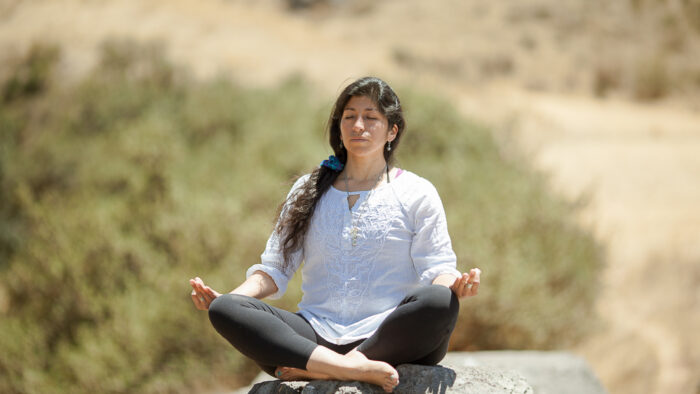
A biologist by profession, Claudia Gomez, started to practice and experience yoga in a Sports Club in Lima in Peru in 2004. Initially, it was a physical experience of the power of asanas. Over the years, her instructors took her step by step over other aspects of yoga, sharing their ideas and information, asking her to borrow books on Yoga and also asking her to teach in their absence.

A decade later, Ayurveda came into her life, at the suggestion of a yoga trainer.  Claudia says all these experiences were connected and soon she visited the Cultural Center at the Indian Embassy in Peru, where she had her first class with an Indian Yoga Teacher. She learnt about the YIC programme offered by S-VYASA, for which she applied and attended in November 2019.

Claudia says her introduction to Indian culture, was “not only through an asana practice, as some music was shared and messages about the scriptures were mentioned and discussed. However, I feel the exposure was stronger when Ayurveda knowledge appeared in my life. I was so fortunate that my yoga and Ayurveda teachers shared with me part of their knowledge about India.”

Claudia’s ancestors come from the highlands of Peru, which she says is similar to Indian culture. “Andean families are closely connected with nature and the environment since time immemorial. Likewise families are close knit and people practice mutual respect and solidarity, deeming their spirituality as paramount. Some ways in which this respect and care is manifested are the rites offered as payment to mother earth, gratitude to the sun, the moon and all living beings for the benefits we receive from them,” says Claudia.

In accordance with folk traditions, she says the people of Peru also don a lot of colour in their clothing, have a wide diversity in their music and a special appreciation for plants and flowers, just like it is in India.

Claudia’s first sessions as a facilitator were with students at the Cultural Center of her Municipality in 2014, then in a Sport Club - La Cascada - in Ayacucho in Peru, and finally at the IKAT Yoga and Meditation Center in Lima in 2019.  She says that people had two kinds of reactions to her interest in Yoga. “The first were people open to learning about different cultures and the second group thought that I was losing my mind or being ‘brainwashed’.”

While many members of the first group benefited from her experiences and interest in yoga, the second group took more time to understand her affiliation for an alien culture. Claudia says that as her ‘health, temper, behaviour as as her way of dealing with life improved, many people started to embrace the change, she adds.

She was among those selected for Indica Yoga’s chanting scholarship. Claudia had learnt chanting as a yoga practitioner, and then during her higher studies, but mostly during her stay at S-VYASA University. She says of her chanting course, “I felt that when I practice it, its resonance transmits strong energy and a peaceful tranquillity in me. It is not easy, but I took it up as a challenge. It requires a lot of concentration, practice and patience. The process is gentle and every second is worthy.”

Describing her chanting course, Claudia says that in Shatala Sriramaiah’s classes, they learnt an “overview of the Vedas; several chanting rules with a great teaching methodology (including chanting notes, intonation patterns, force punctuation and conjugation and much more -  that facilitates follow up for people unfamiliar with Sanskrit) and of course a number of Mantras where all of the previously mentioned points were applied.”

Through the course, the participants, “have received a solid introduction with enough roots to continue our learning journey. Likewise, it would be my privilege to transmit what I have learnt with all beings willing to receive it. Incorporating chanting mantras into my teaching will definitely enhance my yoga teaching process,” adds Claudia.

Ayurveda has Much to Offer; Its Simple Application Can Transform one’s Daily Life: Dr Gangadharan

Vaidya Dr. G. G. Gangadharan’s book - Ayurveda: The True way to restore your health and Happiness is being released today. The book does not seek to defend Ayurveda, which the publishers say is a sound, scientific framework of healthcare that has saved countless lives over 5000 years and does not need defenders. It needs champions, and to be given wings.

In the book, Dr Gangadharan, who has been researching both the theory and the practice of Ayurveda for the past thirty-five years, explains the main pillars of its scientific logic. He points out that our bodies are intelligent systems designed to keep most diseases at bay, but we must pay more attention to the signals they give us. Listening to our bodies allows for true restoration. It is a promise to restore your body and mind to its initial healthy state. Ayurveda has so much to offer; its simple application can transform one’s daily life. In this book, you will find the secret to greater happiness through balance and long-lasting health.

 Dr. Gangadharan, a practicing Ayurvedic physician, is currently the Director of M S Ramaiah Indic Centre for Ayurveda and Integrative Medicine based in Bangalore, India.  After his seven-and-a-half-year Ayurved Acharya course from Coimbatore, Tamil Nadu, he acquired a master’s degree from McGill University in Montreal, Canada. He is the recipient of the prestigious Ashoka Innovators for the Public fellowship. He also has a PhD from Tilak Maharashtra Vidyapeeth, Pune, in management of rheumatoid arthritis.

In this interview he tells CSP about Ayurveda’s role in creating health and happiness.

Dr Gangadharan

How does the book explain the connection between health and happiness in a world where there's a disproportionately large connection between wealth and happiness?

Health can be perceived from different levels. This book explains the connection between health and happiness from a physical, physiological, psychological, and spiritual perspective. It doesn’t deal with socio-economic imbalances that are prevailing in the society, which is nowadays overwhelmingly high. The perception of health is also a mind-set. Ayurveda talks about how to domesticate internal and external enemies to work positively for health. This includes dinacharya, ritucharya, sadvritta and daivavyapashraya chikitsa.

You say our bodies are intelligent and can cure themselves.  Why are we unable to intercept these signals anymore?

As long as one lives in tune with nature, which is not intercepted by barriers like tensed mind, anxiety prone environment, work culture, competing professions at psychological level and processed food, polluted air, water and soil and toxic induced cultivation, preserved foods especially fruits and vegetables, also weaken and suppress, which distorts capacity of one’s sensitivity to understand and correct nature's signals of early symptoms of morbidity.

Can Ayurveda bring a shift where we are looking at prevention rather than cure?

Ayurveda as a science is prevention and promotion oriented. The whole science of public health revolves on these two components, which are strengths of Ayurveda. We need to apply principles of Ayurveda in public health and community medicine including primary healthcare.

Primary healthcare in Ayurveda starts at home. This is people oriented knowledge based on indigenous, preventive healthcare. This is what Ayurveda must advocate in the 21st century.

Where does this book meet your other published books? How does one balance writing best sellers and academic publications to reach both the layman and the practitioner?

This book is written with a definite purpose of reaching to people, who are interested in Ayurveda with an open mind. This is not an academic exercise but a public outreach. I have made use of inputs from writers who write this kind of a book. This is a genius mix of layman`s language and technical know-how for scientists. It was not an easy job though.

For example, my recent book Two futures of food, health and humanity co-authored by Dr Vandana Shiva, who heads Navadanya, is an academic and intellectual exercise to debate between modern, mechanical and reductionist perspective of development and life and Indian Sciences especially Ayurveda`s holistic perspective of life and development.

Westerners have published many books on Ayurveda made Simple. Is this necessary for modern readers?

Many books by Westerners have made efforts to make Ayurveda simple, but it has distorted the concept of Ayurveda sometimes in an irreparable manner. For instance, equating Vatha with air, Jala Bhuta with water and dosha as energy etc. These are wrong concepts and will take the reader in the wrong direction and perspective. That’s why I thought of writing this book. But I do admit that there are good writers who have a sound understanding of Ayurveda like Robert Svoboda, David Frawley, Dominik Wujasty and others.

In the last one year what impact have you seen Ayurveda making on dealing with the pandemic?

There are many efforts in different parts of the country to tackle the massive epidemic. Many of them are wonderful experiences of Vaidya, both preventive and curative. Unfortunately, there is no coordinated effort to put together all these efforts to make it evidence-based science. The Ministry of AYUSH is planning to launch a portal – Ayush Clinical Case Repository (ACCR) to document alternative therapy outcomes and the third version of Ayush Sanjivani app. This will provide access to professionals for research and analysis.

Extract from Ayurveda: The True way to restore your health and Happiness (Available on Amazon)

The Whole Plant, the Whole Person

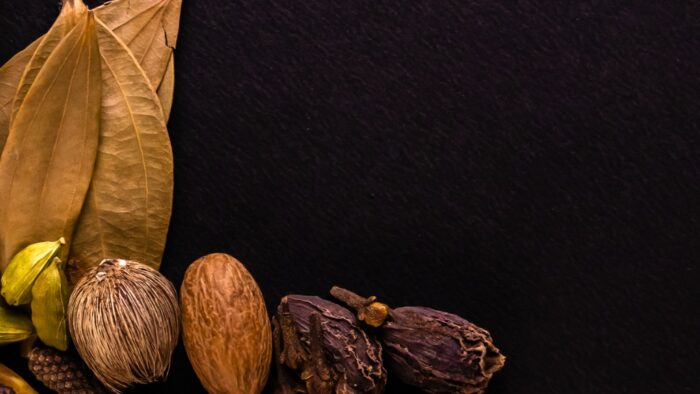
The plant that the West calls Rauwolfia serpentina is known in Ayurveda as ‘sarpagandha’. Ayurveda has been using it for centuries for the treatment of high blood pressure without any side-effects. Modern scientists have researched this plant and identified a master molecule named reserpine. They extracted it from the plant, synthesized it in a laboratory and used it to make medicines that would reduce blood pressure. The medicine achieved this objective, but also caused side-effects that included depression and suicidal tendencies.* After many fatal incidents, the medicine had to be retracted from the market.

There’s a larger story behind this phenomenon—what I call the ‘Sarpagandha Syndrome’. To understand this story, we need to know how nature works and how Ayurveda has moulded itself to fit into nature’s contours.

* Douglas Lobay, ‘Rauwolfia in the Treatment of Hypertension’, Integrative Medicine, June 2015, https://www.ncbi.nlm.nih.gov/pmc/ articles/PMC4566472/

Nature, Wholeness and the Dynamic Equilibrium

We know that nature abhors a vacuum. Let’s also acknowledge that nature abhors the lack of wholeness. At every point in time since the formation of our planet, every life form and substance found in nature has remained in a state of dynamic equilibrium— within itself and also with respect to its environment. If there is a momentary imbalance in that—for instance, if an unstable isotope is created—nature quickly restores the substance to its whole and natural state.

Meanwhile, nature uses chemistry to change biology over vast periods of time, so that every life form continuously evolves to a higher level of resilience.

Since nature sets such exacting standards for itself, is there any wonder that Ayurveda trusts it implicitly? By extension, Ayurveda trusts every plant and human body to be whole and complete. In the human body, this dynamic equilibrium is maintained by, among other phenomena, homeostasis; Claude Bernard, the father of experimental physiology, called this self-regulating ability the milieu interior. Since the human body and other natural life forms are designed this way, any imbalance in the human body—that manifests as a disease—can be addressed by using the restorative power of nature.

When we take a step back and look at the entire universe, we realize that nature is awe-inspiring. We realize that every life form is a microcosm of the entire universe. Since humans tend to be self-obsessed, let us rewrite that sentence as follows: The human body is a microcosm of the entire universe. The matter of the universe is in the human body and what is in the human body is in the universe. After all, astronomy tells us that the atoms that make up our body were produced inside a star. We share chemistry with the universe and, therefore, everything we find in it is potentially therapeutic for us.

So for the vaidya—the practitioner of Ayurveda—our planet is a boundless pharmacy. This makes the vaidya a bridge connecting the whole nature with the whole human being.

We will now look at how Ayurveda embraces the wholeness of the plant while also treating the human being in its entirety. In simpler terms, Ayurveda does not reduce a plant to its constituent bio-molecules. Nor does it reduce the human being to a set of ailing organs. Life is undoubtedly enabled by molecules and organs, but life is experienced in its entirety.

Therefore, the processes that nurture and preserve life must be wholesome.

The first sign that Ayurveda is wholesome is the fact that its medicines do not cause side-effects if used appropriately.

No Side-Effects

Yes, Ayurvedic medicines cause no side-effects. The brazenness of this claim is made apparent by the fact that many allopathic medicines have a list of side-effects that’s longer than the list of chemicals used to make them. Despite painstaking research that can last years—including clinical trials on various life forms and multiple iterations of development—allopathic medicines have been unable to shrug off the bane of unwanted externalities.

Take antibiotics, for example—every generation of antibiotics is made stronger so as to vanquish newer generations of more resilient superbugs. This also means that every new generation of antibiotics takes a stronger toll on the human body, with the side effects becoming starker. In such a dynamic domain, Ayurveda continues to use medicines free of side-effects, conceptualized and created many centuries ago. How has Ayurveda achieved this?

Well, Ayurveda studies plants in their entirety. Roots, stems, bark, flowers, fruits and leaves are understood—as constituent yet interconnected parts of the plant—and the therapeutic value of each part is understood. That done, Ayurveda identifies the best way to extract the plant’s essence for human use.

Any part of any plant has hundreds of types of bio-molecules, such as alkaloids and saponins. In many cases, only one bio-molecule among these is capable of acting as the master molecule that combats the ailment. While allopathy will isolate, extract and synthesize this bio-molecule, Ayurveda will extract the entire part because it believes that the other bio-molecules in the plant negate the side-effects caused by just one of them.

This throws new light on the Sarpagandha Syndrome mentioned earlier. The plant sarpagandha behaves like a team, whereas reserpine behaves like the star player of that team, who is completely lost without his teammates.

The long and short of it is that Ayurveda trusts nature’s design to be more holistic than its counterpart, the human design, and by embracing nature’s holism, it manages to do away with potential side-effects.

Having said that, let’s make another statement that, which at first glance, may appear contradictory: We don’t take all parts of the plant or even everything within a single part of the plant.

All we are saying is that molecular-level selection of matter leads to problems. So, in Ayurveda, the Vaidya removes those parts of the plant that are neither necessary for treatment, nor easily ingested by the human body. Through well-considered extraction methodologies, the physician makes the therapeutic qualities of the plant accessible to humans.

A Show of Indian Dance Forms and Enraptured Russian Hearts

If one wants to go back to the classical world of music and opera, one need not look further than Moscow. Russia has a great musical tradition and many of the world's greatest operas and symphonies premiered here including Glinka, Tchaikovsky, Rachmaninov, Prokofiev, Shostakovich, Rimsky-Korsakov. Most visitors don’t miss the Bolshoi theatre, while the Stanislavsky theatre is also of outstanding class, as is the relatively new Helikon opera.

India’s connect to this land has been one of kinship - both in hard and soft power. It is said the city of Astrakhan held a significant Hindu presence in ancient times. The city on the banks of Volga, along the Caspian sea was very fertile and attracted many people including Indians.

This evening we can witness a beautiful coming together of India and Russia, as Namaha foundation, a premier organisation in the Tri Valley area in the US presents the teachers and students of Nritya Sahba Nritya Sabha Foundation for Indian Cultural Heritage Studies of Moscow in a special programme titled 'From Russia with Love'. Register here: https://forms.gle/U8EN4WHQLMEqjyC47

Among the special dances, we will witness the dance rendition of a beautiful composition by Shri Adi Shankaracharya, the Ardhanarishwara stotra, by Guru Nadezhda Kovriga and disciple Ekaterina Nazarova Nadezhda of Russia. Kovriga is a performer and a choreographer of Bharatnatyam, graduating from Kalakshetra College of fine arts in 1997.

Promos: https://youtu.be/VZu24JEn070

Nritya Sabha, Moscow

In 2008, Nritya Sabha was recognized by the ICCR as an Empanelled Foundation”, the first ever foreign organization to be given this status. Their activities include Training students in Indian Classical Dance forms, conducting and directing performances, festivals, workshops, seminars, lec/dems and collaborating with like-minded organizations both within Russia and outside.

Their teachers will be performing at this evening’s presentation. The performance will open with the students of Irina Isrorostenskaya - Maria Jiltsova and Anna Apostolova. Maria and Anna, have been training under Irina for the past 12 years and have performed and organized their own programs. Irina is an alumni of the Kalakshetra Foundation, Chennai. In 1986, she started taking private lessons in Bharatanatyam under Nirmala Ramachandran, and later under Jyolsana Menon after graduating from Kalakshetra. She has also had Nattuvangam training under the guidance of Bhagavthulu Sitaramasharma at the Kala Peetham Institute.

Since her return to Moscow in 1998, Irina continued her practice of this art form and founded the Natyashrama dance studio. In 2003, she co founded the Nritya Sabha foundation.

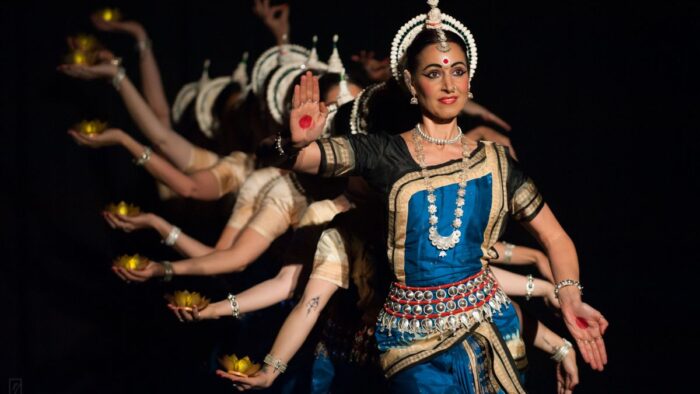
Apart from Bharatanatyam, Nritya Sabha also is associated with Omkara, Theatre of Indian dance. The artistic director of Omkara is world renowned Odissi dancer and guru, Sujata Mohapatra.

Moscow is also home to the Chakkar school of Kathak dance, led by Ekaterina Seliverstova. The Chakkar group is one of the leading
Kathak dance groups in Russia, successfully performing all over Russia and abroad. In 2009 the Chakkar group performed in the Opening concerts of the grand festival “Year of India in Russia” in the Bolshoi Theatre, Moscow and State Academic Philharmonic, Saint Petersburg. The Chakkar group was the only Russian group to perform in this event.

In 2013 “Chakkar” dance group successfully performed in Russian Centre for Science and Culture, New Delhi, India and in 2019 took
part in Indo-Russian Cultural Summit, organized by TAAF (New Delhi and Gwalior, India).The artists included Elena Antonova, Mariya Anufrieva, Marina Dikareva, Oksana Malakhova, Anastasiya Smislova, Olga Tcherbakova of the Chakkar group. Svetlava Stasilevich is one of the senior disciples of Vera Krishnaraj. She has trained for over 15 years in Kuchipudi.

Vera Krishnaraj an exponent of Kuchipudi, is a teacher and horeographer in Nritya Sabha, and also the founder of “Natyalayam” – school of Kuchipudi dance in Moscow. She is a direct disciple of Padma Bhushana, Dr. Vempati Chinna Satyam. Vera and her students have performed extensively throughout Russia and elsewhere.

Vera Krishnaraj

The Ardhanarishwara stotra will be performed today by Guru Nadezhda Kovriga and her disciple Ekaterina Nazarova, Kovriga’s teachers at Kalakshetra were the renowned masters such as S Janardhanan, Ganga Thampi, Panga Thodi Narendran and Jyolsna Menon. On her return to Russia, Nadezhda continued her dancing career, participating in many festivals of Indian culture, in Russia, Kazakhstan, Hungary and India under the patronage of ISKCON. She has also performed with her own dance group around Russia.

She become a member of the Nritya Sabha Foundation in 2003 and heads a Bharatnatyam Dance School called 'Revati'. Nazarova - is a student at Revati school under the guidance of Guru Nadejda Kovriga. Ekaterina started learning Bharatanatyam after studying the history and culture of India in Moscow university.

A Kathak performance, a duet by Ashwani Nigam and senior disciple Svetlana Nigam will be another offering.Guru Ashwani Nigam was the first and still is the only Indian origin Kathak teacher in Russia. He has been working in Russia for 24 years. A prominent choreographer of many dance projects all over Russia, He has been running a theatre of Indian dance 'Tarang' since 1999 and has prepared many Russian professional dancers in the Kathak style. Ashwani is also a member of Nritya Sabha Foundation. His student Svetlana Nigam completed her Degree in Kathak from Prayag Sangeet Samiti India in 2007.

Vitalina Lobach, artistic group leader of the ‘Odissi Jeevan Nritya’ team will present a lovely piece on Lord Krishna and his beloved Radha and the gopikas enjoying the Holi festival. Vitalina studied Odissi dance at the Gandharva Mahavidyalaya, Art Institute (New Delhi, India) on a scholarship from the Indian Council for Cultural Relations under the guidance of the famous dancer and teacher Madhvi Mudgal from 1990 to 1995.

In 1995, on her return to Moscow, she founded the Odissi Jeevan Nritya dance school. Vitalina widely performs in Russia and India and regularly conducts workshops on Odissi dance.

The next piece is a lovely representation of the traditional Mohiniattam repertoire, the Pandaatam - a game of playing ball. Alexandra Vodopyanova – a Mohiniyattam dancer and the head of Lasya Kalakari school in Moscow, is a member of Nritya Sabha foundation. She is a disciple of the legendary Guru Padmashree Bharati Shivaji, and her daughter, Vijayalakshmi. A recent graduate of Center for Mohiniyattam institution, under the guidance of Bharati Shivaji, Alexandra has performed with the CFM troupe, along with her Guru and has participated in many productions of the institution.

Elena Knyazeva will present another traditional piece performed by most classical dance styles, the Ashtapadi. Elena, is a Moscow based professional Odissi dancer and teacher and an artist of the “Nritya Sabha” Foundation. She is the Artistic director of her own group “Odissi” Dance Project. Elena has dedicated herself to this classical dance for over two decades now. She is a diploma holder from the “Prayag Sangeet Samity” Institute of culture (India).

Tatiana Nazarova will presents another piece on Lord Krishna in the Kathak style - a lovely Surdas bhajan. Tatiana Nazarova is a post-graduate from the National Institute of Kathak dance "Kathak Kendra", New Delhi. Tatiana learnt Kathak for 13 years under the guidance of eminent Guru Munna Shukla and has performed
at major festivals all over India. She is the co founder and artistic director of Nritya Sabha Foundation.

Alexandra will also present Chhau for which she trained under Pandit Gopal Prasad Dubey, Shashidhar Acharya and Sapan Acharya. She graduated from Triveni Kala Sangam with a diploma in Seraikela Chhau.

The Kalina Taal will be presented by Mariya Anufrieva, Yuliya Kardashova, Ekaterina Korost, Anna Litvinova.

Finally a Thillana, usually performed at the end of a traditional south indian dance recital. Today the Thillana is being being performed by Dmitriy Zmeyev in the Bharatanatyam style and Eleonora Petrova in the Kathak style. Dmitriy Zmeyev studied the Pandanallur style of Bharatnatyam under Guru Nana Casar at the Gandharva Mahavidyalaya University of Indian Classical Music and Dance in New Delhi. Later, he continued his Bharatnatyam training under the tutelage of Lila Samson, one of the brightest exponents of the Kalakshetra School. Dmitriy continued his training at Triveni Kala Sangam Institute under the guidance of JayaLakshmi Ishwar and also learned the art of playing Talam, or the Nattuvangam. He graduated with honours from the Gandharva Mahavidyalaya University with a Bachelor of Arts Degree. On his return to Russia he founded “Natya Rekha” dance School, and is one of the leading members of Nriya Sabha Foundation.

Eleonora Petrova is a Moscow based Kathak dancer and choreographer. She is a Government of India scholarship holder and a post-graduate of "Kathak Kendra". She runs her own dance school “G-taal” and widely performs in Russia and other countries. Eleonora learnt Kathak under the guidance of Rajendra Gangani of Jaipur gharana.

The evening will also have the Shivapadam repertoire! Even though the Shivapadams are composed in Telugu and set to Carnatic music, they are being extensively explored in recent days by various dance styles individually or in collaboration with multiple styles. A dance is dedicated to Lord Shiva who destroyed the arrogance of Manmadha. The last event will be a Padam dedicated to Lord Shiva who loves to perform the cosmic dance, Taandavam. A composition from “Shivapadam” by Brahmasri Dr. Samavedam Shanmukha Sarma, has been choreographed by Ekaterina Seliverstova, Tatyana Nazarova, Irina Iskorostenskaia, Elena Knyazeva and will be performed by Tatyana Nazarova, Mariya Anufrieva,
Anastasiya Smislova, Olga Scherbakova, Alexandra Vodopyanova, Anna Apostolova, Elena Knyazeva, Anna Maya Panchenko, Alexandra Vodopyanova. It will be performed in Bharatanatyam, Mohiniattam, Odissi and Kathak styles.

Namaha Foundation is organising "From Russia with Love" to support the Nritya Sabha Foundation during these difficult times of pandemic lockdown. Promo https://youtu.be/Z2uJr0IhUyw

Namaha Foundation for the Arts was founded by Guru Vidushi Naina Shastri (artistic director of Ushanjali School of Dance and Vice Chair of the Arts Advisory Committee of the City of San Ramon), six years ago in San Ramon to bring quality performances to the Tri Valley area and to provide platforms and opportunities to upcoming artists.

To know more about its activities and to apply for performing in their various events, artists can visit www.namahaarts.org or contact them via email at namahaffa@gmail.com.