Brazil is Indeed in Need of More Indic Influence: Amratananda Das (Alex)

Amratananda Das (Alex) practices Sanatana Dharma in Brazil and is a student as well as a teacher of Ayurveda, Yoga, Jyotisha, and Samskritam. In this interview he speaks to CSP about the need for Hinduism in Brazil but also the challenges for true seekers.

You said in a recent talk that Yoga helped ground you in your teenage years and also you gave up eating meat subsequently.  Do you think these two areas are often the most understated benefits of Yoga?

Yes. Yoga changed Western society and its mindset in many subtle ways, and people do not always acknowledge this. In fact, I believe vegetarianism here is a direct influence of Hindu spirituality and philosophies as yoga and Vaishnavism (as the Hare Krsna movement introduced a lot of Indic vegetarian dishes in the west by way of prasad distribution and restaurants). Vegetarianism was almost an alien word in my childhood and nowadays it is becoming more common and is a direct influence of Yoga for sure.

Brazil shares a similar history of colonization as India. Do you think that Indian systems of Yoga and Ayurveda are facilitating a sense of pride in Brazil's own indigenous practices?

Yes. Ayurveda in Brazil gave legitimacy for the Native traditions of Brazil to be also viewed with a more scientific approach. You can find a growing number of youth here that practice Shamanic religions and lifestyles (we call it Pajelança).

Soft Power is good but ancient systems sometimes suffer when transposed to other countries. How have Yoga and Tantra suffered in Brazil due to pressure to be exotic and sensual. Societies that are very materialistic may benefit the most from Yoga, but are they also ones that are following the West in trashing authentic practice?

 Indeed. Some yoga teachers and schools in the West follow a materialistic understanding of Yoga with a new age mask for it, bringing many distortions to the practice. De Rose is one famous yoga school that was founded by a Brazilian by the same name. His books claim his yoga is the authentic yoga - a classical yoga which came from Shiva. But his history is based on colonialist theories like the Aryan invasion theory and something about chakras and mantras.

He became a millionaire and his organisation has branches in Europe. His form of Yoga is elitist, commercialised, sensual-ized and competitive, where you have to build the perfect body and exhibit perfect poses, with no belief in God, involving worship of him as a guru. He fought legal cases and has lost the right to use the name Yoga as he was declared an atheist.  He holds many Hinduphobic views popular in mainstream media, promotes colonial history and has a distorted knowledge of shastras and samksar.

Sometimes in Brazil, there is also a distortion of the message of Tantra, where Tantra is sold as erotic massages claiming to be a Tantric therapy to free the mind of dogmas. There are many New Age Yoga groups which tend to support a Marxist narrative, always siding with Islamic and Christian perspectives against native Indic Hindu perspectives. In their anxiety to prove all religions are the same they mix Vedanta with Abrahamic texts. The problem is that they side with the colonial narrative in India against Hindu revival, surely a direct influence of the mainstream media and education system that is designed to support Western perspectives.

Brazil has a huge migrant population.  Isn't it incredible that in the midst of it all Hinduism has found some space? What are the commonalities with the African immigrants worship practices and those of Hindus?

Brazil is a really miscegenated society, which makes our civilization more pluralistic, and open to the more universal approaches of Hindu Dharma. African religions here survived mostly by hiding and creating syncretism. They started to associate their Gods (Orixás) with the Catholic saints. Umbanda is a mix of Catholic, African and Shamanic traditions, but survived mostly by using Catholic saints name for their Gods. Candomblé is more African rooted with less syncretism, associated more with native Shamanism than with Catholicism. African religions worship icons of Gods and make offerings of food, but also have animal sacrifice and wine.

Their practices are similar with Hindus in some aspects, as they have many Gods, they are close to nature, they worship nature also like Hindus, and their celebrations involve dance, music, food and are colorful. Some of their practices are different from those of Hindus, although I have heard of incorporation rituals is some sects in Tamil Nadu. They incorporate spirits of the Orixás (Gods of nature) and also of other spirits like the Preto Velho (spirits of ancient, wise, enslaved old men and women who had power to cure illnesses); Pomba Gira (spirits of a sexual nature, when men dress and act as women) and even the People of East (similar to gypsies but they say are they are from India and give blessings and predict the future).

There are many gypsy communities in Brazil who came in during the colonial period. They were all forced to convert on arrival and today are mostly Christians, but they have retained many beliefs and culture like language (similar to Punjabi and Sindhi), dance, music, fire, rituals, same caste marriages, palm reading, etc. Soon it became part of Brazilian culture and you can find many Catholic women who observe African religious practices and those of the gypsies.

You mention a French missionary who created a kind of religious practice which combines Hindu ideas of Karma and reincarnation with Christianity? Raised as a Catholic yourself,  what attracts people to the whole value system of Sanatana Dharma rather than a piece meal approach?

 We call it Espiritismo, a religion created by Allan Kardeck’s work - The Book of Spirits. He is not remembered in France, but is quite popular here. He has taken some ideas from the Vedas like Karma and reincarnation, and also communicating with higher spirits. But he preaches the Bible and focuses on Jesus as the main spiritual personality. The people of Brazil are naive and simple and even believe if someone uses Vedic ideas and credits it to the another religion.  Unfortunately, I have noted people prefer a sugary approach to spirituality, and are not really interested in the truth. In search for some comfort in their lives of misery, some of these practices work as a placebo, atleast for most people.  I studied with them when I was around 12 to 13 years old, but I quit when I realised they were superficial and I wanted to go deeper.

Yoga changed Western society and its mindset in many subtle ways, and people do not always acknowledge this. In fact, I believe vegetarianism here is a direct influence of Hindu spirituality: Amratananda Das

You bring Brazilians to India. What does a tour include?

Before the pandemic, I was bringing different tour groups to India. Usually had two kinds of tours, one more of a spiritual and touristic one of North India (covering Delhi, Haridwar, Rishikesh, Amritsar, Jaislamer Jodhpur, Pushkar, Jaipur, Agra, Varanasi, Vrindavan). We have visited many different temples and historical places to present people a compete tour of the vast perspectives of Indian ethos and heritage. The second kind of tour is an Ayurveda retreat in Kerala which ends in Rishikesh with Yoga classes. I plan to make more tours of different routes as soon as possible after the pandemic ends.

You mention similarities between indigenous populations and the people of North East India. What are they?

That’s a complex question, as Brazil has many different ethnic and linguistic native tribes, similar to North-East India. You can find some similarities between them in the skin colour, the features of the face and hair and also the tribal life style including the practise of using bird  feathers to make head covers. This is based on impressions and speculations, but it is known that Native American people have ancestry in Asia, so it may not be far-fetched.

We know that the Kalingas, Cholas, Cheras and even the people of Saurashtra and Sindh used to navigate oceans in ancient times, creating an exchange of people and ideas between Europe, Africa, Arabia to West and South East Asia, Pacific islands and America to the East. Historians claim some migrants came by foot through Bering Strait between Siberia and Alaska.

Is there a demand for Indic courses in Brazil? Why is there only university offering a course related to India?

 There is some demand for Indic courses, especially Ayurveda which is  popular even to academic researchers and officials of the Government health system. In academics, there are few specialization of Indic studies. I know the USP University of São Paulo has Post Graduation courses in History of India and also Sanskrit. PUC, a private Catholic University has some chairs and lecturers about but it is usually colonial ‘bashing’ of the caste system and cow worship and glorification of the Mughals, sometimes even denying colonial atrocities and blaming of natives for all  medieval problems. Usually, those who understand India better study under the guidance of some guru or cultural religious institutions, as universities are not the best place for pursuing such knowledge.

How can India help in making better translations available for people wanting to know more.

There are very few or no translations of most of Vedic Hindu literature in Portuguese. You can find the Bhagavad Gita, the Bhagavata Purana, some Upanishads, some short translations of Mahabharata, Yoga Sutras, Parashara Hora Shastra. These are the few that I know have Portuguese translations. One can’t guarantee all translations are trustworthy. Many are distortions and that's what makes it hard to spread Hindu ideas here as most of translations are  filtered under a Western mindset. Indeed, more books of other Vedic literature need be available but the big challenge is that our editorial market is weak. Brazilians don’t read much and most books don’t sell enough to become profitable. Brazil is indeed in need of more Indic influence. The ICCR is welcome and I could help for sure.
Ayurveda’s Depiction in Temple Sculpture Promoted Harmony with Nature in Ancient Indians: Rekha Rao

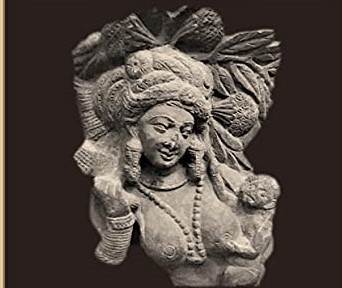
Researcher Rekha Rao's new book - Ayurveda in Indian Temples: Depiction of Herbal Medicines through Apsaras and Shalabhanjikas - takes us on a mythical journey to Ayurveda through art. This book explores how the knowledge of Ayurveda was depicted in temple sculptures. The focus is on Shalabhanjikas, Yakshis and Dohada figures, which are depicted as celestial beauties on the outer walls of temples throughout India. This book looks at various types of medicinal plants depicted along with these figures and the dress code and elaborate jewelry that has been standardized for these sculptures. CSP in a conversation with the author, explores how this illustrative book is a comprehensive documentation of how these figurines have immortalized the Ayurvedic and the cultural heritage of India. 

How has Indian culture imbibed Ayurveda in literature and architecture. What impact did this have on people?

Ayurveda in literature explains the medicinal herbs that are used in the preparation of medicines. Commoners were often not aware of how the related plant looked like. In temple sculptures of shalabhanjika or dohada figures, highly adorned celestial beauties embrace or hold the flowering or fruiting trees that have medicinal properties. This was with an intention to educate people about how to love plants, nurture them lovingly and use the plant products for healthy living. The prime intention probably was to promote aspects of harmony, ecological balance and coexistence between the tree, animal and human groups. It encouraged the conservation and love for plants, and the use of plant products for therapeutic properties. The information on plants and their  herbal medicinal properties were depicted in sculptures because in olden times temples were not only religious centers but also were cultural and educational centers.

What inspired you to study Shalabhanjikas, Yakshis and Dohada figures and their connect to Ayurveda? Which temples are they found in?

While studying some beautiful figures of divyangana with trees, I noticed some interesting figures depicting the hand to be pressing their belly or holding a flower branch exactly at the genital region. One figure clearly indicated the assistant figure to be applying something at the anal region. These plants had a clear representation of flowers where I could identify the botanical family they belonged to. With these observations, I tried to find it if they are related to physical problems and if they indicated any medicinal plants as remedies.

My first introduction to medicinal plants was from my grandparents. My grandfather was an Ayurvedic doctor and my grandmother used to assist him in making herbal medicines at home. As a young girl, 8-9 years old , I was introduced to how herbal plants and ingredients were collected and how the powdered form was made into a decoction, etc when I assisted them in the preparation of medicines at home. Later I studied Botany as a major subject at graduate level which helped me to identify plant names, their habitat, families etc.in sculptures. I studied ancient history and archaeology at PG level which introduced me to sculptural art of India.

Apsara figures have always inspired me to know more about the multiple activities they are depicted with. A closer study of divyangana/ shalabhanjika figures with trees revealed that the trees depicted were not just motifs but a realistic picture of varieties of trees highlighting the leaf, flower and fruit structure precisely. These varied and interesting species of plant representations held by shalabhanjikas evinced keen interest in me which made me dive deep into the message they  intend to convey.

Why do you think these celestial beauties were selected to depict medicinal plants?

The Rig Vedic stanzas of mandala 10.97, has addressed trees as mothers, which came before the Gods. They are relievers of pain and restorers of health, bearing the strengthening sap for very long periods. The blooming of flowers and bearing of fruits were compared to the “Pushpavati and Prasoovari” stages of coming of age and the reproductive stages of a woman. The divine status of mother given to the tree was also conveyed through association with semi divines goddesses and dohadavati (pregnant) figures.

Regarding the intentions of the representation of a lady with a tree, a mere picture of a tree in sculptures does not create enthusiasm in commoners to observe or understand the values of plants or trees. When associated with a beautiful well adorned young woman, the tree gets noticed while admiring the beauty of sculpture and understand the multiple uses of plant products. Probably, this was the fundamental intention why a beautiful well adorned woman like Apsara, shalabhanjika or yakshi, the nature spirit, holding the branch of a tree got introduced in Indian art as decorative and informative figures.

Yakshi figure from Barhut stupa holding Nagakesar flower. Picture from Indian Museum, Calcutta

Did you find evidence of these plants being used in the daily lives of people?

  1. Ayurveda herbal medicines are the heritage knowledge of our country. Even to this day preparations of trees products like Ashoka, Lodhra are popular medicines for women in reproductive ages. Various types of herbal treatment for different types of diseases are described in detail in the 13th century treatise Manasollasa. This reflects the medicinal practice of Ayurveda that was practiced in India till Allopathic medicines gained popularity in India.

Is there a theme in the depiction. Could you give examples of plants portrayed?

The most popular theme of shalabhanjikas is about the association of divyangana with Ashoka tree and flowers. Ashoka dohada is a famous ritual where the woman touches the tree in various ways and brings it to flower. Ashoka is an extremely popular medicinal herb in Ayurveda, where it is said to be particularly useful for treating a range of conditions related to the female reproductive system. Many parts of the tree like the bark, leaves and flowers are with medicinal values that reduces the pains during menstruation and hence called an effective woman’s tonic. This connects to the term A-shoka - the one which lessens uterine pain. The bark is also peeled and used as medicine. The juice obtained from boiling the bark is a cure for belly ailments, in the treatment of gynecological problems and menstrual disorders in women like menorrhagia (scant menses), leucorrhea, internal bleeding, hemorrhoids, and hemorrhagic dysentery. Charaka Samhita mentions the herb also acts as an astringent and analgesic.

Another interesting medicinal tree representation is the Noni fruit tree. The Sanskrit name for noni fruit is Ashyuka which means longevity and used to treat a variety of ailments. The fruit, leaves and roots are used as medicines. It is an evergreen shrub, a small tree with conical crown and bears fruits all through the year. The ripe fruit has pungent odor and is called cheese fruit for this reason. It contains many seeds. The slimy pulp is sweetish sour and is “Tridoshanga” in Ayurvedic terms which mean that which pacifies all three vitiated doshas. Ashyuka / Noni plant is a source of Phyto nutrients and known to boost immune system as it has anti-inflammatory, anti-viral and anti-bacterial compounds. A variety of beverages are made of the fruit as it is rich in mineral contents like iron, calcium, potassium, and sodium. These trees are depicted in shalabhanjika figures which shows only flower or fruit. The additional information connected are to be studied in scriptures. (attached pictures 1 and 2)

Shalabhanjika holding Noni fruit tree branch. Rajarani temple, Orissa. Picture credit Saroj Mohapatra.

Shalabhanjika holding Ashoka tree flowers in right hand and pressing her belly in left hand, Rajarani temple, Orissa, Picture credit Saroj Mohapatra

You have written a book on the beverages of ancient India in the Vedic age. Are these the earliest recipes in the world?

I have written about how the invigorating drink soma juice was extracted from soma plant in soma yajnas, correlated with the seals of Indus valley civilization. Vedas also have description of making ‘sura’ the beverage made by the celestial physicians Ashwin gods as a remedy for over consumption of soma juice. These are definitely the oldest beverages of ancient land of Bharatavarsha. I have not studied whether they are oldest ones in the world.

Is there a connect between this art and our Ayurveda texts. Is there any scriptural explanation?

Plants as the source of medicines is described in Rigveda itself. Rudra was the expert god of medicines, was “Deva Bhishaja” who saved people and cattle from ailments. Later we can also see the mention of Hanuman bringing medicinal plants from sanjeevani parvata to save Lakshama’s life. Ayurveda was also revered as upaveda of Rigveda.

Temple architecture and Ayurveda are two different ancient heritage knowledge systems of India. The former relates to preparation of medicines while the later, the sculptures of Apsara figures in temples are with multiple significance of aesthetic and supportive values. We can see how sculptural art depicts medicinal plants. The converse of it seeing sculpture in Ayurvedic text may not be there.

How does this book tie in with your other research. How did you get interested in these sculptures?

As said before, I am fascinated by the beauty and significance of Apsara sculptures. The accessories they hold like tree branches or instruments or activities like hunting or rearing of pets speak volumes reflecting the social life of the elite. The infinite knowledge contained in Rig Veda, Natyashastra, Upanishads, the ancient treatise Manasollasa, Manusmriti, Amarakosha, all influenced me to research on correlative work between sculptures and scriptures. I have attempted to work analyzing the science of tattva yoga hand mudras, also called Mudra vijnan in sculptures which is yet another branch of therapeutic practice of ancient India. These mudras are depicted in temples through Apsara figures.

Are there any Sthala puranas relating to the figurines?

Sthala puranas go more with depictions of puranic episodes and mythological episodes. Shalabhanjikas are not much associated with this. But, regional variations dynastic architectural styles and availability of stone texture play a great role in the depiction of costumes, jewelry hair dress etc. The plants chosen for shalabhanjikas are mostly common all over India.

(Both e-book and print versions of the book are available for purchase on Amazon.  To buy a print book in India, please contact the author Rekha Rao (rekhasubbarao@gmail.com).

https://www.amazon.com/Ayurveda-Indian-Temples-Depiction-Shalabhanjikas-ebook/dp/B093CJ3N2V/ref=tmm_kin_swatch_0?_encoding=UTF8&qid=1620284547&sr=8-1)