India Must Focus on Southeast Asia;They Can Clearly Appreciate Our Culture: Aravinth Kumarasamy

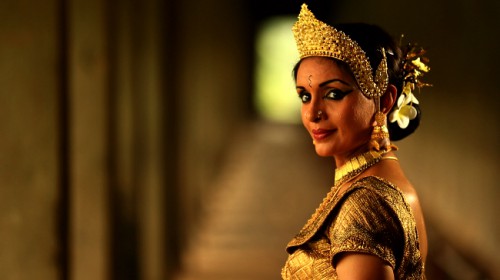
Apsaras Arts was founded in Singapore in 1977 by Shri S Sathyalingam and Smt Neila Sathyalingam, alumni and former faculty members of Kalakshetra, India. With over four decades of prolific international productions, Apsaras Arts has grown into a premier Indian dance company in the region.

Since 2005, under the leadership of Aravinth Kumarasamy, an award winning Artistic Director, Apsaras Arts has transformed into a premier professional performing company, focusing on creating new works which are presented at international festivals.  

He had learnt vocal, Veena and Bharatanatyam in Sri Lanka. In Chennai, he came under the guidance of the legendary Vazhuvoor Bagyathammal Ramaiah Pillai, who was appreciated for introducing innovative trials in Bharatanatyam. Pillai belonged to the ancient Vazhuvoor bani dating to the days of the Chola dynasty.  Aravinth was perhaps his last student, before Pillai handed over the mantle to his son. 

At 20 years, Aravinth moved to Singapore and first started teaching and working with the Temple of Fine Arts, which he describes as one of the pioneering organisations promoting Indian dance and music in Singapore. 

Soon he joined the Sathyalingams conceptualising their productions and composing music for them. At one time, the elderly couple was distraught that Rukmini Arundale had not planned a succession for Kalakshetra in Chennai. To avoid this, they appointed Aravinth as their successor in Singapore. In this interview, Aravinth Kumaraswamy talks about his journey with Indian dance in Asia.

What were your dreams for Apsaras Arts when the Sathyalingams left it in your charge?

I wanted Apsaras Arts to be a repertory company. There are institutions all over the world teaching dance, even in Singapore, which has academies older than us. The question is after 10 to 15 years of learning, what happens to all these students of dance. Not everyone can sustain as a soloist, because there are only so many opportunities out there. I wanted to create ensembles beyond the dance drama tradition as I think ensembles are the way forward.

Today 20 percent of Apsaras Arts is the Academy, which continues to teach and inspire young people, but our focus is on the repertory company. We now have professional dancers, not students. This is very rare outside Singapore, it is rare even in India. The Kalakshetra repertory  comprises their teachers and students, who are dancers but not full time artists yet. Aditi Mangaldas’ Kathak Company has professional dancers but it is still rare. We also want to collaborate with artists from India as I believe that we should bring together the dance fraternity in our productions. 

What are the themes that you select for your dance productions which look at India’s influence in South East Asia?

 Angkor The Untold Story premiered  in 2013. It took us five years of research and 14 trips.  We don’t use recorded music, so we had 25 musicians, including the Cambodian Gamelan orchestra on stage. Priyadarshini Govind played the protagonist's role, but she was dancing to our choreography, not something she did in India.  

Conceptualised by Apsaras Arts, Anjaneyam - Hanuman’s Ramayana is a  cross-cultural production which puts together a creative team from around Asia including Era Dance Theatre (Singapore), Kalakshetra Repertory Theatre (India) and Bimo Dance Theater (Indonesia). It features an arresting juxtaposition of Indian and Southeast Asian depictions of the epic, told through Bharatanatyam and Javanese dance and set to a stirring, original score. We had Javanese musicians and artists working together with us. 

Indonesia has its Ramayana called the Kakawin Ramayana, which predates Kambar’s and Tulsidasas’ Ramayan. It came immediately after Valmiki and is written in the old Javanese language. The meter of the Kakawin Ramayana is the same as Valmiki’s and its text follows him closely. So we were able to marry this ancient connection between India and Southeast Asia. 

The idea is not to pluck and put some Javanese dancer in the production to make it beautiful, but to see the deeper connections.  I flew the Javanese orchestra to Chennai.  We camped there for two weeks and soon they were playing Carnatic ragas. We don’t do things in a hurry, such collaborations should have a purpose, a reason.  

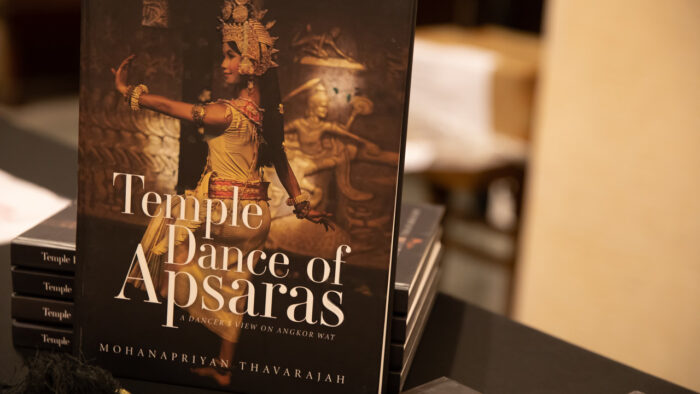
You have a dance production on Angkor Wat, and now the book Temple Dance of Apsaras by Thavarajah Mohanapriyani. What piques you about Angkor Wat?

The quest for me coming back to Angkor is because it is not only the largest Hindu temple, it's also the largest place of worship man has built. It is bigger than Srirangam, the Vatican or Mecca. It is dedicated to Vishnu, when the entire Khmer empire were Shaivites. So why did they build the biggest temple on earth to a different God? The  next generation went back to being Shaivaites again and there is a link to India for that. 

The story of this dance unveils why there are 795 women called devatas, (who are not the 3000 dancing apsaras), who are unique standing figures inscribed on the walls. They have unique hairdos and jewellery. I worked with researcher Ken Davis, who has spent 40 years doing biometric scans on these faces, and says they represent the entire world’s ethnicity. This is virtually the first Facebook of the world. 

At Apsaras Arts  we are fascinated by Southeast Asia. While my peers in India and seniors are fascinated with the West, they like to go and perform there, I want to collaborate with artists from Southeast Asia. They want to perform in Carnegie Hall and in Paris, and want to understand the Martha Graham technique,  while here I am thinking, we have all these cousins in Southeast Asia with whom we should connect.

We underestimate the power of Southeast Asians to appreciate Indian art. I brought a Gamelan composer from Indonesia, who had never come to India, and had not seen any Indian dance or music, except probably on YouTube.  I told him I was going to take him to Narda Gana Sabha for a hardcore Carnatic kutcheri, and he could leave if he wished in five minutes. It was a four-hour Ranjani Gayatri concert, and he sat through the whole thing. When he observed something happening he would go - O, they are improvising, O they are shifting the grahabedham, they are moving the tonic scale. So they can clearly appreciate our culture and I don't know why we are wasting time trying to convert Europeans and Americans. 

Southeast Asians can understand the Ramayana, they know when Hanuman appears, and when he gives something in Sita’s hand, they know it is a ring.  Ramayana is danced every night in every village there unlike even in India. 

How do your productions reflect the cultural landscape of India? 

In 2019, at the last music Margazhi season in Chennai, we presented a production that had already toured the world called  Alapadma that tells the significance of the Lotus flower from India to Southeast Asia. This dance production draws inspiration from the multi-faceted symbolism of the lotus and will explore its representation in mythology, iconography and philosophy, particularly in the ancient civilisations of India, Egypt, Iran and Southeast Asia. Alapadma is the name of the dance mudra (hand gesture) that represents the fully opened lotus, and can be found in the ancient texts on Indian dance and theatre namely the Natyasastra and the Abhinaya Dharpana, which serve as invaluable repositories of knowledge for most Indian classical dance forms. The many aspects of the lotus such as Srishti Sarasija (signifying creation), Pada Pankaja(mythology), Leela Kamala (romance), Alankaara Ambuja (iconography) and Sahasrara Padmam (human wisdom) was brought alive through music and dance.

The lotus is a flower sacred to nature and the divine, and representative of both the abstract and the physical universe. It is also emblematic of the productive powers within and borne out of the spiritual and physical realms. It was held sacred in antiquity by the Hindus, the Egyptians, and thereafter by the Buddhists. Revered in China and Japan, and adopted as a sacred emblem by the Greek and Latin Churches, the symbolism of the lotus is an enigma worthy of exploration.

In another production we trace the trail of Buddhism in Southeast Asia. Añjasa” (pronounced as “Anyasa”) means “the path” in Pali, the classical language of Buddhism. In this sequel to Nirmanika – The Beauty of Architecture by Apsaras Arts, Añjasa explores the beauty of Buddhist temple architecture. The audience will journey through monuments including Mahadevi Temple in Nepal, Buddha Gaya Maha Bodhi Temple and Sanchi Stupa in India, Vattadage in Sri Lanka, the Shwedagon Pagoda in Yangoon, Bayon in Cambodia and the Borobudur in Indonesia.

We are talking about taking dance and music out of sabhas into more natural settings. How do you feel about that in the global context?

We present our productions in various venue sizes. We present at the 2000 seater at the Esplanade for about three or four nights. So that's looking at about 4000 to 6000 people watching our productions. 

In terms of demography, I would say 45 percent of our audiences are India based, but the other 55 % are non-Indians including Japanese, Southeast Asians, Chinese, Caucasians including French. Sometimes when we go on tours, like in our last tour to France, we went to the border town of Strasbourg where we performed in 200 or 300 seaters. Except for me and one lady helping us, the rest were French. When we finished the French audience gave us a standing ovation for over 17 minutes!

We also realise that while it is nice to do all this ensemble work, the heart and soul of Bharatanatyam and Odissi is the solo artist dancing in a temple precinct, in a very intimate space. So we have started telling people to bring somebody from their workplace who has never seen Indian dance, and it is a kind of infotainment.  For example, many people don't know the Marathi contribution to Bharatanatyam in Tanjore, so we try to give them a little bit of information. Our vision is to be “The Indian Dance Company” of Singapore and the Region. 

Ayurveda is Very Much a Part of the Indian Psyche: Sonja Shah Williams

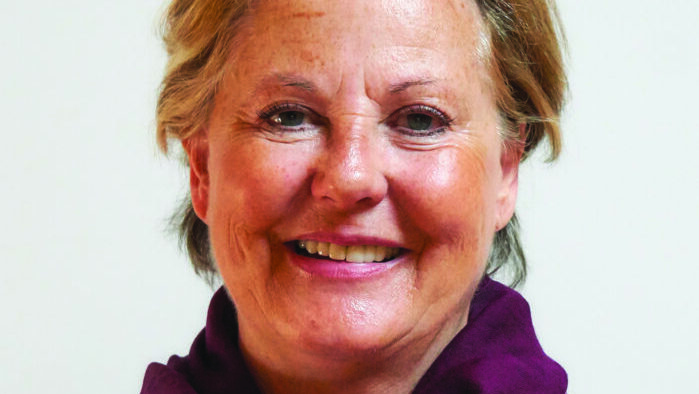
Sonja Shah Williams spent an idyllic childhood in Yorkshire in the UK, deeply rooted in Indian traditions. She believes “we must accept our place within the natural world and honour the importance of mutual respect between animals, plants and flowers.”

As an Ayurvedic Medicine Practitioner, Sonja teaches through her work that “Ayurveda is THE system of medicine that brings balance through our interconnectedness with nature. The healing power of plants and their flowers is simply amazing.”

Her book by DK Books, ‘Ayurveda: a little book of self-care’ (available at Ayurveda: An Ancient System of Holistic Health to Bring Balance and Wellness to Your Life (A Little Book of Self Care): Amazon.co.uk: Shah-Williams, Sonja: 9780241443651: Books) offers a taste of the fundamental principles of Ayurveda. She has collated a collection of tried and tested Ayurvedic practices and remedies including foods, oils, yoga, and meditation to aid sleep, increase energy, boost immunity, relieve digestive problems, improve relationships and more.

In this interview with CSP she speaks about her interest and belief in Ayurveda.

As an Indian living in a multicultural society how does Ayurveda connect you to India?

I have known of Ayurveda all my life due to our regular vacations back to India. All our relatives and others we know in India see Ayurvedic, as well as allopathic doctors, and my interest in what would later become my profession began at a young age. My mother also follows many Ayurvedic principles, as most Indian people do, even though they don’t even refer to them as Ayurvedic. Ayurveda is very much part of the Indian psyche.

Do Indians need to learn Ayurveda separately or is part of their culinary traditions. Could you speak about your family?

As I mentioned, Indian people have many key rituals, both culinary and otherwise, that follow the basic laws of Nature and the universe, therefore unless they decide to study Ayurveda formally, at university, most simply live life seasonally. In India, vegetables and other foods are always available seasonally, and many people have a routine that fits with their circadian rhythm, such as going to bed by 10pm and rising early.

How did you integrate your father’s knowledge with your mother’s?

It was a wonderful mix. I am very similar to my late father, whom I loved and admired greatly. He was more or less the first Indian GP in Bradford, Yorkshire, in the North of England, where I grew up. Most of his patients were fellow Indians, and he not only helped them medically, but also got to know them and their families enough to support them in other ways. I remember one couple who were having marital difficulties, and my father virtually counselled them enough to help them work through their issues. They stayed together as a result! My mother is hugely disciplined in her life and also principled. She is a great one for routine (key to balance in Ayurveda) and cooks Gujarati food, which is as close to Ayurvedic nutrition principles as one can get. When I was growing up, she cooked every meal fresh, and used only wholesome foods, in including pulses, vegetables, ghee and whole milk, which she has always done. When we, her three children were ill, with say a cold, she made us ‘yellow doodh’ (yellow milk) which was hot milk boiled with turmeric and other spices. This is a perfect Ayurvedic immune boosting and healing recipe, with antiseptic and anti-inflammatory properties. So both parents, in their different ways, were able to look after our health.

Living in Yorkshire how did you experience closeness to nature? Does being amidst the beauty of nature inspire one to eat more mindfully?

Yorkshire is a beautiful, rugged county where much of the landscape has remained untouched. As a child I spent many hours in the garden which was full of roses and other lovely flowers, and also walking in fields and on the famous Moors, where one connects with the spirituality of life at a deep level. It is a very honest environment, not showy. I felt very much part of it, which of course I now realise makes sense … we are 'of Nature' as human beings. I think that when we understand that all living things require the same energetic principles to thrive, we understand that we should eat foods that are pure, created as Nature intended, in their most natural state.

How can we bring India's varied culinary tradition to a Britain raised on stereotypes of Indian food?

It is happening, but everything takes time. When I was a child, 'Indian food’ was sampled by English people only in restaurants. Ironically, these were run by Bangladeshi people, not Indians, and also modified to suit the British palette. Nowadays one can go to fantastic regional Indian restaurants, certainly in big cities such as London, and also many English people with Indian friends are able to sample true, home cooked food. I very often cook Indian meals for non-Indian family and friends, and they realise it is entirely different from the food they have been eating often for years, in restaurants.

Are Indians in the UK associated with good food habits. Are there influences who speak about Ayurveda?

I wouldn’t say that’s strictly the case. Certainly, home cooked food is still as wholesome, but many of the Ayurvedic principles have diluted amongst Indians in the UK, due to moving from India many years ago and having to adapt to a very different life. Ayurveda is still relatively unknown in the UK, even Indian people who know of Ayurveda don’t actually know the principles as much as their families do back in India.

What according to you is the attraction of Ayurveda to the youth of today.
Ayurveda is the answer to most modern-day imbalances, and I am certainly very keen to bring its message to a wider audience, especially to younger people. This is the stage of life when good life habits can be set, and benefit us for the rest of our lives. It’s very much about prevention of imbalances that might lead to disease.

(Follow Sonja on her website: anala.co.uk, Follow her https://www.instagram.com/analaayurvedichealth)

Mohanapriyan Thavarajah tells The Untold Story of India in Angkor Wat

Mohanapriyan Thavarajah is a young talented male Bharatanatyam artiste and choreographer based in Singapore. He is the principal dancer, resident choreographer and dance faculty member with Apsaras Arts Dance Company and Academy.

He was born in a coastal town in the eastern province of Batticaloa in Sri Lanka, where the singing fishes in the rivers are the pride of the region. Batticaloa is known metaphorically as “Meen Paadum Then Nadu”  - “The land of the Mellifluous Singing fish”. He hails from a traditional goldsmith family.

Inspired by his father S Thavarajah, an award winning community leader, and his mother Vijayasundari Thavarajah, a deeply spiritual person, his childhood was  deeply rooted in religious and cultural practices, and also learning Bharatanatyam, Carnatic Vocal, and attending Araneri (The path of Dharma) classes.

Priyan says that until his high school - languages, aesthetic studies, religion were compulsory subjects and were part of the curriculum. "Even though all these components are part of every child in Lanka in their upbringing or education system, art was never considered to be choice for a career. My passion together with the support of my parents led me to explore the art of dance without any expectations of where it would lead me."

He joined the Kalai Kaviri College of fine Arts in Trichy India, an affiliate of Bharathidasan University in 2005.  "Angkor Wat from the lens of a dancer" was his thesis submitted for his MPhil degree in 2016.

In this interview he talks about his new book: Temple Dance of Apsaras - A dancer's view on Angkor Wat published by Apsaras Arts Ltd. Video of launch: https://youtu.be/zTlUVAPHFi8

At what point in your dancing journey did your performances start reflecting the influence that India has had on other Asian countries. What role did Apsaras Arts play in this?

It was only after I joined Apsaras Arts, Singapore in 2012 my love towards South East Asian culture developed and started to reflect in my approach to dance. The name of the company itself reflects the vision of the founders who embraced the uniqueness of Southeast Asian aesthetic and culture. The term Apsaras literally means celestial nymphs or heavenly dancers, who are commonly found in South East Asia as well. They are referred in the Natyasastra, epics, Puranas and have taken physical forms in temple sculptures. Hindu practices and classical dance forms are intertwined with each other. As Hinduism spread across South East Asia, the different classical dance forms have started to blossom in different regions like Cambodia, Thailand, Indonesia. The classical dance forms are dedicated to the gods in the temples. Singapore being situated in close proximity to these regions it provided a big scope for Apsara Arts to explore cross cultural collaborations, which resulted in beautiful works which are very informative and educative even beyond the grandeur of the presentations.

How is this book your own journey of evolution as a dancer, trying to get to the bottom of how art forms influence cultures and are also themselves influenced in the process?

The inspiration for this book is from the grand scale production Angkor - An Untold story in 2013 by Apsaras Arts. This production narrates the story of an artisan from Cholanadu (South India) who were inspired to build the temple Angkor Wat dedicated to Lord Vishnu. We made a field trip to Angkor to commence the creative process of the work. During the trip I had the opportunity to visit Angkor Wat, watch the performance of Apsara dance, interact with dancers and teachers of the Royal Ballet of Cambodia, visit the Phnom Penh museum, religious sites like mount Kulen and other Angkorian temples. I was immensely inspired by Cambodia’s Heritage, its Arts and religion which is not entirely different from India in its faith and practice. I felt that I’ve strung a common thread among the routes from Srilanka - India- Singapore- Cambodia. As practitioner of the religion and arts I was able to make a connection with every thing I saw resulting in the choreography work that I did for the production Angkor and later to pursue my MPhil on this same topic of Angkor Wat from a Dancers View.

Taking the Natyashastra as the starting point, rather than the influence of Kings, Empires and Commerce, you talk about the spread of Indian dance? Is that how it panned out in reality?

When we look at classical dance forms in India, they originated in the temples as an offering to the deity as part of the daily rituals. The the dancers who were dedicated to dance in the temple were called Devadasis. They were patronised by the ruling Kings of the region. They were exposed in the the scholarship of arts comprising of various components like languages, music, dance, theatre etc. For example in South India the ruling king the great Raja Raja Chola who built the Tanjore Bragadeeshwara temple is celebrated as a great patron of arts and artistes. He employed over400 Devadasis, and gave them remuneration like paddy, land, money and housed them around the temple complex. His rule was considered to be the golden age of arts and culture. We also learn the similar histories during the reign of Suryavarman 11 who built Angkor Wat temple in Cambodia, who had had a similar vision as that of Raja Raja chola in India, of building temples not only for worship but also to nurture the arts. Today the enormous Bas-reliefs of dancing apsaras, Devatas, sculptural depictions from the Ramayana and Mahabharata are the witness to the traces of Indian ideologies adopted and localised by Khmer Royals. Later Jayavarman IV had employed dancers in his court. His vision for the patronage of arts is reflected in the temple Bayon, built by him in the hall of dancers found in this monument.

My reference to Natyasastra in South East Asia is based on Dr Padma Subrahmaniam’s research. In her book “Natyasastra and the unity” she writes that the author of Ramayana Sri Valmiki and the author of the Natyasastra - Bharata were contemporaries dating to 500 BCE. She further says along with Ramayana, Natyasastra would have crossed the ocean. Particularly in Angkor Wat, I saw the depiction of the churning of Milk ocean has carved so elaborately in the eastern, south wing bas-relief gallery. One of the dance-theatre which Bharata has mentioned in Natyasastra is the churning of Milk Ocean (Amrita Madana) and during the churning of milk ocean, there were many treasures manifested and one among them was the ‘Apsaras’.

Is the book focused only on Bharatanatyam? Did you see other dance forms being featured in Cambodia?

The book is not specifically focused on Bharatanatyam but rather finding the similarities of dance traditions of India in Cambodia and how they have been adopted and localised by the Khmers. It is a journey to trace the Indian roots in Cambodia through performing arts with a lens of a dancer.

Why Angkor Wat. It is so interesting that the largest Vishnu temple in the world is among the only ones in a land dedicated to Lord Shiva. How did you research this and what direction did it steer your book? What aspects of the Vaishnavaite tradition influenced the dance and aesthetics of the temple?

Hinduism is the most ancient religion and Vaishnavium has been part of its body. But in Cambodia its so beautiful that Shaivism and Vaishvaism coexist. In mount Kulin ranges, there are thousands of Shivalingas carved in the riverbed of Kbal spean, but also in the same site you may find reclining Vishnu and Brahma in the sandstone relief carvings. It is perhaps by the respective interest of different rulers in different periods of times that led to their vision of building the temples dedicated to the deities like Shiva and Vishnu.

In 10th century Banteay Srei was built by the king Yajnavaraha dedicated to Lord Shiva (Chandarshekara) later in the 12th century. Angkor Wat dedicated to lord Vishnu was built by Suryavarman 11. Angkor Wat was built over 40 years and the kings crowned after Suryavarman continued his visions. The khmer courts were greatly influenced by Brahmin priests who were leading in high positions. There were also another source for the connection between India and Cambodia. There are many inceptions of shlokams in the Khmer temples like Bantey Srei, found in the language of Devanagari which was an ancient Brāhmī script, used in the Indian subcontinent and was developed in ancient India from the 1st to the 4th century CE and in regular use by the 7th century CE.

The steering point for my research was how the Khmers have envisioned the Hindu iconography. For instant, the way the Shivalingas were carved in the flowing river bed and there are many others which have inspired me as a Hindu.

 It took a century for the Chola influence to show in Khmer architecture. What aspects of the sculpture and architecture reflect this influence and how much is indigenous?

I have compared the 10th century south Indian temple architecture of Tanjore Bragadeshwara temple to Bantey Srei(10th Century) and Angkor Wat(12th century) temples in Cambodia. I have referred in the book that how these temple architectures have similar concept of representing the universe and Mount Meru as Gopuram. For instant the Tanjore Brahadeeshwara temple carving of Nataraja with Karaikal Ammaiyar playing symbols, which is so indigenous to Tamil Nadu has been featured in Banteay Srei Temple Gopurams. The lifelike bas-reliefs carvings of gods and goddesses, dancing apsaras are so significant but they are represented in Khmer features. We may see the same concepts but not replicas and all the intricate details have been absorbed beautifully and enhanced with their artistry which is indigenous to their region.

References and connections are made between the Devadasi tradition in India and the Apsaras in Cambodia. As a dancer, how significant is this, considering that the devadasi dance tradition has almost disappeared in India?

Devadasi system in India has totally disappeared after it became a democratic ruling country. Cambodia is still ruled by a king. The Devaraja concept of King as God is very much prevalent.  Suryavarman 11 who built Angkor Wat was called Paramavishnulokan after his demise, after the presiding deity of Angkor Wat. In earlier times, in Cambodia, the young dancers also  dedicated themselves to dance for the temples rituals and were patronised by the kings. Their family was given support for dedicating their daughters to dance. Till this day, the palace in Cambodia has been following the tradition of patronage of dancers who now belong to the Royal Ballet of Cambodia.

Who are the devas and apsaras that feature in your book? What is their connection to India??

Apsaras are the dancing female figurines who are commonly carved in the Angkorian temples. Their connection to India was their hand gestures and postures originally from the Natyashastra and Indian classical dance forms. Devata, the standing divine women represent the Khmer’s Matriarch. The female figurines of dancers and musicians are typical of Indian temple architecture.

How important is it for you to document this knowledge in textual form. You could have stopped at a dance production, but you have explained many things that give us a clue about the range of influence.

I am always fascinated by the Southeast Asian art and culture. The Angkorian temples are special for their heritage and uniqueness and offer not only an oppurtunity for the tremendous study of the culture but also to reflect on the great minds of visionaries like kings and artisans. It is also provides an opportunity learn how we should  trust and believe in our own culture.

Having said that, dance productions might appeal to arts lovers but the book covers topics including religion, art and culture and may interest any reader from any part of world. This book is from the perspective of a proud Asian looking at Cambodia's Angkor Wat from a dancer’s perspective. I am so thankful to have been born in this region to discover many parallels of my culture that has spread across in Southeast Asia beautifully. As a dance practitioner and academic oriented artiste I find research is very important for the artistic pursuits. Travel, exploration, discovery are various means through which you can nurture your love and strong connection towards our art forms. I always believe that artistes are not mere entertainers of the senses but also to also touch the intellect of every spectator.

You talk about the Khmer's worshipping Bharatamuni. What are the aspects of Indian culture that are valuable while learning the dance form. How have the Khmer's lived this ideal?

Conducting prayer before performance is always the tradition of all our Indian dance-theatre practices. In a normal day in a class room, the students starts their training in dance by paying obeisance to the teachers. I was particularly amazed to see the Khmer’s artists reverence for the teachers and art form. Every Thursday, Khmer artists conduct prayers to the teachers and celebrate the eternal guru Bharatamuni who is known as Brot Rishi in Cambodia. It is a profound practice that teaches values of respect and humility which is very important when learning to be an artiste. This is why the Asian cultural is so special to me. Its not just to appreciate and practice but to touch, feel and breath those sensibilities which are intertwined with every one of our lives here.

As a dance practitioner, I have been reading and practicing the text Natyashastra, but there was no physical representation of Bharata Muni and what he looks like? The brilliant Khmer artists have given form to Bharata with five faces. As we know Natya Veda is known as the 5th Veda. It is created from the essence of the four Vedas - Rig, Yajur, Sama, Atharva. So, they imagined the form of Bharatamuni with five faces which is the personification of the fifth Veda which is later known as Natyashastra. Its noteworthy that Dr Padma Subrahmaniam who is the managing trustee of Bharata Ilango Foundation for Asian culture, has commissioned to make a statue for Bharata in Mahabalipuram, Chennai.

Could you briefly describe the 4 chapters: 1. Emergence of Hindu religion in Cambodia, Details of temple symbolism, architecture, and layout (Divakarapanditha), use of Indian language, idea of libraries 2, Bass relief: Hand gestures, usage of Natyashastra, difference between two female figurines, the dancing apsaras and standing Devatas. 4. Practice and application of ritual tradition of dance, comparing devadasis and early Cambodian dancers, churning of the ocean representation, 4. Khmer classical dance of Cambodia and its connection to India.

The book consists of four chapters. The first chapter is a comprehensive study on the emergence of the Hindu religion in Cambodia. It further extends about the details of the temple’s symbolism, architecture and layout. In this chapter, one of the highlights is the Royal Brahmin Guru Diwahara Pandit, who was employed in the court of Suryavarman 11. Because of the connection with Brahmin gurus from India, usage of Indian languages like Sanskrit prevailed in the Khmer courts. Libraries within the temple complex also adding depth to this study.

Chapter 2 discusses the beauty of the bas-reliefs of Angkor Wat. The static positions of the sculptures and hand gestures have been identified to have similarities found in the usage of Natyasastra - dramaturgy for Indian performing Arts. The highlight of this chapter is the difference that has pointed in detail about the two female figurines that are carved in Angkor Wat - the dancing apsaras and standing Devatas.

Chapter 3 explores the Dance Heritage of Cambodia, expanding the lens to look at the practice and application of the ritual tradition in dance, the Dance halls in the temples of south India and Cambodia, comparing the tradition of Devadasis of Tamil Nadu to early Cambodian dancers, patronage for dance by the royals from Chola empire and Khmer empire and finally bringing reference of the birth of Apsaras from for the legend of churning of the milk ocean referred in Natyashastra and sculpted in the west wing bas-relief gallery of Angkor Wat.

Finally, chapter 4 bring insights into the Apsara dance - the Khmer classical dance of Cambodia and its components like the training methods, repertoire, costumes and music.

What are your next plans? Which country are you going to turn your lens to?

I am now focussing on Indonesia, particularly Balinese and Javanese heritage and dance forms and their Indian influences. I have taken this research for my doctoral study thesis.

When Food Became Medicine For Todd Caldecott

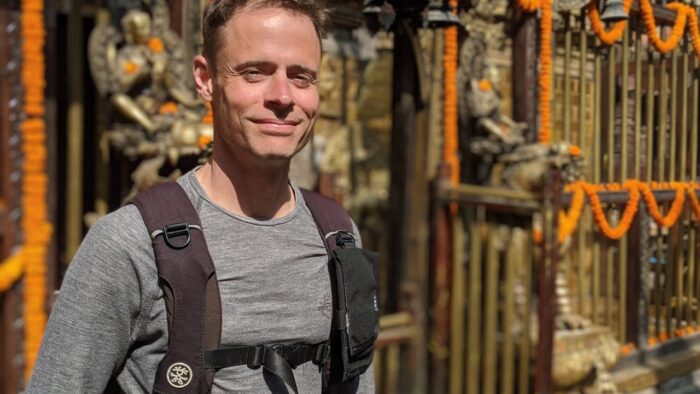
Todd Caldecott, medical herbalist and practitioner of Ayurveda,  says that while Ayurveda is seen as a profession today, he has always understood  Ayurveda to be a spectrum from grandma’s medicine to highly sophisticated technical procedures.  

In his interview with CSP, he says that his journey with Ayurveda has a strong link with India, which although serendipitous was not necessarily positive. He was working as a film and television actor in Canada, which he jumped into right out of high school. Not happy with the roles he was being offered, he decided to move away from it for a while.  “I always thought acting was an artistic discipline but what I saw in the film industry was that I wasn't able to choose parts that I wanted to do. So I decided I would kind of give it up for a little.”

Just 19 years old, he had saved up a bit of money ($2000) and wanted to “just get away from our culture and spend a year traveling around India.” He spent most of his time in India, but also exited India through Pakistan, went up to North Pakistan near the Chinese border and came down through Afghanistan and went through Iran all the way to Istanbul and Turkey. “And when I saw my first McDonalds there, I was like ‘Oh my God, I'm not ready for this, so I flew back to Sri Lanka and studied meditation there. Then I returned to South India  before I returned home.” While it was all fun and exciting, he fell very sick.

 While he had thought he had a lot of money, he realised that he was left with only a  few dollars a day. “I stayed at the cheapest guest lodges and ate at the cheapest restaurants, often being  the only white guy I ever saw in any of these establishments.  I got really sick, because my body just wasn't ready for all of the diversity of the subcontinent. I almost died, and was left with a chronic GI issue.” 

Todd found it really hard to rebuild his digestive health. “It wasn't until I spent some time in a remote village near the Chinese border in northern Pakistan, a famous place called Hunza renowned for longevity, that I began feeling better. I felt amazing when I was drinking this glass of water everyday and eating their food. It was my first experience of just how dramatic an impact a diet could have.”

However, he didn’t spend enough time there and continued his travels  finally returning to Canada with a chronic GI disorder. He sought help from a number of different practitioners but no one was able to help him. “People had different theories on what it was. It wasn't until I met Canada based, Kerala trained Ayurveda physician Dr Sukumaran, that I felt some relief. It was quite a rarity back then to find someone from India with that level of practice in Canada. He told me what to eat and when to eat it and he provided some really simple remedies. It took around two months or so for my whole health to shift. It made such a profound impact upon me that I decided that I wanted to study this and make it a part of my life. So that's when I embarked on this journey of Ayurveda, natural medicine and herbal medicine.”

Dr. Sukumaran gave him a menu to follow, and prescribed simple herbal formulas to enkindle his digestion such as Hingwastak, a blend of hing (asafoetida) and warming herbs such as ginger, pippali (long pepper), and ajwain (wild celery seed).

After recovering, he did continue to go back to acting. He would wear a salwar and kameez, all the time. He says he didn't change his dress for anyone even for his auditions. “I was even flown first class to meet with Aaron Spelling in LA to audition for Melrose Place, dressed the whole time in my shalwar! Although I didn’t get the part, walking around Venice beach later in my shalwar attracted a lot of attention, and I had one African-American fellow who was a rapper ask me where I got my pants. I don’t know who he was, but sometimes I think I might be indirectly responsible for Hammer pants,” Todd has said in an interview.

Todd studied Ayurveda with Dr Sukumaran, through informal classes in the Gurukula style. “But it wasn't enough. I wanted more in depth clinical training and there was no way to study Ayurveda in Canada, at that time. Even now there isn't really any place to study Ayurveda here.” So he joined a three and half year course in Western herbal medicine. Almost immediately after completing his studies, he returned to India, where he did a clinical internship and period study at Coimbatore in South India in 1996. With his son and wife, who would give birth to their second child in India. He spent almost a half a year doing post graduate work and study in Ayurveda and then returned to Canada, where he began his clinical practice around 1997.

In Canada, each province regulates health professions and the Federal Government regulates products including natural health products and drugs. So Todd practices as an unlicensed health practitioner, which means “I have to be careful about what I do and what I say but there's no impediment to me as long as I'm practicing safely.  So it's kind of just a legal grey area, which means you have to be careful with the language you use, making sure we don't use words like diagnose or treatments or prescribe. However, it provides for more flexibility in terms of my scope of practice because, once you are licensed, then the terms of what you can do and what you cannot do are very specific.”

Todd says he always begins with someone's diet first. “My first approach is to work with someone's diet and lifestyle and then later on suggest medicines or treatments, as required. That's why I wrote the book “Food as Medicine”, as I realized that if people weren't making changes in their diet, they weren't likely to get better.”

Healthy eating is made difficult by a food industry determined on pushing artificial, packaged food. When things started to change in the West, with people becoming more aware, food companies faced more resistance.  “They started looking for new markets in countries like India. It has been the same for things like cigarettes.  Cigarettes fell out of favor here and companies began to look for new markets in places like India and China. Similarly for breastfeeding. When I was a child, I wasn't breastfed and it was very common for children here not to be breastfed. That was directed by the industry. You had the audacity of physicians telling moms that scientifically designed formula is better than breast milk. The effect of this is being seen in places like China and India.”

Todd says it has become quite common for people to give up eating traditional fats like butter, for example, and switch to consuming things like margarine and corn oil due to the messaging by the food industry. “Today, even in India you go to the local market and you buy this clear refined oil. Sometimes you don’t even know what's in it, it just says edible oil.”

Todd says that as multinationals look for new markets, it's really time for places like India to reassert “their awareness of traditional interventions and practices and dispel with a novelty that the West has introduced. There’s so much novelty in absorbing the information of other cultures. We’ve done that as well with Yoga. Although I would say it’s disastrous, as we've turned Yoga into something it's not. That's not evocative of the authentic tradition, and even some Indians have participated in turning it into a form of exercise when it's actually more a form of meditation.”

Todd says when we look to other cultures for inspiration, we have to really critically assess that just because something is new doesn't mean it's better.  “People have lost touch with their own culinary traditions, they simply don't even know how to prepare the foods they have. All it takes is one generation to lose a tradition and then it's lost for the succeeding generations, and there is a rapid deterioration of traditional knowledge all over the world. I have been going back to India for more than 30 years, and you can definitely see the degradation of traditional knowledge and it's very worrisome. I wrote “Food as Medicine” to help restore some of these traditional practices to create a more sustainable approach to lifestyle and to eating.”

“None of us are born with an instruction manual, and so we traditionally relied upon our elders to teach us how to care for ourselves. The problem is that this elder wisdom has been systematically undermined and discarded, such that even though modern people are pretty smart, they don’t know about simple things like getting to bed early, or having a nourishing breakfast.”

He says when he went to India three decades ago, he used to observe artists hand painting movie posters. There were these big movie posters of Western movies. There was a James Bond film and all the lovely ladies surrounding him. When the Indian painters were representing them they added about 20 pounds of weight to all of them and James Bond had a bit of a double chin. All of the lovely ladies had a bit of extra fat, because that was the Indian aesthetic. Todd says,  “that's certainly changed now and all the Indian heroes look like regular guys. Attitudes changed but now it's kind of a festish, and reduced to just a function of visual appearance and not based on actual physical health and the thing about calories is interesting because it is an objective experimental model that we're applying to real world scenarios.”

Obsession with calories is the new healthy. But, “How do you determine what a calorie is? Essentially you take the food, put it into a box, incinerate it and measure the heat. But I don't know anyone that digests food like that. You don't reduce it to ash inside your abdomen. You can take a piece of chocolate cake, or some different type of food, maybe some rice, some dhal and maybe some chicken. You put it in there and you might get a similar caloric reading from those different foods, but there's no way that those foods are going to be digested and metabolized in the same way. They're not the same foods, so the calorie model is a very basic model.”

Nutritionists say that that if you eat way too many calories more than you're physically able to burn, then you will likely become obese. “The whole model of calories is a gross oversimplification. It depends on the constitution of the person. In Ayurveda, you can give a skinny person lots of calories and they won't actually put on any weight. They will burn it through creative activity and fretting, so we have to consider this. Each of us in our own way, are going to metabolize those calories in different ways, so we need a more sophisticated model and the calories model is really not an appropriate model to apply to human nutrition. It is only really good if we're just measuring very basic components, but that's not enough to figure out what a healthy diet is for you and how much to consume,” says Todd.

He says these sophisticated models exist in Ayurveda where “you are eating a healthy diet that's appropriate to you, to the point of satiation.  Ayurveda recommends eating twice a day unlike the idea of eating multiple times throughout the day.”

He writes about the ‘graduated diet’, or sansarjana krama in Sanskrit, is a measure utilized in Ayurveda to rekindle the digestive fire (agni). “It is used for the purpose of amapachana: to enhance digestion and the processing of wastes, and remove the metabolic and immunological detritus (ama) that is generated with poor digestion. Do read his prescription for a graduate diet here: The graduated diet (toddcaldecott.com) 

The graduated diet can be utilized in a variety of situations, including whenever digestion is weak and in the treatment of diseases such as fever (jwara). The process of ‘rekindling’ the digestive fire (agni) is analogous to starting a fire in a wood stove, enkindling the agni with easily digestible foods as one would a fire with paper or kindling. Once the fire is established, in the form of a strong appetite, progressively denser and more energy-rich foods are introduced in a graduated fashion to feed the digestive fire, but never so much as to cause it to smolder or be extinguished.” 

(Todd Caldecott is a medical herbalist and practitioner of Ayurveda, in practice since 1995. He is the Executive Director of the Dogwood School of Botanical Medicine, and author/editor of three books including Ayurveda: The Divine Science of Life, Food As Medicine, and Ayurveda In Nepal.)

From Agnihotra Homa to Ghee, Myra Lewin’s Discovery of Healing India

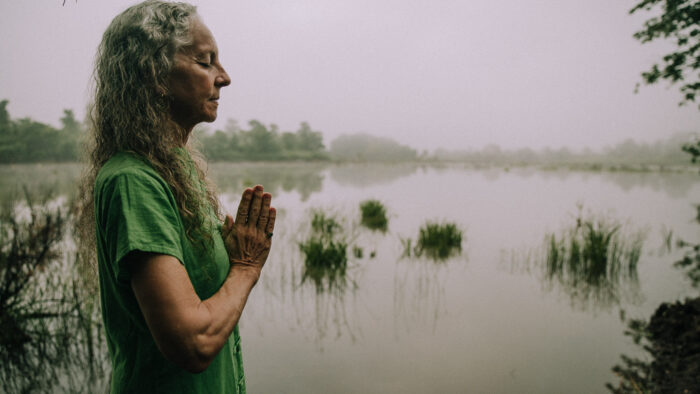
Myra Lewin’s favourite asana is the Urdhva dhanurasana. She says that the opening in the front side of the spine is energizing and helps her open up to life. She also likes inversions because they reduce attachment by helping her see things from an additional perspective.

Myra has worn many hats - she is a ‘trained classical pianist turned amateur auto mechanic; a corporate accountant who can dissect a cadaver. An organic farmer, an alchemist and a yogini’.

A fast paced corporate career saw her staring at a diagnosis of rheumatoid arthritis at age 30, a debilitating condition deemed “incurable” by doctors. As Myra moved away from her career and towards Yoga, she says she saw the root cause of her disease -  “anger, over-exertion and a lack of connection to her spirit” disappear.

She came to Mysore to meet Pattabhi Jois to learn about Patanjali’s Yogasutras. During her stay she integrated ghee into her diet, which lent lubrication and digestive support. Thus, Ayurveda and Yoga became the foundation of her life. In 1999 Myra founded Hale Pule Ayurveda & Yoga - a home-based holistic educational and healing centre where people gather to connect to their true selves and to the power of nature.  She says “Ayurveda gave me answers to the why and how of living. Many things in life didn't make sense to me prior to coming to Ayurveda and Yoga. It gave me the tools to step into life and experience the joy of it fully.”

In this interview with CSP she talks about her fascination for the Agnihotra homa and her belief in India's knowledge systems. She says “Ayurveda brought me back to life by understanding how I, as a human being, am designed to work. Seeing myself as part of nature has made it much easier to heal ailments and wounds of the past so that I can live a full life each day. It is truly the Science of Living and once I came to realize I came to this life to live it, Ayurveda was the answer to good living.”

You speak about the Agnihotra homa? When did you first experience this homa and what does it mean to  you?

I have been practicing agnihotra consistently since 2007. It is a profoundly healing experience for the person doing it and for all of those in the home. It softens the heart and helps us to see solutions to our problems. It does this by bringing us into the rhythm of nature. I have experienced it in my home and also in India in Maheshwar at the goshala of Shree Vasant Pranjape. I have participated in many other homas but I find agnihotra to be the most powerful on a daily basis.

How did you first feel when you learnt these were a part of Ayurveda? 

I was surprised and so pleased. Since 1995 I had been to many homa performed by pundits and priests, but actually performing the homa myself was a life changing experience. It makes sense that it is a part of Ayurveda as it is all based in nature and relating to Surya, Prajapati and Agni.

Usually in India when homas are performed we serve certain foods. Do you follow that too?

In many areas there are traditional foods used, but with our homas we prefer to stay with sattvic foods prepared in a loving manner and sometimes may not follow tradition. If there is specific meaning that is understood such as the offering of certain grains then we follow this of course.

Is the preparation of food a kind of beautiful ritual like a homa? 

The preparation of food is meant to be a sacred ritual and an offering just like a homa. We are meant to be making the offering to the divine in all of nature for our nourishment and expressing appreciation for the opportunity for that connection and the experience of life.

How are they purifiers of our bodies? 

Having food that is sattvic offers the opportunity for purification. But the attitude of the consumer is also very important. When we are open hearted we will naturally choose sattvic foods that support purification as we are revealing ourselves as eternal beings. Rajasic and tamasic food takes us away from ourselves, drawing us outside and causing disturbance in the mind.

What role did Ayurveda cooking play during your own training and now at your programme?

 I learned Ayurveda cooking first from books and trying things, then from watching the cook at a small ashram in India where I spent time and from Dr.(s) Joshi in Nagpur. The real key to cooking from Ayurveda is to understand the principles and use them. Then one can create balance with food from anywhere in the world. In our programme we teach people to use their intuition in combination with the Ayurvedic principles from nature and amazing food is prepared. It's empowering for the chef and wonderful for the eater.

Do you refer to traditional Indian Ayurveda texts? Or are the vaidyas mediators in this education? I do refer to them but often the specific herbs or situation are not possible. So I look to the principle used and adapt it to present day situations.  Vaidyas with lifetime experience are always a good resource as they have studied the Sanskrit. i have learned a great deal from Vaidyagram and Dr. Ramkumar, particularly in their sincerity, generosity, and gentleness.

In your book Freedom in your relationship with Food....what does Freedom refer to. 

Freedom in our relationship with food comes when we align with nature rather than regarding the body and mind complex as something in conflict with nature. This means looking at ourselves in a holistic manner and understanding how our body interacts with food and our environment. This helps us to establish cause and effect with food choices and therefore tune into how what we do makes us feel. Then we can experience food as nourishment rather than just a necessity or entertainment. It is a different attitude toward food, ourselves, and life.

Is food a form of nourishment today or is it a kind of bondage? 

For some people it is a kind of bondage as their relationship with it is mechanical and lifeless. This comes with addictive foods and people not really knowing how to nourish themselves, or even how to easily allow themselves to be nourished. Not easily nourishing one’s self is when we have a closed mind and heart as this is detrimental to agni, the digestive capacity, which will reduce the nourishment possible from any foods.  The commercialization of food is also a big factor here. A  lot of the food available today is refined, low in prana, and not particularly nourishing (and this leads to overeating, dosha imbalance, and weak agni).

How did awareness of the nature of food change your own diet?  When I learned to look at food in terms of its qualities, the gurvadi gunas, and the five elements, or panchamahabhutas, it allowed me to see how we are just like the food. We are an expression of the same aspects of nature, prakruti. Then it became easy to see how food affects us and how our relationship with food was a reflection of our relationship with ourselves and all of life. Healing these relationships for myself has allowed me to experience a much richer life. This healing can come concurrently.

In your book Simple Ayurvedic Recipes do you present staple Ayurveda recipes or the lesser known ones. 

Both books, Freedom in Your Relationship with Food and Simple Ayurvedic Recipes were for people new to Ayurveda. They offer a transitional approach from a modern diet. We also have a small e-book of additional recipes Dine With Myra that takes you through a full week of 3 meals in a day. These are all meant to be simple, balancing for doshas, easy on agni, and sattvic so that we can all feel the best.

I have found in working with clients over many years that when we let only our tongue make decisions about food we can easily have a more rajasic diet that is disturbing for the body and mind. Many people think this is the body asking for the food, but it is usually the mind and attachment from the senses. This has a significant effect on our mental health. But understanding the relationship between nature and our human experience allows us to make simple sattvic choices and feel so much better in life mentally, emotionally and physically. This cultivates the connection to our spiritual being as well as optimal health and joy in life.

Are there certain herbs and spices which you can't do without in your cooking? 

I like to include some fresh ginger, coriander and cardamom whenever possible. But I love all of the spices and fresh herbs for the combinations and how they work together to bring balance to our systems. It reminds me of how I want to be in my relationships with other people. When you cook the spices they become friends and work together to make something with beautiful taste and effect. We can do the same in our relationships to experience love and beauty in life.

How is yoga essential for Ayurveda?

Yoga is practiced on a daily basis at Hale Pule including mantras, pranayama, meditation, asana. Yoga provides the tools for developing the spiritual connection required to keep ourselves in optimal health. At the root of all disease is this disconnection from our innermost self, or spiritual self. To have healing at the deepest level requires this connection and Yoga provides the tools and direction. Meditation is the most powerful tool. Learning and experiencing the stillness within ourselves opens our hearts to the healing process, the movement of prana.  

(Courtesy: Www.vaidyagrama.com,   https://avspunarnavaayurveda.com/
www.punarnava.org

Ayurveda Teaches Us Oka Satmya – Foods We Have Grown Up With Are Most Nourishing: Miriam Kasin

Miriam Kasin’s childhood in Berkley, California was accompanied by the hoarse shriek of an electric saw biting into wood. Her father was a mechanical engineer and after work every evening and weekend would build a cabinetry for their home until bedtime. With music playing in the background.

The story of Miriam’s childhood is closely entwined to her journey with Transcendental Meditation and Ayurveda. The family’s love for music led to search for a higher path of consciousness.

She writes in her blog (www.miriamkasin.com) - “Music was everywhere in my young life. In school we sang patriotic hymns in class and jump rope songs at recess. Listener supported KPFA radio, to which my parents’ dial was turned, played classical music. A wealth of folk music from around the world and country blues were featured at the annual Berkeley Folk Festival on the university campus. In that venue, the performers were warm and approachable. It was a world filled with songs and melodies.”

It was a time when American society started searching for elusive happiness. She says that "virtually every major happening, demonstration and protest in the San Francisco Bay Area in the 1960s saw me front and center. I inhaled my share of tear gas at Vietnam protests and the People’s Park demonstrations. A little too much was going on for peace of mind."

She adds, “Many musicians danced down the razor’s edge towards enlightenment, renouncing drugs for a safer, more permanent and much higher high. Many among us gathered up our ideals in our old knapsacks and followed. New religions emerged: a church was dedicated to John Coltrane and Bob Marley became a venerated figurehead of Rastafarianism. Also, many renounced traditional religions as being stale and corrupt, and sought spiritual practices outside of religion. It was through the songs and statements of these artists that I became aware that higher states of consciousness existed that you could reach without drugs.”

When the Beatles sang Jai Guru Deva in “The Long and Winding Road,” she wanted to know what it meant.  She writes “I suspected that it had something to do with their involvement with TM. It turned out to mean “glory to the teacher,” and was sung to honor the teacher of Maharishi Mahesh Yogi, founder of the Transcendental Meditation movement.’

In her teens, Miriam had tried Kundalini Yoga, Zazen and learned to read Tarot Cards and also took up meditation classes.  Miriam has been a teacher of TM since  1973. She writes, “I have taught in many places in the U.S., and in the Philippines and Taiwan. I worked on Maharishi’s staff in Switzerland for three years, and worked at a large facility near Delhi, India for a year. Everywhere, from teaching illiterate rice farmers to professors and executives to students, everyone’s experiences are similar. Wherever we are and whatever we do, we have the same concerns about our lives, our health, our friends and families, and about the state of our surroundings, be they a tiny village or the world village. Virtually everyone I taught benefitted from the practice, which has made for a fulfilling life for me. Thank you Beatles, Beach Boys, Doors, Loading Zone and Donovan, from the bottom of my heart, for helping to show me my path.”

It was TM that turned her to Ayurveda. She tells CSP in an interview, “The founder of Transcendental Meditation, Maharishi Mahesh Yogi, was helping revive many aspects of Vedic knowledge. He turned his attention to Ayurveda, and worked with some of the few existing traditional practitioners of Ayurveda to revive the knowledge that had been suppressed during the British rule. I was in India when he was meeting with the traditional vaidyas (Ayurvedic doctors) and was able to sit in on the sessions with them. I became fascinated, particularly with the diet and cooking, as I was a chef at the time. I had already had one cookbook published, The Age of Enlightenment Cookbook, and wanted to create a book with Ayurvedic principles and recipes. People were getting recommendations for diets from Ayurvedic practitioners, and didn’t know how to cook the food. I wanted to help.”

Miriam says that she has loved and studied India since she was young. “I studied Sanskrit in college. I love to be in India and feel very at home there. Traditional Indian food is more universally prepared according to Ayurvedic principals than other cuisines.” In her email she says  she been to Bangalore, “back before it became a tech hub with large buildings. It was mostly low bungalows and gardens. I loved it." She got married in a temple in a little village about 80 km east of Bangalore.

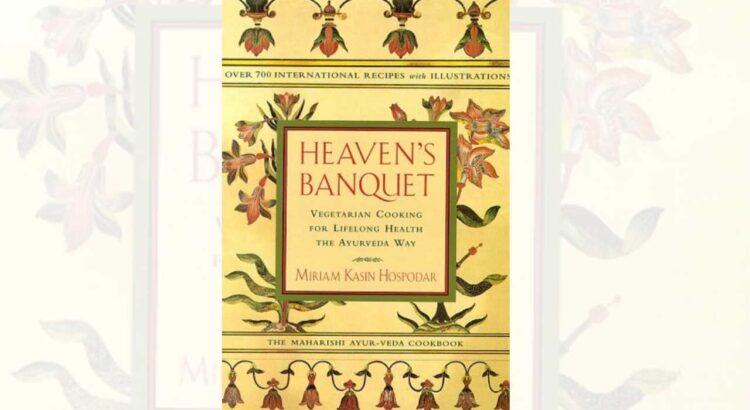
For over two decades, Miriam Kasin Hospodar traveled between three continents, gathering recipes inspired by the age-old wisdom of Ayurveda. Her book Heaven’s Banquet is the result of her culinary journey, a  sourcebook of healthful and delicious vegetarian cooking. In more than 700 recipes and variations, Heaven’s Banquet draws from a rich palette of international cuisines and shows how to match your diet to you mind-body type for maximum health and well-being.

Miriam’s website says that she has used recipes that have been tested in places ranging from a “five-star Swiss hotel to a charcoal-filled pit in the Philippines, Hospodar brings us such exotic dishes as Thai Corn Fritters, Asian-Cajun Eggplant Gumbo, Persian-Style Millet with Dried Cherries, Moussaka, Scottish Shortbread, West African Avocado Mousse, and Mocha-Spice Cake with Coffee Cream Frosting.”

A special feature of Heaven’s Banquet is its dessert section, which features egg-free cakes, cookies, and puddings. There are also special sections on how to lose weight and control sugar sensitivity, a detailed questionnaire to help you determine your mind-body type, and essential ingredients for a well-stocked Ayurvedic kitchen. “Heaven’s Banquet shows you how to use food to tap into your body’s intelligence to create lifelong health” says the website.’’

Asked if anyone can turn to Ayurveda following her book, she says: “Many people embrace Ayurvedic cooking who have not had the ability to see a vaidya and get diagnosed for specific imbalances. Ayurvedic cooking is healthy for everyone and there are many universal principles. In “Heaven’s Banquet,” I have a questionnaire that can help people determine their primary dosha, and they can tailor their diet accordingly. People can also eat Ayurvedically according to the seasons. So it is very easy to follow in a general way for overall health.”

Can the medical science embedded in food can be used to treat modern lifestyle diseases? Miriam says, “Certainly. It depends on a person’s dosha to determine the best diet for them. I have recipes that nourish all the doshas. Some foods are good for all three doshas, such as fennel, asparagus and split moong dal.”

Mariam says today many countries have Ayurvedic practitioners and clinics. “The United States, Germany and Holland are very active, but so are many other countries as well. For instance, there is a farm of ayurvedic herbs in Slovenia.”

Since Heaven’s Banquet looks at recipes from around the world, we ask Miriam to shed light on the influence that Ayurveda has had on food around the world. She says that they are original recipes, adapted to Ayurveda, “but I gleaned their basis from people from around the world and many cookbooks from other cultures.”

“Most cuisines have Ayurvedic aspects to them. Heaven’s Banquet has recipes from around the world. Freshly cooked, seasonal produce eaten in the most conducive environment (sitting down, no rushing, etc.) is nourishing everywhere. Also, there is a principle noted in the Ayurvedic text, Charaka Samhita” called “oka satmya.” That means foods that we have grown up with and are familiar with. They will be nourishing to us. For instance, in most of Asia, people eat rice and it is nourishing for them. In the Americas, people eat more corn, and it will be nourishing to them. In Italy, they eat wheat-based pasta. That doesn’t mean that you should only eat foods from your geographical area, but it does mean that there’s a nourishing effect from those familiar foods.”

“It is best to eat locally sourced food. We can’t always get everything locally, but what we can is more nourishing,” adds Miriam.

For her book she thought in terms of fresh produce, and recipes that were well combined, delicious and balancing. “I used many herbs and spices. I looked for recipes from around the world and adapted them to a vegetarian Ayurvedic diet. I wanted to represent many cultures and show how that food could be prepared Ayurvedically.”

This includes “Eating according to the seasons. Winter and cold, windy weather is generally Vata. Spring and wet weather are Kapha. Hot, dry summer weather is generally Pitta. Eat the foods that “pacify” those doshas. Food that is freshly cooked is best — no leftovers. Eating is a tranquil environment, sitting down, having pleasant conversation when eating with others, having gratitude for one’s food, praising the cook, are all Ayurvedic principals. Eating many types of food, not just one or two ingredients, is balancing on the overall. Making food flavorful with herbs and spices is balancing.’

Taste has Emotional Analogs in Ayurveda and Prevents Overeating and Cravings: Angela Hope-Murray

 A female welder from Boston Mass. with Sjogren's Syndrome, on Prednisolone to the point of blindness was cured using Ayurvedic protocols. A patient with Ankylosing Spondylitis having a 4-week Panchakarma every year is able to lead a normal life and is asymptomatic. Angela Hope-Murray narrates these instances as some of Ayurveda's success in exceptional cases she has seen. Additionally, she says, "On a personal note 40 years of regular meditation has completely changed my life."

Angela Hope-Murray has trained extensively in all aspects of complementary medicine. Angela began her work life in the NHS before moving to Boston, Massachusetts and gaining a Master’s degree in nutrition and health counselling. Her interest in Ayurveda began in 1984, when she was an intern at the Lemuel Shattuck Hospital in Boston Massachusetts.

Angela says that it was when famous Indian Ayurveda Vaidya Dr Vasant Lad gave a lecture in one of their occasional lunchtime meetings on Ayurveda that she knew that "what I had studied in medicine to that point was incomplete and I must learn Ayurveda. Co-incidentally I was initiated into the Advaita Vedanta tradition the same month."

Angela has visited India several times and lectured extensively on Ayurveda medicine.  "My experience of Ayurveda in natural settings in India is that it has always been enhanced. This is because Ayurveda espouses the fact that 'we are nature' with this in mind all 5 elements and their objects are lovingly fulfilled in the trickle of a stream, the aroma of a plant, the clarity of the sky, the brush on the skin of the breeze and the support of the earth. All these elements will always nourish my heart and give a feeling of well-being, Rishikesh and lake Mulchi gave me this experience."

Asked if Ayurveda should be put in the same bracket as other complimentary medicines, when Ayurveda is in fact the science of life itself, Angela says, "Unfortunately that has been the case, although it is head and shoulders above all other complementary practices it is a complete medical paradigm like Allopathy. BAMs trained physicians also have the same length of training as their counterparts in western medicine."

Angela has travelled extensively in India and lectures worldwide on Ayurvedic medicine. She is the author of two books: Healing with Ayurveda, Ayurveda for Dummies and  Outline of Musculoskeletal medicine in Ayurveda.  Her background in osteopathy, podiatry Nutrition, Spagyric medicine and Marmapuncture (Ayurvedic Acupuncture) and specialisation in musculoskeletal conditions and nutrition for over 40 years, led her to going deeper into her area of special interest - "psychosomatics and the effect of the emotions on bodily health works to bring balance back into one's life."

The body-mind complex has intrigued the medical community in the last few decades. Says Angela, "Initially the effect of the mind on the body of an individual says much about their "attitude" e.g depressed, proud, etc. So bodywork is essential e.g LBP is often connected to feeling unsupported, shoulder pain can be a sense of taking on too much responsibility. Ayurveda tells us that all 6 tastes have emotional analogs so anger, for instance, is an excess of pungency, especially in the liver.  Psyche and Soma are indivisible and at either point of entry, one will affect the other. Food, herbs, counseling, mantra and yoga all have their effect on the nadis."

Today as we battle a raging pandemic,  Ayurveda stands at an important modern juncture in her own long history. "If we were living a fully Vedic lifestyle, this (the pandemic) probably would not happened in the first place but it has been many centuries since this has happened. Throughout the last few thousand years, zoomorphic diseases have arisen because of humanity's close contact with animals. When this occurs we have little resistance to them. Undoubtedly a good diet and lifestyle will always enhance our immune responses. Charaka says that mismanagement of the land is one of the leading causes of epidemics," says Angela.

Angela says she sees food as the most fundamental building block of our bodies. "Diet and digestive capacity are vital for the maintenance of our bodies. It is both nourishment and medicine." In her book Healing in Ayurveda, her approach is to think of the "GI tract as the engine room of our bodies so a chapter is devoted to Stoking the Fire. Advice is given on careful adherence to doshic requirements for each constitution with particular emphasis on good food combinations. Herbs are recommended to complement digestion and optimize its functioning."

Can a lateral entry into Ayurveda, maybe by reading books such as her book Ayurveda for Dunmies...can one expect a turn around in health even at a late stage in one's life? "The answer to this question is an unequivocal yes. Very real changes can be made until we draw our last breath. Using that as an example the vital capacity of our lungs begins to lose their patency from the age of 35 years, pranayama can reverse that process, I experienced this on a personal level."

Modern day nutritionists focus on calories and other physical parameters, so how does she see an Ayurvedic diet? "The difference as I see is that Ayurveda is related to the understanding of rasa which is the fundamental principle of food knowledge in Ayurveda. Taste has emotional analogs in Ayurveda, for example, the sweet taste is connected to love, it is the flavor of our mother's milk that's why we become addicted to it. Most of today's food is tasteless and is very dependent on strong flavourings such as salt. Ayurveda feels that all 6 tastes need to be present in our food otherwise we will tend to overeat to find satisfaction. Foods in Ayurveda are recommended for different constitutions and what may be suitable for one individual may not be appropriate for another. Western dietetics is very reductionist in their approach and has none of the understanding of potency, post-digestive effects, and special effects of food on our tissues."

Most nutritionists also recommend dietary supplements and her book Outline of Musculoskeletal medicine in Ayurveda,  explains why a judicious combination of approaches may be required. "Poor soils demand supplementation of minerals and Vit D is advisable when people are not exposed to sunlight on a regular basis. Vit B12 is necessary for many vegetarians in the West."

Swamini Jayanthi Kumaraswami Bringing Vedic Civilisation To Trinidad and Tobago

Swamini Jayanthi Kumaraswami will be celebrating her birthday on May 14th. She was but a child of seven years when she started to get visions and began predicting events before they happened. On one occasion she told her mother that she heard people talking to her and felt her body being elevated. She says her parents were simple people and so her mother would tell her to forget these episodes and go and study.

At the age of 11, she started telling her friends what she saw in her dream-like state. People would surround her asking her about their life and how to bring about a change. Brought up in a simple Tamil family in South India, she could not have imagined that her purpose in life would take her to the islands in the Caribbean. 

Her fame spread by word of mouth. Some months later she had a visit from an African pop star living in the British Virgin Islands (BVI) who asked to bring her to the BVI. As word of her work spread throughout the region, she began visiting other islands like Guadeloupe, St Lucia and Martinique. 

Sri Jayanthi Kumaraswami says she never had the chance to learn with a guru in real life. However, she says that when she was seven she felt that “somebody would come to her and teach her in her mind. My mother did not know any rituals, but I would tell my mother how to do pujas and would tell my father to do Shiva puja. I somehow knew the mantras by heart. I learnt all I know from some form of energy who was talking to me at that early age.”

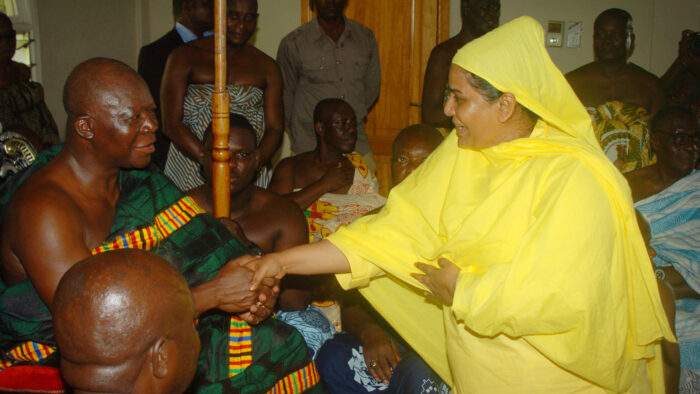
Swamini in her conversation with CSP talks about taking spirituality to the Carribean. For the last 15 years, the people of Chase Village, Chaguanashe associate her with Indian values and culture. She is the founder and leader of the Jai Sathya Mission of Trinidad and Tobago (a local branch of an international charity) which helps underprivileged families, youth in education, animal welfare and feeding the poor. She says “living the life of a householder while following a path of spirituality is difficult. Then one has desires of fulfilling things in the material world. I began thinking about the philosophical aspect of my powers. So I embraced the life of spirituality. I told them that only those who don’t eat meat could meet me.   Some people were reluctant to give up their eating habits, but slowly I started to influence them.”

She would speak to people about how to reach a space of peace and happiness through meditation and how to live in a family without quarreling. “I would hold satsangs and people in the Caribbean were deeply interested in finding solutions to daily problems.”

Talking about the religious diversity in Trinidad, where she stayed, she says that people of all faiths and nationalities including Muslims, Jews and Syrians would be drawn to Hinduism. Explaining why this is so, she says, “Hinduism is like a big tree with many branches. It also has various kinds of trees of philosophy which people are free to follow. There are many paths to peace. If one is not attracted to one way, one can follow another.”

Her method of spreading the wisdom of Hinduism was very simple. She would allow people to ask questions. “I wanted them to ask me what the want rather than me telling them what I want to. I could tell them about the Mahabharata and Ramayana, but I need to also tell them about the things they are concerned about in their daily lives and which Hinduism addresses.” 

People ask her about the difference about prayer and spirituality, the meaning of worship, whether an ancestral curse will have an impact in the future, what is enlightenment, what is the third eye and many other things. At a recent online meeting, someone asked her about Hitler, and why he did what he did. What was the role of Karma in his actions. 

Asked about the difference between the rituals and practices of Hinduism and that of the native people, she says they are similar, except that “Hinduism is very deep. We know both what to do and what not to do. In Hinduism we learn how to open the door and also how to close the door. Other practices often will teach only how to open the door and not how to close it. We know that how to finish is as important as knowing how to start. The problem in the whole world is that only a small part of the complete knowledge is learnt.”

Asked to explain further, she says that when we are doing a homa, we collect the wooden sticks, and put them inside the homa kundam and light the flame. “In the end we put water to pacify the agni, as shanti and also put flowers. This is unique to our Vedic culture. We always end with a prayer to Ganga, Yamuna, Kaveri, Pushkarini and with Shanti Shanti Shanti.” 

Sri Jayanthi Kumaraswami says the people in the West Indies are very interested in Shivaratri and are serious devotees.  “The follow all fasts and don’t even have a sip of water. During Diwali and Navaratri they keep a fast.  However, after those 10 days you can’t find them. They think fasting is only about not eating food at all.  But I tell them that fasting is also not eating meat on other days. They go back to their normal lifestyle immediately after but in some ways they are more strict about their religious practices than Indians, but are less consistent. 

People outside India are fascinated by chanting of mantras. She tells them that “Chanting - the repetition again and again of mantras helps achieve our goals and also fulfil our desires. It helps  control our mind and overcome some distress. Mantra is a way of giving food to the soul just as we give food to the body. Just like we take supplements for our body, mantras are the energy or power for the soul. We can achieve anything in this world by chanting mantras.” 

She has not started an ashram in Trinidad as she believes that those immersed in spirituality should travel from place to place to spread their wisdom. She has travelled all over Tamil Nadu, and in other parts of India and the world, walking from place to place. “An ashram is not for me, it should be for the people who come to visit me. We hope to have a place like this soon in the Carribean,” she adds.

An American nuclear physicist’s love for India

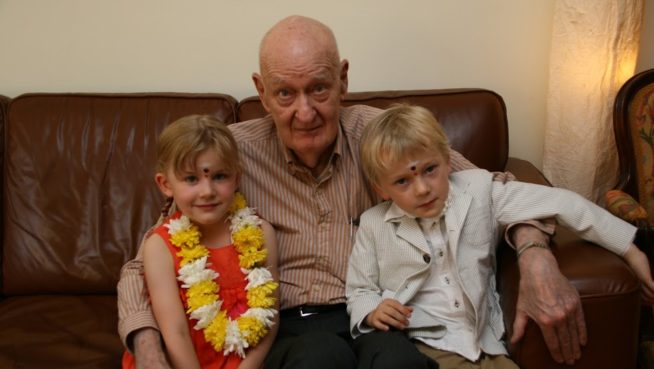
The family of Arthur Herrington, American scientist and strategist analyst, who passed away recently at the age of 87, visited India in April to ring in the Tamil New year visiting various temples in Bangalore. His daughters Eldrid and Edith Herrington speak about their family’s deep connect to India and to Veena player Vijaya Krishnamurthy whom Herrington cherished as his third daughter

Arthur Herrington’s daughter Dr Eldrid Herrington, Senior Fellow in Medicine at the University of London and a member of St Hugh's College, University of Oxford, in History and Literature, wrote in her tribute to her father in the Daily Telegraph this January:

“Arthur Herrington joined the US defence department in 1965 to find that it had no complete inventory of nuclear arsenal. As Director of Nuclear Weapons he developed a full picture of the stockpile and advised that $ 500 million of weapons be scrapped. In an era of gung-ho naivety he became a bridge between scientists and politicians, educating decision makers about the life and death implications of nuclear science.

He developed MIT’s first graduate programme in Political Science, with a focus on the effectiveness of defence and intelligence. He was hired by the government for his unusual combination of scientific and strategic acumen. Without him the Johnson Nixon and Carter years may have been even more volatile than they were.”

Arthur Herrington was a man of many interests. He went to MIT for undergraduate and postgraduate studies, then worked for Standard Oil of Indiana, the Atomic Energy Commission, MIT, the MITRE Corporation, and finally the Department of Defense and the Department of Energy, from 1965 to 1980, in various roles - from 1970 to 1980 as a consultant. After that time he started and stopped a couple of companies - one designing and building boats and the other in commercial real estate.

The family’s relationship with India began with their grandfather- Arthur William Sidney Herrington. Eldrid narrates the story. “The Japanese bombed Pearl Harbor in December 1941 and America entered the war. In March 1942, Roosevelt knew that Churchill was sending Sir Stafford Cripps to India to discuss Indian "independence" and India's participation in the war effort. He sent his own envoy to counter the Cripps Mission, Louis A. Johnson, who had been his Undersecretary of War. Louis brought my grandfather, whose company, Marmon-Herrington, had been making tanks and trucks prior to the war and for Lend-Lease.

Arthur Herrington in India in 2006

“Louis and my grandfather befriended Nehru and my grandfather in particular had great sympathy with the Indian industrialists he met, all of whose efforts had been stymied by the European preferences scheme: GD Birla, Walchand Hirachand, Tata, JC Mahindra, and, I believe, Visvesvaraya. Louis's and my grandfather's sympathies for Congress and for these Indian industrialists infuriated Churchill to such a great extent that he and Roosevelt had the greatest fight of their relationship. We know what happened next: Quit India.”

Eldrid has in her possession the gifts that Nehru bought for her grandmother – ‘a shawl of some of the finest handiwork ever known’, as well as a photograph inscribed by Nehru to her grandfather.

The shawl gifted by Nehru to Arthur's mother

For Arthur himself, his love for India came with veena player Vijaya Krishnamurthy, whom he called his third daughter, along with Eldrid and Edith. Arthur was very close to Vijaya’s family and visited India to attend her nephew’s wedding. Both Edith and Eldrid have visited India several times.

Vijaya moved from Wisconsin to Maryland around September of 1992 to teach Computer Science at the local college in Montgomery County. She taught during the day and in the evening sat in Arthur’s C++ programming class.

“He was sitting across from my table and as usual I started chatting like I do with strangers. One thing lead to another and soon we went out for dinner and I was invited home for Thanksgiving in November 1992. After that I went for Christmas and then never stopped. From day one he treated me as his third daughter. We argued and cooked and talked about all topics in the world,” says Vijaya.

Her parents Alamelammal and Krishnamurthy who had visited USA from India had just returned in October 1992 back to Bangalore. They thoroughly enjoyed their visit to US but could not come back on another visit to US. Vijaya’s friendship with Arthur blossomed and in the next many years he had mastered Indian cooking and his kitchen was well equipped with all Indian spices.

Arthur with Vijaya's father

“Art was part of my life like I was for him. He was very generous to include me throughout every event that happened after 1992. I truly feel lucky to have him as an additional American parent in addition to my loving parents. I come from  traditional Iyer family and it is amazing that everyone from the Herrington family followed all Iyer rituals when they visit India. Even recently when Art passed away on Dec 31st the Shubam for him was done as per Indian rituals on January 12, 2019.”

Vijaya introduced them to a lot of Indian customs and practices. Eldrid is a vegetarian and this dismayed Arthur, who grew up during the Depression. “He grew up during the Great Depression. He felt that no one should refuse any kind of food. I do not find that lifestyle healthy, sustainable, or ethical. He tolerated my vegetarianism because he accepted Vijaya's vegetarianism, which he realized predated the Great Depression by several thousand years,” she says.

Her engagement with things Indian is not a dabbling kind. Eldrid loves and practices Yoga, but believes that its spiritual and cultural practice is less understood in the ‘west’. “When Vijaya's parents were alive, I did namaskar to them. They are no longer here; so I do namaskar to their images. Vijaya showed me a form of yoga which functions as prayer.”

She loves listening to Vijaya play the Veena, and through her was introduced to Bangalore based Vainika Dr Suma Sudhindra. She also loves the music of the legendary Veena player Chitti Babu.

Arthur with his three daughters

There are parallels between her love for classical music and architecture, both Indian and Western. “This is how I think about my introduction to Indian music, having grown up with "classical" music. I grew up loving cathedrals and knew the stonemasons who created the National Cathedral in Washington DC. I went to many churches and cathedrals across Europe, spanning a wide variety of styles. Vijaya took me to Hoysala temples in Karnataka, with stonework so fine and strong that thin strings are suspended from their player's fingers by the width of a reed. I had never seen anything so beautiful. I feel a bit that way about Indian music. It is ancient and complex and seems to have incorporated in its origin musical aspects only latterly embodied in jazz and compositions by Schoenberg and Webern.”

Edith Herrington lives across the Potomac River from Arthur Herrington’s house (South), in Northern Virginia (outside of Washington, D.C.) on her husband's family farm. She visited India almost 20 years ago and says she shares her father love for travel. On her first impression about India, she says, “Viji's family was so welcoming, the food was amazing, and that the traffic was crowded and would have scared me if I had tried to drive!

Edith says that having someone who knows the area, culture and language when traveling to other countries provides a deeper experience. “Staying with Viji's family, I was allowed to see a home and the traditions of visiting/having visitors first hand. She and her family truly ‘rolled out the red carpet’. Hiring a car to take me to almost every temple within driving distance, going to see nature/animal preserves, even a bus ride with a group of people that allowed me to stop the entire group, just to take a picture of a haystack! (My husband does hay for his family's farm and I was thrilled to see how it was done differently, if even for a moment.)”

Had Vijaya not invited her, Edith says she would have visited India anyway, but “more likely gotten the "tourist experience" up north, including the Taj. I have a whole "bucket list" of places to travel, and after my husband retires we will probably visit those locations!”

The love and respect that Vijaya’s family and the Herrington family share is very apparent to anyone seeing them together. Curious, I asked Edith if this very obvious kindness and graciousness is a cultural trait or something unique to their families.

Edith observes that her father was always bringing home strays - human or animal! “We have a tradition passed down from his parents, to share in our good fortune, provide shelter, and a comfortable place to stay for anyone who needs it. I carried that tradition along by bringing home from school people who didn't have a place to celebrate the holidays. Sometimes my car was packed to the brim with people, and dad was always happy to have a crowded house.”

Edith is not sure whether this love for the athithi or guest is a global, regional, or cultural trait. “My first thought is that dad got it from his British family, but truly I think it is just what he would have called "good breeding" -- just the right thing to do, the right way to be. If you have the food, the space, the ability to do so, why not get to know someone new over some good food and time together? I don't have much space at my house, but I do what I can to house our many family members and friends when they are in town! I am not the consummate host that my dad was, but I try!”

One can’t help but think, Arthur’s daughters are so very Indian.

Brazil is Indeed in Need of More Indic Influence: Amratananda Das (Alex)

Amratananda Das (Alex) practices Sanatana Dharma in Brazil and is a student as well as a teacher of Ayurveda, Yoga, Jyotisha, and Samskritam. In this interview he speaks to CSP about the need for Hinduism in Brazil but also the challenges for true seekers.

You said in a recent talk that Yoga helped ground you in your teenage years and also you gave up eating meat subsequently.  Do you think these two areas are often the most understated benefits of Yoga?

Yes. Yoga changed Western society and its mindset in many subtle ways, and people do not always acknowledge this. In fact, I believe vegetarianism here is a direct influence of Hindu spirituality and philosophies as yoga and Vaishnavism (as the Hare Krsna movement introduced a lot of Indic vegetarian dishes in the west by way of prasad distribution and restaurants). Vegetarianism was almost an alien word in my childhood and nowadays it is becoming more common and is a direct influence of Yoga for sure.

Brazil shares a similar history of colonization as India. Do you think that Indian systems of Yoga and Ayurveda are facilitating a sense of pride in Brazil's own indigenous practices?

Yes. Ayurveda in Brazil gave legitimacy for the Native traditions of Brazil to be also viewed with a more scientific approach. You can find a growing number of youth here that practice Shamanic religions and lifestyles (we call it Pajelança).

Soft Power is good but ancient systems sometimes suffer when transposed to other countries. How have Yoga and Tantra suffered in Brazil due to pressure to be exotic and sensual. Societies that are very materialistic may benefit the most from Yoga, but are they also ones that are following the West in trashing authentic practice?

 Indeed. Some yoga teachers and schools in the West follow a materialistic understanding of Yoga with a new age mask for it, bringing many distortions to the practice. De Rose is one famous yoga school that was founded by a Brazilian by the same name. His books claim his yoga is the authentic yoga - a classical yoga which came from Shiva. But his history is based on colonialist theories like the Aryan invasion theory and something about chakras and mantras.

He became a millionaire and his organisation has branches in Europe. His form of Yoga is elitist, commercialised, sensual-ized and competitive, where you have to build the perfect body and exhibit perfect poses, with no belief in God, involving worship of him as a guru. He fought legal cases and has lost the right to use the name Yoga as he was declared an atheist.  He holds many Hinduphobic views popular in mainstream media, promotes colonial history and has a distorted knowledge of shastras and samksar.

Sometimes in Brazil, there is also a distortion of the message of Tantra, where Tantra is sold as erotic massages claiming to be a Tantric therapy to free the mind of dogmas. There are many New Age Yoga groups which tend to support a Marxist narrative, always siding with Islamic and Christian perspectives against native Indic Hindu perspectives. In their anxiety to prove all religions are the same they mix Vedanta with Abrahamic texts. The problem is that they side with the colonial narrative in India against Hindu revival, surely a direct influence of the mainstream media and education system that is designed to support Western perspectives.

Brazil has a huge migrant population.  Isn't it incredible that in the midst of it all Hinduism has found some space? What are the commonalities with the African immigrants worship practices and those of Hindus?

Brazil is a really miscegenated society, which makes our civilization more pluralistic, and open to the more universal approaches of Hindu Dharma. African religions here survived mostly by hiding and creating syncretism. They started to associate their Gods (Orixás) with the Catholic saints. Umbanda is a mix of Catholic, African and Shamanic traditions, but survived mostly by using Catholic saints name for their Gods. Candomblé is more African rooted with less syncretism, associated more with native Shamanism than with Catholicism. African religions worship icons of Gods and make offerings of food, but also have animal sacrifice and wine.

Their practices are similar with Hindus in some aspects, as they have many Gods, they are close to nature, they worship nature also like Hindus, and their celebrations involve dance, music, food and are colorful. Some of their practices are different from those of Hindus, although I have heard of incorporation rituals is some sects in Tamil Nadu. They incorporate spirits of the Orixás (Gods of nature) and also of other spirits like the Preto Velho (spirits of ancient, wise, enslaved old men and women who had power to cure illnesses); Pomba Gira (spirits of a sexual nature, when men dress and act as women) and even the People of East (similar to gypsies but they say are they are from India and give blessings and predict the future).

There are many gypsy communities in Brazil who came in during the colonial period. They were all forced to convert on arrival and today are mostly Christians, but they have retained many beliefs and culture like language (similar to Punjabi and Sindhi), dance, music, fire, rituals, same caste marriages, palm reading, etc. Soon it became part of Brazilian culture and you can find many Catholic women who observe African religious practices and those of the gypsies.

You mention a French missionary who created a kind of religious practice which combines Hindu ideas of Karma and reincarnation with Christianity? Raised as a Catholic yourself,  what attracts people to the whole value system of Sanatana Dharma rather than a piece meal approach?

 We call it Espiritismo, a religion created by Allan Kardeck’s work - The Book of Spirits. He is not remembered in France, but is quite popular here. He has taken some ideas from the Vedas like Karma and reincarnation, and also communicating with higher spirits. But he preaches the Bible and focuses on Jesus as the main spiritual personality. The people of Brazil are naive and simple and even believe if someone uses Vedic ideas and credits it to the another religion.  Unfortunately, I have noted people prefer a sugary approach to spirituality, and are not really interested in the truth. In search for some comfort in their lives of misery, some of these practices work as a placebo, atleast for most people.  I studied with them when I was around 12 to 13 years old, but I quit when I realised they were superficial and I wanted to go deeper.

Yoga changed Western society and its mindset in many subtle ways, and people do not always acknowledge this. In fact, I believe vegetarianism here is a direct influence of Hindu spirituality: Amratananda Das

You bring Brazilians to India. What does a tour include?

Before the pandemic, I was bringing different tour groups to India. Usually had two kinds of tours, one more of a spiritual and touristic one of North India (covering Delhi, Haridwar, Rishikesh, Amritsar, Jaislamer Jodhpur, Pushkar, Jaipur, Agra, Varanasi, Vrindavan). We have visited many different temples and historical places to present people a compete tour of the vast perspectives of Indian ethos and heritage. The second kind of tour is an Ayurveda retreat in Kerala which ends in Rishikesh with Yoga classes. I plan to make more tours of different routes as soon as possible after the pandemic ends.

You mention similarities between indigenous populations and the people of North East India. What are they?

That’s a complex question, as Brazil has many different ethnic and linguistic native tribes, similar to North-East India. You can find some similarities between them in the skin colour, the features of the face and hair and also the tribal life style including the practise of using bird  feathers to make head covers. This is based on impressions and speculations, but it is known that Native American people have ancestry in Asia, so it may not be far-fetched.

We know that the Kalingas, Cholas, Cheras and even the people of Saurashtra and Sindh used to navigate oceans in ancient times, creating an exchange of people and ideas between Europe, Africa, Arabia to West and South East Asia, Pacific islands and America to the East. Historians claim some migrants came by foot through Bering Strait between Siberia and Alaska.

Is there a demand for Indic courses in Brazil? Why is there only university offering a course related to India?

 There is some demand for Indic courses, especially Ayurveda which is  popular even to academic researchers and officials of the Government health system. In academics, there are few specialization of Indic studies. I know the USP University of São Paulo has Post Graduation courses in History of India and also Sanskrit. PUC, a private Catholic University has some chairs and lecturers about but it is usually colonial ‘bashing’ of the caste system and cow worship and glorification of the Mughals, sometimes even denying colonial atrocities and blaming of natives for all  medieval problems. Usually, those who understand India better study under the guidance of some guru or cultural religious institutions, as universities are not the best place for pursuing such knowledge.

How can India help in making better translations available for people wanting to know more.

There are very few or no translations of most of Vedic Hindu literature in Portuguese. You can find the Bhagavad Gita, the Bhagavata Purana, some Upanishads, some short translations of Mahabharata, Yoga Sutras, Parashara Hora Shastra. These are the few that I know have Portuguese translations. One can’t guarantee all translations are trustworthy. Many are distortions and that's what makes it hard to spread Hindu ideas here as most of translations are  filtered under a Western mindset. Indeed, more books of other Vedic literature need be available but the big challenge is that our editorial market is weak. Brazilians don’t read much and most books don’t sell enough to become profitable. Brazil is indeed in need of more Indic influence. The ICCR is welcome and I could help for sure.