The Art Of A Pramāṇika Chitrakār

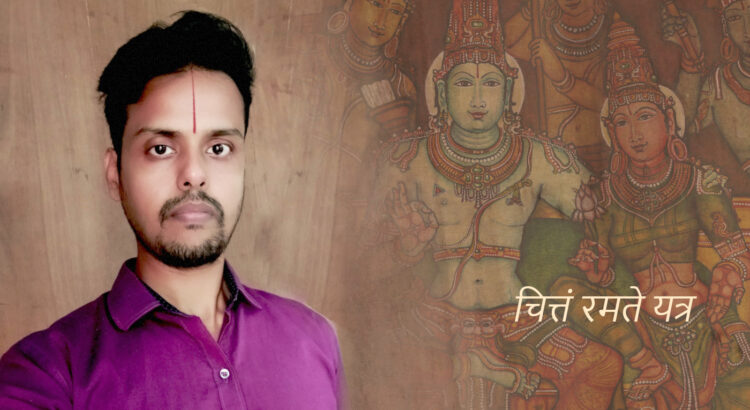
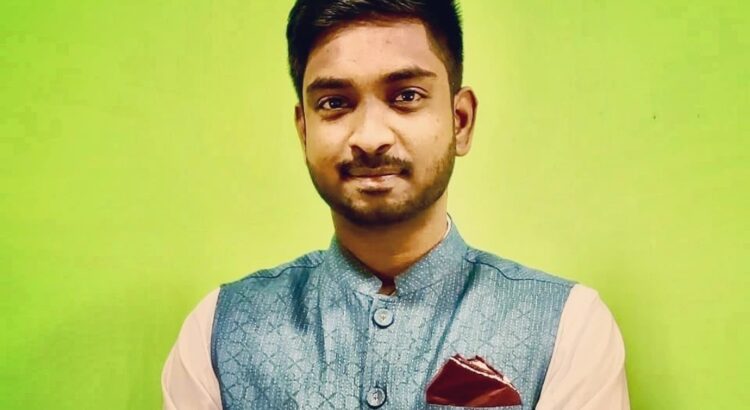
A pramāṇika chitrakālākāraḥ - a traditionally grounded muralist – Shri Krishna Swami draws inspiration from the classical idioms of Chozha, Pallava, Early Pandya, and Ajanta art, translating the sculptural language of these periods into intricate linework. His compositions are rooted in the scriptural canons of Āgama, Chitra Śāstra, and Śilpa Śāstra, and are painted using techniques from the Kerala mural tradition.

While professionally engaged in the IT industry for over a decade, Krishna Swami has simultaneously nurtured a parallel life of sādhanā, approaching art as kainkaryam — a devotional offering. His art is not only an aesthetic rendering, but also involves sacred visualizations informed by precise textual sources and a living lineage of temple art. From a re-imagined Dhwaja Pata for the Melkote Brahmotsavam to a monumental Sudarshana Narasimha Yantra inspired by the Parameśvara Saṁhitā, his art is both ancient as well as scholarly.

In this interview, we delve into his journey, the principles that guide his art, and his vision for transmitting this timeless tradition to future generations. Shri Krishna Swami will be conducting a workshop in Banglore on May 10, in collaboration with the Heritage Trust and INDICA.


How is the Chitra Sūtra tradition preserved or interpreted in Tamil Nadu's art heritage?

India has always been culturally diverse, with dynasties and art guilds shaping regional visual languages as holistic ecosystems aligned with tradition, as the Viṣṇudharmottara describes, emphasizing the interdependence of arts like sculpture, painting, and dance. For instance, Chola bronzes, temple murals, and dance forms in Tamil Nadu are interconnected, reflecting the Viṣṇudharmottara’s focus on the unity of arts in temple contexts. Similarly, Pattachitra in Odisha mirrors its sculptural and dance traditions, and early Pandya and Chera murals align with their sculptures. While the Chitra Sūtra isn’t preserved as a manual in Tamil Nadu, its spirit - the syntax of form, rasa, and bhava - persists in regional practices. However, current traditions are fragmented: sculptors often follow śilpa-śāstra without natya understanding, and painters lack iconometric grounding. This holistic tradition has weakened but can be revived with renewed integration.

Can you trace your artistic lineage or training back to any guru-śiṣya paramparā or temple sthapati traditions?

While I haven’t trained under one continuous guru-shishya parampara, I owe much to the traditional lines I have studied through. I learnt Kerala mural painting under Sri Sasi Edavarad (2016-2018) and continue to practice it with śāstric intention.

I studied Kerala mural painting under Sri Sasi Edavarad (2016–2018) and continue to practice it with śāstric intention. I also trained in classical sculpture drawing at KPJ Prabhu Artisans Training Institute (2016–2017) and studied Dravida temple architecture and iconography under Sri Manoj Gundanna (2019–2020)

I hold deep reverence for Sthapati Dr. Sri Gnanananda, who, although not a direct teacher, has guided me with texts and directions. He once explained the difference between “Raja Ravi Varma” paintings and Sri Siddhalingaswamy traditions – the former humanizes the divine, while the latter follows pramāṇika roots. His words profoundly influenced me.

I also regularly study the works of Sri V. Ganapathi Sthapati. Though I never met him, his writings are foundational to my understanding of pramāṇas. In this way, my training is interwoven with the lineage of temple sthapatis and muralists.


Dhanvantari

Is there a difference between how śilpa-śāstra and chitra-śāstra are approached in Tamil Nadu's temple ecosystem?

Tamil sthapatis still largely follow the śilpa-śāstra, but they are often not initiated into natya-śāstra or the inner logic of bhanga (posture), bhāva, or mudrā, leading to rigid or static poses in new mūrti-s. Similarly, painters today often study “painting” as a technical craft, isolated from śāstra, bhakti, or rasa, diluting the wholeness of Indian aesthetics. The Viṣṇudharmottara emphasizes that an ideal artist should be trained in music, dance, and other arts to fully grasp bhāvas and rasas, an integration that the Chitra Sūtra also points to. This holistic approach is what I aim to reweave through my work, ensuring that mudrā, iconography, proportion, śruti, and śāstra are unified in the creative process.

How do you see the connection between visual art and Śaiva-Vaiṣṇava temple rituals?

They are inseparable, as the Viṣṇudharmottara underscores in its emphasis on temple-building and image worship as meritorious acts that bring happiness. In traditional Tamil Śaiva-Vaiṣṇava practice, painted images are not just symbolic - they are treated as devatā-s. For example, dhvaja pata-s (ceremonial flags) are created following precise tāla-pramāṇa from the āgamas and are worshipped during temple restoration or samprokṣaṇa, temporarily housing the divine until the kumbhābhiṣeka. In Kutrālam’s Chitrasabhai, the mural itself receives full upacāra-s, including abhiṣeka (performed on a mirror in front). Similarly, Odisha’s Anasāra Pata during Ratha Yatra exemplifies the divine presence in painted form. This usage, as the Viṣṇudharmottara suggests, is not relic-based but living and ritual, facilitating devotion through the Bahir Vedi of image worship.

Garuda Dhvaja, designed per Īshwara Saṁhitā of Pāñcharātra Āgama in Chozha art style, traced for Vairamudi Brahmotsava 2025 at Melukote

Do you consider your work to be a continuation of the ancient sthapatis and muralists of the Chozha and Nayaka periods?

Short answer is no, not yet. I see it as one of my life purposes. However, I still have many years of study, sādhanā, and pramāṇika refinement ahead. I strive toward that standard, but do not claim it yet.

How are stories from the Tēvāram, Tiruvilayāḍal Purāṇam, or Āḷvār Divya Prabandham represented in your art?

This is a space I revere deeply, but have not yet engaged with fully. These texts are not just literature – they are bhāva-granthas. Representing them requires deep understanding of the rāga, rasa, and īśa-bhakti inherent in them. I hope to do justice to them in future works, after more personal exploration and sādhana.

 Many temple murals in Tamil Nadu are now fading. Do you see your work as part of a revival effort?

Absolutely. Art must be preserved in people, not just museums. The western lens often seeks to preserve “ancient civilization” in glass cases. But our art is living. That’s why we redraw kolam daily, why the Jagannatha Ratha is rebuilt anew, and why mūrtis are installed in rituals. I hope to serve this tradition by creating works that are ritually relevant, and by mentoring students in this path.

The Viṣṇudharmottara Purāṇa speaks of an ideal artist as one trained in music, dance, and philosophy. Do traditions reflect this expectation?

Yes, as the Viṣṇudharmottara outlines in Adhyāya 2, where Mārkaṇḍeya advises Vajra that an ideal artist should be trained in music, dance, and other arts to understand bhāvasmudrāsrasas, and nāṭya-hasta-s. Without these, the lines lack movement, rasa, and sādhana. Tamil traditions once embodied this synergy - fictional works like Sivakamiyin Sabadham capture this, with Ayanar, the sculptor, inspired by his daughter Sivakami’s dance. However, this holistic training has become rare in modern Tamil practices, where interdisciplinary understanding is often lacking. This absence of integrated training is what has caused later Indian paintings to lose the charm of classical murals like those of Ajanta and Chozha, which were imbued with a deep understanding of rasabhāva, and movement, creating a timeless spiritual resonance. This is exactly what I aspire to revive through my work—bringing back that synergy so my lines can truly dance and reflect the depth of our classical traditions.

Does the concept of Aham (inner sanctum) and Puram (outer form) resonate with how art should be conceived?

The concepts of Aham (inner sanctum) and Puram (outer form) deeply resonate with the artistic and philosophical principles outlined in the Viṣṇudharmottara. King Vajra inquires about attaining happiness in both this world and the next, to which Mārkaṇḍeya explains two paths of worship: Antar Vedi (inner altar, representing devotion and sacrifice) and Bahir Vedi (outer altar, involving the construction of temples for the gods). This duality mirrors the Tamil Aham and Puram. The Bahir Vedi aligns with Puram - the external form, such as the temple’s gopuram, which guides the devotee inward. The Antar Vedi corresponds to Aham - the inner sanctum or garbhagṛha, a space of inner stillness and divine connection. Mārkaṇḍeya further emphasizes that building a temple (Bahir Vedi) is a meritorious act that brings happiness through the worship of a deity’s image, while the inner devotion (Antar Vedi) fosters a deeper spiritual realization. In temple architecture and art, this is reflected in the journey from the outer structures to the garbhagṛha, where the artwork - be it murals, sculptures, or icons - serves to guide the devotee from the external form (Puram) to inner contemplation (Aham), embodying both ritual and philosophical dimensions.

Are there unique methods for proportioning deities or landscapes in temple art that align with or differ from Chitra Sūtra norms?

Yes. Different traditions use different models. Chitra Sūtra gives the 9 tāla (~112 aṅgula) Pañca-Puruṣa system. Mānasāra and Mayamata describe a leaner 10 tāla (~124 aṅgula) Uttama Puruṣa. Chola bronzes clearly reflect this leaner system. Proportional differences are tied to dynastic and regional schools. It’s like different code stacks built on the same śāstra core. The landscapes in Chola murals are rich, but I’m still studying whether they align directly with Chitra Sūtra descriptions.

Murals often use rich natural colors. Do you follow traditional methods like kāvi, turmeric, indigo?

Not yet.

  1. The cost of natural colors is a barrier.
  2. Kerala murals use laterite stone for red/yellow, herbal pigments for green, and lamp soot for black.
  3. Pattachitra and Thangka use different opaque or mineral pigments.
  4. I mimic Kerala mural palettes using acrylics adjusted to resemble early Chera tones – which visually align with Chozha murals that lack strong blues, and instead use red, ochre, and sap green tones.

Can you talk about the use of symbolism like certain mudrās, animals, or motifs in your art?

Symbolism in Indian sacred art is not decorative – it is spiritual language. Every mudrā, āyudha, color, and vāhana has scriptural significance. As described in the Viṣṇudharmottara Purāṇa, these elements are treated as hetus - indicators of tattva, function, and bhāva. These lists are vast and diverse.

For instance, in the Viṣṇudharmottara,

  • Cakra = Sun, Time, Order (Viṣṇu, Vāsudeva)
  • Śaṅkha = Sky, Auspiciousness (Viṣṇu, Lakṣmī, Varuṇa)
  • Gadā = Moon, Power of Rule (Kubera)
  • Kamandalu = Creative Waters (Brahmā)
  • Akṣamālā = Tapas, Scripture (Sarasvatī)
  • Hamsa = Discernment (Sarasvatī)
  • Gaja = Wealth and Strength (Lakṣmī, Dharma)
  • Makara = Fertility, Joy (Varuṇa)

These are expressive frameworks rooted in śāstric principles, where meanings shift with context, rasa, and dharmic alignment (auchitya).

This symbolic language is echoed across texts like the Bhāgavata Purāṇa (12.11), which maps the Mahāpuruṣa’s limbs to cosmic principles - His arms as Indra, chest as Dharma, feet as Pṛthivī -and the Viṣṇu Purāṇa (1.22.66–90), where Viṣṇu’s astras and bhūṣaṇas reflect guṇas and divine functions. In my work, I draw on these meanings, letting śāstra guide my lines so that each symbol resonates with its inner significance, infused with bhakti-rasa.

The art thus becomes a Bahir Vedi - a sacred external altar, as described in the Viṣṇudharmottara -mirroring the Antar Vedi of inner contemplation, where the devotee’s vision deepens. This echoes the spirit of sacred creation, as beautifully expressed in both Sanskrit and Tamil traditions.

A śloka captures this:
“Ārādhayāmi hṛdayakeśavaṃ ātmagehe

māyāpure hṛdayapaṅkajasaṃniviṣṭam,

śraddhānadī vimalacittajalābhiṣekaiḥ

nityaṃ samādhikusumairapunarbhavāya”

(“I worship Keśava in the home of my heart, seated in Māyāpur, on the lotus of my heart -bathed with the waters of clear intention flowing in the river of śraddhā, and offered daily the flowers of samādhi for liberation beyond return.”)

Similarly, Periyāḻvār in the Thirumozhi (4.5.3) sings:
“mArvam enbadOrkOyil amaittu mAdavan ennum deyvattai nATTi,

ArvamenbadOr pooviDavallArkku aravataNDattil uyyalumAmE”
(“if one is able to build a beautiful temple in the heart, consecrate the unparalleled ‘MADHAVAN’ and offer Him the flowers of bhakti, he will be saved from the miseries of Yama.”)

My art aspires to embody this spirit—not just as a visual form, but as a consecrated space, inviting the viewer to enter the temple of the heart, where the divine is both seen and experienced. In the light of the Upanishads’ wisdom—draṣṭavyaḥ द्रष्टव्यः (to be seen), nididhyāsitavyaḥ निदिध्यासितव्यः (to be contemplated)—it invites one to gaze upon the form with devotion, for through profound contemplation, the heart awakens to true seeing, unveiling the eternal truth within.
Swaraj In Thought: Challenging Colonial Narratives In Indian Public Discourse

The MetaRetreat ‘Beyond Colonial Discourse’ gave participants a much-needed space to step back and reflect, away from the constant noise of news cycles and social media, says Sharan Setty, senior journalist with Swarajya. He says at the retreat organised by INDICA it was refreshing to be with people who are not just questioning the way things are, but also creating real alternatives in media, culture, and education. “One big takeaway for me was the importance of building swaraj in our thinking—not just by rejecting colonial narratives, but by actively creating ideas and frameworks rooted in India’s own civilizational experience”, is a summary of his thoughts on the experience.

In this conversation, he has shared my thoughts on how colonial ways of seeing the world still shape Indian media today, why that matters, and what it might take to change the story. Having said that, there seems to be a growing hunger, especially among young people, to reconnect with something more authentic.

What was a major takeaway for you from the Metaretreat?

The MetaRetreat offered a rare space for reflection beyond the churn of daily media cycles. For me, the biggest takeaway was the necessity of building swaraj in thought, not just in terms of resisting colonial narratives, but creating affirmative, rooted frameworks drawn from Indian civilizational experience. It was also energising to connect with people who are not just critiquing the status quo, but actively building alternatives across media, culture, and scholarship.

How do you define "colonial discourse" in the context of Indian public media today?

Colonial discourse today refers to the persistence of categories, priorities, and assumptions inherited from a framework designed to delegitimise Indian civilizational continuity. It’s visible in the preference for Western academic lenses to interpret Indian realities, the automatic suspicion of dharmic institutions, and the uncritical import of global ‘liberal’ or ‘secular’ vocabularies, which often obscure more than they reveal.

Do you think mainstream media in India still operates within a colonial mindset? If so, could you provide examples?

Yes, very much so. One example is how ancient Indian Knowledge Systems - be it Ayurveda, temple architecture, or even philosophy- are still treated with scepticism or exoticism unless validated by Western academia. Similarly, the framing of caste is almost always borrowed wholesale from colonial ethnographies, ignoring both historical complexity and ongoing reform within dharmic traditions.

How do you see the legacy of British colonial narratives still affecting how we talk about pre-modern Indian civilisation in public media?

The British cast pre-modern India as a land of superstition, stagnation, and tyranny - waiting to be ‘civilised’. That trope still lingers. Media coverage of temple rituals, tribal customs, or regional kingdoms often lacks curiosity or empathy. There’s a tendency to view India’s past as something to be overcome, rather than inherited, engaged with, and built upon.

Are there specific terms or frameworks used in Indian media today that you believe stem directly from colonial epistemologies?
Definitely. Terms like “upper caste” and “lower caste” erase the complexity of varna and jati and reflect (neo)-colonial administrative convenience. Similarly, using “tribal” or “backward” without context carries the baggage of 19th-century anthropology. Even how we understand concepts like secularism or nationalism is heavily influenced by European histories, often with little relevance to India’s civilisational arc.

How does Swarajya attempt to decolonise language or framing in its own reporting or opinion pieces?

At Swarajya, we try to centre Indian experience, not as a reaction to the West, but on its own terms. Whether it's discussing economic policy or cultural identity, we avoid defaulting to Western categories. There’s a conscious attempt to reframe debates around Indian history, spirituality, and society using our own vocabulary and civilizational memory.

With the rise of digital platforms, do you see a shift away from colonial narratives, or is it being reinforced in new forms?

Both are happening simultaneously. On one hand, digital platforms have empowered independent voices who are challenging hegemonic narratives, especially in vernacular languages. On the other hand, social media algorithms still reward outrage and clickbait, which often reinforces the same colonial binaries and identity politics. The battle is ongoing.

In your travels across the country, is there evidence of a change in how the country is addressing these issues?

Yes. I’ve seen a quiet cultural resurgence across rural India—whether it’s through local history projects, temple revivals, or grassroots educational initiatives that draw on Indian texts. The hunger for authenticity is real, especially among the youth. But this is rarely reflected in English-language media, which remains mostly urban and disconnected from these undercurrents.

What are the challenges you face in promoting a decolonised narrative in a media landscape that is still influenced by Western institutions and values?

The biggest challenge is legitimacy. Unless your work is endorsed by elite gatekeepers - the pressure to conform to global standards of “neutrality” or “objectivity,” which are themselves culturally contingent. Funding, visibility, and scale remain tough without compromising authenticity. But the space is opening up and that gives hope.

Manomanthana: Adapting Thyagaraja’s Compositions to Dance

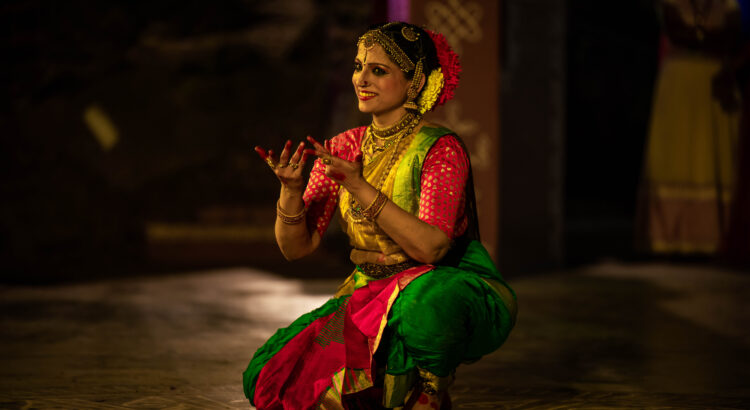
INDICA was privileged to sponsor dancer Srividya Angara's production and debut shows of Manomanthana - a Kuchipudi thematic solo dance production based on the kritis of Carnatic Vaggeyakara Thyagaraja Swamy and interspersed through English prose and poetry, a couple of years ago. Manomanthana is coming to Bangalore on April 15.

What was your vision behind Manomanthana and your tribute to Thyagaraja Swami through this?

Thyagaraja Swami’s kritis continue to play a very important role in my journey as a person. He was single-minded in his devotion to his Istha Lord Sri Ramachandra. Through verse and melody, Thyagaraja poured out his love, devotion, anger and angst and dedicated it to Rama. I can identify with that mind-set – to turn to a larger, ubiquitous Creative Consciousness for questions and answers, to ask with abandon for anything and everything. Growing up listening to Thyagayya’s kritis, there was always that thought “Someday I’d like to dance to this.”

A lot of the kritis used in Manomanthana are these old friendships that made themselves available when this production was in the works. My tribute to Thyagayya lies not only in using his kritis as a scaffolding for my own emotions, but also in endeavouring to summon the kind of searing intensity he had when he sang back then.

What information do we have about the influence of Thyagaraja Swami's krithis on dance?

I don’t think there’s a single South-Indian classical dance recital these days which does not incorporate a Thyagaraja kriti in its repertoire. His Kritis, Divyanaama Sankeertanas, Utsava Sampradaya kritis, Pancharatnas, and musical operas like Nauka Charitam and Prahlada Bhakti Vijayam are all suitable for dance presentations. His influence therefore is immense and immeasurable. The lyrics of Thyagaraja are steeped in profound bhakti with language that is sweet and uncomplicated. This makes it accessible for dancers to create and weave their choreography around it.

They say that Thyagaraja was the first one to introduce the concept of Sangatis in kritis giving the modern singer the bandwidth to elaborate on the beauty of the raagam and to emphasise on certain sections of the lyrics. Some also say that his inspiration for sangatis lies in the multiple iterations needed to do abhinaya in dance. Kuchipudi yakshaganas have been documented to inspire his musical operas – Nauka Charitam and Prahlada Bhakti Vijayam. 

Either way, the dance forms of South-India are certainly indebted to his virtuosity.

Where was your first performance of Manomanthana and what was special about it?

Oh, this answer could go on for a while! But I’ll try and keep it brief. When Manomanthana was produced and choreographed, and basically ready to go, I had this inspiration of wanting to premiere it at the Thyagaraja Samaadhi at Thiruvayyaru as an offering. I spoke to a few friends about this, the word spread, and the next thing I know is that I had the singular opportunity of presenting it in front of the very vigrahams that Sri Thyagaraja himself used to worship.

Words cannot describe the tidal wave of emotions that engulfed me. All that work - I had lost count of the number of times I went to the recording studio because some nuance somewhere was not to my satisfaction. It had to be perfect in my mind – because it was an offering of everything I had to Thyagaraja’s Istha, my Istha – Srirama. Along the way there were multiple indications of this Boundless Grace but this! This one was the culmination of it all – to premiere this production Manomanthana in front of the Srirama panchayatana that was worshipped so ardently by the saint-poet himself! Ahobhagya!

Oh, how the tears came that day, a downpour! Uninhibited, unhindered, unbridled. There was the Rama Parivaara, and not more than ten people in my audience. That presentation can never be repeated. The limbs were doing their job, the steps and mudras were happening on beat, but there was a negligible sense of audience, and all the time a rising feeling in my chest that kept breaking the bunds through copious tears of joy and incredulity that such Grace has made itself known to me.

And then this - never before in history has dance ever been presented in front of Thyagaraja’s Rama! That it should happen through Manomanthana, through me, was and still is overwhelming, emptying, and fulfilling all at once!

When we talk about aesthetics, how does it differ in our classical dance and music?

I think irrespective of the art form – be it dance or music, we are looking at an upsurge of energy as a takeaway. So logically, I would think that the pieces that the artist chooses are designed to take you on a journey. Start with something that helps you get into the architecture of the repertoire, help you settle down for the show ahead, start carrying you upward and forward, and then come to a graceful slide, allowing you to take home that energy created. This would be the plan always – and therefore whether its dance or music, the selection of raagas, taalas, and technical prowess displayed, and the ability to transcend using all of these aspects, taking the audience with you by dint of your own intensity would be the game plan.

What are the newer compositions that dancers today prefer? And do composers today stick to the earlier genres? What has changed?

I think there is more freedom to create, produce and present out-of-the-box ideas through dance these days with a greater surety of acceptance. So we do have say a Surdas, Meerabai or Kabir composition coming together with a south-Indian classical form like Kuchipudi or Bharatanatyam. I’m not sure of newer compositions in dance, it really is each dancer’s perspective and sensitivity with respect to the subject at hand. But the way of presenting these compositions has changed. Productions are necessarily more theatrical in terms of light and sound. It is a social-media driven world, and in the struggle to be seen and to be considered relevant, one does have to bring in a sense of newness in terms of composer, composition and choreography with a sharp eye for time, or lack thereof! How long is new considered new remains a question.

What is involved in conceptualizing a production like MM?

Long hours, brutal honesty. Pain and clarity.

Could you tell us about the way tradition and shastras are preserved and transmitted through our performing arts?

The performing arts are vivid storytelling canvases, devices. In our land, we’ve always spoken about an Absolute Truth. There are scriptures that talk about this phenomenon in the most esoteric of terms, and then there are scriptures, itihasas, puranas that layer this very profundity in engaging storylines with fantastic character arcs, plots and sub-plots.

When traditional performing arts like dance, puppetry and theatre take these stories, it makes for an engaging telling of a tale with the artiste’s own take on it, and also imprints better in public memory because of the various other aspects it utilizes, like movement, music and dialogue. One takes away what one can and therefore, in its own way, the art form is a keeper of tradition.

Photo Credit: Chandrakala Mamidala

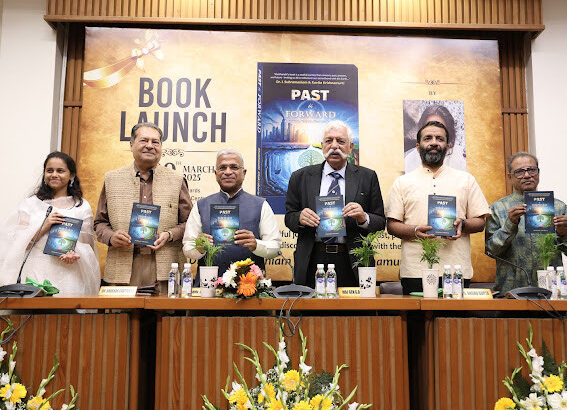
Past Is Forward: An Indian Youth’s Perspective on Sustainability

At a time of escalating environmental crises and deepening social divides, it has become more urgent than ever for young people to not only understand the world they inherit - but to question, reflect, and respond to it. Young author Shubhanshi Chakraborty in her book – Past is Forward : A Journey Back to Heal the Future, writes that she is shaped by a civilisation that has long understood the interdependence of life, the sanctity of nature, and the duty of stewardship. Concepts like Dharma, Ahimsa, and Prakriti are not modern interventions - they are foundational to our way of life.

Yet today, the values that once guided our relationship with the land and each other are often overshadowed by consumption, convenience, and a growing disconnect from both community and environment. In this context, it becomes crucial for children to reclaim their role as thinkers, storytellers, and changemakers. Not in imitation of the West, but rooted in our own traditions - our forests, our rivers, our tribal wisdom, our epics, and our lived realities.

This is not just about sustainability—it is about civilisational continuity. It is about asking the right questions, even when the answers aren’t obvious. It is about writing, creating, and imagining futures that honour both science and spirit. For 17-year-old Shubhanshi, that journey began at home—with the quiet example of her father, with stories from the margins, and with the realisation that to serve the environment is to serve the soul of this country.

How did your interest in climate change, environment and tribal communities begin?

My interest in this field of work did not begin with a textbook, it began at home. I have grown up in a household where I have seen my father selflessly dedicate himself to causes greater than himself, not because of recognition, but because of his dharma, his duty. For a long time, I thought that I too would go on to follow in his footsteps and fulfil my duty towards this country by pursuing a career in social work but life in its own way, opened another door. One afternoon, I found myself speaking to my father’s friend, Shri Satyarup Siddhanta - the youngest mountaineer to complete the Seven Summits. He told me that for the last five years he had been planning to go to the North Pole but the expedition was being repeatedly called off due to climate change. It was being cancelled not because people lacked the will, not because people lacked courage, but because the ice beneath their feet was no longer able to lift them up - melting eternally. That is when I realised that climate change is a heartbreak, a stolen dream and that there are people all around this world who are being forced to give up on their hopes because of it, which is why I understood that if I serve the environment, I am serving all of humankind. I am serving the future. I am serving the divine.

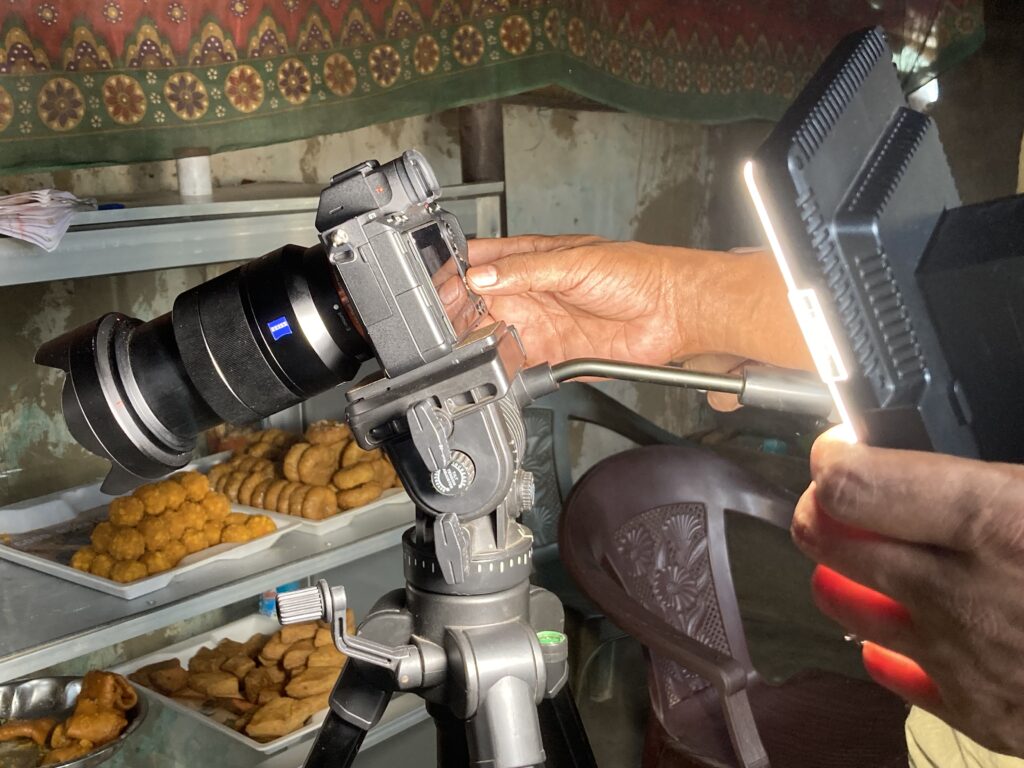
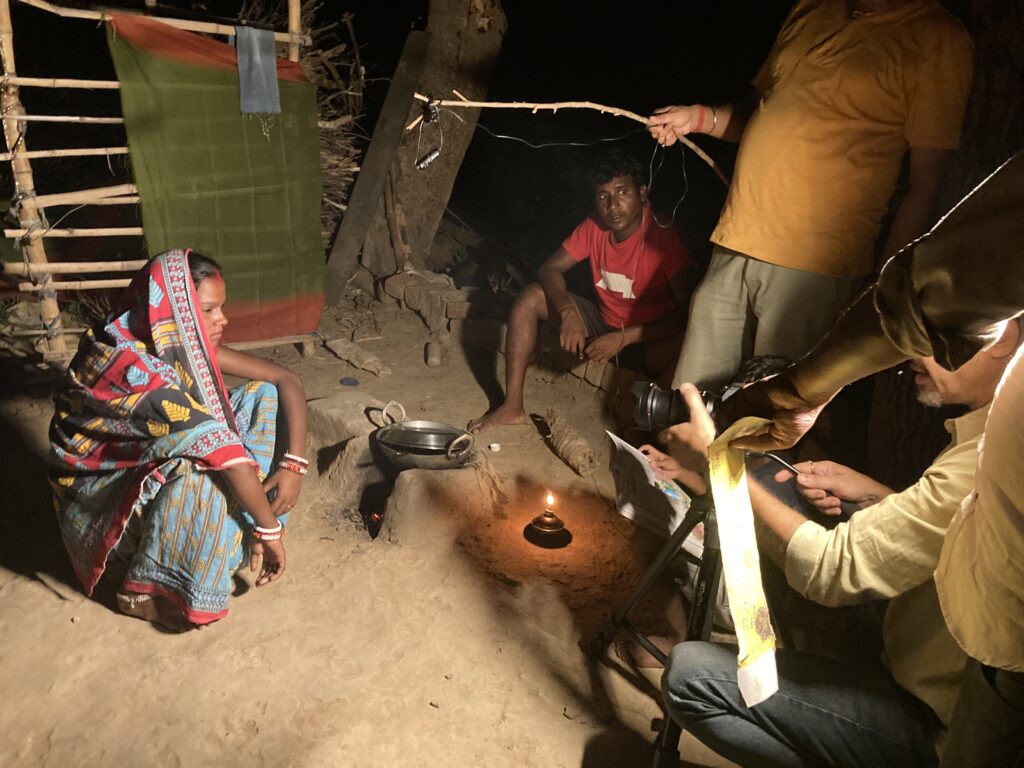
How did you decide to direct your short film Natok on Chauu dance as a 15-year-old? How did your father’s work with these communities impact you?

I recall my earliest memories to be in a small village called Pandadih in the state of Jharkhand, a village which my father has loved like his own child. I remember running barefoot through the verandah of the village home, laughing with the friends I had made there, while my father worked quietly yet tirelessly in the background. He built libraries where there were none. He championed education and opportunity. And he poured his heart into promoting the local culture, especially a powerful yet fading dance form called Chauu – a form that tells mythological and folk stories through bold, expressive movement. I have often found myself lost, in trains of thoughts with destinations I did not know of. I was inspired by my father. I wanted to be like him but I unfortunately did not know how to, so a few years back, I asked him, “What can I do? How can I help too?” He smiled and simply said, “Do it through what you’re good at.” And for me, it has always been art. That is where the idea of my short film ‘Natok’ was born. I won’t call myself a filmmaker - not in a traditional sense at least. I don’t come from a place of knowing technicalities very well. I am an artist. I work and create with my instincts. I like to take what I think, what I feel and bring it to life in front of me.

In Natok, I told a story through the eyes of a young boy from a tribal village. Every day he would watch his father become a hero through dancing Chauu. Sometimes he would see his father as Lord Ram, other times as Maa Durga—annihilating the evil like a true protagonist. But one day he accidentally sees a different side of his father—washing dishes outside a small eatery, being humiliated by the owner. This causes a cognitive dissonance in that child’s head. He is confused. Who really is his father? That fearless hero who destroys evil or this defeated man who has lost his all. He couldn't distinguish between his previous reality and this current helplessness. This contrast - the emotional dissonance the child feels - became the core of Natok. Through the film, I wanted to reflect the heartbreaking truth that while these artists pour everything they have into their craft, their art alone cannot sustain their livelihoods.

How have your ideas on Ecology and Sustainability changed over the years. In your book you talk about your gradual disassociation with Western notions of fixing problems. What in your opinion is the Indic view?

 When I was younger I used to associate the term ‘sustainability’ with monumental acts - saving forests, changing policies and essentially fixing our Bhu Devi. But now, I have come to the realization that neither does mother Earth needs ‘fixing’ nor is sustainability about fixing. Sustainability is about recognising. It's about recognising our own actions and that nothing in this world exists in isolation. Every single action of ours, no matter how small or big, returns to us in the form of the rivers which we can’t drink from anymore, the air which we can’t breathe anymore and soil which can’t feed us anymore. This is simply retribution. Over time, I have felt more and more disconnected from the Western notion that all problems can be “solved” with logic, funding, or technological interventions alone. While these have their own place, the Indic worldview doesn’t begin with the problem - it begins with the self. In our culture, the Earth is seen as a goddess, as Bhu Devi instead of a resource meant to be exploited. Trees are more than timber, they are van devtas. While writing this book, I often thought why? Why in a country as culturally rich as India, this sense of connection with nature is being lost? And the answer was cultural disconnection.

Children of our villages are growing up in a liminal space, where tradition is fading and modernity hasn’t exactly arrived yet. Our stories and knowledge which once connected our children to our land are being replaced by textbooks which speak in city-centric perspectives and abstract terms. Now when a child no longer hears the stories of Prithvi, no longer understands why we worship Tulsi devi or offer water to the Peepal tree - how can they understand sustainability? So, while the Western model tells us to “fix” the planet, the Indic vision reminds us that we belong to it.

Could you talk about the guardians of nature in Hindu traditions and how can kids benefit from knowing about them?

 In Indian traditions, nature has always been viewed as one with the divine. Forests, rivers, mountains - even the wind - have always been seen as living beings with consciousness. One of the most fascinating examples of this connection can be found in the stories of the Yakshas and Yakshinis - a class of mystical beings believed to be guardians of natural spaces like groves, trees, lakes, and mountains.

There is an old belief known as the Curse of the Yaksha, which warned that anyone who harmed a tree or disturbed a sacred grove protected by a Yaksha would face divine punishment - illness, misfortune, or even death. While today, such stories may seem highly superstitious to many of us, they still served as great tools for environmental protection - acting like a psychological safeguard, where people instinctively treated nature with reverence and care as they feared the consequences inviting the wrath of these beings. This enabled a society where ecological responsibility was a part of daily life through cultural memory and not something enforced by the law.

This kind of storytelling is especially important today – especially for children. Instead of teaching sustainability through cold hard data or diagrams, we can connect them with cultural stories which once shaped our relationship with nature so that when a child sees a forest, he/she can regard it as more than a patch of land and instead as the sacred home of a Yaksha - instinctively learning respect and responsibility. These ancient guardians - Yakshas, Yakshinis, and nature spirits can become symbols of conservation in our contemporary world -finally eliminating the cultural disconnection which the children of our nation are facing.

What are the rituals and customs that you think are important for studying sustainability. Are these addressed in courses on the topic?

I believe that some of the most important rituals for studying and understanding sustainability are those which train us in observation, restraint, and reciprocity. Observation makes us aware of the fact that this world extends beyond us and the impact of our actions. Restraint teaches us to function within limits and to consume mindfully. Reciprocity reminds us that we aren’t meant to be just takers, but also givers. I think that to truly understand sustainability, it is important for educational programs to include space for reflection, traditional knowledge systems, and emotional connection with nature. These can help students not only learn about sustainability but live it.

Could you please talk about your study on some indigenous scripts and their connection to nature.

In the fourth chapter of my book - Nature As A Guru, I have spoken of the oldest teacher of all - Nature herself. In this chapter, I explore the idea of how nature has shaped our spiritual, cultural, and linguistic expressions. One of the most powerful examples of this is the Warang Chiti script of the Ho tribe in Jharkhand. I had first seen this indigenous script in a short film made by my father known as magical script. This film was made on the developer of this script, Guru Kol Lako Bodra. What fascinated me the most was how this script is a living testimony of the tribe’s connection to nature. Guru Kol Lako Bodra – believed that the Earth was his guru. With great reverence for nature, he created the Warang Chiti script, seemingly from the movements and forms of yoga, which themselves are inspired by nature.

How have you used Rishi Patanjali’s framework to understand Sustainability?

 In the fifth chapter of my book - The Living Sutras - I reimagine Rishi Patanjali’s eightfold path of yoga as a powerful allegory for sustainability. Many of us unfortunately assume that Yoga is confined to just physical postures like asanas but I believe that Yoga is a well, filled to the brim with wisdom and a crash course for life. The Yoga Sutras present Ashtanga Yoga, the eight-limbed path, as a roadmap for ethical living, inner balance, and conscious action. When seen through the lens of sustainability, the first two limbs - Yamas (ethical restraints) and Niyamas (self-discipline) - become especially meaningful. For example, Ahimsa (non-violence) calls us to care for all living beings and tread lightly on the Earth. Aparigraha (non-possessiveness) reminds us to live with less and reject overconsumption. On the other hand, Shaucha (purity) encourages us to keep our surroundings clean, while Santosha (contentment) teaches us to find joy in sufficiency rather than excess. By aligning each of the eight limbs with principles of environmental and social responsibility, I’ve tried to show that the path of yoga can guide us not just toward personal liberation - but toward collective ecological harmony.

How can we measure Indic solutions to environmental protection with modern technological tools?

One of the key arguments which I make in Chapter 10 - Data Pradhan is that when data and technology is rooted in the realities of the land and its people, it can seamlessly align with Indic ways of environmental protection. Indic solutions have since ages emerged from lived experiences, whether it be the cycles of seasons or the intuitive knowledge of our Annadatas, our farmers. These solutions are value based, community driven and in sync with nature, which is why to measure them, we must move beyond extractive data collection and instead adopt participatory and ethical technologies. Technologies like GIS or even remote sensing can map sacred groves and biodiversity hotspots. AI too can help in analysing traditional calendars or almanacs like panchangs in order to understand the alignment of agriculture with climate patterns.

What according to you is the biggest take away from our shastras on sustainability?

I believe that the biggest takeaway from our shastras on sustainability lies in the verse: “Everything in this world is enveloped by the divine. Enjoy what is given to you, but do not covet what belongs to others.” (Śrī Īśopaniṣad 1.1). This simple verse teaches us to see our Bhu Devi as someone to honour, someone to revere and not exploit mindlessly. When we look upon the world as something divine, every action of ours automatically becomes an offering and this is when sustainability transcends from being environmental to spiritual, it becomes about balance, restraint, gratitude, and the quiet understanding that we are part of a larger, divine whole.