Promoting Auspiciousness in Everyday Life

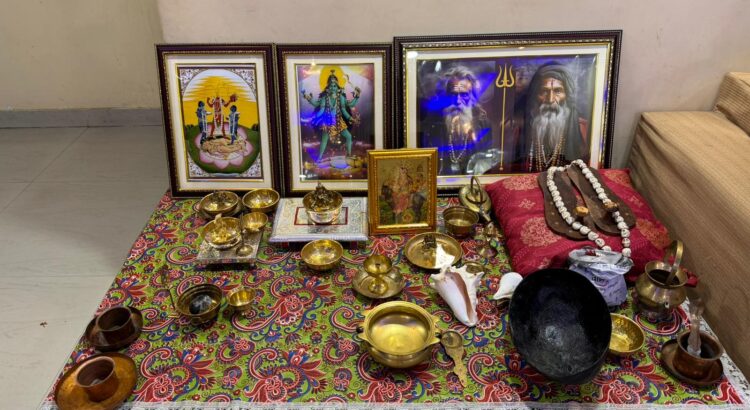
The conversation with Shri Prabhav Paturi at his home in Hyderabad with him sitting cross legged and narrating his in-depth personal experiences with spirituality, particularly rooted in Indian traditions and practices gave a wonderful insight on how our traditions flow and converge. His earliest childhood memories, such as his connection with the sun and the realization of Shiva while riding in front in a scooter with his father Dr Nagaraj Paturi (Dean IKS INDICA, through his experiences with his grandfather's teachings on Sri Vidya upasana and the influence of his guru and the Aghora tradition, all show how the paths differ but the quest is the same.

The metaphorical and literal interpretations within the Aghora parampara, particularly regarding Shamshan, Shiva, and Shava sadhanas, offer a unique glimpse into how spiritual practices intertwine with life experiences, transforming one's outlook. Prabhav’s experience with his guru Shri Vidurendranatha Saraswati (or Bapu as he fondly called him), the unexpected qualities he observed in him show how spirituality can sometimes defy societal expectations, leading to deep personal growth.

Prabhav’s work as a psychologist, incorporating Ayurvedic wisdom like Nadi pariksha and understanding of diverse genders through Sushrutha Samhita, demonstrates how ancient knowledge can be applied to modern therapeutic practices. It's fascinating how one can integrate this holistic view with modern psychology, especially in the realm of gender identity and mental health, advocating for a balanced approach that promotes well-being without invasive measures.

Prabhav has had a rich and nuanced spiritual and professional journey, one that bridges traditional wisdom with contemporary applications, particularly in helping others navigate their own psychological and spiritual challenges.

How do you apply your Vedic psychology experience to your work as a psychologist?

There are some things I’ve learned not from my grandfather, but from Bapu, which I currently apply in my therapy. One of the primary techniques is Nadi Pariksha or Nadi Vaidyam, which helps us understand the individual's Prakruthi, the state of growth or imbalance (Vriddhi), and the presence of any Doshas. Based on this, I try to suggest remedies within the framework of Ayurveda, though in India, we are not formally allowed to prescribe medicines.

In the modality of Vedic psychology, the study of Upanishads plays a central role. For example, I use the Taittiriya Upanishad for the Panchakosha analysis of a person, or the Ishavasya Upanishad in connection with Nyaya Shastra, to understand the causes (Karanas) of a person’s condition. Even within Ayurvedic theory, we can determine the kind of emotional state or energy (Avesha) a person is experiencing—whether it's psychological or psychosomatic. These definitions come from Ayurveda and are linked to the Manovikaras (mental disorders).

Another area many people aren’t aware of is related to what modern psychology refers to as Queer Affirmative Therapy. In this practice, when someone identifies as a particular gender, as a psychologist, I have to honor their perspective. However, Ayurveda offers a different, and in my view, more useful understanding. The Sutra Sthanas of the Sushruta Samhita, written at least 2000 years ago, mentions nearly 48 different genders and distinguishes gender from sex. It acknowledges gender as a preference, unrelated to biological sex, and this understanding is helpful for my work in Queer Affirmative Therapy.

In Ayurveda, we study gender through the lens of the three Gunas and explore how different Doshas contribute to such tendencies. Dosha in this context isn't viewed as a disease but as something that can be balanced. Ayurveda also offers remedies, not to change a person’s gender, but to address associated mood disorders and other issues. As both a psychologist and a researcher, I can confidently say that individuals who are non-binary or outside the conventional gender spectrum tend to face more psychological challenges, and there’s a clear correlation. With the three interventions—psychological, Ayurvedic, and Vedic—people either find clarity about their identity or, if they choose to remain non-binary, they live a healthier and happier life.

In contrast, modern medicine uses methods like puberty blockers or surgical procedures to alter a person’s body, often leaving them without the option to revert if they later wish to. I don’t agree with the claim that gender identity is entirely determined at birth, as there is no substantial evidence in modern science to support that. I believe it’s a choice, and Ayurveda helps people make healthier choices by promoting a better psychological outlook.

As Navaratri is approaching, how do we understand the concept of the Divine Feminine based on how people worship Devi, especially the Mahavidyas?

The concept of the Mahavidyas originates from Tantra, and texts such as the Mahakala Samhita, Tantrasara, and the Tripura Tapini Upanishad discuss the Mahavidyas and their emergence. In South India, the only Mahavidya with widespread acceptance is Lalitha, who in Mahavidya terminology is known as Shodashi, her mantra form. In the South, she is worshipped in various forms, such as Rajashyamala or Bala Tripurasundari. In the North, the origins of these teachings can be traced back to rishis who lived in Kashmir, and the term Kashmir Shaivism is often associated with Shakti. This is perhaps why the teachings of Mahavidyas spread more extensively than in the South.

However, nowadays, there is more general awareness of the Mahavidyas, though often with misunderstandings. In North India, people tend to focus on one Devi. For example, in West Bengal and the Seven Sister States, Kali is predominantly worshipped, while certain areas in Bengal are devoted solely to Ma Tara. People in Madhya Pradesh and Jharkhand focus more on Ma Bagalamukhi or Chinnamasta. Preference for specific Mahavidyas varies by region, but it's also important to learn how to transcend these boundaries and see each Mahavidya as being connected.

In my lineage, which is known as Tara Kula, we see all the Mahavidyas through the lens of Tara and identify which of Tara’s attributes each Devi represents. This perspective is something I've been taught but is often missing in both South and North Indian traditions. While most people confine the Mahavidyas to the concept of the Dasha Mahavidyas, the Mahavidyas themselves are much broader.

As a polytheist, (as Hinduism while not being Polytheist is more so than being Monotheistic) I can see parallels between the Mahavidyas and Greek goddesses. For instance, if Lalitha’s qualities were more aggressive, I would compare her to the Greek goddess Hecate. If Hecate were to be seen as a Mahavidya, she might be named something like Parambika, though not quite Paraparambika, who is Lalitha. Ultimately, the Mahavidyas represent the feminine concept. Without perceiving Devi as Adi Parashakti, the ultimate form, or Sarveshwari, who is omnipresent, spiritual growth in sadhana becomes limited.

So in this world of gender emphasis, how do we view Devi and her different attributes?

The distinction between men and women as separate and unequal didn't emerge in India until after the Mughal or other foreign invasions. Before that, male and female attributes were seen as complementary, and this was reflected in how society functioned. The idea of division and imbalance between the genders developed later, and education became focused on how to balance the perceived disadvantages of both men and women. Today, societal norms often dictate that men and women should behave in specific ways, but this wasn’t always the case in traditional Indian communities.

For instance, the concept of a "stay-at-home dad" is seen as modern, yet in some Indian communities, men staying home while the women worked was not unusual. Who stayed home or went to work depended on the nature of the work and the community, rather than rigid gender roles. This sense of collective responsibility shifted with modernity, which favoured individualism over community.

In contrast, the traditional Indian view of Devi embraces her as both a nurturer and a warrior, whereas modern views often reduce femininity to nurturing alone. If we look at the concept of angels in other cultures, for example, the female figures are often depicted as non-combative, unlike our own tradition where each community has a specific form of Devi that meets its needs. When we lost the concept of community, we also lost this balanced understanding of feminine power.

If we regain that sense of community, the traditional forms of Devi will once again make sense. In the meantime, women can draw from Devi’s attributes to promote auspiciousness at the individual, household, and community levels. Even in the small details, like choosing the right kind of jewellery for different times of day or seasons—whether sunlight, moonlight, or rain—there’s an understanding of what is auspicious and how it can be expressed.

Women can learn from Devi how to be present in every situation and how to protect themselves when necessary. In my kula, my guru would even say that we pray to be reborn as women in our next life so that we can bring this auspiciousness into the world. Ultimately, our goal is Manidveepa, where we attain a light body, and that body is female.
 

The 7th INDICA IKS MetaRetreat: Shakti – The Power Of Indic Feminine

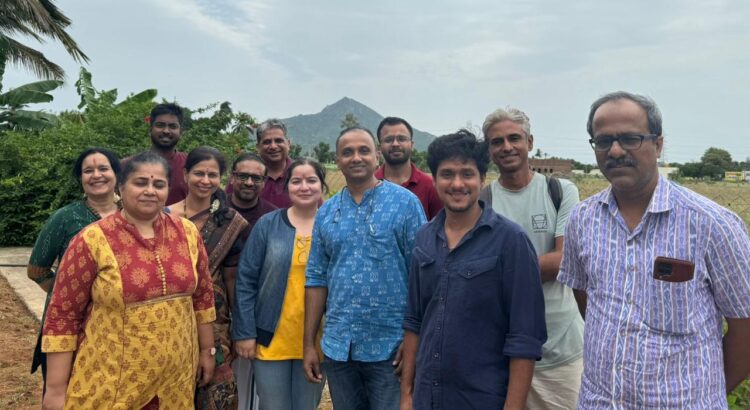
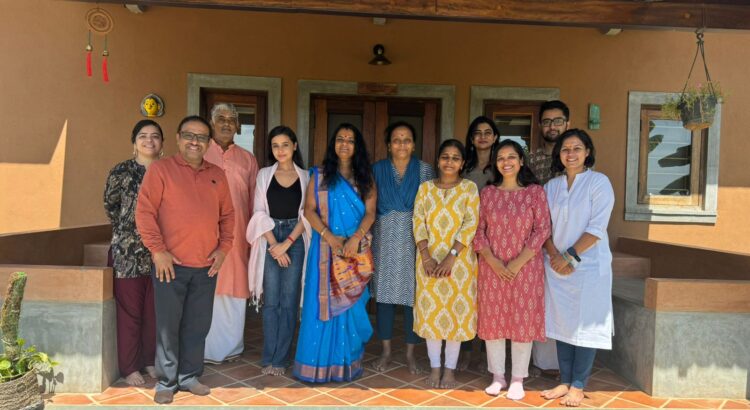
We are pleased to share that we completed our 7th IKS Meta-Retreat “Shakti: The Power of Indic Feminine” with Sh. Sumedha Verma Ojha, Member - Academic Council, INDICA  as the Lead Faculty at Bilvam Foundation, Tiruvannamalai from 22-Aug to 25 Aug 2024.

Bharat is Shakti. From ancient times to our freedom movement our ancestors, seers, luminaries have viewed Bharat as the Mother Shakti. Shiva-Shakti as Ardhanareeshwara has always been the defining principle of Sanatana Dharma. From ancient times to modern times, the Tatva of Shakti has guided us through our glory and fall alike. Every rejuvenation is with the guidance and power of Shakti - The Indic Feminine.

Healing with Ayurveda: Insights from Rural Practice

Dr Sathyanarayana Bhat has been an Ayurveda practitioner who also has a doctorate in Botany. He has worked with cancer management therapy and is a Sahithya Academy awardee and Naturalist. In this interview, he talks about his work with land and plants, with Ayurveda and healing. He stays and works on his farm near Karkala taluk in Karnataka.

What are the main ways in which Ayurveda is influencing health today?

Ayurveda, the ancient system of health and wellness, is deeply embedded in our everyday lives. Its timeless principles offer simple, practical solutions that can be easily incorporated into modern routines. By paying more attention to these practices, we can foster a healthier lifestyle.

For instance, the age-old tradition of “early to bed and early to rise” is a core Ayurvedic recommendation. This aligns with the Chaturmasa Vratha, a ritual observed mainly by saints today but originally meant for everyone. During this four-month period, certain foods like leafy vegetables (Shaka), pulses (Dvidala), curd (Dadhi), and milk (Ksheera) are avoided every two weeks. This is because, during the rainy season, these items can lead to health issues. Karkataka Masa (the monsoon season) is especially known for aggravating the Vata dosha, increasing the body's vulnerability to illnesses.

In Kerala, there is a strict regimen during this time, known as Ramayana Masa. People rise early, take baths, and visit temples, while the epic Ramayana is recited throughout the month. This daily routine, especially waking up during Brahmi muhurta (just before sunrise), is key to a long and healthy life. It costs nothing and can be practiced by anyone.

Ayurvedic wisdom is also woven into Indian festivals. After Ganesha Chaturthi, the next day is Rishi Panchami, a day linked to women entering their peri-menopausal phase. Unique rituals, like early baths in streams while holding Apamarga (Achyranthes aspera) sticks, highlight the symbolic and practical aspects of Ayurveda in addressing women's health challenges, such as fibroids and uterine disorders.

The Kojagari Vratha is another example of lifestyle correction, where the focus is on staying awake at night, as Ayurveda discourages daytime sleep. The word Kojagari itself means “awake.” Festivals like Dasara and Deepavali occur during Sharad ritu, a season dominated by the Pitta dosha. Consuming sweet foods (Madhura Bhakshya Bhojya) is encouraged to balance the excess Pitta in the body during this time.

What are the rituals which are connected to Ayurveda that can be done daily?

The wisdom of Ayurveda, with its deep understanding of seasonal changes, dietary habits, and daily routines, remains essential today. Its propagation and practice are not just a return to tradition but a path to a healthier future.

In Ayurveda, balance is key. For instance, Vata dosha is managed through practices like oil application, with the oil being lukewarm to suit the body. Exercise is essential, but only to half of one's capacity, as the other half is reserved to fight off diseases, akin to protecting our immune systems. This principle also reflects in Rithu sukha snana (seasonal bathing), where water temperature should match the season—warm water in cold months and cooler water during hot weather.

Ayurvedic practices also emphasize mindful eating. According to the Charaka Samhita, food is the ultimate medicine—Maha Bhaishajya. The Bhagavad Gita says that consuming food is like performing a sacred ritual, or Yajna. Daytime sleep is discouraged, and while drinking water, small sips during meals is the best practice.

Everything in Ayurveda, from diet to sleep, focuses on balance and harmony with nature, ensuring good health and longevity.

When and how did you incorporate farming into your practice?

I was born in a small village where agriculture was our family’s main source of income. However, the Land Reform Act took away our small landholding, leaving milk vending as the only source of income. It was a hand-to-mouth existence. As a teenager, I took on the responsibility of running the family by managing our two or three livestock, all while continuing my education. These circumstances were tough, but I managed to excel in both.

The passion and memories of those days eventually pulled me back to this profession after my retirement. I jokingly refer to this phase of my life as my Vanagamana Ashrama (Vanaprastha), where I have returned to livestock farming and the conservation of forests, focusing on medicinal plants. My knowledge of taxonomy and biodiversity has proven invaluable in this new venture.

Though I was a top rank holder academically, I often joke about how many times I’ve failed in the five years of farming, owing to the harsh geographic and climatic conditions of the Western Ghats. I affectionately call these hills the "Himalayas without the snow."

What are your findings from your cancer research?

My discovery was purely accidental. Decades ago, my preceptor, Dr. C. S. Somayaji, who is now a youthful 94, taught us that cancer is a karmaja vyadhi—a disease stemming from past deeds. However, the landscape has changed significantly since then. Today, nearly all my clients diagnosed with cancer have one thing in common: a long history of exposure to chemical drugs. Decades of using these medications to manage lifestyle disorders have taken their toll, yet the pharmaceutical industry rarely discusses the carcinogenic properties of these drugs.

In response, I have strongly advised my cancer patients to stop relying on chemical medications. By doing so, they remove one of the main contributors to the disease. The results have been remarkable—Ayurveda not only improves the quality of life but can also extend it. My first lung cancer patient is still alive, more than 30 years after their diagnosis.

Tobacco remains the primary culprit, especially in rural areas. Prolonged medication for diabetes and high blood pressure also accounts for many cases of cancer. Women who roll beedis for a living are particularly vulnerable to brain tumours. I’ve even seen cases where snuffing tobacco has led to brain tumours. One woman, who was regularly spraying chemical insecticides on cabbage crops, developed a tumour in the frontal lobe of her brain, yet she has survived for over 15 years.

These are my latest observations from this small rural setup, and they highlight the role of environmental and medicinal exposure in the growing cancer epidemic.

How do we deal with this constant demand for proof and validation of Ayurveda?

I strongly resonate with my friend P. Unnikrishnan’s argument from the study "Evidence-Based Traditional Medicine: For Whom and to What End?" Traditional medicine, including Ayurveda, has been used for generations, yet the modern push for scientific evidence in the form of Randomized Controlled Trials (RCTs) poses challenges for its integration into mainstream healthcare. This biomedical focus often overlooks the broader context of healing, which is deeply personal and culturally rooted.

As Charaka wisely stated, the physician’s duty is to understand the disease and alleviate suffering, not to control the lifespan (Na vaidyaha prabhurayusha). Healing, especially in cases like cancer, goes beyond measurable outcomes in labs. Who, then, should judge or validate my ability to heal, particularly when the results speak for themselves? My cancer patients have experienced extended, quality lives, with some surviving more than thirty years. This is real, lived evidence, not something confined to the walls of a research lab.

A related issue is the increasing scrutiny of Ayurveda pharmaceutical companies and their bold claims in the media. There has been a lot of debate about this, but we must ask: do we have any legal control over these advertisements? Mainstream ads show fantastical results, like lifting a lawn with a ball shot after consuming an energy drink. If such claims are permitted, why is the focus solely on Ayurveda's drug industry? There seems to be a double standard here that undermines the credibility of traditional medicine while allowing exaggerated claims in other sectors to flourish without much resistance.

Ayurveda deserves an honest and balanced evaluation, not by comparing it to the biomedical model but through holistic methods like Whole Systems Research and participatory approaches. Only then can we truly appreciate its potential to provide affordable healthcare solutions for people, especially those with limited resources.

The Enduring Charm Of Indic Storytelling

Indic storytelling, deeply rooted in ancient traditions, is a rich tapestry woven with myth, history, and moral lessons. From the Vedic hymns and the epic narratives of the Ramayana and Mahabharata to the intricate folktales and regional legends, this storytelling tradition offers a diverse range of narratives that explore cosmic principles, heroic exploits, and the complexities of human nature. These stories often intertwine the divine with the mundane, using allegory and symbolism to convey philosophical and ethical teachings. Through oral recitations, performances, and written texts, Indic storytelling has preserved and transmitted cultural values and spiritual insights across generations, reflecting the profound interconnectedness of the material and spiritual realms in Indian culture.

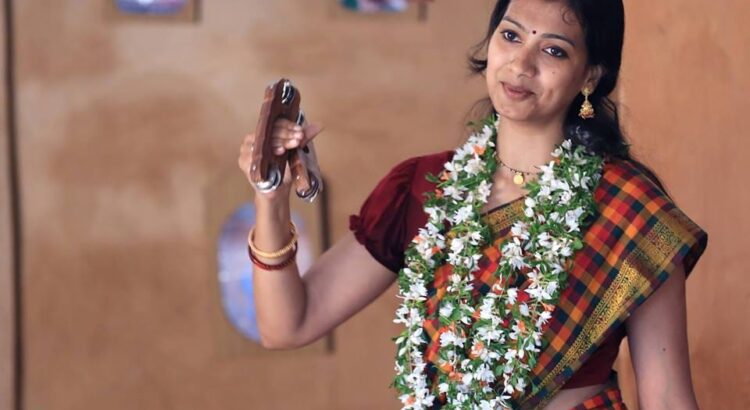
In this interview, Deepa Kiran talks about how she has dedicated her life to be with children, with stories, music, dance, art and craft.

How did you decide to turn to storytelling to bring alive our culture and traditions?

 Growing up, my world has been rich with Indian classical dance classes, Rabindra Sangeet practice, learning flute, violin and experimenting on my own with other musical instruments like keyboard. It has been about loads and loads of reading ...at home, in book stores and libraries.

I was sent for Bal Vihar and Bal Vikas classes with Satya Sai mission and Chinmaya mission - so stories, shlokas and songs have been an integral part of my growing up years. The stage has been my playground, with dance, drama, debates, oratory, school band as my core joys.

And we lived in different states of India, imbibing local language and culture each time.

I didn't realize at that time, but alongside graduation and post-graduation I was actively involved with strengthening my voice and speech. Secretary of Young Orators Club of Secunderabad, working for All India Radio as a compere, Teaching English and soft skills, writing columns for the newspapers such as The Hindu, The Khaleej Times. All interconnected with the journey of storytelling.

I was informally a popular storyteller among friends and family and knew that I loved it. But didnt realize until much later that I wanted to follow this as my life journey. It was in 2008, when I was 31 years, that the decision to take up storytelling as my life-work happened. My sons were around 3.5 and 1.5 years. I was diagnosed with a kidney malfunction and was put on a daily dose of 80 tablets of Prednisolone steroids. After 5 months of enduring this and with little recovery in my condition, in despair I reached out for hope anywhere and everywhere. A friend from my college days sent me a CD of bhajans and said "Just listen to these and have faith. You will be taken care of."

Like Ramana Maharishi's favourite story where the passenger in the bullock cart is carrying his luggage on his shoulders and complains how painful the journey is, only to be reminded "Put down your luggage...... the bullock cart will carry it for you"

The enchanting singer and his songs....led me to 'let go'. I 'put down my luggage' and of course the mind was cleared out its clutter and then I had this realization that the way out of my condition is..... to do what I love. I had to be with children, with stories, music, dance, art and craft. I soon put out posters for a summer camp, had about 30 registrations, spent three weeks with children, stories, smiles and arts. And in the following check-up the nephrologists said, "You are perfectly fine. We need not put another tablet inside you"

Ever since, I've known storytelling, children, music, dance, teaching....this is my life source and my shine. And when I shine I will spread the shine too. Ever since, I've made a conscious decision to pursue storytelling in my life and I feel really grateful for the journey it has taken me on.

I took it up with commitment in Hyderabad and by word of mouth, I travelled and worked across the country and around the world. And among other special milestones, in 2017 went on to set up our registered trust Story Arts Foundation. In 2015, received a national award for my educational videos for UGC on Storytelling and for research from British Council. These have definitely been encouraging turning points.At the end of it all, continuing to pursue storytelling and continuing despite all odds and being grateful for life's support.......has been a magical story in itself for me.

Bharat has an unparalleled repertoire of stories and a legacy of storytelling.  How does one pass it on to the next generation growing up on mobile phones and gadgets?

True! We have a rich heritage of not only stories but unique story-formats such as nested stories (story within a story within a story), and we also have highly developed oral traditions. Mahabhartah, Ramayana, Panchatanatra, Katha Sarit Sagar to name a few. Our ancestors knew the significance of 'Sravanam' listening as far more accessible, universal and democratic tool in comparison to reading, which is restricted to the literate community. Therefore the composers of texts often kept in mind, while composing that the 'oral' essence of the literature they composed had to focus on, as much as 'printed word' essence. Naturally use of stories, poetry, rhythm and musicality in speech became integral to the compositions.

Another interesting aspect is that any audience was understood to belong to one of the three categories. Adhamaadhikari - who listened merely to be entertained. Madhyamaadhikaari - who listened to be entertained, but believed there was more than entertainment here yet may or may not decipher the deeper layers of meaning. Uttamaadhiakri - who listened to be entertained, and expected depth and was equally capable of unravelling the inherent wisdom.  What is be noted here is that this categorization is without any judgement on the audience. It was mere information for the composer to keep in mind, the levels of audience one could expect and to accordingly ensure that each category is catered to and satisfied.

Such a simple, beautiful and effective pedagogical tool our oral tradition becomes.

Thus oral storytellers were many times the channel for dissemination of knowledge, news and views. And the skill and the act of listening held a high place. One of the words for a wise person is "Bahu Shrota", meaning 'one who has listened to many'.

In these multi-media and gadget inundated times, people ponder over what role can oral storytelling play? And can it find its way in? Can it leave an imprint and impact at all?

As a mother of two teenage boys, as a teacher for students in schools, as a teacher trainer and as a storyteller...from my various roles, I can reassure you that sharing stories orally still remains a powerful tool for connection and bonding. No amount of Ed-tech and AI can substitute the unique gift that narrating a story offers - the gift of our presence, the gift of personal attention.

While digital technology and multi-media has its immense benefits, it can also become a reason for lack of attention. There is a saying that a story is the shortest distance between two humans. So when digital technology is at times causing a divide in attention, putting aside our screens and gadgets and sitting around, making eye contact and speaking out stories...becomes an act of love, of giving attention, of saying..."I value spending time with you. I value speaking to you. I value knowing you."

By sitting down to tell a story, the elders are learning again, to give attention to their young. By listening to stories the young are receiving the right kind of attention and it builds trust in them.

Storytelling is a simple and powerful act of love, attention and connection.

For those who feel overwhelmed with their busy schedules and lack time to tell stories, I recommend beginning with 2-3 minute story time every day. A fairly achievable goal.

And for the other concern that the traditional stories are disconnected from the reality of the children today, I recommend starting with those few stories that resonate with you and help you make meaning of your life. In due course children will learn to make meaning and interpret the stories in their larger contexts and not just isolated pieces (which may not make sense).

Storytelling becomes an opportunity for bonding, opening up and having conversations.

 What are the challenges faced by story tellers today in terms of making stories fun when people have lost touch with our roots

One of the challenges is the pointless yet inevitable comparisons that are sometimes made, between the Indian stories and oral traditions with the non-Indian stories and non-Indian storytelling formats and contemporary storytelling formats. The intent, context, format and other factors vary from story to story, and it would not make sense comparing them. It's more helpful to acknowledge each for its own unique contribution by placing it in its cultural context.

Another challenge is a wrong assumption that children and youth today do not relate to traditional stories. My experience over two decades has been that a well-chosen, well-crafted and well-narrated story does entertain and engage the audience. Whether it is tales from Ramayana, the Upanishads or stories to understand Yoga.

For example: Children relate to stories of Hanuman and baby Krishna. Sundrakandam and Bhagavtaham, thus becominng a rich source of stories that can offer insights that build their life skills like resilience, empathy, dealing with fear and more.

The challenge is to bring back trust and faith of the adults in the potential and possibilities that stories and storytelling has. Challenge is to bring back the faith of the adults that children today are still interested in traditional stories.

 How do we make the stories fun? 

My biggest inspiration continues to remain Indian oral traditions. From Iran, to South Africa, Scotland to Indonesia, Columbia to Hawaii, Jammu to Trivandrum, Ajmer to Assam, I have experienced audiences of different ages and different backgrounds enjoy musical storytelling from our Itihaasas and Puranaas. I have experienced the universal appeal, like this applause from the audience in Austria, for story of Meera Bai at the Opera House https://youtube.com/shorts/95jgqzSsLmw?si=RCW6GUH_hEuKbT0m

What has worked in making our stories fun? 

Practising and honing my craft of storytelling, shaping and sculpting my stories with care ...as a storyteller, a teacher, an orator. And keep the intent, the sankalpa of creating an artistically integrated storytelling experience by weaving in poetry, music and movement.

Have you noticed our Satsangs? It is the stories, music and movement which brings alive not only the performance but the audience who can even relate to these, and join in with the rhythm and actions, clapping and moving!

Stories come in various forms and shapes. Which format is dearest to you?

Yes. With storytelling we have as many styles as the tellers. The range and variety is fascinating. Cultures all over the world have oral storytelling traditions with unique elements woven in.

Coming from this land and having grown up learning Indian classical dance forms Bhrat Natyam and Kuchupudi, as well picking up foundations of musical instruments such as the violin, I was always drawn to musical dance drama elements. The weaving in of music and movement in Indian oral traditions inspires me and my work is entirely based on this inspiration. And of course as a teacher of English, and one who taught children and adults from around the world, English, the challenge I enjoy is narrating stories of our land in simple interesting English, yet rooted in my cultural sensibilities. "Can you do a musical narration of stories from the Dashavatara in English for children of NRIs Deepa?" And that's how I began the journey of weaving together a tapestry based on observations from Hari Katha, adding musical instrumentation, songs in different languages of India, slokas in Sanskrit and movements from Kuchupudi.

LINKS to Musical Storytelling

Dashavatara https://youtu.be/scYXQcFxPp4?si=5t5142VoEwcIf0dQ

Ramayana ina folk tale https://youtu.be/Fh8Xuyvr7RA?si=Uw8-FgGqK_PhfozX

Do we have records of the history of story telling in India. We have had Harikathas where stories of worship are accompanied by music and sometimes dance. 

The Jaati Puranas is one oral tradition which orally documents and passes on the origin stories of a community and its people. This is being kept alive in a few places but is struggling for lack of patrons, whether it is the tellers in Adilabad, in Telangana, or the Kaavad storytellers in Rajasthan.

Oral traditions are highly culturally contextualized, with Hari Katha in Andhra & Telangana, Teru Koothu in Tamil Nadu, Yakshgana in Karnataka, Pandvani in Chhattisgarh, Kudiyaattam in Kerala, beng some of them. The list is endless and spread across the length and breadth of the country.  True to the saying about the diversity of Bharat, that every 100 kilometers you will find the food, dressing and customs change; so do the versions of stories and styles of their narration.

So consolidated records of oral traditions become a challenge, however the individual learning institutions, mostly informal and some formal ones, are doing their share in documenting and passing on the learning of their specific oral traditions such as Hari Katha, Burra Katha, Yakshagana, Teru Koothhu and many others.

Modern scholars such as Prof Nagaraj Paturi, A K Ramnujan and others have attempted to collate and document folklore and oral traditions of India. It is important to understand that I am referring in a drop, to this vast ocean of "oral traditions". There is much I am leaving out here. However I certainly hope this question, and this platform becomes a point of sharing and exchanging more.

What were some outcomes of the storytelling. 

Oh! Many many special moments come to my mind. Most recent is last month, when I had uploaded a story from the Upanishad on my Youtube channel https://youtu.be/pfzB1KRrF2w And a young lady from Nrimal village in Telangana, reached out to me writing, "Ma'am. Thank you so much. I don't know such stories at all. I am learning stories from my culture and also English. Can you please narrate the entire Ramayana like this? Me and many other young people like myself, can learn the Ramayana as well as English."  A young audience was impacted enough to write in and ask for more. What could be more valuable and satisfying?

A parent once attended an event of mine and said, "I've been following you and attending all your events ever since my 4 year old came for your storytelling on 'Rock Conservation' Deepa. There are rocks in his school and he used to scared of them. I brought him for your storytelling, hoping he'll sit through for 40 minutes and wishing this would influence him. He sat all through the 40 minutes and next week when he returned to school he was running and playing all over the rocks and telling his classmates, "You know rocks are our friends! And we must take care of them". This was the best evidence of the faith that Rock Conservation Society of Andhra Pradesh had in me and in the power of storytelling.

I received a message from an under-gradutae student once. I had narrated stories at their college and as always before leaving urged them to share the story and spread the joy. This young boy texted me the next day, "Ma'am my mother has been unwell and in the hospital since 15 days. Last evening I narrated the story I'd heard you tell. And for the first time in 15 days, she smiled.

Another one was during a pandemic when I conceptualized and offered a "Yoga and Story Path" program for children. It was so heartwarming to have children attend sessions eagerly and finally give feedback like, "I never knew Yoga could be so interesting Ma'am". And their parents chipped in and saying, "My children complain to attend online classes of school but for this Yoga and Story Path, they log in before time and don't even mind when the session extends". And like one child summed up the essence of storytelling, "ma'am in these lockdown times, sitting in my home I am now feeling so connected to everyone and everything"

Children and even teachers who are shy and nervous, under-confident or termed as introverted, have comfortably and voluntarily opened up and come forward to share their thoughts, share stories, and find their shine. I have seen this repeatedly in storytelling workshops I have conducted for close to 1 lakh teachers across the globe and many more children. Children with behavioral issues have naturally and gently settled down and become cooperative and participative instead of disruptive. My storytelling workshops are intended to offer a safe, comforting, inviting and inspiring space to find one's own unique shine and shine with it confidently! This has been the outcome and as I mentioned, having found my shine with stories my life-work is spreading this joy and bringing out the shine in each one of us.

(Deepa offers performances, workshops and talks/lec-dems on storytelling and oral traditions of India. To know more click https://linktr.ee/Deepa.Kiran)

When Technology Helps Us Walk Tall With Our Ancestors

As one navigates the small streets and by lanes of India’s temple towns, bustling now with shops and people, it is difficult to imagine a time when all the attention was on the towering gopurams and one entered the shrines with a deep quietness. Not rushing, pushing, prodding or purchasing.

What if someone comes along and recreates for us the mystery and magic of times when the Brihadeshwara Temple, a timeless marvel of Chola architecture, was built, evoking nostalgia for a bygone era of grandeur and spirituality. Standing tall in Thanjavur, Tamil Nadu, this 1000-year-old temple, often referred to as the "Big Temple," is a masterpiece of stone and sculpture, embodying the rich cultural heritage of South India.

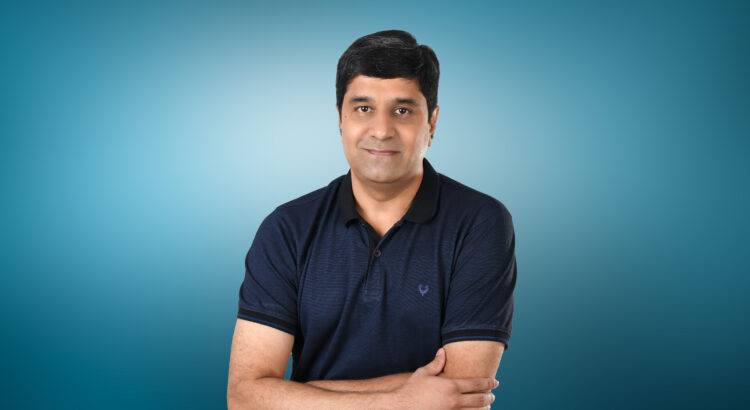
Tech entrepreneurer Ajit Padmanabh, Founder and CEO at Who VR has helped recreate our temples and sacred sites, giving us a digital preview of what went into the making of the magic. His journey has been a search of our roots through a multi-dimensional team of historians, chant-healers, artists, neuroscientists and content creators - retelling History like never before!

What are your favorite cultural memories growing up. Have you able to replicate them for children and their parents.

There are many of them! Life happened to me while I was charting my own path. So when I look at it in hindsight, these memories appear as the fundamental links for the reason why I am where I am. From a techie who wanted to retire and pursue instrumental music composition and production, becoming a culture-centric entrepreneur with a sense of deep purpose and mission is nothing short of a magical journey in life. I remember, as a kid, I was always fascinated with History in school and would always score the highest! I could recall Dates, Wars and Dynasties quite easily! My school project report would always have a pencil drawing by self of a temple facade (Hoysala, Vijayanagara architecture) as its cover.

I can never forget our trips in 90s to places like Rishikesh, Haridwar, Mathura, Rudraprayag, Joshimath, Badrinath as well as Varanasi, Bodhgaya and visiting various Archaeological museums in each of these sites in the north. Equally formative were our travels to temples in the south, especially Belur, Halebid, Mangalore among others. Another memory was my fascination with Harappa in 90s and wanting to make a 3D model of a house as a project in school. I even asked my dad to call the Pakistan Embassy for photos or details around the same! So, yes, History and Heritage were always circling around me while I lived my life. But now, History and Heritage are the very purpose of my life! I believe we have a long way to go at Who VR but have created considerable impact in the minds of children and their parents, through our unique immersive experiences. We also hope to provide tools and technologies to the next generation that are responsible, ethical and mind-expanding, amplifying the cultural renaissance in the years ahead!

How did your journey start in pairing culture with technology?

Aged 8, I was exposed to various genres of music, thanks to my dad who would bring in cassette tapes of the "latest" music of the time. I used to listen to a lot 50s and 60s music via LPs. In my teen years, I remember watching an instrumental music concert against the backdrop of an ancient monument (Yanni, Live at the Acropolis). It left me in awe of the visual splendor of the monument as well as the fantastic multi-genre music performed. 2 decades later, while working in Infosys as a techie, I released my debut album, Think Void, inspired by the Nataraja Temple at Chidambaram, its connection with the Akasha element and with the Orion constellation. I wanted to perform at heritage sites across India, with an intent to bring out the intricate architecture of our ancient temples and monuments. At that time, technologically speaking, I was fascinated by Metaverse and technologies like Virtual Reality. I had a vision of people wearing headsets at certain concert venues or tents, experiencing music of the artist virtually against a heritage backdrop. This was the first time I thought of pairing culture with technology. One thing led to another and today Who VR is a large ecosystem of possibilities of HeriTech (Tech for Heritage), one of which is our concert package called ConcertSCAPE.

Aged 11 or 12, I would wonder how our ancestors could have dealt with modern technology. Or did they know the tech’s consequences much in advance which is why they didn’t prescribe the same and always came up with Do’s a nd Don’ts when it came to usage of technologies during the ancient times? I always believed they knew a lot more than we do today and I think this was another aspect where I was thinking of culture and technology.

The current content available online about shrines and cultural spaces is very scarce, inadequate and often inaccurate. Is this the responsibility of the government or is the private sector better equipped to do this.

Who VR became larger than a music concert experience, primarily due to the problem of inaccurate and inadequate documentation on various aspects of a tangible heritage. I believe we are doing a great disservice to our ancestors for not bringing out their multi-dimensional knowledge and depth of their sciences, be it astronomy, anatomy, Physics, Chemistry etc.

In my opinion, the responsibility of showcasing our heritage and history to the world and catapult Bharat on the world stage in terms of knowledge economy lies with both Govt and private players. While Govt can implement an innovation at scale, the innovation invariably resides in the private sector. At the same time, the private sector needs to operate humanistically and not look at it as mere business and profit-seeking machine. Culture-centric Entrepreneurship is unique to India and should be leveraged to create powerful public-private partnerships leading to authentic, multi-sensory narrative of our civilizational history and ethos. People who are proud of their culture and heritage should come together and be a part of this renaissance, in whatever capacity they envisage themselves in.

We take our research very seriously and consult our historian partners, temple architects as well as archaeologists, specific to the ancient site we work on. All the content including 3D scene design, first-person walkthroughs, 3D Avatar creation, embedded videos, sound design, audio narrative are thoroughly researched and reviewed by experts for their authenticity and accuracy – a core principle at Who VR.

What are your primary areas of focus in digitizing information.  Have you been able to gauge impact?

Our primary focus has been to authentically digitize tangible heritage. Our LIDAR 3D Scanners are used to create highly intricate 3D models of the temple or monument, for its preservation as well as for dissemination of knowledge. We create multi-sensory, immersive experiences of these monuments in Virtual Reality, narrating their history and any significant aspects like architecture or astronomy associated with the monuments. This has been showcased at G20 to the foreign dignitaries as well as lakhs of visitors across Chennai, Amritsar, Bhubaneswar, Pune and New Delhi. Our time-travel experiences enable people to witness monuments, which are in ruins today, as they used to appear in the distant past, replete with the cultural ensemble of that time. Our patents enable us to create hyper-realistic, one-of-their-kind experiences of our tangible heritage. The impact on the audience has been phenomenal, to say the least. Firstly, it instills a sense of pride in them after having watched the grandeur and depth of our ancestor's ingenuity and knowledge. Their curiosity is piqued. Many kids said they would ask their parents to plan to visit such ancient sites during their summer holidays. Many of the visitors folded their hands while some of them removed their shoes as they embarked on the VR experiences. Many left to seek additional details around the monuments. At the core of a cultural renaissance lies an individual sense of awareness regarding lack of cultural pride and a means to claim the same. VR is found to inculcate 4x more focus in viewers and 4x more retention power than e-learning or other means of knowledge dissemination. With such high retention and attention-span possibilities, we believe Who VR is at the heart of our cultural renaissance with multi-sensory experiential monument walkthroughs. This would usher in a never-before opportunity to seek knowledge across all aspects of Indian Knowledge Systems (IKS) and be able to recall it at will, thereby aiding in civilizational re-building of Bharat.

Another focus area has been R&D on showcasing various aspects of Bharatiya knowledge through modern scientific approaches. For example, we are into neuroscientific research to help understand the prowess of musical raagas and Vedic chants on the human brain in terms of focus, calmness etc. We intend to embark on another track focusing on Dharmic AI, a foundational AI program, keeping in mind the addictive, habit-forming AI algorithms at play in our daily digital lives and if there lies a solution in our scriptures to rescript the anatomy of AI.

What were some of the takeaways of the meta retreat?

Meta Retreat was a wonderful opportunity to meet some brilliant minds this land has produced in our generation. The focus area came about as a result of the aspect being spoken in brief at the IKS conclave held in Pune. The discussions spanned across various technologies (not just software) on how Dharmic practices or indigenous intelligences can help augment current technologies and leapfrog Bharat on the world stage, be it in food processing or AI. It was an honour to be part of the Meta Retreat as an Acharya and absorb the depth and knowledge of fellow participants as a Vidyarthi. For me, some of the takeaways were that this generation is poised to imprint Bharatiya Parampara on the world stage across various technology-spaces. While we are keen to bring forth Dharmic Tech, at the same time, we are practical about its approach, application and consumption and are bringing out a vision paper shortly, which would include absorptive details around the same. My eternal gratitude to INDICA for organizing such a transformational retreat and to the hosts of the retreat to keep the energies sacred and high during the event.

The 6th INDICA IKS MetaRetreat: Deconstruction And Reconstruction: Beyond Colonial Discourse

We are pleased to share that we completed our 6th IKS Meta-Retreat “Deconstruction and Reconstruction: Beyond Colonial Discourse” with Prof. Kundan Singh, Professor @ Sofia University, Palo Alto  as the Lead Faculty at Bilvam Foundation, Tiruvannamalai from 26-July to 28-July 2024.

The Meta Retreat was organised in the context of the publication of Prof. Kundan Singh’s book “Colonial Discourse and the Suffering of Indian American Children.” The book, while characterising the impact of colonial distortions on Indian American children, presents a universally relevant deconstruction of James Mill’s The History of British India which is applicable to every context where its narrative made an impact. Prof. Singh’s book has been published Open Access as well in order to ensure a wide readership across the world. Please find its pdf as well as epub versions at the following website: https://link.springer.com/book/10.1007/978-3-031-57627-0

A Shilpa Guru From The Tolu Bommalata Tradition

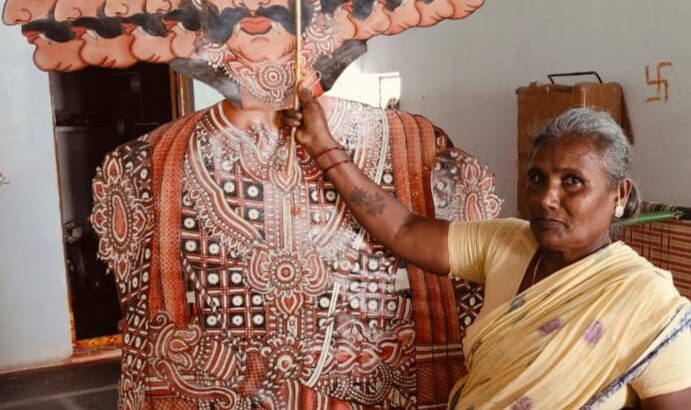
During a visit to the Ananthapur district of Andhra Pradesh with the Onamaalu team, which was researching local culinary traditions, we met Shivamma, recently honored with the title of Shilpa Guru by the Government of India. Shivamma is an artist of Tolu Bommalata, an ancient shadow theatre tradition known as the "dance of leather puppets." She and her son trace their art's origins to Maharashtra, migrating south centuries ago, with their family’s artistic lineage spanning over 10 generations.

Shivamma’s family has been performing this leather puppet art for more than 1,500 years, telling stories from the Ramayana and Mahabharata. This art form spread to Southeast Asia, where it was adapted to local cultures. We met her in her open workspace in Dharmavaram, where she was receiving congratulatory calls for her prestigious award. For the Shilpa Guru title, Shivamma created an artwork depicting the life of Shri Krishna, featuring scenes from his birth to adulthood, with Radha and Krishna at the center, reminiscent of Ardhanareeshwara. Devout in her spirituality, she takes her workers on an annual pilgrimage to the Arunachaleshwarar shrine in Thiruvannamalai to honor the spiritual side of their work.

Shivamma explains that their forefathers came from Pinguli in Maharashtra, and over time, many artists migrated to regions like Ananthapur, Karnataka, and Vishakhapatnam. Despite these migrations, they continue to speak Marathi, even though this art is no longer practiced in Maharashtra. The tradition is closely linked to Pinguli Chitrakathi, practiced by the Thakar community of Maharashtra, who performed various art forms, including Panguel Bael (storytelling with decorated bulls), Gondhal (group singing and dancing), and Fughdya (dance during Ganeshotsav). The Thakars practiced 11 art forms, including painting-based storytelling, leather shadow puppetry, stringed wooden puppets, and bullock art shows.

However, Tolu Bommalata is now in decline, and puppetry occupies only 1% of their time. Since the 1970s, reduced interest and economic hardships have forced the family to diversify into crafts like lampshades, wall hangings, and torans, which has helped them survive. Today, this art form is mainly seen at special events, international festivals, and exhibitions. For the past 10 to 15 years, they have traveled to exhibitions in cities like Delhi and Mumbai, showcasing their work and creating new designs.

Traditionally, performances were held outdoors near temples during festivals like Maha Shivaratri. Puppeteers traveled between villages, crafting and repairing puppets and instruments like the mukhaveena, mridangam, and kartal during the day and performing at night. The leather puppets are intricately crafted with vibrant colors and multiple joints, allowing for expressive movements.

Shivamma has been deeply involved in making small dolls and puppets since her childhood. She describes the meticulous process of preparing the leather, which once included deer skin but now uses goat and buffalo skins. Their work focuses mainly on themes from Indian epics, selecting small segments from the Ramayana or Mahabharata to create detailed characters, each cut with intricate patterns and painted in vivid colors. The performances often center on single episodes like Sundarakandam, Balakandam, or Sugreeva Patabhishekam, with a full presentation of the Ramayana taking up to 45 days.

Despite the hardships, the region has earned significant recognition, with 14 to 15 national awardees, including a Padma awardee, and now Shivamma herself receiving the Shilpa Guru award. She notes that focusing solely on puppetry would not have been sustainable, as live performances have lost their audience. Diversifying into other crafts has allowed them to create a viable market for their work.

As we watch Shivamma meticulously paint her crafts, it is clear that this is more than just a livelihood—it is her heritage and her life, a deep connection to the stories and songs of her ancestors. "And so, we continue," she says, "carving leather, crafting stories, and preserving an ancient tradition in our modern world."