kms download for windows 10 ✓ Activate Windows 10 Easily ➤ 2025

KMS Download for Windows 10: Activate Your Windows Now

If you want to use your Windows 10 properly, you need to complete the windows 10 activation process. One way to do this is by using a kms activator. This tool helps you activate windows 10 easily and quickly. When you activate windows 10, you can enjoy all the features and updates that come with it.

To start the windows 10 product activation, you will need a valid key or a kms download for windows 10. This key is important because it proves that you have the right to use the software. Without it, you might face limitations on your computer.

Once you have the kms download for windows 10, you can follow the steps to activate your windows 10 license activation. This process is straightforward and can be done in just a few minutes. After activation, you will have a fully functional version of Windows 10, allowing you to use all its features without any interruptions.

Understanding KMS Activation for Windows 10

KMS activation is a method used to activate Windows 10 through a service called Key Management Service (KMS). This method is especially useful for businesses and organizations that need to activate multiple copies of Windows 10.

With KMS licensing, companies can manage their Windows 10 volume activation easily. This means they can activate many computers at once without needing to enter a product key for each one. The KMS activation for Windows 10 is a great solution for corporate environments.

What is KMS Activation?

KMS activation is a process that allows organizations to activate their Windows 10 software using a KMS activation server. This server helps manage the activation of Windows products in a corporate setting.

Corporate licensing is essential for businesses that want to use Windows 10 on many devices. With KMS key activation, companies can ensure that all their computers are running a genuine version of Windows 10. This is important for security and performance.

How Does KMS Work for Windows 10?

KMS works by setting up a KMS server that communicates with the client computers. The KMS server setup is crucial for the activation process.

To activate Windows 10, each client needs a KMS client setup key. This key allows the client to connect to the KMS host and request activation. The windows 10 activation process is automatic once the client is connected to the KMS host.

In a corporate setting, Windows 10 corporate activation ensures that all devices are properly activated and compliant with licensing agreements. This helps organizations maintain control over their software usage.

KMS Download for Windows 10 Free

If you're looking for a way to activate your Windows 10 for free, KMS download for windows 10 free is a popular option. This method allows you to use a KMS server emulator to activate your Windows 10 without paying for a license.

Using the KMS auto feature can simplify the activation process. It automatically connects to the KMS server and activates your Windows 10. This means you don’t have to worry about entering keys manually.

Where to Find the Latest Version of KMS Download

To ensure you have the best experience, it's important to find the latest version of the KMS download. You can look for a list of KMS servers that are reliable and up-to-date.

Using a kms activation tool can help you manage your Windows 10 license management effectively. This tool can guide you through the activation method and ensure your Windows 10 is activated properly.

If you're using the kms download for windows 10 64 bit, make sure to check for compatibility with your system. This will help avoid any issues during the activation process.

KMS Download for Windows 10 64 Bit

For those using a 64-bit version of Windows 10, the kms download for windows 10 64 bit is essential. This version is specifically designed to work with 64-bit systems, ensuring smooth activation.

If you're looking for a windows 10 pro activation key free, the KMS activator can help you find one. This tool is designed to activate Windows 10 Pro easily.

Additionally, the windows 10 pro activator can assist you in managing your activation process. With these tools, you can enjoy all the features of Windows 10 Pro without any hassle.

How to Activate Windows 10 Using KMS Activator

Activating Windows 10 can be done easily using a KMS activator. This method is popular because it simplifies the windows 10 activation process. Here are the steps to follow for a successful activation using the kms activation method.

Step 1: Temporarily Disable Your Antivirus or Windows Defender

Before you start the activation, it's important to disable your antivirus or Windows Defender. This is because these programs can sometimes block the windows activation tool from working properly.

  • Go to your antivirus settings.
  • Find the option to disable it temporarily.
  • Make sure to enable it again after the activation is complete.

Disabling your antivirus helps ensure a smooth activation process without interruptions.

Step 2: Install WinRAR (if you don’t have it)

If you don’t have WinRAR installed, you will need to do this first. WinRAR is a tool that helps you extract files from compressed folders, which is necessary for the activation files.

  1. Go to the official WinRAR website.
  2. Download the version suitable for your system.
  3. Install it by following the on-screen instructions.

Once WinRAR is installed, you can proceed to extract the KMS activator files for windows 10 activation.

How to Activate Windows 10 Home and Pro Versions?

Activating both Windows 10 Home and Pro versions is quite similar. You will need to use the kms client setup key for the specific version you have.

  • For Windows 10 Home:

    • Use the appropriate kms client setup key.
    • Follow the prompts to complete the activation.
  • For Windows 10 Pro:

    • Use the specific kms client setup key for Pro.
    • Ensure you are connected to the kms activation server.

Both versions will require you to follow the windows 10 volume activation steps to ensure they are properly activated.

Alternatives to KMS Activators and a Sensible Approach

When looking for alternatives to KMS activators, it’s important to consider various windows 10 activation solutions. These solutions can help you activate your Windows 10 without relying solely on KMS licensing.

Some alternatives include:

  • Retail Keys: Purchasing a legitimate Windows 10 license from authorized sellers.
  • Digital Licenses: Using a digital license linked to your Microsoft account.
  • Volume Licensing: For businesses, corporate licensing can provide a more manageable way to activate multiple devices.

These methods can simplify windows 10 license management and ensure compliance with software regulations.

Legal Considerations of Using KMS Activators

Using KMS activators raises several legal considerations. The windows 10 activation process must comply with Microsoft's licensing agreements.

Here are some important points to remember:

  • KMS Activation for Windows 10: This method is intended for organizations with a volume license.
  • Windows 10 Enterprise Activation: This is specifically for enterprise users and requires a valid KMS host.
  • KMS Key Activation: Using unauthorized keys can lead to legal issues and software penalties.

Always ensure that your activation methods align with legal requirements to avoid complications.

Full Compatibility List of KMS Activators

When using KMS activators, it's essential to know their compatibility with your system. Here’s a list of components involved in the process:

  • KMS Server Setup: This is the initial setup needed for KMS activation.
  • KMS Client Setup Key: Each client must have a specific key to connect to the KMS server.
  • Windows 10 Activation Tool: This tool helps manage the activation process.
  • KMS Auto: This feature automates the activation process for ease of use.
  • Windows 10 Volume Activation: This is crucial for businesses activating multiple licenses.

Understanding these components can help ensure a smooth activation experience.

Frequently Asked Questions

Many people have questions about Windows 10 activation and the KMS activation method. Here are some common questions and answers.

How do I install KMS key on Windows 10?

To install a KMS key on Windows 10, you need to follow a few simple steps. First, you will need to use a KMS activation tool. This tool helps you enter the KMS key activation correctly.

  1. Open Command Prompt as an administrator.
  2. Type the command for the KMS client setup key.
  3. Press Enter to activate the key.
  4. Follow the prompts to complete the Windows 10 activation process.

Using the KMS server emulator can also help manage your Windows 10 license management effectively.

Can KMS activate Windows 10?

Yes, KMS can activate Windows 10. The KMS activation for Windows 10 is a reliable solution for many users. It works by connecting to a KMS host, which is a server that manages the activation process.

  • Windows 10 enterprise activation is also possible through KMS.
  • The KMS activation method is designed for organizations that need to activate multiple copies of Windows 10.

This method ensures that all devices are properly activated and compliant with licensing agreements.

What is KMS in Windows 10?

KMS stands for Key Management Service. It is a service used for Windows 10 volume activation. The KMS activation server helps organizations activate their Windows products efficiently.

  • The KMS client setup key is essential for each device that needs activation.
  • Corporate licensing allows businesses to manage their software licenses effectively.

KMS is a great way to ensure that all devices are running genuine versions of Windows 10.

How do I download RSAT for Windows 10?

To download RSAT (Remote Server Administration Tools) for Windows 10, you can use the Windows 10 activation tool. This tool helps you manage your Windows 10 license management easily.

  1. Go to the Settings menu.
  2. Click on Apps and then Optional Features.
  3. Look for RSAT and select the features you want to install.
  4. Follow the instructions to complete the installation.

Using KMS activation for Windows 10 can help ensure that your system is properly activated. Make sure your KMS server setup is correct for a smooth installation process.

On A Yatra To Protect And Promote The Vedas

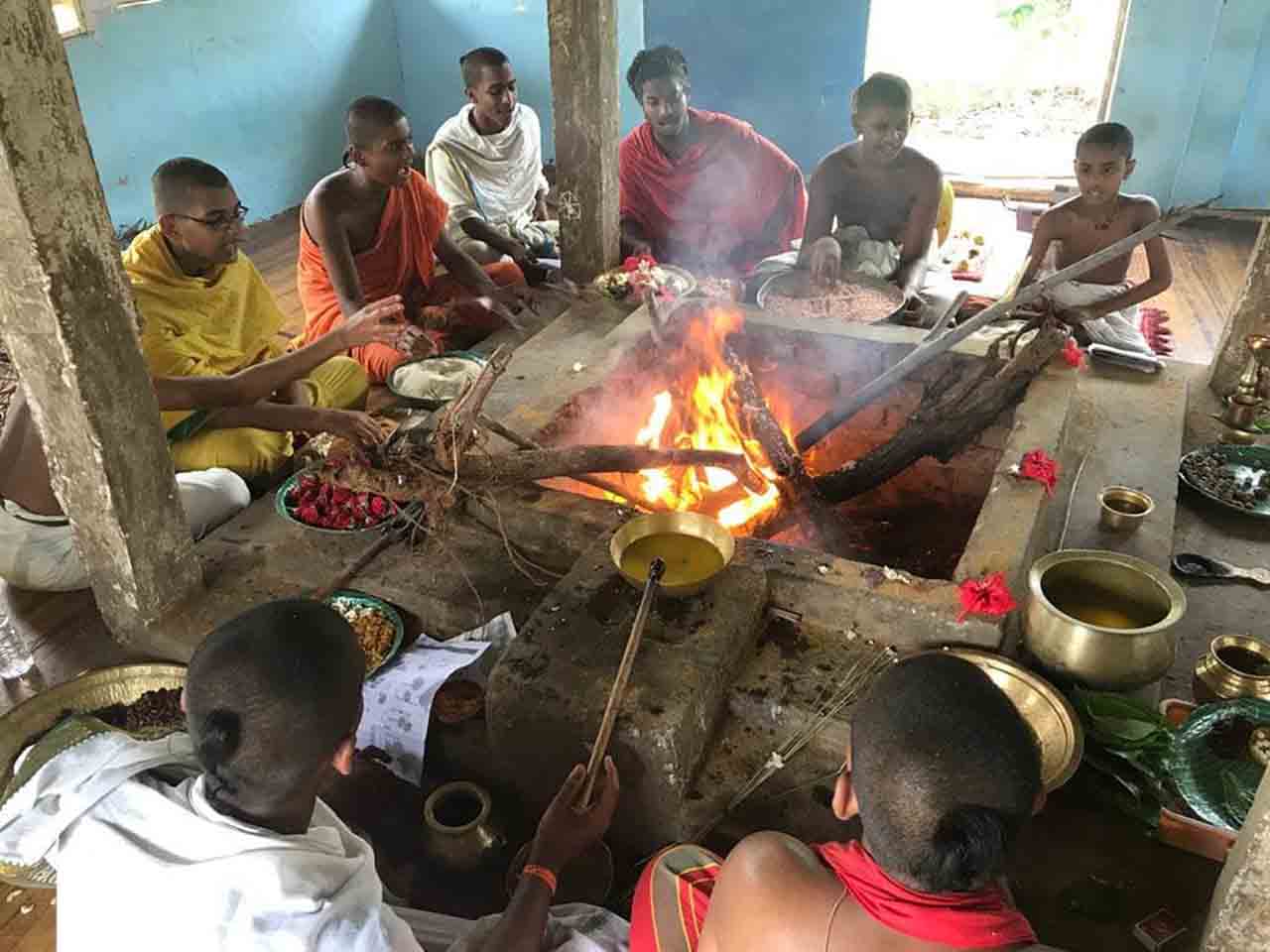
In January 2024, the founder of the Saptarushi Veda Pathashaala Shri Madhav Sarma presented a vigraham of Adi Shankara Bhagavadpada to Shri Hari Kiran Vadlamani, who through Indica has been committed to a manasik yatra of Shankara’s path. Madhav Sarma garu, based in Vishakapatanam, in Andhra Pradesh, believes that Dharmo Viswasya Jagathah Pratishta (It is righteousness which holds up the universe) and has dedicated his life to the protection and furtherance of Dharma and the teachings of Adi Shankara Bhagavadpada.

Started in 2009, the paatashaala was started by his father in order to ensure that the Veda and its values are not lost to the next generation. This family believes that whether or not the present Hindu society changes or not, it is important that there are people whose life-mission is Vedic learning.

As society moves away from the core of the Veda, exhausting the Chatustayam, or four diplomatic principles - “Sama (process of pacifying), Daana (charity), Danda (punishment), Bheda (division), only Veda is the upayam, says Madhav Sarma garu.  “It is only with these mantras that we can fight adharma. We have rakshsasas today who are threatening our dharma, our Vedas. For those who have rakshasa tatvam in their minds, we can only change their attitude with Vedas.”

To this end, he has been going on a Yatra across India to spread the message of Adi Shankara which is to unite the nation through our Vedic tradition. He spoke to Indica from Gokarna, and was on his way to Maharashtra the next day. Asked how we can unite in this cause, he looked around him, where his team was busy cooking the night meal. “All these Vedic pundits have come from different regions.  However they recite the mantras together, there is no difference. The acharya vyavahara (rules of religious activity) differs from state to state. For the dharma rakshana of the Veda we have chosen Vaidika margam.  You can decide if you want to recite stotras, conduct yagnas, or do bhajans. Everyone has to come together to do their bit to make sure our dharma is not harmed. We need to come under the grace of Jagadguru, under one umbrella.  We need to come together to work for the future of Hindu Sanskriti Sampradaya, from wherever we are.”

Madhav Sarma garu believes there should be a Veda Dinotsava to honour our rishis and their wisdom. Over the years, he has been marking this day in different parts of India. The purpose of the Vedas, the purpose of the sound of the Vedas, is the welfare of the world. And in the words of the Kanchi Parmacharya Shri Chandrashekandra Saraswathi, “the remedy for all the ill of the worlds, all its troubles is the return of all to Vedic Dharma.”

Madhav Sarma garu says that their mission is to not restrict Vedic education to traditional schools only but to make the entire nation be aware of its heritage.  For the last 10 years, he has made efforts to spread information about the Vedas to the common man through yatras to villages and towns across India. “The reason we started this yatra was to follow the footsteps of Shankaracharya. He did both Vedam pracharam (propogation) and parirakshana (preservation). In the same way, we would like to do both. With the same uddhashem (objective) we did the roopakalpana (design) of the Veda Bharata Parikram Yatra. Within our limitations we got together all the veda pundits who are with us and we went to every street, village, patanam (district) where we felt there was a need to promote the teachings, mantras, and knowledge about our heritage. In order that the coming generations know about the wealth of Vedic heritage, we roam from street to street.”

Every Ashada Shuddha Panchami, which is referred to as Veda Panchami, they have proposed the idea of ear-marking a day for the Veda, just like there is for Yoga. Reflecting at the special significance of this day, Madhav Sarma garu says that while usually we need to refer to the Panchangam in order to see muhurat for an auspicious function but not on this day when the whole day is auspicious. “In the past there was a niyama that all Brahmins, for one month in Ashada, had to do Dharma pracharam. Therefore Ashada was seen as a shunya masam, as no auspicious ceremony was held at this time. Over time, this has stopped. In order to emphasise the importance of this Vedic commitment, I asked all the Shankaracharyas and vedic pundits if this was alright by them and they were very supportive.”

“It would be good if Veda Day can be celebrated at the international level. Even before we had a Yoga day, there were so many people doing Yoga. But once it was declared as an international day,  even Arab countries are following yoga. More people are doing yoga, there is greater awareness. We bring together almost 500 Vedic pundits and mark the day. In order to make others join this movement, every year we celebrate this day in a different state. One day is dedicated to one Vedam.”

The yatra has been conducted for over a decade now and Ayodhya has always been in the route. He says they have been praying for the sthapana of the Ram mandir in Ayodhya every year with even the Police Commissioner joining in the prayers. This year, they plan to visit Ayodhya not only do Veda parayanam, but also to celebrate Veda day in Ayodhya. “We plan to bring 108 Rig Veda pundits to Ayodhya from all over India. They will do 108 iterations of the Rig Veda. That is our sankalpam.” He adds that we are the first to know of this.

When Veda day was celebrated at the Ma Sharda shrine in Kashmir in 2022, they had made a sankalpam that the temple should reverberate with prayers. They had recited the Durga Saptashati 108 times near the banks of the Sindhu river. Fortuitously, the prathishtana was done by Shankaracharya of Sringeri on the same day, June 4th, of the following year.

YATRA

Every January there is a one month yatra for Veda pracharam. They are following the route that Adi Shankara Bhagavadpada took. In these 30-40 days, the minimum distance covered is 21,000 kms mostly by vehicle. The padayatra distance is usually between 300-500 kms. They cook their own food during the travel. It is not like a normal pilgrimage by people, he adds. “It has to be very Dharmic, just the way Shankaracharya did. Because of the modern context, we are using vehicles, which has made it easier for us. It is amazing how he did his entire paadayatra of Bharata desham on foot at such a young age.”

In Kanchi matham are housed details of Adi Shankaracharya’s routes. There are basicially four peethams – Purvamnaya is the Rig Veda peetham in Puri, Dakshinamnaya is the Yajur Veda peetham in Sringeri, Pascimamnaya is Sama Veda peetham in Dwaraka, Uttaramnaya is Atharva Vedam in Jyotir matham in Badrinath. The trust prepares route maps to these four places. In addition Shankara has visited smaller places like Simhachalam in Vizag and so they visit those places too. Night is for prayanam as they travel all night. They eat one meal a day - satvik aharam. Their visits to temples are kept simple, to the chants of Jaya Jaya Shankar, Hara Hara Shankara. “We are not after VIP darshans, our aim is that our parayanam should be heard by as many people as possible.”

There are around 25 members on the yatra, each responsible for a particular Vedic rite. The Chaturveda pundits know all the four Vedas. Scholars of each of the Vedas do parayanam, some do abhishekam, some do homam. “We are praying for lokakalyanam (welfare of the whole world). Our pujas, our mantras, are not for our personal benefit, but for welfare of everyone. When someone calls us for a homam and gives a dakshina, our prayers are for them. But when we pray for Bharatakandam, we have to transmit the mantra shakti to many people. We ask them to chant Gayatri mantram, so that they are brought into this movement. Through these mantras and pujas we are purifying the whole place.”

India today is moving towards a Western model of pursuit of material happiness. Our acharyas have shown the way how Vedic practices, by turning us towards matters of the Self, can bring harmony and peace. Vedantins around the world have embraced this whole-heartedly. So should the Vedas be protected, from the incursions of those who don’t respect it or understand it fully? Madhav Sarma garu says that they are shielding the Veda (parirakshana) but if they don’t propogate it will disappear. “Those who are interested in studying the Veda should be encouraged to come up, that is our effort. Today, the number of Veda patashaalas is increasing, but not the number of students. The number of temples is increasing but not the number of archakars (priests).  So we are trying to balance promotion and protection. Our people are forgetting that we have a huge treasure in the Veda. We are trying to bring this forward.”

Ofcourse, even in the turn of this century, as industrialization took hold, people would ask: Can being a Vaidika allow one to lead a life of comfort? He says this project is not only about the livelihood of Brahmin priests whose life and families depend on the Veda. It is also the cultural heritage of a great civilization that needs to be protected, he adds. We need to do yagnas/yagas by ourselves as patronage from Kings and kshatriyas have long gone. “Now the government has taken their place, but if they don’t do it and we don’t have kings, who will perform yagnas? There may come a time when people may want to learn the Veda, but the Veda should survive for that.”

To this end, their main activity is Veda parayanam, of all the kandas of the Rig vedam, all the mantras, adhyayas, ashtakas. All the four Vedas - Rig Veda, Yajur Veda, Sama Veda and Atharva Veda are being taught. Madhav Sarma believes that even if people listen to the mantras, the place is energized. The reason that Veda adhayanam is alive in Andhra today is because of the continuity of the Guru shishya parampara. “My father and forefathers were Vedic scholars and I will teach my children the same. In other states, however, it has got cut after some generations. They are pursuing other professions. They have left their own vrutthi (profession in which generations have been trained) and gone to other vrutthis. There should be a rule that our children should compulsorily do Vedam adhayananam.”

Our acharyas have shown us the way. They have told us, “This is a Dharma that requires to be practiced. The Vedas are the breath of God and it is our duty to protect the Dharma not just to God but to all the rishis who have bequeathed this treasure to us.” It is people like Madhav Sarma garu who are ensuring this is passed on to the future.

Jainism Champions A Robust Epistemic Framework That Transcends Biases

Saathvik Devarakonda will be presenting a paper on Virtue Epistemology and Indian Philosophy titled "Epistemic Ethics in Jain Philosophy" at the Early Career Researchers' Conference organized by the University of Nottingham, UK, this month, funded partly by Indic Academy.

In this interview he speaks about his paper which delves into the concept of epistemic ethics within the context of Jain philosophy, considering the influence of Jain ethical concepts such as Aparigraha (non-possession/non-interference), on potential externalist epistemic practices that emphasize on further notions like compassion and intellectual empathy in philosophical endeavors. It scrutinizes how Syadvada (Jain theory of the relativity of knowledge) and Nayavada (Jain theory of perspectivism) within Jainism might contribute to the development of epistemic ethics, aligning virtuous principles with the pursuit of knowledge.

How did you get interested in studying Jain Philosophy?

When I was a recent high school graduate in the summer of 2021, before commencing my undergraduate studies in philosophy, I engaged in independent study to familiarize myself with the history of Indian traditions. Exploring various secondary sources, including works like Chandradhar Sharma’s A Critical Survey of Indian Philosophy and Jadunath Sinha’s Outlines of Indian Philosophy, I sought insights into the complexities of the world. Jain philosophy, particularly its conceptions lying in relative-pluralism, provided intriguing answers to my questions. I resonated with the apparently-plausible metaphysics and epistemology of Jainism and, in simpler terms, found alignment with its philosophy. My curiosity deepened as I explored sections of Umaswati's Tattvartha Sutras and Mallisena Suri's Syadvadamanjari, fostering a profound fascination with this venerable school of thought.

How does Jain philosophy approach the concept of epistemic ethics, and what role does it play in the pursuit of knowledge and truth?  What are the fundamental principles of epistemic ethics in Jainism, and how do they guide individuals in their intellectual and moral endeavors?

While engaging in philosophy, the critical aspect is the state of one's epistemic framework. Shaped by metaphysical and ontological commitments and their interconnectedness with surrounding factors, our epistemic framework dictates our ethics—the manner in which we act based on our best knowledge and beliefs. Hence, it is very essential to keep our epistemic framework healthy to both acquire and disseminate knowledge purported towards sound philosophizing.

The branch of philosophy that could exclusively deal with questions pertaining to the virtue of being a good knower to maintain a healthy epistemic framework, is what I refer to as epistemic ethics. In the realm of epistemic ethics, Jain philosophy stands out with its distinctive approach. It champions a robust epistemic framework that transcends biases, emphasizing specific practices over inherent qualities or gunas considered essential for competent knowledge seekers. At its core are three key tenets elucidated by Natmal Tatya in his introduction to Tattvartha Sutrasaparigraha or non-possession, anekanta or non-absolutism, and ahimsa or non-violence. The concept of aparigraha extends beyond the mere non-possession of physical objects to include ideas. Pujyapada Devanandi's commentary on the Tattvartha Sutra, known as Sarvarthasiddhi, delves into the idea of knowledge, intuition, and thought as possessions. While those who attain Kaivalya may not perceive possession towards thoughts, knowledge, and intuitions, for truth aspirants, clinging to specific ideas risks fostering dogma. Dogma, in turn, interferes with the autonomy of others' thoughts, words, and actions, constituting intellectual violence or himsa. Jainism underscores that each vantage possesses relative validity due to anekanta, demanding practitioners to grapple with cognitive issues for a robust epistemic framework.

In Jain epistemic ethics, the pursuit of knowledge harmonizes with the fundamental principles of aparigraha and ahimsa, exemplified by 'anekantavada' or non-absolutism. This doctrine recognizes the intricate nature of reality, urging individuals to embrace diverse perspectives for a comprehensive understanding. The ethical dimension lies in committing to approach knowledge with an open mind, recognizing the limitations of one's viewpoint, and respecting the autonomy of diverse perspectives. Adding a layer of epistemic humility, Jainism emphasizes 'syadvada.' By acknowledging that reality can be expressed in multiple ways based on one's perspective, 'syadvada' encourages a nuanced and tolerant approach to knowledge by qualifying all statements with perhaps (acknowledging the scope for falsifiability of knowledge). This aligns with the broader ethical goal of fostering a harmonious and respectful intellectual environment. Therefore, Jainism’s conception of epistemic ethics, with its emphasis on openness, humility, and respect for diverse perspectives, paves the way for a rich and ethical pursuit of knowledge within the philosophical landscape in my opinion.

In Jain philosophy, how is the relationship between right perception (Samyak Darshana) and ethical conduct (Samyak Charitra) elucidated concerning the acquisition and application of knowledge?

Philosophy is a dialectical endeavor. And when I say dialectics, I mean it from an evolutionary sense of perspective. I think Samyak Darshana and Samyank Charitra are quite intimately related. When we have an appropriate world view, as Samyak Darshana emphasizes, our vantage becomes such that we address the appropriate questions to reach the relatively right knowledge, which is Samyak Jnana, for our larger pursuit of truth. Samyank Charitra, or the right conduct is in distinct senses is both a cause and an effect of right perception as it also influences our perception of the world. The seventh chapter of Tattvartha Sutra deals with the idea of Samyak Charitra – the vows one has to take of abstinence from violence, falsehood, stealing, carnality and possessiveness.

To follow these vows, which is to put them to animate actions, one must inculcate them in thought which ought to govern the action. These vows ultimately translate into following ahimsa, anekanta and aparigraha. As per how I interpret the Jain philosophy, the relationship between Samyak Darshana and Samyak Charitra is symbiotic. Right perception serves as the foundation for ethical conduct, and ethical behavior such as respecting the autonomy of the other, inculcation of non-absolutism in thought, in turn, nurtures and refines the clarity of perception. In this fashion, while both receiving and conveying knowledge, I would by the virtue of truth be cautious of my implicit biases which could foster dogmas and acknowledge my limitations while conveying the same to another being. This interconnectedness of Samyak Charitra and Samyak Darshana forms the essence of a holistic and ethical approach to the acquisition and application of knowledge within the Jain tradition.

How does the concept of Anekantavada (the doctrine of non-absolutism) influence epistemic ethics in Jain thought, particularly in dealing with diverse perspectives and truths?

We live in an infinitely complex world driven by the scientific methods to push the walls of known into the unknown. We draw inductive inferences every now and then to frame a generalized heuristic lens to interpret and comprehend the current and future phenomena we might encounter and address the challenges they might pose us with. In such an endeavor, our observation is necessarily influenced by the current theoretical understanding (which could be falsified soon enough). There are infinite courses our comprehension could hence take, and to wade through these complexities, it is necessary for us to take a moment to acknowledge the multifaceted nature of reality. We often encounter multiple explanations to a phenomenon or plural perspectives on a given issue that might even appear to be radically contradictory. For each perspective of ours, we might show certain possessive tendencies that could result in dogma (ultimately violence in thought), by searching for resonating evidence that leads to the risk of a confirmation of bias. Not only does such a dogmatic belief lead to unwarranted absolutism, it also results in the interference with the autonomy of the other, and proves to be harmful to both the self and the fellow being. Therefore, rationally speaking, we need a framework that can accommodate pluralism without ending up in skepticism. Jain metaphysics, or Anekantavada, correlates to such a view of reality and seems to be the best fit framework for the task of harmony.

Let’s take the instance of Tycho and Kepler, two pre-telescopic astronomers, who observed the movements of Mars with two different world views — geocentric world view and heliocentric world view respectively. Tychoo was from an era that believed in the geo-centric model of our solar system. Though the observations he made on the movements of Mars are very essential to expand our understanding about certain heavenly bodies, placing the earth in the center of the solar system somewhere or the other disrupts the idea that observation is straightforward and objective. Kohler on the other hand studied the movements of the same Mars with a heliocentric framework in mind. I see this as a dialectical interaction between two individuals, two world views, and two vantages to view the same phenomenon where the one in temporal progression falsifies the former.

Therefore, while understanding the infinite possibilities and qualities of our reality, or even while performing an observation as simple as viewing an object, it is necessary to first acknowledge the limitations of our sensory experience, and the knowledge we have mustered up till yet using sensory data, because somewhere or the other, the implicit belief that confirms our current worldview could impact the way we process and describe information impacting our epistemic framework. Hence, by the virtue of truth, in epistemic ethics, alongside anekantavada, its epistemic corollary – syadvada – also become an important practice of conditioned predication as a sign of epistemic humility. When we acknowledge our limitations while dwelling in an infinitely complex reality, it becomes an excellent opportunity to further the dialectical evolution of knowledge traditions for the sake of a preparatory endeavor of keeping ourselves ready for the future complexities and challenges. And in this course, a notion of an ethics of thought or epistemic ethics seems essential to avoid any sort of regress.

In the Jain tradition, how do epistemic ethics intersect with the practice of non-violence (Ahimsa) and compassion (Karuna) in the pursuit of knowledge?

In the Jain tradition, the synergy of epistemic ethics with the tenets of non-violence (Ahimsa) and compassion (Karuna) is integral to the quest for knowledge. Rooted deeply in Jainism, the ethical framework of Ahimsa transcends physical harm, encompassing intellectual and verbal spheres. This principle forms a profound connection with epistemic ethics in several dimensions. Jain epistemic ethics places a strong emphasis on valuing diverse perspectives, resonating with the spirit of Ahimsa. This commitment creates an intellectual milieu that shuns aggressive discourse, aligning with the non-violent ethos. Simultaneously, the practice of Karuna, or compassion, within epistemic ethics involves a deep understanding and empathy toward varying viewpoints.

This compassionate comprehension is a cornerstone of Jain epistemic ethics, fostering a mutually enriching exchange of ideas. In the pursuit of knowledge, Jain epistemic ethics guides individuals to exercise intellectual Ahimsa. It advocates for the responsible use of knowledge, steering clear of arguments that may cause harm or disrespect to others. While encouraging assertiveness in presenting one's views, Jain epistemic ethics maintains a delicate balance, ensuring that intellectual exchanges remain non-violent and respectful. Respecting the autonomy of others emerges as a core tenet of Jain epistemic ethics. This acknowledgment recognizes every individual's right to uphold their perspectives without coercion or intellectual aggression. The practice of compassion (Karuna) in knowledge-seeking involves engaging in dialogues infused with understanding and empathy. This compassionate approach contributes to cultivating a positive and constructive intellectual environment. Hence, the intersection of epistemic ethics with non-violence and compassion in the Jain tradition creates an intellectual space characterized by respect, understanding, and a commitment to preventing harm in the pursuit of knowledge. These ethical principles serve as guiding forces, fostering an atmosphere of harmony, humility, and compassion in the realm of intellectual exchanges.

Can you elaborate on the role of introspection and self-awareness in Jain epistemic ethics, and how these contribute to the ethical dimension of knowledge acquisition?

In Jain epistemic ethics, the role of introspection, often referred to as 'anupreksha dhyana,' and self-awareness holds significant importance, contributing to the ethical dimension of knowledge acquisition. Anupeksha dhyana, though not an equivalent of introspection, is still the closest concept we can deal with while trying to understand the contribution of introspective methods to the ethical dimension of knowledge acquisition in Jainism. Introspection involves a deep and systematic self-examination of one's thoughts, motives, and actions. In the context of epistemic ethics, this self-reflection helps individuals to become aware of their biases, preconceptions, and potential sources of intellectual dogma. Anupreksha Dhyana encourages practitioners to identify their implicit biases that might influence the acquisition and dissemination of knowledge. By acknowledging and understanding these biases, individuals can strive for a more impartial and open-minded approach to knowledge. And further introspection fosters humility by making individuals aware of the limitations of their own perspectives. Recognizing that one's understanding is inherently partial and subject to personal biases contributes to a more open and receptive attitude toward alternative viewpoints.

Such self-awareness in Jain epistemic ethics involves understanding one's positionality in terms of socio-cultural, philosophical, and personal contexts. This awareness is crucial in recognizing how personal experiences and background might shape one's approach to knowledge. Self-awareness also encourages individuals to seek knowledge responsibly. This includes critically evaluating information sources, being mindful of potential prejudices, and ensuring that the pursuit of knowledge aligns with ethical principles. Therefore, introspection and self-awareness in Jain epistemic ethics form integral components in the ethical pursuit of knowledge. They facilitate the identification and mitigation of biases, nurture humility and open-mindedness, and contribute to a respectful and empathetic engagement with diverse perspectives.

Studying The Integral Core Of Man Through Family

Abhisek Kumar Panda has completed his MSc in Vedic Sciences and will be commencing his PhD at IIT Delhi for his research in IKS based public system/policy under Prof. Nomesh Bolia. Indica is proud to be part of his academic journey. In this interview he speaks about his research one of its aims being the development of a spiritually conscious paradigm for the institution of family that is non-local and non-physical. “The effort here would be to establish the universal purpose of the family. It would integrate all aspects from matter to consciousness.” He says this is necessary as the first communal system of human society can’t take a linear or narrow approach.

What chose you to choose the topic of the unit of family for your PhD? Was it something you studied in your Masters?

My master's was in Vedic sciences from MIT School of Vedic Sciences. I had studied sociology and polity in depth. There are a few institutions that have made our civilisation flourish. Temples, Jati-Kula, Family, Rashtra are noteworthy. Family as an institution is under severe attack today, due to policies made under Western thought models and ideologies, and this is the last fort standing. But there is very little awareness of this. Such social institutions help individuals walk in the path of Purushartha. Hence, I choose the subject.

There are many examples of family functioning as a unit in very traditional systems. Such as the Guru and Guru Patni and how they are seen a unit in terms of the role they play. How is modernism changing the role of such traditions?

Modernism, especially the liberal ideology of individualism and rights-based narrative is leading to the breakdown of traditional structures. There is no space for lokakalyanam and lokasamgraha which were the foundations of these institutions. All this arises due to the duality of matter and spirit principle in enlightenment ideas. There is no integral link with the individual pursuit of artha and dharma, or annamaya kosha is cut off from vijnanamaya kosha. When seen in the context of family, we find that the policies and ideologies influencing via academia, media or state actions are hampering this spiritual evolution of the jiva.

How is the shift from community to individual is going to impact the transmission of knowledge regarding our culture?

There are two/three ways in which external impact on Indian culture is addressed. One is accepting the western culture as superior and Indian as inferior. Two, trying to accept the good in western culture. While first one is suicidal, the second one doesn't help either.

Manifestations of ideas in institutions don't happen in silos. It is not possible to accept good and reject bad. Things don't exist that way. The way ahead should be transformation of western ideas under the Indian/Dharmic paradigm. So when we talk about knowledge transmission and the individual, the idea of the individual must be understood as a jiva. Not as a blank slate of John Locke, or Cartesian duality of matter and mind or Marx's idea of material creative being. If we can transform this through institutions and policies, we will bring the renaissance that our Rishis like Swami vivekananda and Sri Aurobindo talked about.

You want to study family as a system without it being linked to geography or race. Is this possible and feasible?

Definitely, family systems varied with geography. But the principles or spirit was common, the structure varied. Nowadays, universalism is an idea under whose grip we are living. So drawing from the earlier point, I am trying to find the universal principles of family under Dharma/Indic systems and what could be policy response.

How do you think issues such as feminism, gender role shifts, nuclear family structures impact how people relate to these ideas at home?

An Indian critique of feminism, gender study would be they lack understanding of lokakalyanam or universal consciousness, since they lack an integral understanding of matter and spirit. So the ideas of Rna, kartavya, karma are lost as they emanate from spiritual understanding. In fact, they accelerate lower-order vrittis in people. Identity politics shrink the identity of a jiva. So the emancipation of jiva through dharma is lost and we find pursuit of anartha.

What concepts of IKS would you be looking at in your study - the grihasthashrama, the role of pitrus, the veneration of parents? What impact do you hope to create with your study?

Currently, my research proposal is evolving. While I am looking at Sri Aurobindo's integral philosophy and Panchakosha and Purushartha, varnashrama model, the IKS concepts of rina, pitrus would be looked at in due course.

The research will be divided into three major parts. Developing a spiritually conscious paradigm for the institution of family that is non-local and non-physical. The effort here would be to establish the universal purpose of the family. It would integrate all aspects from matter to consciousness. This is necessary as the first communal system of human society can’t take a linear or narrow approach. Secondly, critical evaluation of different prevailing paradigms and their policy manifestations using the above-developed one. The third part would be redesigning laws and policies related to the institution of family and marriage and state welfare schemes. It would finally lead to strengthening the knowledge transmission mechanism of the family and its future evolutionary role. There are signs of the family regaining the formal pedagogy functions in the form of home-schooling etc. Hence, a dire need to shape it through different policies. Statistical tools to validate would be given importance.

I hope to generate some policy guidelines as Hindu law and Uniform Civil Code have severe lacunas. Also, I look to create an index/report to counter Western reports of World Economic Forum and other NGOs. We need to reverse the gaze and judge based on our models instead of they pointing down our institutions as regressive etc.