
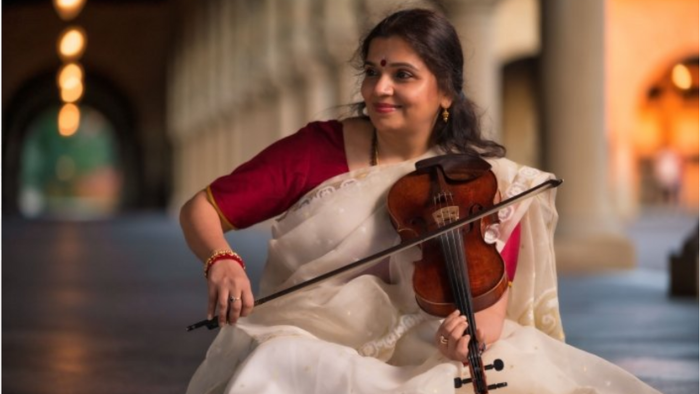
Indian Music Training System is the Best in the World: Violinist Kala Ramnath

Great American composer and musician Terry Riley was greatly influenced by Jazz and Indian classical music. Writing about Indian violin player Kala Ramnath in the San Francisco Chronicle, he said she is “Like an angel in human form,” and “she’s one of the greatest musicians on the planet.” He says she has a tremendously relaxed, sublime way of playing” that draws one immediately. Kala is a seventh generation classically trained musician, hailing from an illustrious family that made both forms of Indian classical music its own. Learning from a young age, with music all around her, she says that “Technique, tunefulness, matter in music and lastly feel in the music” was the lasting legacy she inherited from her family that includes violin vidwan Shri T N Krishan and vidushi Dr N Rajam. 

The musical values that lay at the core of this musical tradition, Kala Ramnath says were “Discipline, surrender with no ego to the music, dedication, practice, perfection, being respectful, humble and grateful always.” Apart from her family, she has learnt from one of the doyens of Indian classical music, Pandit Jasraj of the Mewati Gharana. He commented on her name which in Sanskrit means art, and especially fine arts. “She stands true to her name in every way,” said Pandit Jasraj of her. During this mentorship Kala began revolutionizing approaches to vocalized Hindustani violin technique.  

The violin is not alien to Indian culture. Asked about the adaptation of the ‘Western violin’ to Indian music, Kala interjects. “I would not call it the western violin. The violin in its present form maybe from the west but its ancestor has been in India from the time of the Vedas and it was called the Dhanur Veena. Later on this instrument got named after the demon king Raavana as Raavan hattha as he was a master of that instrument. And in the 7th century when the Arabs came to trade in India, they took this and it became the Rababeh in Persia. From there it went to Spain during the moors invasion where it got named as the viol. From there it went to Europe and became the viola and then the violin and returned to India in the 17th century as the violin along with the Britishers.”

Kala’s family has played the family in both Karnatik as well as in the Hindustani formats. She says that “hearing us (her family) play the violin does not ever make anyone feel that it's not a native of India because of how we have mastered this instrument according to our music and our tastes. For the west, the music is on the notes which is why you hear a lot of staccato notes on the violin but for us the music is in-between the notes. We created a technique for the glides and gamaks to hit the right microtones. This way of playing the instrument, which is what has intrigued people abroad along with the tone we bring out of the violin.” Read more about the difference between the Indian violin and the Western violin in this article

Kala has innovated with the instrument to create new sounds and depths. She has brought down the pitch of the violin by using viola strings, “so that the violin is not high pitched and is pleasing to the ears when heard for a long time as a solo instrument in concert.” 

In an earlier interview she had mentioned that she could easily learn and perform other genres of music because of the way Indian music is learnt by listening rather than written notes, an aspect commented on by many international musicians. “I think that is the hallmark of our tradition. All musicians in our tradition learn to hear and visualize the placement of the notes in their mind due to our specialized system of training thus making it easy to observe and translate what musicians from other genres are doing in a jiffy. The brain starts translating whatever anyone does into notes and figuring out the raag of phrases which are sung or played, to which they correspond to, thus making it easy for us to collaborate with any genre around the world.”

Kala says Indian training pedagogy is the best in the world.According to me our training is the best. No other system of music has something so immaculate and meticulous. Also this music has not been written down and in fact is passed from generation to generation and is still alive this way. That should speak volumes as to how special our tradition is.” 

Her co-musicians have frequently commented on how versatile Indian musicians are due to the systematic training of the tradition. She has passed on to students all over the world this art including violin techniques, the music itself and the art of improvisation.

Improvising spontaneously and effortlessly has won her deep appreciation. She started with the iconic band Doors. “I did not know who the Doors were when I played with Ray Manzarek but that was my first attempt at collaboration and therefore very memorable. Only when I was backstage did I realize how big a musician he was in terms of recognition! So much for my ignorance!!”

Kala is a sought-after artist to work and experiment with such orchestras as the London Symphony and London Philharmonic and world music legends like George Brooks, Kai Eckhart, Bela Fleck, Terry Bozzio, Giovanni Hidalgo Ustad Zakir Hussain, Abbos Kossimov, Ray Manzarek of the Doors, Edgar Meyer and Airto Moreira to name but a few. Raga Afrika, Global Conversation and Yashila are bands Kala has founded with her fellow world music artists. She has played in symphonies, philharmonic and big band orchestras along with Jazz musicians, Flamenco, Celtic, Arabic, Chinese, South American musicians, as well as in background scores for Hollywood films etc. She will be performing the world premiere of her work on Climate with the Seattle Symphony next week at the Benaroya Hall in Seattle.

She refutes the fact that instrumental music is an accompaniment in Indian music. Instrumental music has been a force from time immemorial. And I do not know where this notion came that instrumental is largely seen as accompaniment. Lord Krishna played the Flute, Ma Saraswati played the Veena, Lord Shiva played the Damru! None of them sang or accompanied anyone! It was only Saint Narada who sang the praises of the Lord! So how and why is instrumental music below vocal music! It's all perception created over time which is wrong. If I talk about the violin, it is an instrument which can do all that a voice can do and even more,” says Kala. 

As legends move on, Kala says the future of Indian classical music depends on the government, cultural organisations, universities to promote and preserve it. Technology has played a major role in disseminating it to audiences worldwide. “Today, recording has progressed so much especially during the pandemic, I now do all my audio recordings at home on my laptop with a Logic program. The sound quality is awesome and mostly all musicians have home studios,” Kala strikes a positive note. 

“If one has to pick something that bedazzled those who ventured into the subcontinent without being familiar about its peculiarities, it would have to be Indian Classical Music. This art has survived, evolved and adapted as it continues to venture through time, but now as the pace at which history is being created is faster than ever before, it remains to be seen whether Indian Classical Music and everything that it has to offer can keep up,” writes Kala in her blog.
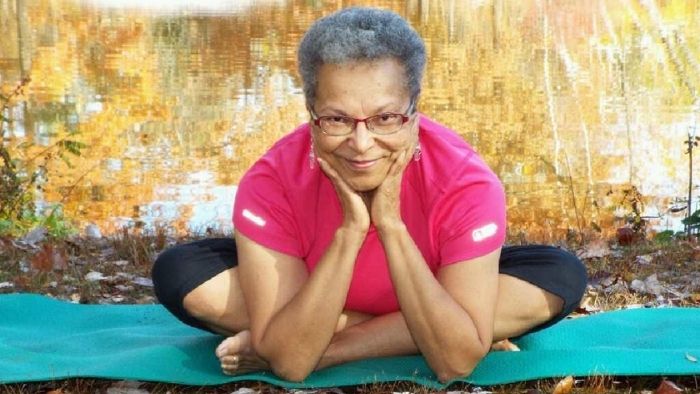
Beth Gibbs Finds Clarity in a Complicated World with Yoga

Beth Gibbs is a certified yoga therapist, through the International Association of Yoga Therapists, and a faculty member at the Kripalu School of Integrative Yoga Therapy. She holds a masters’ degree in Yoga Therapy and Mind/Body Health from Lesley University in Cambridge, MA. She is an award-winning author and writes for several health and wellness blogs. She has published a personal growth book, Enlighten Up! Finding Clarity, Contentment and Resilience in a Complicated World, and a children’s book, Ogi Bogi, The Elephant Yogi. Her personal blog, and additional info can be found at https://www.bethgibbs.com

You have over 20 years of experience in Yoga practice.  How did you get initiated into yoga?

I have always loved movement. I took dance classes, and long walks in the woods. I’ve hiked and backpacked but I didn’t discover yoga until six months after the birth of my son. I was on maternity leave, and feeling overwhelmed by new mom responsibilities. I started looking for help in one of my favorite places, a brick and mortar bookstore.   

I scoured the self-help sections, picked up a yoga book by the late Richard Hittleman, took it home and started to practice on my own in true introverted fashion until a friend encouraged me to try a group class. I did and was hooked. A few years later, I discovered Integrative Yoga Therapy and my main teacher Joseph Le Page. I took the training, and earned a masters degree in yoga therapy and mind/body health from Lesley University in Cambridge, MA., and have been teaching in the program since the 1990’s. Joseph wrote the foreword to my book, Enlighten Up! Finding Clarity, Contentment and Resilience in a Complicated World.

It is frequently said of music therapy, especially with respect to Indian music that it is therapeutic in itself and doesn't need to be offered separately as therapy.  Many yoga practitioners believe that about yoga too. What are your thoughts about this?

Practicing any type and style of yoga is therapeutic in many ways but I’ve found some differences between practicing alone, attending traditional group classes and the growing field of yoga therapy.

Most yoga classes I’ve taken are billed as beginner, gentle, intermediate, advanced etc., and tend to be focused on the postures, correct physical alignment, developing flexibility and performing them correctly according to the school or type of program being taught.  Most westerners join yoga classes for that reason. I know I did. Those classes helped me feel more calm, content and resilient to stress but none of my teachers presented information on the deeper aspects of yoga. It wasn’t until a few years later that I had a personal experience that changed me, and the way I viewed and practiced yoga. 

Cars, for me, are a means for transportation, period. Having a car problem was an invitation to anxiety, anger, panic and feeling all my shadow fears about being abandoned, stranded, rejected and uncared for.  But one night I came out of a yoga class, reached into my bag for my car keys.  They weren’t there.  I looked into the car and saw them in the ignition. I walked back to the class and one of the students drove me to the police station. An officer followed us back and unlocked the car. I thanked them, got into my car, started it up and was halfway out of the parking lot when I realized with a jolt: “I didn’t panic!” I was totally calm and focused throughout the whole experience. I realized then that there is more to yoga than physical movement and I wanted to know what that was. That led to getting certified and teaching classes myself. Because of that experience and my training, I make sure to include information and education about the deeper aspects and benefits of yoga in all of my classes.

Key differences between traditional groups classes/private sessions, and those offering yoga therapy start with a methodology and an assessment of clients/students who experience a health condition or life issue.  The intake/assessment information creates an experience using the methodology to fit the specific needs of the student/client. There are no beginner, intermediate or advanced classes/sessions. The goal is self-awareness, optimal health and well-being. Yoga therapy recognizes that relief of symptoms is just one facet of the healing process and that not all illness and disease can be cured. Yoga therapy recognizes that the healing journey is unique to each individual and so selects, adopts and modifies all practices appropriately for the individual and/or group depending upon age, health condition, ability, religion and culture. 

You have adapted an ancient yogic model of looking at humans as being more than body-mind constructs to having consciousness into your kosha model. Could you tell us more about how important this is to lead more integrated lives?

The first known mention of the koshas (the five-layers of self-awareness), that I’m aware of, comes from the Taittiriya Upanishad, the 3,000 year old spiritual text from India.

Each layer operates moment to moment in our daily lives. If we move through our lives on autopilot with no awareness of our body, how we’re breathing, or our habits, routines, beliefs, emotions, impulses, and reactions, we lose power. When we succeed in understanding how our layers work and how they are connected, we gain a better understanding of how and why we react, or respond, the way we do to what life presents. Then the choices we make are conscious. Our responses are healthier, balanced and more productive. This requires attention and effort but the result will be more clarity, contentment and resilience on the everyday, material world level and may, according to the individual, lead to greater spiritual development.

The process of paying attention is often influenced by the past, how we think about it, how often we mis-remember it and by how it affects our feelings about ourselves in the present. It’s important to understand that the road to self-awareness is not a sprint; it’s a lifelong marathon that requires intention, skill, and practice. 

Developing self-awareness on all levels can help us:

  • Find better solutions for your problems 
  • Make better lifestyle choices
  • Manage stress
  • Improve relationships that can be improved
  • End toxic relationships that cannot be improved
  • Reduce worry, fear and anger
  • Lessen the tendency to judge yourself and others
  • Understand what you can and cannot control
  • Learn how to relax

Research shows that people with self-awareness skills tend to have better psychological health, a positive outlook on life and are likely to be more compassionate to themselves and others. This larger sense of self results in the ability to navigate life from a calm center no matter the swirls, whirls and storms that will inevitably surround us. 

Most of us choose to begin this journey with the body because it is readily observable through our five-senses. Although the body may be the first focus, it’s important to know that all five layers are inseparable, interrelated and will be affected as well. 

Do you think that different systems of health should work with yoga for more effective healing? For instance you talk about yoga nidra and its use in psychiatry and mental health. Is this being done in the US? 

I absolutely think that health systems would greatly benefit their clients if they worked with yoga teachers, yoga therapists and yoga schools. Yoga Nidra is already being used with veterans experiencing PTSD. One of the best known programs is Richard Miller’s iRest program. It’s currently used in military hospitals across the US, as well as in correctional facilities, hospices, clinics, schools, and organizations supporting personal growth and well-being. iRest has been endorsed by the US Army Surgeon General and Defense Centers of Excellence as a complementary and alternative medicine (CAM). I’m sure there are others but here is the link to the iRest website: https://www.irest.org/publications/The-iRest-Program-for-Healing-PTSD-by-Richard-Miller

Do you think that yoga in the US is largely a physical practice and doesn't usually extend to the other requirements that are prescribed for healthy living including yama/niyamas?

In general, yes. That has been my experience. But because of the growth of yoga and yoga therapy as complementary additions to western medicine, that is slowly changing. The creation of the International Association of Yoga Therapists in 1989 has helped to change that. IAYT has created a scope of practice, along with educational standards, a code of ethics and certification requirements. Yoga Foundations form the first category of the educational standards required.

You have taken yoga to schools.  What are the benefits it has offered children during the pandemic both in terms of channeling energy during lockdowns as well as a practice to reduce anxiety?

In 1999 I created a yoga program for after school and the summer camp I worked for. The camp program is still running. It’s called: ‘Wake Up, Relax & Focus.’ It introduces the benefits of yoga to the campers and provides them with specific tools to use to address their needs for self-awareness, self-management, stress reduction and issues like self-confidence, social skills, emotions, peer pressure and academic success. The only change in focus during the pandemic was that the program went virtual. The core curriculum remained the same. It’s to help children improve in their ability to: 

  • Energize
  • Relax and be calm
  • Focus attention
  • Understand the meaning of cooperation

The program includes themes, information and practices on:

  • Exercises and Postures,
  • Better Breathing
  • How to Relax 
  • How to focus and concentrate
  • How to be Mindful

Since it’s inception the program has impacted over 4,000 children and youth. The curriculum we developed was the source for my book, Ogi Bogi, The Elephant Yogi, Stories about Yoga for Children.  Many of the story ideas and characters have come from the children themselves.  Some feedback and comments from the children have been:

  • “When I am in a Yoga Club, I feel that I belong to the Universe.” - - - Chris 
  • “Yoga changed me by helping me relax”  - - - Ziya
  • “I learned how to calm down when I get mad”  - - - Allen
  • “It helped my temper” - - - Shay 

Recently I wrote a blog post about kids, covid and stress. You can find it here:

https://www.bethgibbs.com/enlightenup/kids-covid-stress

As a policy maker, do you encourage the teaching of the origins of Yoga and a little background about its foundations in Indian culture?

Absolutely! Crediting and referencing the source of information and the wisdom traditions from which they come is an important part of professional ethics and standards. I learned this in my yoga training with Integrative Yoga Therapy. My teachers were diligent in crediting their sources and giving us a long list of recommended translations to read.

Finally, how has yoga changed your life and helped you be in the driver's seat as you advocate for others?

Like everyone else, my life has had its ups and downs, difficulties and successes. Since practicing yoga, I am simply more aware of how I respond (or react) to whatever it is I’m facing.  I have a wheel analogy to explain this. It goes something like this: 

I picture myself, and my life as a wheel that steadily turns.  Half of the wheel rim is coated with sugar and is all that makes me happy, excited, upbeat and feeling good - the ups. The other half is coated with negativity and is everything that leaves me feeling, scared, empty, sad and suffering - the downs.  The wheel of life is constantly turning, if I stay on the rim, I have no choice but to go round and round from sugar to negativity and back again over and over and over consumed by the ride with no real understanding. 

The wheel has five spokes – the koshas. Using them I am able to keep a measure of sanity and my sense of humor to increase moment-to-moment self-awareness, I can travel to the hub – the center of the wheel. From that space I can view the turning wheel with a measure of clarity. The highs are still wonderful, but I know they are temporary. The lows are still painful, but I know they are temporary.  Yoga from asana to meditation has gotten me through, divorce, illness, widowhood, self-esteem issues, work problems, prejudice (sexism and racism), financial and relationship issues and continues to do so.

I know that in any situation, I always have three ways to consciously respond; choose to make changes, remain unchanged with full awareness of the consequences or find acceptance and peace of mind if change is not possible. 

Percussionist B C Manjunath On A Rhythm Spree Across the Globe

It is not an exaggeration to say that the world waits for Indian percussionist B C Manjunath to put up a new video every day, with every conceivable complex beauty of rhythm and precision. Not unlike players of the new word game Wordle, rhythmists like a challenge.

Bangalore based mridangam player B C Manjunath is a well known name in Europe and the United States, known for his maneuverings and felicity with numeric based rhythmic patterns, weaving a tapestry of music, both pleasing and intellectually fulfilling.

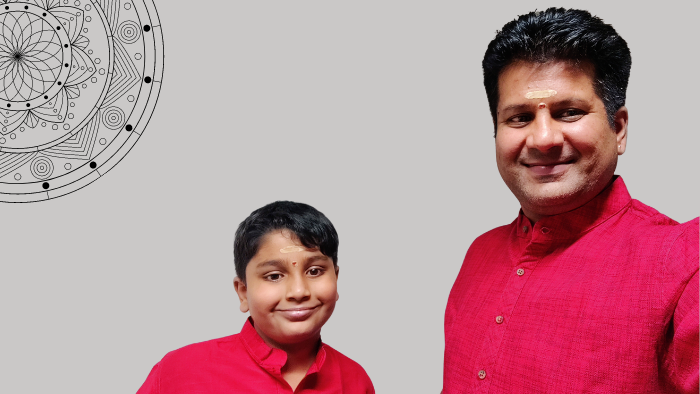
Very recently, along with his gifted son Master Skanda Manjunath, he took centerstage in France where he wrote a whole piece and created rhythms for the song ‘Cosmic Dance’ along with co-composer Sébastien Gaxie. The piece was performed by two hundred musicians of RADIO FRANCE, part of Choeur de RADIO FRANCE, Matrise the RADIO FRANCE. The piece was taken to greater heights by conductor Alexander Bloch.

The piece was of 14 minutes duration and was performed as part of Festival Presenses 2022, at the prestigious Maison de la Musique de RADIO FRANCE. Says Manunath, “We performed the piece mainly based on the Raga Panthuvarali krithi Shiva Shiva Shiva Enarada. It was thrilling to hear French and other nationals singing a Karnatik song and also recite Konnakol.”

The excitement and feelings of hope that Manjunath expresses is encouraging for the arts in a world devastated by the pandemic. Has the interest in Indian music increased across the globe during this period?

Manjunath says that the Fine Arts have given comfort since time immemorial. “The arts have sustained forever. If food is for the body, the arts are nourishment for the soul. Being a musician I can speak for myself, where I have had people come up to me and say that they get a lot of happiness when they listen to what I do on social media. It doesn’t really matter if they understand what I do, but clearly they like seeing a video of me doing what I like doing with extreme happiness. By enjoying my own music, I am able to convey the emotion physically through the senses.”

The appeal of Indian music is its complexity and adaptability. Says Manjunath, “I think Indian rhythm is one of the most sophisticated rhythmic systems in the world. It has almost all kinds of ingredients that are required to relate to and understand most forms of music. Especially Konnakol has been proven to be one of the most important tools for a lot of musicians to converse in music. I think the big changes are happening due to the social media influence where you are your own organiser, publisher, content maker etc. It has certainly been a big part of my growth in the last few years.”

He adds that interest in Indian music is “growing exponentially every year. Thanks to some great Indian musicians like Pt. Ravishankar, Vidwan Palghat Mani Iyer, Dr. Balamuralikrishna, Vidushi M S Subbalakshmi, Ustad Zakir Hussain, and many many more. We are just part of the process which truly began many decades ago. We have to make sure we keep the momentum with all the opportunities that we get.”

Manjunath has kept his audiences on their toes. “Numbers fascinate me. The numbers have always been my starting point and somehow that transcends to rhythms and hopefully to melody with my Gurus’ Blessings. I have been able to discover a lot of things over many many years. If we talk about recent times, it has been Fibonacci Tala, or Triangle numbers or some quaint patterns following rhythms of a water hose or a broken AC machine or trying some amazing patterns like Flamenco rhythms or Kathak rhythms.”

Manjunath has also played for a silent movie and been part of contemporary classical music ensembles with Western classical musicians and also for contemporary dance. On March 5, he was part of the Pandit Ravishankar Centenary concert held at Royal Festival Hall, London, led by the maestro’s daughter sitar player Anoushka Shankar where he played with a galaxy of Indian classical musicians.

Manjunath says the universal emotions of music bind the fraternity together. "It need not be restricted to a certain genre of music. We will always find our way inside a music system if our intentions are to make sure that we ask the right questions about music at the right times. Then we will find answers sooner or later, and shall arrive at a common point jointly as a performer and listener.”

Over the next one month, Manjunath will be performing with French percussionist Florent Jodelet at the Festival Detours des Babel in Grenoble, France. “It is an exciting venture where we have to try to hold the audience's attention with our percussive playing for more than an hour. I have not done this kind of playing before. Maybe it is a new beginning.”

He will also be touring Germany giving a few concerts and holding workshops. In the Netherlands, he will be part of the Gaudeamus festival and will be planning for the project with New European Music Ensemble where he will play compositions of new young composers including his friend Ned McGowan.

Everyday people expect Manjunath to do something more, something new. A challenge he is happy to take up. “I will try to create more and more new music as long as my creative mind works. One thing is for sure, people who had not seen the Mridangam before, and when they listen to it for the first time, they are curious and want to investigate more about its origins, what is its potential and so on. I am so happy that my instrument mridangam has chosen me for these amazing opportunities to travel around the globe and spread India’s rich Indian traditional classical music culture.”