


We are pleased to announce Sri Hari Kiran and Sri D.V.Sridharan will join the board of Trustees of International Forum for India’s Heritage(IFIH). A brainchild of Sri Michel Danino , IFIH was established in 2001 with the blessings of Pujya Swami Dayananda Saraswati with the following charter.
Month: August 2021
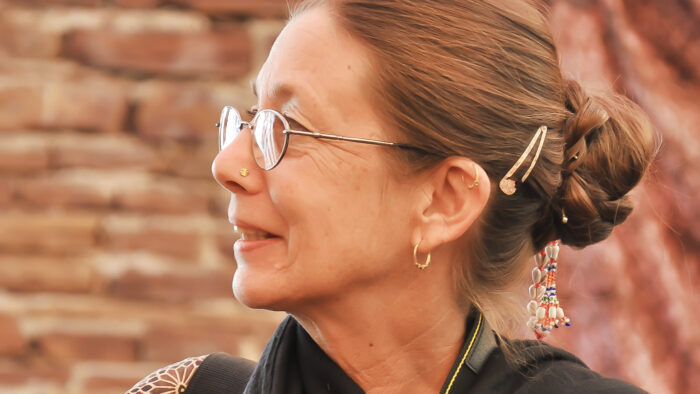
Craft is Cultural Heritage, It Is Not Industry: Judy Frater
Judy Frater lived in Kutch for 30 years, during which she co-founded and operated Kala Raksha Trust, a cooperative for women embroiderers, established the Kala Raksha Textile Museum, and founded Kala Raksha Vidhyalaya, the first design school for traditional artisans. In 2014, to expand the design education program to an institute, Frater joined the K.J. Somaiya Gujarat Trust to begin Somaiya Kala Vidya. From 2014-2020, as Founder Director she initiated a graduate business and management course, Outreach to other regions, co-design programs, and a course in craft traditions for non-artisans.
In 2018, her institution did some soul searching, and began to ask what defined the success of an education programme for artisans. So she asked the question - "what is success? And what do you think contributes to success?" Here's an excerpt from her blog:
One artisan graduate Dayabhai said: “Success is achieving goals; you need a goal. You need to know your capacity, what is good for you.”
“Success is decision making power,” Purshottambhai agreed. “You have to be clear and capable of decision making- and targeting your market,” he said.
“Success is using your creativity,” Prakashbbhai said.
“We now confidently know good design,” Rajeshbbhai added.
Dayabhai elaborated on this. “We now have our own concepts and identity,” he explained. “We know how to take feedback.”
To this Pachanbhai added, “Everyone’s work is unique. Besides knowing your USP, you have to be able to articulate it. Success is having a voice.”
Puroshottambhai echoed, “And success is being able to take responsibility.”
Strikingly, not one artisan spoke of success in terms of money."
Judy Frater is a social entrepreneur steeped in the world of contemporary textile artisans of Kutch, India. Prior to her residence in India, she was Associate Curator of the Eastern Hemisphere Collections at the Textile Museum, in Washington, DC. Judy Frater will be speaking at CSP's Namaste 2021 on the session on Textiles on Sunday at 6.30 am IST.
 Twenty five years is a long time to spend in one place. What attracted you to the Kutch region given that you first learnt jewellery design in Pune?
First, I lived in Kutch for 30 years- from 1990- 2020. Somewhere on the internet something was posted 5 years ago and people always assume that information is current.
I went to Kutch first in 1970 when I was on a study abroad program. I was interested in the traditional embroidery and wanted to learn more about the cultural aspects of embroidery styles. I was also interested in traditional design so I learned jewellery making from a goldsmith in Pune. In the next 20 years I returned to India every year and a half or so and I finished my BA and 2 master’s degrees in South Asian studies, anthropology and museum studies.
You have done single handedly what governments do: give dignity to artisans by showcasing their work in a museum and more, creating a syllabus for design relevant to their art, set up an educational institution. What are the things you focused on in order to create this ecosystem of support?
I have to say that I think governments don’t really do that much to increase the value of crafts. That’s why NGOs are formed. I started with respect, and some understanding of the cultural heritage that craft expresses, gained through my studies and field work. I observed and listened to artisans to understand their strengths, the gaps, and most important their values and desires. I appreciated their creative capacity. And I involved artisans in developing the work I did. Otherwise it would not have been relevant.
 Hand spinning, the rich colour palette the diversity of fabric are some of the things non-Indians mention as their attraction to Indian textiles. What would you say is the most unique feature of the art and craft of the people of this region that you wished to preserve?
The most important thing is agency. Craft traditions are genuine when artisans create them. That includes concept and design as well as fabrication. When artisans create their own work, it has perceptible life. If it is just produced to someone’s order, it is flat, lifeless.
Arts and crafts do not exist in isolation but are part of a social and political milleu. You have accommodated the needs of the artisan community where they are engaged in other work too like agriculture. How did the artists respond to your sensitivity and your initiatives?
Craft is cultural heritage. It is not industry. So I worked with communities rather than techniques. I made programs accessible to people simply by understanding how they live. For the design education program, I thought about the length of time that people could possibly be away from their work, the cost they could afford, the language in which they could comfortably operate, and the atmosphere in which they would be comfortable. Artisans love to learn and, like everyone, they want to be appreciated. So they loved an institute that was designed to be appropriate for them.
Modern design schools don't look at the artist as the source of creativity. You have brought the attention back to them. How is the product influenced by who makes artistic decisions including the use of local motifs and techniques?
Yes, because the concept of design as separate from creation is itself a part of industry, the teaching of most design schools is geared toward industry. In this context, artisans are mostly understood as skilled technicians rather than creative artists. There is a difference between craft traditions and hand made. Again, if artisans are merely crafting other people’s designs, the products lack the life and dimension of cultural heritage. They are just hand made products.
How have you facilitated these artists taking their work to global markets while still retaining for themselves the best of their work.
As an educator I was not involved in commercial dealings. As with any educational institute, the goal was to teach- to provide access to knowledge and guidance in making good decisions. The rest is up to the individual graduates. Happily, most graduates have been able to connect to better markets. We did emphasize domestic markets because those are sustainable. Artisans need to have direct access to their clients in order to create appropriate work. That enables essential innovation. The better the connection between maker and consumer, the more vibrant the work.
What are the areas in which you think India can bolster her softpower in the area of textiles and indigenous artistic creativity.
Artisans should have access to appropriate education. A weaver does not usually need to be taught to weave. Instead, he or she needs to be able to learn in complementary areas-to design, to run a business. Consumers also need to be educated to appreciate craft traditions so that they do not see them as cheap manufacturing but affordable luxuries. I also think there is a need for regulation of quality of raw materials so that, for example, artisans can access pure wool with assurance if they want it, rather than being duped with synthetic blends marketed as wool. And artisans need reasonable access to loans so that they can grow an enterprise.
Do you have any anecdotes you can share with our readers on your interactions with the artists, among your favorites.
There are too many. I hope readers can access my blog http://threadsofidentity.wordpress.com and my writings!(
(Ms Judy Frater founded Kala Raksha Vidhyalaya, the first design school for traditional artisans. For this concept, Ms. Frater was awarded an Ashoka Fellowship for social entrepreneurship in 2003. Under her eight- year tenure as Director of the school, Kala Raksha Vidhyalaya received international recognition for its unique approach to education of artisans. Frater received the Sir Misha Black Medal for Distinguished Services to Design Education in 2009, the Crafts Council of India Kamla award in 2010, the George B. Walter’36 Service to Society Award from Lawrence University in 2014 and the New Delhi Rotary Distinguished Service Award in 2020.
In 2014, to expand the design education program to an institute, Frater joined the K.J. Somaiya Gujarat Trust to begin Somaiya Kala Vidya. From 2014-2020, as Founder Director she initiated a graduate business and management course, Outreach to other regions, co-design programs, and a course in craft traditions for non-artisans.
Ms. Frater’s Threads of Identity: Embroidery and Adornment of the Nomadic Rabaris received the Costume Society of America’s Milla Davenport award. Prior to her residence in India, she was Associate Curator of the Eastern Hemisphere Collections at the Textile Museum, in Washington, DC.)

Made with Mantra – Gift Scheme for US based Vegan/ Vegetarian Restaurants
Indica Yoga is pleased to launch ‘Made with Mantra’, a new gift scheme for Plant Based Restaurants in the United States.
Ayurvedic texts talk about the efficacy of medicines prepared by a Vaidya whose mind is calm. We now seek to extend this idea to food preparations to enhance the beneficial effects of consuming food that has been prepared whilst listening to chanting.
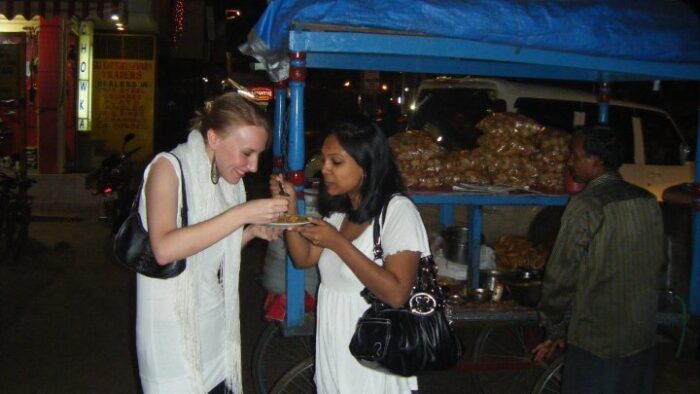
India is Already the Best Destination in the World for Vegetarians, So it Has A Head Start For Vegans: Wendy Werneth
Wendy Werneth is an intrepid traveler, vegan foodie and polyglot. She has travelled over 117 countries so far and as a vegan has explored 30 to 40 countries and written about her experiences in her blog https://www.thenomadicvegan.com/. Wendy had visited India in 2019 when she brought a group of vegan travelers to tasty fares in Bangalore and Pondicherry.
Wendy will speaking at Namaste 2021 on August 29th at 6 pm IST.
How did you turn to veganism? What was your initial initiation?
My journey to veganism started in 2014. My father had recently passed away from complications caused by type 1 diabetes, and the last couple of months of his life were quite miserable. Seeing him on his deathbed, I knew I didn’t want to end up like that, so I started looking into the lifestyle choices I could make to improve my own health.
That was how I discovered the benefits of plant-based nutrition, and initially I was mainly interested in it for health reasons. At first, I was just cutting back on my consumption of animal products and didn’t plan to go fully vegan.
But as I continued to educate myself, I learned about how my food choices were destroying the planet, and about the horrible things happening to innocent animals in the meat, egg and dairy industries.
The more I learned, the more I realized that being fully vegan was the only way that I could live in alignment with my own values. I took about four months to make the transition.

Wendy at the Golden Temple, exploring veganism
How does India compare as a vegan destination as opposed to countries which have very specialised vegan restaurants?
It depends on how you look at it. On the one hand, it’s true that India doesn’t have as many specialized vegan restaurants as some other countries. But on the other hand, there are many naturally vegan dishes that are already part of traditional Indian cuisine.
This is especially true in the south of India. In the north, it’s of course still very easy to avoid meat, fish and eggs, as all restaurants are used to accommodating the many vegetarians in India who don’t eat these things. Dairy products are the one thing you need to be careful about as a vegan in India, but even so it’s not difficult to avoid them.
You can just ask restaurant staff to prepare your dish with vegetable oil instead of ghee, for example. Since many restaurant staff are not yet familiar with the term “vegan”, it’s best to be specific about the ingredients you don’t want (ghee, curd, paneer, cream, etc.).
This might be intimidating at first for vegan travelers who are used to eating in restaurants where veganism is widely understood, and where vegan options are clearly marked on the menu.
But personally, I much prefer trying traditional local dishes that happen to be vegan even though they’re not marked as such, as opposed to eating in an all-vegan restaurant that serves “international vegan” dishes that are not really part of the local cuisine.
What attracts you to Indian cuisine? How is an Indian vegan diet different from other countries?
I’ve always loved Indian food, and I continue to be amazed by the huge variety it has to offer. There’s such a mix of spices that every dish is always a new adventure.
The main difference I’ve noticed between vegan food in India vs. in other countries is that there are not as many plant-based meat and cheese alternatives in India. This is just fine with me, since I don’t miss eating animal products and don’t feel any need to recreate the experience.
In Western countries, though, it’s common to find plant-based versions of burgers, chicken nuggets, hot dogs, etc. Whereas in India, where many people refrain from eating animals for religious reasons, the idea of eating something that imitates the look, taste and texture of animal products hasn’t taken off in the same way.
How does the veganism of different states and religions in India appeal to you?
On my most recent trip to India, I really enjoyed discovering many local vegan dishes that were new to me, particularly in the state of Karnataka. Through conversations with one of the co-leaders of our tour, I also had the opportunity to learn more about Jainism and how veganism coincides with Jain teachings. India has such a rich cultural and religious diversity, so no matter how many times I return there will always be something new to learn and discover.
Do you think given our huge proclivity for vegetarianism, we can become an attractive tourist destination for vegans. Is vegan tourism a big industry?
My answer to both questions is definitely yes. India is already the best destination in the world for vegetarians, so it has a huge head start over other countries when it comes to catering to the needs of vegans.
Vegan tourism already makes up a sizable chunk of the tourism market and is growing at an astonishing pace. Tourism-related businesses that do not respond to this change in the demand from their clients are going to get left behind.

You have travelled all over the world. How many countries have you been to and have you recorded the vegan stories in all these countries. Is veganism a cultivated choice, a societal trait or an environmental necessity? In a family of vegans, can veganism or vegetarianism be forced or should it be a choice?
I’ve been to 117 countries so far, but many of them I visited before I became vegan. As a vegan, I think I’ve visited 30 to 40 countries in Europe, Africa, Asia and South America.
I do my best to share as much helpful info as I can about these countries on my blog, The Nomadic Vegan. And I also publish guest posts by other authors on destinations that I have not yet had the chance to visit.
As for the question on whether veganism should be “forced” within families, I’m child-free by choice, so I don’t have experience with raising children and would not presume to tell other people how they should raise theirs. I find it very odd when people say that parents shouldn’t “force” veganism on their children.
Should parents not instill in their children their own values and the moral code that they live by? That’s what parenting is! Children already have innate compassion and empathy for animals. It’s only through societal pressure that they are taught to suppress that compassion.
Please tell us a little about your tour. Why did you choose the two south Indian cities of Bangalore and Pondicherry?
The tour was actually organized by a vegan company called Escape To, which specializes in sustainable, vegan tours to places on the Indian subcontinent. So while I didn’t choose the destinations myself, I was thrilled to explore this part of India.
I had been to Pondicherry on my first visit to India, back in 2004, but at that time I skipped Bangalore. To be honest, back then I didn’t think it would be that interesting, because in my head I had stereotyped Bangalore as a modern technology hub, and I was more interested in the traditional architecture and culture of India.
But thanks to the opportunity to co-lead a tour there with Escape To, I discovered that there was much more to the city than I had imagined. Traveling as part of the tour was a very different experience than traveling independently.
Both forms of travel have their advantages and disadvantages, but the tour was very special because Escape To arranged opportunities for us to share meals with locals inside their homes, meet with local entrepreneurs and activists, and visit community-driven empowerment projects. Those were experiences that I never would have had by visiting India on my own, and it really gave me a deeper understanding of and appreciation for the country.
Are there any famous ambassadors of veganism from India?
Yes, and their numbers are growing! I don’t follow the lives of celebrities very closely (whether they’re from India or from anywhere else), but I do know that a number of Indian celebrities have adopted a vegan lifestyle or at least switched to a plant-based diet. A few examples are Alia Bhatt, Vinita Chatterjee and Sonakshi Sinha.
What is the most compulsive argument for people to turn to veganism today in your view.
There are many compelling reasons to adopt a vegan lifestyle. As for which one is the most compelling, that’s going to depend on the individual person and what they care about the most.
It could be the many health benefits of a plant-based diet, the fact that going vegan is the single most important step we can take as individuals to reduce our ecological footprint and save the planet, or it could be that they believe in non-violence and don’t want to cause unnecessary harm to innocent animals.
For me personally, the most compelling reason for going vegan was because it was the only way for me to live in alignment with my own values of compassion and non-violence. My conscience would not let me continue to call myself an animal lover while at the same time paying people to kill animals.
And compassion and non-violence are values that virtually all humans hold dear. We may have grown up eating animals and their secretions because our societies taught us that it was socially acceptable, but if we really look at the matter objectively, we will see that eating animal products doesn’t line up with our own moral values.
Chanting Scholarships for Europe Based Yoga Teachers
IRF and Indica Yoga is pleased to announce 10 scholarships, worth 199 Euros each, for Europe based Yoga Teachers interested in learning Vedic Chanting from Shantala Sriramaiah, founder vedastudies.com, with whom we have successfully collaborated
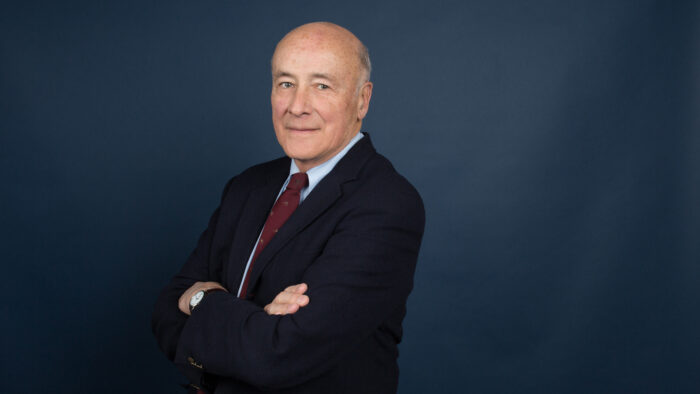
India’s Soft Power Comes In Part From its Ancient Culture, But Also From Modern Culture: Nye
Joseph S. Nye, Jr. is best known for coining the term Soft Power and has been one of the most influential voices in American foreign policy having served as Assistant Secretary of Defense for International Security Affairs, Chair of the National Intelligence Council, and a Deputy Under Secretary of State, and won distinguished service awards from all three agencies. In a survey of international relations scholars, he was ranked as the most influential scholar on American foreign policy around the time he started articulating the term Soft Power and in 2011, Foreign Policy named him one of the top 100 Global Thinkers.
In his article on Wielding Soft Power (joe_nye_wielding_soft_power) Nye writes: “Promoting positive images of one’s country is not new, but the conditions for projecting soft power have transformed dramatically in recent years. For one thing, nearly half the countries in the world are now democracies.” He quotes RAND Corporation experts on politics and information who say Politics in an information age “may ultimately be about whose story wins.
In this interview, Mr Nye talks about the changing notions of Soft Power with respect to India.
You were the first to coin the term Soft Power, conceptualize it and state the parameters that made it possible to research how cultures hold influence. Have you fine tuned these concepts as the world continues to face unprecedented challenges in enhancing their soft power.
My definition has remained the same: soft power if the ability to affect others to get what you want through attraction rather than coercion or payment. I have come to realize that concepts such as soft power are like children. As an academic or a public intellectual, you can discipline them when they are young, but as they grow they wander off and make new company, both good and bad. There is not much you can do about it, even though I gave the concept birth in 1990. However, at least three aspects of my soft power concept have remained stable over the time it has spread to use by others: it functions through directly or indirectly transforming the attitudes of target audiences in foreign countries; it has a longer operational time horizon compared to hard power and is more suited to the attainment of general rather than specific goals; it does not lie exclusively within the control of a country’s government, but is shared with civil society
India believes in the concept of Vasudaiva Kutumbhakam or the World is Family. Its soft power has grown organically and not through government actions. This is most evident in the spread of Yoga. What are your thoughts on this approach. Is it less effective than the mechanisms used by China, France, US, Germany and the UK, all of which have state agencies of soft power.
Yes, the largest part of a country’s soft power is produced by its civil society rather than its government. For example, America remained attractive to many because of its foundations, films and educational institutions in the 1960s even while people were protesting its government’s war in Vietnam.
You have stated in an interview to a Japanese publication that "The Future is Not Asian", in response to a book titled "The Future is Asian" by an Indian origin American observer. The reason you state is that Asia is not a single identity and there are schisms within. Despite strong growing economies, do you predict Asian nations to ever rise in Soft Power rankings. Why/Why not.
Asia will be the largest of the world economy and in that sense it is future, but there are many Asias and it has its own balance of power. India and Japan do not want to be dominated by China. And each of these centers will have its own soft power as well as hard power. Japan, Korea and India already enjoy impressive soft power.
India's soft power is that of an ancient civilization which has contributed to the areas of science, arts, medicine, Spirituality and Mathematics. However modern notions and rankings are based on current influence and do not take into account that many world cultures have adapted, modified Indian influence to an extent that they are no longer acknowledged as having an Indian source. How do you think India should position this influence of antiquity?
India’s soft power comes in part from its ancient culture, but also from modern culture such as Bollywood and its democratic political culture.
Many Indian academics do not like the term 'power' as it suggests force or dominance. Can we ever move away from the politics of force even in Soft Power. 5 points are relevant here 1) India has never been an aggressor 2) India is a spiritual democracy 3) India is a Knowledge society 4) The relationship between individual and society is unique 5) Our relationship with nature is unique. How do we reconcile this ethos with power (https://www.softpowermag.com/india-is-the-super-soft-power-of-the-world-iccr-president-vinay-sahasrabuddhe/)
Power is ubiquitous in human behavior. Our species is a social one, and we must cooperate to get things done. Leaders cannot lead without power. The important questions are not how to avoid power, but what types of power to use and how to control and civilize it. That is where the ethical conditions come in and I have tried to describe it in my new book Do Morals Matter? The answer is yes!
(Joseph S. Nye, Jr is University Distinguished Service Professor Emeritus and former Dean of Harvard’s Kennedy School of Government. His books include The Future of Power, The Power Game: A Washington Novel, andDo Morals Matter? He is a fellow of the American Academy of Arts and Sciences, the British Academy, and the American Academy of Diplomacy).
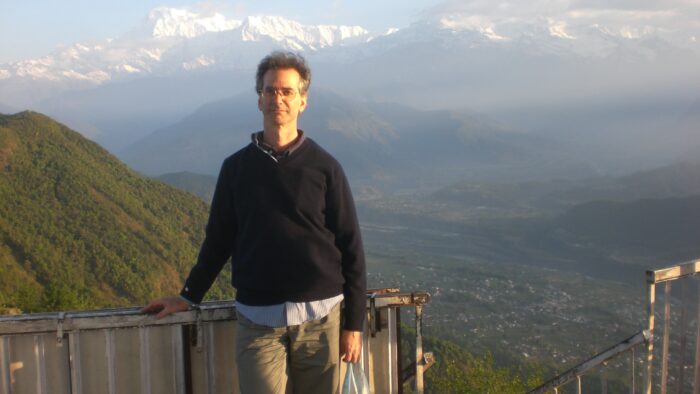
Understanding of Syntactic Structure Should Adopt the Procedure of Indian Grammarians: Professor Peter Scharf
Peter Scharf, a Sanskrit scholar, Paninian grammar expert, founder of the digital Sanskrit Library began his journey with Sanskrit at the age of 15. CSP is privileged to have him speak at Jnana, Vedanta and Oneness at 6.30 am, August 14 at Namaste 2021.
How did your interest in Indian culture, meditation and Sanskrit in your childhood evolve to your current area of interest?
When I was 15 years old, my brother taught me the Transcendental Meditation technique (भावातीत ध्यान) where I first heard Sanskrit recited. Several years later, after my second year in college, I read the Vedanta society’s translations of the principal उपनिषद्s, and during the next few years while training to become a teacher of The Transcendental Meditation Program, I studied Vedic Science for a couple of months. When I enrolled in graduate study at Brown University, I took a first-year Sanskrit course and the next year began the doctoral program in Oriental Studies at the University of Pennsylvania. After three years of intensive course work reading Sanskrit texts in diverse fields but especially in philosophy and in पाणिनिan grammar (व्याकरण), I studied व्याकरण in Varanasi with पण्डितs for about a year and a half, then wrote my doctoral dissertation on an issue in the Indian philosophy of language, which bridges the disciplines of philosophy and linguistics, entitled, “The denotation of generic terms in ancient India philosophy: grammar, Nyāya and Mīmāṁsā.”
How did your interest in Sanskrit move from reading Indian philosophy to Linguistics?
It didn’t move. I have always been interested in both. In college I majored in philosophy, but this included modern analytic philosophy which is very much oriented towards linguistic issues including artificial languages, and during one summer I studied computer science and software engineering. After college I worked as a software engineer for a couple of years. In graduate school I thought it best to focus on व्याकरण so that I would learn Sanskrit well, and also to avoid certain materialistic biases in field of philosophy. However, I have maintained my interest in philosophy. Just this year I had two articles published on Indian philosophy, one called, “Creation mythology and enlightenment” in the Journal of Indian Philosophy, and the second entitled, “Determining the ancient Vedic conception of speech by samanvaya of hymns of the R̥gveda,” presented in a seminar on Vedic philosophy of language and published in the Annals of the Bhandarkar Oriental Research Institute.
You say "India developed an extraordinarily rich linguistic tradition over more than three millennia that remains under-appreciated and under-investigated". What is the background to this statement and how are changing this?
Over the past three centuries, ground-breaking insights based on the study of Sanskrit and the Indian linguistic traditions by Sir William Jones, Ferdinand de Saussure, and Noam Chomsky and others gave birth to historical linguistics, to modern linguistics, and to generative linguistics. Historical linguistics adapted पाणिनिan sandhi rules and the phonetic rules of the प्रातिशाख्यs and शिक्षाs, which apply synchronically, to diachronic language study. Ferdinand de Saussure, considered the father of modern linguistics, adapted the semantic and performative relations described in the Indian philosophy of language to languages and semiotic systems generally. Chomsky applied the generative approach inherent in पाणिनिan grammar to English. In general, पाणिनिan grammar begins with semantics and introduces basic speech forms and affixes based upon semantic conditions to create a morphemic string to which it applies morphophonemic replacement rules and phonetic changes to produce a valid utterance. I described this in brief in several articles including “Modeling Pāṇinian grammar.” (Sanskrit computational linguistics: first and second international symposia, Rocquencourt, France, October 2007; Providence, RI, USA, May 2008; Revised selected and invited papers, ed. Gérard Huet, Amba Kulkarni, and Peter Scharf; pp. 95–126. Lecture Notes in Artificial Intelligence 5402. Berlin; Heidelberg: Springer-Verlag, 2009. http://sanskrit.inria.fr/ Symposium/Program.html.)
“Levels in Pāṇini’s Aṣṭādhyāyī.” (Sanskrit computational linguistics: third International Symposium, Hyderabad, India, January 2009, Proceedings, ed. Gérard Huet, and Amba Kulkarni, pp. 66–77. Lecture Notes in Artificial Intelligence 5406. Berlin; Heidelberg: Springer-Verlag, 2009. http://sanskrit.uohyd.ac.in/Symposium/program.html.)
I describe how the various linguistic disciplines of India, namely शिक्षा, छन्दस्, निरुक्त, and व्याकरण have contributed to the history of linguistics in my contribution,
“Chapter 11. Linguistics in India” - (Oxford handbook of the history of linguistics, edited by Keith Allan, pp. 230–264. Oxford: Oxford University Press, 2012.)
Still the significance of the Indian linguistic systems remains to be understood and its insights applied to understand languages. Contemporary syntax studies spends huge human and financial resources analyzing word-order and creating phrase structure trees and syntactic dependency trees. I presented papers in a couple of venues on how the understanding of syntactic structure should adopt the procedure of the Indian grammarians which recognizes that the structure is in the linguistic cognition (शाब्दबोध) rather than in the speech forms. Speech forms are associated with that structure in a complex graphic relationship rather than a simple hierarchical tree structure. These papers will be published in the proceedings of a seminar held at the University of Pavia on Indian linguistics as well as in the journal of the Indian Institute of Advanced Studies in Shimla.
“Insights from Pāṇini for representing non-linear syntax: developing language-neutral syntactic representation” (International Vedic Seminar. Dipartimento di Studi Umanistici, Sezione di Linguistica Teorica e Applicata, Università di Pavia, Pavia, Italy, 24–27 May 2017.)
“Insights from Pāṇinian grammar and theory of verbal cognition for representing non-linear syntax: developing language-neutral syntactic representation.” (Studies in Humanities and Social Sciences. Paper presented at the International Seminar, “Paradigm shift in Indian linguistics and its implications for applied disciplines,” Indian Institute of Advanced Study, Shimla, 30 October – 1 November 2017.)
Forthcoming: “Non-linear syntax: insights from Indian linguistic traditions for developing language-neutral syntactic representation.” Veda-vijñāna-saṁmelanam: A Dialogue between Vedic and Modern Sciences (VVS2019), Bhāṣā-vijñāna section. Indian Institute of Technology, Banaras Hindu University, Varanasi, 22–22 September 2019.
Could you describe your work in Computational Linguistics and Sanskrit with Professor Gerard Huet.
Gérard Huet is a very accomplished computer scientist who was instrumental in the design of a prominent programming language CAML and in the establishment of the internet in Europe. He took a sincere interest in Sanskrit and created a parser. At his instigation I was invited to Paris in a Blaise Pascal Research Chair for a year to work with him and other linguists. Our interests and skills are very complementary, and we enriched each other’s work. We collaborated in organizing the Seminar on Sanskrit Syntax and Workshop on Sanskrit Syntax which explored computational methods in analyzing Sanskrit. In addition, although I had previously implemented पाणिनिan sandhi rules computationally in a Pascal program that was since translated into Perl, C++, Java, and Python, and also had formalized the root list (धातुपाठ), it was during this year of my appointment in Paris that I launched an endeavor to formalize पाणिनि’s entire linguistic system including all 4,000 rules of the अष्टाध्यायी. I completed the task in 2015 with the assistance of two dedicated scholars of पाणिनिan grammar who had just received their doctorates at IIT Bombay, Drs. Tanuja and Anuja Ajotikar.
What inspired you to work in India with young engineers combining technology and Sanskrit?
There is a great deal of fascinating work to be done in formalizing Indian linguistic theories and implementing them computationally, and in making Sanskrit works and manuscripts accessible via modern technology. It is essential that the immense and valuable knowledge in Sanskrit be transitioned into the digital medium and made accessible in ways that utilize the current mode of knowledge acquisition among the younger generation. I have been actively engaged in this pursuit my entire career.
While I was in Paris I was invited as a Visiting Professor to IIT Bombay for three and a half years between 2012 and 2017, and then to IIIT Hyderabad for a year and half 2018–2019. In Paris, Gérard Huet and I invited a brilliant and industrious recent computer science doctorate, Pawan Goyal to work with us. He continued to work with me at IIT Bombay until he was hired at IIT Kharagpur. At IIIT Hyderabad, I offered courses in पाणिनिan linguistics, Indian semantic theory, and Introductory Sanskrit. Several students there worked with me on Bachelor in Technology projects, and one MTech. student who took two of my classes, Harsha Pamidipalli, is working with me now. We are just now debuting interactive exercises for an introductory Sanskrit course offered through The Sanskrit Library. This software allows students to get immediate feedback on their exercises as they do them and spares them a great deal of the uncertainty and frustration that students feel when trying to learn the complex prosody and grammar of Sanskrit. Next we plan to update an interactive Sanskrit reader for the रामोपाख्यान, the story of राम as told in the महाभारत. I originally designed such a reader 20 years ago to allow students study on their own and access the information they need for a complete and thorough understanding of every aspect of the script, sandhi, vocabulary, grammar and syntax of every verse as they need it. I’ve now updated text of the reader to be released soon in its second printed edition. The digital app in which it was implemented at the time ceased to function with the security updates on the internet. We’ll now reimplement it using up-to-date methods.
Contemporary computational methods permit one to collect, organize, and represent information in ways that enhance insight. There are many more projects we envision that utilize current software and Web technologies to investigate the linguistics of Sanskrit as well as to facilitate the study of Sanskrit. I recently presented an overview of these in a paper presented at a conference in China the proceedings of which should appear soon:
“Issues in digital Sanskrit philology and computational linguistics’' -Sanskrit in China 2019. Papers presented at the conference hosted by the Centre for Tibetan Studies of Sichuan University and Centre for India Studies of Peking University, 27--28 April 2019.
You have read, memorized the Yoga Sutras and the Bhagavad Gita. Most Indian texts are in verse allowing memorization and transmission through an oral tradition. How easy has it been for you to memorize texts?
Committing texts to memory is no longer a part of education in Europe and the U.S. and unfortunately is diminishing in India as well. This method of rote learning was denigrated for decades as dulling the mind. So it was new to me and at first very difficult to do. One high school teacher I had made us memorize the first 14 lines of Chaucer’s Canterbury Tales. I could barely do it. However, when I was training to become a teacher of The Transcendental Meditation Program, Maharishi Mahesh Yogi had us memorize many materials during the months that we were engaged in extended practice of meditation. The deep experience in meditation of expanded, clear awareness awakened my consciousness and actually generated in me a thirst to memorize. Then every summer break from graduate study I went to Maharishi International University, engaged in extended practice of the TM and Tm-Siddhi program there, and spent an hour a day memorizing and reciting texts, first half of the भगवद्गीता, which consists of about 700 verses, then most of the अष्टाध्यायी which consists of about 4,000 सूत्रs, then I thought I’d better take a short text so I memorized the योगसूत्रs, of which there are only about 200.
In contrast, however, to the opinion of educators that rote learning dulls the mind, recent research in neuroscience has demonstrated that memorization actually increases the grey matter in the brain, reduces functional holes, and increases intelligence and creativity. Coupled with the practice of Transcendental Meditation, regular recitation of Vedic and other Sanskrit texts has an even greater influence in increasing attention and comprehension. These practices should be a regular part of education.
What is the role of Ayurveda in your life? Is your approach scholarly in this field too or more practical?
Although I have taught the texts of आयुर्वेद to Sanskrit students, my interest is more practical. आयुर्वेद has important health measures that should be a part of everyone’s daily and seasonal routine. We recently taught a course through the Sanskrit Library called, “Traditional Indian health maintenance: essential Āyurvedic practice through its sources.” Dr. Shankar Adluri, an M.D. who has also had significant training in आयुर्वेद, led most of the course. Our goal was to get people to practice the essential daily and seasonal routines that enhance health, strengthen one’s immune system, and increase one’s defenses against disease. Such practices, which used to be passed down in traditional families in India, would be particularly helpful during the Covid pandemic. Now my colleague, Dr. Tanuja Ajotikar is teaching a course designed for those who would like to learn to practice आयुर्वेद professionally. The course, called “Unfolding the secrets of आयुर्वेद: learning Sanskrit with the अष्टाङ्गहृदय,” trains potential वैद्यs in the Sanskrit necessary to read the source texts.
How does modern India speak to? Is it the same as the India of the past? Is Sanskrit the link between the two or is it the philosophical underpinnings which appeal.
Indian culture is extremely rich in life-supporting knowledge and practices. The knowledge and philosphy that is inherent in Indian culture is preserved primarily in texts written in Sanskrit because Sanskrit was the language of learning for more than three millennia. So Sanskrit is the primary culture-bearing language of India. It is through the Sanskrit language that people today can gain access to that knowledge. It would be a grave mistake for India to treat Sanskrit as just any other language, or as a dead language of an elite group stuck in the past. 95% of the more than 10 million manuscripts still extant in libraries in India and abroad are written in Sanskrit. If people do not learn Sanskrit that knowledge become inaccessible within a generation, and the manuscripts will all perish within a few hundred years. The perishing of this knowledge would be a disastrous loss for the world. The youth in modern India had better wake up to the treasures they have inherited and use modern methods and techniques to bring it into the engagement with contemporary life.
What is the role of Advaita in your engagement and interest in India?
अद्वैतवेदान्त is the system of Indian philosophy that investigates the unity underlying the diversity apparent in everyday life. Unified field theory in contemporary physics also describes unity underlying the diversity of nature. Many of the worlds’s religions also recognize one universal omnipresent god who pervades all the diversity in nature. This idea of the unity underlying diversity has been more explicitly explored in a scientific manner in India for centuries than in any other culture. अद्वैतवेदान्त is actually not merely an abstract theory; it is knowledge of reality. One of my principal motivations in learning Sanskrit was to read the relevant texts of अद्वैतवेदान्त in the original. Often translations fail to capture the proper sense of the original. The two philosophical papers I just mentioned explore वेदान्त in Vedic passages and other ancient Sanskrit texts. They deal with the essence of वेदान्त: the idea that human consciousness has the capacity to realize the unity underlying all of nature and to recognize that we are that one consciousness.
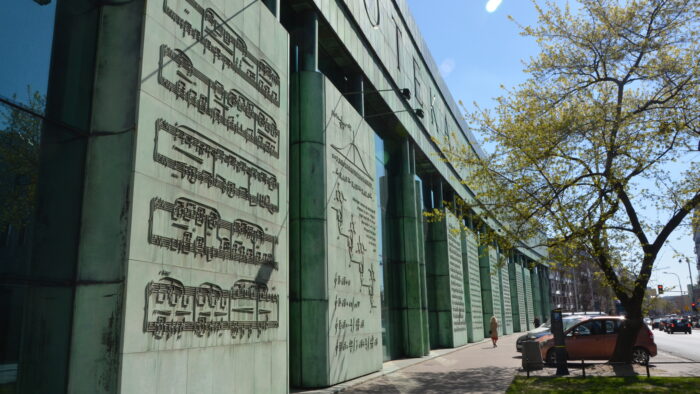
The Types of Knowledge A Man Should Learn – Upanishadic Wisdom On Warsaw University Library Walls
Last week the world woke up to pictures of verses from the Upanishads as part of the symbolism of the building of the University of Warsaw Library. On request from the Center for Soft Power, librarian and custodian as she refers to herself, Lilianna Nalewajska went around taking pictures of these beautiful walls which she shared with us. "If you come to Poland, let me know, I will guide you around," she told this author.
Lilianna shared a scan from a leaflet which describes the verse. "It's the Rigveda 3.62.10; Mundaka Upanishad 1.1.4-6; Bhagavad Gita 13.7-11. The work and excerpts were selected and digitally designed by Joanna Jurewicz and the lettering is by Stanisław Michalik. It's not a painting but a copper board," she told us.
The scan she shared is a translation by T H Griffith, Patrick Olivelle and George Thompson which was selected by Joanna Jurewicz (who is an Indologist at the University of Warsaw. She won the Prime Minister's Award for Outstanding Scholarly Achievement (for the book Fire and Cognition in the Rgveda). She is also the author of Fire, Death and Philosophy- A History of Ancient Indian Thinking. The verse means:

(Picture by Lilianna Nalewajska)
"May we attain that excellent glory of Savitar the God: So May he stimulate our prayers. Two types of knowledge a man should learn - those who know brahman tell us - the higher and the lower. The lower of the two consists of the Rgveda, the Yajurveda, the Samaveda, the Atharvaveda, phonetics, the ritual science, grammar, etymology, metrics, and astronomy; whereas the higher is that by which one grasps the imperishable. Knowledge is said to consist in the absence of pride and deceit, of nonviolence and patience and upright honesty, of service to one's teacher, purity, stability, and self-control, dispassion with regard to sense objects, and the absence of an ego-sense. There should also be an accurate perception of the misfortunes that inevitably come with birth and death, and old age and disease and sorrow, the absence of attachment or affection toward a son or a wife or a home, and all the rest; the constant practice of equanimity, whether events are wished for or not wished for, and there should be undeviating devotion, along with yoga focused on me alone, a preference for solitary places, and a distaste for large crowds. Finally, there should be constant attention to knowledge of the self, and a perception of the purpose of the knowledge of reality - all of this is called true knowledge. What differs from this is just ignorance."
Lilianna has taken pictures of the front wall of the building of the University of Warsaw Library. "There are eight huge copper boards with texts from different cultures and times. Those boards resemble open books. This is one of the symbolic meanings of the architecture. It was an idea of the architect of the building, Professor Marek Budzyński to show that a library is a very meaningful and important place. It was part of the project of the building to place the boards on the front wall," she says.

Professor Marek Budzyński says about the building architecture in a brochure: "I believe in the movement which is called sustainable development, and that is why the symbolic unity of the opposites of nature and culture is the main theme of the University of Warsaw Library project. This building, like any other, has its exterior and interior. The exterior shows the coexistence of the building with nature and culture, and has aspirations to be a Sign. It has a so-called “Ecological” roof and three facades with biologically active coating."
The fourth facade of the building, he says the “cultural” one represents relationships with the past, the diversity of civilizations, and with the Graeco-Roman and Judeo-Christian source of the Polish culture. It makes the building united with the organisation of the city. "The space of this world is, like any Euclidean one, formed on three mutually perpendicular axes defining relationships. The first one, is an area where contrasts meet, and where delicate proportions determine the success of the expected feeling of coexistence. The second axis, perpendicular to the first one, determines the relationship with nature, with the surrounding park climbing up the building and covering the space of the Library. At the intersection of the first two axes passes the third one, vertical, symbolically determining the relationship of culture and the Universe. This is the axis of ideas, faith and transcendental matters. Network of individual connections with the collections spans on
these three axes around the information hall. "
About the Indian students at the University of Warsaw, Lilianna says the university has a growing numbers of international students. "Quite many of them come from India. From the Report of the Rector of the university for 2020, I learnt that there were 59 long-term students from India (all together international students and doctoral students - 3810). But as far as I know many students from India study in some other public and non-public high schools in Poland."

Justice P Kodandaramayya Foundation Provides Scholarship to Students of Tenali Pareeksha
Tenali is a small city in the Guntur district of Andhra Pradesh. It is only small in size. The town continues to live in our consciousness for more than one reason. Not in small measure for being the birthplace of Tenali Ramakrishna, one of the Ashta Diggajas of Sri Krishnadevaraya. Situated on the banks of the River Krishna, Tenali is an ancient place. It finds mention in the Andhra-Satavahana Kingdom relics. The Nagalingeshwara Temple inscription of Tenali shows a rich Vedic-Jain-Buddhist history for the place going back to 2000 years. In the modern era too, Tenali as a town is known for Art, Literature and Culture. But that is not everything. This story is about a tradition, culture and a person who should have been an inspiration for many in the nation, only if we cared to know the man and the institution. It is a one-man Institution that he has held fort in the midst of all turmoil.

India Australia Cultural Relations Are at an All Time High: Ramanand Garge, SVCC Director Sydney
The National Gallery of Australia recently announced that it will return 14 works of art from its Asian art collection to the Indian Government. Among the works being returned include works from the Chola dynasty (9th-13th centuries), an arch for a Jain shrine, from the Mount Abu region, Rajasthan, the divine couple Lakshmi and Vishnu [Lakshmi Narayana], 10th-11th century, Goddess Durga slaying the buffalo demon [Durga Mahisasuramardini], 12th13th century, a letter of invitation to Jain monks; picture scroll c. 1835 and more
National Gallery of Australia Director Nick Mitzevich says in a press release: “This is the right thing to do, it's culturally responsible and the result of collaboration between Australia and India. We are grateful to the Indian Government for their support and are pleased we can now return these culturally significant objects.” (https://nga.gov.au/aboutus/press/pdf/mr_australiareturnsworksofarttoindia.pdf)
In the light of this development, CSP spoke to Shri Ramanand Garge, Director Swami Vivekananda Cultural Center, Sydney on the changing nature of Indo-Australian relations. He is an avid photographer and has shared some of his photographs taken in Australia and India with us.
How are the cultural relations between India and Australia evolving since you joined the mission, especially in today’s time, when there is great synergy observed at the summit level?
India Australia relations are very warm and relations are at an all time high especially at the summit level when both the Prime Ministers are engaging at different forums, multi-laterally and bi-laterally. The warmth is palpable through different informal gestures. Last year, prior to the first virtual summit between India and Australia, the honorable Prime Minister of Australia Scott Morrison had prepared samosas and shared those details through his social media platform and he is frequently engaging with Indian diaspora. His recent visit to a temple in Melbourne also stands testimony to the warmth of the interactions with the Indian diaspora here in Australia as well.
When it comes to the cultural exchange, I am pleased to inform you that the National Gallery of Australia has decided to repatriate 14 of its artefacts to India. This is a wonderful gesture and this is one of the largest number of items any country has returned to India. The centuries old artefacts from various time periods, representative of the art of different states will be returned to India. The National Art Gallery is a federal entity in Australia and it is the government's initiative as a gesture towards India.
Prior to that, in 2014, the then Prime Minister of Australia told me about the return of two artefacts - one is a Lord Nataraja icon along with a 1,000-year Ardhanariswara was returned to Shri Narendra Modi ji, the Prime Minister of India, during their summit interaction. So, this is unique engagement between the countries, as compared to other cultural profiles.
The relationship is very warm at the people to people level as well. The standard profile is Curry, Cricket and Citizens, and these are the defining features of India Australia dosti and they are very strong. Be it cultural festivals, food or movies or even for that matter sports engagements are getting enhanced on a daily basis.

The Indian diaspora has carved out a special place in each and every country it has settled in and has a very strong role in dissemination of soft power. We would love to know your experience of the Indian Diaspora in Australia and its significance in growing bilateral relations between India and Australia.
The Indian diaspora has a large global presence and are known for their constructive character in whichever society they have assimilated across the world and same is the case in Australia where they have a large presence. This has been a very great source of strength for the Indian consulate and all the missions across Australia. They hail from different states of India and when it comes to the interaction with the Indian consulate and to any cause pertaining to India,, they are very much united. Their strength lies in the fact that they work together culturally, and are very vibrant.
I am pleased to inform you that as a mark of respect towards the Indian diaspora, the iconic Sydney Opera House is lit in crimson red on the occasion of Diwali every year. It is a great gesture by the Government of New South Wales and Australia towards the diaspora. Besides this, Indian languages also have a great presence in the academic profile of Australia. Sanskrit and Hindi are taught till the High School level in the main curriculum and along with the 16 Indian languages taught at different community language programs supported by the Government of Australia and the New South Wales government at the state level. That shows the commitment and support by the respective state government as well because when it comes to implementation, it is not just a commitment, it is also backed by financial support.
When it comes to the other cultural profile, Indian culinarians are very much popular, and Indian restaurants a huge cultural landmark presence on the horizon of Australia.
What are the potential areas of cooperation between India and Australia in the field of sports.
Australia is a sports loving country and even the present medal tally of Australia in the Olympics stands testimony to that. When it comes to the engagement on sports platforms between our two countries, there is a huge amount of interaction happening with cricket and sports universities in India are also engaging at various levels. These are routine in India Australia bi-lateral engagements in the sports field.
The recent finals of MasterChef Australia featured two persons of Indian origin, with one winning the competition. How has Indian cuisine been received in Australia the same as it is in the UK, where it has been absorbed and modified into the local culture. Or are there restaurants serving authentic Indian cuisine?
I am happy to share with you that the Indian cuisine is very much liked by the Australians notwithstanding its spice level. Vegetarian, non-vegetarian all sorts of culinary dishes are prepared. When it comes to awareness about Indian cuisine, outreach programmes like MasterChef Australia have been front runners creating awareness of different dishes. Earlier you talked about another part of the world, where there is a standard format like Chicken Tikka Masala, where only certain dishes are popular like Idli or Tandoori. When it comes to the culinary profile of India, people who are well versed with local Australian cuisine are also well versed with certain culinary dishes of states like Maharashtra or Jharkhand or certain North Eastern states as well and they are well liked. Certainly when it comes to the preparation part, there may be a difference in the preparation in India and here, but when it comes to the spirit, I feel it is all the same.


 (Pics by Ramanand Garge: Pengong So post of India, UT of Ladakh, Kaola, Australian ship and fish)
Many Australians are interested in Indian textiles especially in the Kutch and Rajasthan belt and they have also come and worked with weavers in this region. Is there any initiative to bring these ties closer in textiles or is it only individuals who are coming and learning?
When it comes to textiles, Indian textiles are also very much liked here especially cotton and silk. These are the two prominent textiles which are popular here, not only because of the texture part but also because of the making part of it as well as the vibrancy, the colors which we have in India are very much liked here. I am happy to share with you that the Powerhouse Museum (which alongside Sydney Observatory and the Museums Discovery Center, is part of the Museum of Applied Arts and Sciences (MAAS) here in Parramatta has many Indian ethnic dresses of different states and they are showcasing it in their profile. The related trade and commercial aspects of textiles are on a growing track.
The Education sector is one of the big attractions for a lot of Indians. Lot of Indians travel to Australia to study. Is there a similar interest in Australians to spend their gap year here or to spend time in between their courses traveling in India.
This is on the rise now. Australia is a popular destination for Indian outgoing students especially in Masters and Research areas. Australian students are willing to engage with Indian institutions of eminence. We have received a warm response to the recent fellowships declared by the Indian Council for Cultural Relations for art and culture. Be it the Pandit Bhimsen Joshi fellowship or the other fellowships declared by ICCR, people are willing to learn Indian languages, Indian art forms.
Last year we had a very unique interaction between an Indian and an Australian artist where they came together and created a wonderful composition in Raag Desh. See link: https://m.youtube.com/watch?v=5_h2XUW91IA
Many Australian artists playing Western instruments have spent a good amount of time in India and learnt Indian classical instruments like Tabla, flute, even for that matter, violin - both in Carnatic and Hindustani style.
Similar interactions have also happened this year as this is a very special occasion. We are celebrating our 75th Independence Day this year as Amrit Mahotsav - a year long festival is about to begin in a couple of weeks. Sydney based Carnatic artists - both of Indian and Australian heritage have come together and are sharing their expertise and creating another new composition to celebrate this special occasion. Although we are in lockdown in Sydney, they are very much active in their respective studios and they are working and sharing and collaborating on these fronts.
What is the status of Ayurveda in terms of practice? Is there license or considered as alternative or integrative medicine or considered as mainstream medical practice?
Collaborative engagements in this direction are being decided. Apart from this, Ayurveda too is very much popular here. An Ayush Chair is likely to be established soon this year at the National Institute of Complementary Medicine in Western Sydney University in collaboration with the All India Institute of Ayurveda, New Delhi and they have signed a MoU of research collaboration with each other. Once the chair is established, we are optimistic about more engagement in the fields of Yoga and Ayurveda here.
While Ayurveda will be at the beginning level, when it comes to Yoga, it is already popular here. Australia being a sport loving country, yoga is a part of their fitness regime. This is the case with many Australians.
On the occasion of International Day of Yoga we had arranged various competitions related to Yoga postures. It was tough for the judges and it was very nice to see people of Australian descent participating in the yoga activities here in large numbers across various cities.
Can you talk about some of the initiatives that you have done at the center which have had an impact on diplomacy and soft power.
The center here is relatively new and we are the youngest cultural center established in 2015 during the Prime Minister's visit to Australia. It was declared in November 2014 and became functional mid 2015 onwards. I am the first Director of the Cultural center and shouldering the responsibilities of at least making our presence felt on the cultural horizon of Australia and simultaneously also thinking about the comprehensive development of the Cultural Center including basic infrastructure in the form of state of art audio visual facilities. The state of the art acoustics stage we have here has a comfortable seating arrangement of a minimum of 200 people.
When it comes to the engagement part, in the consulate, we call it Team India. All wings are lending a hand. When it comes to the cultural promotion part, all wings of the consulate take a very keen initiative under the leadership of the honourable Consul General here and promote Indian culture not only with the Indian diaspora but also go out of their way to present it in different formats - be it trade promotion or any institutional engagements.
I have been involved in the language development - Sanskrit and Hindi, mentioned earlier as well as the establishment of the Ayush Chair, cultural engagement in the form of Sur Sagar in which we had a joint venture between Indian and Australia artists which was liked by many. As it is the birth centenary of Bharat Ratna Pandit Bhimsen Joshi, we are starting a series of engagements - Legends of Indian Classical Music. We will be interacting with music enthusiasts to celebrate the contribution of Pandit Bhimsen Joshi is unparalleled in India in classical music. This year long series will be called Arghya. We would like to share the experiences of various artists of Indian descent who have successfully contributed to our music and are icons of Indian classical music on a global platform. We will showcase their experiences with Pandit Bhimsen ji along with certain features of Indian classical music. Pandit Jayateerth Mevundi who is also from the same Kirana Gharana of Pt Bhimsen Joshi will inaugurate the series.
On the culinary front, we already hosted a Taste of India where legendary chefs of India prepared Indian dishes and shared their recipe videos in our programmes. It was one of our key activities during pandemic, and we managed to interact and engage with Australian chefs as well. Well known Australian chef Maggie Beer, popular in India and Australia, prepared some Indian dishes for our programme. Various chefs are participating in our Aahar series which we held on the International Day of Yoga 2020 and 2021 as diet is a large part of Yoga. When it comes to cultural promotion, irrespective of which individual assumes office, when it comes to Team India we have always worked together.

In times of Covid, digital diplomacy has come to have a very important role in communication more than face to face engagements. What are the areas in which it has been used in Indian diplomacy?
In the past year right until this summit, digital diplomacy played a crucial role. The first virtual summit was held between India and Australia and various countries followed after that. It was the pinnacle of digital diplomacy. When it comes to our engagements at the cultural center, on special days like World Cultural Diversity Day, and India being one of the most culturally diverse countries, we managed to engage with people from various Indian states. They came together and shared their ideas in their native languages. We shared it on social media.
Similarly, different dancers came together on World Dance Day and shared their expertise through different compositions. Artists also showed India’s gratitude on Gandhi Jayanthi or National Unity Day to legendary icons of India. They have paid their gratitude through instrumental music, and classical dances or folk dances. Folk dances are extremely popular because of their vibrancy which represents the warmth and creativity of the different zones of India. The Swami Vivekananda Center in Sydney has been successful in generating quality content for the audiences who are not only interested in visiting SVCC but also very enthusiastic towards Indian culture. They can get great insights about Indian culture on our social media platforms.
(Cover Pic: Diwali Dress up of Sydney Opera House by Shri Ramanand Garge)