India has influenced the West Very Softly: Saxophonist George Brooks

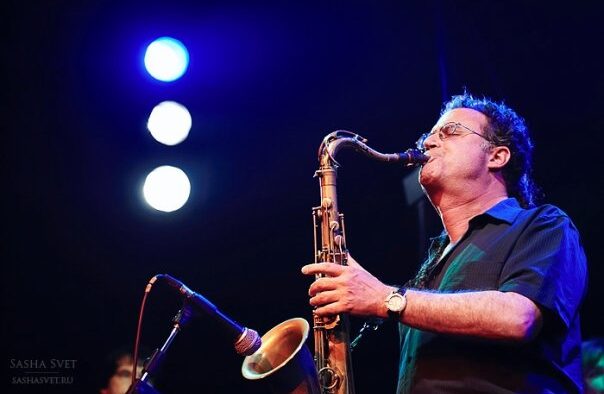
Saxophonist George Brooks has built bridges with India through his music which is primarily a beautiful combination of jazz and Indian classical music and through his collaborations with Indian musicians. He says that India has influenced the West and “in some ways so softly that many times people don’t understand the connect with India. Most English speakers don't understand that we have Sanskrit roots in our language,” he told CSP in an interview recently.

He is the founder of Indian fusion groups Summit with Zakir Hussain, Steve Smith, Kai Eckhardt and Fareed Haque; Bombay Jazz with Larry Coryell and Ronu Majumdar; the Raga Bop Trio with Steve Smith and Carnatic guitarist Prasanna and Elements with Indian violinist Kala Ramnath and Dutch harpist Gwyneth Wentink.

Brooks says his first introduction to Indian culture was through music. The first time he heard Indian music was that of Sitar exponent Pandit Ravi Shankar when he played with the Beatles in the late 60s or 70s. George Harrison had done a charity concert in Bangladesh and Ravi Shankar played at that concert. “I had that album and I just remember that when Ravi Shankar’s part would come on I didn't really understand it, I wasn't quite sure what was going on. That was probably when I first heard it, but I didn't establish a relationship with it at that point. I mean I heard the exotic sounds in some of the Beatles stuff, but didn't recognize it as Indian,” says Brooks.

Brooks with his guru Pandit Pran Nath

Brooks started playing jazz when in high school. Growing up outside of New York city, he says that he was able to sneak into jazz clubs. Brooks began his study of jazz with Count Basie saxophonist, Frank Foster and continued at the New England Conservatory of Music, with George Russell, Joe Allard and Jaki Byard. On a whim, he says, he took a course called - Survey of Indian Classical Music, “and that was when the light bulb went off and I started listening to Indian music.”

The course was being taught by an American Sitar player Peter Row who was married to an Indian at that time and a practitioner of Hindustani music. Peter had spent extensive time in Kolkata, where he attended Don Bosco High School and studied sitar for many years with the distinguished Gokul Nag of the Vishnupur gharana.  He later obtained the Bachelor of Music, Master of Music, and Doctor of Music (Sangitacharya), from the Prayag Sangit Samiti in Allahabad.

A fixture of the Boston classical music scene, Row also served as Dean and Provost at the New England Conservatory while teaching courses in the music of India and world music.

Brooks says that Row would come to the conservatory “wearing a chaddhar and smoking beedi and had adopted many Indian mannerisms.” He was teaching the students Sargam (singing the notes instead of the lyrics) and the students were given listening assignments.  

Brooks says he was listening primarily and almost exclusively to Hindustani music at that time.  The Dagar brothers, Ustad Ali Akhbar Khan, V G Jog, Pandit Ram Narayan were a great attraction to him. “This really older generation and especially the Dagar brothers was the kind of music to which I was very attracted to - Dhrupad music and this kind of singing. I started trying to figure out what about this music could I express through my instrument, even though I wasn't having any kind of taleem at that point.”

Brooks says his teachers at the conservatory didn’t really like his experiments as they didn’t have any relationship with Indian music, except for Peter Row who was teaching the course.  

In the same year, Brook met his wife Emily who was involved in the mystical teachings of Hazrat Inayat Khan, the ‘Sufi who brought Sufism to the West’. When she moved to California to study at Mills College, a nationally renowned liberal arts women's college, he joined her. That is where he met his guru Pandit Pran Nath as well as his guru's senior disciple American pianist and composer Terry Riley. After Emily, his wife, graduated from school she received a Watson fellowship to study in India, and Brooks followed her.

“This was my real introduction to Indian culture. Before we went to India we studied Hindi. I learned to speak and also read some Devanagari. When we arrived in Delhi it was a totally mind blowing experience. Communication wise, there were certainly no cell phones, no computers and there wasn't even much in the way of landlines. So if you wanted to visit somebody, you went to their house and hoped they would be home. If you wanted to go somewhere you'd have to go to the train station a day before and stand in a queue for three hours to get a ticket and then come back the next day... and for people like us to hope that we got on the right train. So that's where I really got to know Pandit Pran Nath and learned to do Guru seva and give him massages and cook and just do all the things that a student would do in order to receive the knowledge.”

As to the teacher-student relationship, Brooks says there are teachers in the West who are very serious mentors and take students under their wing and “somebody might be considered the protege of a particular individual but it is not quite the same as a Guru. We don't have the ‘Guru Brahma, Guru Vishnu concept. In America everybody's got the feeling they are ‘independent’. It's about ‘I did this on my own’ and that's it. Whereas in India, it's like I couldn't have done this without the blessings of my Guru and Bhagwan. I think that's kind of  different. Nobody wants to be subservient to anybody here.”

So, the Guru-Shishya relationship was very special to Brooks. “It just brought a different world view. It helped me see the world in a different way.” His guru stayed in Kailash Colony in New Delhi and so the Brooks lived in Nizammudin and at the Sri Aurobindo Ashram. “We had a lot of different types of experiences.  We actually lived at the dargah of Hazrat Inayat Khan, for several months. We traveled a lot in those days, we went to Rajasthan and saw so many parts of India that I guess your average tourist doesn't see.”

Brooks, John McLaughlin, Zakir Hussain and Louis Banks

On his return to the US, Brooks met Sitar exponent Krishna Mohan Bhatt, a relative of Grammy winner Vishwa Mohan Bhatt. Krishna Mohan Bhat lived in Berkeley in California. “We became very close in the 1980s and Krishna, Terry Riley and myself started touring together. Northern California, which is where I settled, was the Center for Indian classical music in the US. It was where Ali Akbar Khan had his scholarship, Pandit Pran Nath was teaching here, Zakir Hussain was part of the Ali Akbar college and was living here. Through Krishna I met Zakir Hussain.”   

Brooks was playing with Blues artists, writing music and playing with some students from the Ali Akbar College, but it wasn’t till 1996 that his first recording was released by Ustad Zakir Hussain on Moment Records. It was a collaboration between Brooks, Krishna Bhatt, Zakir Hussain and some Western musicians. “I would have to say, because I was performing with Zakir and because he was presenting my music that gave me a great deal of visibility in the Indian classical world. As I kept writing music in this realm I never felt like it was right for me to say I’m a Jazz musician or an Indian classical musician. I don't think I'm either of those things. I study Indian classical music, I study Western jazz and I write music that hopefully expresses how those elements have kind of grown inside of me.” 

Brooks with Pandit Hariprasad Chaurasia

Working with Zakir opened the world to Sultan Khan Saab, Pandit Hariprasad Chaurasia and then later to Carnatic musicians like Ganesh-Kumaresh, Shivamani and Flute Sashank and then much later to Suma Sudindhra, Chitravina N Ravikiran. Brooks says it kept unfolding - Kala Ramnath, Ronu Majumdar, Purbayan Chaterjee, Niladri Kumar and so many others. 

Of course these international collaborations did not always go down well with traditionalists in the classical world of Indian music. “Well it's interesting. I mean people are really eager to criticize. My Guru ji used to say, if you made a painting and put it out in the village and said please comment, everybody would say the sky should be a different blue, the tree should be a different green. But if you put up a blank canvas and said please create, it would stay blank.”

Brooks says that Indian musicians played classical music but tried to find new ways to collaborate and create. “Ravi ji played incredibly serious classical music, as did Ali Akbar Khan Saab, but they also looked for ways to relate to the people listening to them. If Ravi ji met Yehudi Menuhin, a brilliant classical violinist, and they wanted to find some way to have a conversation, to have a simple shared experience, somebody like Yehudi Menuhin is not going to be able to sit for 15 years to learn the intricacies of Ragas to have that conversation. So they have to find common ground somewhere in the middle, where they can meet.”

Brooks says that historically in most of the East-West collaborations, Western musicians have moved more towards the Indian side, mainly because “Indian instruments are crafted to play within a Raga system. They are not created to move through harmonic motion, the way let's say a piano was actually invented and developed over the decades and centuries to be able to move through the keys. Indian instruments are crafted to explore the subtleties of one mode of the relationship. The sitar has meends - the slides and spaces between the notes. Western instruments can't do that at all, certainly a piano cannot, the saxophone has some ability and the violin has total freedom to do that which is why it's been so well adapted to the Indian classical world.” Brooks says if musicians want to come together and explore new territory, then there has to be a kind of accommodation on both sides.

Over the years, the recording industry has grown by leaps and bounds. There are today several platforms streaming live music and recorded music and the seeds for this were laid in the 1980s. The first time Brooks heard Indian music it was because of the many albums recorded at that time. Zakir Hussain would talk to him about the times when his father Alla Rakha Khan Saab would come back from his tours with a recording of My Fair Lady or a show tune or Buddy Rich playing jazz, and Zakir grew up hearing these records.

Of course Brooks mentions the now ubiquitous Youtube where everything is available to everyone, all the time. “But sometimes it is hard to find the gems. The industry can also be problematic in that it pushes, sometimes, what you might consider the lowest common denominator music that will appeal to everyone, or which they think will appeal to the largest number of people that they presume they can make the most money from.” He adds that most people out there are not going to listen to Bade Ghulam Ali Khan, but they may hear A R Rehman’s Jai Ho, from the hit movie. “The industry has the risk of obscuring important artists who are less popular while promoting those who might have more mass appeal,” he observes.

Classical music requires rigorous training, and one has to be super focused to get to that level of proficiency, says Brooks. “I see incredibly brilliant musicians coming from all parts of the world, evolving as very mature musicians in a variety of cultures, not always the culture that they were brought up in. I think a brilliant inquisitive mind is going to adjust to the amount of information coming in and make something special. I believe in  the ability of the artistic spirit and human ingenuity.”

 The power of the Human Voice

The human voice has been the most sought after sound in most forms of music. In Indian music it is known as the Gayaki style. Brooks says a lot of the underpinnings of Western jazz are also songs that have been explored by jazz instrumentalists. “Most of those great jazz instrumentalists have also become composers and they've written their own instrumental music, so we have what's referred to as the great American Songbook. These are songs from the 20th century, from the 1950s which have evolved into a different kind of pop music and worked their way into jazz.  Jazz instrumentals and people like Thelonious Monk, John Coltrane and Charlie Parker (nicknamed ‘Bird’ and ‘Yardbird’, was an American jazz saxophonist, bandleader and composer) were our inspirations. I listened to the vocalists because they have maybe the strongest ability to communicate emotion and to really touch our hearts. There's nothing quite like the human voice, saxophone is second (smiles).”

He also listened to “Bade Gulam Ali Khan, Bhimsen Joshi and Kishori Amonkar. I listened to these vocalists to hear what they do, but also to somebody like Hariprasad Chaurasia to see what the wind instrument creates.”

All of these influences come together in the trio called Elements which represents a new standard in global chamber music, combining the unique talents of American Brooks with violinist and vocalist Kala Ramnath and Dutch harp virtuoso Gwyneth Wentink bringing together Western classical, Indian classical and American Jazz music.  

Gwyneth Wentink is a harpist from the Netherlands and was introduced as a teenager to Indian classical music, learning from Hariprasad Chaurasia when he was teaching an Indian classical music programme at Rotterdam. In 2004, they performed  together with Hariprasad in New York City. “Elements was an exciting project for me because you have Kala, who is an Indian classical musician and doesn't read notation and then there’s Gwyneth who came up in a strictly Western classical scene where everything is written, so I had to be this bridge between these different worlds.”

With the Element Trio, Brooks has composed ‘Karuna’ which is a tribute to Karuna, a student of Pandit Pran Nath.  She was a musical and sort of spiritual leader at the Sri Aurobindo Ashram in Delhi and Emily, Brook’s wife, had come to India to study with her. “We became very close and on her first trip to America, she stayed in our home and we stayed very close to her until she passed away two to three years ago. This is a tribute to her. It's based essentially in Raag Yaman or Kalyani depending on where you're from and the opening notes are so heart wrenching.”

Just before Covid happened, Brooks was introduced to Utsav Lal, a Raga pianist, raised in Delhi and then Ireland. He went to the conservatory in Scotland and then nearly 40 years after Brooks went to the New England conservatory and got to know Peter Row, the same teacher who introduced Indian classical music to Brooks. 

“Although a pianist, he studied with Wasifuddin Dagar, one of the Dagar brothers of Dhrupad music. I worked with him in one of the last concerts before the Covid shelter began. He lives in Brooklyn, 3000 miles from where I live in Berkeley, but we were able to put a couple of video compositions together, through the internet and one of them was Karuna. Then we just followed it up with another called Silver Lining, based on Asaveri Raga,” says Brooks.

George Brooks says that the biggest learning for him in all these collaborations was developing a personal relationship with the people he was collaborating with. “It's not enough to look at the culture, either the West or East. Look in either direction, you don't want to look from outside and cherry pick something and go ‘Oh, I like that’. You don't want to use these things indiscriminately. The thing, I think, that's given me the most pleasure and maybe has given me strength in what I do, has come from my relationships with the artists themselves. As I mentioned, Krishna Bhat  was a very, very close friend or even my relationship with my guru ji was very special.”

For Brooks, relationships have been about “understanding who his fellow musicians are, and from that understanding how they view the musical world. What is it about their culture that makes their music the way it is, what is the music used for in their lives, how do they relate to it, who was their guru, who is their guru's guru, those kinds of things.”

One of those relationships was with Ustad Zakir Hussain. He had a chance to work closely with him in several recording sessions, watch how he worked in the studio, and observe the kind of serious attention he brought to his craft. He narrates a special occasion with the famous Indian tabla player. “Onstage and watching him do his soundcheck, you get to know how he relates to his instrument, how he brings himself into that performance space. There were these special events, which he conducts every year as a memorial concert for his father.  I've performed quite a lot of those. Usually in the evening there's a jam session, where they bring musicians from different places, usually some western and Indian, fusion and classical.”

But that year, John McLaughlin was in India and had written a piece called Abbaji as a tribute to Alla Rakha Khan saab. For the first time Zakir Hussain had a  jazz or a non classical performance in the morning for the opening of the event. “You had John McLaughlin who was really one of the architects of East-West fusion and his band Shakt was one of those really groundbreaking seminal groups. So to perform with him, Louis Banks and Zahkir Bhai - all playing this reverential piece for Abbaji at six in the morning, with several thousand people in attendance, all in a kind of a reverential mood, was a very special moment.” 
I Have a Strong Belief There Is A Power In Words and Sounds: Dorien Reyners

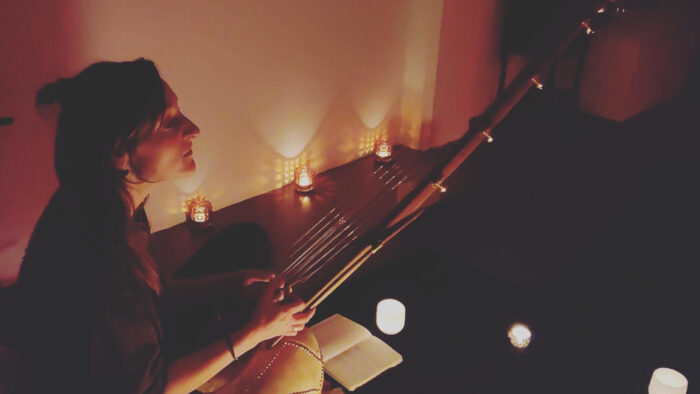
Dorien Reyners lives in Diest, a city in the Belgian province of Flemish Brabant. She works at Academie Beringen, a center known for ‘Deeltijds Kunstonderwijs’, literally translated as ‘part-time art education’. It’s an education center for children and adults where they teach music, theatre and dance, mostly after school hours. Dorien teaches music for children and adults with a disability which includes differentially abled children, those with learning disability, ADHD, autism etc.

Dorien has been learning chanting with Ms Shantala Sriramaiah, a Vedic chanting teacher based in Belgium and speaks to CSP about music, chanting and therapy.

Could you share your journey as a music therapist and how you came to chanting?

When I was in secondary school, I went to study music. There I heard of music therapy and I was immediately attracted to the idea of becoming a music therapist. It combined my two passions: music and human interest.

I studied music therapy for 5 years in LUCA Leuven. Five intensive but very interesting years. After that, I started to teach music to children and grown-ups with a disability in the music school. In these courses, the relationship between the teacher and the student is very important. When there is no connection, the process of learning becomes difficult for them. That is why my background works very well for my profession, because in music therapy the therapeutic relationship is very important.

More or less eight years ago, I discovered the power of mantras. I heard mantras from some famous European singers, but after a while I became really interested in the Sanskrit mantras and their background. Then Shantala appeared in my inbox because I was following her already but had not been to Brussels. I attended an online introduction to a course she was offering. It really ticked all of the boxes regarding what I was looking for and I have been enrolling in several courses since then. That first introduction is now over a year ago.

What in your opinion makes for good music therapy sounds?

From a music therapist's view there is no good or bad sound. In my education, the most important thing is to improvise with the clients, to actively make music and sounds. Everything that emerges there and then in a session, happens for a reason and is a reflection of what is alive in the client, in the therapist and in the relationship between them. Also there is time and space to reflect on what was experienced during the improvisation(s).

In addition, I have a strong belief that there is a power in (the resonation of) words and sounds and that it has an influence on our body and mind. That is where my interest in the Vedas comes from. I also love to discover the global meaning of the mantras.

Your teacher Shantala ji recently shared at Indica Yogas Global Festival of Yoga her own personal healing experience with chanting.  From a Western Music Therapy perspective how can you use chanting for Therapy?

I think my previous answer covers this question a bit. My belief in chanting for therapy is very personal and we didn't see this in our education. Music therapy, where I studied it, is based on psychodynamic therapy. The therapeutic relationship is very important. Client and therapist create a musical interplay that can then be reflected on. In my experience, the mantras resonate with what I experience in my daily life. Therefore they can feel like a support. If we would integrate chanting in this perspective, maybe we can create time and space to reflect what effect chanting and the mantras have on the client.

I heard your rendition of the Gayatri Mantra. What does this mantra mean to you?

I have always loved the sound of the words of the Gayatri Mantra and it became more special to me when Shantala began to explain it. For me, the Gayatri mantra is very interesting because I'm just discovering it. There is so much to discover about this mantra. When I am free, I participate in the Friday community chanting - Gayatri mantra japa. What I understand from it is that we pray for clarity. With a clear mind, the possibilities are much brighter and we can make decisions from a brighter perspective, from a position that is more aware and closer to our intuition. I mean... When wouldn't we chant this mantra?

There are so many aspects to chanting that many of us in India take for granted like sitting on the floor for music and chanting. Was that a challenge?

Yes, this is a challenge! First of all, physical discomfort. I think because my body is not used to sitting on the floor for a longer time and sitting still. Also there is so much distraction in this world: internet, social media, things to go to... For me, chanting is also becoming silent, meditating. The mind easily takes over. This still is a challenge.

What about Sanskrit? Was it difficult to learn? The sounds and meanings have deep cultural connotations.  Did you come from a space where you wanted to know more about Vedic culture or did this course ignite that curiosity?

Yes! Like I explained in the first question, I was very curious to discover the Vedic culture, to discover those meanings and connotations. Shantala's introduction immediately resonated with my curiosity and also with my beliefs. There was an instant connection and that connection still keeps on growing.

Could you talk about learning outcomes for you. As a music therapist what impact could you feel on your physical,  mental and emotional well-being. 

I'm learning Sanskrit the way Shantala teaches it, in order to chant the mantras. So now I know a lot of phonetic rules, pronunciation,... I'm not learning word by word but the overall meaning of the mantras because for now, that is where my interest is at. I think it is going quite easy, like I was made to learn it. I also love to chant without the phonetic guide, just to see where I stand. For example: when I'm learning the pada pāṭhaḥ, I try it first myself and then I put on Shantalas recording to check if I was correct or not.

First of all I feel an overall contentment and happiness when I'm studying Vedas. Maybe I can compare it with studying an instrument. My mind is only concentrating on the sounds and on the words. I'm doing nothing else, no distraction. When I'm studying music, the sounds penetrate into the cells of my body. With the Vedas, not only the sounds but also the meanings of the words have that influence. Studying and chanting also feels like a support. Now I'm studying the one-year course of Śrī Rudrapraśnaḥ. I tend to remember what is currently applicable in my life. In this particular moment, Śrī Rudrapraśnaḥ gives me support in embracing all there is, in acceptance.

What aspects of Indian culture have you learnt from this experience that you cherish.

I love the importance of the rituals and discipline. When we chant the Vedas, we are forced to develop concentration, focus, will power,... And what maybe touched me the most, and I hope that I am interpreting it right, is that the deities are cosmic powers that we can address when needed. That they are not something unreachable, but they stand for powers that we all have in us. It is strange because I think I only have European blood, but I feel very connected to the Indian culture!

Ayurveda is Not a Trend or Fad Diet Exclusive to Food Deemed Healthy at the Moment Claire Ragozzino

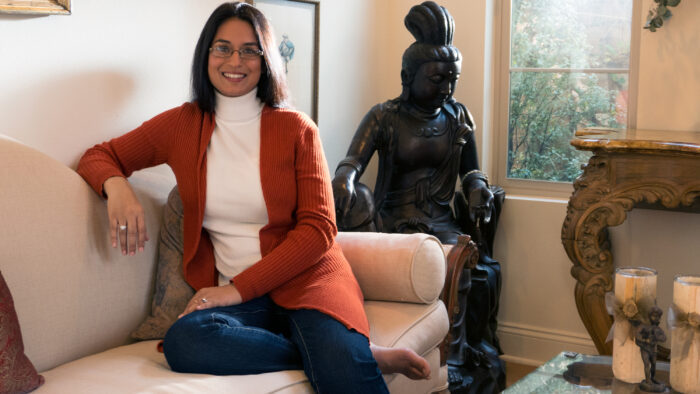
Chef Claire Ragozzino, the founder of Vidya Living, gave up a career in policy making in favour of Yoga and Ayurveda. Claire says her mission is to move beyond trends to Truth, as far as food is concerned. She is a certified Ayurveda Health Counsellor as well as a certified Yoga trainer. She has also done courses in integrative nutrition. 

Her journey with Ayurveda began in her teens when a gut problem led her to cooking her own meals. As the daughter of two busy pilots, Claire says she did not grow up with awareness of food as medicine. “There are many paths to healing, mine happened to start with food. I didn’t grow up with a lot of awareness about the importance of food as medicine. My parents were busy pilots with their focus and passion on aviation, so food was seen more as fuel, and eating a matter of what could be quick and convenient. I would say this is the case for many.” 

Claire adds that “With an industrial globalized food system, it’s easy to go to the grocery store today and shop for quick pre-packaged foods without having any idea of what’s inside the actual ingredients, let alone where the ingredients came from or how they will affect your body or mind. In the quest for convenience, we’re losing real connection to our food sources, and thus our innate wisdom of our relationship to the natural world. Now with so much nutritional information and product lines out there, it can be quite confusing and even overwhelming to know how to select and prepare meals that are properly nourishing to your unique needs. It’s become a passion and mission of mine to help people reclaim this inner wisdom and heal their relationship with food.” 

In the course of your extended training with various specialists in Yoga and Ayurveda what was the importance given to food and cooking?

Diet (Āhāra) is one of the three supporting pillars of good health in Ayurveda. Healthy and wholesome food nourishes the body, mind and soul. On a physical level, it forms our tissues and dictates the overall health of our body. On a mental and emotional level, food plays a vital role in how we can perceive the world around us. Ayurveda teaches us how to apply correct knowledge of our individual constitutions (Prakṛti) and our current state (Vikṛti) to our time and place in order to feed ourselves according to our unique needs. So when studying Ayurveda, food and how we digest that food is a large focus.

As a yoga practitioner, this knowledge can help you to intelligently care for your body and foster a clear, sattvic mind. I would say many modern yoga trainings don’t delve too much into diet or cooking, however, I believe every yoga practitioner would benefit from knowing at least the foundational principles of the sister science and how an individualized approach to diet can better support their practice. 

What is the connection between yoga and Ayurveda for you?

Yoga is considered to be Ayurveda’s sister science, with a similar timeline of development. Many know yoga in the modern West as a physical practice, a workout for staying in shape. However, until recently, yoga was primarily a practice for spiritual liberation, only outlining a handful of postures for meditation. It wasn’t until the early 1900s that yoga became a more embodied practice and started to merge with Ayurveda as a means of supporting the body, mind, and spirit as an interconnected whole. 

Yoga can be used as a therapy (Cikitsā) to prevent and treat disease. Because the mind influences the body, yoga’s aim is not only to bring strength and vitality back to the physical body but also to restore the mind back to its sattvic state so that it can perceive reality more clearly. Yoga as a therapy is not a one-size-fits-all or all-the-time approach. Rather, yoga can be practiced in accordance with your unique type and needs. In my book, Living Ayurveda, I aim to equip the reader with an understanding of how to use yoga as a therapeutic tool to balance the doshas and work with different postures and breath through the seasons. 

What is the main difference between eating healthy and eating for healing according to you?

Healthy eating has become a really trendy term these days hasn’t it? There seems to be a plethora of ways that people are claiming to be the healthiest ways to eat—some tout no fat low carb diets, some praise high fat and high protein diets, or trumpet intermittent fasting, or caffeine-laced with butter and superfoods. What I love about Ayurveda is that it’s not a trend or a fad diet that is exclusive to certain types of food deemed healthy at the moment. Rather, it looks at the individual, their unique metabolic blueprint and current digestive capacity, their environment and time of life, and maps out a diet that is healing to their present moment needs. A healing diet is used to treat imbalance and put the body back on track, whether that is healing from a long-term illness or treating a seasonal imbalance. There is no “good” or “bad” food necessarily in Ayurveda, but rather an awareness of what is needed for the individual at this point of time in their life. 

Physically we are aware of the benefits of an Ayurvedic diet. What is your experience in its mental and emotional benefits? 

The old saying “Food affects mood” is true! We look at the Maha Gunas (Rajas, Tamas and Sattva) as overall states of mind. The mind’s nature is inherently Sattvic, and when we eat nourishing meals prepared from quality, whole food ingredients and cooked with loving presence, this can promote a peaceful mind. When our diet is habituated with foods that are processed, frozen, canned, old or stale, it does not give life. We can feel a sense of lethargy, dullness or even withdrawal and depression when our diet is Tamasic in nature. Equally, when we live a fast and furious life fueled by caffeine, processed sugar and stimulants, our frenetic energy can create an aggravated Rajasic state of mind. Knowing these states of mind can help us to choose a diet that supports what we are seeking in our daily experience, and can shed the light of awareness on poor eating habits that drain us. 

Can Ayurveda help to break the cycle of poor eating and addictive eating?

Absolutely, because it teaches us awareness of our root patterns. When we become aware of how we want to feel and observe what is pulling us towards habits of disordered eating, we can then approach the change needed by treating the root of the pattern. Oftentimes, poor eating comes from lack of knowledge on how to eat for how we want to feel. And addictive eating usually stems from an unmet emotional need.

For example, a client once shared that she was so busy with her work as an online counselor, she never had time to eat during the day and instead wound up binge eating at erratic hours. She drank several cups of coffee to curb her appetite and stay energized during her busy hours. She saw a half dozen clients in the day where she spent most of the session talking or listening to difficult emotional stories, and afterwards felt ravenously hungry. Without thinking, she’d eat a whole bag of salty chips and then crave chocolate afterwards. Her biggest concern was having addictive eating patterns she could not overcome.

Yet, the foods themselves weren’t really the culprit here, it was the activities and unmet needs behind them. Her work was hyper-stimulating, she exhausted her energy talking and unintentionally fasting during the hours she needed the caloric intake the most. In order to calm herself after a long session, she would quickly eat some salty and then pendulum over to the sweet sugary foods. Both of these tastes, sweet and salty, contain qualities that provide a sense of comfort, grounding and satisfaction. When she realized the binge eating came after long client days, but not on weekends when she could prepare meals, she could quickly shift the habit by using her weekends to meal plan and have better quality foods prepared and ready to eat during her busier workdays. 

Kitchari by Claire

Could you share some anecdotes on what transformation food can bring about?

To continue the example above, the client that continuously binged on snack foods and never took time to eat full meals, was moving towards hypothyroidism and experiencing chronic fatigue. She had difficulty sleeping and irregular menstrual cycles. She was often constipated and felt bloated after eating. By prioritizing meal planning based on her needs and taking a short lunch break midday to eat a full meal, she was able to get out of the cycle of overstimulation and binge eating. Instead of reaching for caffeine to pick her up or alcohol to calm her down, she took a conscious rest and meditation after work when she felt most tired and ate a nourishing dinner in the evening. In time, she began sleeping through the night and waking more energized. Her digestive fire was restored by eliminating the erratic eating cycles, and she no longer felt bloated and constipated. Food became an anchor point in her busy life, and by nourishing her relationship to food she began to find a deeper stability within herself.

Your book deals with seasonal cuisine and recipes. At this time of the year, what would you recommend to your followers?

It depends on your climate, your constitution and digestive capacity, I would note first and foremost.  However, what the summer season generally brings is increased heat and longer days. In summer, we want to keep in mind how high temperatures and more time outside in the sun can increase our internal heat and start to dry us out. Our body’s digestive fire, Agni, is weakened this time of year, as heat disperses from our core to cool us down. So it’s important to maintain healthy eating habits and routine meals to keep our digestion on track. We want to avoid excessive fasting or grazing all day, and instead focus on eating two to three satisfying meals a day at consistent hours, with a digestive-friendly snack as needed for those who are more active or have a sharp digestion. We also want to reduce foods with heating qualities, such as pungent spices like chilies, onion, garlic, mustard and ginger. Instead, we cook with more cooling spices and herbs such as coriander, fennel, dill and parsley. Our meals can incorporate more sweet tastes from ripe fruit, whole grains, and quality dairy, as well as bitter and astringent tastes from seasonal leafy greens, cruciferous vegetables, and legumes. We often crave lighter foods in summertime, such as salads, but it’s best to enjoy these at lunchtime when your digestive capacity can handle more difficult to digest raw ingredients, and enjoy your cooked meals in the evening. 

How did you do the research for your book?

When researching for the book, I spent time with the classical texts, primarily referring to the Aṣṭāṅga Hṛdayam and the Caraka Saṃhitā. I also referenced Dr. Vasant Lad, Dr. Robert Svoboda and Dr. David Frawley, their translations and interpretations are very helpful for a Western reader who is still studying the nuances of Sanskrit! My aim was to provide a very simple introduction to the foundational principles of Ayurveda in a way that could be approached by a Western reader and palate. The recipes include more traditional recipes⁠—like ghee, chapati and khichdi⁠—alongside dishes like mung bean tacos and chapati crust pizza with parsley pesto with an Ayurvedic spin. My hope is to share Ayurvedic wisdom in a way that any reader from any culture can feel comfortable and confident applying the principles to their culinary traditions. 

(Claire Ragozzino is a certified yoga instructor and Ayurvedic counselor with a background in holistic nutrition and natural cooking. Her work is dedicated to bringing yoga, Ayurveda, and nutrition to a modern lifestyle. She is the author of the popular site, Vidya Living, and also writes and photographs for online and print publications surrounding topics of food, culture, and our relationship to nature. Her first book, Living Ayurveda, offers a comprehensive Ayurvedic cookbook and lifestyle guide. Claire works with clients around the globe and leads immersive workshops and retreats. www.vidyaliving.com, www.instagram.com/claireragz, www.facebook.com/vidyaliving)

NBH Kulkarni: The Man Who Nurtured Indo-Israeli Ties from Its Infancy

Professor Eliot Cohen, an American authority on Soft Power and author of the book Buy the Stick - The Limits of Soft Power and the Necessity of Military Force, says the U.S.-India defense relationship has been improving ever since the Clinton administration “and now represents an important counter to China. That's hard power, he says, but hard power that has grown out of the effective soft power of forging links with India.”

He narrates an incident on a trip to India, while speaking at the Naval War College in Goa. "It was basically a bunch of admirals," he recalls. "Every one of them had either studied at the naval war college in the United States, had on some other occasion studied in the United States, had a son or daughter who was studying in the United States, or had other relatives living here. That makes [military cooperation] a lot easier, when there's this deep web of connections."

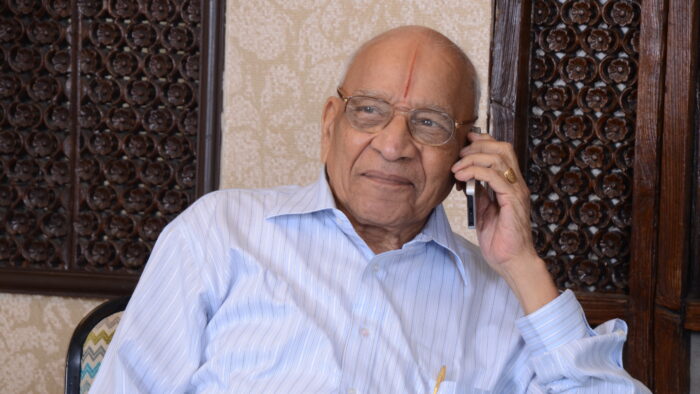
In a strikingly similar pathway, 93 year old NBH Kulkarni has single handedly built India’s strategic partnership with Israel. This year marks the 50th year of the Indo-Israel relationship, and Kulkarni is being felicitated during the commemoration of five decades of Indo-Israel business and economic trade relationships at the Israeli consulate in Mumbai. It will be attended by the Consul General as well as the Federation of the Indo Israel Chamber of Commerce, the apex organization facilitating trade relations between India and Israel.   

In a conversation with the Center for Soft Power, before another recognition for his efforts by the Israeli Embassy in Mumbai on July 21st, NBH Kulkarni spoke about his efforts to support the bi-lateral trade relations between these two ancient civilisations.

Israeli delegates with Kulkarni in Mumbai

Hailing from Dharwad in Karnataka, Kulkarni was a pioneer in bringing Israel to India in 1971 for trade and commerce. At that time the largest chemical company from Israel - Dead Sea Bromine Company Limited a part of Israel Chemicals Limited was not operating outside Israel and approached him for help to enter into the Indian market “because they had expanded their production capacity and were looking for new markets,” says his son Sriram Kulkarni, Director Technochem Agencies (Bombay) Pvt Ltd. 

“At that time, India did not recognize Israel, so it was impossible for any Israeli company to export any materials to India. A delegation met my father in 1971 and said  they would like to export bromine (an important chemical used in the pharmaceutical, agrochemical and the petrochemical industry) to the Indian market,” says Sriram.

A shrewd businessman, Kulkarni used innovative methods to initiate this link. Within a couple of years, his company Technochem Agencies took the bromine from Israel to the UK, and to Singapore to repackage and bring it into India. “In those times repackaging would change the country of origin, and it was legal to do it. So father started bringing the bromine chemicals into India,” says Sriram.  The business benefited India as well, as the finished products were being exported back to Israel.  

United States Consular General Peter Haas honouring NBH Kulkarni 

Along with the bromine, he brought in the technology to process the bromine in various small and medium sized industries in Gujarat and Maharashtra. ‘The technology for taking bromine and producing downstream products was the process that he brought in, and he gave it to young entrepreneurs to start their own business activities due to which the chemical industry really flourished during those times. During that time there was no Maharashtra Industrial Development corporation (MIDC) or the Gujarat Industrial Development Corporation (GIDC).”

When the industry burgeoned, Kulkarni took the lead in meeting with the governments of Maharashtra and Gujarat and urging them to make available basic infrastructure to support this industry. Kulkarni initiated the concept of developing infrastructure such as land, providing water, providing electrical power, maybe giving small sheds for industries to come and set up their factories, thus creating the foundations of MIDC and GIDC. Seeing this success, other Israeli companies with other technologies approached Kulkarni. Israel with its cutting edge innovation had converted a virtual desert into a green land, and Kulkarni realised India could benefit from this partnership.

Drip irrigation, used by many of Indian farmers today, was brought from Israel, reducing water consumption by more than 70%. Kulkarni connected the Israeli technology companies to various groups in India like Jain irrigation, Finolex, Coromandel fertilizers, Nagarjuna fertilizers and allowed them to tie up with Israeli agricultural technology companies.

Seeing the progress of these trade partnerships, Kulkarni was approached by bureaucrats from Israel to negotiate a meeting with India’s political leadership. He got his friend, former Chief Minister of Karnataka and a Union Cabinet Minister Veerendra Patil, to set up one of the first diplomatic meetings between India and Israel at New Delhi. The Indian Prime Minister at that time, Mrs Indira Gandhi told the team that while India had no issues with Israel, the Middle East boycott made it difficult for India to establish political ties with Israel. India was dependent on the Middle East for oil and could not jeopardize that relationship.

With Bharat Ratna Hindustani Vocalist Bhimsen Joshi, who also hailed from Dharwad in Karnataka

Sriram says, “She told the delegation not to push for diplomatic ties, but India would be happy to extend any help needed on the business front. She passed an ordinance to all the customs authorities immediately, instructing them that any material coming from Israel should be allowed in without questioning. So in the 80s, although there was no diplomatic relationship, the business started taking very good shape, so  much so that the Indian Government wanted to establish ties for Defense procurement as well from Israel.”

Kulkarni arranged the visit of India’s first delegation to Israel under the leadership of Sharad Pawar, under the guise of agri tech, as defence procurement could not be a stated reason given the lack of political  ties. “Mrs Gandhi’s also advised them to work on the erstwhile Soviet Union to recognise Israel, as it would pave the way for India to follow. This happened in 1991 when Russia recognised Israel after the split up of the Soviet Union and India followed suit in 1992,” says Sriram.

In 1995, Kulkarni was honored with the highest national civilian award by the Israel government for helping build Indo Israeli friendship and diplomatic relationships. He was also   honored with a lifetime achievement award by the Israeli Government in 2002 for over three decades of Indo-Israel trade and commerce relationship.

In the 1960s, Israeli diplomats visited India on trade and cultural grounds and a consulate was set up in Mumbai. “For a few years in the 1970s, the Israel Government did not have enough funds or the budget to operate the office in Mumbai, so the Israel consulate was operating from our Technocam offices in Mumbai for about three to four years,” says Sriram. 

Kulkarni helped organise the Israeli cultural festivals being celebrated in Mumbai. ”In those days, members of the Israeli consulate were not even entertained by any of the hotels to organize these functions, so these hotels were actually rented in the name of Technocam. We would celebrate Israeli Independence Day and their many festivals. Father would try to encourage many of the bureaucrats and industrialists to come and participate. Initially people were not comfortable attending these functions, today people are waiting to be invited for any Israeli function and once the diplomatic relationship was opened up in 1992 everyone wanted to have a special relationship with Israel,” says Sriram.

Since 1994, Israeli company IDE Technologies Ltd has installed 20 thermal desalination plants in five major companies costing $400 million. Together they provide 200 million litres of water per day (MLD). Technochem is the sole distributor of IDE in India, catering to oil refineries of Reliance Petroleum Ltd and Essar Essar Oil Ltd at Jamnagar, cement manufacturer Sanghi Industries Ltd in Kutch, EID Parry Fertilizer near Chennai and Nuclear Power Corporation of India Ltd (NPCIL) in Kanyakumari.

Sriram adds that the cooperation and collaboration happening with Israel has helped India on a global front. “Israel has been a very strong supporter of India at all international forums. Even in war situations, Israel with their state of art surveillance equipment allowed us to know exactly what kind of position we were in.”

Kulkarni believes that there are many similarities between the two cultures. “Jewish culture and tradition is about 5000 years old and the Indian civilisation is much longer than that so both come with a very rich and strong cultural background.” It was this connection which inspired him to forge relationships with Israel and for which he is being recognised on 21st July.

Yoga Challenges the Concept of Inevitability of Disease in Old Age: Chitra Ravi

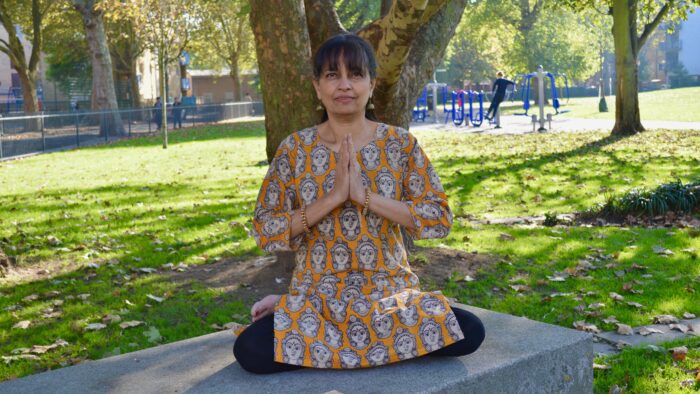
UK based Yoga practitioner and teacher Chitra Ravi has called her practice Turmeric Yoga (Turmeric Yoga). She says  she wanted a name that would convey the two things that she enjoys very much – teaching yoga and plant-based cooking. "Fresh turmeric (an important spice in my cooking) not only has the most beautiful vibrant colour, it has so many healing properties, and like yoga can greatly contribute to health and well-being," says Chitra.

In her website she quotes a research paper which says that “through consumption of plant chlorophyll pigments, animals, too, are able to derive energy directly from sunlight.” Chitra predicts that sometime in the future, "people will start having chlorophyll skin patches, or better still, chlorophyll skin tattoos, and when people go into the sun, they will be able to make their own food."

In her interview with CSP she talks about the role of Yoga in healing for all.

How do you think Yoga can help people reverse aging both in the mind and body?

I can talk about this from personal experience. At the age of 50, I found myself with high blood pressure and very high triglycerides. I was overweight and would tire easily. I generally felt quite depressed at the prospect of having to deal with age related diseases for the rest of my life.. Until that time, I had not done any meaningful exercise. I was not even convinced deep down that yoga could help.

During one annual visit to India, I arranged for a yoga teacher to come home and teach my daughter and I. It was more as an activity to please my daughter. As any good Indian yoga teacher, he was uncompromising. We had daily lessons for about 5 weeks. It was tough but the feeling I got in my body was something very special. Despite all the aches and pains triggered from the yoga, I started to feel wholesome. It took another summer for me to get hooked into yoga fully.

Seeing my enthusiasm, my teacher suggested that I train to be a yoga teacher. Again I had to overcome a lot of mental blocks before I took the plunge. It has been one of the best decisions I made. In parallel, I began time restricted eating (intermittent fasting) and a plant based diet. At 60, I am in the best shape of my life. I have a healthy weight and I have come off all my medication. I am now trying to learn Kalaripayattu.

My mother began learning yoga at the age of 78 on my insistence. She too was overweight. She is now fitter than many of her age. I also notice the difference yoga can make to the overall well being of many elderly people that I teach. The following is from the manager of a Dementia Day Centre where I teach chair based yoga:

‘The benefits have been amazing and the feedback from the people is that they feel healthier, sleeping well, more flexible with body movement and better balance. The staff team has also seen tremendous results in the people that attend these sessions. We have noticed less agitation and restlessness.’

During the lockdown I taught chair yoga via Facebook Messenger to several elderly women and it helped them both in their physical and mental well being.

Yes I definitely see a possibility for reverse aging with yoga both in body and mind.

Do you think that not just children but also school teachers and other professionals should enroll in yoga classes from a young age.

I definitely think that yoga should be taught alongside core subjects like Mathematics, Science, etc. As I continue practising yoga, I find myself more accepting of other people. I am able to relate to others in a more non-judgemental way. My tremendous popularity among students as a secondary school maths teacher is due to yoga and Vedanta. I am able to treat each student as an individual and tailor my teaching to the needs of each and every student. I feel centered within myself and this feeling is also passed on to my students. I am able to be kind without appearing weak. Students feel secure and supported in my lessons. Yoga helps me create that nurturing atmosphere in my lessons that helps students thrive.

I think if teachers practised yoga, they would be more kind and compassionate. They will be able to avoid unnecessary friction in their interactions with students and colleagues.

How did you find learning yoga in the UK?

I have experienced learning yoga both in the UK and in India. In the UK, there is a greater emphasis on health and safety. There are strict protocols and rules in place. There is a component of the spiritual side of yoga in the teacher training course but this is not tested. My peers in the yoga teacher training course were more interested in the asana aspect. Of course there are many teachers here who try to bring out the spiritual side when they teach, but for most parts the yoga teaching qualification was just geared towards teaching the asanas in a safe way.

Your being good at Sanskrit being appreciated by others speaks a lot about the value accorded to the language. Did you learn Sanskrit before?

I have not formally learnt Sanskrit. My exposure to Sanskrit is from the slokams we used to recite at home when I was growing up in India and listening to spiritual lectures. Sanskrit was much embedded in my upbringing. I didn’t quite appreciate that before. I am making more of an attempt to learn it now. There is a natural aptitude as it appears encoded in my genes.

What is the value of Sanskrit for you in unearthing the treasures of Yoga, Vedic Maths.

Right now I am going through Dr Jayaraman Mahadevan’s course on ‘Introduction to Yogasutras’. I am starting to get a deeper understanding of the sutras as I learn to understand the sutras in Sanskrit itself. I do have a long way to go. I would like to take a similar approach to Vedic Mathematics. Even with my little knowledge, I am able to convey to my students that many concepts in Mathematics originated in India. Recently I did a lesson on Pascal’s Triangle and I was able to trace it back to Pingala and the Meru Prasthaara. I am able to point out to my students (a diverse group of all races, colour and creed) that many commonly used words in mathematics can be traced to Sanskrit, e,g Locus to ‘Loka’ etc.

When I start teaching a new bunch of students, I first ask them to hold their mobile phones up. Then I tell them that you wouldn’t have this device (many of them can’t be without them even for a short while!) but for the Indians and the concept of Zero. I talk to them about ‘Karma’ in the context of Newton’s laws. One student recently gave me a card in which she said that she also enjoyed the philosophical aspect of my lessons. I am happy to play my small part in giving the younger generation the right perspective about India and what contributions it has made to the world. I keep telling them about the benefits of yoga as well. I run yoga classes for stressed teenagers. I am always pleasantly surprised when a few boys turn up. I tell them yoga has come from the country and people that made your mobile phone possible. So take it seriously!

The adaptation of yoga to people with different issues is something very inclusive and admirable. Most other physical activities celebrate winners who are faster, stronger....whereas yoga helps everyone at different levels. What prompted you to take yoga to these vulnerable people?

Here in the West, yoga seems to be mainly the domain of health conscious young women (mostly) and men. And most yoga classes are not accessible to those who are differently enabled or have health issues. But I feel that Indian knowledge systems like yoga, Vedanta, Ayurveda, etc are for all people, all places and all times. I cannot twist my body into shapes that a young millennial can, but that has not prevented me from benefiting from yoga and turning my life around. So I wanted to take it to those who could potentially benefit a lot from yoga. I wanted to do it with a lot of compassion and present it in a way that vulnerable people could access it. In 2020, I was pleasantly surprised to win the Best Yoga Professional UK Award in the My Life My Yoga video blogging competition. My video blog was on chair yoga.

The inevitability of disease in old age has always bothered me. I saw many of my own relatives accept this with resignation. I have always wondered if there was a solution to this. Can people not grow old gracefully like a fruit in a tree that just drops off when it is ripe. When I heard about the 98 year old yoga teacher Nannammal from my hometown Coimbatore, I felt that yoga may be the answer I was looking for.

During a visit to the local dementia centre, I noticed that many looked sad. I wanted to bring some cheer into their lives. I started volunteering there to teach chair yoga and it always warmed my heart to see them come into the yoga session with a lot of enthusiasm. Many had dementia and other age related illnesses. I have written a few blog posts about my experience with the dementia patients: https://medium.com/@turmericyoga

(It also has a couple of posts about my maternal grandfather and paternal grandmother who led a dharmic life.)

As I mentioned before, I also teach yoga to stressed teenagers. It was quite a revelation to me that many young people could not do savasana. They are so restless that lying down quietly makes them quite anxious. I worry that this kind of restlessness may lead to other problems like alcohol or substance abuse. As I mentioned before, I feel that if yoga and pranayama had been part of their curriculum from an early age, so many problems could have been avoided.

I taught yoga to autistic students and I could see the potential of yoga to calm them and also for improving their proprioception.

How did the chanting course help you take your love for Sanskrit further?

It was an amazing experience. I have always liked to listen to vedam chanting, maybe a liking inherited from my father. Chanting is already enhancing my yoga teaching. I was also fortunate to continue learning from Shantalaji. I completed the course on Agni Mantras of Rig Veda as well.

I really admire Shantalaji for taking such a hard core thing as Veda chanting and presenting it in an accessible format to a world wide audience without the slightest dilution. Her presentations are simple, clear and elegant. She presents it without making it sound overly esoteric or mysterious or claiming it to be something miraculous or magical. She conveys the rigour that is needed without scaring people off. She has a pleasant presence, voice and accent. Shantalaji’s confidence comes from her deep knowledge and saadhana. She has also invested a lot of time and effort in getting the technical aspects right like sound, lighting, website, communication. It also helps that she understands both India and the West. I feel that any knowledge from India should be presented in this way. She has definitely set the benchmark for how Indic Knowledge related things should be presented to a global audience.

What do you think can be done to make Yoga in the UK more rooted.

Yoga is now a big business in the West. The emphasis is mostly on asanas. On Youtube and Instagram, some yoga teachers are making big sums of money. To make it more rooted, we need teachers who follow the Shantalaji model. Have a good presence, voice and accent. Get the technical aspects like lighting, sound, camera angle, ambience, clutter free surroundings, clothing, etc right. In the West there is a greater emphasis on the outward forms and presentation. Teachers who can get these aspects right and yet teach without dilution will be able to make an impact.

What has Surprised Me is not the Rise in Popularity of Ayurveda in America, But The Decline of Its Popularity in India: Dr Kulreet Chaudhary

Dr Kulreet Chaudhary, Integrative Neurologist, starts her book The Prime, saying that her grandfather was a doctor for a large community of people in a town near Ludhiana in India. She says that after many years as a doctor in the United States, she has reached a stage where she feels she is now practicing medicine much the way her grandfather did.

“When somebody got sick, he wasn’t seeing the patient for the first time, in isolation, with no knowledge of his or her history or life. In most cases, he was also taking care of the sick person’s parents, grandparents, and children. He understood how they lived. He created a loving bond with his community, and that bond allowed him to influence the entire family’s health over the years,” she writes in her book authored with Eva Adamson.

Dr Chaudhary says that today patients are living in a kind of medical dual reality, and so are doctors. “Who is right depends on which question is being asked.” She gives us a simple rule of thumb in her book. 1. If the question is “Which medications can treat my current symptoms?” then your conventional doctor’s answer is likely right. 2. If your question is “How do I get off medications and reverse this disease process?” then your integrative doctor’s answer is likely right.”

Dr. Chaudhary’s combined expertise in both modern neurology and Ayurveda has uniquely positioned her as an expert able to pull from the broadest possible base to treat her clients. She is passionate about raising awareness for the need of a paradigm shift in contemporary medicine that focuses on patient empowerment and a health-based (rather than disease-based) medical system. Dr. Chaudhary is a regular guest on the Dr. Oz show, where her teachings about Ayurvedic medicine have been applauded by a national audience.

Dr. Chaudhary was the Director of Wellspring Health in Scripps Memorial Hospital for ten years, and remains a pioneer in the field of Integrative Medicine. She has successfully developed a powerful system to manage chronic neurological disorders such as multiple sclerosis, Parkinson’s disease and migraine headaches, by incorporating fundamental changes in diet, behavior, and stress, in addition to the standard allopathic approach to these issues. This program has been so successful that many patients now use it not just for neurological issues but also for a wider range of health concerns, including weight issues and chronic disease.

Dr. Chaudhary is the author of The Prime and Sound Medicine. She is also a neuroscientist and has participated in over twenty clinical research studies in the areas of multiple sclerosis, Alzheimer’s disease, Parkinson’s disease, ALS, and diabetic peripheral neuropathy. Her research includes groundbreaking work in stem cell therapies for diabetic peripheral neuropathy and drug development for the treatment of ALS.

In this interview with CSP, Dr Chaudhary talks about her experience with Ayurveda and integrating it with conventional medicine.

Dr. Chaudhary you took up meditation at the age of 9. What kind of an impact did it have on your life circumstances and the choices you made in subsequent years?

Learning mantra meditation at 9 years of age completely changed my perspective of life.  It introduced me to the concept and experience of silence and gave me a way to cope with stress without the typical needs for numbing behaviors, like alcohol, drugs and food addictions that so many adolescents and young adults turn towards to cope with stress.  To this day, I’m not drawn to outward numbing behaviors thanks to this inward stress removal pathway of meditation.  That doesn’t mean I lead a perfect life, but I always had this internal compass that brought me back to my true self no matter how challenging life became.

Indian texts and rishis have talked about health and longevity in the Vedas. In Ayurveda too health is not just the absence of disease. What led you to integrate this ancient wisdom with your strong neurology background?

I wish I could say it was a deep intuitive process that lead me towards Ayurveda as a neurologist but it was actually my own struggle with migraine headaches that lead me to integrate Ayurveda and neurology.  I was a neurologist at the time I developed debilitating migraine headaches.  None of the medications I was using for migraine headaches were working.  When I tried the Ayurvedic recommendations, my headaches were gone within a few months and my overall energy, creativity and gut health improved as well, much to my surprise.  That’s when I realized I had to explore this the option of combining the two specialties together if I wanted to really understand how to approach neurological conditions successfully.

Modern science looks at aging from the biological and the chronological perspective. Researchers are studying the senescence target genes for anti-ageing. According to the Sushruta Samhita, human life can be normally prolonged to 100 years. Yet, with the use of certain Rasayana remedies (such as Brahmi Rasayana and Vidanga-Kalpa), life can be prolonged to 500 or 800 years. Ayurveda has solutions for most modern-day problems but is under pressure to scientifically prove itself through western lenses. What are your thoughts?

 This has been one of the biggest challenges with bringing Ayurveda to the medical community - the lack of scientific investigation.  But this is changing as more studies are being done in Ayurveda and as an allopathic physician and scientist, I have to embrace the need for scientific validation in our current medical paradigm.  However, if you look at the full spectrum of Ayurveda, so much of the health prescriptions are behaviors based on common sense.  You don’t need to scientifically validate some of these basic behavioral principles that are so often overlooked in our pursuit to find the perfect “herb.”  There is no supplement that takes the place of good habits.

Could you briefly tell us about the 4 stages of The Prime and how it integrates Ayurveda with Western medicine. You mention making changes in biochemistry and in changing thought patterns.

I developed The Prime when I realized how difficult it was for people to change their habits around food choices due to the biochemical blocks resulting from modern life.  Each stage of The Prime is created to help overcome those biological blocks, which include the impact of food addictions on our ability to make healthy food choices due to the process of neuroadaptation.  The Prime is a modern Ayurvedic approach to the contemporary challenges of good health, including the impact that environmental toxins have had on overwhelming our detoxification pathways.  It’s a program I recommend that people do once a year to maintain optimal brain-gut health.

Weight management is such a preoccupation in modern society. How did you manage to find a solution as you treated other serious diseases?

What happened with my approach is that as I was treating chronic diseases, I realized I had serendipitously come up with a weight loss/weight management program as an unexpected side effect.  As you reduce inflammation and the other causes of chronic disease in the body, you lose weight.  Our weight epidemic is a result of our chronic disease epidemic and most people attempt to lose weight the hard way, through willpower, without realizing there is a biochemical state associated with weight gain that requires a scientific, medical solution.

 What are the areas specifically in which you have integrated Ayurveda with Western medicine to find positive results?

In my medical practice, Ayurveda provided positive results in every specialty within medicine because it is really just matching personalized, healthy lifestyle practices to people’s conditions.  What doesn’t improve when you choose a healthier life?  Everything improves.  But the sooner in a disease process that someone began the changes, the more effective Ayurveda is.  Many people are surprised that psychological conditions improve via Ayurveda, but again the mind-body complex is ultimately biochemistry and you can shift biochemistry with biochemistry using lifestyle as an epigenetic influencer.

Could you please talk a bit about your research in Siddha medicine.

This research is still on-going and was interrupted by the COVID pandemic so I’ll be able to comment on this in the future.

We did a session last year on Mantras and Neuroplasticity (https://youtu.be/l2LBQpMEi1E). Have you done research into the impact of mantras on patients suffering from debilitating disease?

I am in the process right now of discussing this type of work with a research institute in Europe that treats childhood genetic illnesses.  The use of mantra is an under-studied area and the scientific community is still highly skeptical at the potential use of sound medicine in chronic conditions.  Even though there has been so much research into the benefits of Transcendental Meditation in America, there is still not a coherent medical paradigm that allows the application of mantra meditation as part of a new biological medical model.  But that is changing as scientific theories of the human biofield are being more widely explored.

Ayurveda's Nadi Pareeksha helps to diagnose not only the state of health but also predict lifespan and quality of life. How do you think we can incorporate this important tool for mapping the course of life and health?

We can use it simply by implementing it as part of medical training.  Pulse diagnosis gives us so much insight into the patient.  Beyond trying to map out an entire life, it helps us to connect to all of the layers—physical, emotional and spiritual—of the patient’s current state of health.  There are so many diagnostic tools available simply by observing the body and pulse diagnosis is among the most useful tools I have ever learned.

You have appeared regularly on the Dr Oz show. What is the public perception of common Americans about Ayurveda and also the perception of those in the alternative health space?

What I have observed over the past two decades is that Ayurveda is gaining more and more relevance in America due to both the efficacy and increased scientific research into many of the basic Ayurvedic herbs, such as Ashwaganda, as well as for its personalized approach.  There is so much common-sense knowledge from Ayurveda that is now widely accepted by Americans, such as the concepts of intermittent fasting and the gut-brain connection, and more Americans are seeking out Ayurveda for simple, practical and cost-effective solutions to chronic disease.  What has surprised me is not the rise of popularity of Ayurveda in America, but rather the decline of popularity of Ayurveda in India—that astounds and confuses me!

There is no easy answer, but how do we move the focus away from managing disease, to empowering individuals to take responsibility for their health.

You begin by talking about two of the most important aspects of health—diet and stress.  If we begin looking at and changing what we eat and what we think, you can solve at least 80% of all health problems.  It is actually a very simple solution, but what I have found is that the complexity with which we are living in the modern life can make the simplest solutions seem difficult to implement.  But they are not—just start with one small simple step at a time.  That is how I approach my patients—small, simple, daily steps to help them change what they are eating and what they are thinking.

My Vision is of a Society Where the Public has Access to Ayurvedic Doctors in Every Community: Dr Marc Halpern

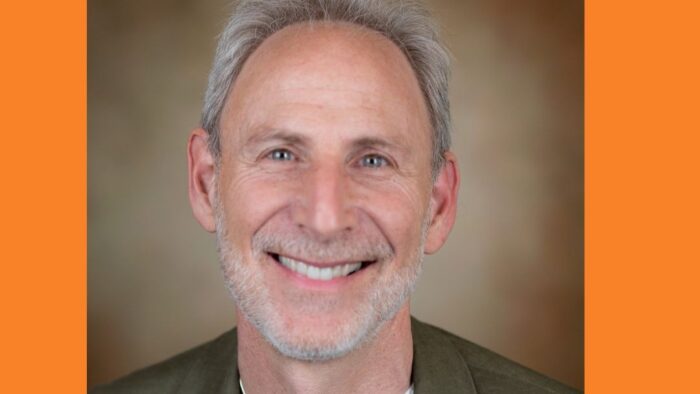
Dr. Marc Halpern, D.C., AyD. (Ayurvedacharya)  is a pioneer in the establishment of Ayurveda medicine in the United States.  Awarded the All India Award for Best Ayurvedic Physician, he is co-founder of the National Ayurvedic Medical Association for which he served as Chairman of the National Committee on Ayurvedic Education. He is also a co-founder of the California Association of Ayurvedic Medicine,  and the National Council on Ayurvedic Education in the United States.

Dr. Halpern is the author of two important textbooks in the field of Ayurvedic Medicine as well as the popular book, Healing Your Life: Lessons on the Path of Ayurveda and the audio recording, Yoga Nidra and Self Healing.

How were you inspired by Ayurveda?  As you mention in a talk people come to Ayurveda usually with a problem. Is that how it will continue to be in the future? 

 Most people do not like to spend money on their health unless they are sick. Wise people are willing to invest in preventative care. There is growing interest in preventative and lifestyle-based medicine. Ayurvedic Health Counselors focus on this area of service. Our Clinical Specialists and Ayurvedic Doctors focus on disease management through they l also provide preventative care services.

I was inspired to pursue a career in the healing arts at a very young age when I desired to know the reason why people get sick, why they are unhappy, and how to help. This led me at first to study Chiropractic Medicine. From there I studied Chinese Medicine, Homeopathy and Herbalism. Eventually I found Ayurveda and Yoga, and this spoke deeply to my heart. Ayurveda and Yoga answered all my deepest questions and I knew that I would devote the rest of my life to these sciences. I also suffered from some serous illnesses in my life and Ayurveda and Yoga played important parts in my healing journey. This is detailed in my book: Healing Your Life; Lessons on the Path of Ayurveda. (Published by Lotus Press).

Could you take us briefly through the changes in public perception of Ayurveda from the time you started the California College of Ayurveda up to the Covid period.

I started the California College of Ayurveda in 1995. At that time only very small percentage of people had heard of Ayurveda. I would guess less than 1%.  It was even relatively unknown in the Yogic community within the US. There, perhaps 3-4% had heard the word. Today, I would estimate 10% of the population has heard of Ayurveda and 80% of the US Yoga community. So, awareness has grown tremendously.

Public perception of Ayurveda varies. Among those who have heard of Ayurveda it’s very good. Here in the US, holistic medicine is quite respected. The public realizes that there is more to healing then taking drugs or receiving surgery. Ayurveda is appreciated for its broader view of prevention and for supporting the body to heal itself.  There are certainly some conservative individuals who do not accept approaches that are new to them. They reject all forms of medicine other than Western medicine.

You are Co-Founder: National Association of Ayurvedic Schools and Colleges (NAASC) and Co-Founder: National Council on Ayurvedic Education (NCAE). How has the syllabus been structured keeping in mind both Indian traditions as well as modern scientific research?

 Here in the United States, there is a lack of centralized regulation. Regulation occurs at a State level and each State can have different laws.  Some states have legalized the practice of all forms of healing through what is called “Health Freedom Legislation”. This allows practitioners to practice their healing art within the parameters set forth in the legislation. No license is needed. Other states do not have this provision. Still, in all states the practice of Ayurveda is legal so long as it is practiced in a manner that does not break any existing law. Hence, a practitioner must know the existing laws. At the California College of Ayurveda students are trained how to practice legally.

In almost all States, educational institutions must be State Approved. This means that they meet the financial and administrative guidelines of the State. The State does not look at curriculum. There is no legal body that regulates Ayurvedic curriculum. There are membership associations however that set forth some parameters. Even still, these are only voluntarily followed, and schools do not need to be a part of these associations.

At most schools, the syllabus evolves over time. As schools grow, so do their curriculums. The California College of Ayurveda is the largest school of Ayurvedic medicine in the United States. Our Ayurvedic Doctor program is now a 4-year program consisting of more than 4000 hours of education.  Only a few Ayurvedic Doctor programs exist in the United States. Most programs in the United States are shorter and focus on preventative and lifestyle medicine. Most of these programs are 6-12 months in duration. At the California College of Ayurveda, our Ayurvedic Health Counselor program is a 1-year program.

What place does Ayurveda occupy in the spectrum of alternative medicine in the US. It is neither complementary nor integrated in India?

 In the United States, Ayurveda is classified as a “Complementary and Alternative Medicine”. Alternative is a term used relative the standard medicine in this country which is allopathic medicine. All forms of medicine outside of allopathy are classified as Complimentary and Alternative Medicine.  Some practitioners integrate Ayurveda into other disciplines. This is the meaning of “integrative medicine”.

Today terms like Pro Life and Pro Choice are bandied but Ayurveda has always been about these things.  What aspects of Ayurveda are being integrated into conventional medicine without many knowing their origin?

 The terms “pro-life” and “pro-choice” are opposing terms used politically and morally in the United States in relationship to the issue of abortion. Occasionally, the terms are used in other contexts. Ayurveda is pro-personal responsibility. The moral code is first and foremost dharma – that which is in alignment with the Divine rather than based on the ego. The final judgement lies in individual karma and one’s experience of the afterlife in various lokas.

Conventional, or allopathic, medicine has accepted and integrated aspects of Ayurvedic and Indian modalities. Some aspects are subtle, others are more obvious. For instance, it is now generally accepted that the practice of neti is beneficial to sinus health. It is also generally accepted that swishing the mouth with oil and pulling it through the teeth is beneficial to dental health. Even cleaning the tongue has been accepted as an approach to keeping the breath fresh.  Other aspects are more subtle. Western conventional medicine recognizes the value to moderating the diet, of keeping a regular sleep routine, and the importance of deep relaxation. These more subtle approaches are common sense. Western medicine values Western science. Science has been validating the value of these lifestyle behaviors. Western Science has also been validating the usefulness of many herbs from India.

What is missing however an understanding of the broader paradigm of Ayurveda. Lacking is an understanding about individuality in relation to sleep rhythms. Lacking is an understanding of utilizing herbal medicines according to the nature of the individual and the nature of the disease. Western Medicine takes pieces of Ayurveda, validates it scientifically, but strips it from larger body of knowledge. This is reductionism and it is the opposite of Ayurveda which is based in holism.

Many Westerners are now utilizing aspects of Ayurveda in their lives though they do not know the word or the broader basis of the knowledge. While they are utilizing parts of the whole, they are not really practicing Ayurveda. Others however, those who go to see Ayurvedic Practitioners, learn the broader principles of Ayurveda and apply them to their lives. This is part of what makes the practice of Ayurveda unique in the West. The Western practitioner spends considerable time educating their patients.

Ayurvedic principles are part of many Indian households passed on as granny's remedies and recipes.  Does learning it as a formal science rather than intuitive wisdom take away anything from it?

 No, I don’t think so. I think they complement each other. Formal study allows for the complete body of knowledge to be studied. Intuition allows for a deeper connection to the knowledge. Wisdom comes from the embodiment of the knowledge, whether it was originally attained through intellectual study or intuitive insight.

Ayurvedic medicines are regulated as dietary supplements rather than as drugs in the United States, so they are not required to meet the safety and efficacy standards for conventional medicines - says a Johns Hopkins report. What does this augur for people looking for validation?

While the FDA classifies herbal medicines as dietary supplements rather than drugs, this does not mean that there is not extensive research supporting efficacy and safety. There are thousands of high-quality research papers published on various herbs from India and these are indexed in peer reviewed journals. The main reason that herbal medicines are not classified as drugs in the United States is due to the extraordinary high cost associated with the process. Some of this is research related. Larger scale studies are often needed.  Much of the cost however is administrative. Because herbs belong to nature and not to a specific company, it is not possible to gain patents on herbs. This means that there is little profit to be gained relative to the cost of going through the process of classifying an herb as a drug. In summary. For those needing validation, I provide extensive research summaries on the medicines we use.

What is your vision for Ayurveda and public health in the United States?

My vision is of a society where the public has access to Ayurvedic Health Counselors and Ayurvedic Doctors in every community. The public sees these practitioners at first for preventative medicine based on their prakruti. When the public gets sick, they see an Ayurvedic Doctor first, before the condition progresses to the point where emergency medicine is necessary. I see a population that values living in harmony with nature and with each other. I see a society where we ask the most important question. How did I participate in creating this illness?  With this awareness, each person is empowered to take different actions, those that will support healing and re-create a state of health.

India and Cambodia are Sister Civilisations, and India Takes Pride in Assisting in Its Progress: Ambassador Devyani Khobragade

India-Cambodia relations go back to the 1st century AD when Hindu and Buddhist religious and cultural influences emanated out of India to various parts of South-East Asia. Cambodians are today predominantly Buddhist but retain a strong influence of Hindu rituals, idolatry and mythology. The pervading influence of Hinduism, Buddhism, and Indian architecture are borne out by the magnificent structures at Angkor Wat, Angkor Thom, Bayon, Ta Phrom and other religious and historical sites in Cambodia.

In response to an appeal by the Cambodian Government to save the famous Angkor Wat temples, GOI responded favourably and it was the first country to offer such assistance, says an Ministry of External Affairs notification. Various teams of Archaeological Survey of India worked from 1986 to 1993. On Cambodia’s request, India also agreed to restore Ta Prohm temple in Siem Reap.

India has been appointed co-chair of the prestigious International Coordinating Committee (ICC) on Preah Vihear, a world heritage site and one of the oldest temples and pilgrimage site of Lord Shiva. For the restoration of Preah Vihear Temple, Indian side has
conveyed its willingness to carry out restoration and conservation work of Gopura-5 and some segments of Gopura-1 of Preah Vihear.

The “Asian Traditional Textiles Museum” has been set up at Siem Reap with India's help.. The construction of the Museum building was completed in end December 2011. An Indian Director joined the museum in July 2013.

Dr Devyani Uttam Khobragade is the Ambassador of India to the Kingdom of Cambodia.  A doctor by qualification, she tells CSP she considers Cambodia to be a sister civilisation sharing bonds of culture, trade and most importantly language.

When you first landed in Cambodia did the country throw up any surprises. Did you find similarities with India?

I consider Cambodia as a civilizational sister country, owing to our ancient trade as well as religious ties emanating from Buddhism and Hinduism. When I first arrived, I noticed that  culture, religion, food and customs very similar to India and hear familiar Sanskrit words in Khmer language as it is spoken on the streets. The country has so much to offer, the sunrise at Angkor Wat, majestic beaches and hundreds of  Vishnu and Shiva temple influences are worth witnessing. From its array of glorious temples and religious structures, rich heritage and culture to the rare wildlife and stunning eco-tourism spots, the country has it all.

The antiquity of Indian connection is well known. Are these connections valued and preserved? Especially as seen in temple excavations?  Recently the assistance of ASI was requested to preserve some monuments. Is this happening?

India takes immense pride in the fact that we were the first country that the Cambodian government approached for the conservation of the Angkor Wat. India led the heritage conservation work from 1986-94 under most arduous circumstances which has been deeply appreciated by Cambodia. India takes utmost care when dealing with preservation and conservation of artifacts, antiquities, as may be seen from the restoration and preservation work done by Archaeological Survey of India (ASI) in Angkor Wat and ongoing work in Ta Prohm temple. At present, India is engaged in the restoration work of Ta Prohm temple in Angkor Archaeological Park, which receives a good foot fall of around 10,000 tourists every day in normal times. The Government of India has agreed to restore/preserve a part of Preah Vihear temple complex. It will be my utmost effort to make India the first country to contribute to conservation of Preah Vihear temple originally dedicated to Lord Shiva. India is also the co-chair for the International Coordinating Committee (ICC) of the Preah Vihear temple. The ASI team is expected to arrive soon to start work on ground. Embassy is exploring some more sites for providing assistance in preserving ancient temples by way of Quick Impact Projects. In addition to the ASI work, Embassy is also engaging in restoring small temples and other sites.

Which are the areas in which India has taken initiative forge strong ties culturally with Cambodia in the recent years?

India-Cambodia cultural and historical relations are more than a millennium old when Indian culture emanated out of India and spread rapidly in various parts of South-East Asia. To exploit the goodwill and familiarity between the two nations, enhancing people to people contact from the present level is of utmost importance. Even in the contemporary times India and Cambodia share close cultural ties with initiatives like the India-Cambodia Cultural Exchange Programme,   Mekong-Ganga Cooperation (MGC) Asian Traditional Textiles Museum at Siem Reap etc. The Indian Council for Cultural Relations (ICCR) has been maintaining a Chair on Buddhist & Sanskrit Studies at Preah Sihanouk Raja Buddhist University and a full time Indian Professor on Sanskrit and Buddhist Studies is deployed by Government of India in the University.  Through more cultural interaction and exchanges, India see a strong convergence in strategic, economic, political, security and development perspectives of both nations.

What are the areas of collaboration in cultural entrepreneurship where India can showcase her cultural offerings?

I believe cultural entrepreneurs are cultural change agents and resourceful visionaries who organize cultural, financial, social and human capital, to generate revenue from a cultural activity. Their innovative solutions result in economically sustainable cultural enterprises that enhance livelihoods and create cultural value and wealth for both creative producers and consumers of cultural services and products. India is making good progress in using cultural knowledge into sustainable economic activity. India is working with Cambodia in painting restorations, artifacts and digitization of temples, supporting UNESCO heritage sites etc.

As a person who knows many languages, what role do you think language can play in connecting the cultures. Are Indian languages spoken, learnt and used in Cambodia?

Language is a bridge to bring people closer. The relationship between language and culture is deeply rooted. Language is used to maintain and convey culture and cultural ties. Indian languages are not spoken here but there is definite link between Sanskrit and Khmer and many Khmer words have originated from Sanskrit. Indian Council for Cultural Relations (ICCR) has recently launched Sanskrit learning “Littleguru” app, which saw many requests from Cambodian scholars, students. Embassy will actively promote to reach out to the common man and women and scholars in Cambodia. It would be interesting for people to learn Indian languages and Indians will also find interest in Khmer.

How popular are courses on India popular in universities? Are students interested in coming to India for their gap year?

India has one of the most advanced infrastructure for higher education in the Asian region. Indian degrees are treated with respect all over the world and professionals who have undertaken higher studies in India have made significant contribution to advanced and applied research in different disciplines all over the world including in Cambodia. India is a popular destination for higher studies for students from Cambodia as it is home to many reputed and top ranking universities in the world. Besides the top universities, India has thousands of government and private universities and colleges to choose from. Currently, many Cambodian students join Indian Universities through Indian Technical and Economic Cooperation Programme, ICCR Scholarships and those offered under multilateral frameworks like ASEAN, MGC etc. There are specific courses on Buddhist studies at Nalanda University which are popular in Cambodia. The Embassy is actively promoting Cambodian students and monks to apply for courses in India.

How do you think India can draw more tourists to India from Cambodia to visit temples and areas of a common cultural source of heritage?

Cambodia and India have common cultural heritage. The sacred Buddhist places like Bodh Gaya, Sarnath, Kushinagar etc are of immense interest to Cambodians. The air connectivity issue; lack of information in Cambodia about the pilgrim places may be a major reason for less interest. The Embassy is working with various stakeholders to promote travel to India. Once COVID-19 subsides, we will work organize tour operators meet with both countries to address the issues and establish tourism flow to both the countries.

Are there areas where you think India can learn in cultural promotion and preservation?

In the cultural growth of Cambodia, there was a big setback during Khmer Rouge period. The way Cambodia emerged stronger from it is really inspiring. The progress made in preserving both tangible and intangible culture really worked out and the results are clearly visible in Angkor Wat and Preah Vihear. India also takes pride in being a part of this progress. The way Cambodia is balancing urbanization and preserving culture could be inspiring to India.

Given the pandemic have you had an opportunity to travel and experience the country?

I am a travel enthusiast. Luckily when I arrived in Cambodia there were no travel restrictions. I have visited a few significant cultural sites including Angkor Wat. There are many places in Cambodia that are on my bucket list to cover such as ancient temples Phnom Banan, Phnom Chisor, Phnom Da, Ek Phnom Temple & Angkor Borei are on top priority now. The majestic Cambodian temples and scenic beauty has mesmerized me and I am really looking forward to exploring interior parts of Cambodia.


Japanese Art Has Been Greatly Influenced By India: Hiroyoshi Takeda

Hiroyoshi Takeda is a Japanese national working in Tokyo as an artist.  He drives around Tokyo in an auto, with pictures of Subramanya (https://youtu.be/AQABlZaHga4). He says that when he was a child, he had a book on Anthropology at home. “The book was about different countries around the world with beautiful pictures. Among all of them, I was very attracted to India. I was very interested in the magnificent temple sculptures and the different cultures that exist in India. After that, I always wanted to visit this land. “

When he was in high school, he decided to go to art school to become an artist. He did have some doubts though, wondering if it was normal for artists to go to art school to study art. Could people who do ordinary things, become artists. While reading a school catalogue, he found a vocational school which taught Hindi, and since his favourite art was in India, he decided to enroll in that school instead.

After studying Hindi at the Asian and African Language Institute, he visited South India. He says that one of the books that inspired him to visit India had a picture of the Madurai Meenakshi Temple “I like kolams on the front door, the great Carnatic music, folk performing arts, movies, festivals and much more. I like Indian culture and cooking very much. The endless variations inspire endless inquisitiveness. Tamil culture is strangely common to Japanese culture. At first glance, Japanese and Indian cultures look completely different, but there are a number of similarities” he says. In Chennai, not knowing the language, he felt isolated, but engaged himself painting huge walls, in street performances and avant-garde art from the 1960s and 1970s.

Takeda says he likes Indian folk paintings very much and when he first visited India, he visited the village of Warli. He says he also likes Madhubani paintings and Gond paintings.

He had a deep connection with India and formed the Indian unit Masala Wahler with his performing friends. In order to deepen his understanding, he began to learn Tamil. He has danced in various stages as a member of the Indian movie dance team "Sandoshan".

Since 2011, the main axis of his art has changed from primary color paintings with acrylic paints to fine pen drawings with ballpoint pens. “The reason is that you can draw wherever you are with the materials you can get at any time,” he says. The influence from India was reflected in the works, and the themes of ‘repetition’, ‘yin and yang’, ‘spiral’, Buddhism and Hinduism came to be expressed more. In 2014, he started woodblock woodblock prints, and in 2015 he began copperplate prints. From the end of 2017, he began using round pens and school pens instead of ballpoint pens, and again expressed them with a brush. His solo exhibitions are held once or twice a year. He also participates in various special exhibitions.

Takeda says that he has had no specialized education in Japanese art or Indian art. “Both are so diverse that they cannot be expressed in one word. However, I feel that Japanese art has a great influence from India. Japan and India have an old connection through Buddhism. In Buddhism, Hindu gods are also introduced to Japan. In religious paintings, it seems that Indian motifs are drawn using Chinese brush technique.” The portrayal of nature, relationships with animals, myths, diversity, philosophy are common to both Indian and Japanese art, says Takeda.

Takeda always adds a short poem to his art work and he says people like these poems. In his solo exhibitions, he also makes clay works and people look forward to this. He loves painting elephants as he feels they are a symbol of nature. “Elephants are very intelligent, kind, sometimes dangerous and powerful. Drawing an elephant is a lot of fun. I also love drawing cows. Since animals do not have human facial expressions, they can be expressed without being limited to one. It's like the god's eyes on religious paintings.