
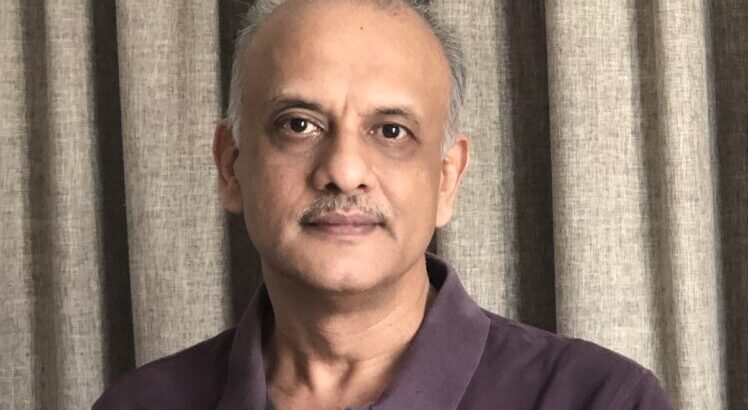
Kannan Srinivasan Debuts at Sharjah Book Fair with Boston Brahmin

Kannan Srinivasan, the son of well-known journalist Kalki Kannan and the grandson of the Carnatic icon MS Subbulakshmi is not new to the world of high-culture, having experienced it both in India and in Boston. His new book Boston Brahmin premiered at the Sharjah Book Fair and is a tale of migration, identity and spirituality in a fast changing world.

The book is about the physical and spiritual journey of Jai, a young Indian expatriate student from Dubai who moves first to Boston and later to Cornell University for higher studies, travels around the globe on work only to realise the path of spirituality that leads him inwards.

In an interview with CSP, he talks about the book and his experience as a first-time expatriate author.

What is the significance of the title Boston Brahmin?

Knowledge acquisition, development of values, comprehending roles in society, performing all that enables understanding the ‘inner self’, gaining economic stability, experiencing family life and finally, giving back to society, are the significant objectives of one’s existence. 

During an extended stay in Boston, I got to appreciate the genesis and development of the institutions of higher learning in and around the city. A migrant community of Englishmen (Irish origin), facilitated their setting up with liberal grants. They also enabled the evolution of institutions in the cultural space of art, music and literature. They preferred to remain anonymous and not seek any recognition/ visibility for their noble gesture and continue to support such causes. They are referred to as ‘Boston Brahmins’ in the USA. This did strike a chord in me. The title, aptly captures the enormous value that they provide. This gets further accentuated with their not seeking any leverage for personal gratification! In addition, it is also catchy and memorable. It consequently, may trigger interest amongst the target group, particularly in a crowded market of millions of offerings. 

Such people do exist all over and do form a significant ‘value group’ of material size! Hence the title of my book!

What has been your personal experience of ‘spirituality’:

Like most middle class families, I too experienced an upbringing that instilled in me, values, education, religion, culture, physical development... The one special aspect that provided the ‘edge’, was  getting to experience performing artists, religious gurus, politicians, influencers of communities/society, in addition to my peer group. The common thread of ‘simplicity’, of having similar issues and challenges, provided an understanding that ultimately, everyone gets to experience a ‘spectrum’ of life along a continuum of expectation to achievement. I did have the good fortune of visiting places of religious significance, on holidays with my parents and siblings. The Sree Kanchi Kamakoti Peetam, with the Divine Mahaperiyava had and continues to influence my spiritual journey.

Spirituality, to my comprehension, is an ultimate convergence of all beliefs. Religions and practices eventually seek to enable the practitioners to understand the one perpetual ‘Brahman’  though it is known by various names. So spiritualism is the one converging  point for all living beings to work towards. It has taken me a lifetime to comprehend this, not because of its complexity but for the time I committed (erratic/inconsistent). I believe it easily coexists with our daily ‘karma’ and does not seek our excessive indulgence.

What do you think is the influence of South Indians on the rest of the world?

South Indians do contribute significantly to practices related to their religion and culture. They are as active as other Indian communities and the visibility of such groups is commensurate with their size and share of the overall population. The propagation of such practices/activities is a function of the extent of ‘space’ provided by the environment/authorities.

How has your family background and legacy shaped your writing?

The good fortune of growing in an environment of artists, journalists, writers and publishers did build in me an interest in writing. I developed a habit of registering aspects of life, habits and attitudes across various  geographies that I got to visit. Over time, one was able to sieve and arrive at common points that linked up diverse ethnic groups! A combination of travel, reading, experiences with spiritual gurus and evolved souls, did cause a churn and interest in seeking greater understanding of spiritualism! ‘There are two ways of achieving wealth- one is to chase and eventually achieve a significant part of aspired wealth and the other is to develop economic contentment and achieve it fully’, is an advice that my father, mentor and Guru, conveyed as profound wisdom. My mother and Guru, constantly guided my development along this path. Though I have a way to go, I believe sharing of this wisdom may trigger interest amongst the aspiring lot of the target group.

What is the scope of reach of your book given its content?

 While my foundation and development is from within my religious upbringing, I believe, as explained earlier, spiritualism is the ultimate common point of convergence for all faiths and culture. Hence, while the book is primarily focused on India, it reaches out to the wider world. Limitations of logistics, do restrict its reach.

Which Indian authors have influenced you?

The highly successful book, Autobiography of a yogi by Swami Yogananda , Intuition and Silencing the mind by Osho, biography of Sree Lahiri Mahasaya, Deivatn Kural by Sri R Ganapathi (have been reading relevant excerpts in English), writings of Devdutt Patnaik, are some of those that have had a profound influence on me.

Having said this, I realise (to my limited capabilities) the challenges that seekers of spiritualism experience. For one, the terminologies are ‘so’ many to confuse a beginner. The other is the complexity of concepts. Many writings have a liberal dose of both and this in itself, is a huge inhibitor. As one browses through such writing, the effort shifts from comprehension of the terminologies to concepts. This process being quite intense, it takes one away from understanding the essence of the subject. Such an experience stunts one’s travel on the spiritual path. I had this in mind while developing my rendering and felt it appropriate to create an environment of comfort and restrict concepts of spiritualism to subtle blends with the core narration.

How can combining Hindu wisdom with popular writing help to spread the message of Sanathana Dharma?

In a world that is increasingly rational, where unsubstantiated concepts do not find interest, addressing this anomaly can evoke interest in the target group. For example, the ‘black hole’ theory is the scientific interpretation of ‘brahman’ of spiritualism. Most spiritual concepts are the source of science, medicine and technology. Hence validation can be a key strategy of spiritual writing. Creation of an environment of familiarity, interest and entertainment can help gain acceptance of the target group.

We have today, the good fortune of many spiritual ‘gurus’ who evoke good following amongst the contemporary audience. Sri M, Sri Sri Ravishankar, Satguru and many expounders of the subject are huge influencers. Concepts and context of their rendering can provide thought that can be creatively worked around to reinforce the writings.

Kama Ayurveda’s Partnership with AVP Offers Remedies for Skin and Hair Care

Kama Ayurveda launched with a range of nine Ayurvedic treatments, developed in partnership with the 100-year-old Arya Vaidya Pharmacy in Coimbatore, Tamil Nadu. These potent remedies were developed to help treat existing skin and hair concerns and to prevent future concerns.

To complement these treatments, Kama Ayurveda developed ‘Les Jardins D’Inde’, a highly effective ayurveda-inspired range of products, suitable for different hair and skin types.

The Arya Vaidya Pharmacy and Kama Ayurveda work with local forest communities, and small-scale farmers and artisans to source the natural ingredients that lend their purity to Kama Ayurveda products.

CSP spoke to Rajashree of Kama Ayurveda on Ayurveda and Cosmetics.

Do you at Kama Ayurveda know if the number of people with skin, hair and other related issues has increased over the last few years? What do doctors say about it?

There has been a great increase in the number of people of all ages having thinning of hair and alopecia even in the 30-year-old men and women , and skin issues like psoriasis are on the rise. Doctors and specialist attribute it to the kind of a food we use ,the chemicals and pesticides that are already absorbed by the vegetables and fruits we eat, the amount of farm pesticides that the pulses and grains are subjected to when they are stored before they are packaged and also the quality of water, the pollution and so on.

How does Ayurveda help to deal with it?

The treatment in Ayurveda in its self is very local and is done by a trained physician who reads your physical condition and can assess your internal system and the problems associated at the present moment. This means that whatever the patient is going through at  that particular moment is treated both with topical oil treatment using the pizhichil method and also by giving internal herbal medicines to treat the particular cause. Bhringadi oil is proved to be many times more efficacious than using minoxidil for hair loss. There is a study that has been conducted at one of the most prestigious medical institutions in America and you will be able to read the case study online.

There are many brands which have become popular worldwide for skincare. You also have a lot of foreign companies going organic. Is this a recent boom or was there always an industry that catered to those who were concerned about being the source of their products?

Over the last decade there have been several brands both Indian and global that have become popular for their organic skincare. The reason for this is that people have become more and more aware of the harmful effects of chemical usage on their skins and therefore looking for alternate solutions. However there are very few authentic Ayurvedic products that are in the market;  the consumer should read the labels to know where it has been produced and what exactly are the ingredients and where they are sourced from when they purchase these products.

Are there modern interventions and additions to the Ayurvedic recipes? Is there a lab that does the research?

Today Ayurveda has become the subject of several medical studies many of which have been documented in medical institutions.   AVP, Arya Vaidya Pharmacy who are the partners and collaborators with Kama Ayurveda have partnered with research institutions in South America, in Europe and also with labs in India. They also have their own clinical research in-house with a number of medical cases that they have been treating over several decades.

Are the herbs sourced in bulk or do you get them in batches. Are there Ayurvedic prescriptions for the same?

The herbs and medicinal plants are mostly  seasonal and  grow on the hillsides, and mostly harvested by the local tribal community who are well aware of their properties. The reason that Ayurvedic products cannot be mass produced like any FMCG product is due to this reason; that the cultivation of several of the vital plants is still wild and seasonal on a non commercial scale. However due to the demand and popularity of Ayurveda, some of the easily sourced herbs are now cultivated in farms on a commercial scale.

How does one maintain standards and quality when the scale of production and sales increase?
Most of the Ayurvedic producers manufacture in small batches, however now they are expanding their capacity keeping the intrinsic methods of distillation intact according to the original texts. Of course there are situations where companies are driven by commercial considerations and they are forced to compromise on the production. And therefore quality.

How are Ayurvedic products performing in the international stage? Is there a lot of demand?

Ayurvedic products are slowly getting into the mainstream markets in the West. In certain countries there are still entry barriers due to the regulatory issues where some of the ingredients or not yet recognised as being safe according to their authorities. Some of the countries like Germany Switzerland and other parts of Europe are a little more liberal in that they have studied Ayurveda more closely and for a longer period of time and allow products which are produced in certified laboratories or facilities. Some of them also are manufacturing some products themselves importing vital ingredients from India. Another reason some countries block Ayurveda from India is due to the need to protect their own indigenous systems of medicines Chinese medicine is very popular and very strong in the Southeast Asia also in Latin America they have their own systems of medicine using Amazonian medicinal plants. There is a fear that alternate medicine may make inroads into the general consumption of allopathic medicine, leading to negative propaganda.

Why are so many chemicals being used in cosmetics nowadays? How does Kama Ayurveda manage without using any of these?

The answer that comes first to my mind is that the chemicals are far cheaper than natural products and enables mass production for global marketing in the millions  with a longer shelf life. Ayurveda is  limited by its availability of raw material and lengthy manufacturing processes and also has a very short shelf life for most of its products.

We have remained authentic in all our processes , strictly following the philosophy of Ayurveda and its age old time tested production practises - partnering with the 100 reputed Ayurveda company,  AVP Coimbatore, has enabled us to maintain the purity of our products.

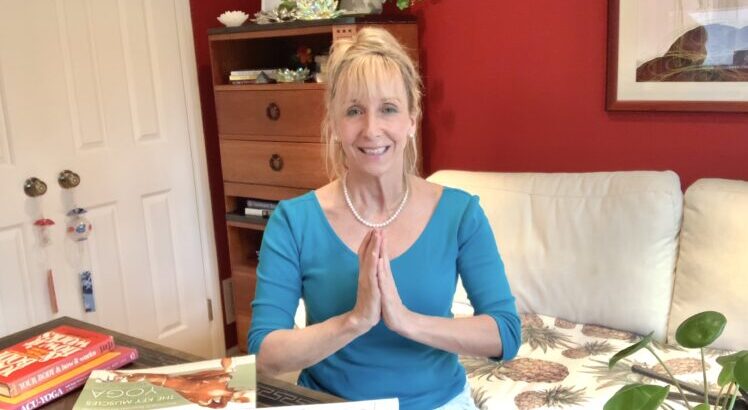
Indians Don’t Need to Be Taught Yoga, They Live Yoga: Claire Diab, the first Yoga Teacher of the US Military

Claire Diab’s introduction to Yoga began in the 1970s not in a Yoga retreat or ashram but at the most unlikely of Yoga spots - the Short Hills Mall in New Jersey. Ten years old, she followed her mother to her four week yoga class, and sat at the back colouring. When she went to college, her mother gave her the book which was the foundation of the class - Get in touch with yourself through Yoga by Tillie Mia, the lessons of which have stayed with her throughout her life.

Gentle speaking Claire is the founder of The American Yoga Academy, a Yoga Teacher Training School headquartered in Summit, New Jersey and has designed the Yoga programme for US Naval Seals. She also trained fire fighters in New York and New Jersey in Yoga, after September 11, 2001 when the world watched in horror the attacks on the World Trade Center.

The US Navy picks its Seals through one of the most rigorous of selection and training programmes in the world. Lieutenant Commander Mike H, the executive officer of Seal Team 10 says, Today, our primary weapons systems are our people’s heads. You want to excel in all the physical areas, but the physical is just a prerequisite to be a SEAL. Mental weakness is what actually screens you out”.  

And yet, Clair has said earlier “they (the Seals) often need more flexibility and balance”, due to the stress of prolonged deployment, grief, guilt and fear inherently involved in combat and the trauma of war zones.

She was asked to teach Yoga at San Diego at the Naval Training Center in the early 90s, at the time of Desert Storm. She taught yoga for two years to the marines and the Navy Seals at their fitness center. “It was a beautiful experience. I was possibly the first person to bring Yoga into the Navy. A lot of it was about stress management, focus, and dealing with PTSD that some maybe experiencing.”

While she is no longer associated with the military, there are personnel, both in active service and post-retirement who reach out to her. “There is research now which shows that yoga, the meditative aspect of it, the breathing, staying in the present can actually alleviate trauma and stress syndromes.”

As to why Claire was handpicked to train seals and is sought after for her teacher training programme is probably because her programme encompasses the whole philosophy of yoga. “There may be teachers who have been teaching for 15 years or more and taken a 4-5 year teacher training programme but they might not necessarily know how to be a teacher who is professional, safe, flexible, able to offer variations.”

The Yoga Academy, she says, welcomes everyone whether you have been practicing for many years or are new to the experience. “I have had a teacher training without an arm. We have had teachers training who have physical limitations and they have had to sit in a chair, and they have learnt to teach from a chair and also to teach chair yoga. You can teach yoga flow without demonstrating if you have the proper words and the awareness of all students."

Rigour in teacher training has been a point of departure between schools.  B K Iyengar's programme, the first to come to the United States, was of seven years duration and in the UK the programme is usually of four years. But Claire has different views and her teacher training is between six months to one year. “I can’t believe we need this much time. We would not have had so much Yoga if we had to study for so many years before teaching. I think it is important to get this beautiful way of connecting body, mind and soul, the philosophy, the meditation, the asanas, sooner than the many years it takes otherwise.”

She says that she has seen great success in her programmes, emphasising that she does not teach people to “do headstands or arm balance or arm stands. Maybe you would need more time with the more advanced asanas. My training is more about a beautiful Vinyasa flow and really connecting people with their breath and their body. I am big on offering variations.”

I was surprised (remember though this was 25 years ago) that there were no Yoga studios in Bombay. I realised that they (Indians) live yoga - Claire  Diab

Claire says she can teach a class of 400 people, which she has done travelling with Dr Deepak Chopra, world renowned author. She would do yoga and meditation at the seminars which he would be leading. She created the yoga programme along with Dr Deepak Chopra and Dr David Simon at the Chopra Center for Well Being. She helped the Seven Spiritual Laws of Yoga Programme. She was also reponsible for their Yoga and Ayurved Teacher training programmes. “Deepak Chopra  from nearly 27 years ago was my first teacher who taught me the deeper meaning of Yoga, and David Simon as well.”

She visited India with him for a seminar called “Seduction of Spirit’. She was in Goa for two consecutive years for 12 days at a time, over 25 years ago. “I loved Goa. Goa is to India what San Diego or California is to the United States. I loved the Indan food, and the food there with the Portuguese influence.”

She then went to Bombay as her father had grown up in Bombay, he was of Middle-Eastern/Turkish descent. She went to meet some of his family friends and where her father grew up. “I stayed in their apartment with them. And I was surprised (remember though this was 25 years ago) that there were no Yoga studios in Bombay. I realised that they (Indians) live yoga. They do Yoga in school while growing up, so Yoga studios were not really popular.”

When she was at the Ayurveda center in Goa, there were Yoga classes, but “it wasn’t like the Yoga Studios in the United States.” Claire says the teachers there thought Americans were a little ‘funny’ because they couldn’t do Yoga without their mats, and yoga bag and blocks. “They said they do yoga anywhere - in the jungle, on the beach in their living rooms, and they didn’t need a mat of blocks and straps.”

Asked if Yoga in the United States had moved away from its altruistic roots, Claire says “I think for a while they had got too commercial. But if we have to show it to be a cool thing to do, if that is how we have to get people to Yoga, that’s okay. Because a lot of movie stars - Demi Moore, Sting, the musician took to Yoga and that made Yoga more popular.”

She says that in 2020 and for the past five years or so she has seen Yoga teachers keeping the philosophy and the eight limbs of Yoga and weaving the yamas and niyamas into it. “I think it is coming back.”

One of the key methods that Claire employs while teaching asanas and training students, is to teach the pose, name the pose, remind them to breathe and only then tell them the benefits. “Yoga means union, put simply. It means being in union with our bodies and understanding that this is not just a stretch class. It is what is happening inside the body - the strengthening, to lengthening, the nourishing, the organs, the glands, and creating space in the body.”

When CSP asked Claire whether she refers to India in her training, pat comes the response. “Absolutely. I honour and respect this beautiful philosophy of Yoga that originated in India and I always connect it to India, honouring India, honouring the beautiful Sanskrit words and the beautiful philosophy of Yoga that is taught and lived in India. It is so much more than an asana.”

(Video of the interview: https://vimeo.com/475586249/dda3c38ac8)