
As one navigates the small streets and by lanes of India’s temple towns, bustling now with shops and people, it is difficult to imagine a time when all the attention was on the towering gopurams and one entered the shrines with a deep quietness. Not rushing, pushing, prodding or purchasing.
What if someone comes along and recreates for us the mystery and magic of times when the Brihadeshwara Temple, a timeless marvel of Chola architecture, was built, evoking nostalgia for a bygone era of grandeur and spirituality. Standing tall in Thanjavur, Tamil Nadu, this 1000-year-old temple, often referred to as the "Big Temple," is a masterpiece of stone and sculpture, embodying the rich cultural heritage of South India.
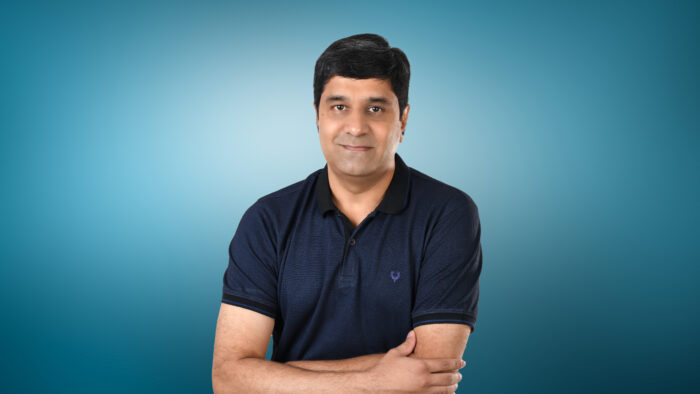
Tech entrepreneurer Ajit Padmanabh, Founder and CEO at Who VR has helped recreate our temples and sacred sites, giving us a digital preview of what went into the making of the magic. His journey has been a search of our roots through a multi-dimensional team of historians, chant-healers, artists, neuroscientists and content creators - retelling History like never before!
What are your favorite cultural memories growing up. Have you able to replicate them for children and their parents.
There are many of them! Life happened to me while I was charting my own path. So when I look at it in hindsight, these memories appear as the fundamental links for the reason why I am where I am. From a techie who wanted to retire and pursue instrumental music composition and production, becoming a culture-centric entrepreneur with a sense of deep purpose and mission is nothing short of a magical journey in life. I remember, as a kid, I was always fascinated with History in school and would always score the highest! I could recall Dates, Wars and Dynasties quite easily! My school project report would always have a pencil drawing by self of a temple facade (Hoysala, Vijayanagara architecture) as its cover.
I can never forget our trips in 90s to places like Rishikesh, Haridwar, Mathura, Rudraprayag, Joshimath, Badrinath as well as Varanasi, Bodhgaya and visiting various Archaeological museums in each of these sites in the north. Equally formative were our travels to temples in the south, especially Belur, Halebid, Mangalore among others. Another memory was my fascination with Harappa in 90s and wanting to make a 3D model of a house as a project in school. I even asked my dad to call the Pakistan Embassy for photos or details around the same! So, yes, History and Heritage were always circling around me while I lived my life. But now, History and Heritage are the very purpose of my life! I believe we have a long way to go at Who VR but have created considerable impact in the minds of children and their parents, through our unique immersive experiences. We also hope to provide tools and technologies to the next generation that are responsible, ethical and mind-expanding, amplifying the cultural renaissance in the years ahead!
How did your journey start in pairing culture with technology?
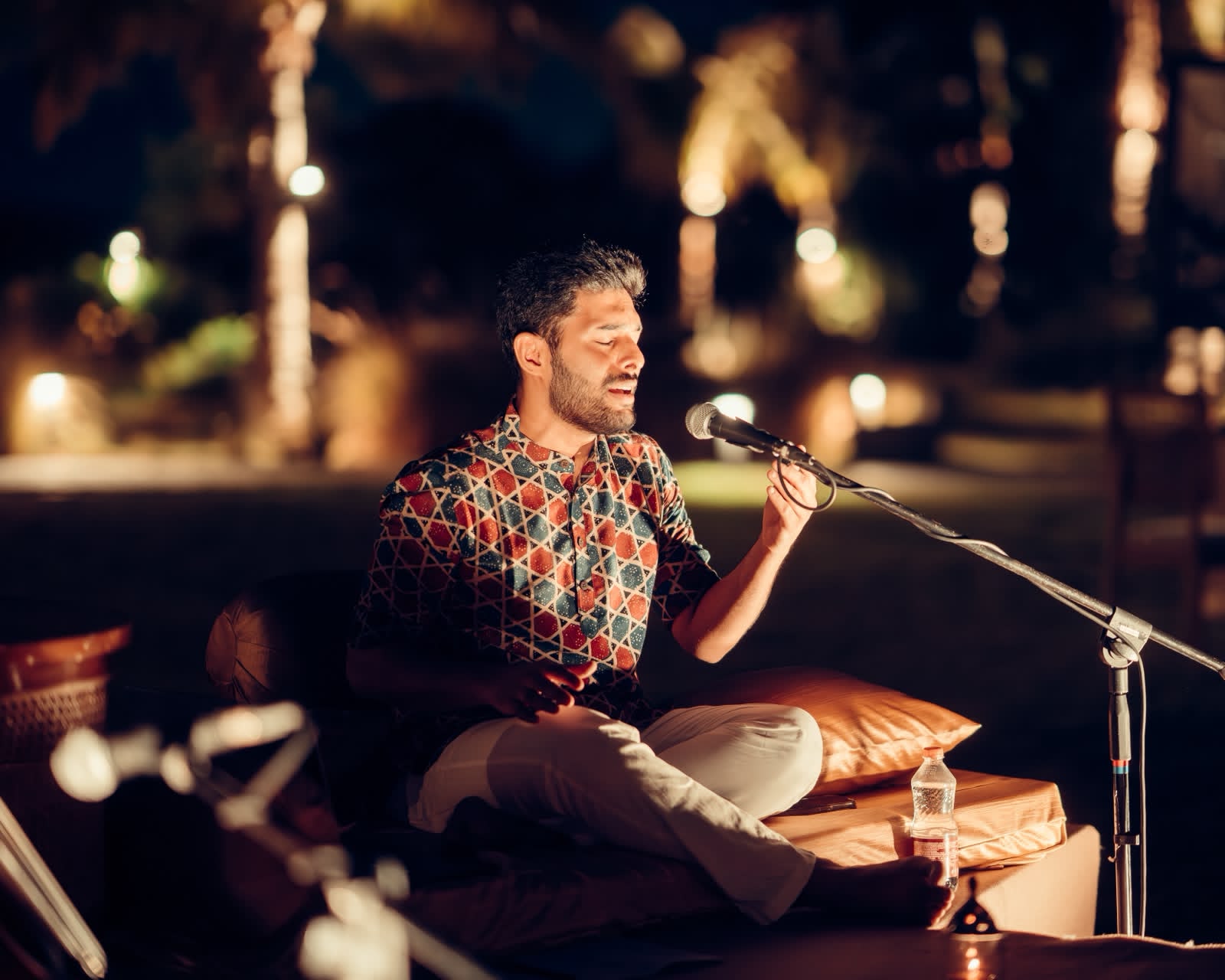
Aged 8, I was exposed to various genres of music, thanks to my dad who would bring in cassette tapes of the "latest" music of the time. I used to listen to a lot 50s and 60s music via LPs. In my teen years, I remember watching an instrumental music concert against the backdrop of an ancient monument (Yanni, Live at the Acropolis). It left me in awe of the visual splendor of the monument as well as the fantastic multi-genre music performed. 2 decades later, while working in Infosys as a techie, I released my debut album, Think Void, inspired by the Nataraja Temple at Chidambaram, its connection with the Akasha element and with the Orion constellation. I wanted to perform at heritage sites across India, with an intent to bring out the intricate architecture of our ancient temples and monuments. At that time, technologically speaking, I was fascinated by Metaverse and technologies like Virtual Reality. I had a vision of people wearing headsets at certain concert venues or tents, experiencing music of the artist virtually against a heritage backdrop. This was the first time I thought of pairing culture with technology. One thing led to another and today Who VR is a large ecosystem of possibilities of HeriTech (Tech for Heritage), one of which is our concert package called ConcertSCAPE.
Aged 11 or 12, I would wonder how our ancestors could have dealt with modern technology. Or did they know the tech’s consequences much in advance which is why they didn’t prescribe the same and always came up with Do’s a nd Don’ts when it came to usage of technologies during the ancient times? I always believed they knew a lot more than we do today and I think this was another aspect where I was thinking of culture and technology.
The current content available online about shrines and cultural spaces is very scarce, inadequate and often inaccurate. Is this the responsibility of the government or is the private sector better equipped to do this.
Who VR became larger than a music concert experience, primarily due to the problem of inaccurate and inadequate documentation on various aspects of a tangible heritage. I believe we are doing a great disservice to our ancestors for not bringing out their multi-dimensional knowledge and depth of their sciences, be it astronomy, anatomy, Physics, Chemistry etc.
In my opinion, the responsibility of showcasing our heritage and history to the world and catapult Bharat on the world stage in terms of knowledge economy lies with both Govt and private players. While Govt can implement an innovation at scale, the innovation invariably resides in the private sector. At the same time, the private sector needs to operate humanistically and not look at it as mere business and profit-seeking machine. Culture-centric Entrepreneurship is unique to India and should be leveraged to create powerful public-private partnerships leading to authentic, multi-sensory narrative of our civilizational history and ethos. People who are proud of their culture and heritage should come together and be a part of this renaissance, in whatever capacity they envisage themselves in.
We take our research very seriously and consult our historian partners, temple architects as well as archaeologists, specific to the ancient site we work on. All the content including 3D scene design, first-person walkthroughs, 3D Avatar creation, embedded videos, sound design, audio narrative are thoroughly researched and reviewed by experts for their authenticity and accuracy – a core principle at Who VR.
What are your primary areas of focus in digitizing information. Have you been able to gauge impact?
Our primary focus has been to authentically digitize tangible heritage. Our LIDAR 3D Scanners are used to create highly intricate 3D models of the temple or monument, for its preservation as well as for dissemination of knowledge. We create multi-sensory, immersive experiences of these monuments in Virtual Reality, narrating their history and any significant aspects like architecture or astronomy associated with the monuments. This has been showcased at G20 to the foreign dignitaries as well as lakhs of visitors across Chennai, Amritsar, Bhubaneswar, Pune and New Delhi. Our time-travel experiences enable people to witness monuments, which are in ruins today, as they used to appear in the distant past, replete with the cultural ensemble of that time. Our patents enable us to create hyper-realistic, one-of-their-kind experiences of our tangible heritage. The impact on the audience has been phenomenal, to say the least. Firstly, it instills a sense of pride in them after having watched the grandeur and depth of our ancestor's ingenuity and knowledge. Their curiosity is piqued. Many kids said they would ask their parents to plan to visit such ancient sites during their summer holidays. Many of the visitors folded their hands while some of them removed their shoes as they embarked on the VR experiences. Many left to seek additional details around the monuments. At the core of a cultural renaissance lies an individual sense of awareness regarding lack of cultural pride and a means to claim the same. VR is found to inculcate 4x more focus in viewers and 4x more retention power than e-learning or other means of knowledge dissemination. With such high retention and attention-span possibilities, we believe Who VR is at the heart of our cultural renaissance with multi-sensory experiential monument walkthroughs. This would usher in a never-before opportunity to seek knowledge across all aspects of Indian Knowledge Systems (IKS) and be able to recall it at will, thereby aiding in civilizational re-building of Bharat.
Another focus area has been R&D on showcasing various aspects of Bharatiya knowledge through modern scientific approaches. For example, we are into neuroscientific research to help understand the prowess of musical raagas and Vedic chants on the human brain in terms of focus, calmness etc. We intend to embark on another track focusing on Dharmic AI, a foundational AI program, keeping in mind the addictive, habit-forming AI algorithms at play in our daily digital lives and if there lies a solution in our scriptures to rescript the anatomy of AI.
What were some of the takeaways of the meta retreat?
Meta Retreat was a wonderful opportunity to meet some brilliant minds this land has produced in our generation. The focus area came about as a result of the aspect being spoken in brief at the IKS conclave held in Pune. The discussions spanned across various technologies (not just software) on how Dharmic practices or indigenous intelligences can help augment current technologies and leapfrog Bharat on the world stage, be it in food processing or AI. It was an honour to be part of the Meta Retreat as an Acharya and absorb the depth and knowledge of fellow participants as a Vidyarthi. For me, some of the takeaways were that this generation is poised to imprint Bharatiya Parampara on the world stage across various technology-spaces. While we are keen to bring forth Dharmic Tech, at the same time, we are practical about its approach, application and consumption and are bringing out a vision paper shortly, which would include absorptive details around the same. My eternal gratitude to INDICA for organizing such a transformational retreat and to the hosts of the retreat to keep the energies sacred and high during the event.