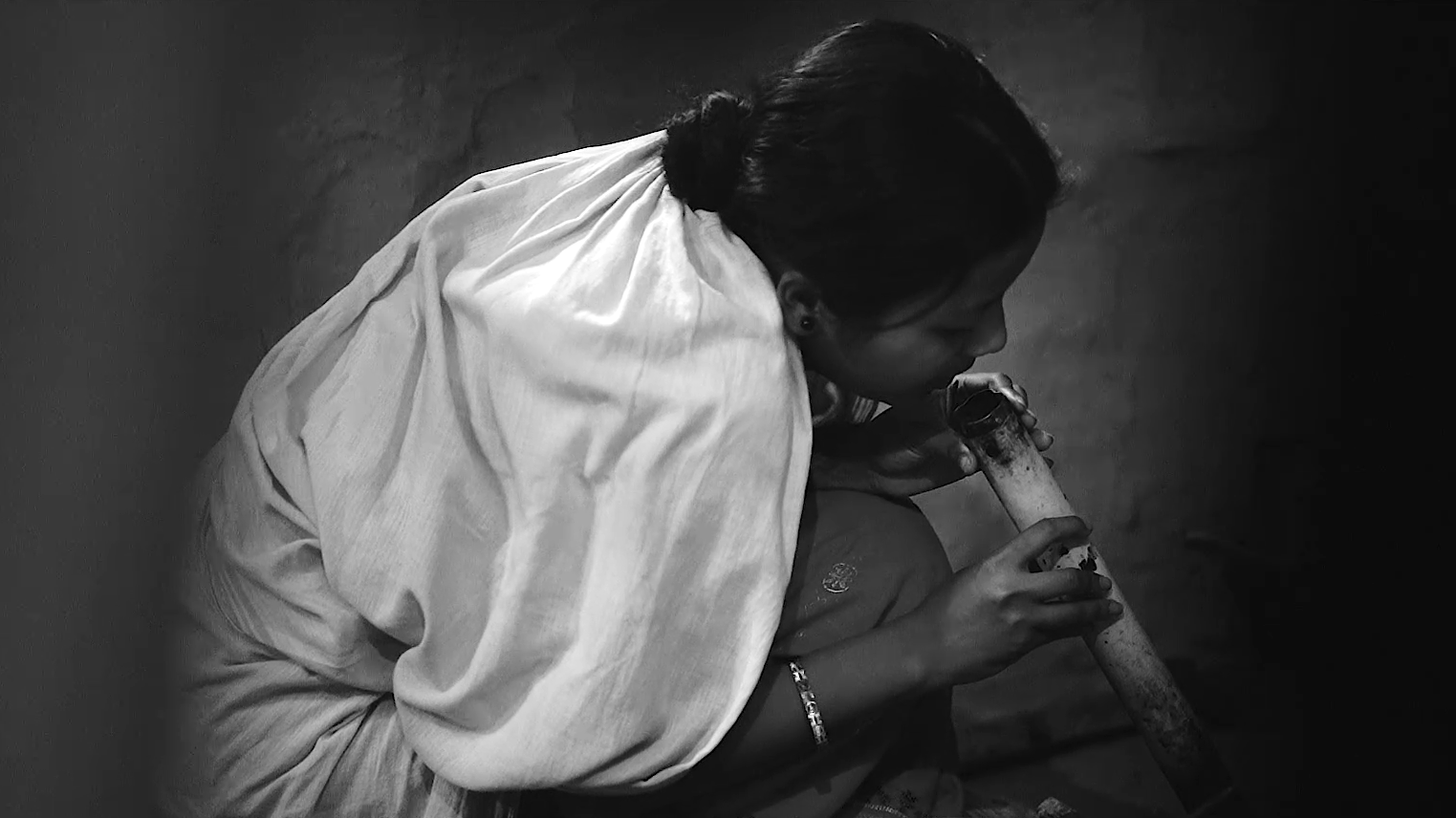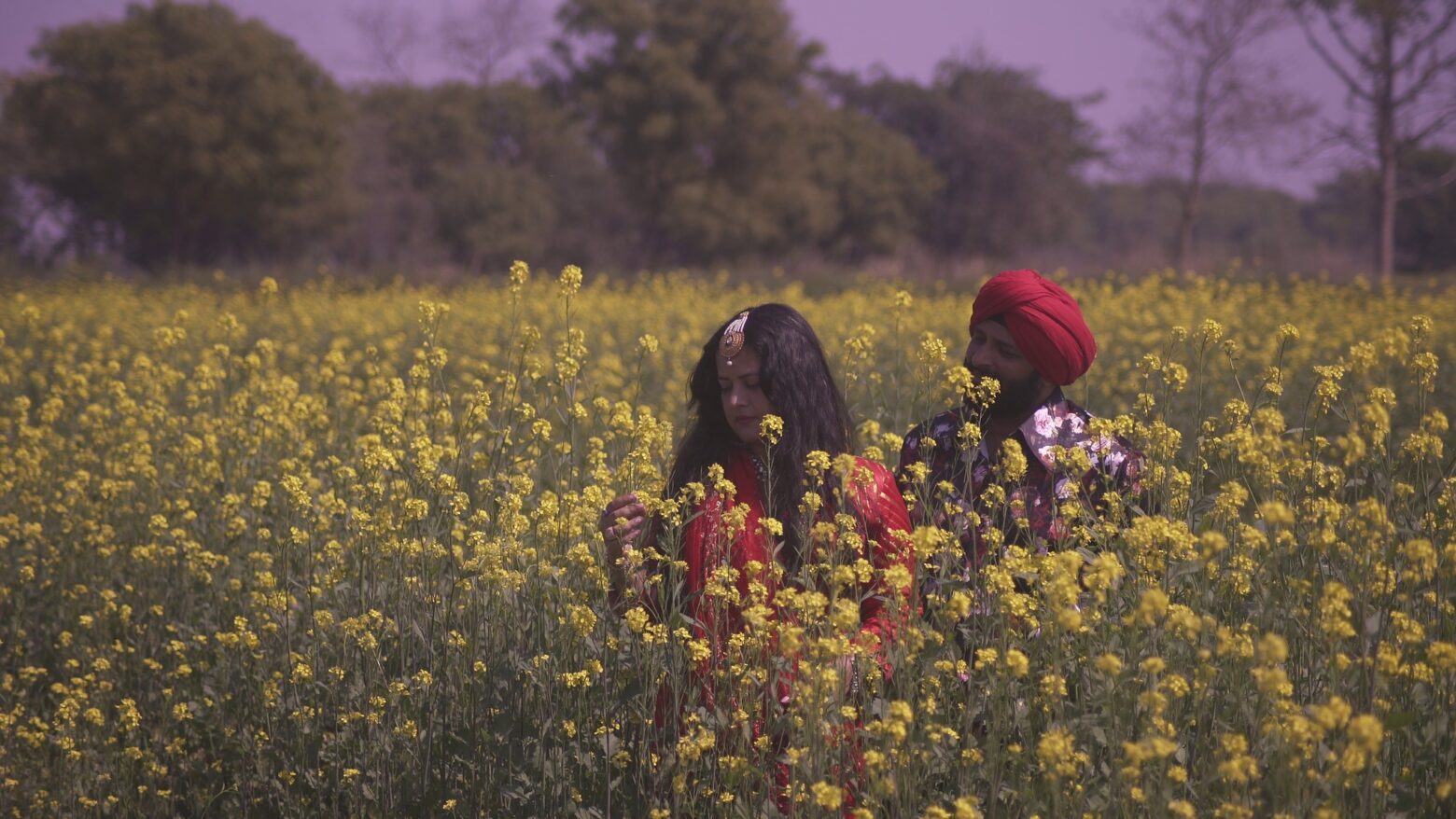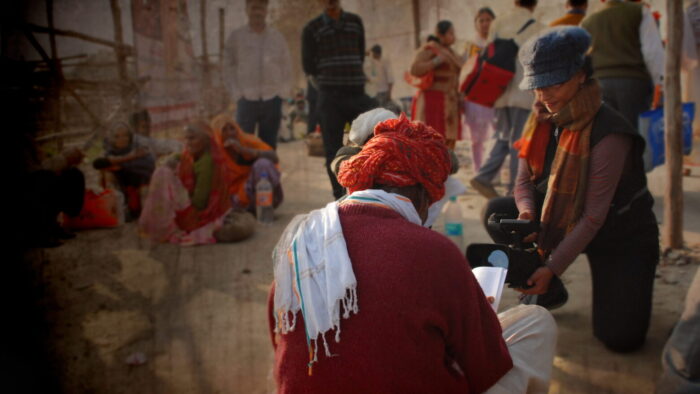
A multiple award-winning filmmaker, writer and meditation facilitator, Akanksha Damini Joshi has been witnessing India in its social, political, ecological, cultural and spiritual dimensions. It is the “Indian people's connection with the Sacred – in all diverse forms and colours – that has been the anchor, through and beyond their crises,” believes Akanksha.
On the occasion of Shivaratri, CSP, in conversation with Akanksha, explores the possible union between the internal and external worlds of Indian consciousness.
One of your storytellers says there is a way of viewing India: as an outsider and as an insider. In your view, how many of us city dwellers can be counted among the outsiders? Do we know the people who inhabit your films?
What I hear you asking is whether there is a disconnect between modern metropolitan Indians and indigenous religious-spiritual India. There is no simple way to answer this, but I will try. In one word, the answer would be yes. There is a huge disconnect. Most of us modern Indians – not all, but many – carry the baggage of inheritance, a mental conditioning of servility.
For almost a thousand years, India was ruled, first under the Central Asian dynasties and then by the European powers. In both cases, while there have been beautiful creative learnings, there is no denying that there has also been incredible destruction – of both tangible and intangible indigenous heritage.
The loss of intangible heritage includes that of socio-economic structures, cultural practices, value systems and a worldview. When I see your question, I see that loss staring at me. Silently. It is so far gone that it is impossible to imagine what we – diversely – were before a thousand years, except through bits and pieces, like the many indigenous folk religious cultures, scriptures, stories and songs.
Modern India, as reflected in mainstream metropolitan culture, does not have the time to look back. Neither the patience nor the intention to carve out an empathetic story, however broken, of India's past.
As far as the latter is concerned, there is a perceptible fear – instilled by modern education based on a Western, masculinist understanding of science and technology – of anything to do with religions. And if you can't creatively engage with religions, you can't engage with India.
For India is, most of all, a land that belongs to seekers. Those who can be seen in my film on spiritual seeking, Hindu Nectar: Spiritual Wanderings in India, or my film on climate change, Earth Witness, where each of the protagonists holds a deeply religious view of life and nature. Yet many modern Indians would not even have the language to say... umm... hello to them.
The non-Indians you feature appear to be the insiders, privy to a world of wonder and secrets. How do they gain access and ease of being?
How do scientists gain access to truths about the various phenomena in this world? By experimenting. What are the essential prerequisites for experimentation? An attitude of openness and learning.
That is what in India we call shishyatva – an emotive tuning to learn, to be a disciple. That, combined with the courage to experiment in the inner laboratory, makes us privy to the world of wonder and secrets, this mother-womb of seeking that is India.
India has always had people from other lands and cultures coming as seekers. Buddhism and its meditative practices spread along the Silk Road, far into Southeast Asia and all the way to Japan as Zen, all thanks to these seekers who came to India with that essential openness of being disciples.
It is the same ancient current of seeking that you witness in the Spanish, Russian, American and Australian protagonists of Hindu Nectar.
As a filmmaker, are you on the inside or outside? Do you take a stance?
I am a modern filmmaker who uses all the ease and delight that 21st-century technology offers as tools to create. At the same time, I trace my artistic lineage back to the ancient traditions of storytelling in India, such as Pattachitra, Natya, Itihaasa and Puranas.
Were these artists, authors and rishis ever outside? Was there ever a difference between the teller and the told in the indigenous narrative traditions of India?
This inside-outside dichotomy comes from a materialistic worldview. In both the Mahabharata and the Ramayana, the rishi-authors Vyasa and Valmiki are integral parts of the narrative, as characters. The teller merges into the told. That is my inheritance.
My style of filmmaking is feminine and poetic. I do not begin with a set idea. I venture to explore and absorb. I am also a cinematographer. I don't subscribe to a vocabulary of “shooting”, the semiotics of which come from the sport of killing. I wait. I watch. I absorb. In the absorbing is the learning.
So, in short, I don't take a stance; but with the words, images and sounds in my stories, I attempt a dance.
Does the media need to go deeper and explore this world?
Recovery can begin only after a recognition of loss. In other words, you wake up only when you know you have been dreaming thus far.
The modern world, rushing towards a global future and continually inventing new dreams and desires, barely has the time to pause, look back, assimilate and digest. To take ahead what needs to be taken and leave behind what is of no use anymore.
Media is a part of that modernity which has no desire or space to look back. It is in a mechanical rut, moving ahead: fast, faster, fastest. Time is limited, deadlines are tight. There is constant, factory-like pressure to produce.
And if there is a looking back, it is through judgmental glasses coloured by modern morality, with no empathetic understanding of the past. That requires the luxury of both physical time and mental space. It requires deep immersion.
Judging one's own past and rejecting it is like cutting one's own roots. Like a flower in a vase, one can look pretty, but one will last only a few days. If we need to sustain ourselves, we need roots. That is essential for any culture or person.
How do we interpret narratives whose language we can no longer speak?
By not being 21st-century time-centric and by not believing that we are the best humans who have ever graced this earth. By realising that we are here because of millions of innovations and adaptations made by our ancestors. They laid the foundation for the good that we have today. With humility.
There are many ancient knowledges and experiences that continue unbroken to this day, including our rich culinary traditions.
I would say we need a feminine approach to relearning. A daughter learns from her mother the family's culinary skills, adapting them over time to her own tastes and needs. It is the same here. Learn the tools and skills the ancients offered. Adapt them to ever-changing times. That alone is the method that keeps India Sanatan, eternal.
In your opinion, are we any closer as a nation to discovering our inner selves than we were before we were colonised?
What we were before we were colonised is, honestly, like a jigsaw puzzle that many of us try to put together in different ways, depending on our ideology or area of expertise. Each presents a different picture.
So, what we were, I can't say for sure. What we are, I can perhaps attempt to say. India is in a process. A churning. And through this churning is gradually emerging a sense of our many selves, rooted in the eternal sacred calling of India.
How has not knowing or not engaging with this core caused harm to our land and water?
I have been researching a film on Varanasi for a few years. One of my protagonists once told me that there was a time when, before entering the river Ganga, people had to first bathe and cleanse their bodies at home. Only then would they step into the river, for she was the sacred mother who would cleanse their souls.
As the understanding of that sacredness got diluted with time, so did people's attitude towards the river. Sure, she is still called “Ma Ganga”, but how one is supposed to behave with this sacred mother has been forgotten.
I have made award-winning films on ecology – Chilika Bank$ and Earth Witness. Spending nearly eight years deeply engaging with stories about nature, I realised that the outer ecology can only be saved when we know how to preserve the inner ecology – through meditation and worship. That realisation resulted in my film on spiritual wanderings in India, Hindu Nectar – https://youtu.be/pwJntmsMAT4.
Sustainability and environmental awareness were ingrained in our indigenous sacred traditions. Losing them, we lost the lived sutra that linked us to the rivers, the mountains and the earth.
Thankfully, in different cultures and regions of India, these sutras still survive as sacred memory that can perhaps still be revived.
Does meditation help to centre our being and facilitate this exploration?
Dhyana is India's original export to the world. In older times, it travelled eastwards, as far as Japan. In recent times, it has travelled westwards, as far as America. India has literally embraced the world with the sutras of meditation, allowing each land to weave the sutra in its own special way.
This has been India's unique civilisational calling: to offer those who search various tools and techniques of realisation – a realisation of our inherent limitlessness and inherent freedom.
Exploring India without an insight into this is like a blind man looking at a source of light – of no use at all, an effort wasted.
The feminine filmmaking I speak of is grounded in this tradition of meditative exploration. My crew will vouch for this: each of my filming schedules is an intense meditation process. On a boat in the Sundarbans, in a jeep in Chhattisgarh, in the ancient Himalayan forests. To listen, we first need to be empty of ourselves. Meditation does that. It is an essential tool to be a via-media.
It must be exciting to witness so much of our country. Are there any stories that are dearer to you than others?
India is my Guru. She reveals to me stories, people and experiences through which I need to learn. The stories dearest to me are the ones that can never be told. The ones that reside softly in the heart of the storyteller, beating ever so tenderly in the sacred moments of solitude.
What stories have caused anguish, and which ones have helped you rejoice that India's ancient wisdom is safe?
I see this as a phase of churning for most ancient cultures around the world. It has come as a response to a dream we had of a global village, which ended up manifesting as a global factory – mass-producing ideas, culture and things.
How the wisdom of our ancestors – in material, creative, emotive and spiritual processes – survives this flat factory world is the greatest challenge of our times. I don't doubt that it will survive. How it will survive will be fun to watch.
The stories that disrupt the standardised mode of ideas and processes – the uniform, one-size-fits-all variety – are heartening to listen to and watch.
How do we break away from the shackles with which English binds us?
There is already a disruption of those shackles, paradoxically, thanks to the global market.
The proliferation of Hindi news channels in the early 2000s, for example, splintered the notion held by many in the Hindi-speaking states that Hindi was inferior to English. Rural markets were now lucrative. Advertisements started being made for them in their languages. The notion of the inferiority of indigenous languages to English began to dilute.
We are not fully there yet – we need higher science education in indigenous languages, for instance – but I am certain that, not too far in the future, there will be a time when English will be seen as just another useful link language of India, for use nationally and internationally.
YouTube channel: www.youtube.com/prabhudamini